
ACKNOWLEDGEMENT TO COUNTRY We acknowledge the Traditional Owners



- Slides: 35
ACKNOWLEDGEMENT TO COUNTRY We acknowledge the Traditional Owners of country throughout Australia and recognise their continuing connection to land, waters and culture. We pay our respects to their Elders past, present and emerging.
NATIONAL DISABILITY INSURANCE SCHEME (NDIS) RECOGNIZED DISABILITIES
We will learn: OBJECTIVES What disability is. Different types of disabilities Physical, Sensory, Cognitive, Psychiatric, Neurological and Intellectual disability explained and some examples of these disabilities. Autism Spectrum Disorder Multiple Sclerosis explained and how it affects the body system Tourette Syndrome and symptoms. Stroke Mental Health Disabilities
What is disability? WHAT IS DISABILITY A disability is any continuing condition that restricts everyday activities. The Disability Services Act (1993) defines ‘disability’ as meaning a disability: which is attributable to an intellectual, psychiatric, cognitive, neurological, sensory or physical impairment or a combination of those impairments which is permanent or likely to be permanent which may or may not be of a chronic or episodic nature which results in substantially reduced capacity of the person for communication, social interaction, learning or mobility and a need for continuing support services. With the assistance of appropriate aids and services, the restrictions experienced by many people with a disability may be overcome.
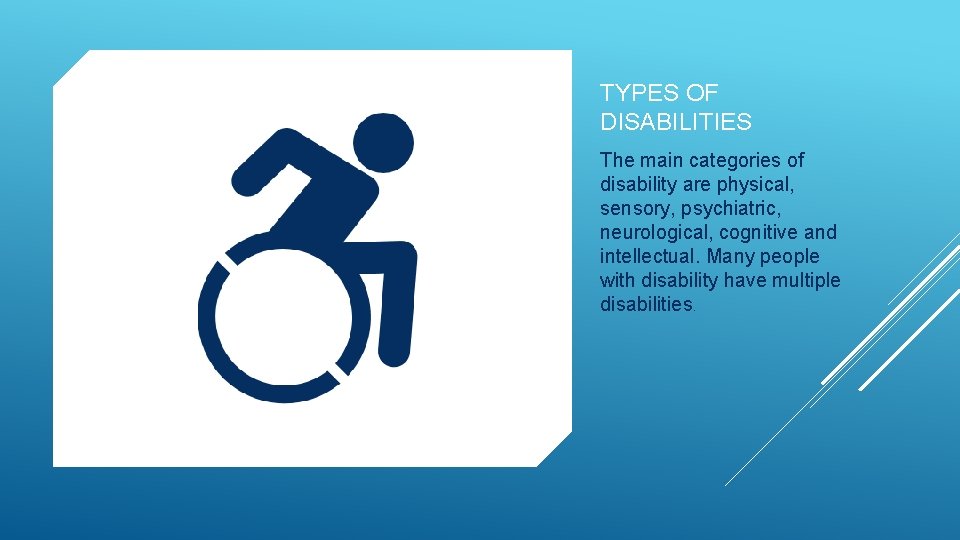
TYPES OF DISABILITIES The main categories of disability are physical, sensory, psychiatric, neurological, cognitive and intellectual. Many people with disability have multiple disabilities.
Physical disability is a limitation on a person's physical functioning, mobility, dexterity or stamina. Examples can be : *Paraplegia *Quadriplegia *Multiple Sclerosis SOME TYPES OF PHYSICAL AND SENSORY DISABILITIES *Hemiplegia *Cerebral Palsy *Dystrophy Sensory Disability- Sensory disability is a neurological disorder where the brain has difficulty processing sensory information such as sight, hearing, taste, touch, and smell, which make people with sensory disability incapable of experiencing senses in a normal way. Examples can be: *Autism *Blindness and low vision *Hearing loss and deafness
Psychiatric disorders resulting in disability may include anxiety disorders, phobias or depression. PSYCHIATRIC DISABILITY
INTELLECTUAL DISABILITIES Intellectual disability (ID), also known as general learning disability and mental retardation (MR), is a generalized neurodevelopmental disorder characterized by significantly impaired intellectual and adaptive functioning. Fragile X Syndrome Fragile X syndrome is a genetic disorder that affects a person’s development, especially that person’s behaviour and ability to learn. In addition, Fragile X can affect communication skills, physical appearance, and sensitivity to noise, light, or similar information. Fragile X syndrome is the most common form of inherited intellectual and developmental disability.
NEUROLOGICAL DISABILITIES Neurological disability are diseases of the central and peripheral nervous system. In other words, the brain, spinal cord, cranial nerves, peripheral nerves, nerve roots, autonomic nervous system, neuromuscular junction, and muscles. These disorders include epilepsy, Alzheimer disease and other dementias, cerebrovascular diseases including stroke, migraine and other headache disorders, multiple sclerosis, Parkinson's disease, neuroinfectious, brain tumours, traumatic disorders of the nervous system due to head trauma, and neurological disorders as a result of malnutrition.
PSYCHOSOCIA L DISABILITY In general terms, PSD refers to the social consequences of disability and the way that your life is impacted upon due to mental illness. Some examples include; Schizoid disorders such as schizophrenia and schizoaffective disorder. Anxiety disorders such as obsessive compulsive disorder, post-traumatic stress disorder, agoraphobia and social phobia. Mood disorders such as major and dysthymic depression and bipolar.
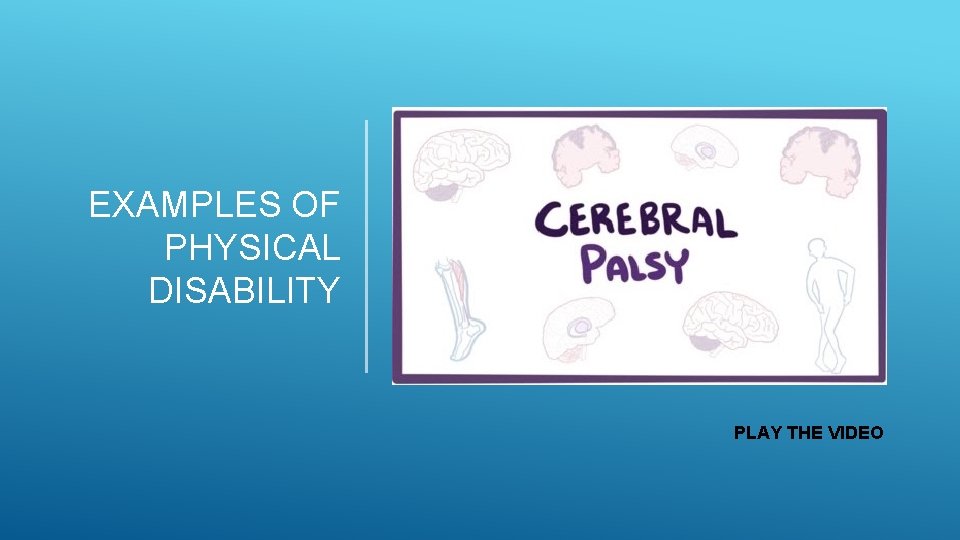
EXAMPLES OF PHYSICAL DISABILITY PLAY THE VIDEO
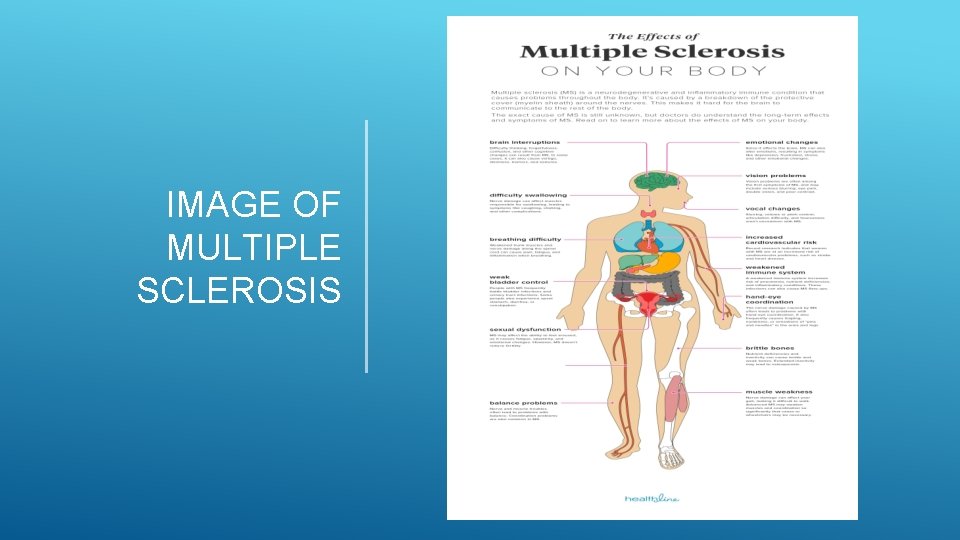
MULTIPLE SCLEROSIS Multiple sclerosis (MS) is a chronic illness involving your central nervous system (CNS). The immune system attacks myelin, which is the protective layer around nerve fibres. This causes inflammation and scar tissue, or lesions. This can make it hard for your brain to send signals to the rest of your body.
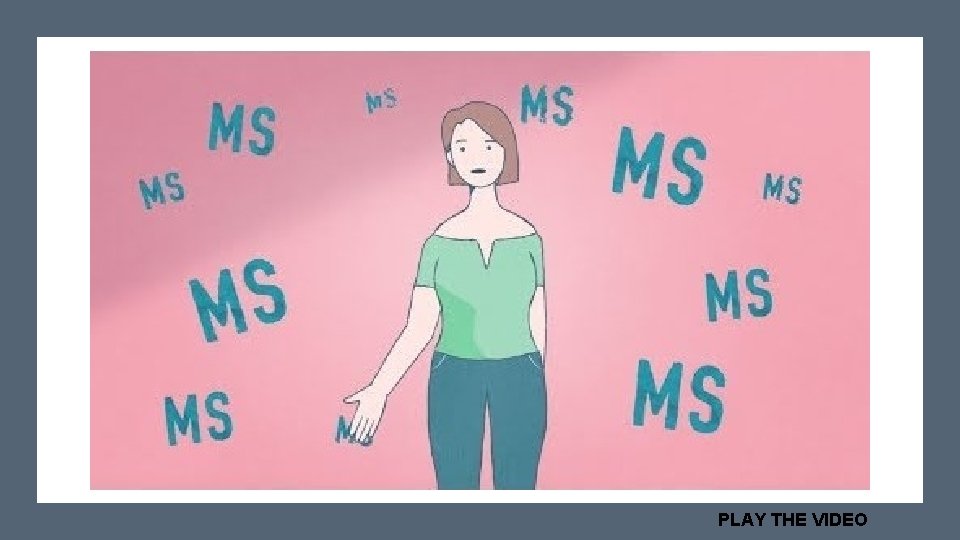
PLAY THE VIDEO
IMAGE OF MULTIPLE SCLEROSIS
NEUROLOGICAL AND COGNITIVE DISABITILY Neurological and cognitive disability includes acquired disability such as multiple sclerosis or traumatic brain injury. Intellectual disability includes intellectual and developmental disability which relate to difficulties with thought processes, learning, communicating, remembering information and using it appropriately, making judgments and problem solving.
What is autism spectrum disorder? AUTISM SPECTRUM DISORDER Autism spectrum disorder (ASD) refers to a group of complex neurodevelopment disorders characterized by repetitive and characteristic patterns of behaviour and difficulties with social communication and interaction
SYMPTOMS OF AUTISM SPECTRUM DISORDER Very early indicators that require evaluation by an expert include: no babbling or pointing by age 1 no single words by age 16 months or two-word phrases by age 2 no response to name loss of language or social skills previously acquired poor eye contact excessive lining up of toys or objects no smiling or social responsiveness
CAUSES OF AUTISM SPECTRUM DISORDER What causes ASD? Scientists believe that both genetics and environment likely play a role in ASD. Researchers have identified a number of genes associated with the disorder. Imaging studies of people with ASD have found differences in the development of several regions of the brain. Studies suggest that ASD could be a result of disruptions in normal brain growth very early in development. These disruptions may be the result of defects in genes that control brain development and regulate how brain cells communicate with each other. Autism is more common in children born prematurely.
There is no cure for ASD. Therapies and behavioural interventions are designed to remedy specific symptoms and can substantially improve those symptoms. The ideal treatment plan coordinates therapies and interventions that meet the specific needs of the individual. Educational/behavioural interventions: Early behavioural/educational interventions have been very successful in many children with ASD. IS AUTISM CURABLE?
INDICATORS OF AUTISM SPECTRUM DISORDER Later indicators include: impaired ability to make friends with peers impaired ability to initiate or sustain a conversation with others absence or impairment of imaginative and social play repetitive or unusual use of language abnormally intense or focused interest preoccupation with certain objects or subjects inflexible adherence to specific routines or rituals
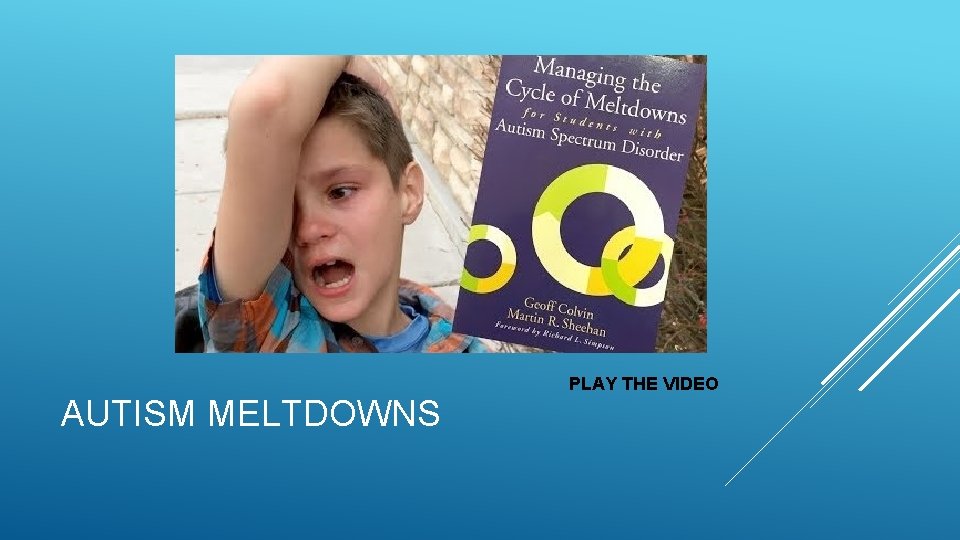
AUTISM MELTDOWNS PLAY THE VIDEO
COGNITIVE AND NEUROLOGICAL DISABILITIES Cognitive disabilities can include: Down syndrome Clinical diagnoses of cognitive disabilities include autism Traumatic brain injury (TBI Dementia. Less severe cognitive conditions include: attention deficit disorder (ADD) Dyslexia (difficulty reading) Dyscalculia (difficulty with math) and learning disabilities in general.
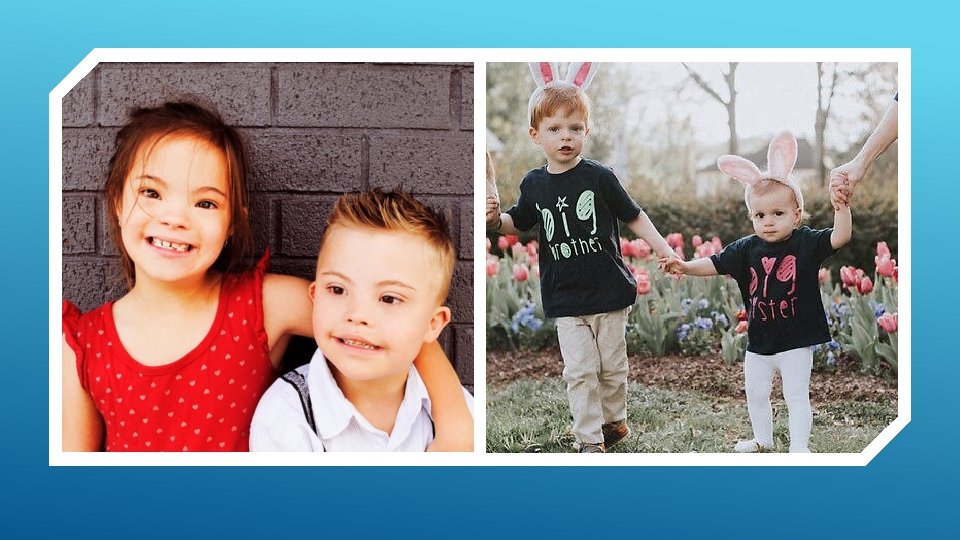
Down syndrome is a genetic condition. It is not an illness or a disease. DOWN SYNDROME Our bodies are made up of millions of cells. In each cell there are 46 chromosomes. The DNA in our chromosomes determines how we develop. Down syndrome is caused when there is an extra chromosome. People with Down syndrome have 47 chromosomes in their cells instead of 46. They have an extra chromosome 21, which is why Down syndrome is also sometimes known as trisomy 21.
Individuals with Down syndrome commonly have distinct physical features, unique health issues, and variability in cognitive development. CHARACTERISTIC S OF DOWN SYNDROME Physical features Some physical characteristics of Down syndrome include: eyes that slant upward, have oblique fissures, have epicanthic skin folds on the inner corner, and have white spots on the iris low muscle tone small stature and a short neck a flat nasal bridge single, deep creases across the centre of the palms a protruding tongue a large space between large and second toe a single flexion furrow of the fifth finger
TREATING DOWN SYNDROME Treating Down syndrome There’s no cure for Down syndrome, but there’s a wide variety of support and educational programs that can help support people with Down Syndrome. Federal law requires that states offer therapy programs for qualifying families. In these programs, special education teachers and therapists will help your child learn: sensory skills social skills self-help skills motor skills language and cognitive abilities Children with Down syndrome often meet age-related milestones. However, they may learn more slowly than other children.
TOURETTE SYNDROME Tourette (too-RET) syndrome is a disorder that involves repetitive movements or unwanted sounds (tics) that can't be easily controlled. For instance, you might repeatedly blink your eyes, shrug your shoulders or blurt out unusual sounds or offensive words.
Tics — sudden, brief, intermittent movements or sounds — are the hallmark sign of Tourette syndrome. They can range from mild to severe. Severe symptoms might significantly interfere with communication, daily functioning and quality of life. SYMPTOMS OF TOURETTE SYNDROME Tics are classified as: Simple tics. These sudden, brief and repetitive tics involve a limited number of muscle groups. For example, eye blinking, head jerking, eye darting and nose twitching. Complex tics. These distinct, coordinated patterns of movements involve several muscle groups for example, touching or smelling objects, repeated observed movements, hopping and using vulgar, obscene words.
MANAGING TOURETTE SYNDROME Aside from medication and behavioural therapy, there are strategies and measures which people with TS can take to help manage their tics. Unfortunately there is no one-size-fits-all solution for managing tics. Everybody has their own ways of coping; what might work for one person may not be suitable for another. Motor Tics Arm/hand tics • Engage in an activity which requires your concentration, for example making something with your hands. • Invest in a laptop if you have difficulty with handwriting. Some students may be entitled to borrow one or obtain a grant to get their own. Banging and tapping • Try put something softer on the table (e. g a mouse mat) to avoid hurting hands and fingers • Try putting plasters on the fingers or hands • Try using a ‘fiddle toy’
PLAY THE VIDEO
A stroke is a serious medical condition that occurs when the blood supply to part of the brain is interrupted. Like STROKE all organs, the brain needs the oxygen and nutrients provided by blood to function properly. If the supply of blood is restricted or stopped, brain cells begin to die. This can lead to brain damage and possibly death. A stroke is a medical emergency and prompt treatment is essential. The sooner a person receives treatment for a stroke, the better the outcome.
F. A. S. T. test The main symptoms of stroke can be remembered by using the word 'FAST': Face FAST TEST FOR STROKE — Check their face. Has their mouth drooped? Arms — Can they lift both arms? Speech — Is their speech slurred? Do they understand you? Time is critical — If you see any of these signs or suspect that you or someone else may be having a stroke, call triple zero (000) straight away and ask for an ambulance.
PLAY THE VIDEO
Mental health disabilities can take many forms, just as physical disabilities do. MENTAL HEALTH DISABILITIES Unlike many physical illnesses though, all mental illnesses can be treated. They are generally classified into six categories: Schizophrenia – The most serious mental illness. Schizophrenia is a complex brain disorder, which affects between 150, 000 and 200, 000 Australians. Mood Disorders (Depression and Manic Depression) – These illnesses affect about 10% of the population. Depression is the most common mood disorder. Anxiety Disorders –Everyone feels anxious at times; it’s our body’s way of keeping us alert. But it becomes an issue when worry or fear starts to interfere with your day-to-day life. . Some other types of disorders can be phobias and panic disorder as well as obsessive-compulsive disorder. Eating Disorders – They include anorexia nervosa and bulimia and are most common in men and women under the age of 30. Personality Disorders – There are many different personality disorders. People with these disorders usually have a hard time getting along with other people. They are the most difficult disorders to treat. Organic Brain Disorders – These disorders affect about 1% of people. They are the result of physical disease or injury to the brain (i. e. Alzheimer’s, Stroke, Dementia).