
Acids Bases What is an acid An acid
Acids & Bases
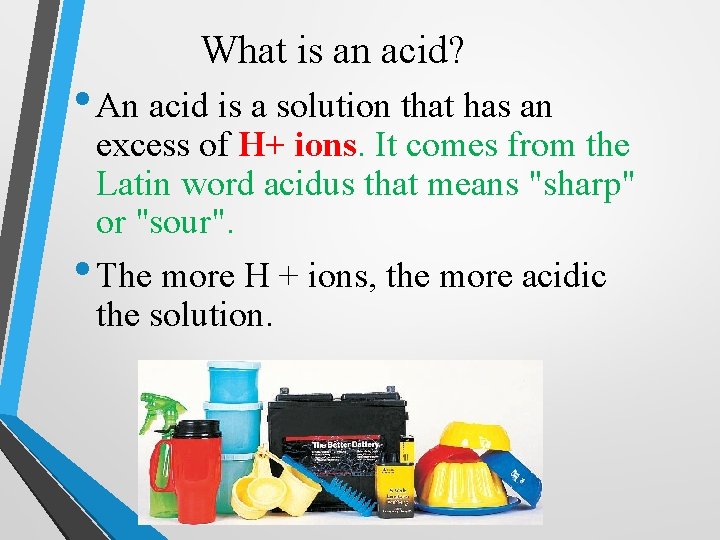
What is an acid? • An acid is a solution that has an excess of H+ ions. It comes from the Latin word acidus that means "sharp" or "sour". • The more H + ions, the more acidic the solution.
A hydrogen ion is a hydrogen atom that has lost an electron. This atom becomes positively charged.
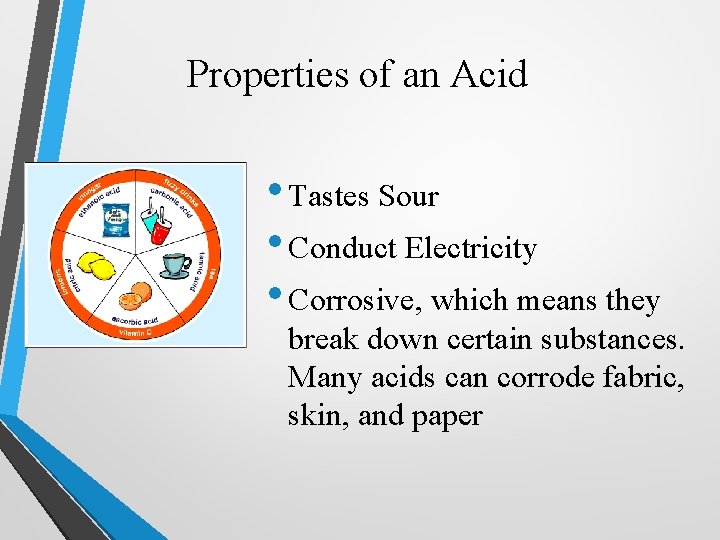
Properties of an Acid • Tastes Sour • Conduct Electricity • Corrosive, which means they break down certain substances. Many acids can corrode fabric, skin, and paper
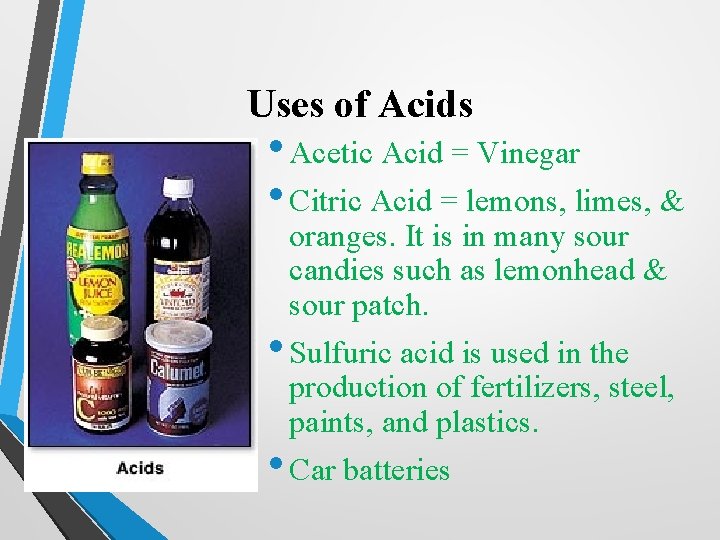
Uses of Acids • Acetic Acid = Vinegar • Citric Acid = lemons, limes, & oranges. It is in many sour candies such as lemonhead & sour patch. • Sulfuric acid is used in the production of fertilizers, steel, paints, and plastics. • Car batteries

What is a base? • A base is a solution that has an excess of OH- ions. • Another word for base is alkali.

Properties of a Base • Feel Slippery • Taste Bitter • Corrosive • Can conduct electricity. (Think alkaline batteries. )
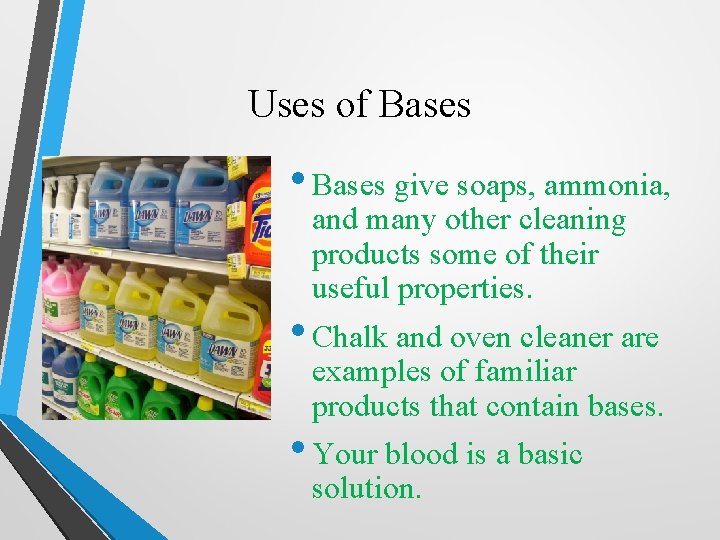
Uses of Bases • Bases give soaps, ammonia, and many other cleaning products some of their useful properties. • Chalk and oven cleaner are examples of familiar products that contain bases. • Your blood is a basic solution.
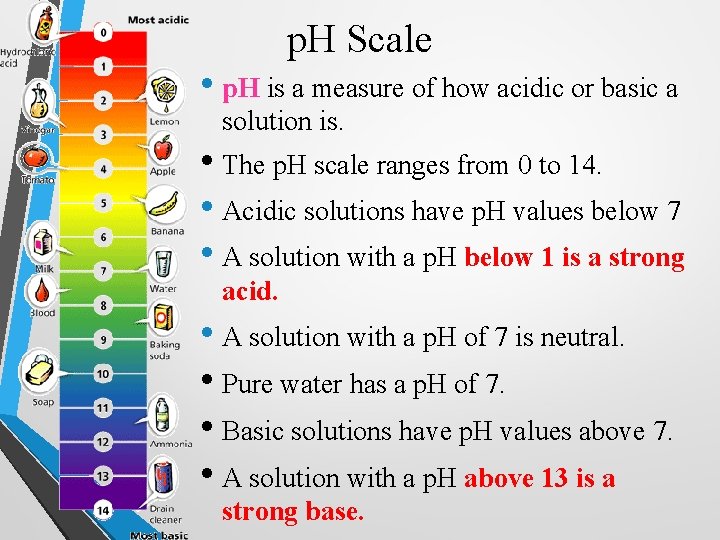
p. H Scale • p. H is a measure of how acidic or basic a solution is. • The p. H scale ranges from 0 to 14. • Acidic solutions have p. H values below 7 • A solution with a p. H below 1 is a strong acid. • A solution with a p. H of 7 is neutral. • Pure water has a p. H of 7. • Basic solutions have p. H values above 7. • A solution with a p. H above 13 is a strong base.
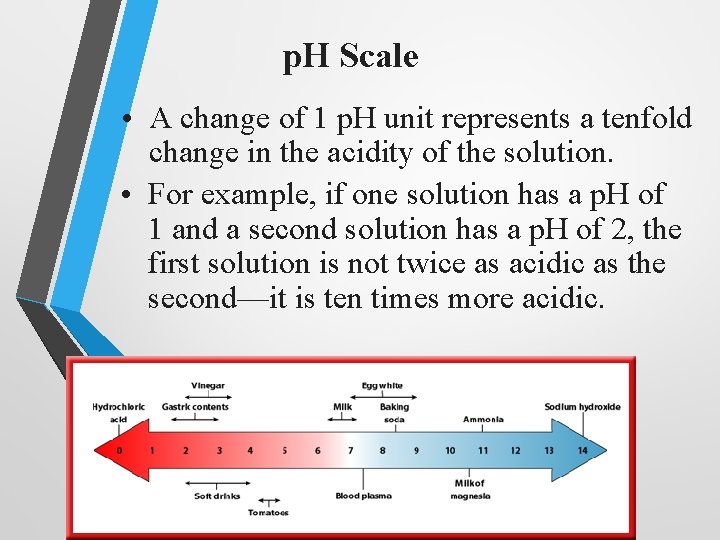
p. H Scale • A change of 1 p. H unit represents a tenfold change in the acidity of the solution. • For example, if one solution has a p. H of 1 and a second solution has a p. H of 2, the first solution is not twice as acidic as the second—it is ten times more acidic.
- Slides: 10