
Acids and bases in Inorganic Chemistry By the
Acids and bases in Inorganic Chemistry By the way: You will be allowed to bring molecular modelling kits into exams. You can find a link to the retailer’s website on Blackboard.
What am I talking about? “It can be described as a proton acceptor” 1. 2. 3. 4. An acid A base A buffer An indicator 0 of 136
What am I talking about? “This is a substance which changes colour at a particular p. H value” 1. 2. 3. 4. An acid A base A buffer An indicator 0 of 136
What am I talking about? “It can be described as a proton donor” 1. 2. 3. 4. An acid A base A buffer An indicator 0 of 136
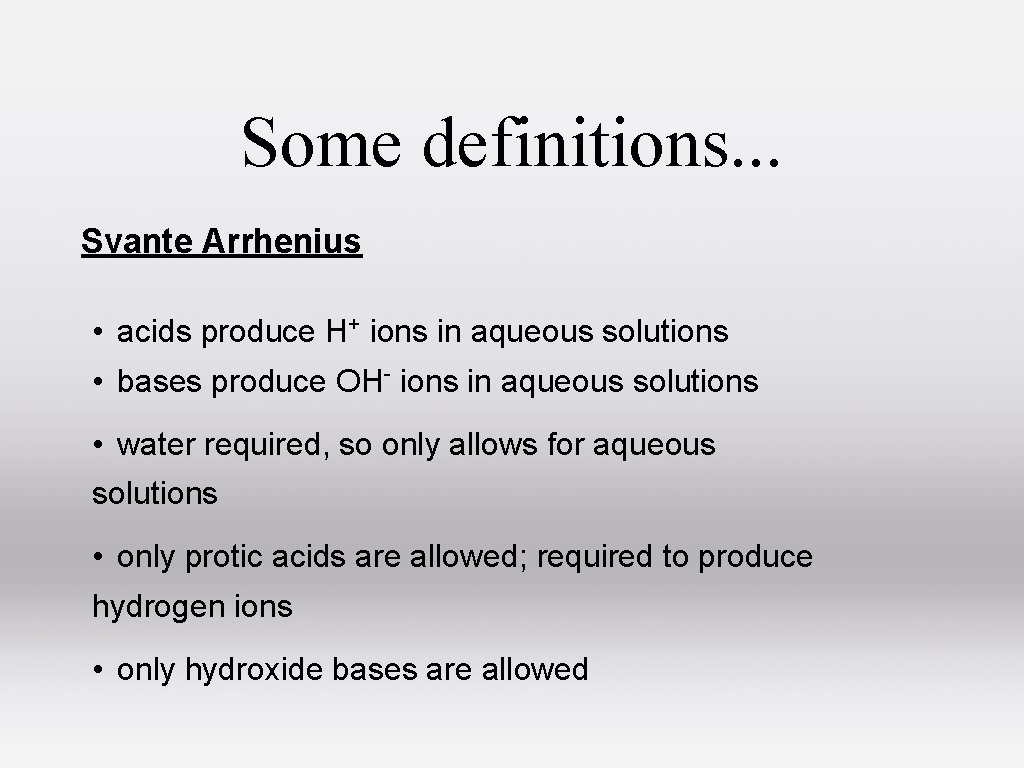
Some definitions. . . Svante Arrhenius • acids produce H+ ions in aqueous solutions • bases produce OH- ions in aqueous solutions • water required, so only allows for aqueous solutions • only protic acids are allowed; required to produce hydrogen ions • only hydroxide bases are allowed
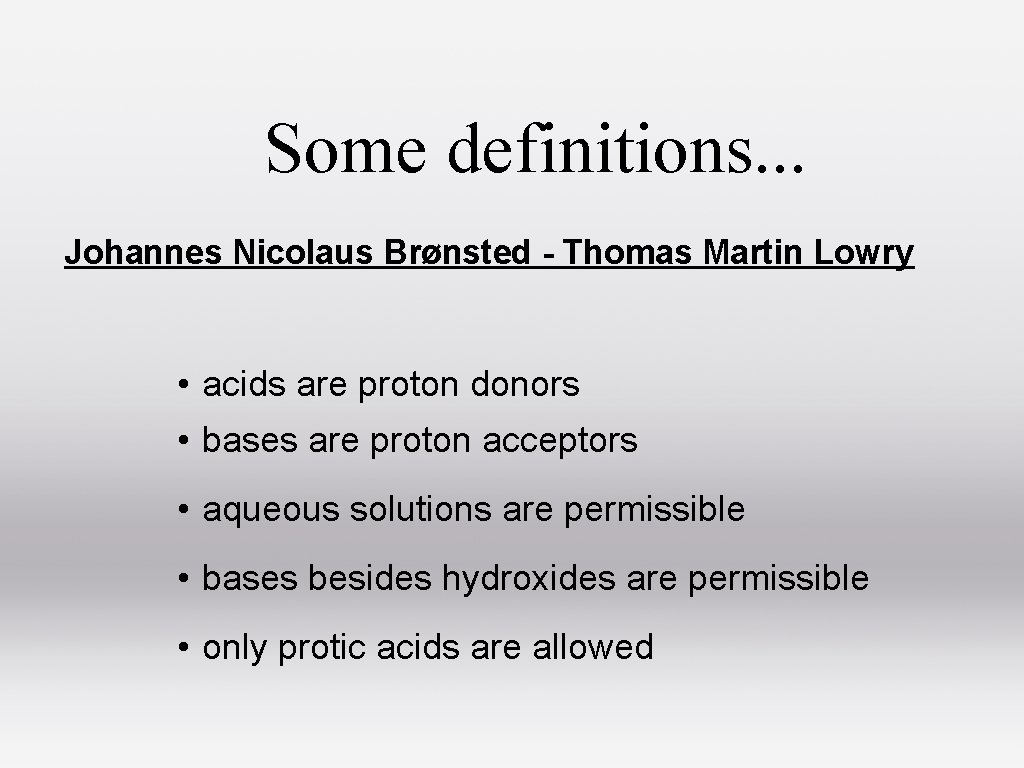
Some definitions. . . Johannes Nicolaus Brønsted - Thomas Martin Lowry • acids are proton donors • bases are proton acceptors • aqueous solutions are permissible • bases besides hydroxides are permissible • only protic acids are allowed
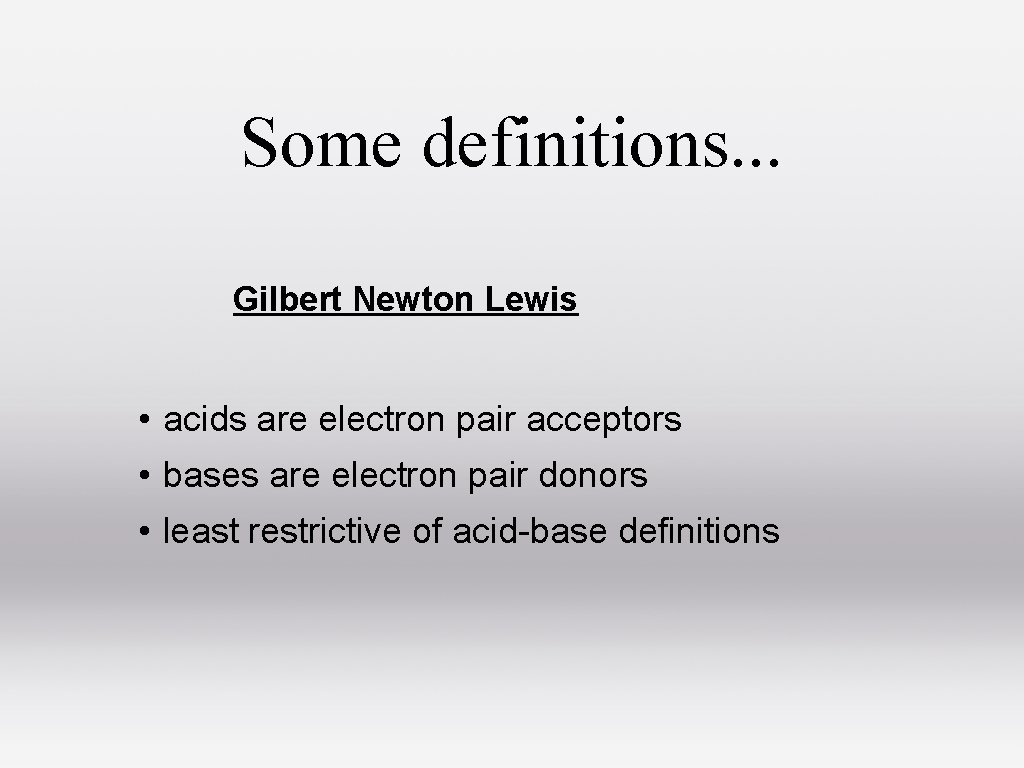
Some definitions. . . Gilbert Newton Lewis • acids are electron pair acceptors • bases are electron pair donors • least restrictive of acid-base definitions
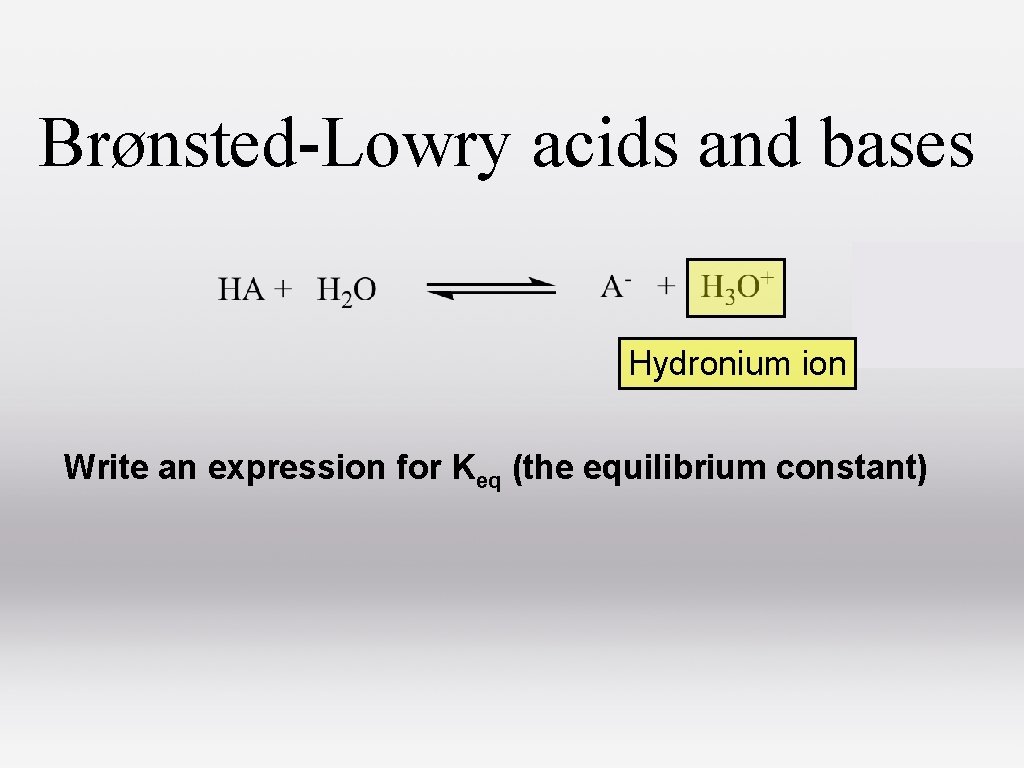
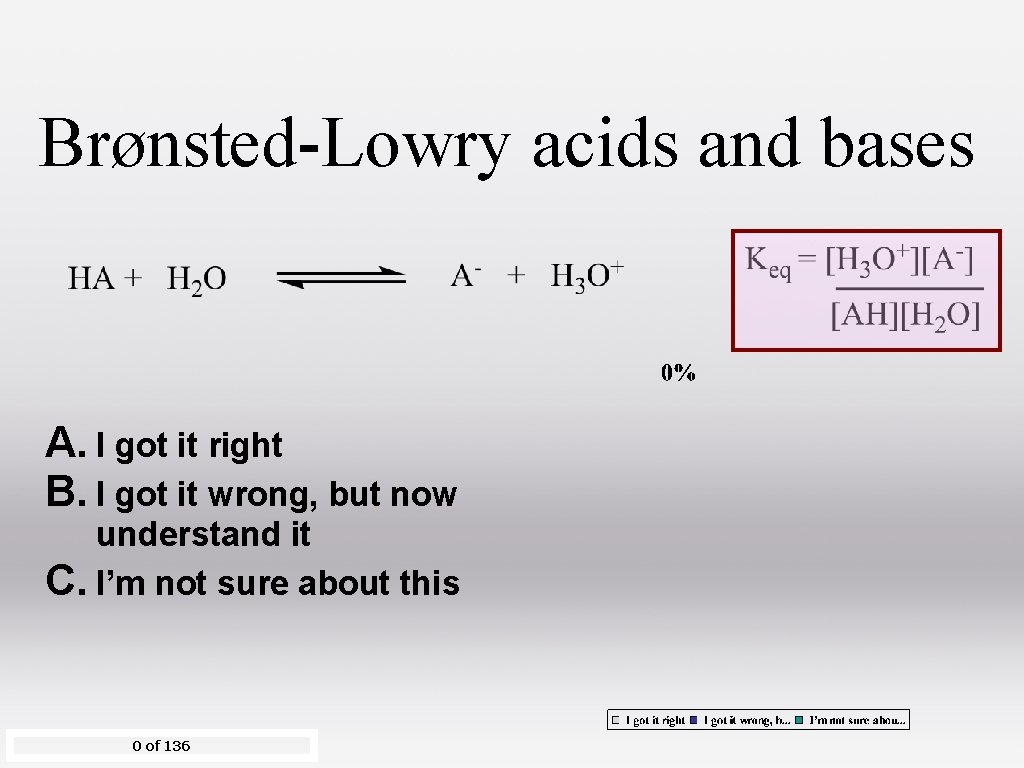
Brønsted-Lowry acids and bases Hydronium ion Write an expression for Keq (the equilibrium constant)
Brønsted-Lowry acids and bases A. I got it right B. I got it wrong, but now understand it C. I’m not sure about this 0 of 136
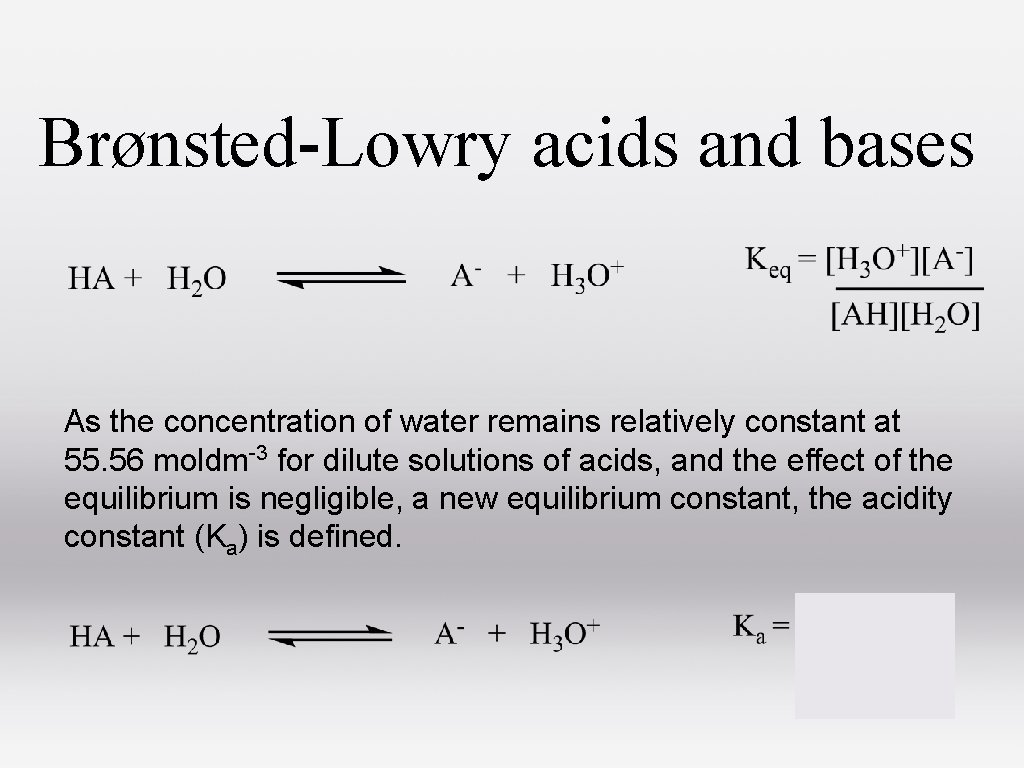
Brønsted-Lowry acids and bases As the concentration of water remains relatively constant at 55. 56 moldm-3 for dilute solutions of acids, and the effect of the equilibrium is negligible, a new equilibrium constant, the acidity constant (Ka) is defined.
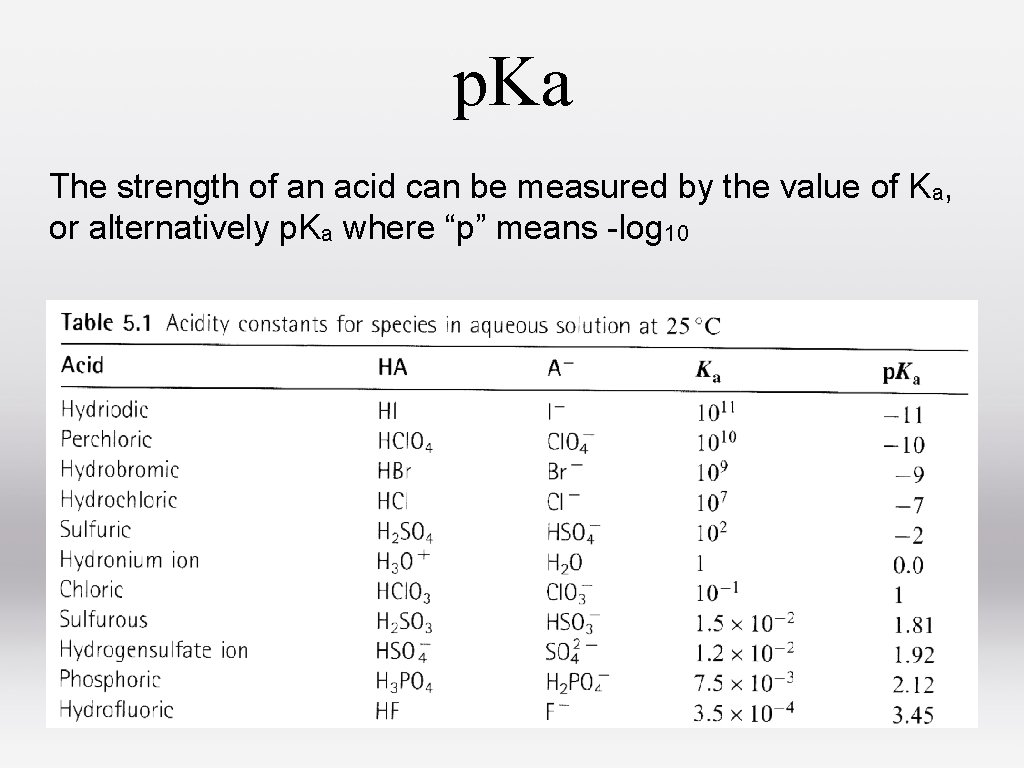
p. Ka The strength of an acid can be measured by the value of Ka, or alternatively p. Ka where “p” means -log 10
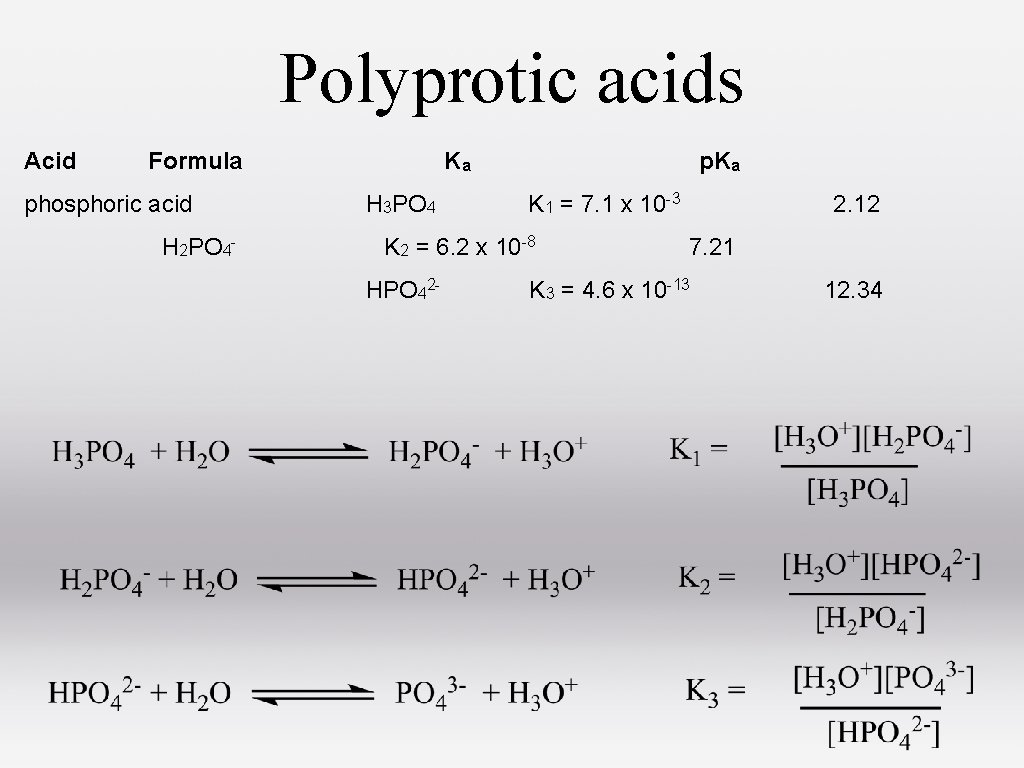
Polyprotic acids Acid Formula phosphoric acid H 2 PO 4 - Ka p. Ka H 3 PO 4 K 1 = 7. 1 x 10 -3 2. 12 K 2 = 6. 2 x 10 -8 7. 21 HPO 42 - K 3 = 4. 6 x 10 -13 12. 34
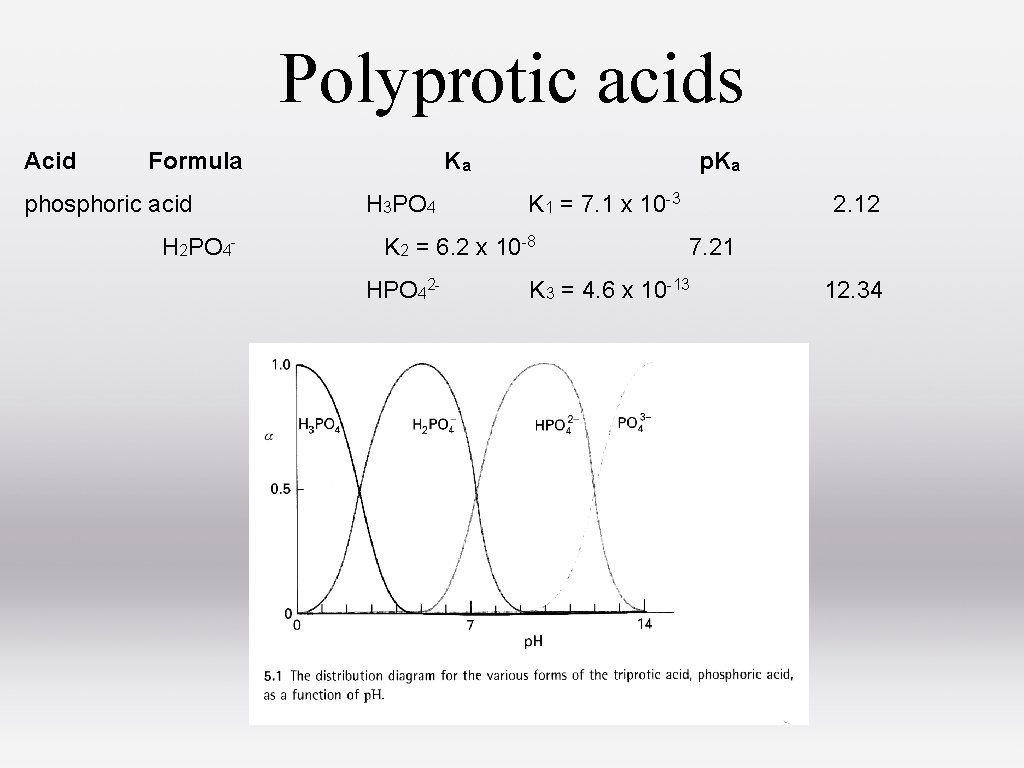
Polyprotic acids Acid Formula phosphoric acid H 2 PO 4 - Ka p. Ka H 3 PO 4 K 1 = 7. 1 x 10 -3 2. 12 K 2 = 6. 2 x 10 -8 7. 21 HPO 42 - K 3 = 4. 6 x 10 -13 12. 34
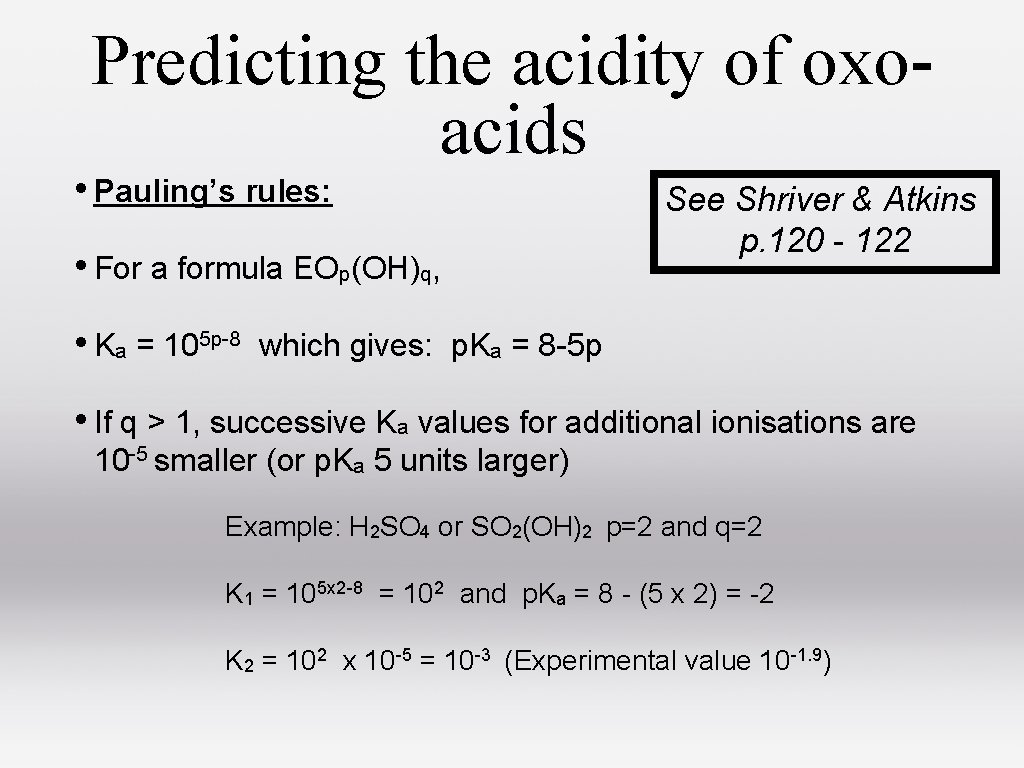
Predicting the acidity of oxoacids • Pauling’s rules: • For a formula EOp(OH)q, See Shriver & Atkins p. 120 - 122 • Ka = 105 p-8 which gives: p. Ka = 8 -5 p • If q > 1, successive Ka values for additional ionisations are 10 -5 smaller (or p. Ka 5 units larger) Example: H 2 SO 4 or SO 2(OH)2 p=2 and q=2 K 1 = 105 x 2 -8 = 102 and p. Ka = 8 - (5 x 2) = -2 K 2 = 102 x 10 -5 = 10 -3 (Experimental value 10 -1. 9)
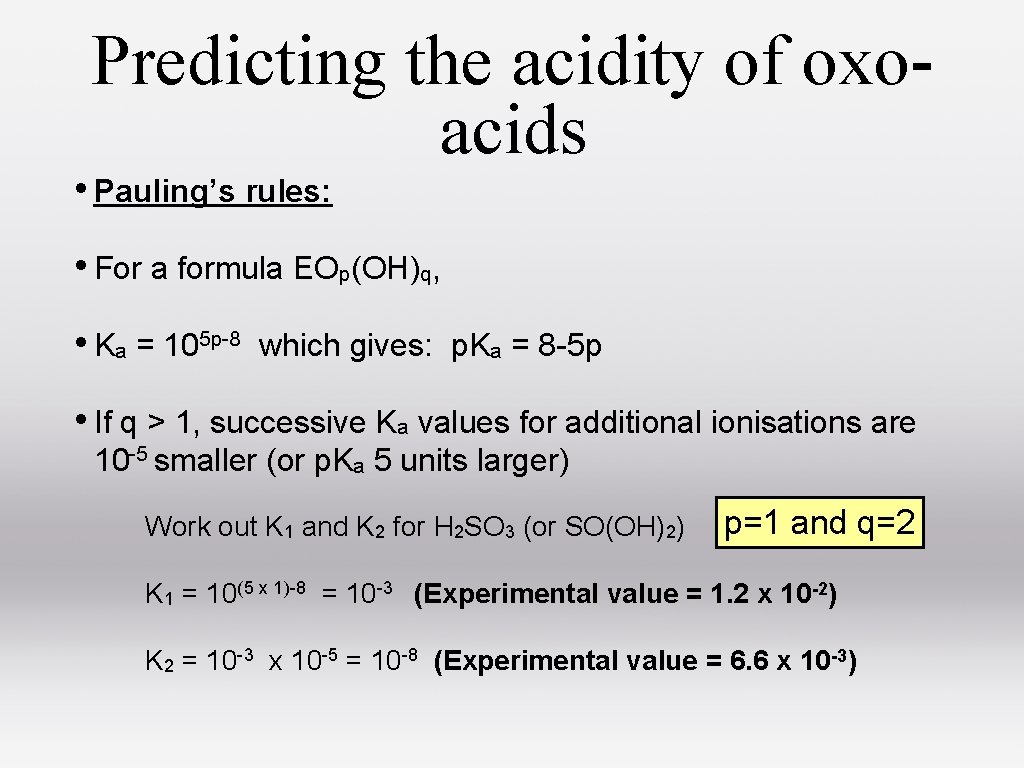
Predicting the acidity of oxoacids • Pauling’s rules: • For a formula EOp(OH)q, • Ka = 105 p-8 which gives: p. Ka = 8 -5 p • If q > 1, successive Ka values for additional ionisations are 10 -5 smaller (or p. Ka 5 units larger) Work out K 1 and K 2 for H 2 SO 3 (or SO(OH)2) p=1 and q=2 K 1 = 10(5 x 1)-8 = 10 -3 (Experimental value = 1. 2 x 10 -2) K 2 = 10 -3 x 10 -5 = 10 -8 (Experimental value = 6. 6 x 10 -3)
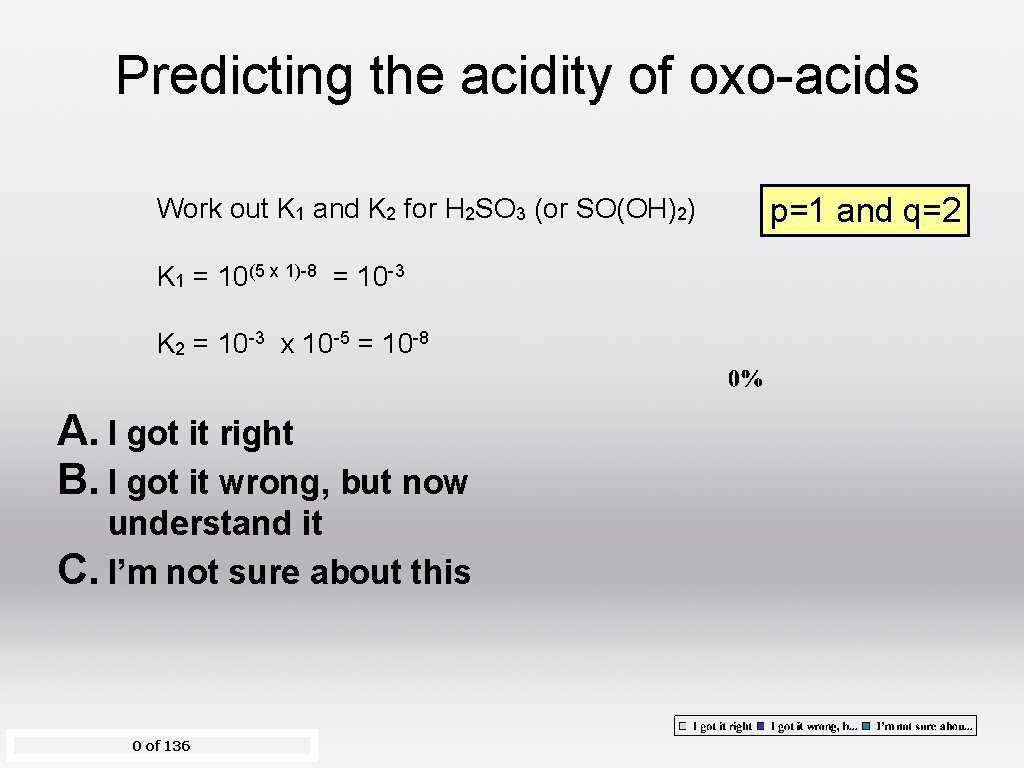
Predicting the acidity of oxo-acids Work out K 1 and K 2 for H 2 SO 3 (or SO(OH)2) K 1 = 10(5 x 1)-8 = 10 -3 K 2 = 10 -3 x 10 -5 = 10 -8 A. I got it right B. I got it wrong, but now understand it C. I’m not sure about this 0 of 136 p=1 and q=2
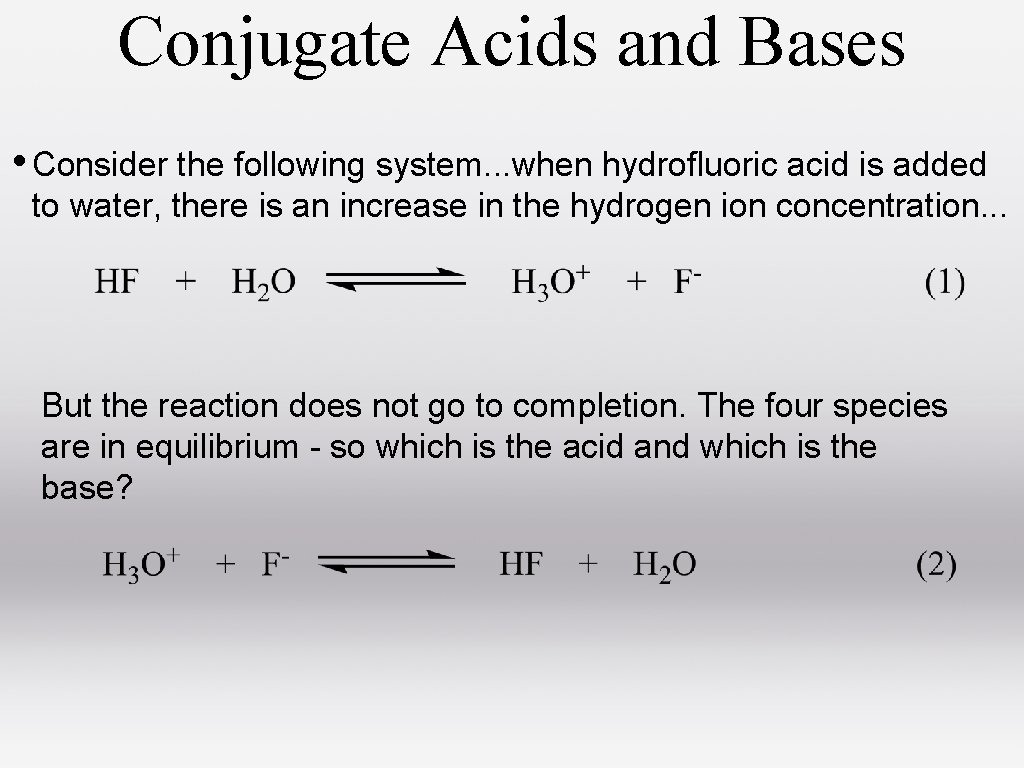
Conjugate Acids and Bases • Consider the following system. . . when hydrofluoric acid is added to water, there is an increase in the hydrogen ion concentration. . . But the reaction does not go to completion. The four species are in equilibrium - so which is the acid and which is the base?
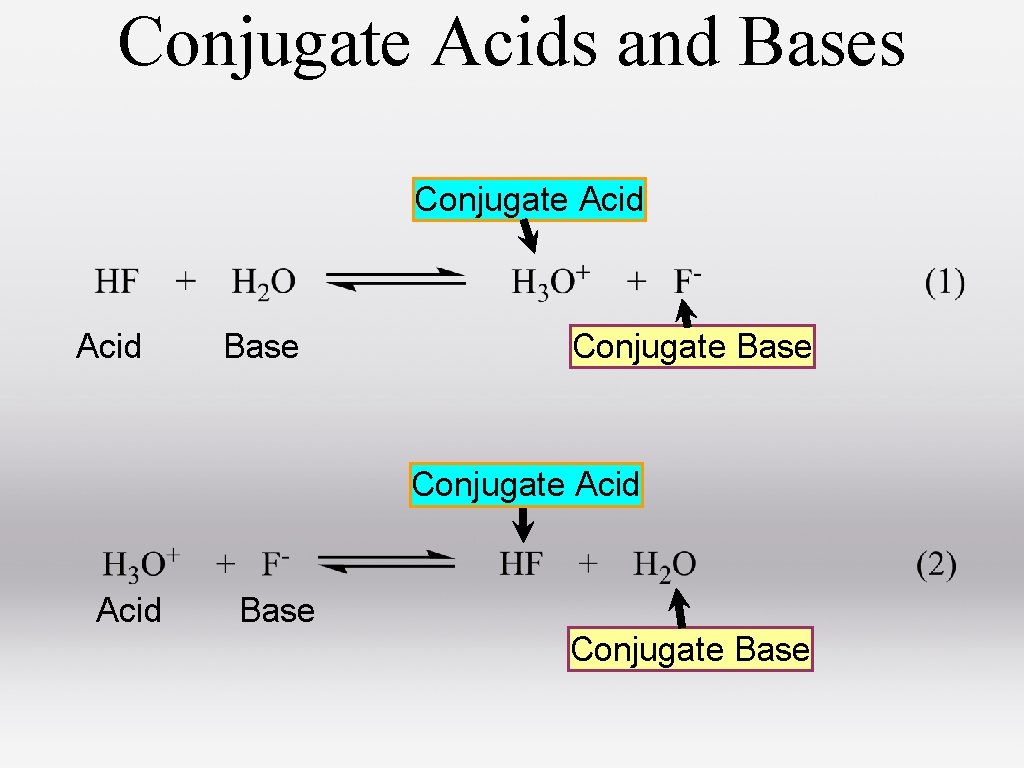
Conjugate Acids and Bases Conjugate Acid Base Conjugate Base
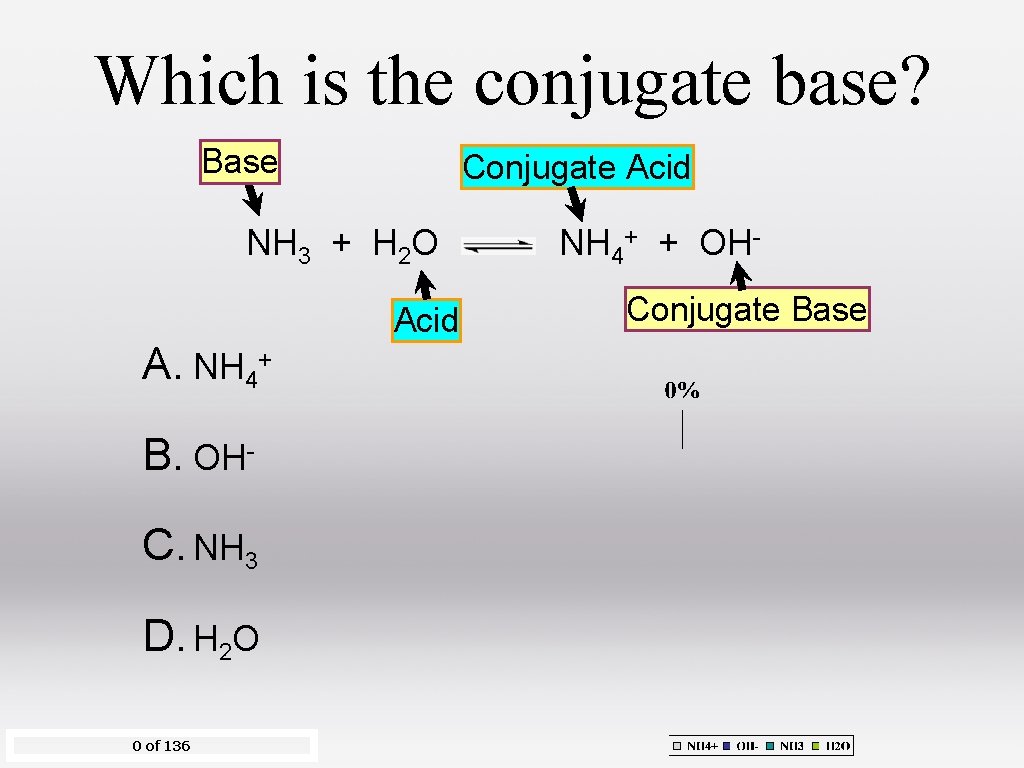
Which is the conjugate base? Base Conjugate Acid NH 3 + H 2 O NH 4+ + OH- A. NH 4+ B. OHC. NH 3 D. H 2 O 0 of 136 Acid Conjugate Base
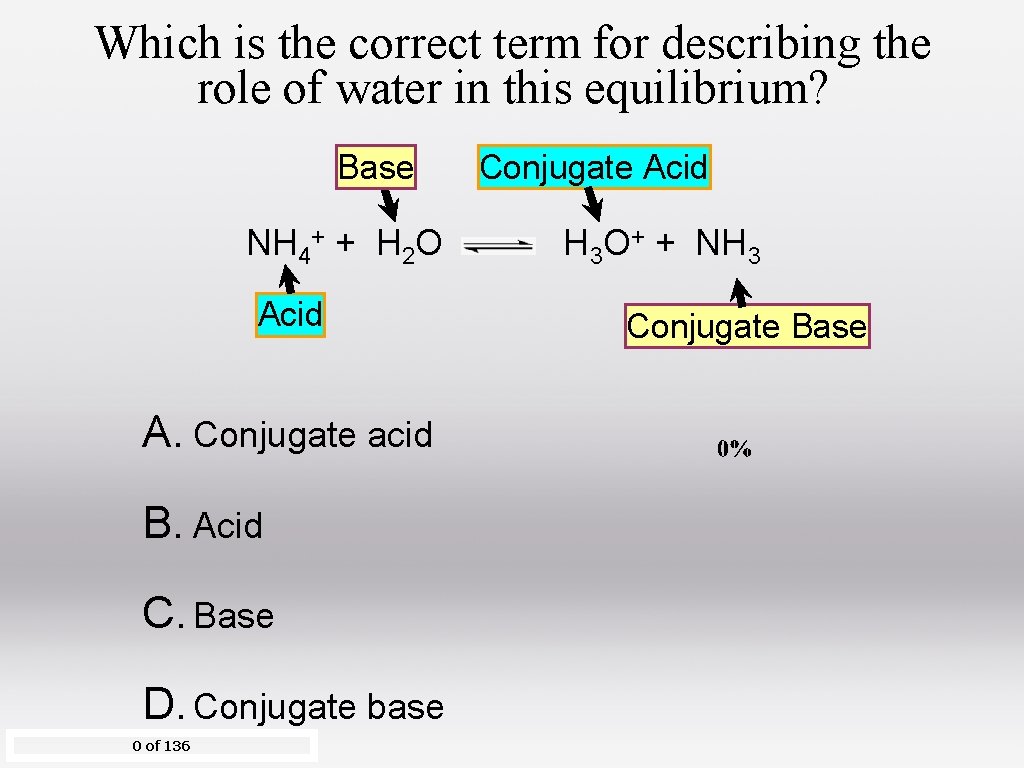
Which is the correct term for describing the role of water in this equilibrium? Base Conjugate Acid NH 4+ + H 2 O H 3 O+ + NH 3 Acid A. Conjugate acid B. Acid C. Base D. Conjugate base 0 of 136 Conjugate Base
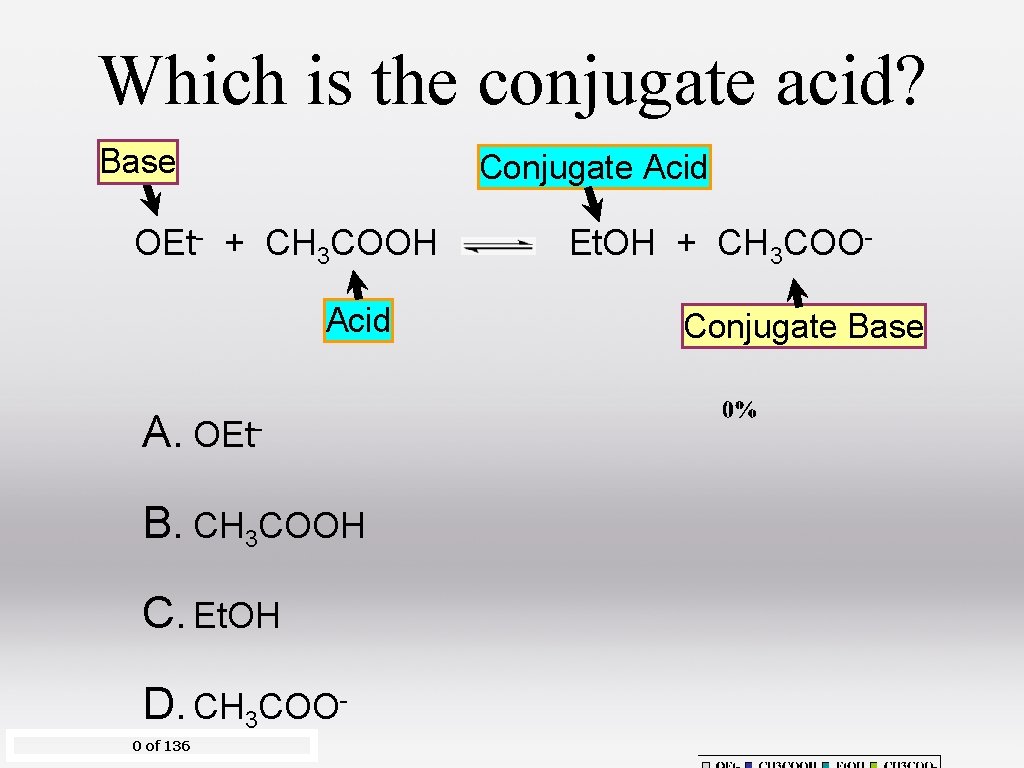
Which is the conjugate acid? Base Conjugate Acid OEt- + CH 3 COOH Et. OH + CH 3 COOAcid A. OEt. B. CH 3 COOH C. Et. OH D. CH 3 COO 0 of 136 Conjugate Base
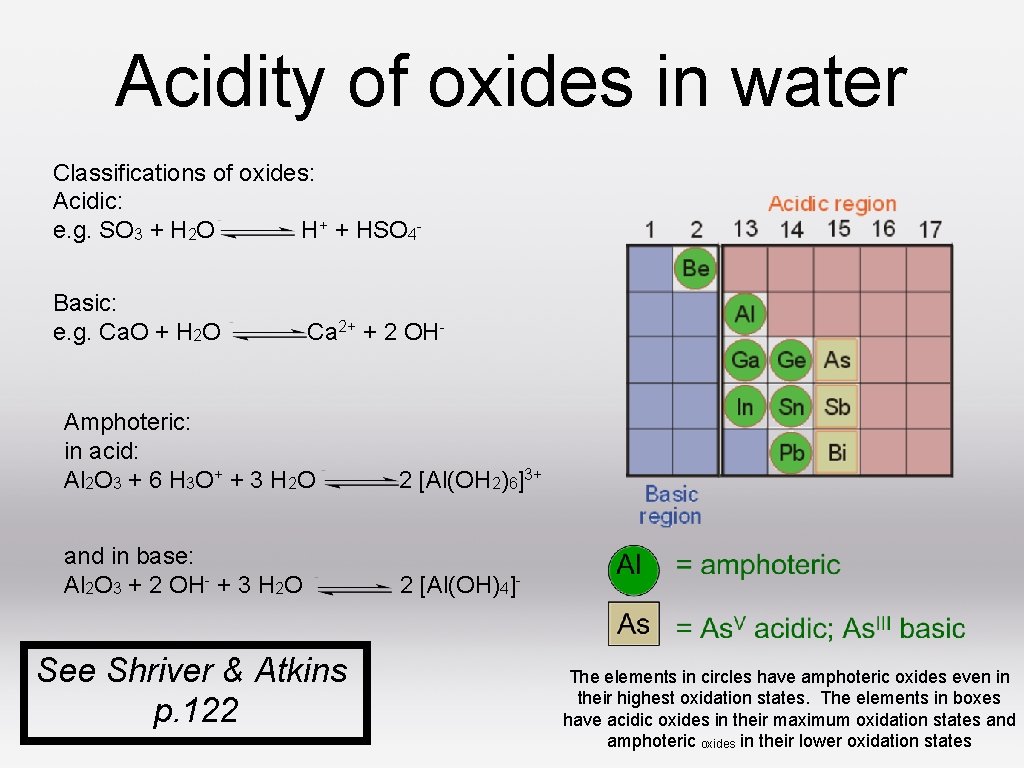
Acidity of oxides in water Classifications of oxides: Acidic: e. g. SO 3 + H 2 O H+ + HSO 4 Basic: e. g. Ca. O + H 2 O Ca 2+ + 2 OH- Amphoteric: in acid: Al 2 O 3 + 6 H 3 O+ + 3 H 2 O 2 [Al(OH 2)6]3+ and in base: Al 2 O 3 + 2 OH- + 3 H 2 O 2 [Al(OH)4]- See Shriver & Atkins p. 122 The elements in circles have amphoteric oxides even in their highest oxidation states. The elements in boxes have acidic oxides in their maximum oxidation states and amphoteric oxides in their lower oxidation states
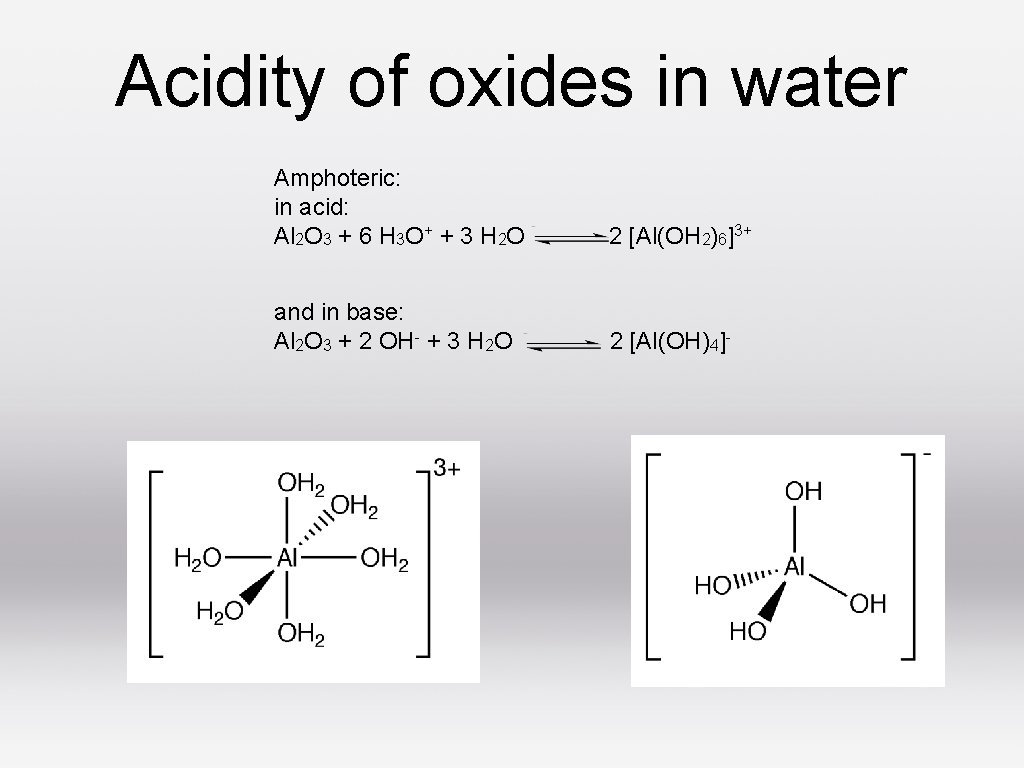
Acidity of oxides in water Amphoteric: in acid: Al 2 O 3 + 6 H 3 O+ + 3 H 2 O 2 [Al(OH 2)6]3+ and in base: Al 2 O 3 + 2 OH- + 3 H 2 O 2 [Al(OH)4]-
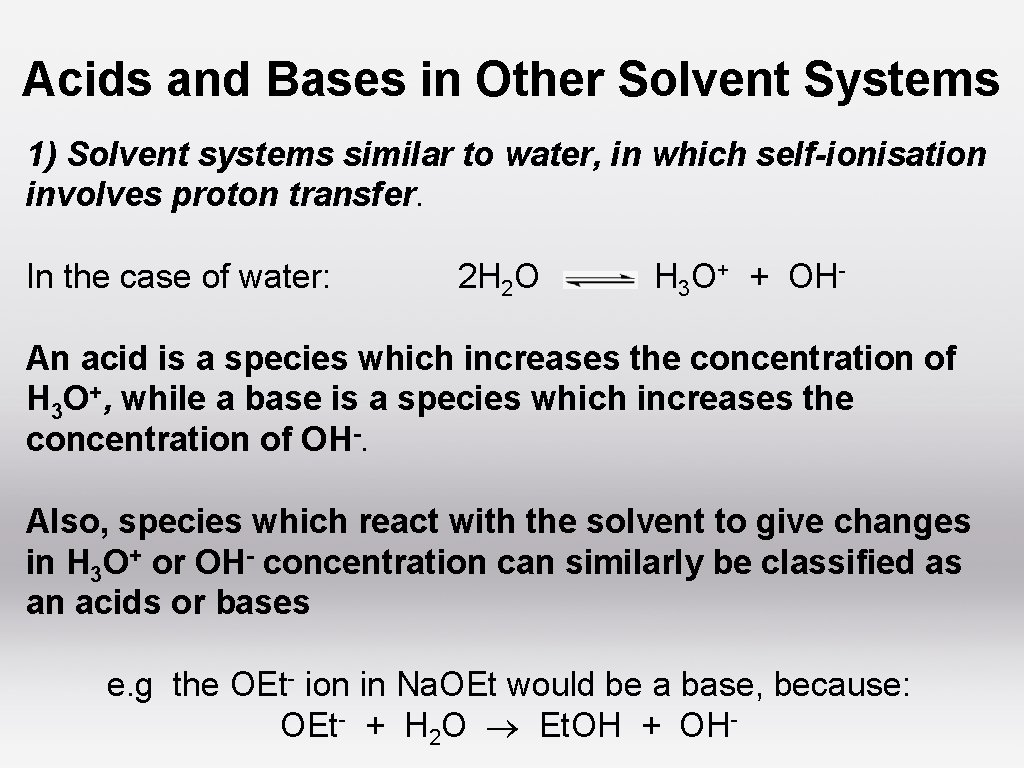
Acids and Bases in Other Solvent Systems 1) Solvent systems similar to water, in which self-ionisation involves proton transfer. In the case of water: 2 H 2 O H 3 O+ + OH- An acid is a species which increases the concentration of H 3 O+, while a base is a species which increases the concentration of OH-. Also, species which react with the solvent to give changes in H 3 O+ or OH- concentration can similarly be classified as an acids or bases e. g the OEt- ion in Na. OEt would be a base, because: OEt- + H 2 O Et. OH + OH-
Acids and Bases in Other Solvent Systems Liquid ammonia is another solvent which, like water, can undergo self-ionisation. Write an equation for the self-ionisation of ammonia.
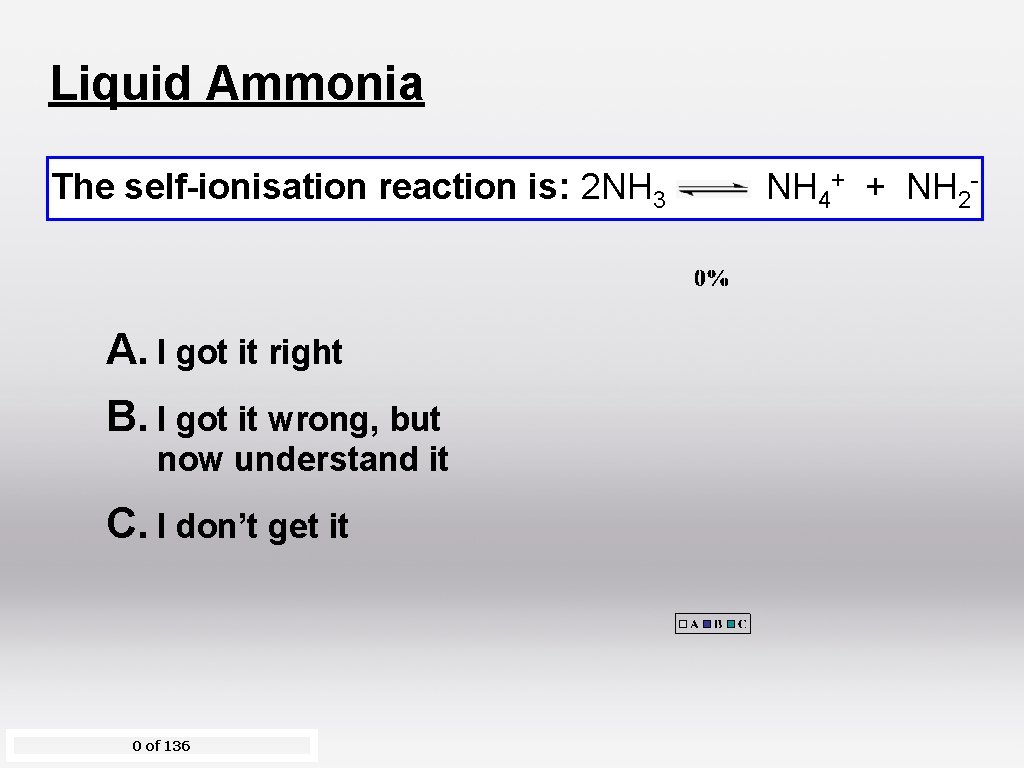
Liquid Ammonia The self-ionisation reaction is: 2 NH 3 NH 4+ + NH 2 - A. I got it right B. I got it wrong, but now understand it C. I don’t get it 0 of 136
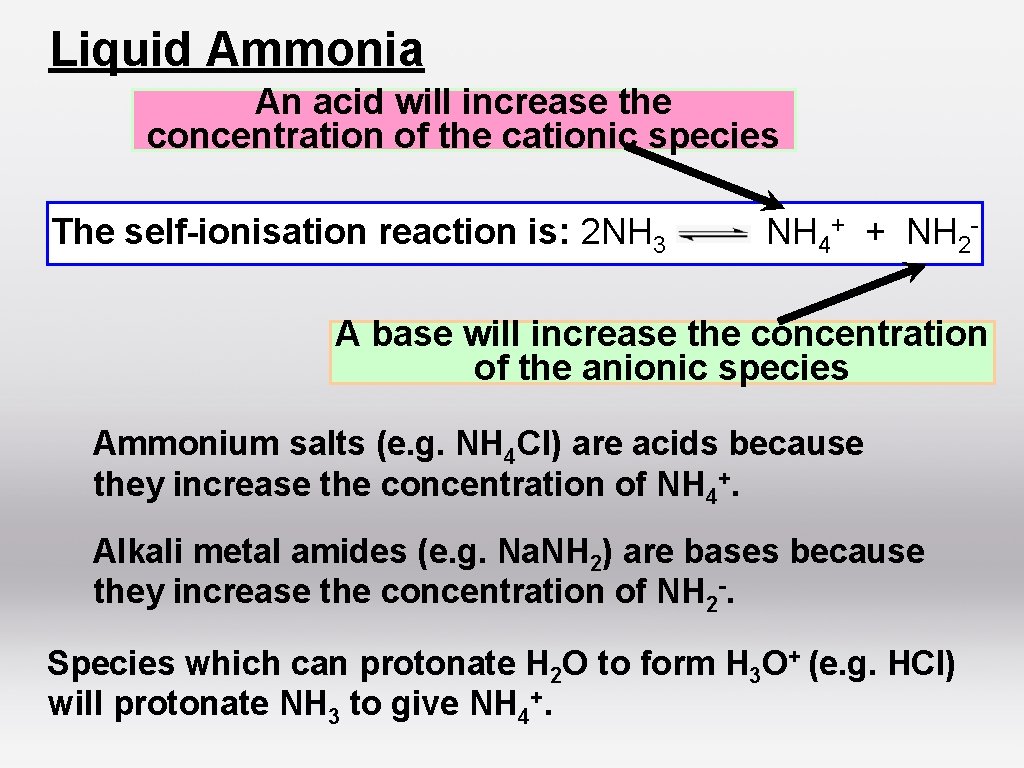
Liquid Ammonia An acid will increase the concentration of the cationic species The self-ionisation reaction is: 2 NH 3 NH 4+ + NH 2 A base will increase the concentration of the anionic species Ammonium salts (e. g. NH 4 Cl) are acids because they increase the concentration of NH 4+. Alkali metal amides (e. g. Na. NH 2) are bases because they increase the concentration of NH 2 -. Species which can protonate H 2 O to form H 3 O+ (e. g. HCl) will protonate NH 3 to give NH 4+.
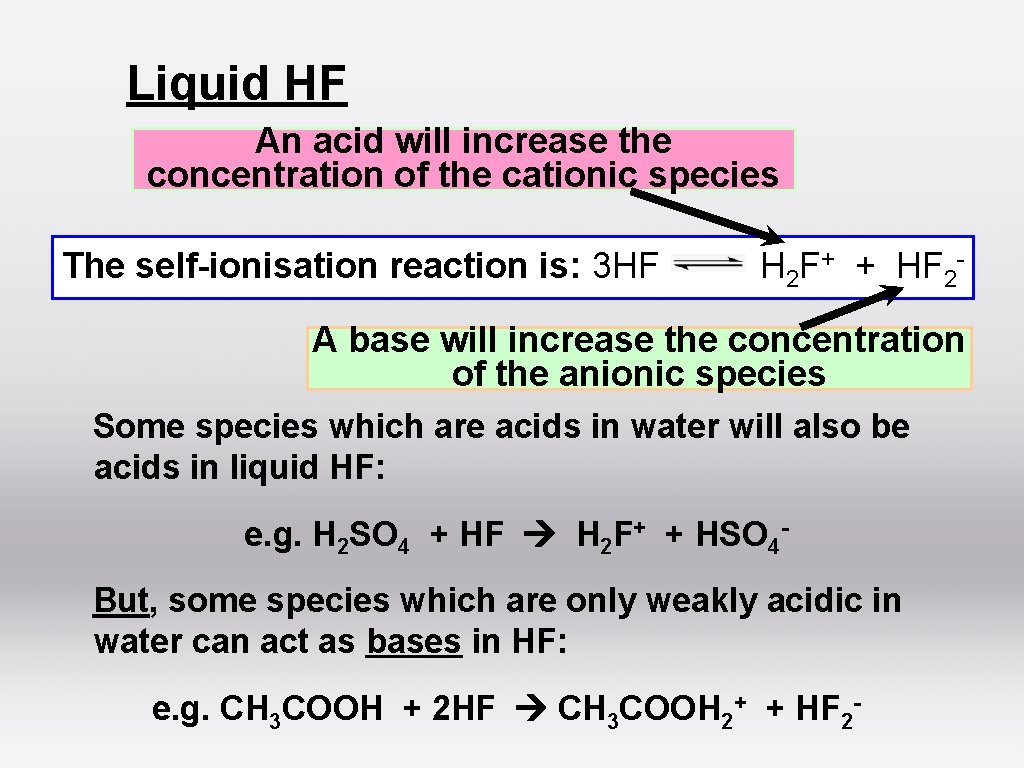
Liquid HF An acid will increase the concentration of the cationic species The self-ionisation reaction is: 3 HF H 2 F+ + HF 2 A base will increase the concentration of the anionic species Some species which are acids in water will also be acids in liquid HF: e. g. H 2 SO 4 + HF H 2 F+ + HSO 4 But, some species which are only weakly acidic in water can act as bases in HF: e. g. CH 3 COOH + 2 HF CH 3 COOH 2+ + HF 2 -
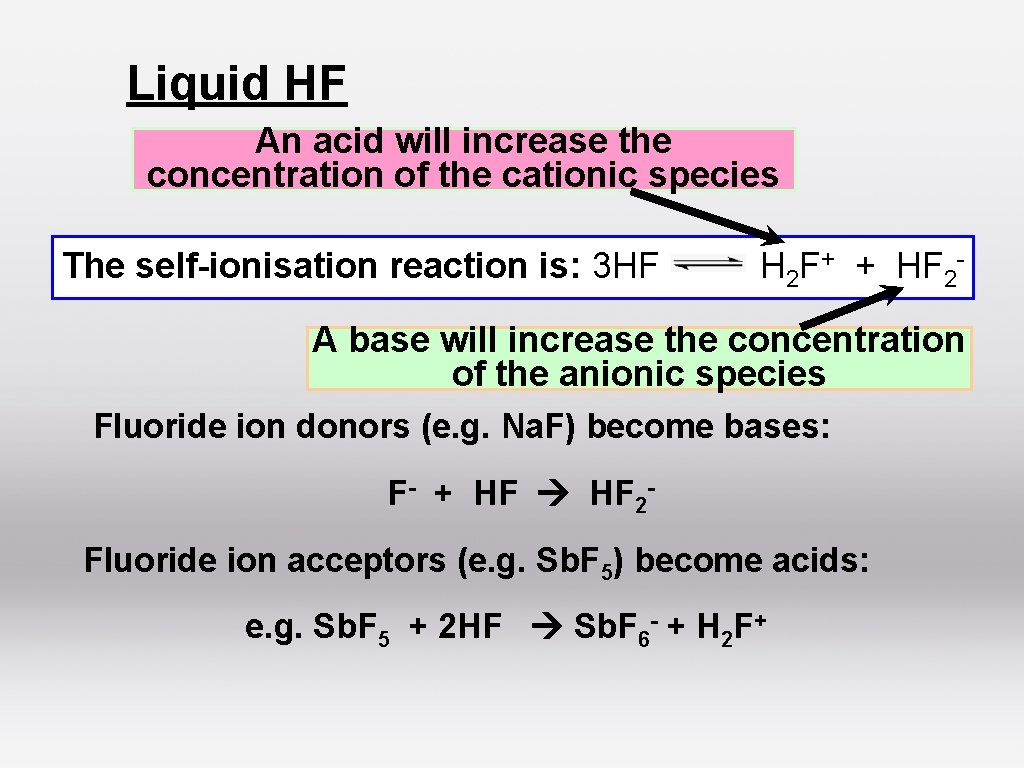
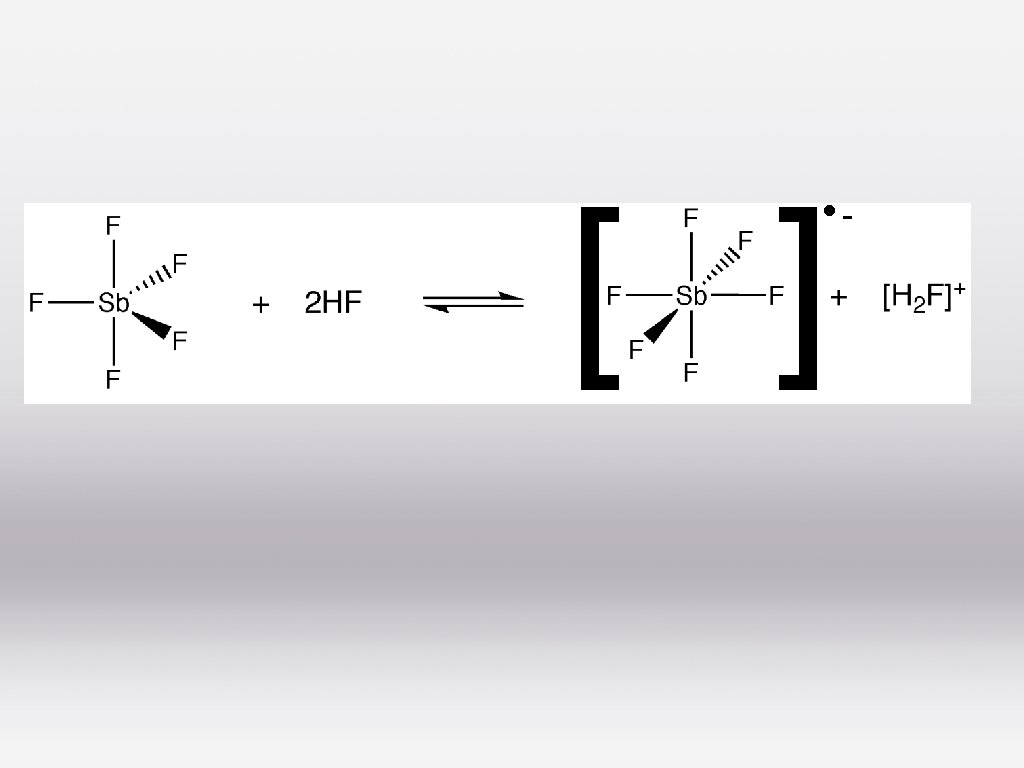
Liquid HF An acid will increase the concentration of the cationic species Theself-ionisationreactionis: 3 HF H 3 HF H 22 FF++ + HF 22 - A base will increase the concentration of the anionic species Fluoride ion donors (e. g. Na. F) become bases: F- + HF 2 Fluoride ion acceptors (e. g. Sb. F 5) become acids: e. g. Sb. F 5 + 2 HF Sb. F 6 - + H 2 F+
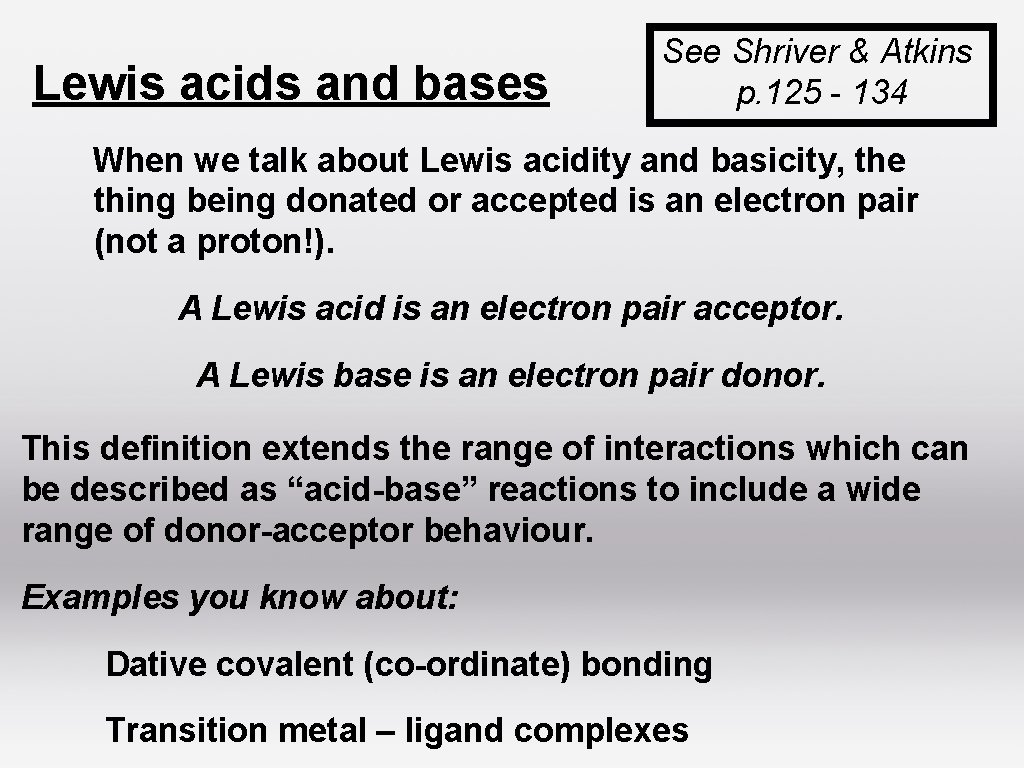
Lewis acids and bases See Shriver & Atkins p. 125 - 134 When we talk about Lewis acidity and basicity, the thing being donated or accepted is an electron pair (not a proton!). A Lewis acid is an electron pair acceptor. A Lewis base is an electron pair donor. This definition extends the range of interactions which can be described as “acid-base” reactions to include a wide range of donor-acceptor behaviour. Examples you know about: Dative covalent (co-ordinate) bonding Transition metal – ligand complexes
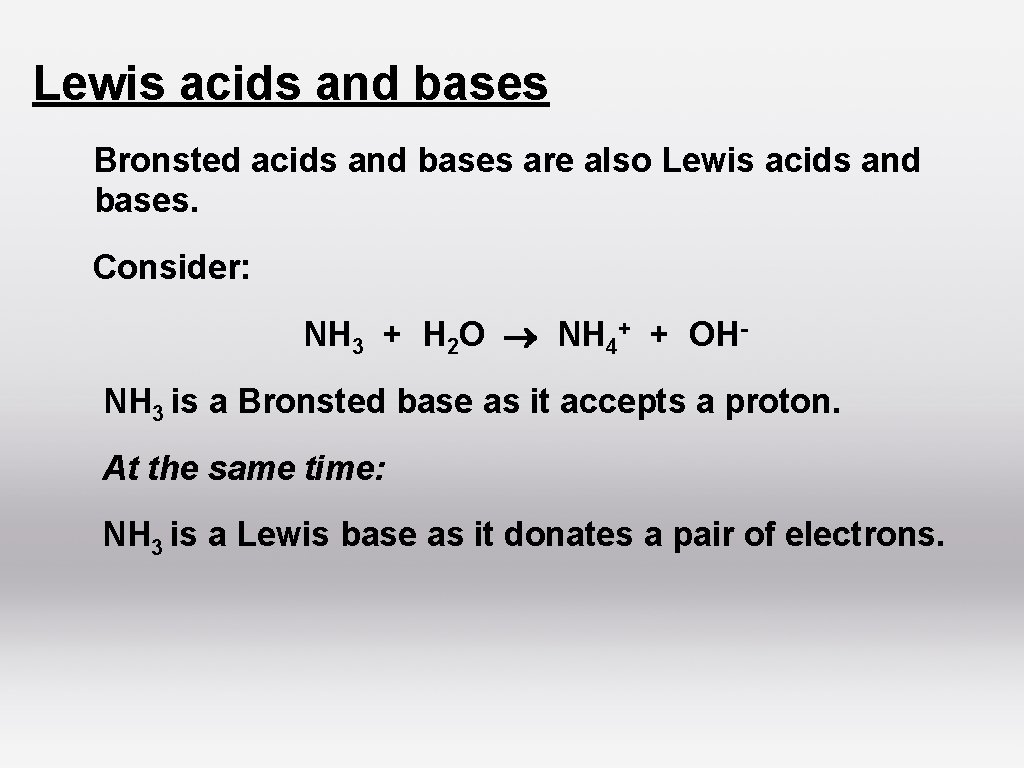
Lewis acids and bases Bronsted acids and bases are also Lewis acids and bases. Consider: NH 3 + H 2 O NH 4+ + OHNH 3 is a Bronsted base as it accepts a proton. At the same time: NH 3 is a Lewis base as it donates a pair of electrons.
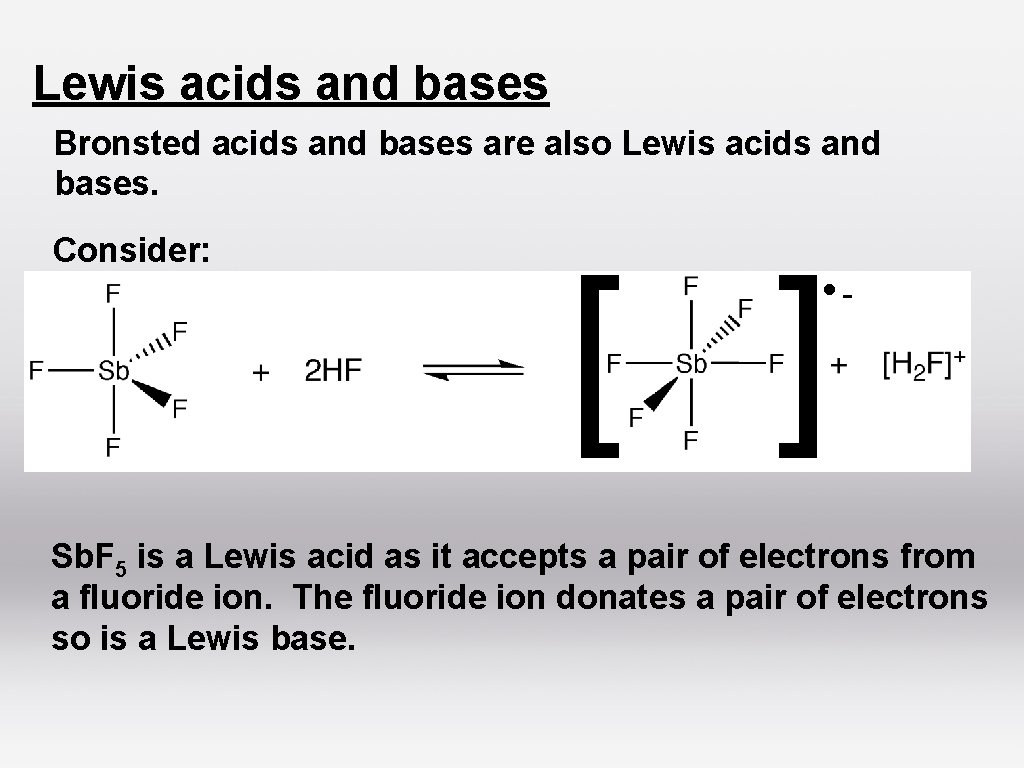
Lewis acids and bases Bronsted acids and bases are also Lewis acids and bases. Consider: [ ] • - Sb. F 5 is a Lewis acid as it accepts a pair of electrons from a fluoride ion. The fluoride ion donates a pair of electrons so is a Lewis base.
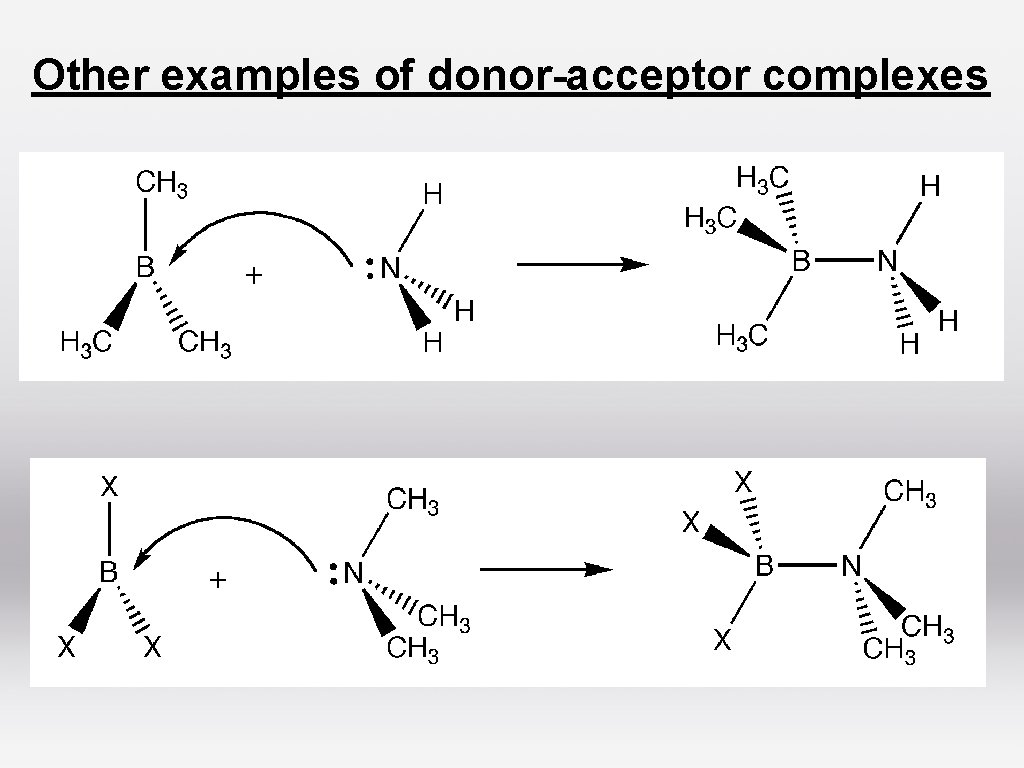
Other examples of donor-acceptor complexes
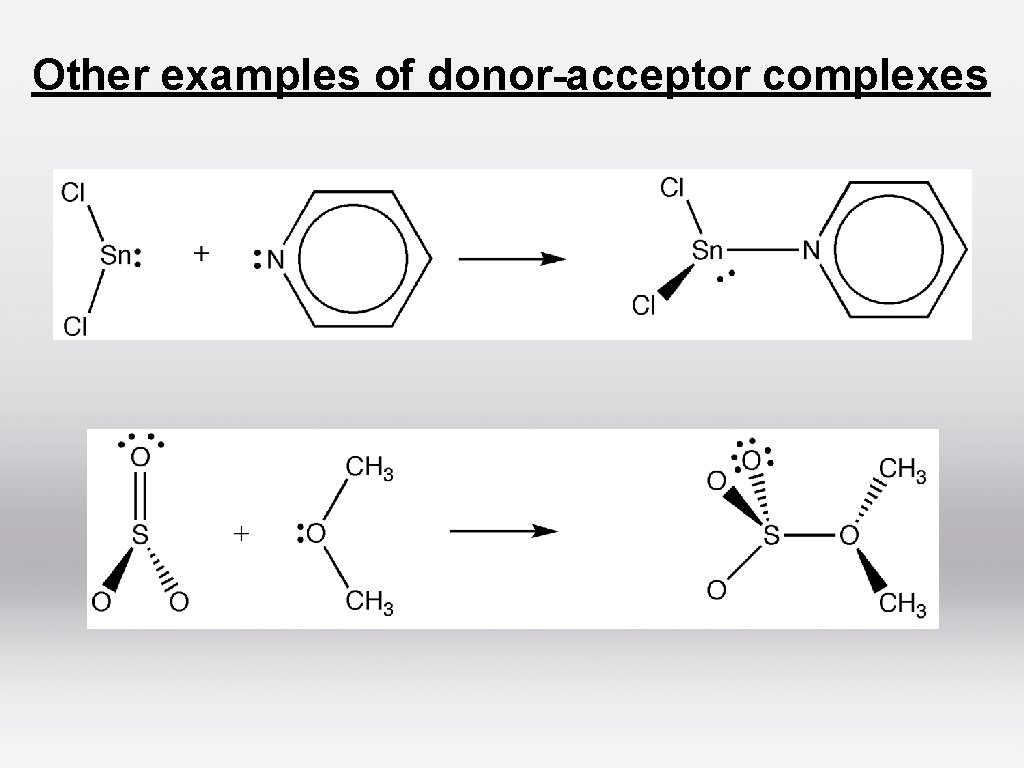
Other examples of donor-acceptor complexes
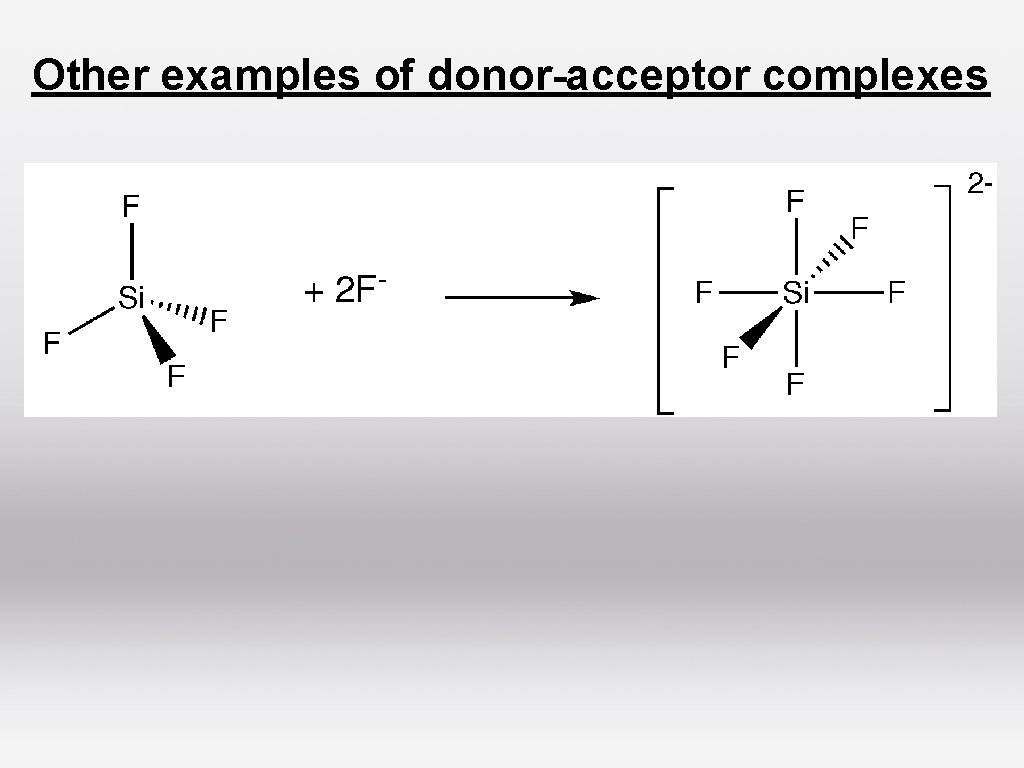
Other examples of donor-acceptor complexes
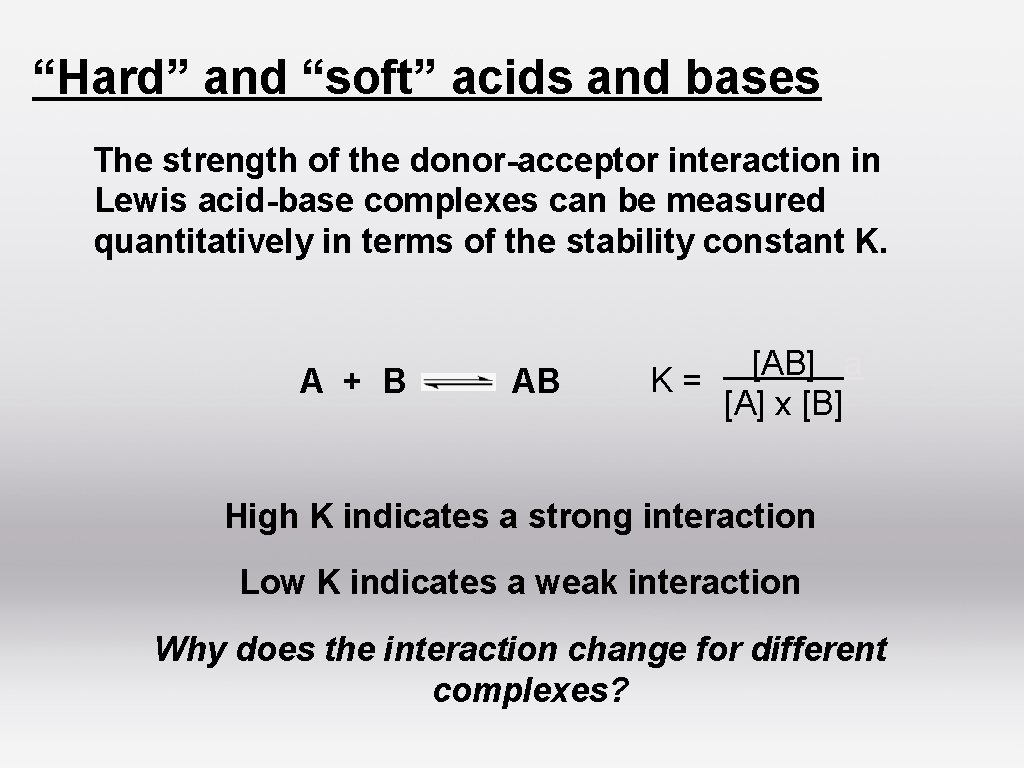
“Hard” and “soft” acids and bases The strength of the donor-acceptor interaction in Lewis acid-base complexes can be measured quantitatively in terms of the stability constant K. A + B AB [AB] a K = [A] x [B] High K indicates a strong interaction Low K indicates a weak interaction Why does the interaction change for different complexes?
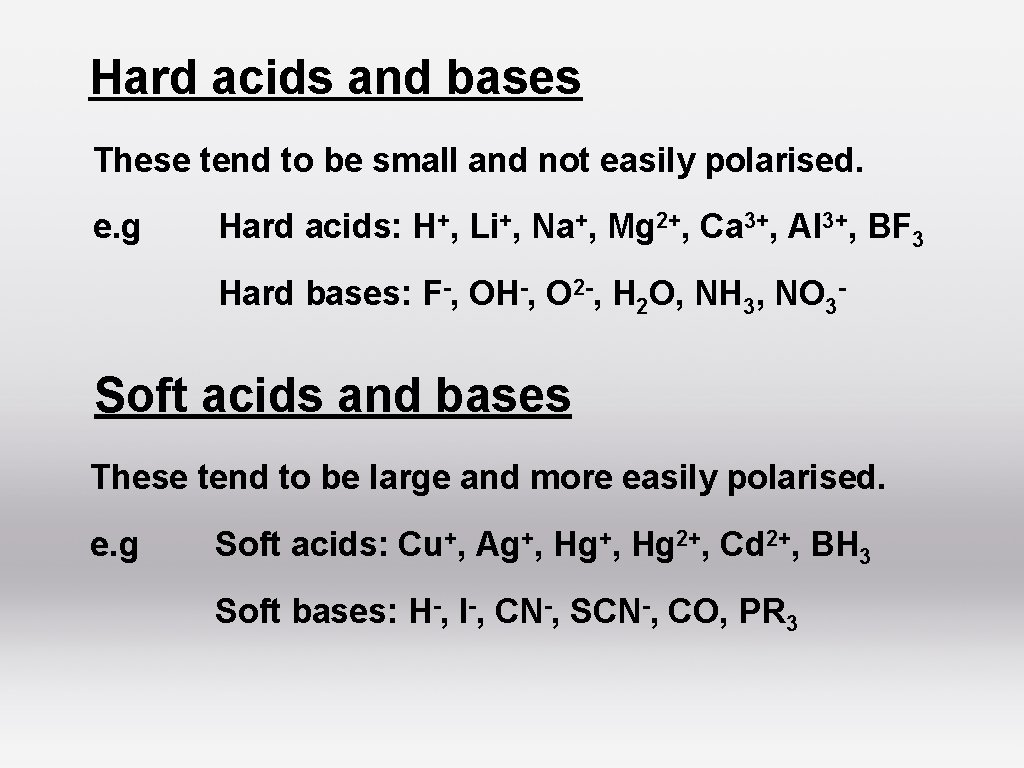
Hard acids and bases These tend to be small and not easily polarised. e. g Hard acids: H+, Li+, Na+, Mg 2+, Ca 3+, Al 3+, BF 3 Hard bases: F-, OH-, O 2 -, H 2 O, NH 3, NO 3 - Soft acids and bases These tend to be large and more easily polarised. e. g Soft acids: Cu+, Ag+, Hg 2+, Cd 2+, BH 3 Soft bases: H-, I-, CN-, SCN-, CO, PR 3
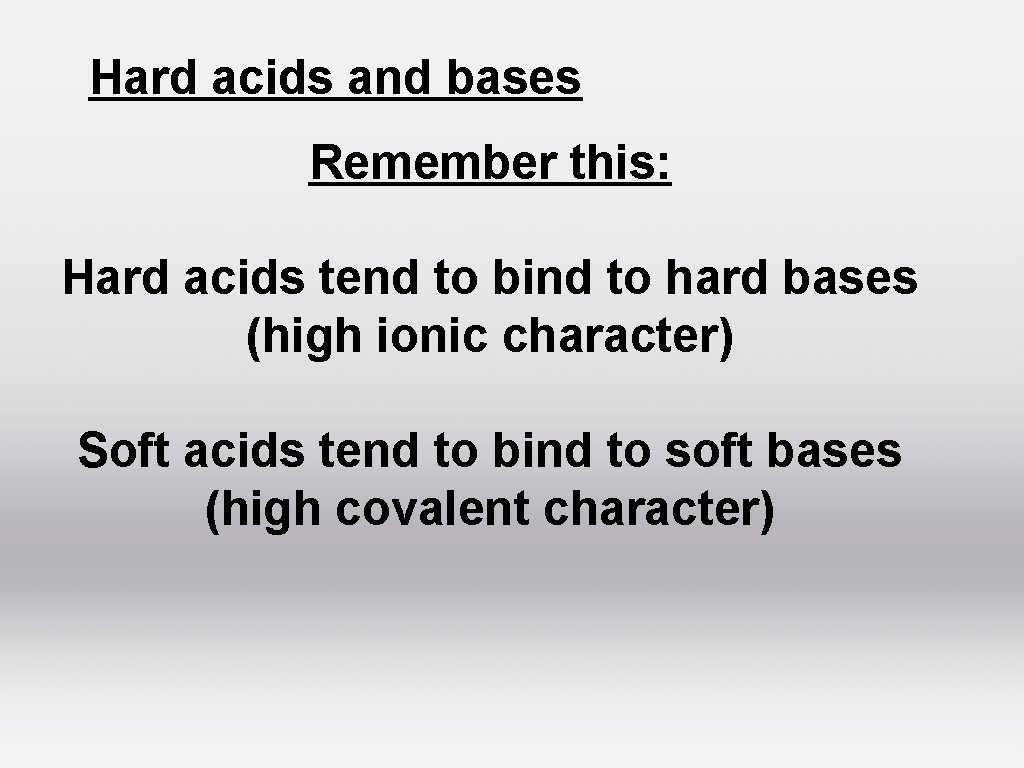
Hard acids and bases Remember this: Hard acids tend to bind to hard bases (high ionic character) Soft acids tend to bind to soft bases (high covalent character)
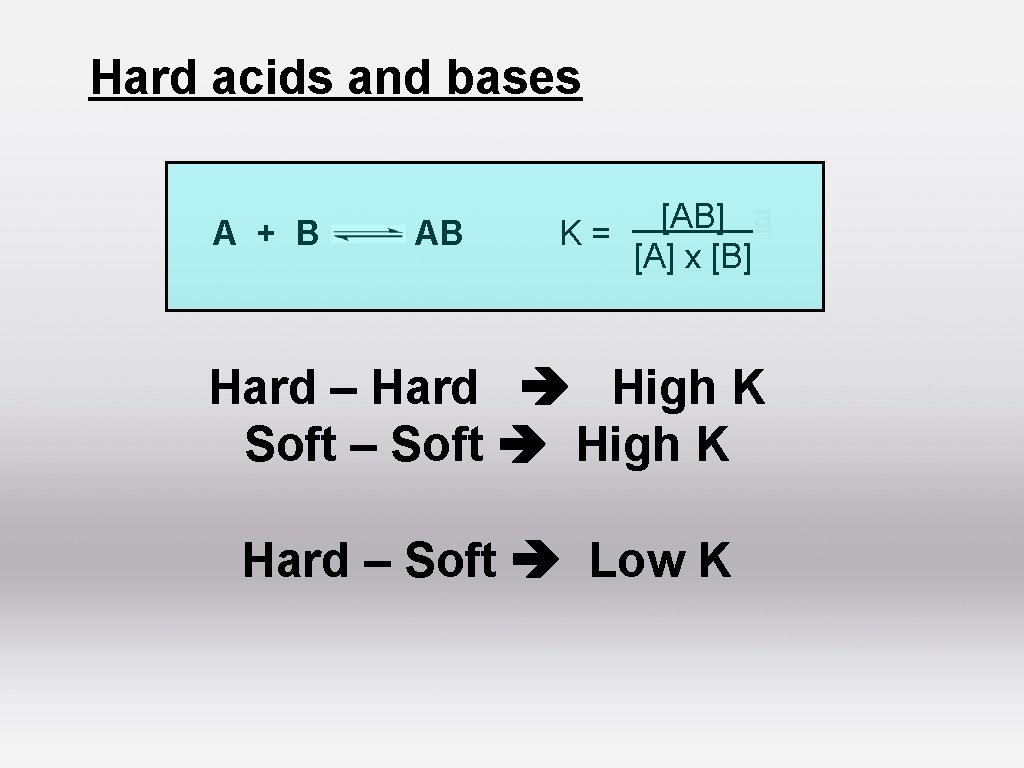
Hard acids and bases A + B AB [AB] a K = [A] x [B] Hard – Hard High K Soft – Soft High K Hard – Soft Low K
- Slides: 40