
Acid in the Atmosphere Pollution and Impact on

- Slides: 29
“Acid” in the Atmosphere Pollution and Impact on Ecosystems
Three Problems • Acid deposition • Nitrogen Eutrophication • Ground-level Ozone
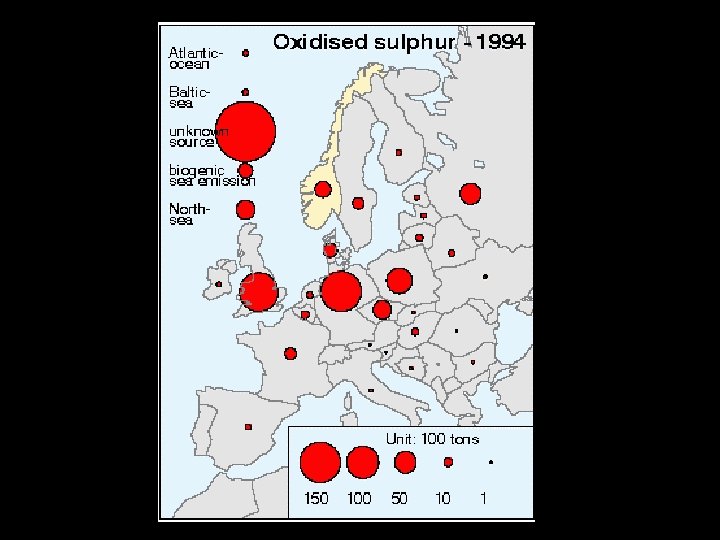
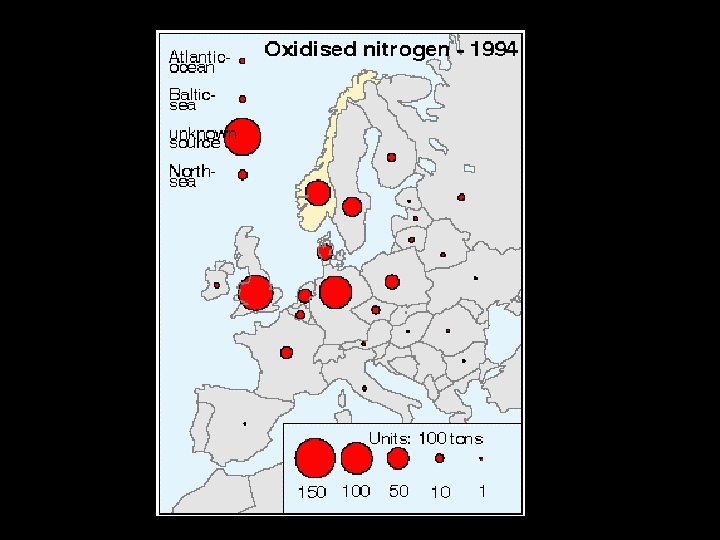
What causes acid rain? • sulphur dioxide, mainly from power stations, • oxides of nitrogen from motor vehicles and the industrial burning of fossil fuels (gas, oil and coal). • Another form of nitrogen pollution, ammonia, is emitted especially in rural areas, e. g. from manure spread on farmland from farm animals.
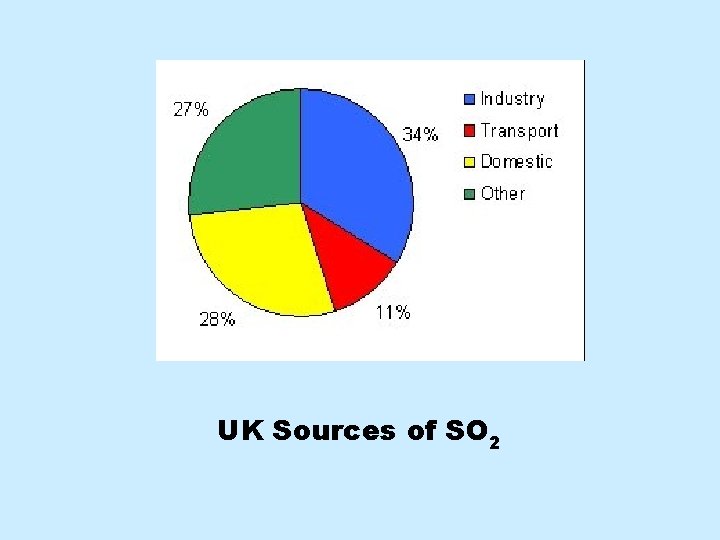
UK Sources of SO 2
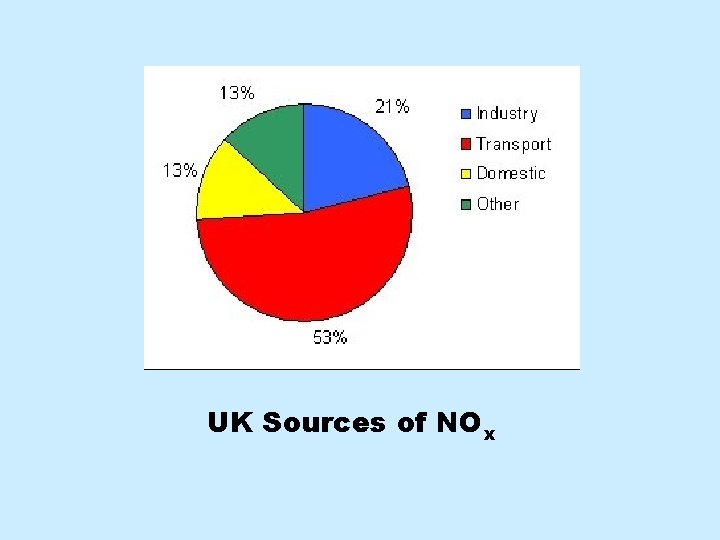
UK Sources of NOx
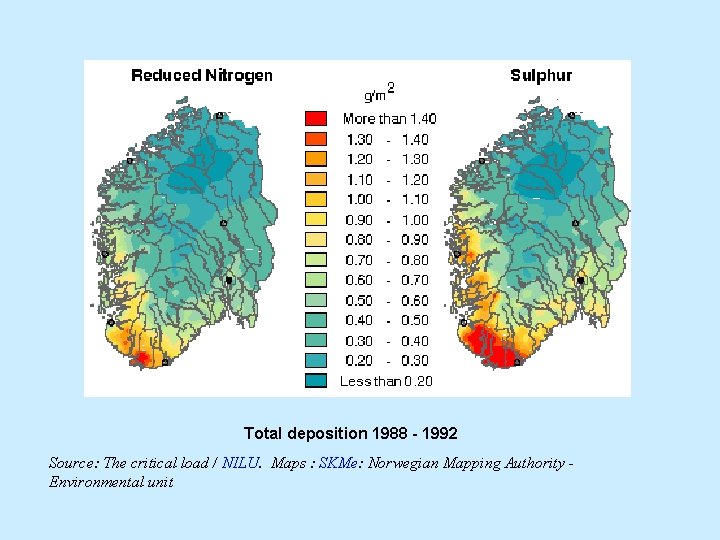
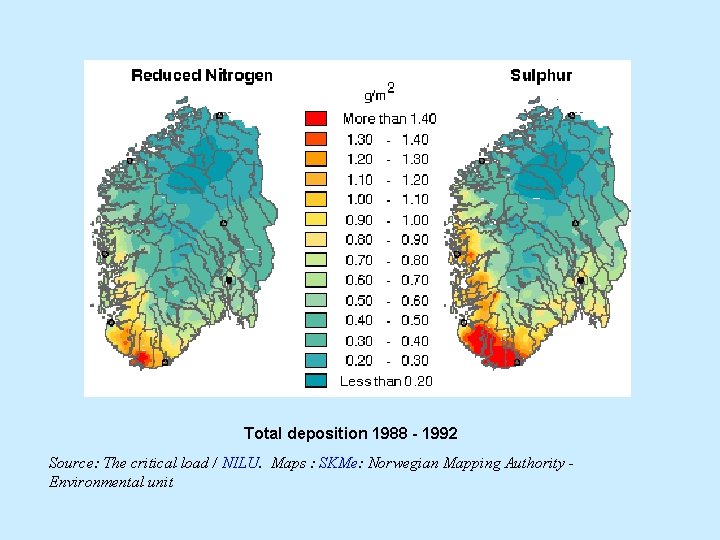
Total deposition 1988 - 1992 Source: The critical load / NILU. Maps : SKMe: Norwegian Mapping Authority Environmental unit
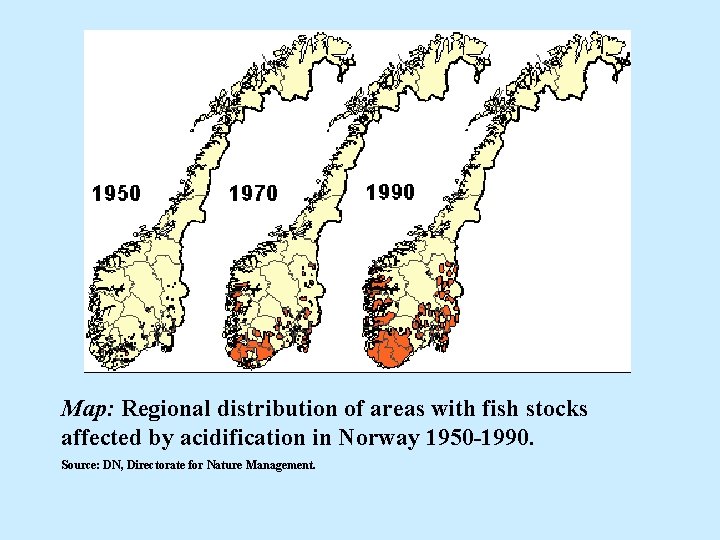
Map: Regional distribution of areas with fish stocks affected by acidification in Norway 1950 -1990. Source: DN, Directorate for Nature Management.
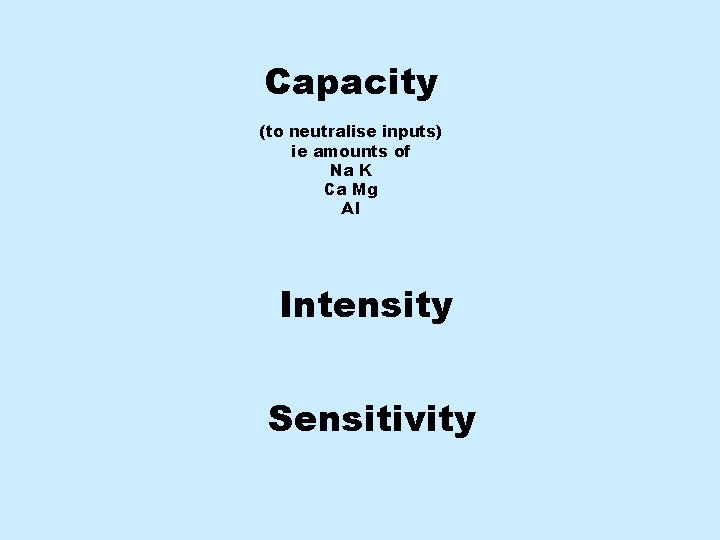
Capacity (to neutralise inputs) ie amounts of Na K Ca Mg Al Intensity Sensitivity
Critical Loads • To help quantify effects and relate them to the acid deposited, an "effects based" approach, known as critical loads, has been developed. • The critical load is a measure of sensitivity of the environment to pollutants.
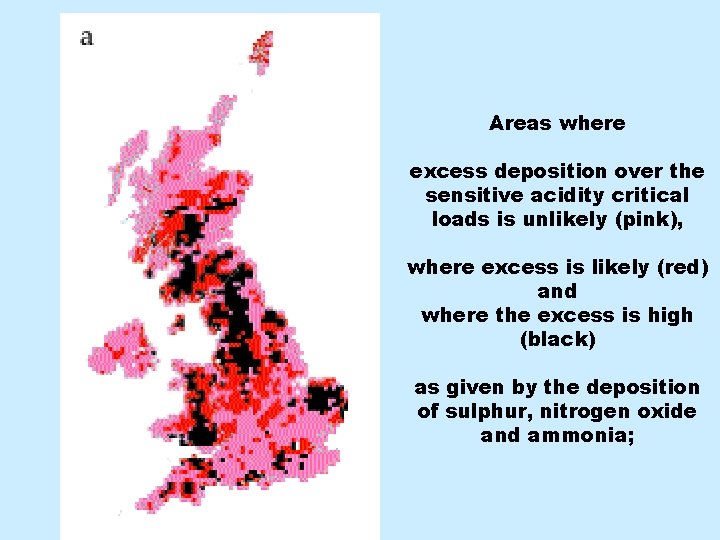
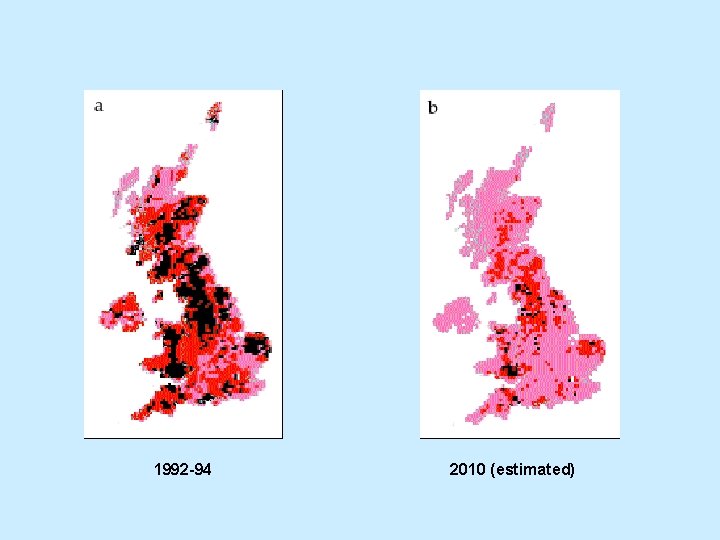
Areas where excess deposition over the sensitive acidity critical loads is unlikely (pink), where excess is likely (red) and where the excess is high (black) as given by the deposition of sulphur, nitrogen oxide and ammonia;
The Critical Load "the quantity of pollution that a part of the environment can tolerate without harmful effects occurring". Deposition above that limit may damage plants and animals. Where acidity critical loads are large, more acid deposition can be tolerated, but areas with small acidity critical loads are very sensitive to acidification.
Total deposition 1988 - 1992 Source: The critical load / NILU. Maps : SKMe: Norwegian Mapping Authority Environmental unit
1992 -94 2010 (estimated)
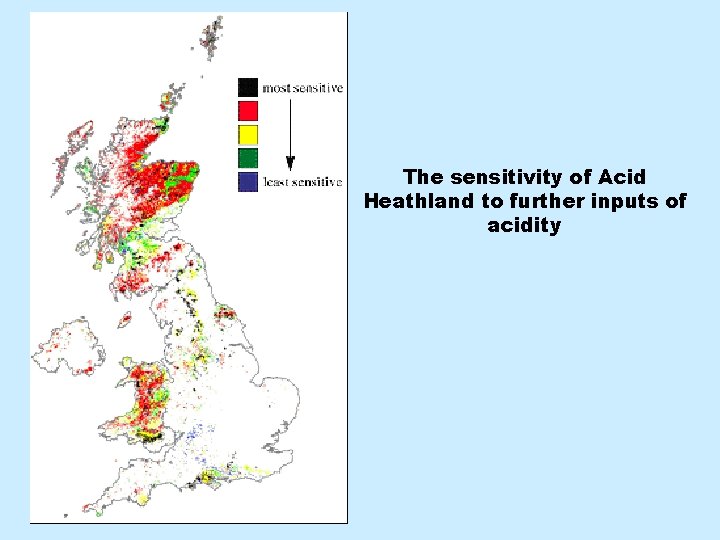
The sensitivity of Acid Heathland to further inputs of acidity
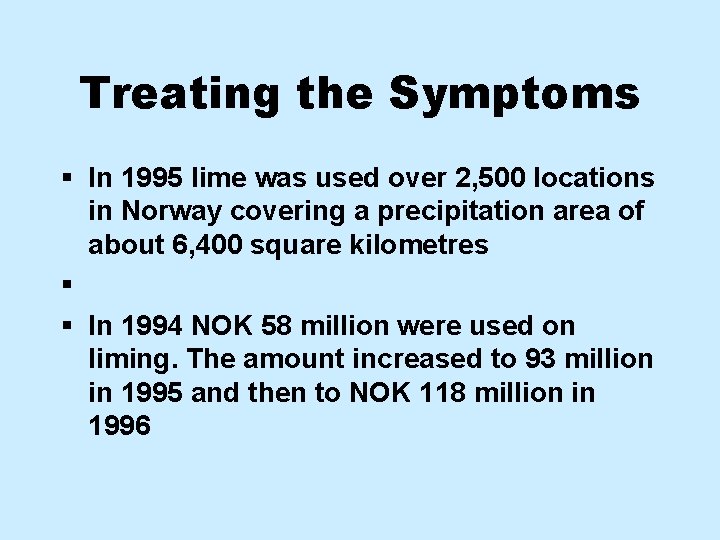
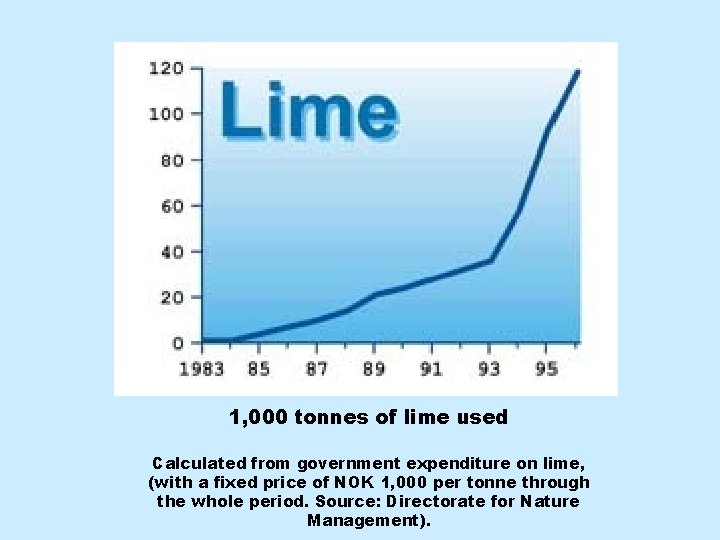
Treating the Symptoms § In 1995 lime was used over 2, 500 locations in Norway covering a precipitation area of about 6, 400 square kilometres § § In 1994 NOK 58 million were used on liming. The amount increased to 93 million in 1995 and then to NOK 118 million in 1996
1, 000 tonnes of lime used Calculated from government expenditure on lime, (with a fixed price of NOK 1, 000 per tonne through the whole period. Source: Directorate for Nature Management).
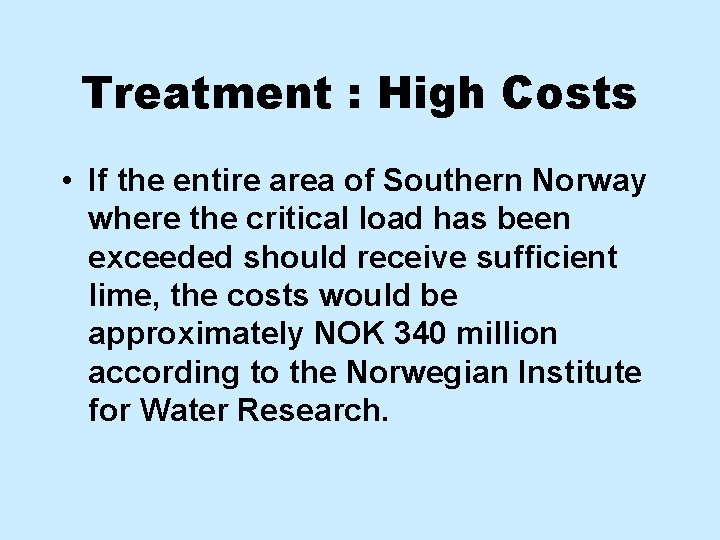
Treatment : High Costs • If the entire area of Southern Norway where the critical load has been exceeded should receive sufficient lime, the costs would be approximately NOK 340 million according to the Norwegian Institute for Water Research.
What is being done? • 1979 Convention on Long Range Transboundary Air Pollution (LRTAP • 43 Signatories around the Northern Hemisphere
Legislation for Reductions in Acid Emissions (I) Early Protocols for sulphur dioxide and oxides of nitrogen set simple targets for all countries: · a 30% reduction of sulphur emissions by 1993 · decreasing emission levels of oxides of nitrogen to those of 1987 (by 1994)
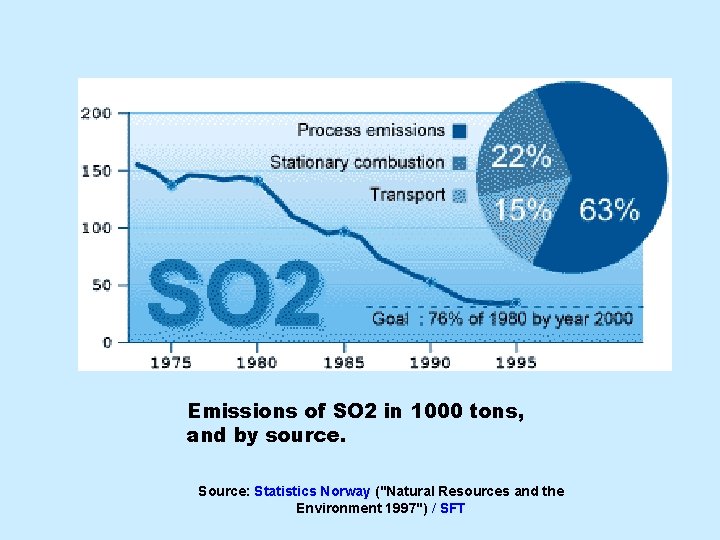
Emissions of SO 2 in 1000 tons, and by source. Source: Statistics Norway ("Natural Resources and the Environment 1997") / SFT
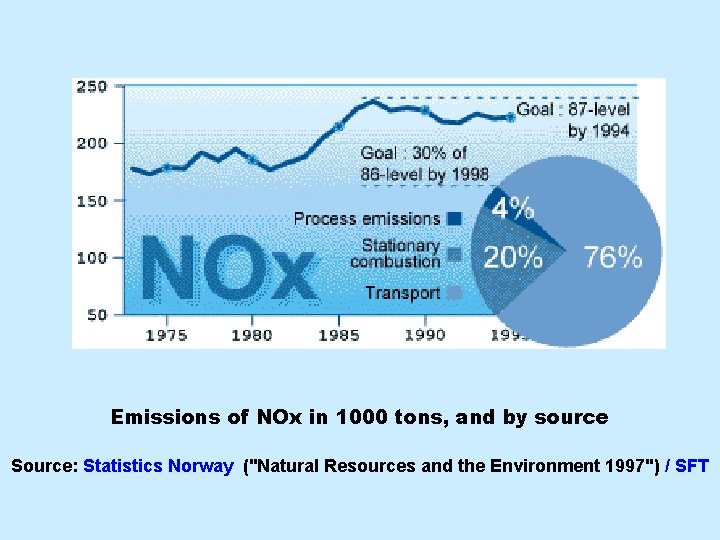
Emissions of NOx in 1000 tons, and by source Source: Statistics Norway ("Natural Resources and the Environment 1997") / SFT
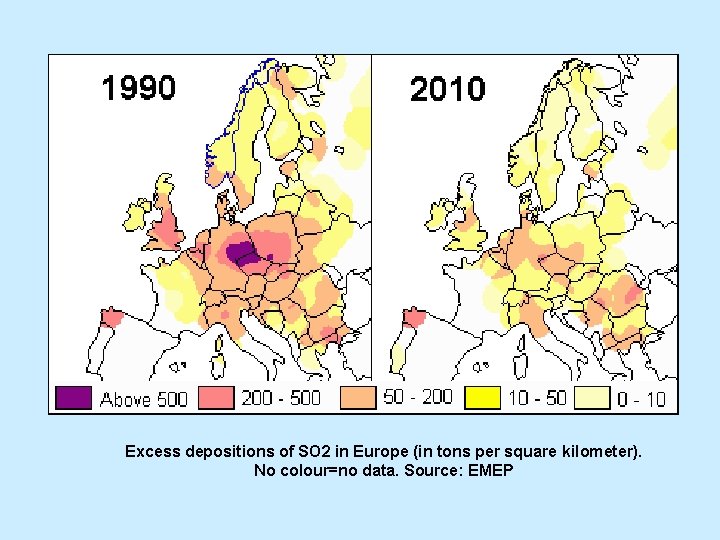
Legislation for Reductions in Acid Emissions (II) • In 1994, the new 'effects based' Protocol for sulphur, based on critical loads, was agreed in Oslo. • This defined a target for each European country based on its pollutant emissions, the costs of abatement and the contribution those emissions made to acid deposition on sensitive ecosystems across Europe.
Excess depositions of SO 2 in Europe (in tons per square kilometer). No colour=no data. Source: EMEP
The Multi-pollutant, Multi-effect Protocol • was signed in Gothenburg in 1999. • It takes into account effects of acidity, excess nutrient nitrogen and also photochemical oxidants (low level ozone).
Recovery • Slow processes are involved • Calculations show that to achieve recovery at the most sensitive sites, emissions of sulphur, oxides of nitrogen and ammonia must be decreased further still.
• For some sensitive areas, however, critical loads may be unattainable with current emission control technology, so recovery may not be possible through emission decreases alone in the foreseeable future • Other methods may be used to aid their recovery. For example, in many lakes in Scandinavia, the addition of lime has been used as an interim measure for neutralising acidification.