
ACID BASES AND BUFFERS Acids Acids are the
ACID, BASES AND BUFFERS
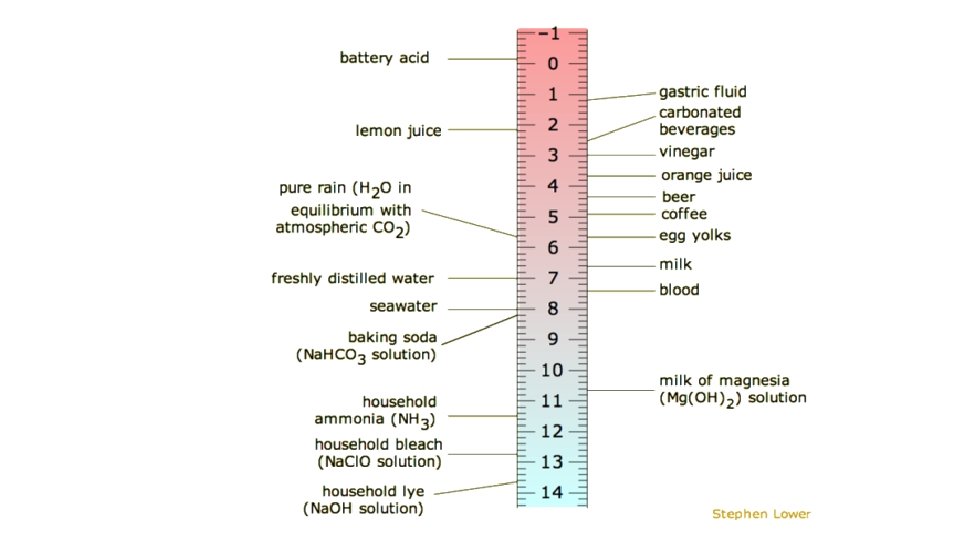
Acids: Acids are the substances which convert blue litmus paper to red. They are having p. H below 7. They have a sour taste. Acids react with bases to form salts and water. Example for Acids: Hydrochloric Acid.
Bases: Bases are the substances that convert red litmus paper to blue. They are having ph above 7. They have bitter taste. Bases reacts with acids to form salts and water. Example for Bases: Sodium hydroxide.
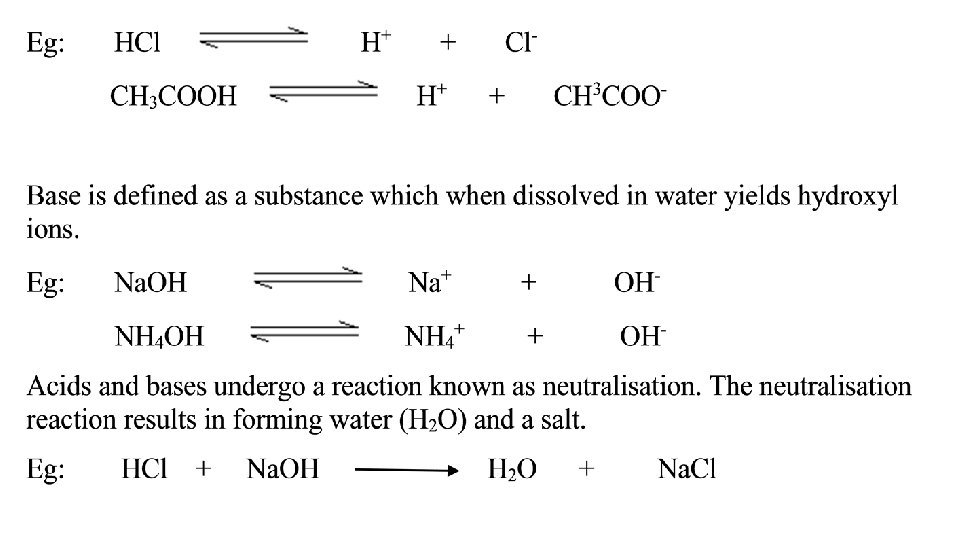
Arrhenius Theory: The concept of acids and bases was first presented by Arrhenius. According to Arrhenius theory, any acid or base on dissolution in water dissociates forming ions and establishes equilibrium between ionised and unionised molecule. Arrhenius theory defines as acid as a substance which when dissolved in water gives hydrogen ions.
Lowry and Bronsted Theory The theory suggests that an acid is a substance that can donate a proton and base is a substance that can accept a proton. Thus, • Acid is a proton donor. • Base is a proton acceptor.
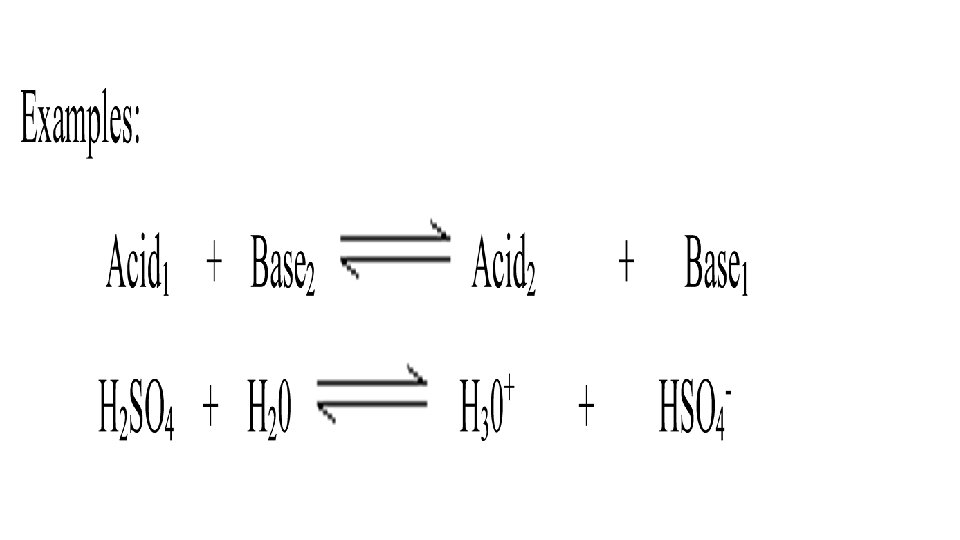
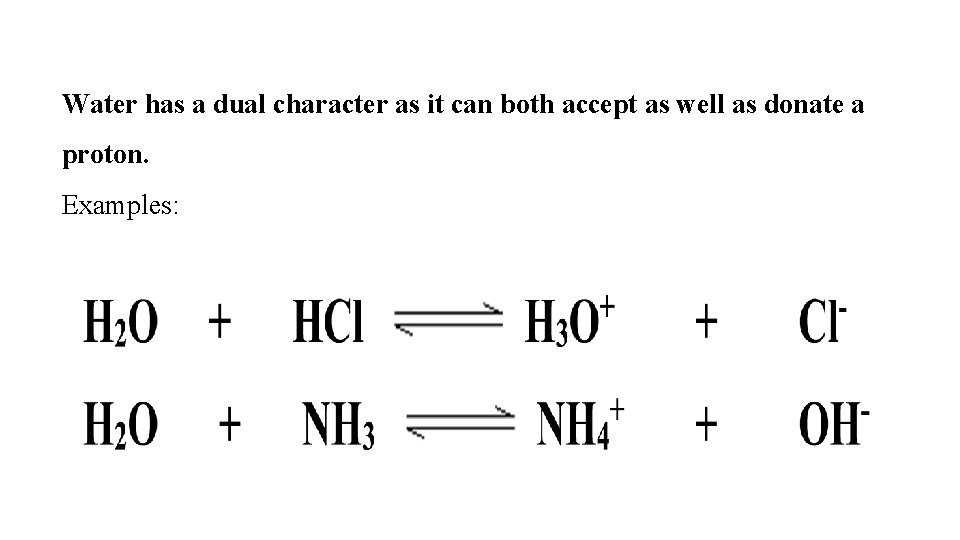
Water has a dual character as it can both accept as well as donate a proton. Examples:
Any substance that can donate as well as accept a proton it is called Amphoteric or amphiprotic. Thus, water is Amphoteric.
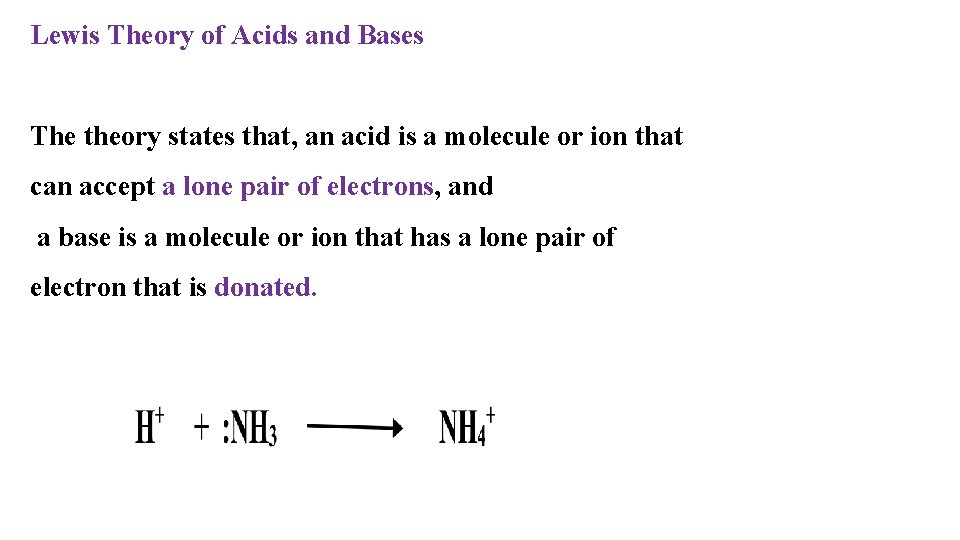
Lewis Theory of Acids and Bases The theory states that, an acid is a molecule or ion that can accept a lone pair of electrons, and a base is a molecule or ion that has a lone pair of electron that is donated.
Buffers Definition “Buffers are compounds or mixtures of compounds that by their presence in the solution resist changes in the p. H upon the addition of small quantities of acid or alkali. ”
Necessity of a buffer system: Sometimes it is necessary that a solution of a definite p. H be prepared and stored. The preservation of such a solution is even more difficult than its preparation. If solution comes in contact with air, it will absorb CO 2 and becomes acidic. On the other hand, if solution is stored in a glass bottle, alkaline impurities from the glass may alter its p. H.
Due to these reasons, pharmaceutical solutions are buffered as the buffer solutions are capable of maintaining p. H at some fairly constant value when even small amounts of acid or base are added.
Types of buffers: Generally buffers are of two types; Acidic buffers Basic buffers
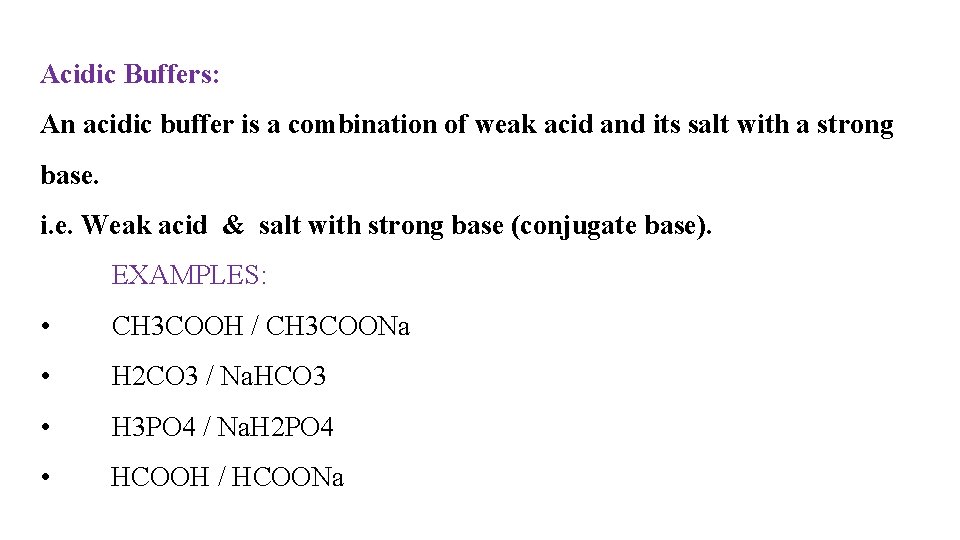
Acidic Buffers: An acidic buffer is a combination of weak acid and its salt with a strong base. i. e. Weak acid & salt with strong base (conjugate base). EXAMPLES: • CH 3 COOH / CH 3 COONa • H 2 CO 3 / Na. HCO 3 • H 3 PO 4 / Na. H 2 PO 4 • HCOOH / HCOONa
Basic Buffers: A basic buffer is a combination of weak base and its salt with a strong acid. i. e. Weak base & salt with strong acid (conjugate acid). EXAMPLES: • NH 4 OH / NH 4 Cl • NH 3 / (NH 4)2 CO 3
Phosphate Buffers (Double salt buffers): Besides the two general types of buffers (i. e. acidic & basic), a third appears to exist. This is buffer system composed of two salts: • Monobasic potassium phosphate (KH 2 PO 4) • Dibasic potassium phosphate (K 2 HPO 4).
Buffer action The resistance of a buffer solution to a change in p. H is known as buffer action.
Mechanism of Buffer Action
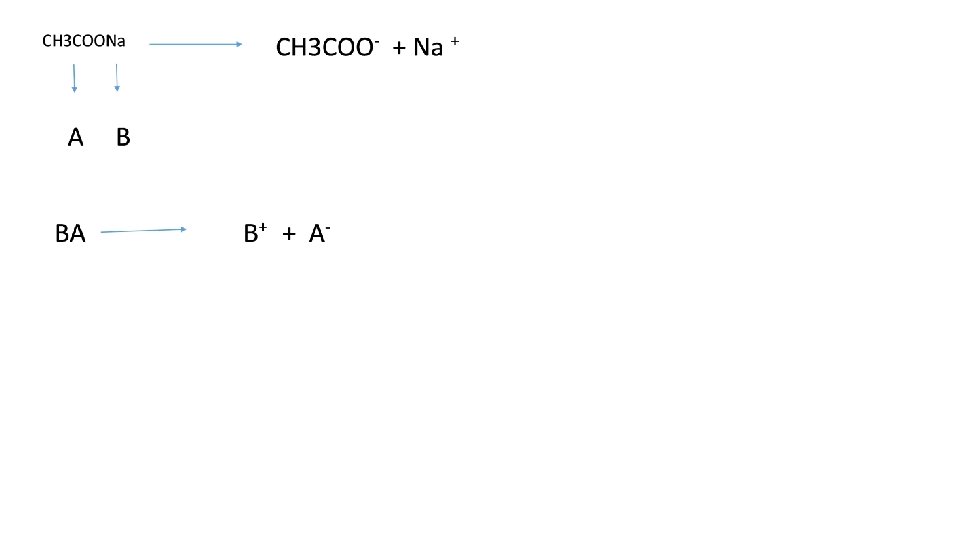
Mechanism of Action of acidic buffers: Consider a buffer system of CH 3 COOH (Weak electrolyte) and CH 3 COONa (Strong electrolyte). There will be a large concentration of Na+ ions, CH 3 COONa – ions, and undissociated CH 3 COOH molecules.
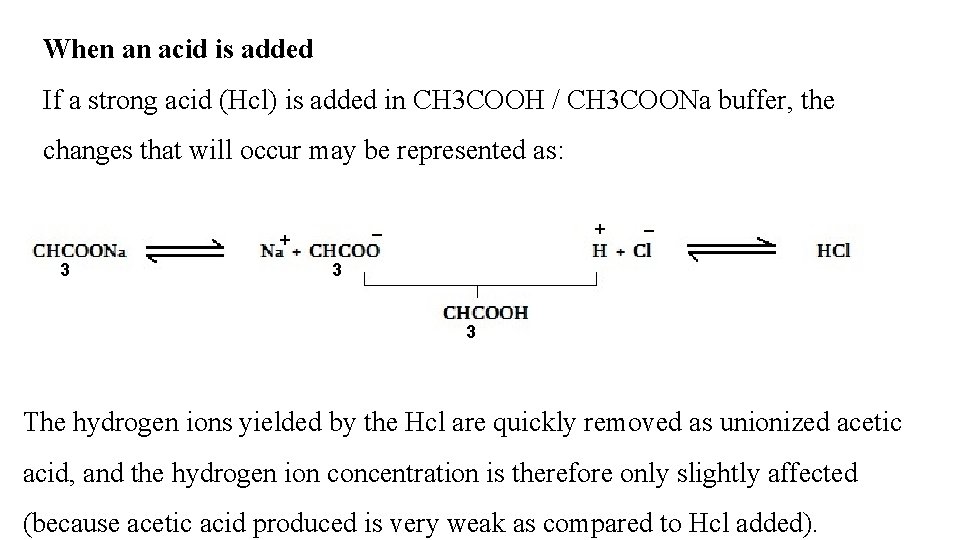
When an acid is added If a strong acid (Hcl) is added in CH 3 COOH / CH 3 COONa buffer, the changes that will occur may be represented as: _ + 3 + _ 3 3 The hydrogen ions yielded by the Hcl are quickly removed as unionized acetic acid, and the hydrogen ion concentration is therefore only slightly affected (because acetic acid produced is very weak as compared to Hcl added).
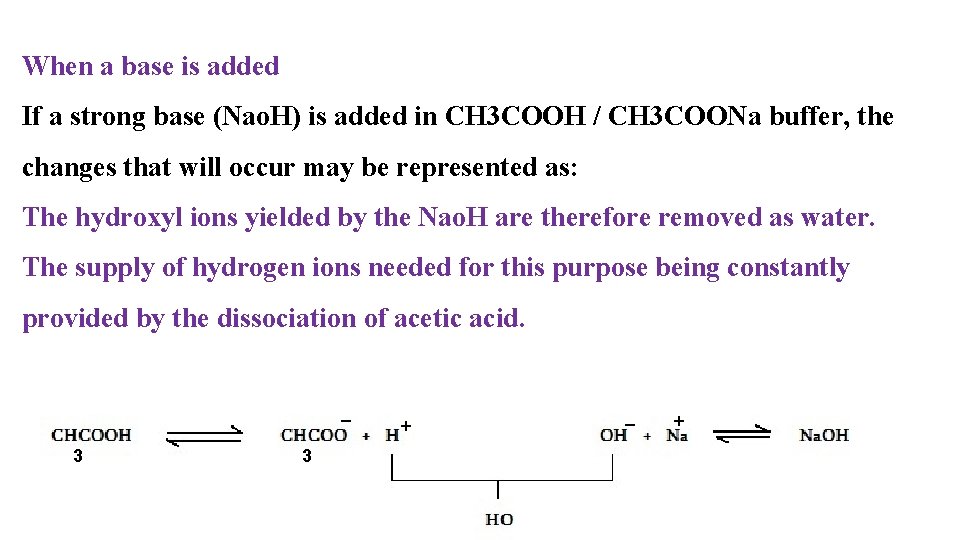
When a base is added If a strong base (Nao. H) is added in CH 3 COOH / CH 3 COONa buffer, the changes that will occur may be represented as: The hydroxyl ions yielded by the Nao. H are therefore removed as water. The supply of hydrogen ions needed for this purpose being constantly provided by the dissociation of acetic acid. _ 3 3 + _ +
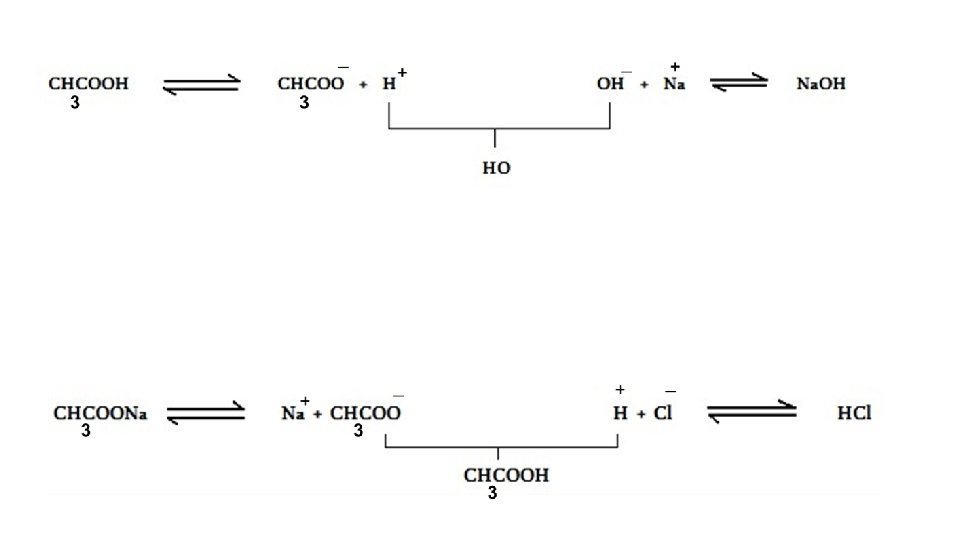
Finally CONCLUSION is Mechanism of buffer action shows that HOW it will resist the change in the PH of buffer solution due to addition of ACID or BASE Buffer solution contain reserve base and reserve acid. RESERVE BASE NETURALISE ACID and RESERVE ACID NETURALISE BASE
Eample 2 : Mechanism of Action of basic buffers: Consider a buffer system of NH 4 OH (Weak electrolyte) and NH 4 Cl (Strong electrolyte). There will be a large concentration of NH 4+ ions, Cl – ions, and undissociated NH 4 OH molecules.
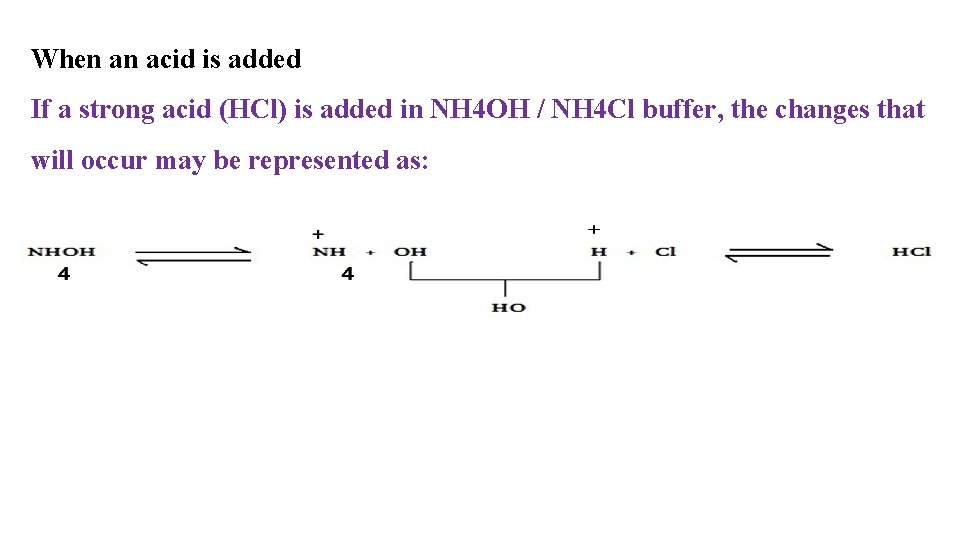
When an acid is added If a strong acid (HCl) is added in NH 4 OH / NH 4 Cl buffer, the changes that will occur may be represented as:
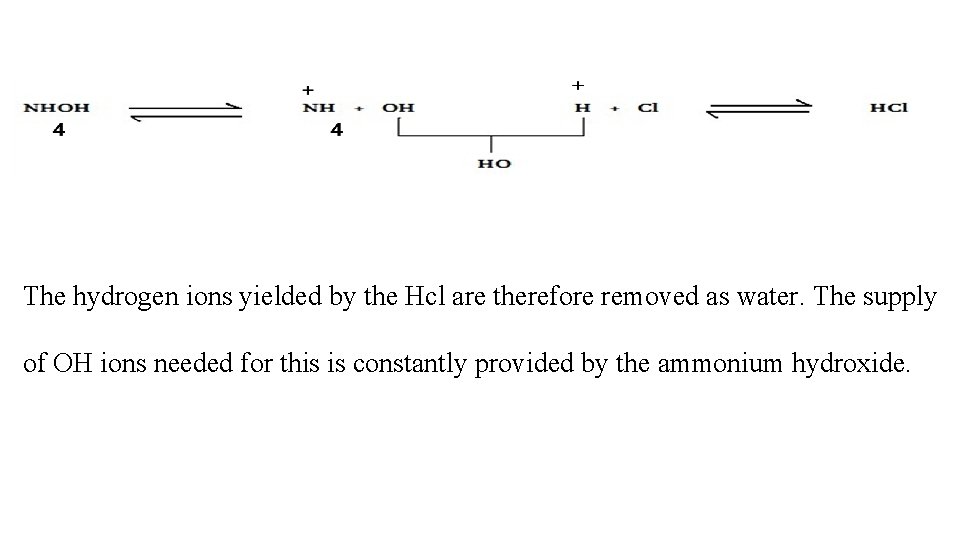
The hydrogen ions yielded by the Hcl are therefore removed as water. The supply of OH ions needed for this is constantly provided by the ammonium hydroxide.
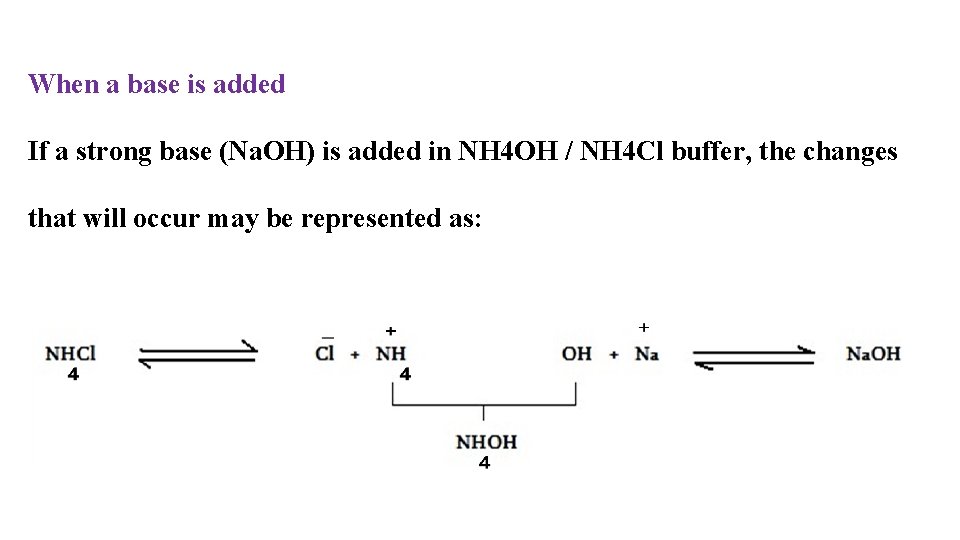
When a base is added If a strong base (Na. OH) is added in NH 4 OH / NH 4 Cl buffer, the changes that will occur may be represented as:
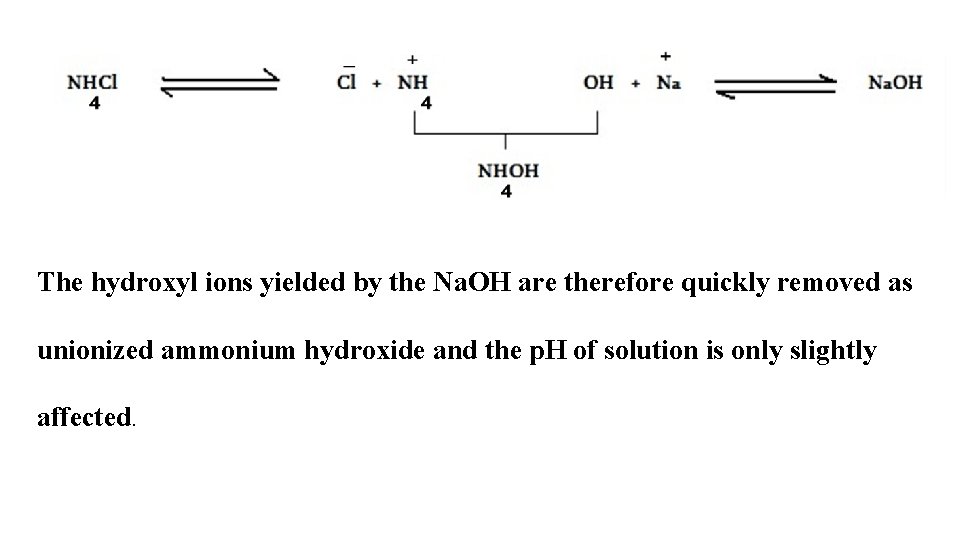
The hydroxyl ions yielded by the Na. OH are therefore quickly removed as unionized ammonium hydroxide and the p. H of solution is only slightly affected.
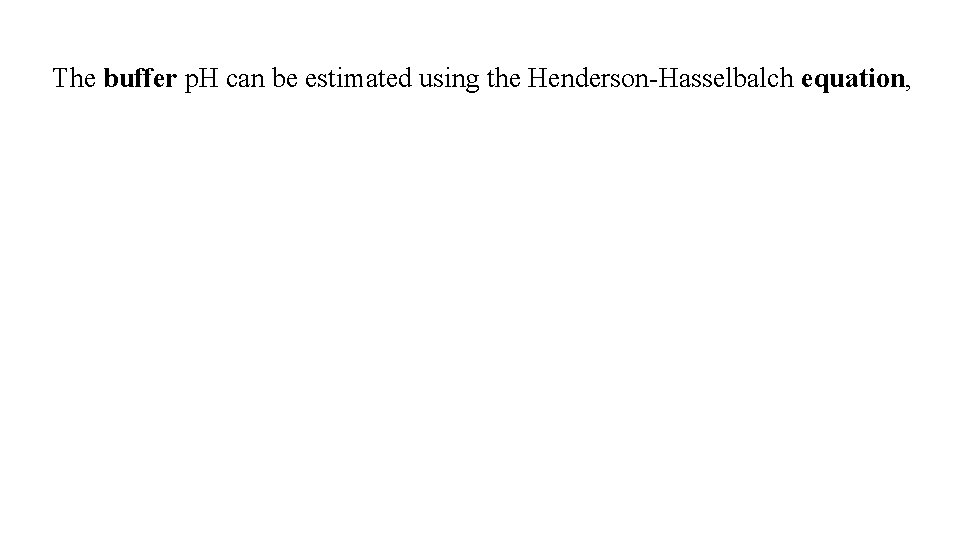
The buffer p. H can be estimated using the Henderson-Hasselbalch equation,
Henderson–Hasselbalch equation Is helpful to calculate the amount of p. H present in the given SOLUTION Or To prepare the required amount of p. H example for PH 5 how much qty of weak acid / weak base is required.
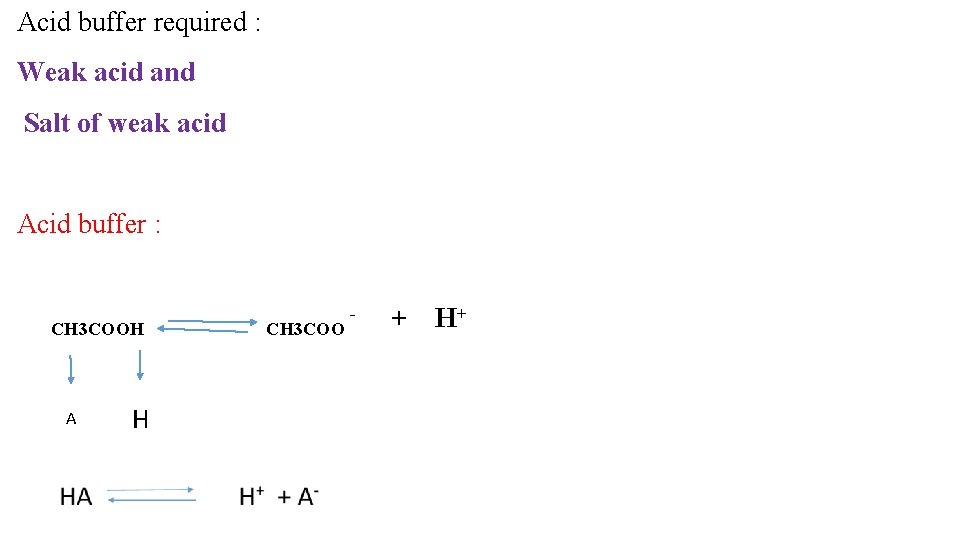
Acid buffer required : Weak acid and Salt of weak acid Acid buffer : CH 3 COOH A H CH 3 COO - + H+
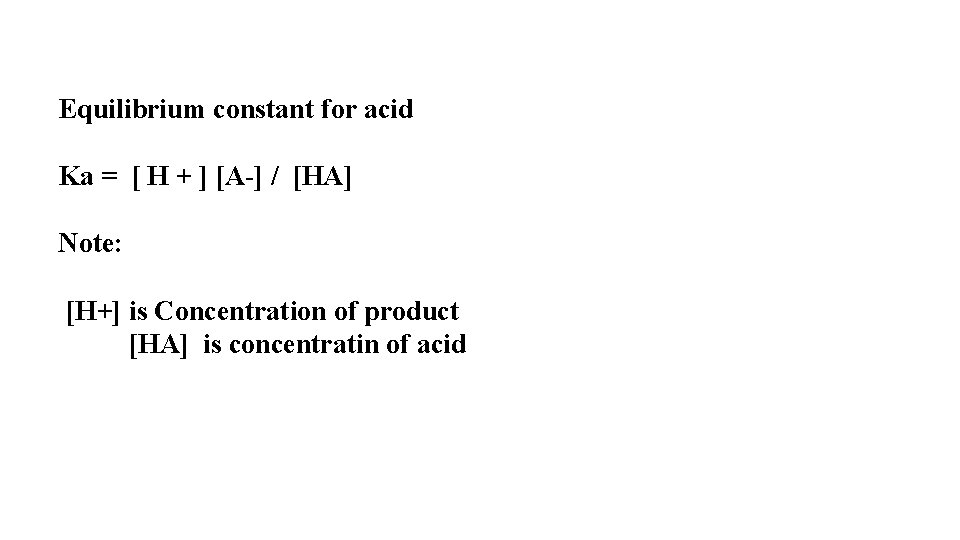
Equilibrium constant for acid Ka = [ H + ] [A-] / [HA] Note: [H+] is Concentration of product [HA] is concentratin of acid
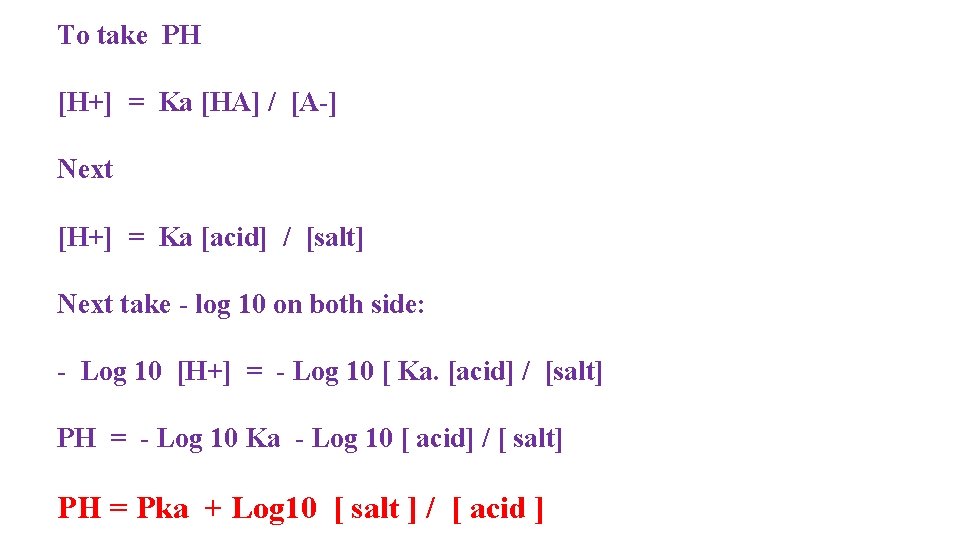
To take PH [H+] = Ka [HA] / [A-] Next [H+] = Ka [acid] / [salt] Next take - log 10 on both side: - Log 10 [H+] = - Log 10 [ Ka. [acid] / [salt] PH = - Log 10 Ka - Log 10 [ acid] / [ salt] PH = Pka + Log 10 [ salt ] / [ acid ]
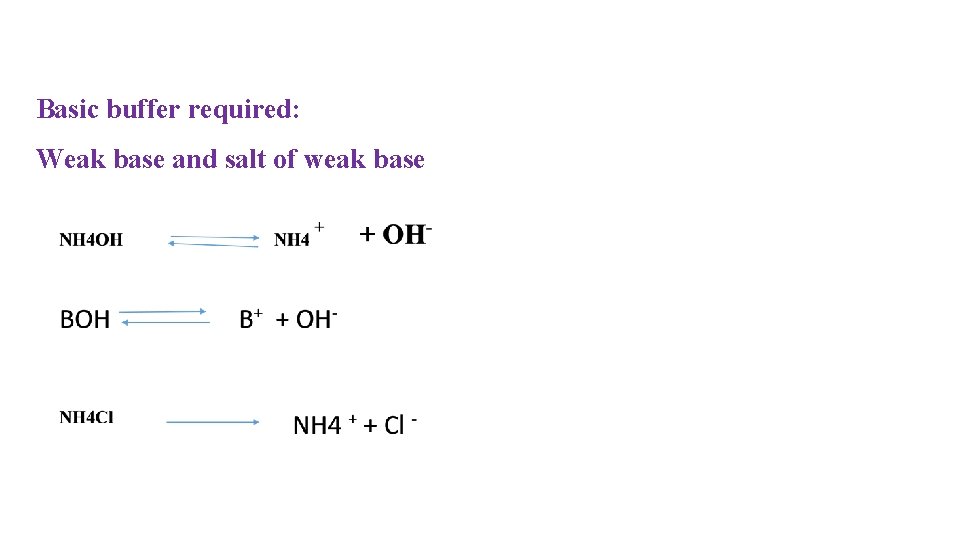
Basic buffer required: Weak base and salt of weak base
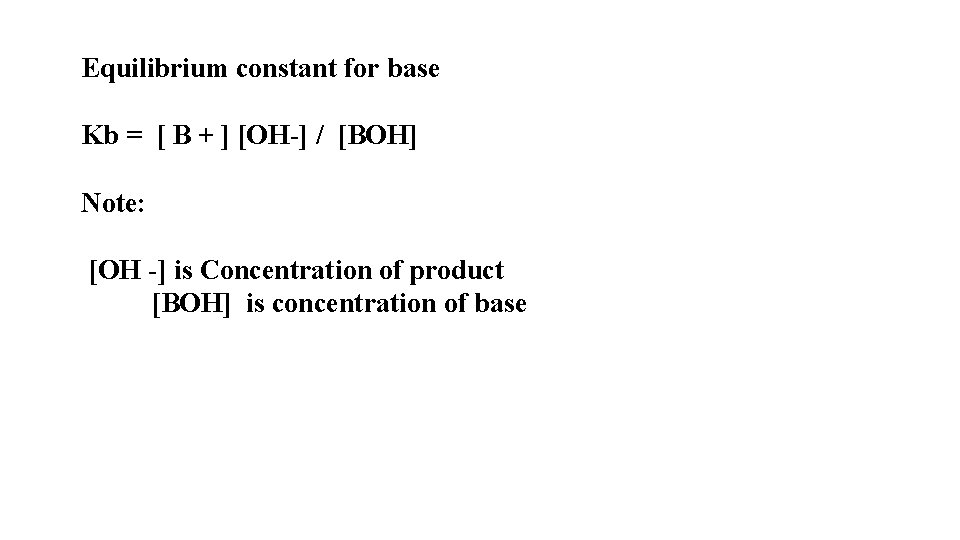
Equilibrium constant for base Kb = [ B + ] [OH-] / [BOH] Note: [OH -] is Concentration of product [BOH] is concentration of base
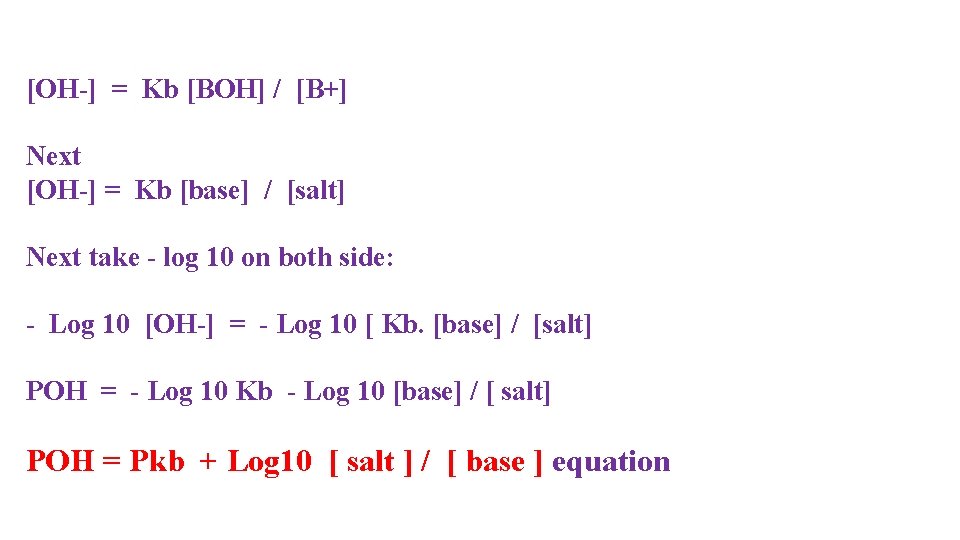
[OH-] = Kb [BOH] / [B+] Next [OH-] = Kb [base] / [salt] Next take - log 10 on both side: - Log 10 [OH-] = - Log 10 [ Kb. [base] / [salt] POH = - Log 10 Kb - Log 10 [base] / [ salt] POH = Pkb + Log 10 [ salt ] / [ base ] equation
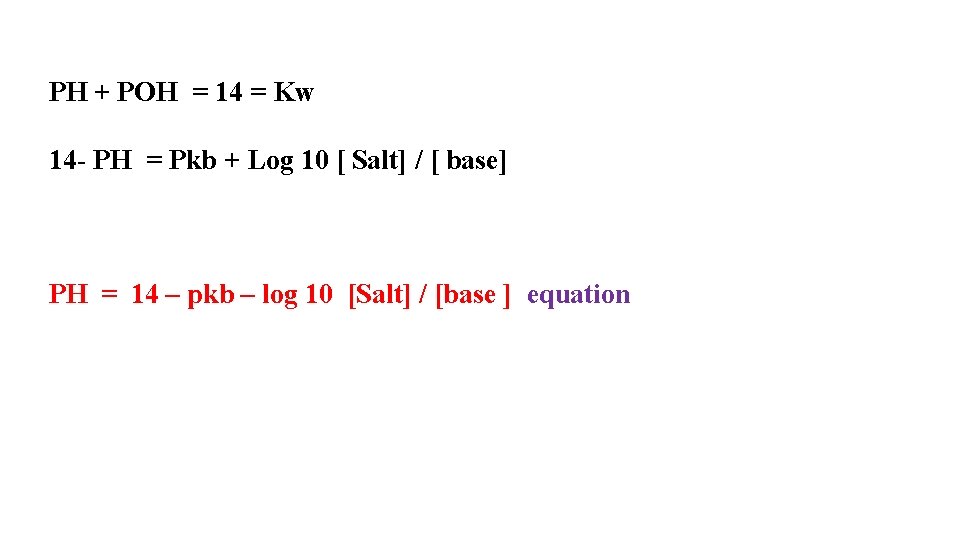
PH + POH = 14 = Kw 14 - PH = Pkb + Log 10 [ Salt] / [ base] PH = 14 – pkb – log 10 [Salt] / [base ] equation
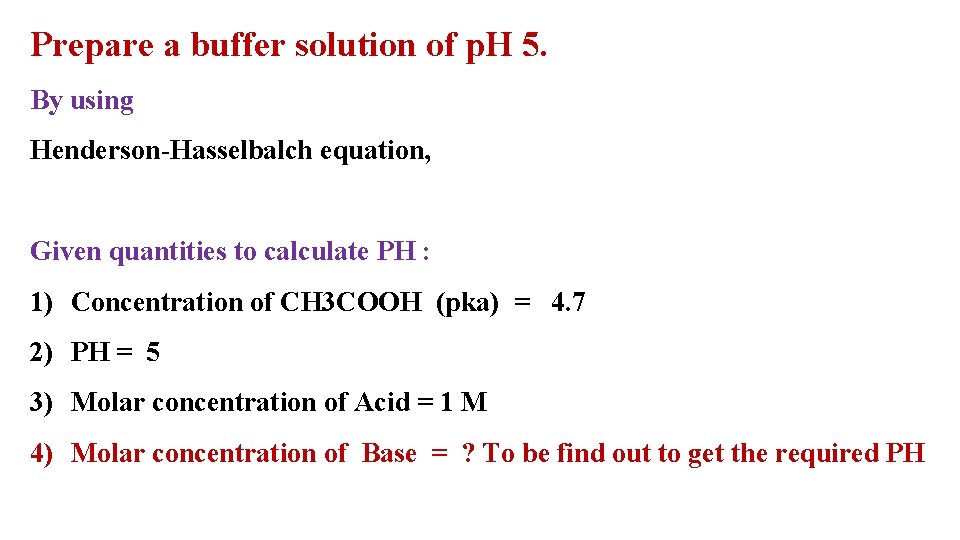
Prepare a buffer solution of p. H 5. By using Henderson-Hasselbalch equation, Given quantities to calculate PH : 1) Concentration of CH 3 COOH (pka) = 4. 7 2) PH = 5 3) Molar concentration of Acid = 1 M 4) Molar concentration of Base = ? To be find out to get the required PH
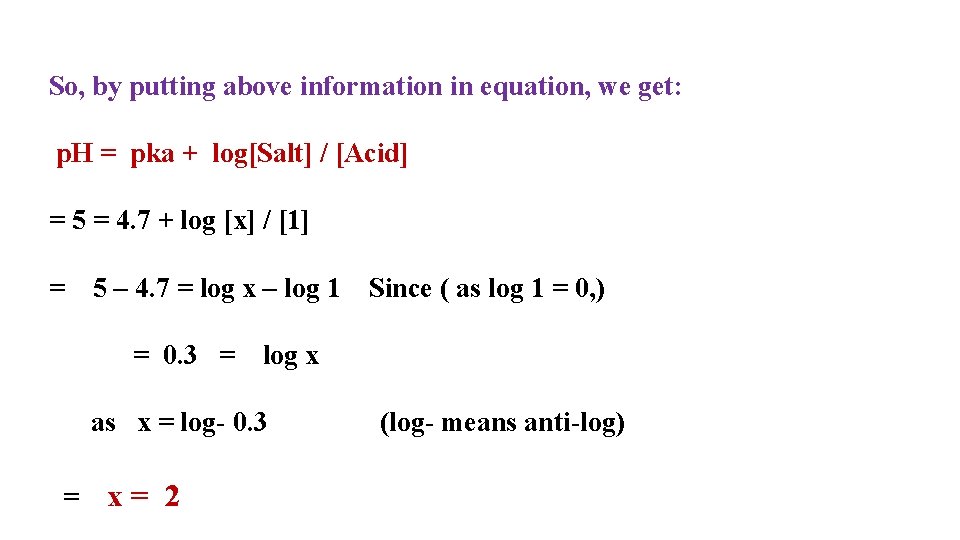
So, by putting above information in equation, we get: p. H = pka + log[Salt] / [Acid] = 5 = 4. 7 + log [x] / [1] = 5 – 4. 7 = log x – log 1 Since ( as log 1 = 0, ) = 0. 3 = log x as x = log- 0. 3 (log- means anti-log) = x = 2
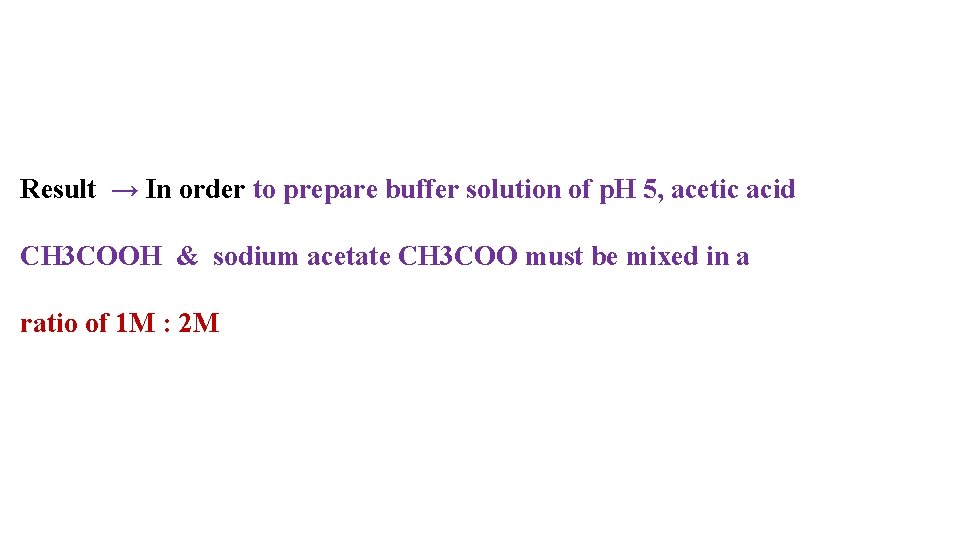
Result → In order to prepare buffer solution of p. H 5, acetic acid CH 3 COOH & sodium acetate CH 3 COO must be mixed in a ratio of 1 M : 2 M
- Slides: 43