
Acid Base Theory Definitions Arrhenius An acid is
Acid – Base Theory
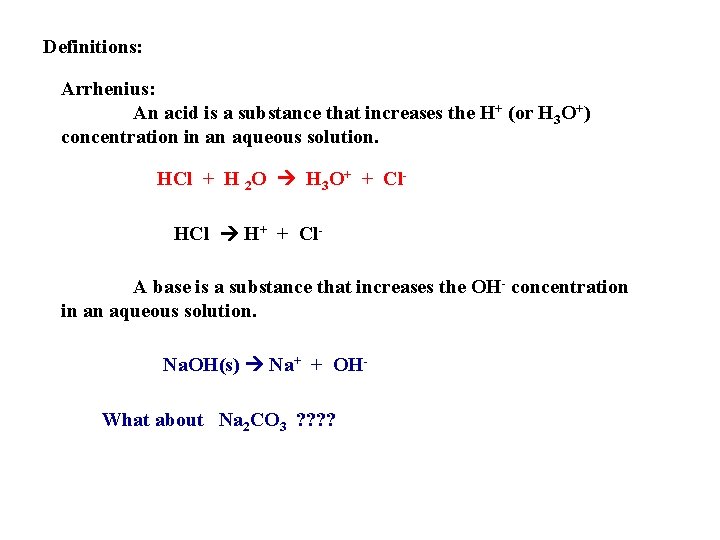
Definitions: Arrhenius: An acid is a substance that increases the H+ (or H 3 O+) concentration in an aqueous solution. HCl + H 2 O H 3 O+ + Cl. HCl H+ + Cl. A base is a substance that increases the OH- concentration in an aqueous solution. Na. OH(s) Na+ + OHWhat about Na 2 CO 3 ? ?
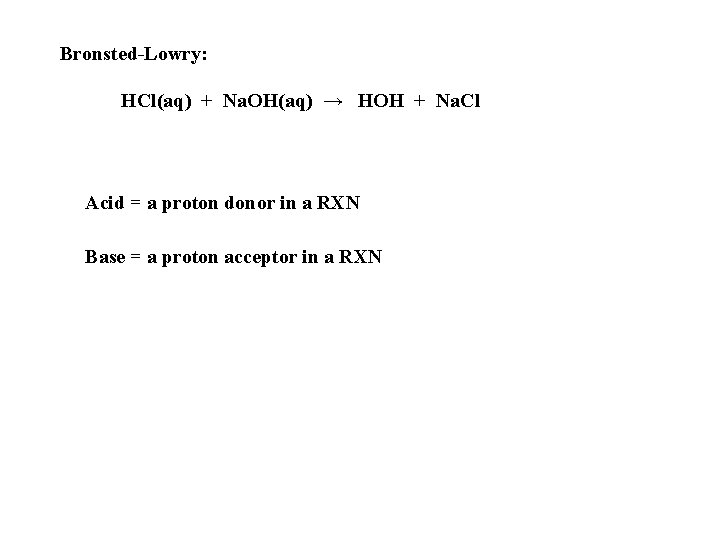
Bronsted-Lowry: HCl(aq) + Na. OH(aq) → HOH + Na. Cl Acid = a proton donor in a RXN Base = a proton acceptor in a RXN
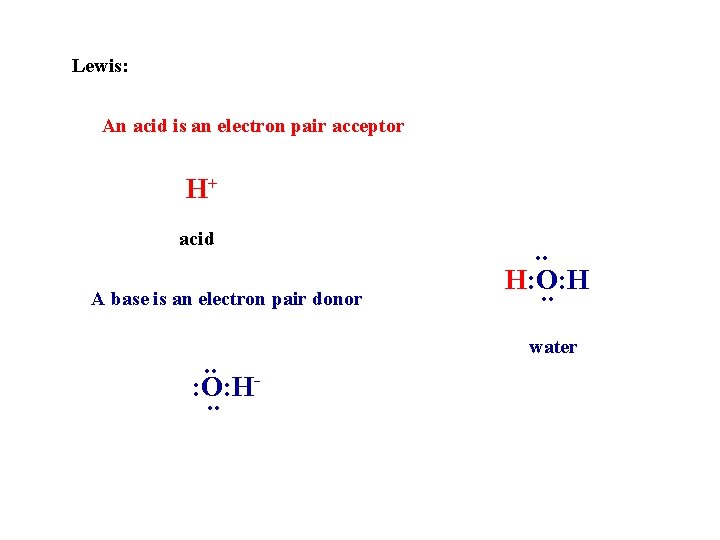
Lewis: An acid is an electron pair acceptor H+ acid A base is an electron pair donor . . : O: H. . H: O: H. . water
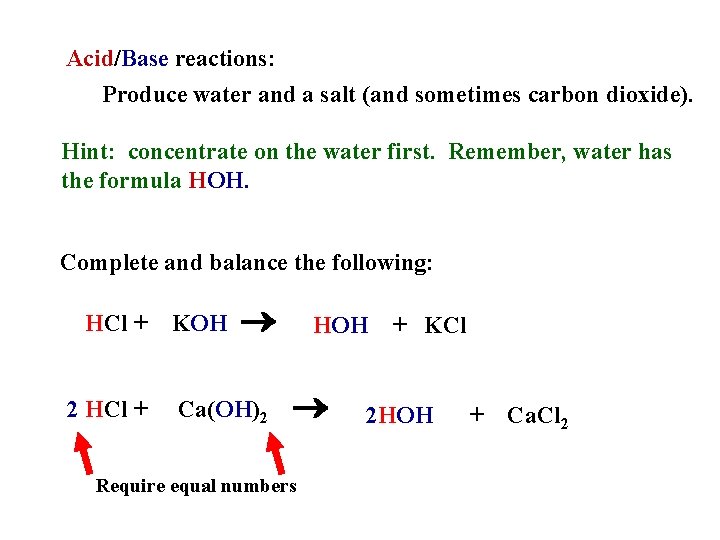
Acid/Base reactions: Produce water and a salt (and sometimes carbon dioxide). Hint: concentrate on the water first. Remember, water has the formula HOH. Complete and balance the following: HCl + 2 HCl + KOH Ca(OH)2 HOH Require equal numbers + KCl 2 HOH + Ca. Cl 2
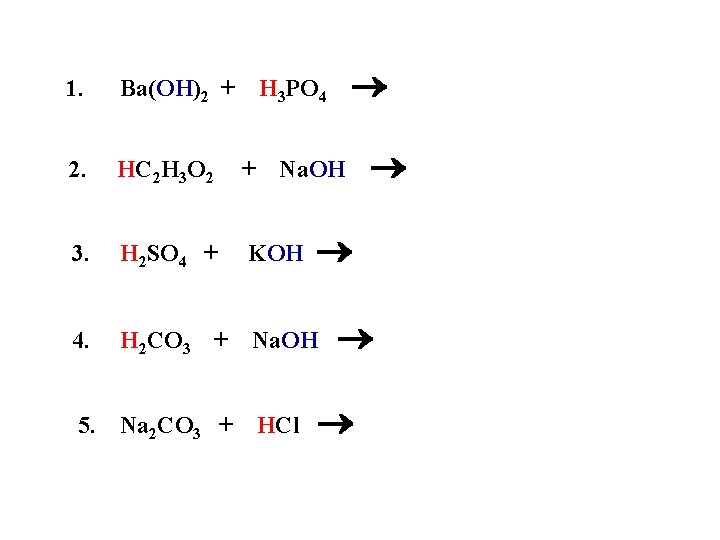
1. Ba(OH)2 + 2. HC 2 H 3 O 2 + 3. H 2 SO 4 + KOH 4. H 2 CO 3 + Na. OH 5. Na 2 CO 3 + HCl H 3 PO 4 Na. OH
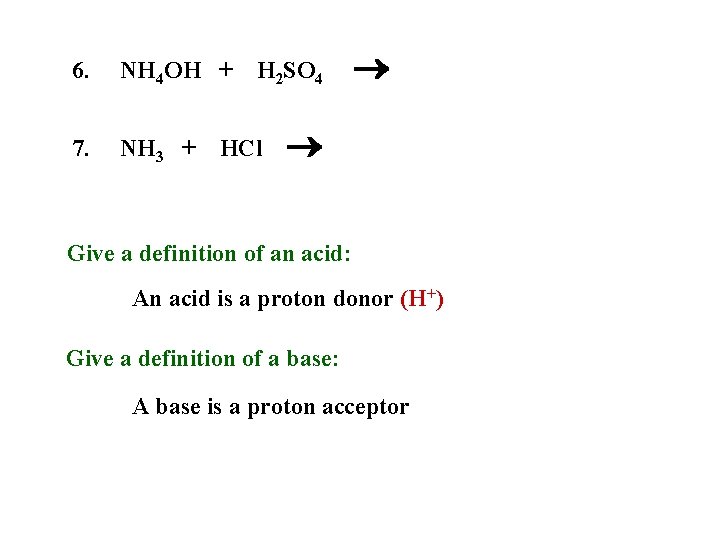
6. NH 4 OH + 7. NH 3 + H 2 SO 4 HCl Give a definition of an acid: An acid is a proton donor (H+) Give a definition of a base: A base is a proton acceptor
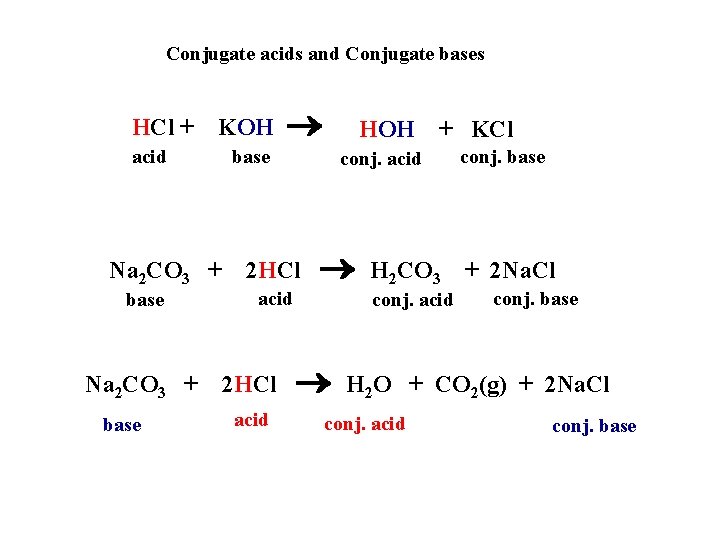
Conjugate acids and Conjugate bases HCl + KOH acid Na 2 CO 3 + base HOH base conj. acid 2 HCl acid + KCl H 2 CO 3 conj. acid conj. base + 2 Na. Cl conj. base H 2 O + CO 2(g) + 2 Na. Cl conj. acid conj. base

NH 3 + HCl NH 4 + + Cl
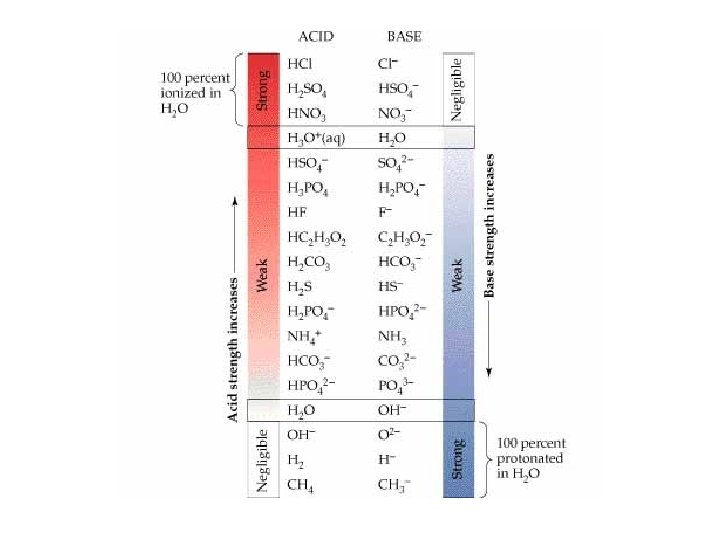
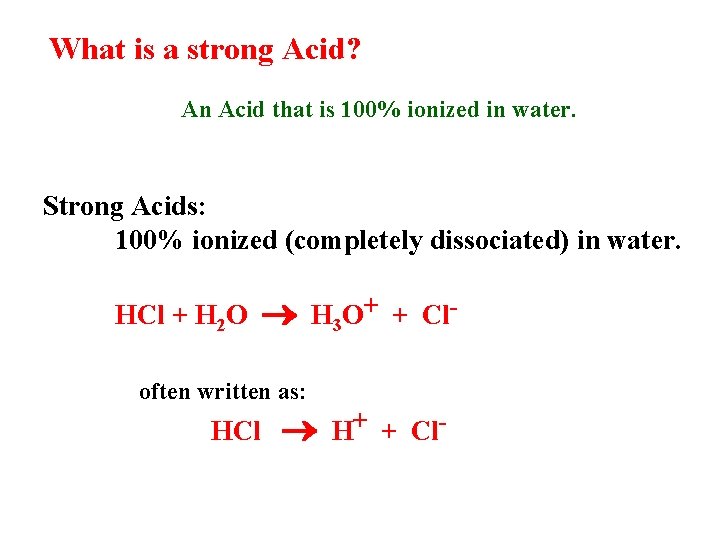
What is a strong Acid? An Acid that is 100% ionized in water. Strong Acids: 100% ionized (completely dissociated) in water. HCl + H 2 O H 3 O+ + Cl- often written as: HCl H+ + Cl-
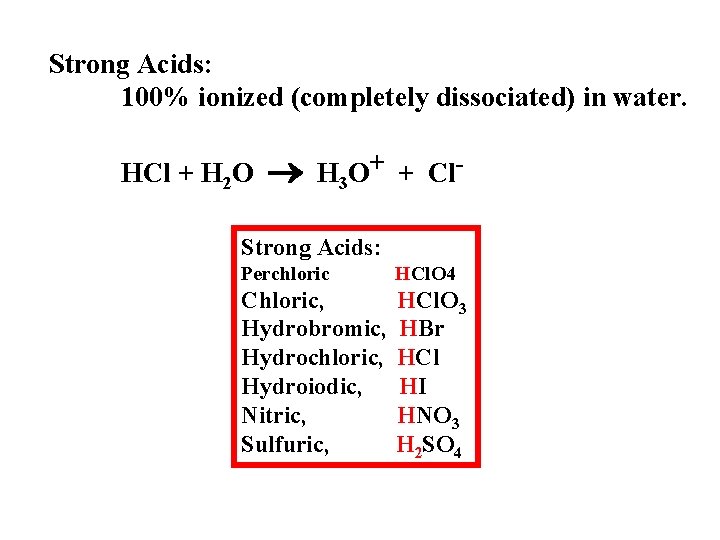
Strong Acids: 100% ionized (completely dissociated) in water. HCl + H 2 O H 3 O+ + Cl- Strong Acids: Perchloric HCl. O 4 Chloric, Hydrobromic, Hydrochloric, Hydroiodic, Nitric, Sulfuric, HCl. O 3 HBr HCl HI HNO 3 H 2 SO 4
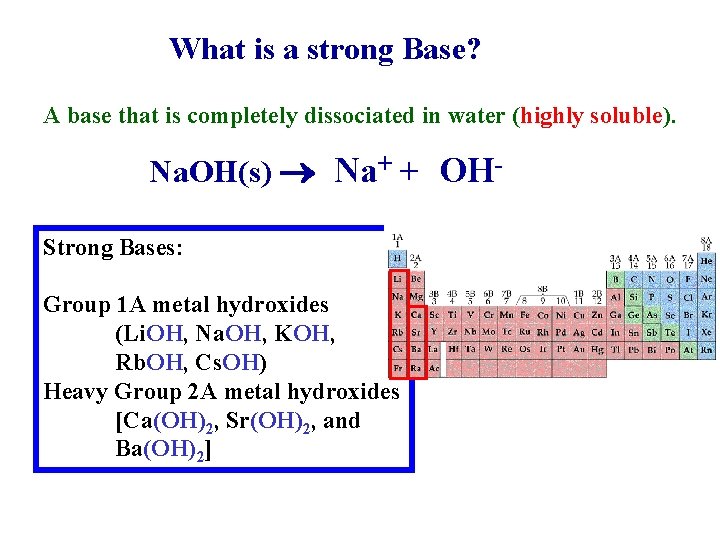
What is a strong Base? A base that is completely dissociated in water (highly soluble). Na. OH(s) Na+ + OHStrong Bases: Group 1 A metal hydroxides (Li. OH, Na. OH, KOH, Rb. OH, Cs. OH) Heavy Group 2 A metal hydroxides [Ca(OH)2, Sr(OH)2, and Ba(OH)2]
Weak Acids: “The Rest”
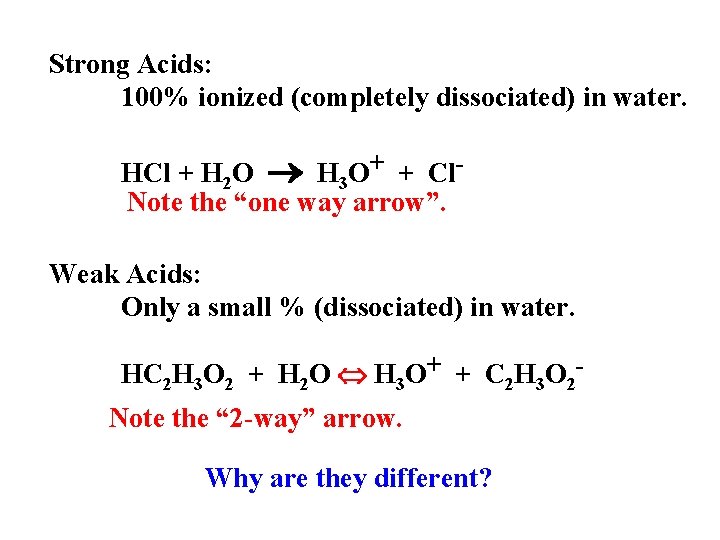
Strong Acids: 100% ionized (completely dissociated) in water. HCl + H 2 O H 3 O+ + Cl. Note the “one way arrow”. Weak Acids: Only a small % (dissociated) in water. HC 2 H 3 O 2 + H 2 O H 3 O+ + C 2 H 3 O 2 Note the “ 2 -way” arrow. Why are they different?
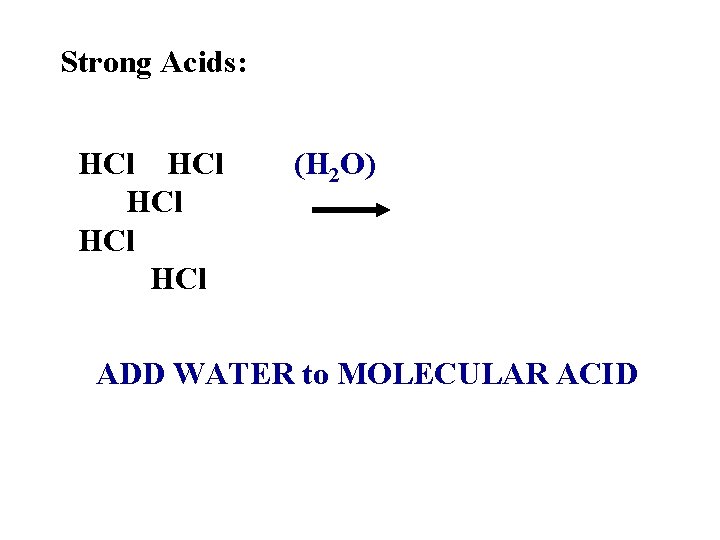
Strong Acids: HCl HCl HCl (H 2 O) ADD WATER to MOLECULAR ACID
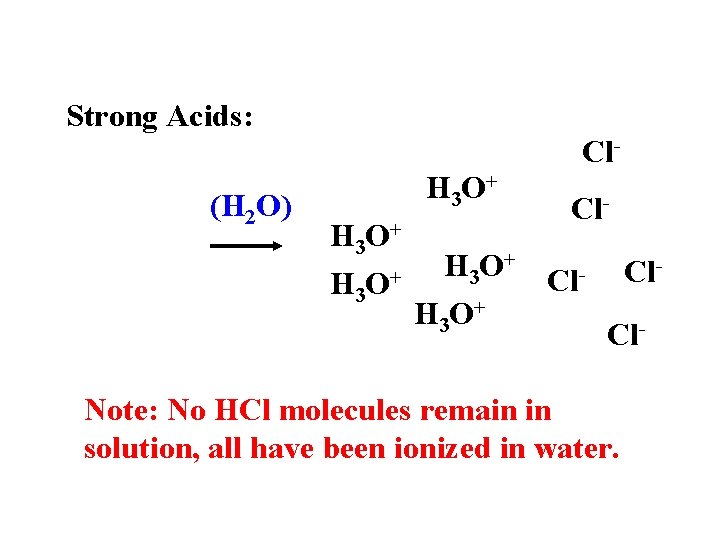
Strong Acids: Cl(H 2 O) H 3 O+ Cl- H 3 O+ Cl. Cl- Note: No HCl molecules remain in solution, all have been ionized in water.
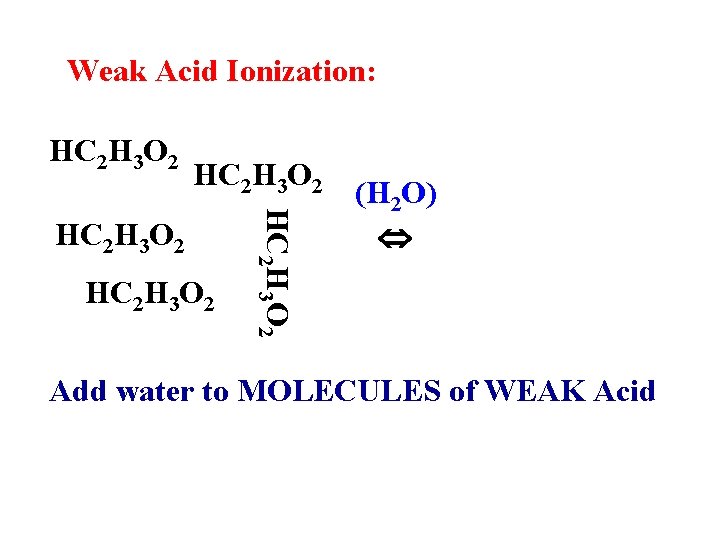
Weak Acid Ionization: HC 2 H 3 O 2 HC 2 H 3 O 2 (H 2 O) Add water to MOLECULES of WEAK Acid
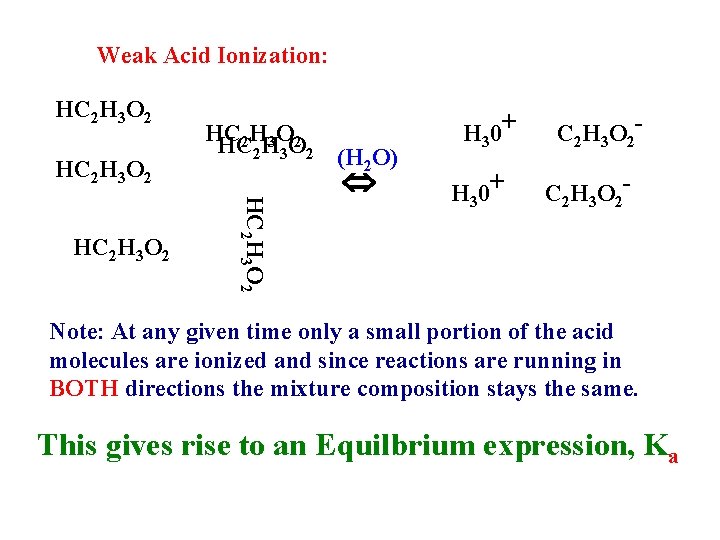
Weak Acid Ionization: HC 2 H 3 O 2 HC 2 H 3 O 2 (H O) 2 H 30+ C 2 H 3 O 2 - Note: At any given time only a small portion of the acid molecules are ionized and since reactions are running in BOTH directions the mixture composition stays the same. This gives rise to an Equilbrium expression, Ka
- Slides: 19