
Acid and Base Reactions Conjugate AcidBase Pair Bronsted
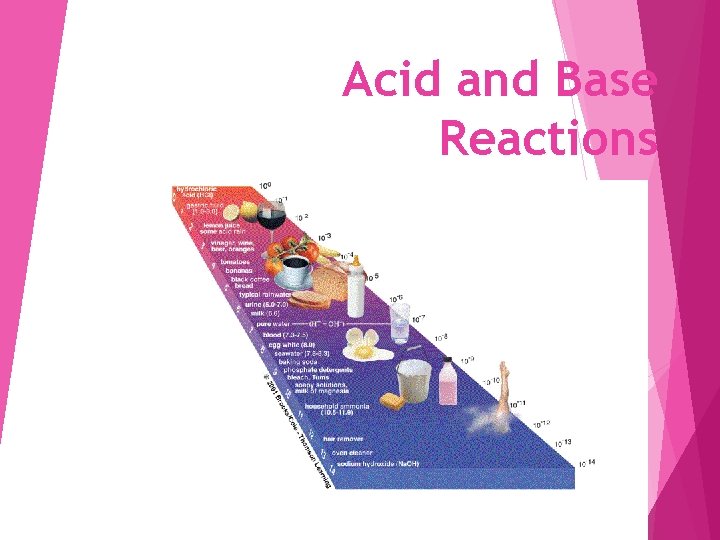
Acid and Base Reactions
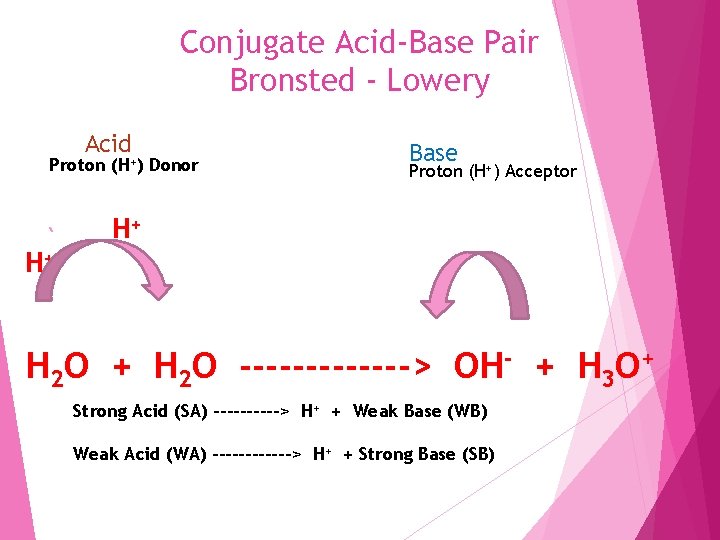
Conjugate Acid-Base Pair Bronsted - Lowery Acid Proton (H+) Donor Base Proton (H+) Acceptor H+ H+ H 2 O -------> OH- + H 3 O+ Strong Acid (SA) -----> H+ + Weak Base (WB) Weak Acid (WA) ------> H+ + Strong Base (SB)
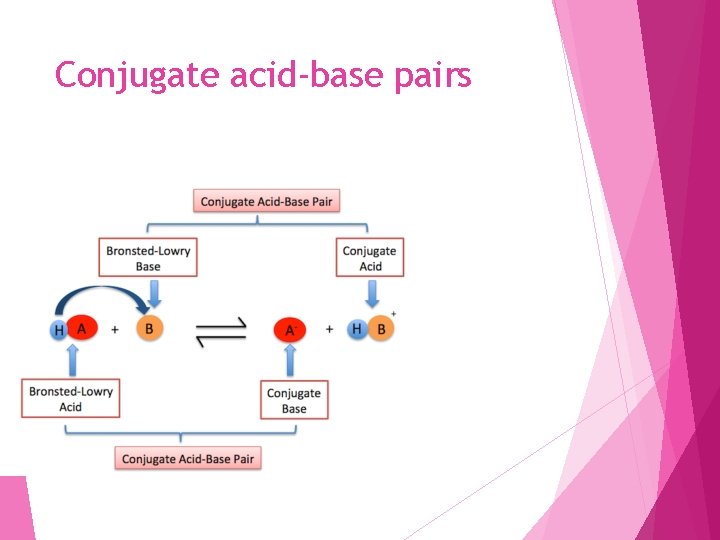
Conjugate acid-base pairs
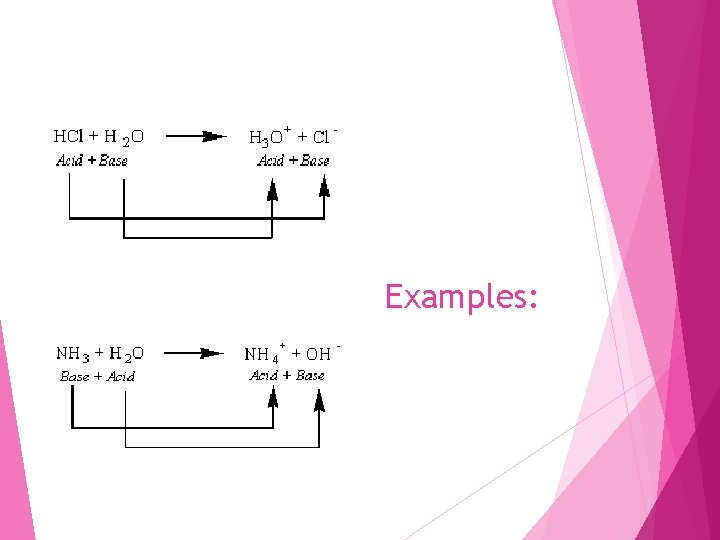
Examples:
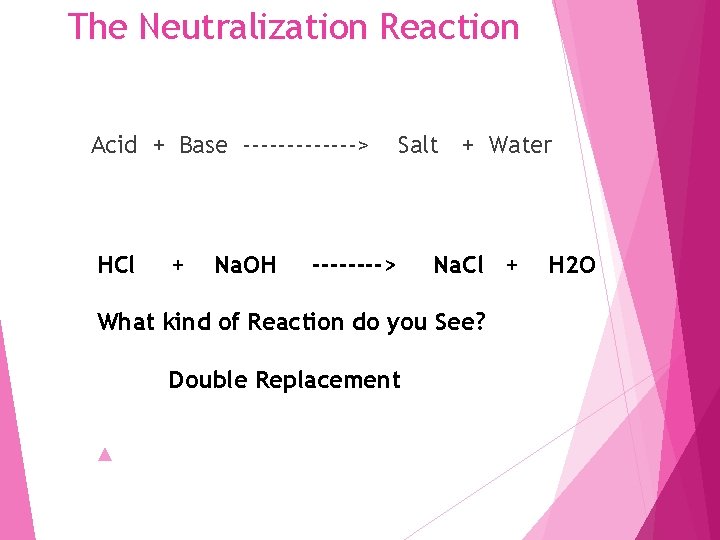
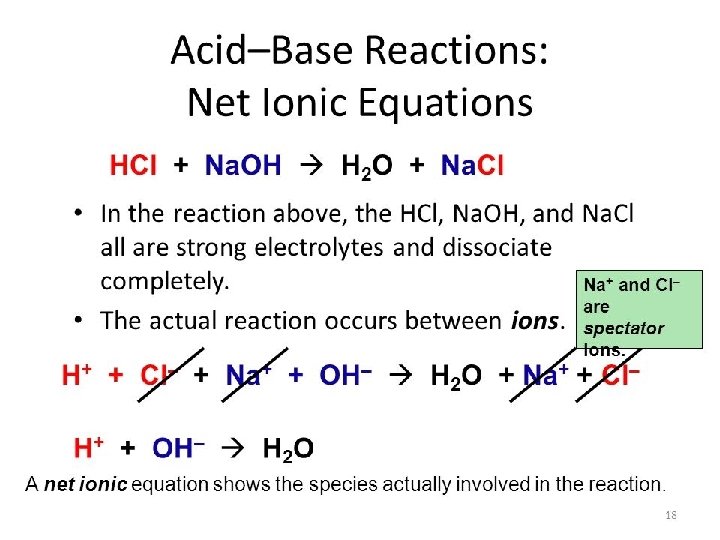
The Neutralization Reaction Acid + Base -------> HCl + Na. OH Salt + Water ----> Na. Cl + What kind of Reaction do you See? Double Replacement H 2 O
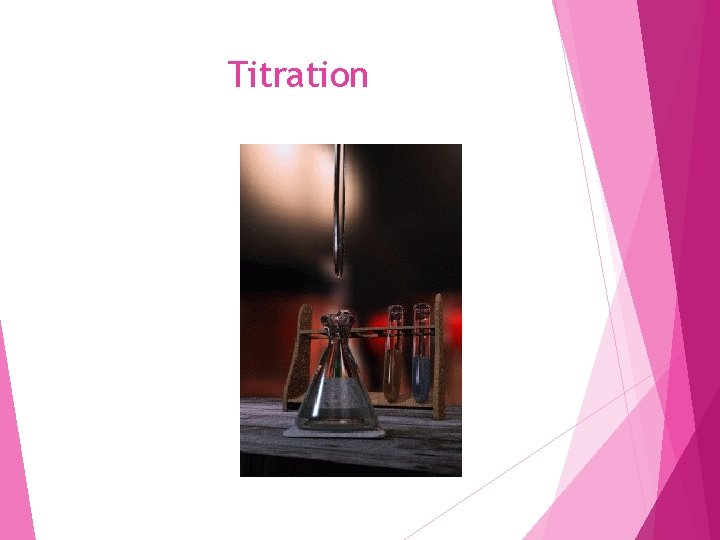
Titration
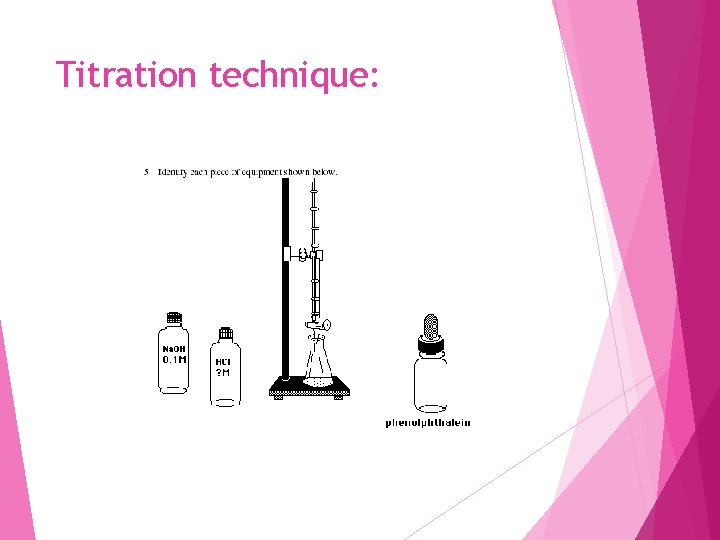
Titration technique:
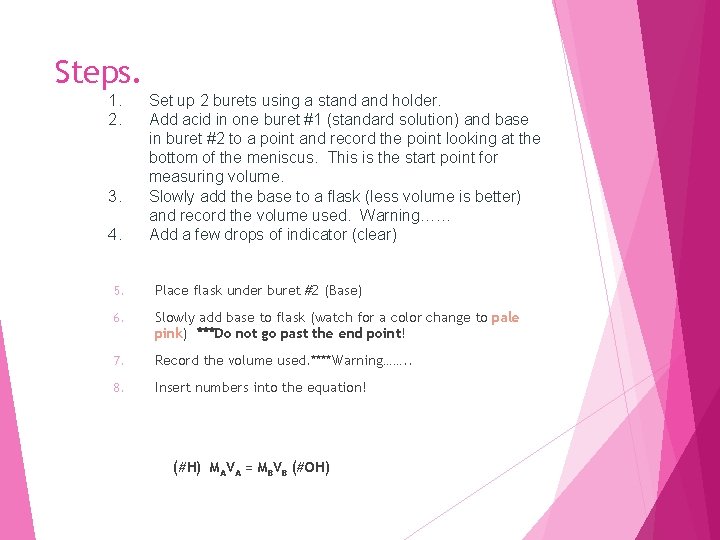
Steps. 1. 2. 3. 4. Set up 2 burets using a stand holder. Add acid in one buret #1 (standard solution) and base in buret #2 to a point and record the point looking at the bottom of the meniscus. This is the start point for measuring volume. Slowly add the base to a flask (less volume is better) and record the volume used. Warning…… Add a few drops of indicator (clear) 5. Place flask under buret #2 (Base) 6. Slowly add base to flask (watch for a color change to pale pink) ***Do not go past the end point! 7. Record the volume used. ****Warning……. . 8. Insert numbers into the equation! (#H) MAVA = MBVB (#OH)
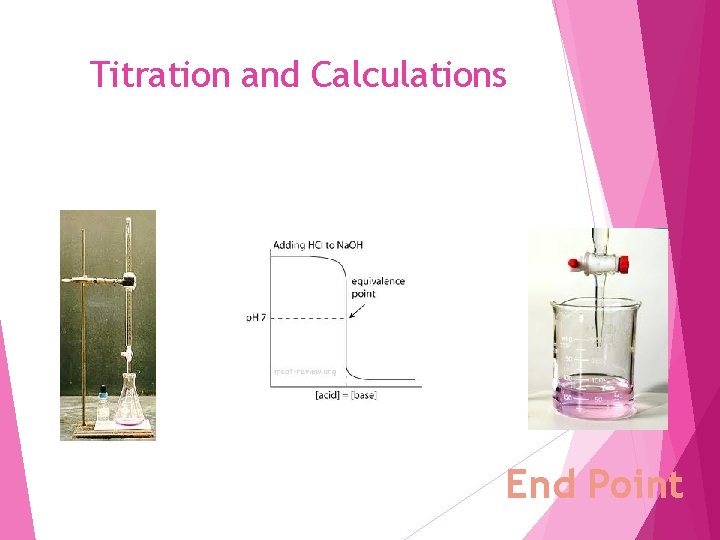
Titration and Calculations End Point
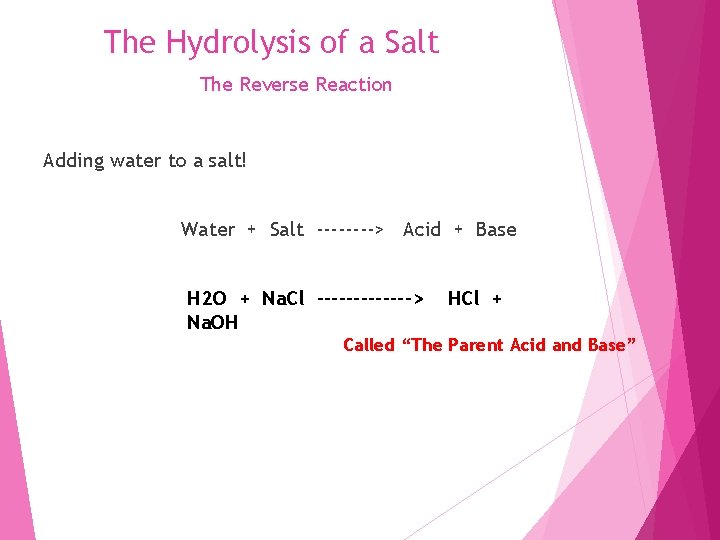
The Hydrolysis of a Salt The Reverse Reaction Adding water to a salt! Water + Salt ----> Acid + Base H 2 O + Na. Cl -------> Na. OH HCl + Called “The Parent Acid and Base”
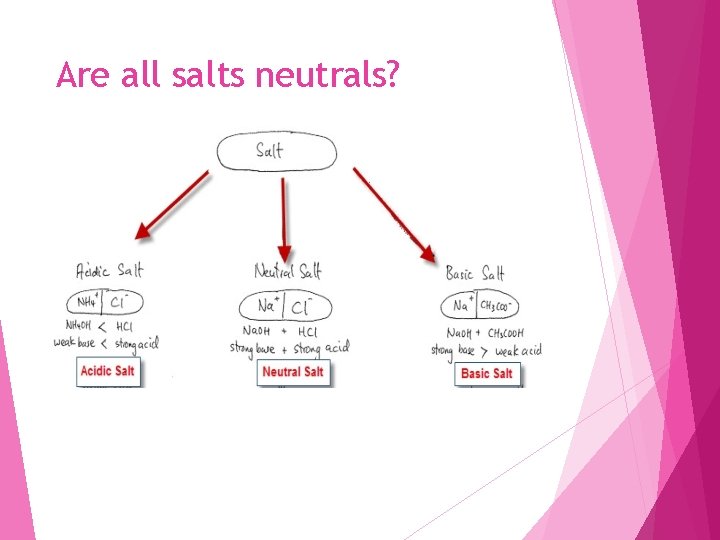
Are all salts neutrals?
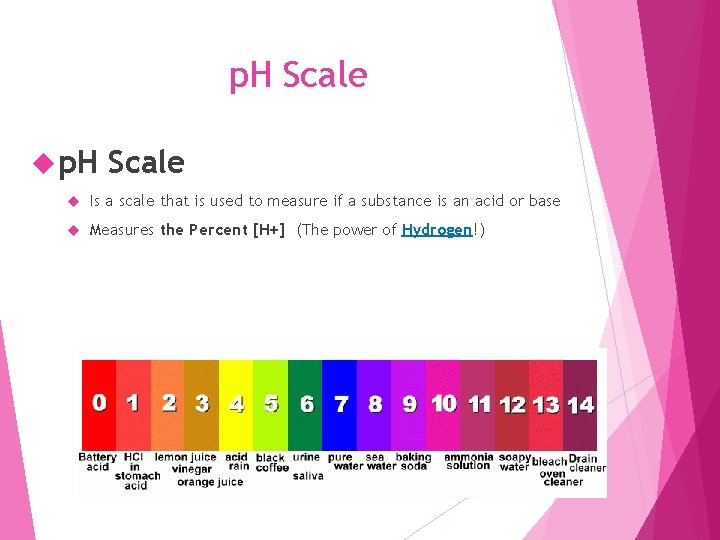
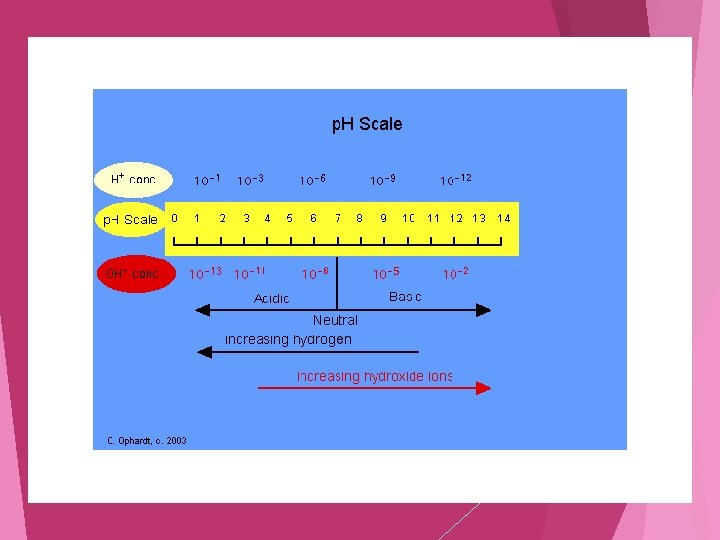
p. H Scale Is a scale that is used to measure if a substance is an acid or base Measures the Percent [H+] (The power of Hydrogen!)
K w H 2 O <------> H+aq + OH- aq Kw, p. H, p. OH Calculations (The ionization of H 2 O) K w = [H+] [OH-] 1 x 10 -14 1 Fact KH 2 O = x 10 -14 = [H+] [OH-] [H+] = 1 x 10 -7 [OH-] = 1 x 10 -7 Calculate p. H = -log[H+] p. OH = -log[OH-] p. H =7 p. OH = 7 p. H + p. OH = 14
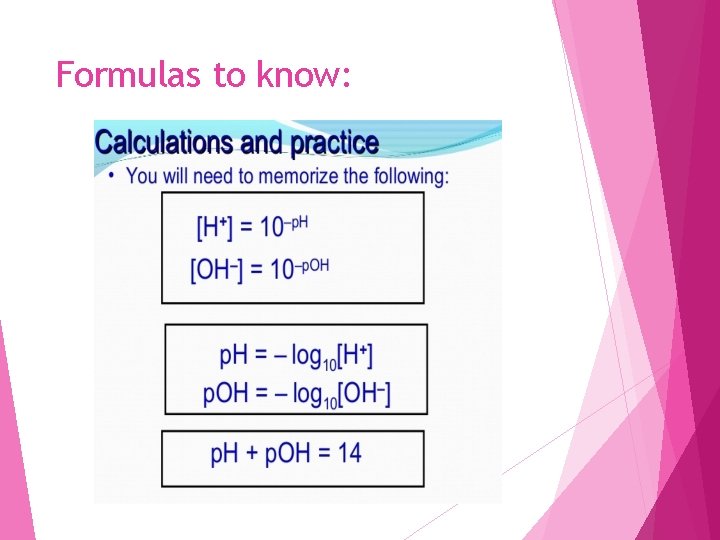
Formulas to know:
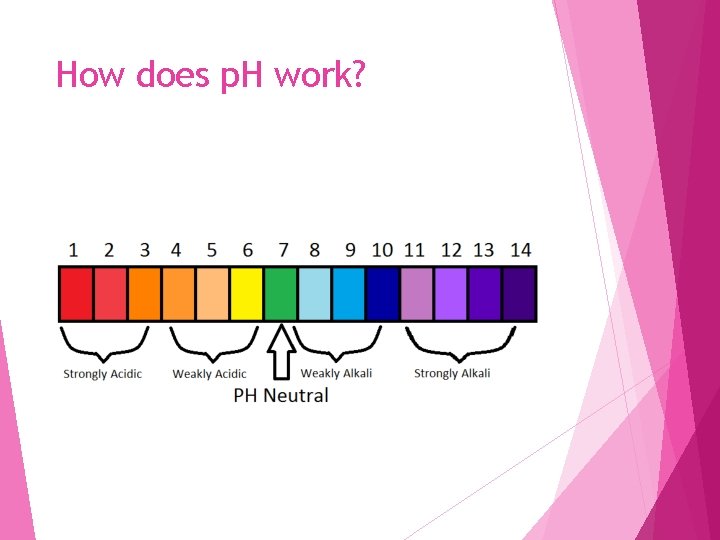
How does p. H work?
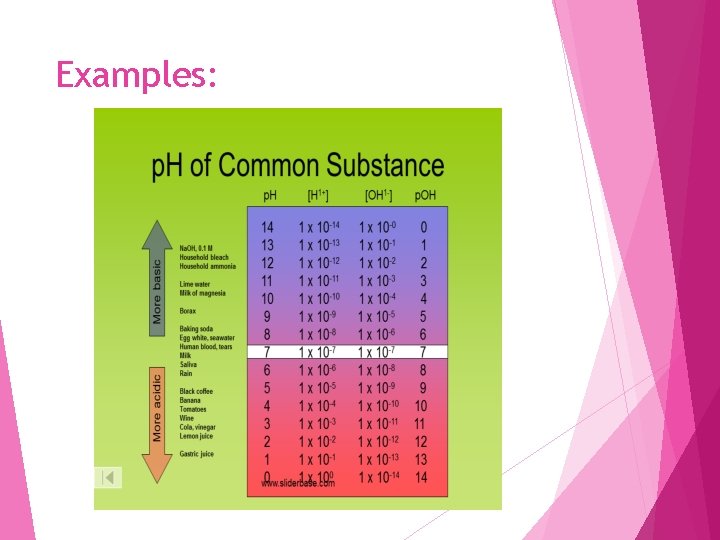
Examples:
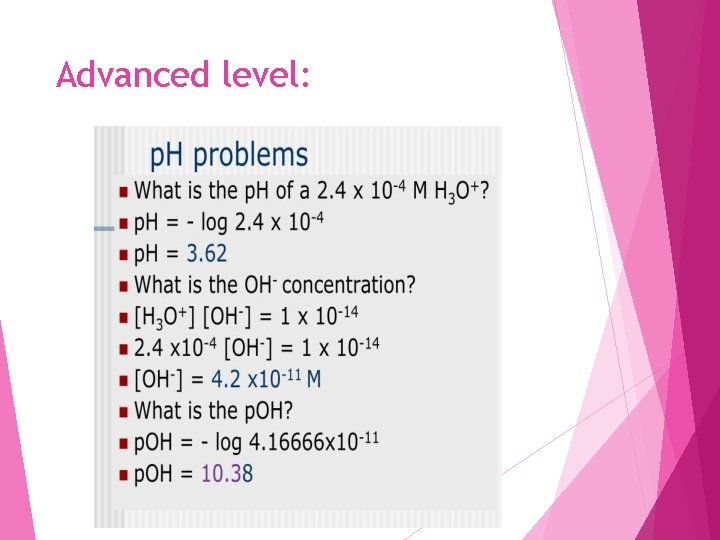
Advanced level:
- Slides: 19