
ACHIEVING SUSTAINABLE WORKPLACE HIV AIDS PROGRAMMES THROUGH A
ACHIEVING SUSTAINABLE WORKPLACE HIV & AIDS PROGRAMMES THROUGH A PHASED OUT CATALYTIC FINANCING MODEL; THE CASE OF SWEDISH WORKPLACE HIV AND AIDS PROGRAMME IN SUB- SAHARAN AFRICA
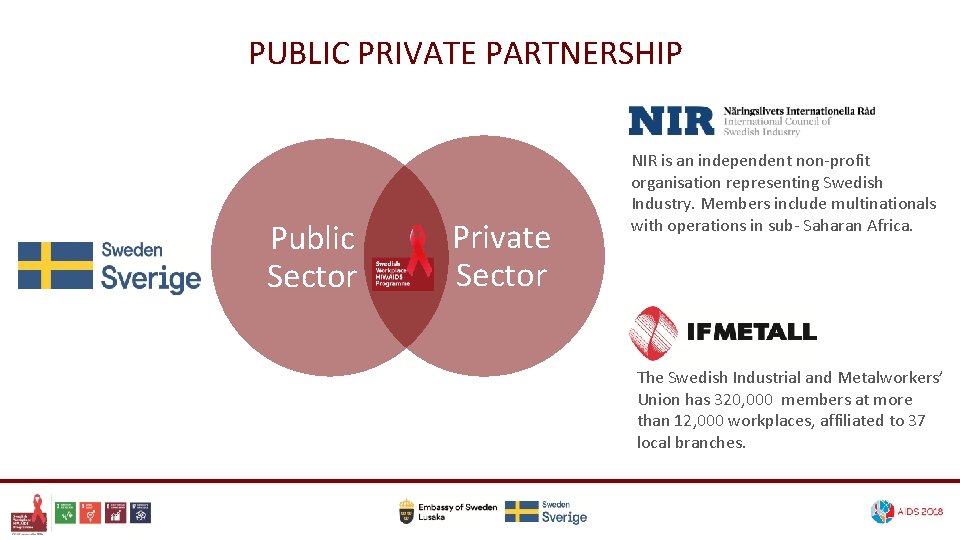
PUBLIC PRIVATE PARTNERSHIP Public Sector Private Sector NIR is an independent non-profit organisation representing Swedish Industry. Members include multinationals with operations in sub- Saharan Africa. The Swedish Industrial and Metalworkers’ Union has 320, 000 members at more than 12, 000 workplaces, affiliated to 37 local branches.
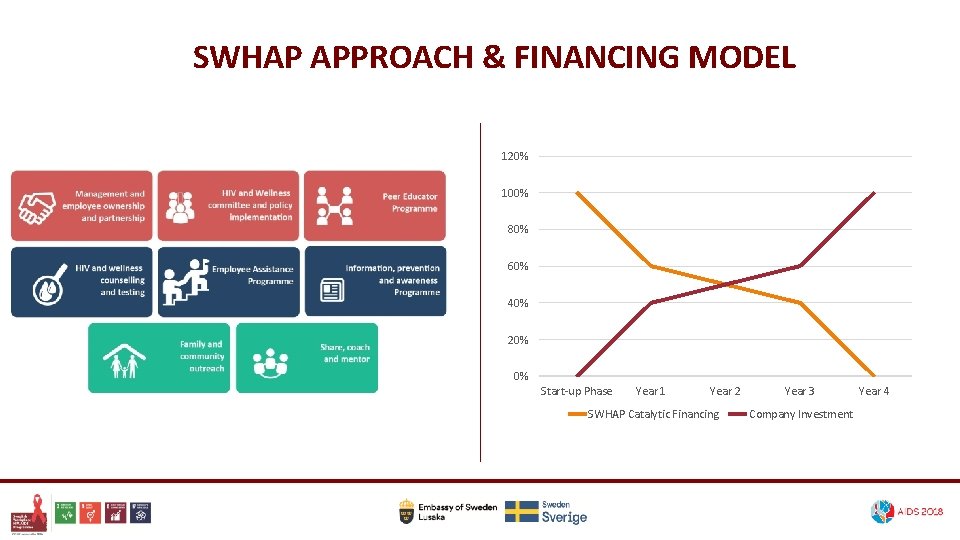
SWHAP APPROACH & FINANCING MODEL 120% 100% HIV 80% 60% 40% 20% 0% Start-up Phase Year 1 Year 2 SWHAP Catalytic Financing Year 3 Company Investment Year 4
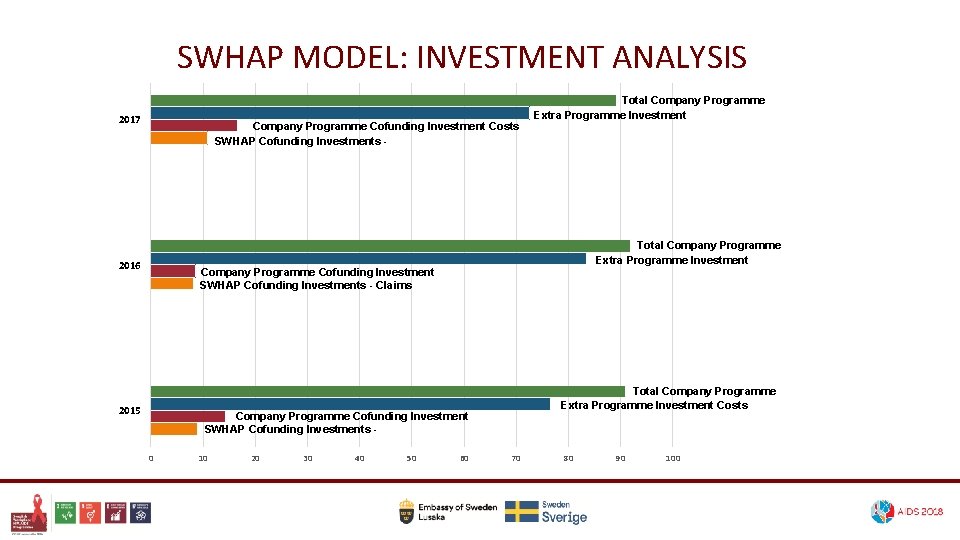
SWHAP MODEL: INVESTMENT ANALYSIS 2017 Company Programme Cofunding Investment Costs SWHAP Cofunding Investments - Total Company Programme Extra Programme Investment HIV 2016 Total Company Programme Extra Programme Investment Company Programme Cofunding Investment SWHAP Cofunding Investments - Claims 2015 Total Company Programme Extra Programme Investment Costs Company Programme Cofunding Investment SWHAP Cofunding Investments 0 10 20 30 40 50 60 70 80 90 100
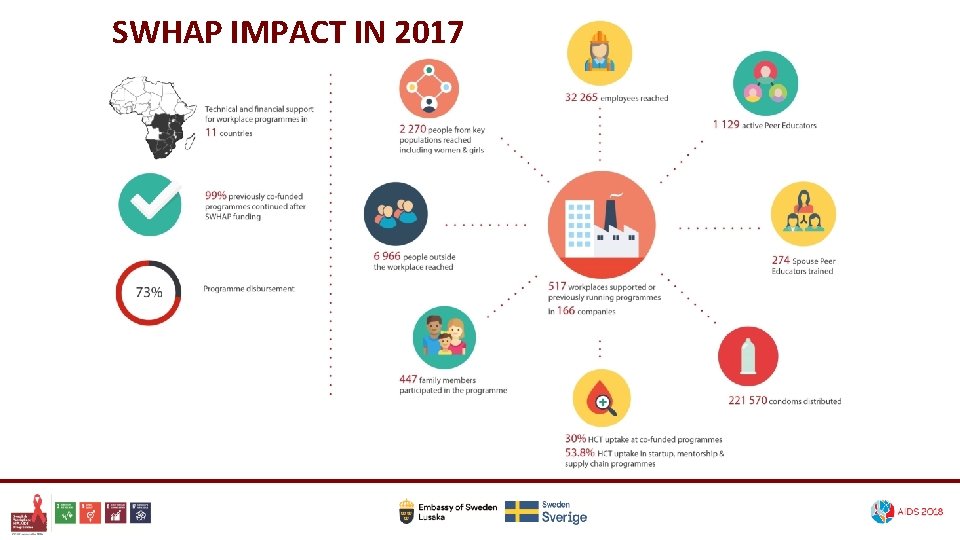
SWHAP IMPACT IN 2017 HIV
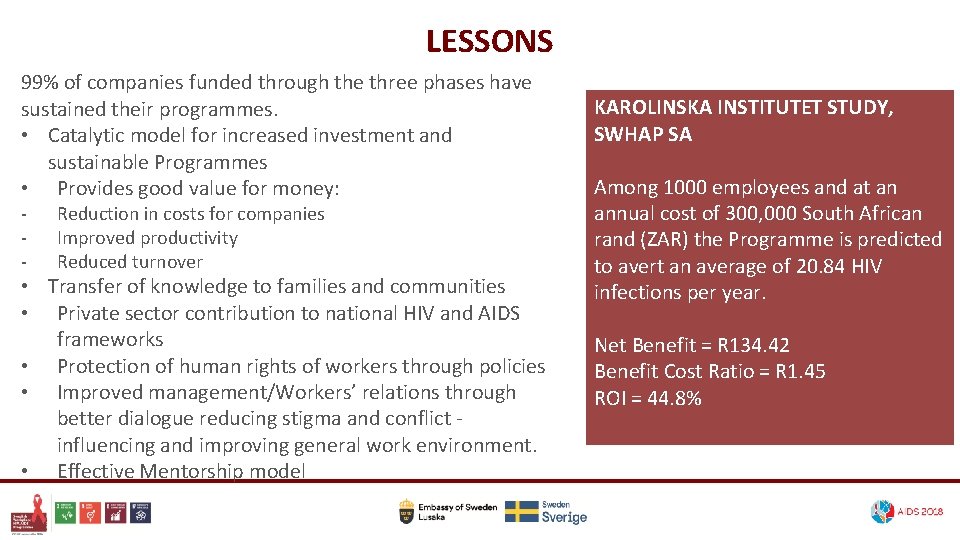
LESSONS 99% of companies funded through the three phases have sustained their programmes. • Catalytic model for increased investment and sustainable Programmes • Provides good value for money: - Reduction in costs for companies Improved productivity Reduced turnover • Transfer of knowledge to families and communities • Private sector contribution to national HIV and AIDS frameworks • Protection of human rights of workers through policies • Improved management/Workers’ relations through better dialogue reducing stigma and conflict influencing and improving general work environment. • Effective Mentorship model KAROLINSKA INSTITUTET STUDY, SWHAP SA Among 1000 employees and at an annual cost of 300, 000 South African rand (ZAR) the Programme is predicted to avert an average of 20. 84 HIV infections per year. Net Benefit = R 134. 42 Benefit Cost Ratio = R 1. 45 ROI = 44. 8%
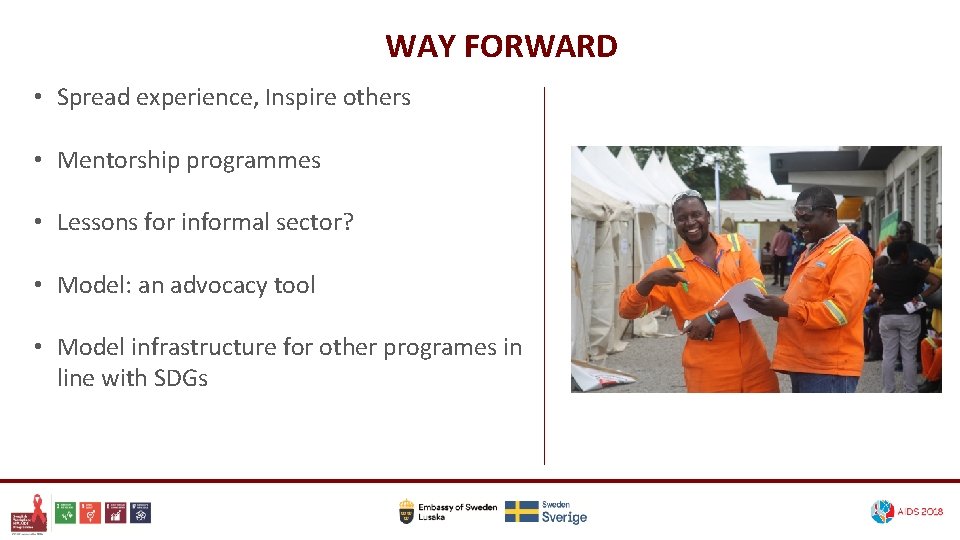
WAY FORWARD • Spread experience, Inspire others • Mentorship programmes • Lessons for informal sector? • Model: an advocacy tool HIV • Model infrastructure for other programes in line with SDGs
- Slides: 7