
Achievers Innovators and the Power of Telling Your
- Slides: 40
Achievers, Innovators and the Power of Telling Your Story: Advising to Promote Integrated Lives Erin Alanson & Debbie Brawn University Honors Program University of Cincinnati
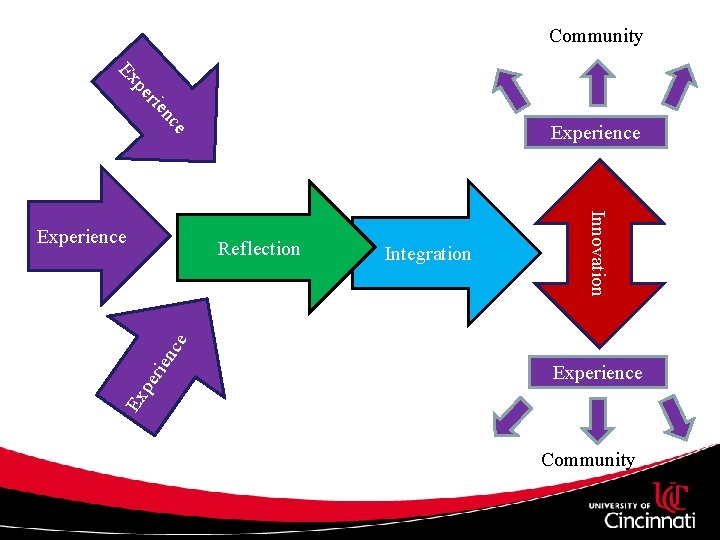
Session Goals • Discuss the relevance of Innovation Reflection Integration • Consider ways to promote reflection and integration to create innovators • Share best practices as a community invested in creating socially responsible individuals
Individual Reflection If the employer of your dream job was sitting next to you and you had 30 seconds to introduce yourself and summarize your key accomplishments, what would you say?
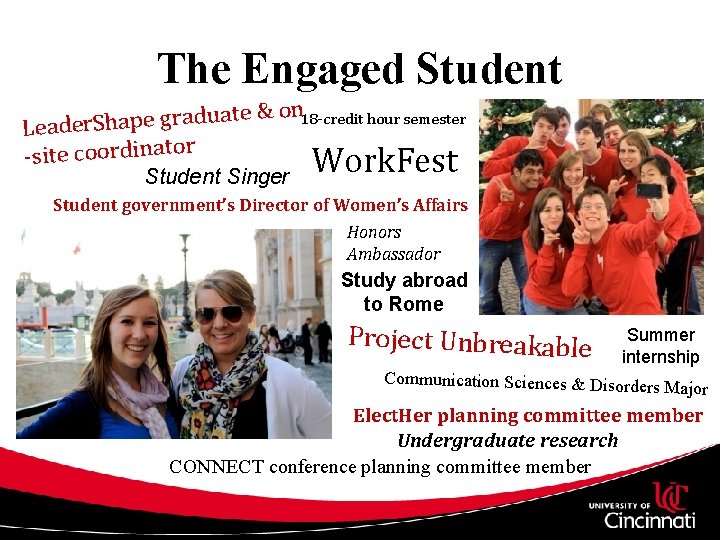
The Engaged Student & on 18 -credit hour semester e t a u d a r g e p a h S r Leade -site coordinator Student Singer Work. Fest Student government’s Director of Women’s Affairs Honors Ambassador Study abroad to Rome Project Unbreakable Summer internship Communication Sciences & Disorders Major Elect. Her planning committee member Undergraduate research CONNECT conference planning committee member
in·no·va·tion
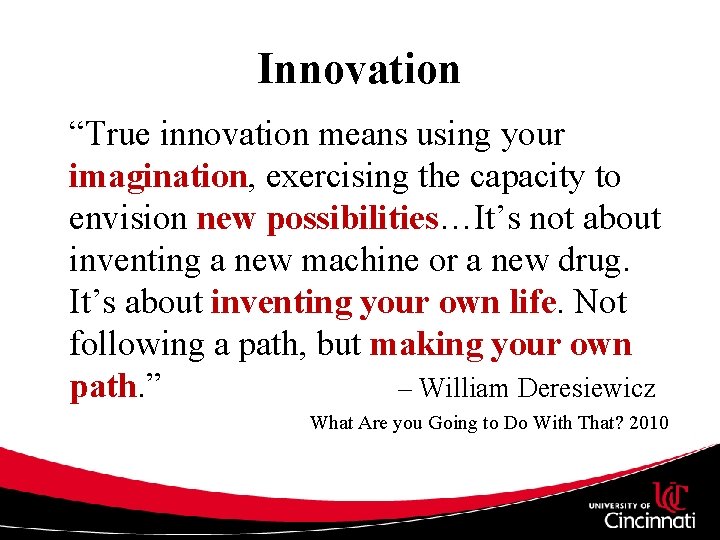
Innovation “True innovation means using your imagination, exercising the capacity to envision new possibilities…It’s not about inventing a new machine or a new drug. It’s about inventing your own life. Not following a path, but making your own path. ” – William Deresiewicz What Are you Going to Do With That? 2010
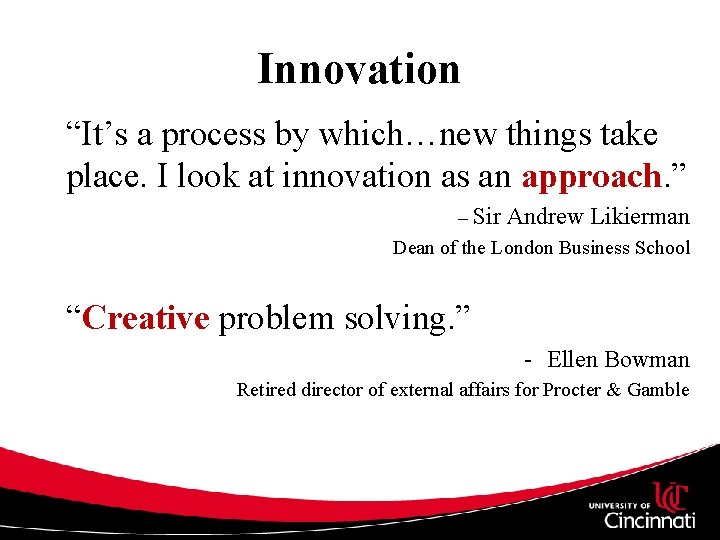
Innovation “It’s a process by which…new things take place. I look at innovation as an approach. ” – Sir Andrew Likierman Dean of the London Business School “Creative problem solving. ” - Ellen Bowman Retired director of external affairs for Procter & Gamble
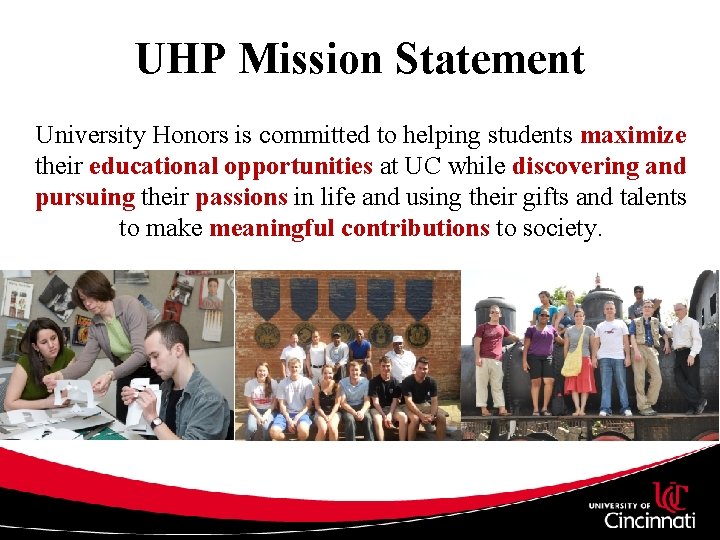
UHP Mission Statement University Honors is committed to helping students maximize their educational opportunities at UC while discovering and pursuing their passions in life and using their gifts and talents to make meaningful contributions to society.
Community nc rie pe Experience Integration Experience Ex pe rie nc e Reflection Innovation Experience Community
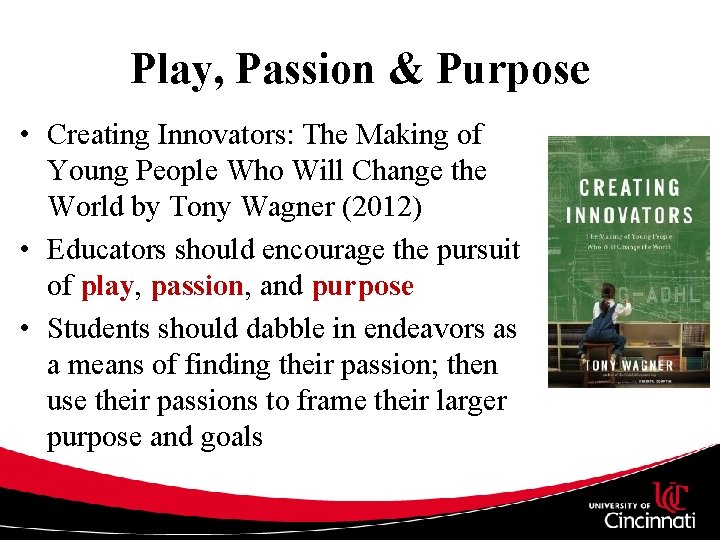
Play, Passion & Purpose • Creating Innovators: The Making of Young People Who Will Change the World by Tony Wagner (2012) • Educators should encourage the pursuit of play, passion, and purpose • Students should dabble in endeavors as a means of finding their passion; then use their passions to frame their larger purpose and goals
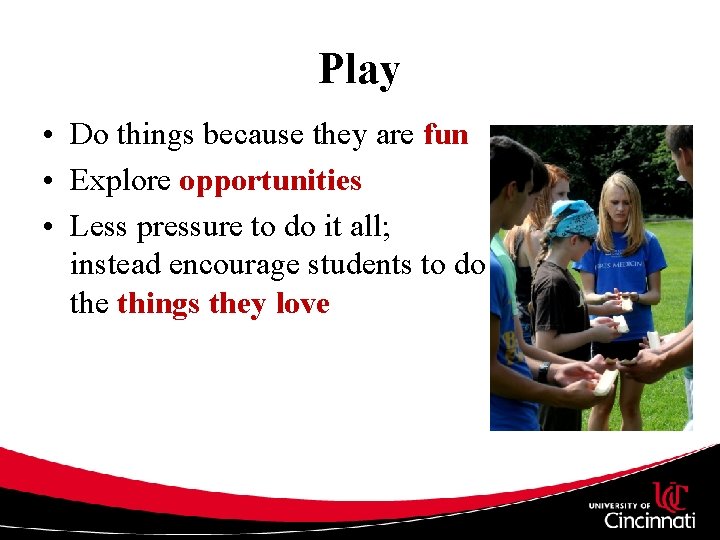
Play • Do things because they are fun • Explore opportunities • Less pressure to do it all; instead encourage students to do the things they love
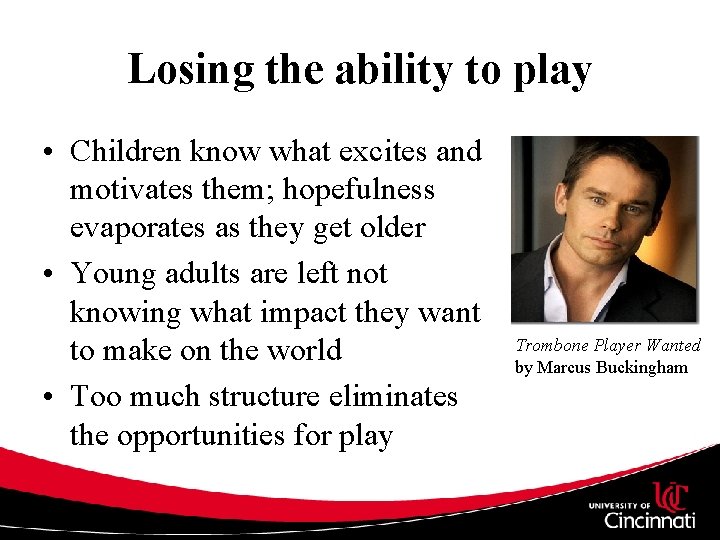
Losing the ability to play • Children know what excites and motivates them; hopefulness evaporates as they get older • Young adults are left not knowing what impact they want to make on the world • Too much structure eliminates the opportunities for play Trombone Player Wanted by Marcus Buckingham
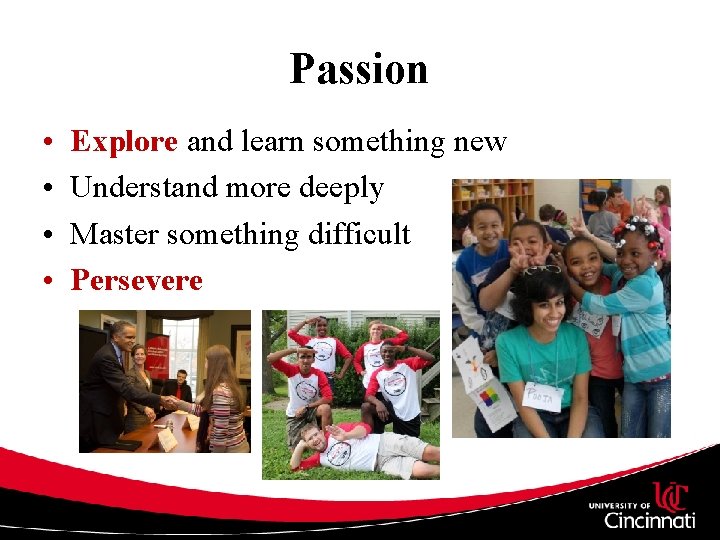
Passion • • Explore and learn something new Understand more deeply Master something difficult Persevere
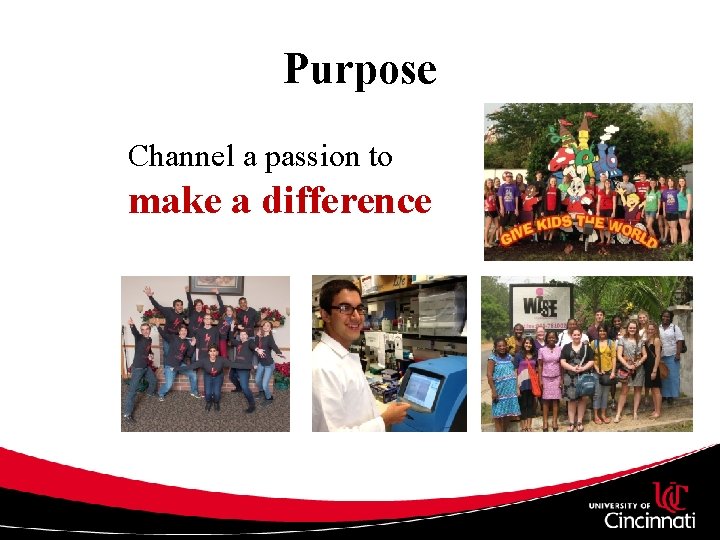
Purpose Channel a passion to make a difference
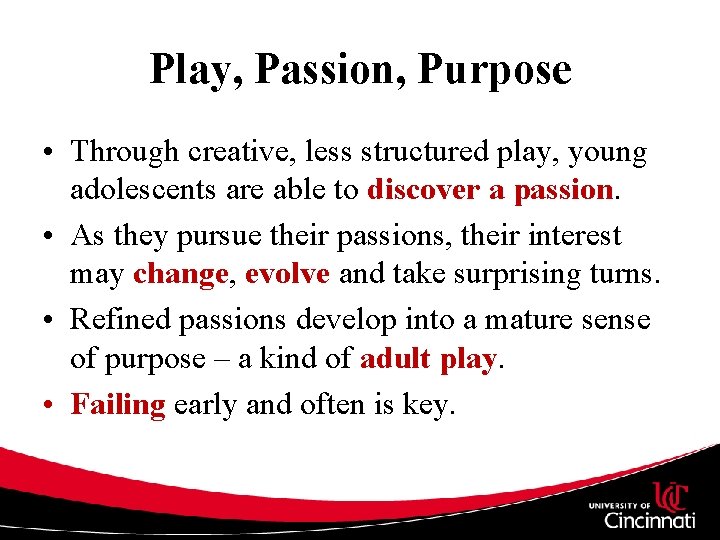
Play, Passion, Purpose • Through creative, less structured play, young adolescents are able to discover a passion. • As they pursue their passions, their interest may change, evolve and take surprising turns. • Refined passions develop into a mature sense of purpose – a kind of adult play. • Failing early and often is key.
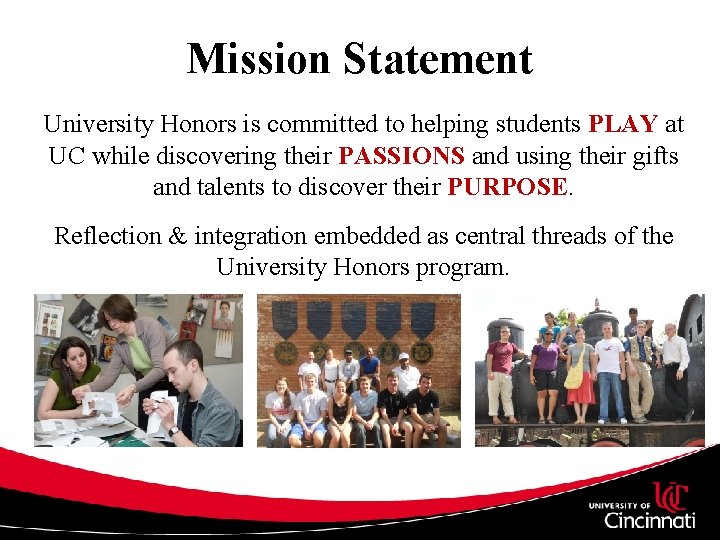
Mission Statement University Honors is committed to helping students PLAY at UC while discovering their PASSIONS and using their gifts and talents to discover their PURPOSE. Reflection & integration embedded as central threads of the University Honors program.
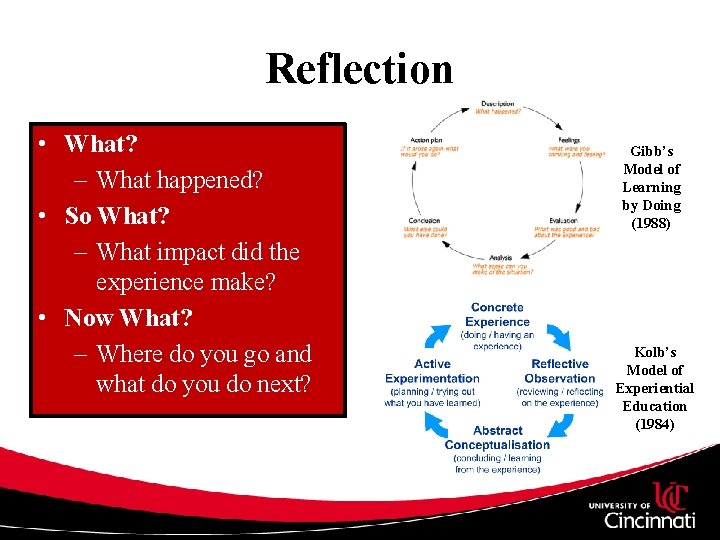
Reflection • What? – What happened? • So What? – What impact did the experience make? • Now What? – Where do you go and what do you do next? Gibb’s Model of Learning by Doing (1988) Kolb’s Model of Experiential Education (1984)
Integration “Fostering students’ abilities to integrate learning – across courses, over time, and between campus and community life – is one of the most important goals and challenges of higher education. ” – Association of American Colleges and Universities The Carnegie Foundation for the Advancement of Teaching
Integration “Application of knowledge takes precedence over acquisition and mastery of facts alone, activating a dynamic process of question posing, problem posing and solving, decision making, high-order critical thinking, and reflexivity. ” – Julie Klein professor of humanities in interdisciplinary studies Wayne State University
Integration “Few college graduates can expect to spend a whole career with the same employer or even in the same line of work. To participate responsibility as local citizens, then, people must also be citizens of the world, aware of complex interdependence and able to synthesize information from a wide array of sources, learn from experiences, and make connections between theory and practice. ” – Huber, Hutchings, Gale Peer Review
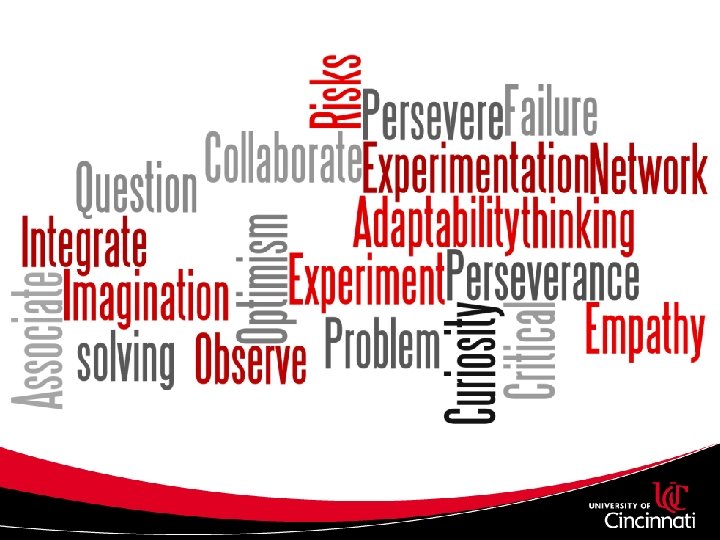
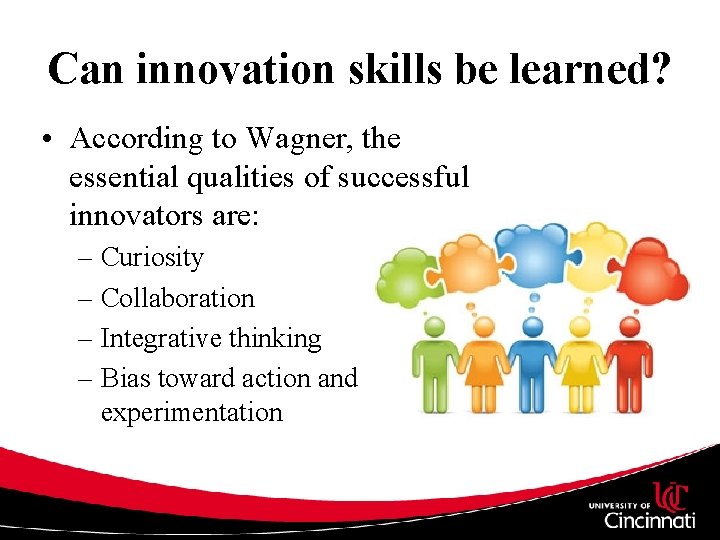
Can innovation skills be learned? • According to Wagner, the essential qualities of successful innovators are: – Curiosity – Collaboration – Integrative thinking – Bias toward action and experimentation
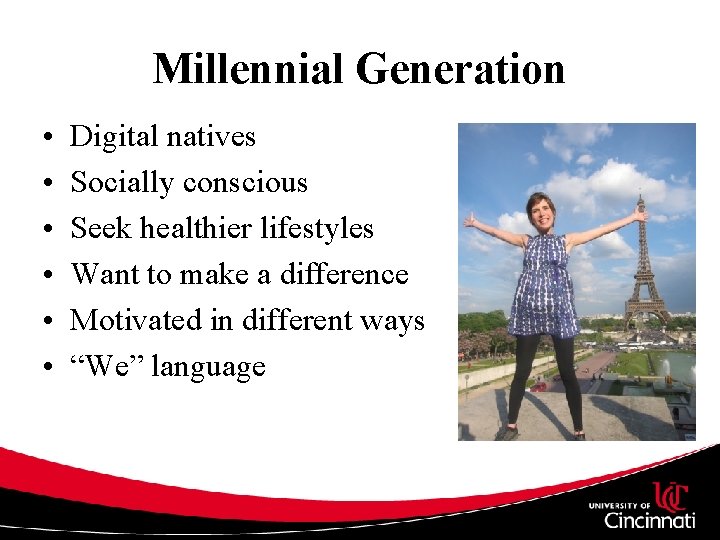
Millennial Generation • • • Digital natives Socially conscious Seek healthier lifestyles Want to make a difference Motivated in different ways “We” language
Curiosity • Develop a habit of asking good questions and a desire to understand more deeply • Examples: – First-year advising sessions – Gateway to University Honors – FYE common reading
Collaboration • Listening and learning from others who have perspectives and expertise very different from your own • Examples: – Group advising sessions – Interdisciplinary, project-based seminars
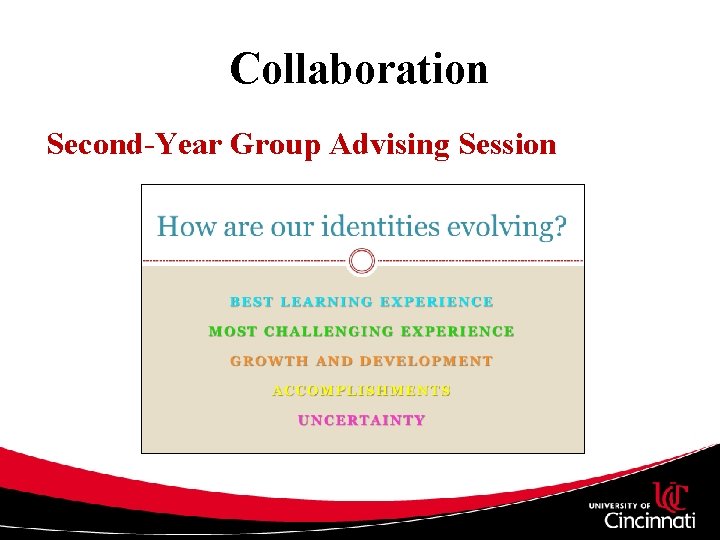
Collaboration Second-Year Group Advising Session
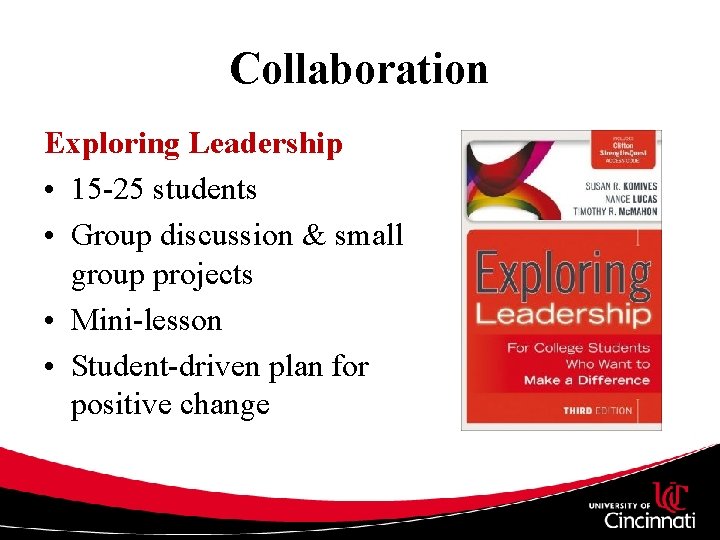
Collaboration Exploring Leadership • 15 -25 students • Group discussion & small group projects • Mini-lesson • Student-driven plan for positive change
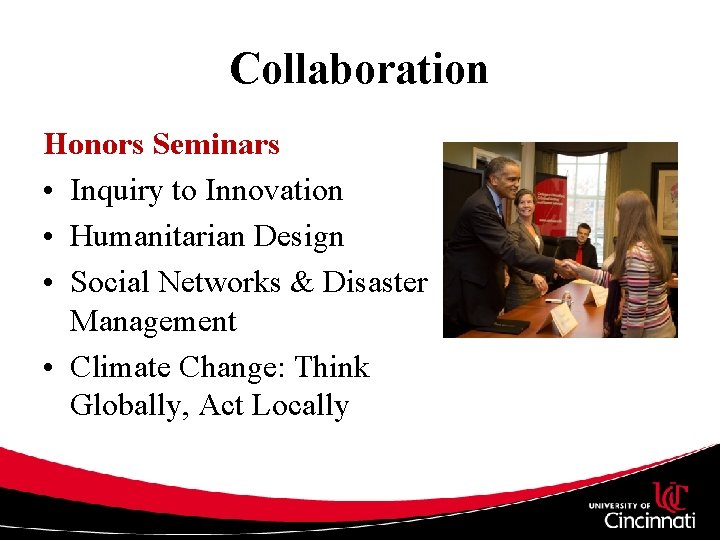
Collaboration Honors Seminars • Inquiry to Innovation • Humanitarian Design • Social Networks & Disaster Management • Climate Change: Think Globally, Act Locally
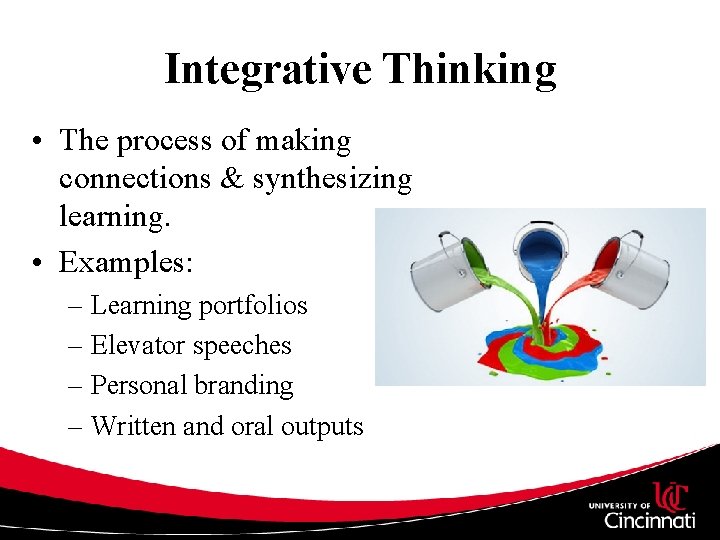
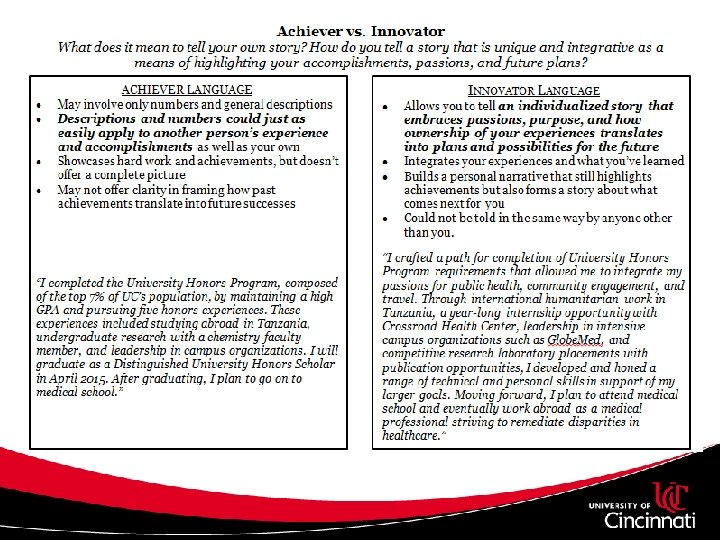
Integrative Thinking • The process of making connections & synthesizing learning. • Examples: – Learning portfolios – Elevator speeches – Personal branding – Written and oral outputs
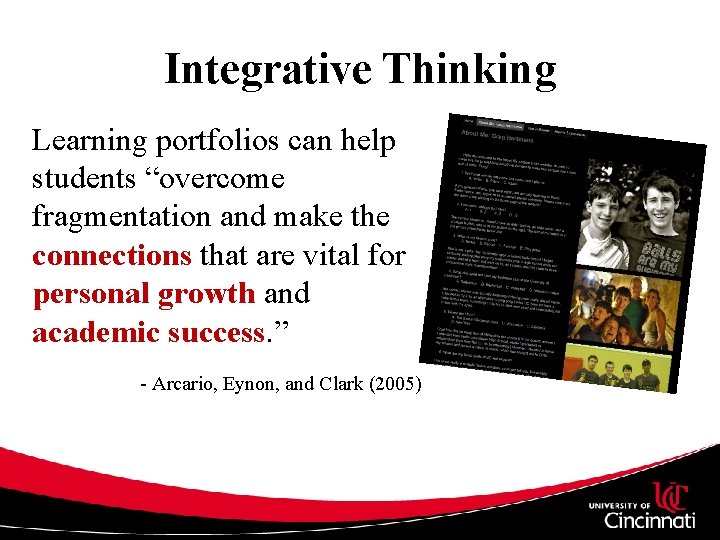
Integrative Thinking Learning portfolios can help students “overcome fragmentation and make the connections that are vital for personal growth and academic success. ” - Arcario, Eynon, and Clark (2005)
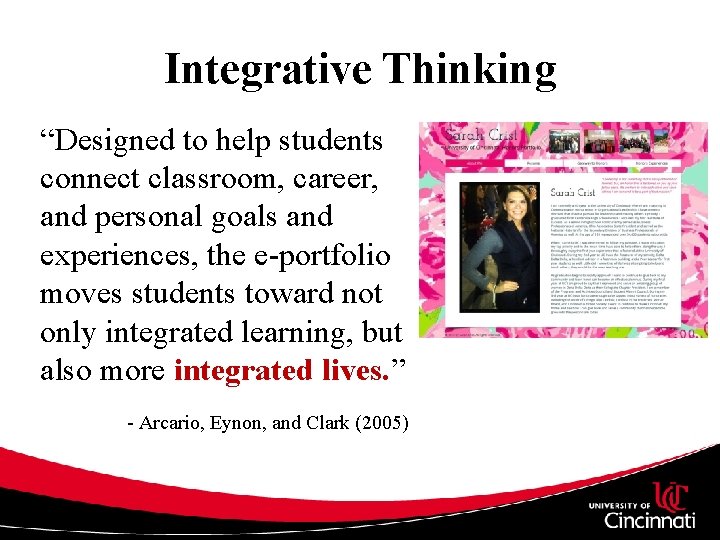
Integrative Thinking “Designed to help students connect classroom, career, and personal goals and experiences, the e-portfolio moves students toward not only integrated learning, but also more integrated lives. ” - Arcario, Eynon, and Clark (2005)
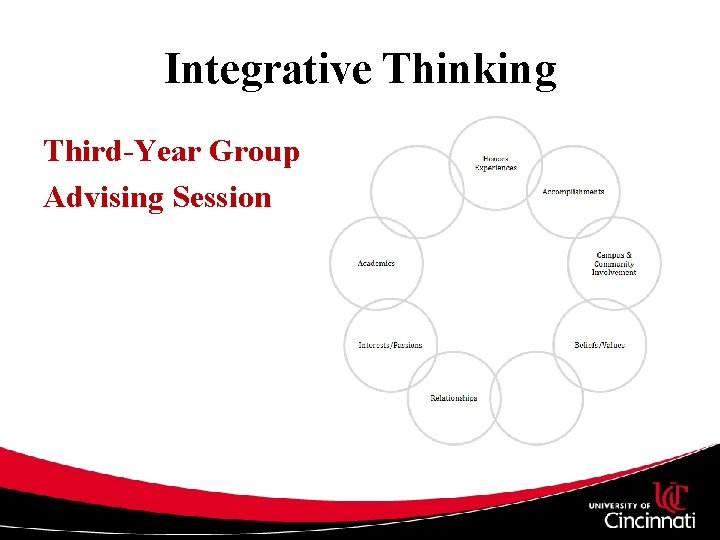
Integrative Thinking Third-Year Group Advising Session
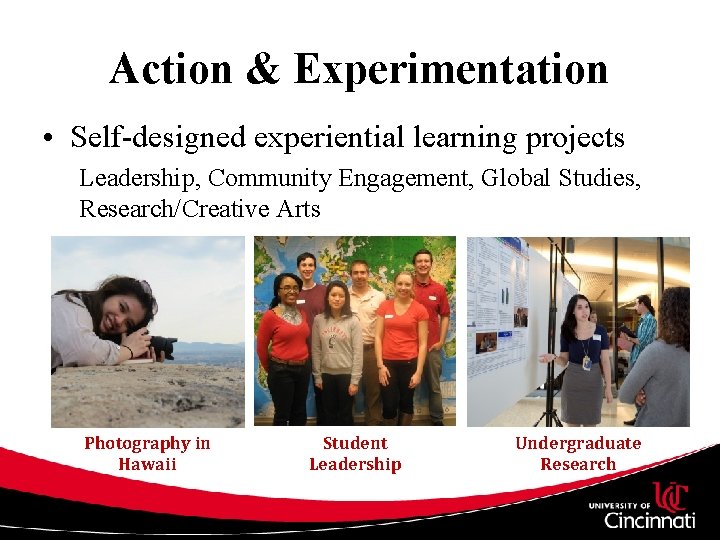
Action & Experimentation • Self-designed experiential learning projects Leadership, Community Engagement, Global Studies, Research/Creative Arts Photography in Hawaii Student Leadership Undergraduate Research
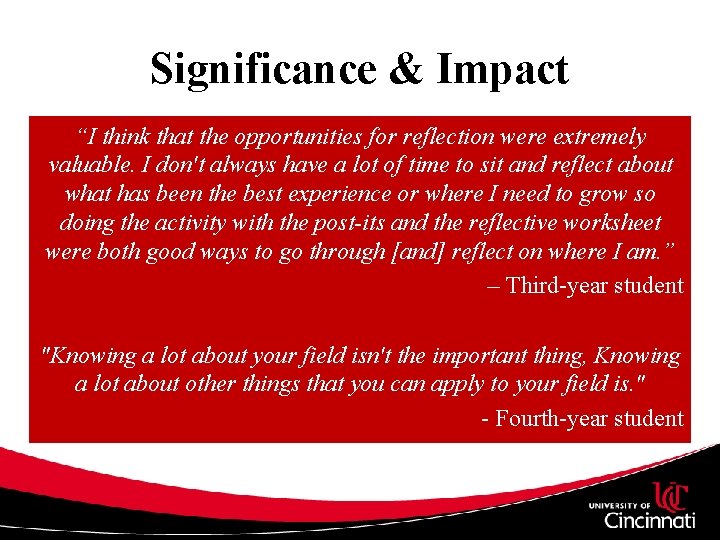
Significance & Impact “I think that the opportunities for reflection were extremely valuable. I don't always have a lot of time to sit and reflect about what has been the best experience or where I need to grow so doing the activity with the post-its and the reflective worksheet were both good ways to go through [and] reflect on where I am. ” – Third-year student "Knowing a lot about your field isn't the important thing, Knowing a lot about other things that you can apply to your field is. " - Fourth-year student
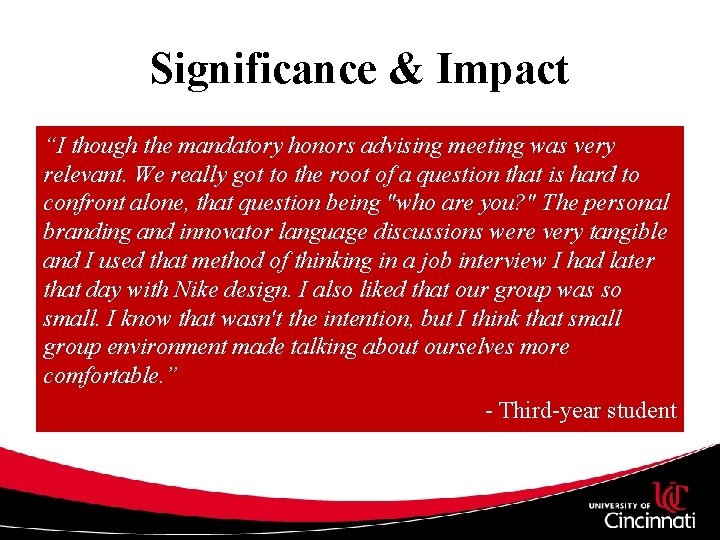
Significance & Impact “I though the mandatory honors advising meeting was very relevant. We really got to the root of a question that is hard to confront alone, that question being "who are you? " The personal branding and innovator language discussions were very tangible and I used that method of thinking in a job interview I had later that day with Nike design. I also liked that our group was so small. I know that wasn't the intention, but I think that small group environment made talking about ourselves more comfortable. ” - Third-year student
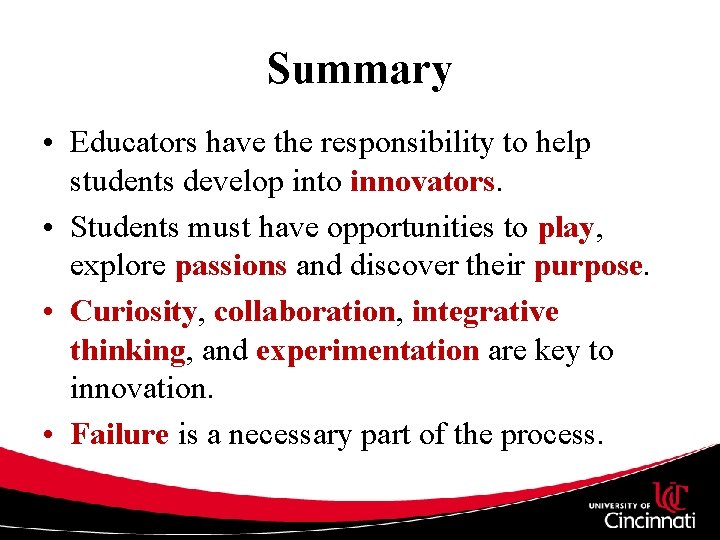
Summary • Educators have the responsibility to help students develop into innovators. • Students must have opportunities to play, explore passions and discover their purpose. • Curiosity, collaboration, integrative thinking, and experimentation are key to innovation. • Failure is a necessary part of the process.
Sharing Ideas • What ways are students being encouraged to play, explore their passions and discover their purpose? • What ways are students being encouraged to reflect and integrate their learning? • In what ways can we change our approaches to better meet the needs of the millennial generation?
References Arcario, P. , Eynon, B. & Clark, J. E. (2005). Making connections: Integrated learning, integrated lives. Peer Review, 7(4), 15 -17. Deresiewicz, W. (2010). What are you going to do with that? The Chronicle of Higher Education. Klein, J. T. (2005). Integrative learning and interdisciplinary studies. Peer Review, 7(4), 8 -10. Kuh, G. (2008). High-impact educational practices: What they are, who has access to them, and why they matter. Washington, D. C. : Association of American Colleges and Universities. Lang, J. (2012). Helping Students to Tell Their Stories. The Chronicle of Higher Education. Nash, R. J. & Murray, M. C. (2010). Helping college students find purpose: The campus guide to meaning-making. San Francisco: Jossey-Bass. Wagner, T. (2012). Creating innovators: The making of young people who will change the world. New York: Scribner.
Contact Information http: //www. uc. edu/honors@uc. edu Erin Alanson Debbie Brawn Associate Director University of Cincinnati Erin. Alanson@uc. edu 513 -556 -6288 Administrative Director University of Cincinnati Debbie. Brawn@uc. edu 513 -556 -6266