
Achieve Scholars Peer Mentoring Creating Systems of Support
- Slides: 26
Achieve Scholars Peer Mentoring - Creating Systems of Support for STEM Students EVERARDO BARRAZA – COORDINATOR AND INSTRUCTOR JUSTINE NGUYEN – SENIOR PEER MENTOR
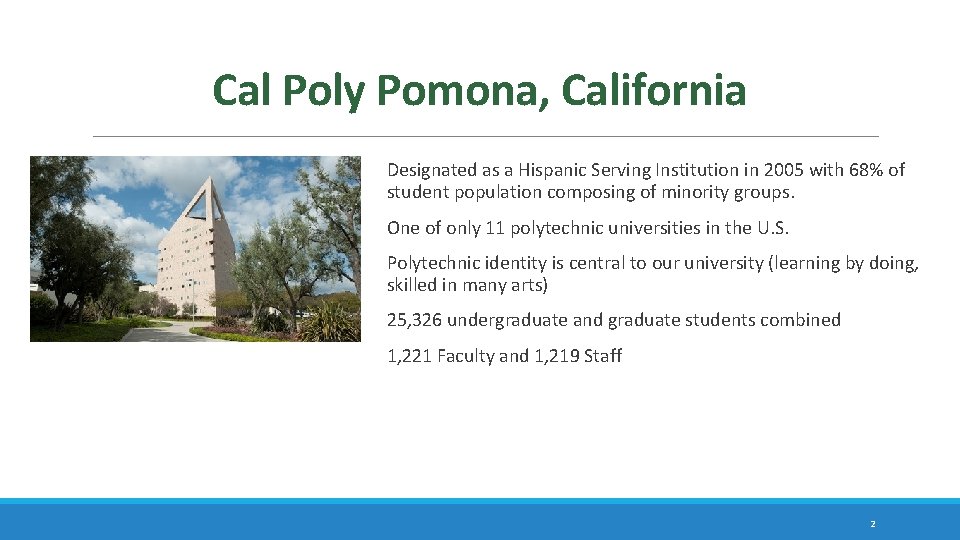
Cal Poly Pomona, California Designated as a Hispanic Serving Institution in 2005 with 68% of student population composing of minority groups. One of only 11 polytechnic universities in the U. S. Polytechnic identity is central to our university (learning by doing, skilled in many arts) 25, 326 undergraduate and graduate students combined 1, 221 Faculty and 1, 219 Staff 2
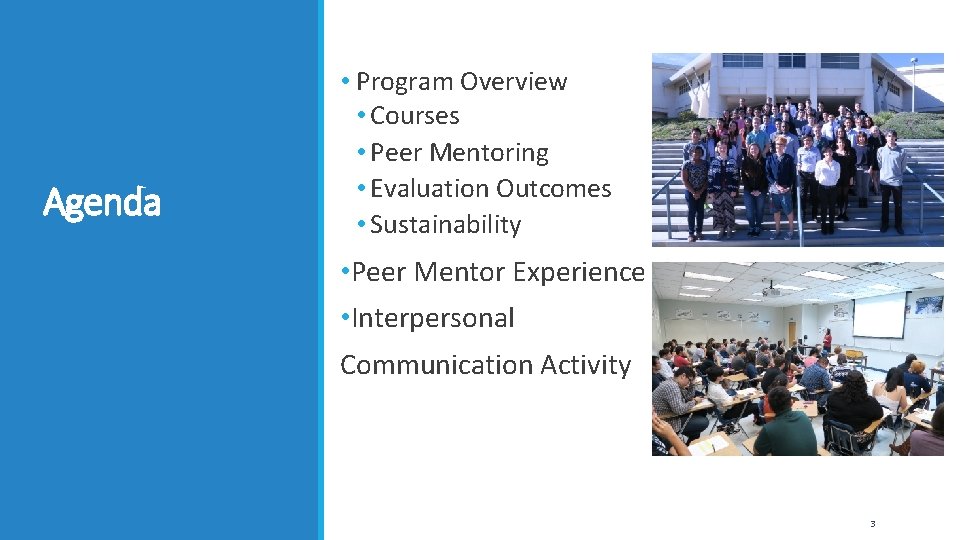
Agenda • Program Overview • Courses • Peer Mentoring • Evaluation Outcomes • Sustainability • Peer Mentor Experience • Interpersonal Communication Activity 3
Achieve Scholars Program (ASP) Overview The U. S. Department of Education Title III Achieve Scholars Program’s goal is to support low-income, first-generation, and underrepresented minority students in STEM by introducing them to the high-impact practice of undergraduate research and peer mentoring. 4
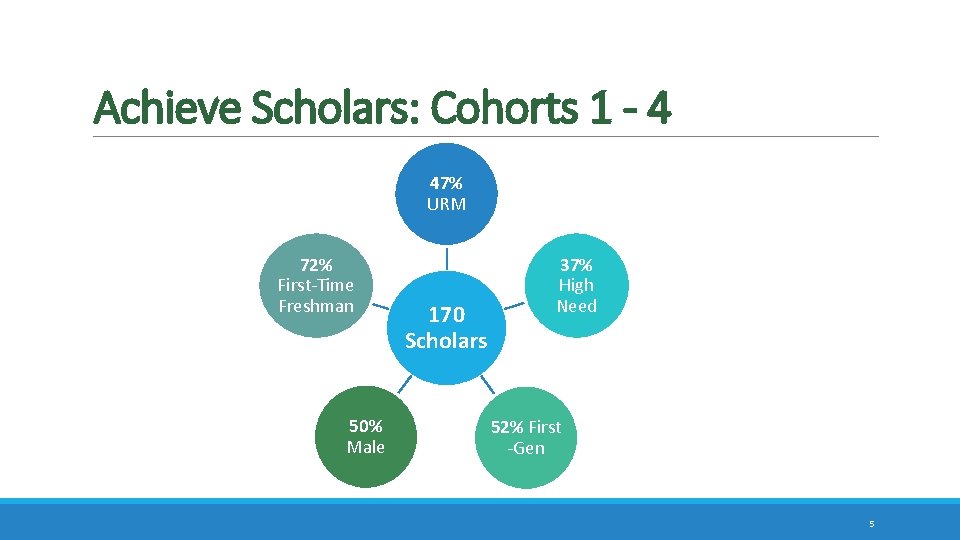
Achieve Scholars: Cohorts 1 - 4 47% URM 72% First-Time Freshman 50% Male 170 Scholars 37% High Need 52% First -Gen 5
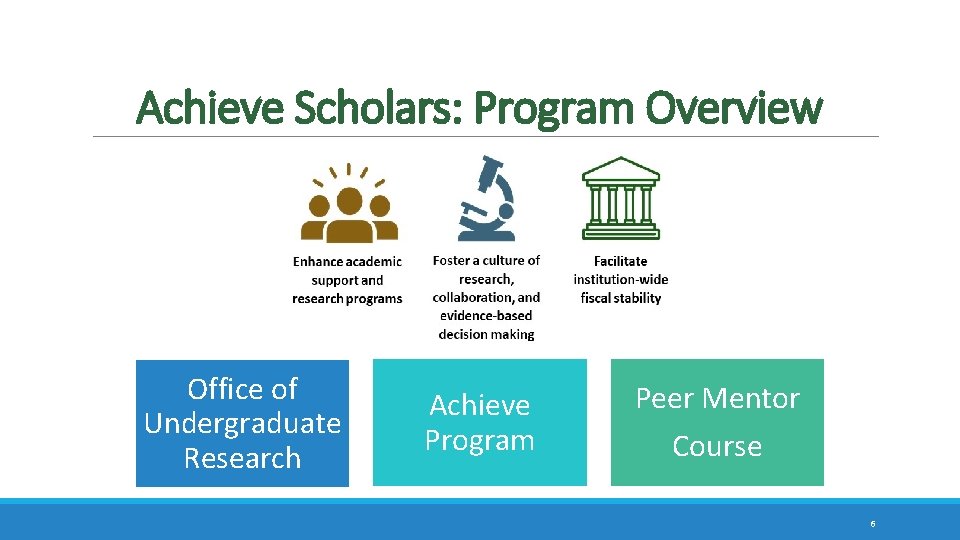
Achieve Scholars: Program Overview Office of Undergraduate Research Achieve Program Peer Mentor Course 6
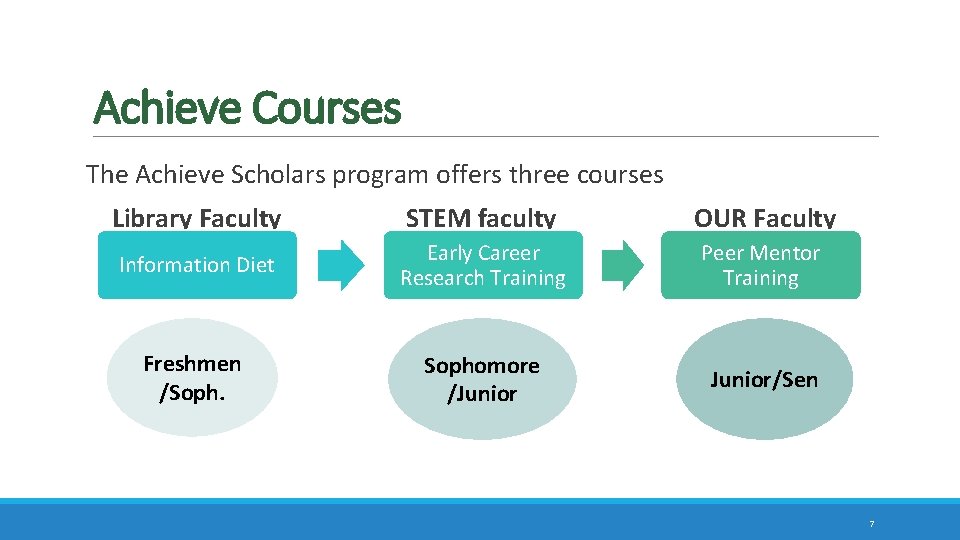
Achieve Courses The Achieve Scholars program offers three courses Library Faculty STEM faculty OUR Faculty Information Diet Early Career Research Training Peer Mentor Training Freshmen /Soph. Sophomore /Junior/Sen 7
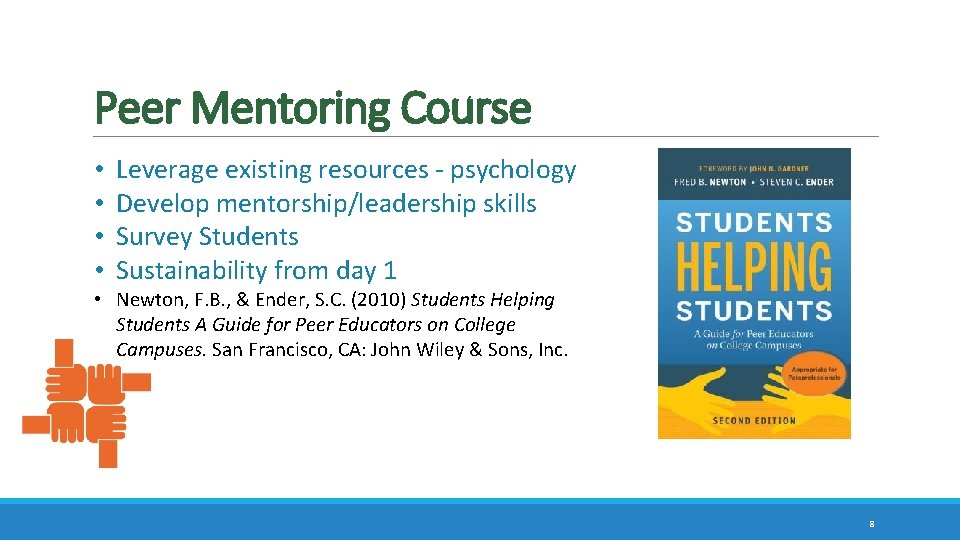
Peer Mentoring Course • • Leverage existing resources - psychology Develop mentorship/leadership skills Survey Students Sustainability from day 1 • Newton, F. B. , & Ender, S. C. (2010) Students Helping Students A Guide for Peer Educators on College Campuses. San Francisco, CA: John Wiley & Sons, Inc. 8
Multi-modal Supervision Lecture o. Mock Situations/Role Playing o Peer mentor discussion activity o Personal development o Professional Development o Supervised mentorship discussion o Weekly journals 9
10
Peer Mentor Experience • First Impressions: How It All Started • My Mentee Experience • Growing Through the Program • Becoming a Peer Mentor • What I’ve Learned as a Peer Mentor 11
Peer Mentor Activity - Interpersonal Communication Skills • What are Interpersonal Communication Skills and why is it important? • ACTIVITY: • Partner up • One partner talks about a problem (it can be minor) for 1 minute • Listener’s job is to not interrupt but to just listen and pay attention to: • • Tone Body language Inflections Words of the speaker 12
Outcomes
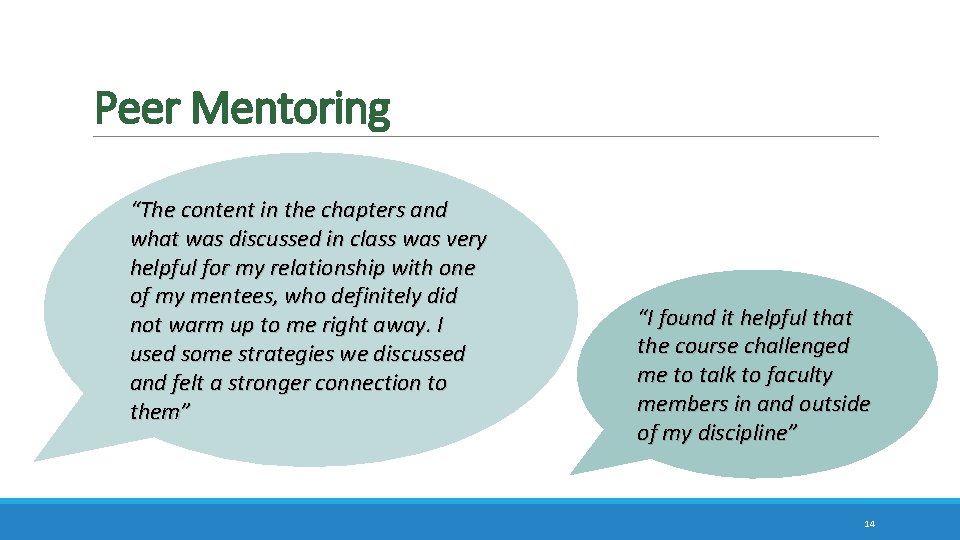
Peer Mentoring “The content in the chapters and what was discussed in class was very helpful for my relationship with one of my mentees, who definitely did not warm up to me right away. I used some strategies we discussed and felt a stronger connection to them” “I found it helpful that the course challenged me to talk to faculty members in and outside of my discipline” 14
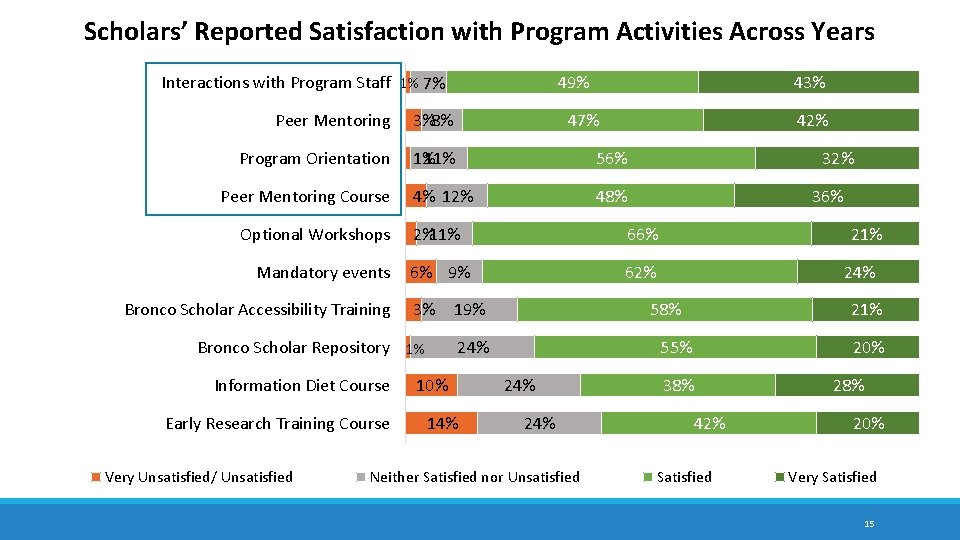
Scholars’ Reported Satisfaction with Program Activities Across Years 49% Interactions with Program Staff 1% 7% 43% Peer Mentoring 3%8% Program Orientation 1% 11% 56% 4% 12% 48% Peer Mentoring Course Optional Workshops Mandatory events Bronco Scholar Accessibility Training Early Research Training Course Very Unsatisfied/ Unsatisfied 42% 36% 2%11% 66% 6% 9% 62% 3% Bronco Scholar Repository 1% Information Diet Course 47% 19% 14% 24% 58% 24% 10% 21% 55% 24% Neither Satisfied nor Unsatisfied 20% 38% 42% Satisfied 28% 20% Very Satisfied 15
Participants’ Sense of Belonging 16
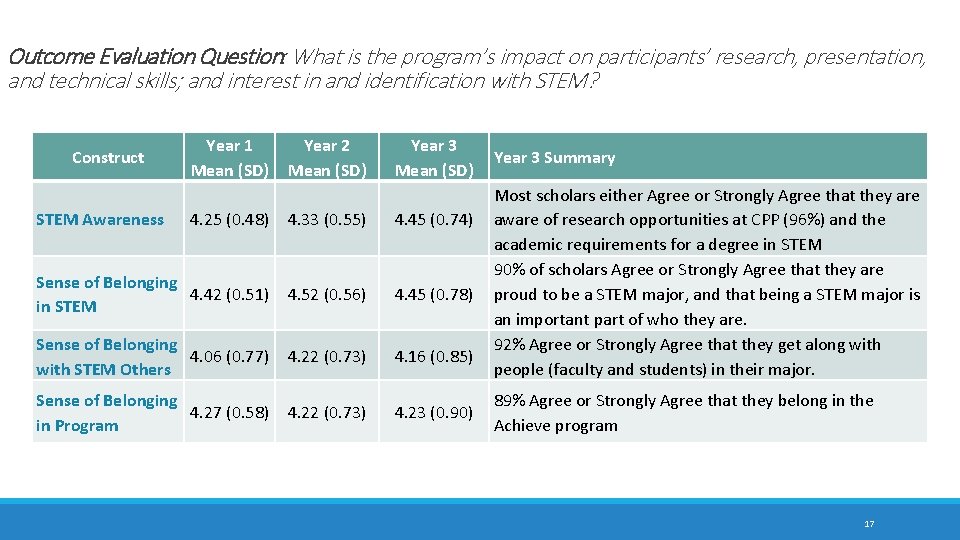
Outcome Evaluation Question: What is the program’s impact on participants’ research, presentation, and technical skills; and interest in and identification with STEM? Construct STEM Awareness Year 1 Mean (SD) Year 2 Mean (SD) Year 3 Mean (SD) 4. 25 (0. 48) 4. 33 (0. 55) 4. 45 (0. 74) Sense of Belonging 4. 42 (0. 51) in STEM 4. 52 (0. 56) 4. 45 (0. 78) Sense of Belonging 4. 06 (0. 77) with STEM Others 4. 22 (0. 73) 4. 16 (0. 85) Sense of Belonging 4. 27 (0. 58) in Program 4. 22 (0. 73) 4. 23 (0. 90) Year 3 Summary Most scholars either Agree or Strongly Agree that they are aware of research opportunities at CPP (96%) and the academic requirements for a degree in STEM 90% of scholars Agree or Strongly Agree that they are proud to be a STEM major, and that being a STEM major is an important part of who they are. 92% Agree or Strongly Agree that they get along with people (faculty and students) in their major. 89% Agree or Strongly Agree that they belong in the Achieve program 17
Participants’ GPA 18
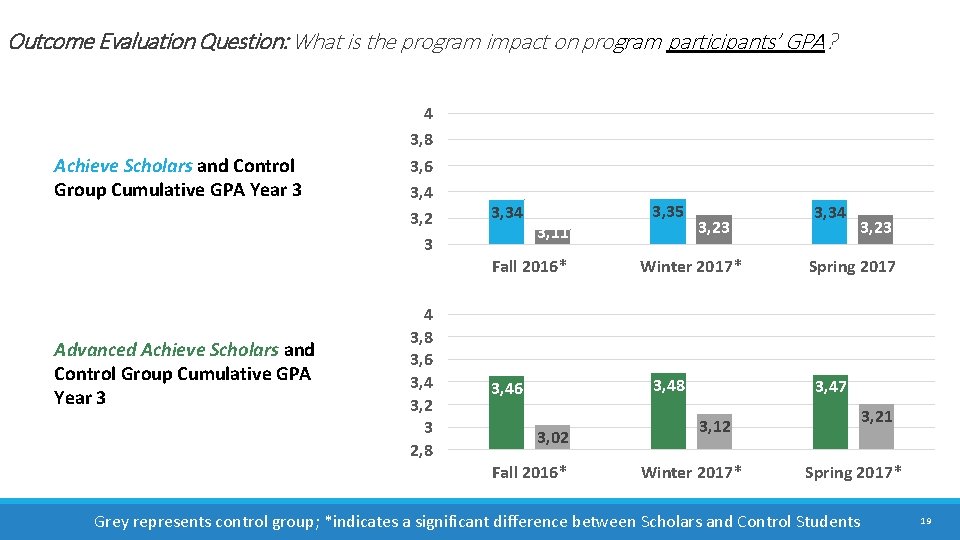
Outcome Evaluation Question: What is the program impact on program participants’ GPA? Achieve Scholars and Control Group Cumulative GPA Year 3 Advanced Achieve Scholars and Control Group Cumulative GPA Year 3 4 3, 8 3, 6 3, 4 3, 2 3 2, 8 3, 34 3, 11 Fall 2016* 3, 35 3, 23 Winter 2017* 3, 48 3, 46 3, 02 Fall 2016* 3, 34 3, 23 Spring 2017 3, 47 3, 21 3, 12 Winter 2017* Spring 2017* Grey represents control group; *indicates a significant difference between Scholars and Control Students 19
Participants’ Persistence 20
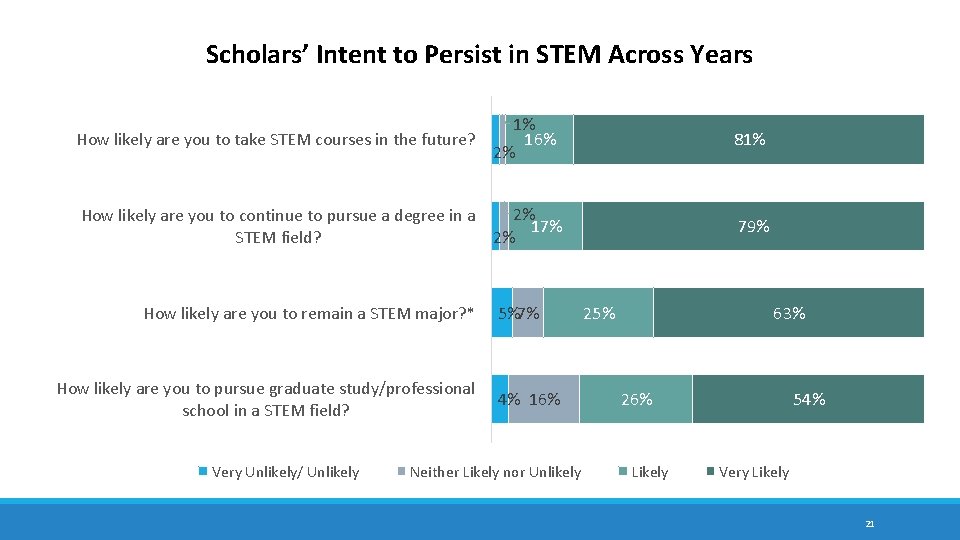
Scholars’ Intent to Persist in STEM Across Years 1% 16% How likely are you to take STEM courses in the future? 2% 81% 2% How likely are you to continue to pursue a degree in a 17% STEM field? 2% 79% How likely are you to remain a STEM major? * How likely are you to pursue graduate study/professional school in a STEM field? Very Unlikely/ Unlikely 5%7% 4% 16% Neither Likely nor Unlikely 25% 63% 26% Likely 54% Very Likely 21
Participants’ Likelihood of Graduation 22
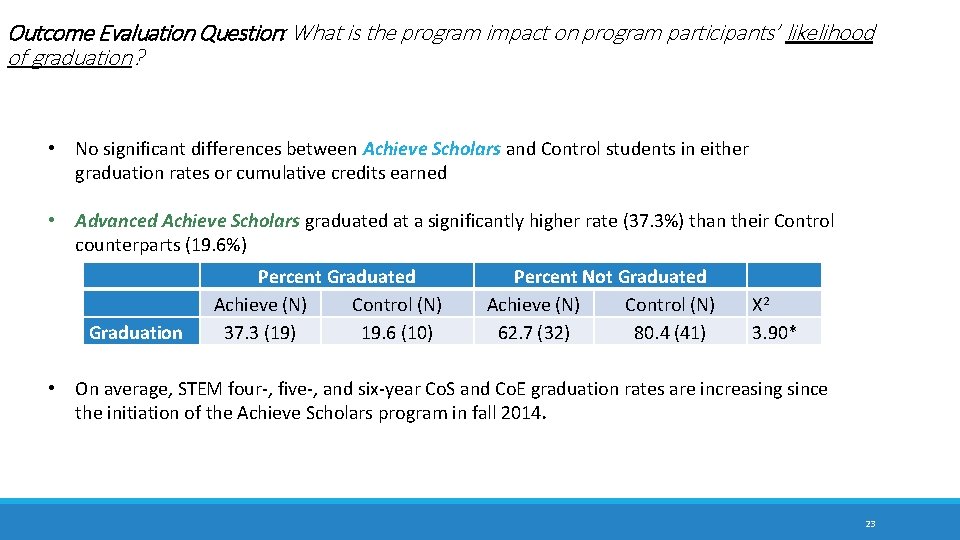
Outcome Evaluation Question: What is the program impact on program participants’ likelihood of graduation? • No significant differences between Achieve Scholars and Control students in either graduation rates or cumulative credits earned • Advanced Achieve Scholars graduated at a significantly higher rate (37. 3%) than their Control counterparts (19. 6%) Graduation Percent Graduated Achieve (N) Control (N) 37. 3 (19) 19. 6 (10) Percent Not Graduated Achieve (N) Control (N) 62. 7 (32) 80. 4 (41) Χ 2 3. 90* • On average, STEM four-, five-, and six-year Co. S and Co. E graduation rates are increasing since the initiation of the Achieve Scholars program in fall 2014. 23
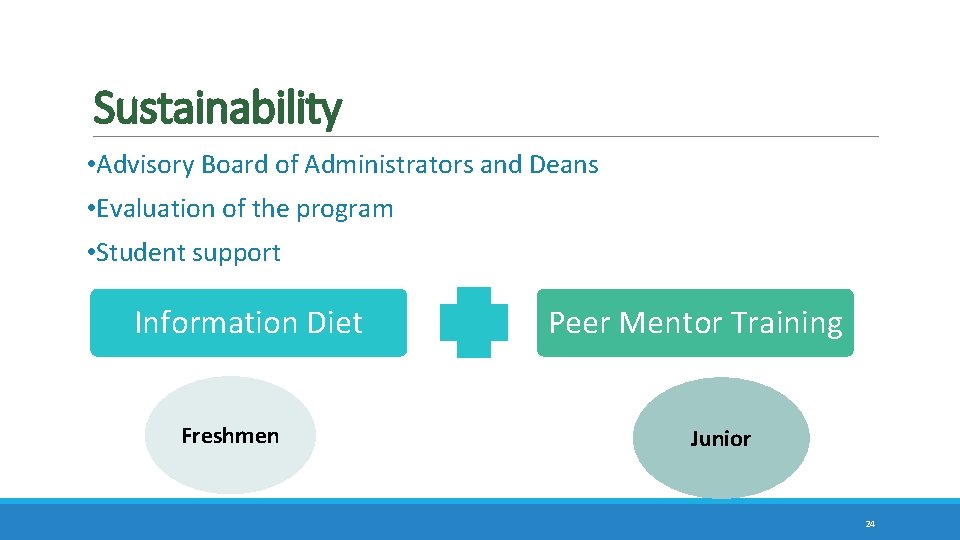
Sustainability • Advisory Board of Administrators and Deans • Evaluation of the program • Student support Information Diet Freshmen Peer Mentor Training Junior 24
Achieve Scholars Team Cal Poly Pomona ◦ ◦ ◦ Dr. Winny Dong Justine Nguyen Elisa Mitchell Everardo Barraza Dr. Paul Beardsley Dr. Nina Abramzon Paul Hottinger Ryan Rush Alyssa Loera Shonn Haren Dr. Keith Forward Evaluation Team (Cobblestone) ◦ Dr. Rebecca Eddy ◦ Dr. Monique Matelski 25
Thank you! Any questions or comments? 26