
Achalasia Mr Yuen Soon Laparoscopic Tutor Consultant Oesophagogastric





- Slides: 43
Achalasia Mr Yuen Soon Laparoscopic Tutor Consultant Oesophagogastric and Laparoscopic Surgeon
Definition ach·a·la·sia (āk'ə-lā'zhə) n. The failure of a ring of muscle fibers, such as a sphincter of the esophagus, to relax. [New Latin : a-1 + Greek khalasis, relaxation (from khalān, to loosen). ]
Definition Achalasia is primary a disorder of motility of the lower oesophageal or cardiac sphincter. The smooth muscle layer of the oesophagus has impaired peristalsis and failure of the sphincter to relax causes a functional stenosis or functional oesophageal stricture.
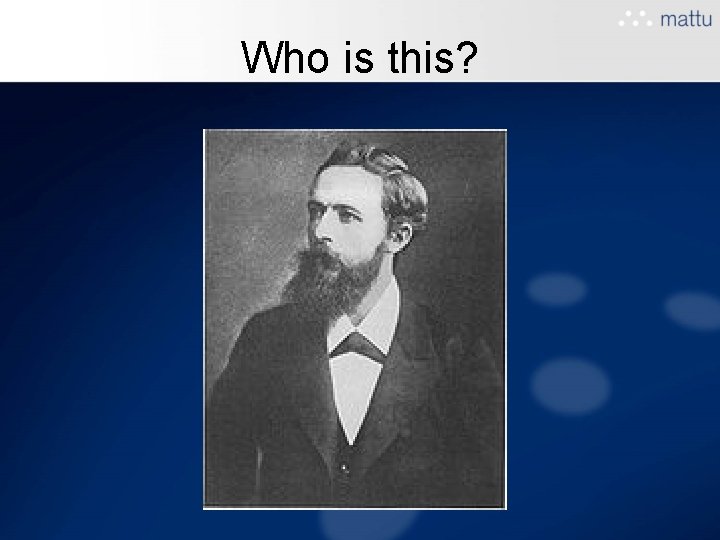
Who is this
Who described this?
Who is this?
History • First described by Sir Thomas Willis 1672 • Described as Cardiospasm by Von Mikulicz 1881 • Ernest Heller performed the first operation 1913
History • Term Achalasia cioned by Hurt and Rake 1929 • First laparoscopic Hellers performe by Shimi in UK 1991 • Botox introduced 1994
Clinical Features • 1/100000 • Equal sex distribution • Occurs at all ages especially after seventh decade
Clinical Symptoms • Dysphagia • Regurgitation (80 -90%) • Chest Pain (17 -63%) • Heartburn/Cough/Recurrent Chest Infection/Weight loss
Dysphagia • Inability to swallow – Non prgressive – Constant • Due to – motility dysfunction – Cardiac spasm
Regurgitation • Food refluxing from distal to proximal oesophagus – Usually stale food – Predisposes to • Halitosis • Chest infections • Sometimes mistaken for heartburn
Chest pain • Mechanism unclear – Oesophageal Distention – Oesophageal irritation – Tertiary contraction • No correlation with manometry • 84% resolved with Manometry • Heterogenous cause
Pathophysiology • Loss of nerve cells in the oesophagus • Fibrosis and inflammation • Hypertrophy and degeneration of oesophageal muscle • Loss of Nitric Oxide deficiency • Preservation of Acetyl Choline Nerves and other promoters of muscle tone • Eosinophils
Huh? !? • What does that all mean – Oesophageal Motility – Sphincter dysmotility
Aetiology • Viral • Autoimmune • Allergy • But truly no one knows
Investigations • Barium Swallow • Endoscopy and Biopsy • Manometry
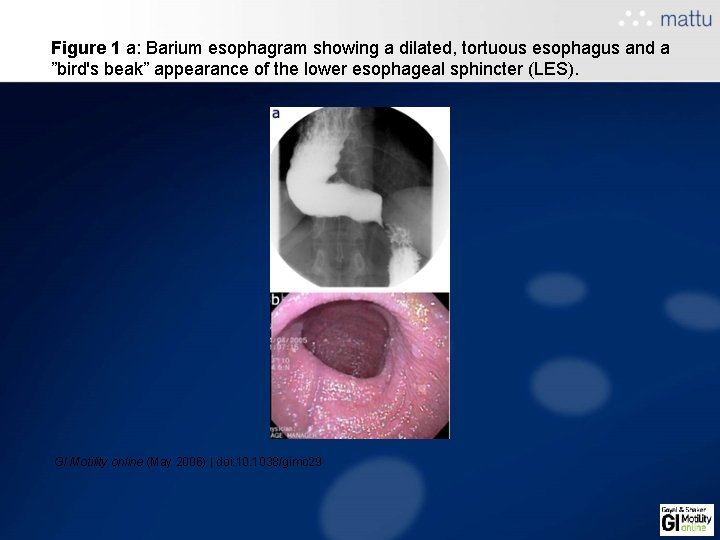
Barium Swallow • Characteristic Findings – Aperistalsis of Distal Oesophagus – Bird Beaking – Dilatation or tortuousity
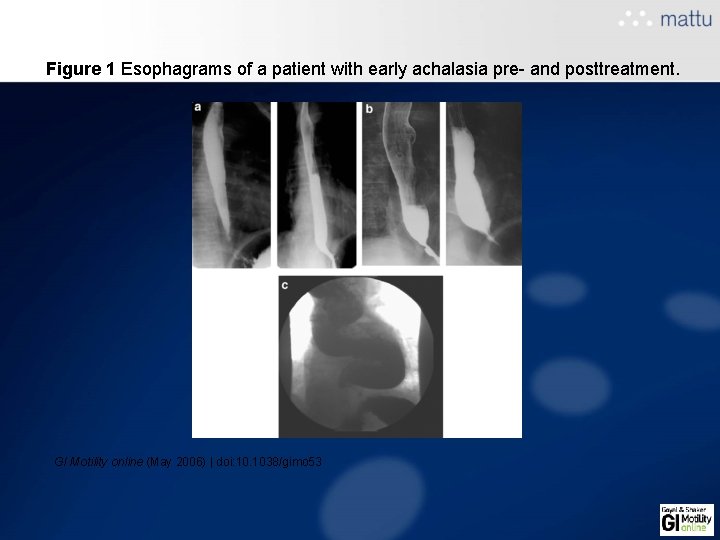
Figure 1 Esophagrams of a patient with early achalasia pre- and posttreatment. GI Motility online (May 2006) | doi: 10. 1038/gimo 53
Figure 1 a: Barium esophagram showing a dilated, tortuous esophagus and a ”bird's beak” appearance of the lower esophageal sphincter (LES). GI Motility online (May 2006) | doi: 10. 1038/gimo 29
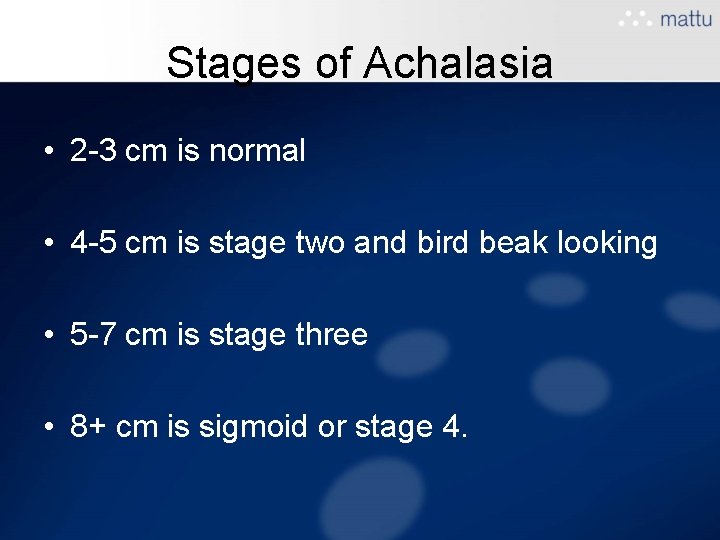
Stages of Achalasia • 2 -3 cm is normal • 4 -5 cm is stage two and bird beak looking • 5 -7 cm is stage three • 8+ cm is sigmoid or stage 4.
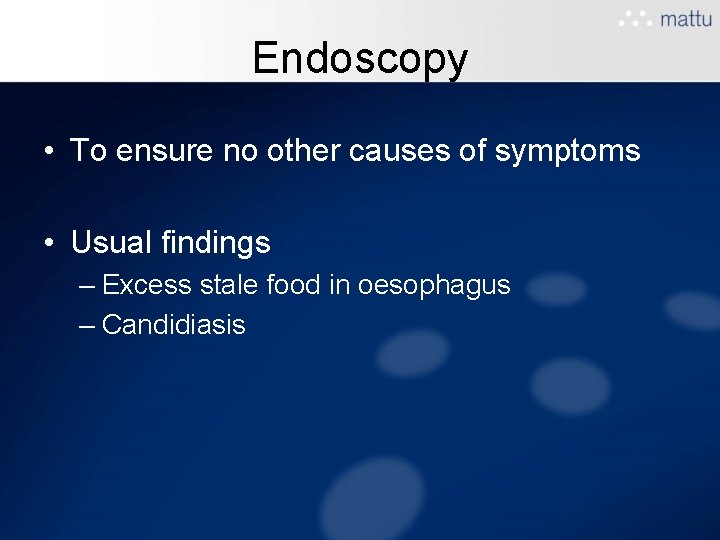
Endoscopy • To ensure no other causes of symptoms • Usual findings – Excess stale food in oesophagus – Candidiasis
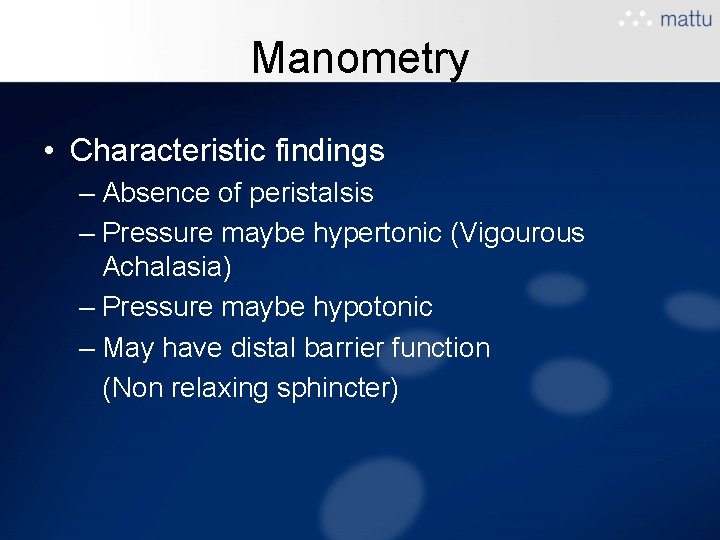
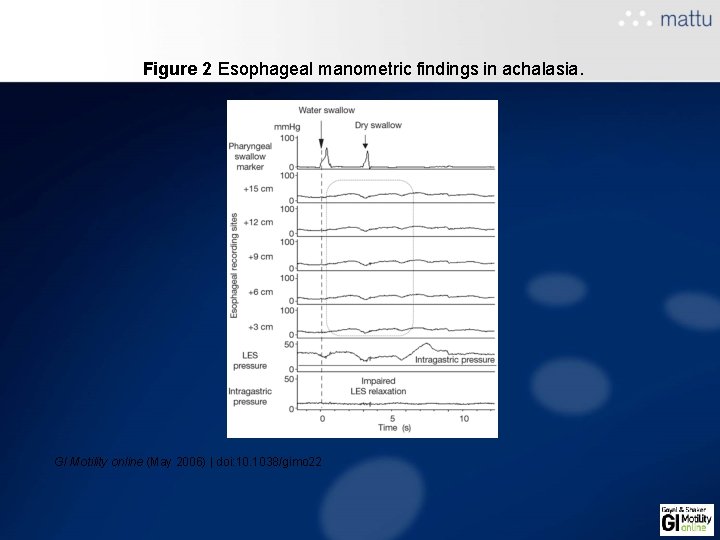
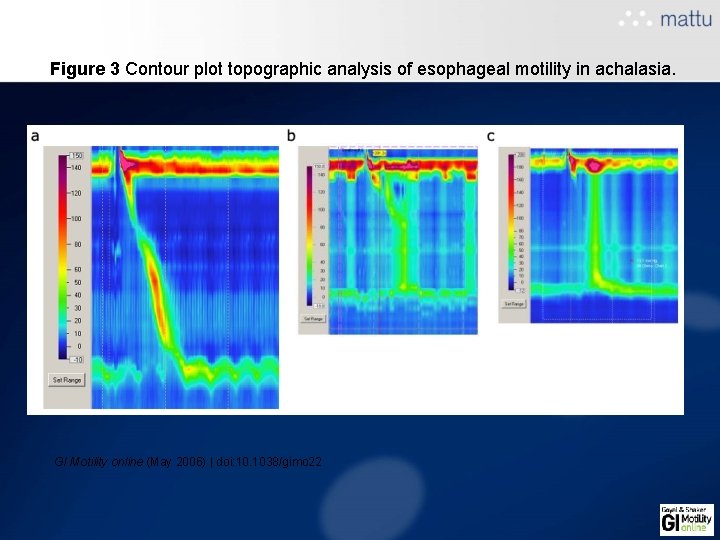
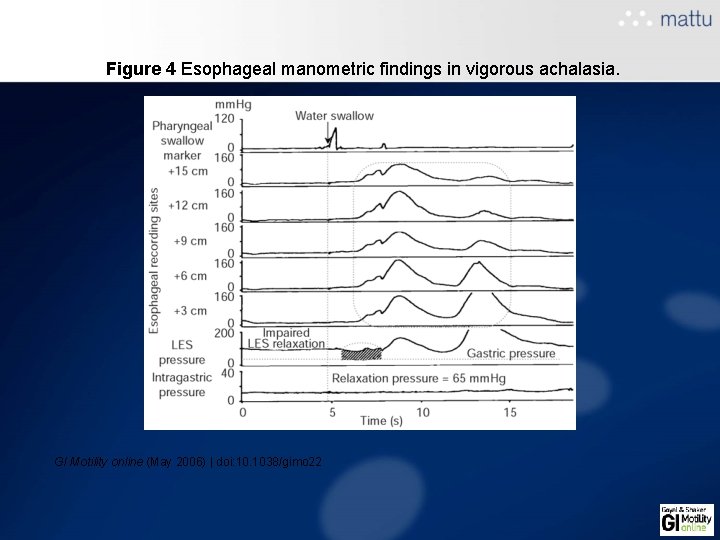
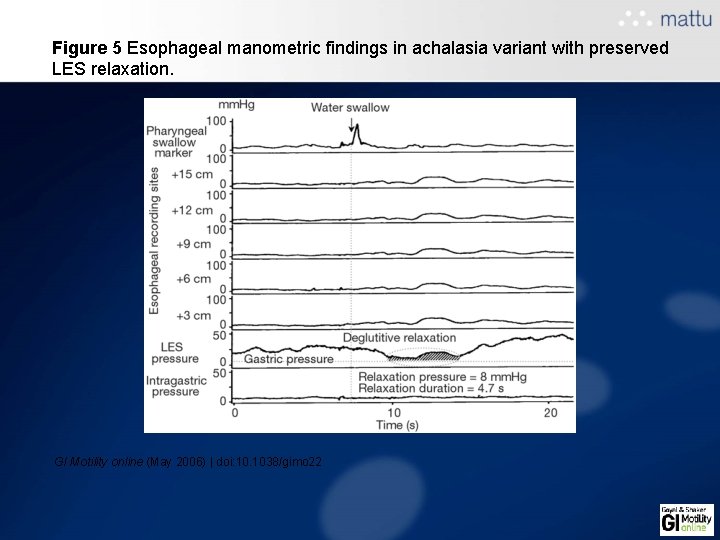
Manometry • Characteristic findings – Absence of peristalsis – Pressure maybe hypertonic (Vigourous Achalasia) – Pressure maybe hypotonic – May have distal barrier function (Non relaxing sphincter)
Figure 2 Esophageal manometric findings in achalasia. GI Motility online (May 2006) | doi: 10. 1038/gimo 22
Figure 3 Contour plot topographic analysis of esophageal motility in achalasia. GI Motility online (May 2006) | doi: 10. 1038/gimo 22
Figure 4 Esophageal manometric findings in vigorous achalasia. GI Motility online (May 2006) | doi: 10. 1038/gimo 22
Figure 5 Esophageal manometric findings in achalasia variant with preserved LES relaxation. GI Motility online (May 2006) | doi: 10. 1038/gimo 22
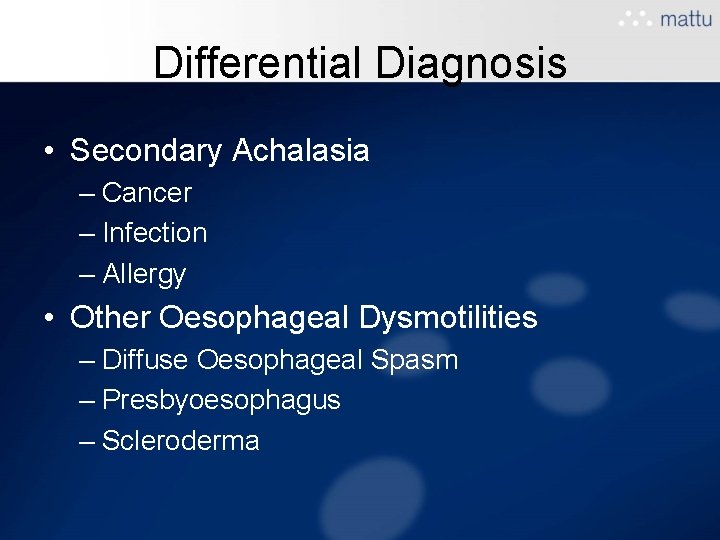
Differential Diagnosis • Secondary Achalasia – Cancer – Infection – Allergy • Other Oesophageal Dysmotilities – Diffuse Oesophageal Spasm – Presbyoesophagus – Scleroderma
• • • • • • • • • Achalasia Allgrove's syndrome (AAA syndrome)10, 36 Hereditary cerebellar ataxia 37 Familial achalasia 38 Sjögren's syndrome 39 Sarcoidosis 40 Postvagotomy 41 Autoimmune polyglandular syndrome type II 11 Achalasia with generalized motility disorder Multiple endocrine neoplasia (MEN) IIb (Sipple's syndrome)12, 42 Neurofibromatosis (von Recklinghausen's Disease)13 Chagas' disease (Trypanosoma cruzi) Paraneoplastic syndrome (Anti-Hu antibody)17, 18 Parkinson's disease 8 Amyloidosis 43, 44 Eosinophilic gastroenteritis 45, 46 Fabry's disease 47 Down syndrome Hereditary cerebellar ataxia 37 Achalasia with associated Hirschsprung's disease 15 Hereditary hollow visceral myopathy 16 Achalasia associated with cancer. (Cancer-associated achalasia may be due to local invasion of the esophageal myenteric plexus or as a part of a paraneoplastic syndrome. ) Squamous cell carcinoma of the esophagus Adenocarcinoma of the esophagus Gastric adenocarcinoma Lung carcinoma Leiomyoma Lymphoma Breast adenocarcinoma Hepatocellular carcinoma Reticulum cell sarcoma Lymphangioma Metastatic renal cell carcinoma Mesothelioma Metastatic prostate carcinoma Pancreatic adenocarcinoma
Treatment • Conservative • Medical – Drugs – Botox – Dilatation • Surgical – Hellers – Oesophagectomy
Conservative • Dietetic Support • Enteral forms of feeding • Stent
Medical • Drugs – Seldom long lasting – Seldom effective – Nitrates (GTN) – Calcium Channel Antagonist (Nifedipine) – Sildenafil (Viagra)
Medical • Dilatation – 60% success at a year and 24% at 5 years following single dilatation – Symptoms reoccur in 50% within 5 years – In general 60% have good results at 5 years with one or more dilatation
Medical • Predictors of good outcome – Low residual pressure – Older patients • Complications – Perforation 3 -7% (0 -21% Range) – Reflux 2% – Higher rate of complication if followed by myotomy
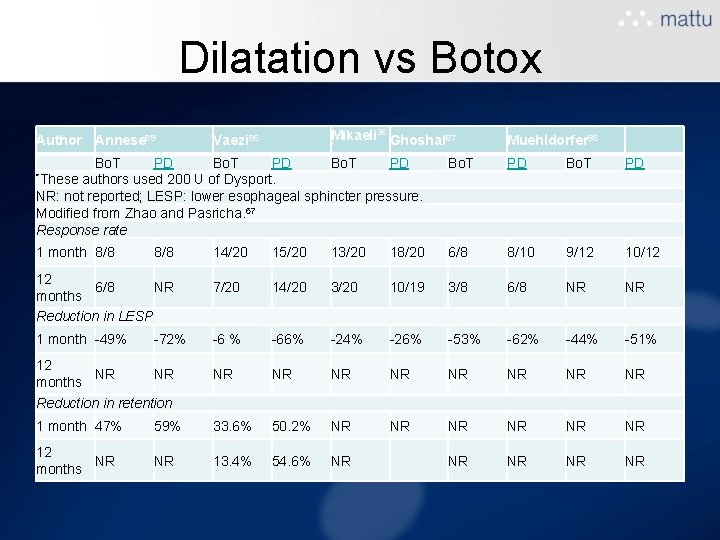
Medical • Botox – High quality symptom relief • 1 month 75 -100% • 6 month 44 -100% – Duration of response upto 15 months – 50% will need other forms of treatment within 2 years – Reduces Sphincteric pressure by 40%
Botox • Increases operative complications • Recommended only for – Elderly – Low pressure sphincter
Dilatation vs Botox Author Annese 89 Mikaeli 36 Ghoshal 87 Vaezi 86 * Muehldorfer 88 Bo. T PD *These authors used 200 U of Dysport. NR: not reported; LESP: lower esophageal sphincter pressure. Modified from Zhao and Pasricha. 67 Response rate Bo. T PD 1 month 8/8 12 6/8 NR months Reduction in LESP 1 month -49% -72% 12 NR NR months Reduction in retention 14/20 15/20 13/20 18/20 6/8 8/10 9/12 10/12 7/20 14/20 3/20 10/19 3/8 6/8 NR NR -6 % -66% -24% -26% -53% -62% -44% -51% NR NR 1 month 47% 59% 33. 6% 50. 2% NR NR NR 12 NR months NR 13. 4% 54. 6% NR NR NR
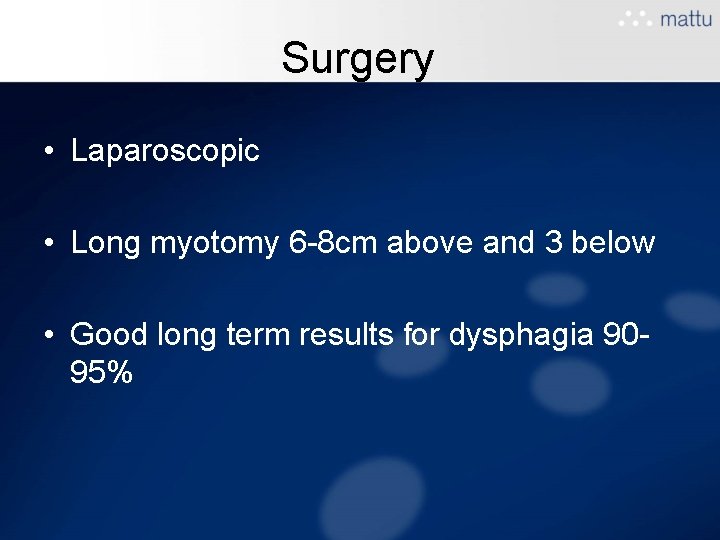
Surgery • Laparoscopic • Long myotomy 6 -8 cm above and 3 below • Good long term results for dysphagia 9095%
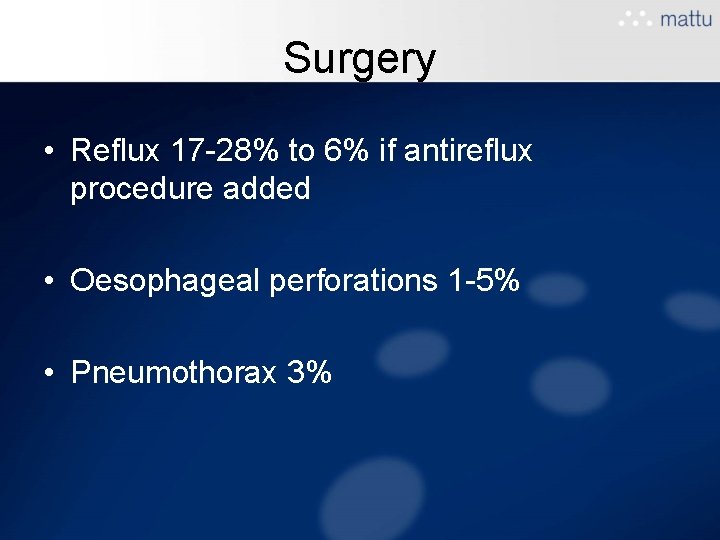
Surgery • Reflux 17 -28% to 6% if antireflux procedure added • Oesophageal perforations 1 -5% • Pneumothorax 3%
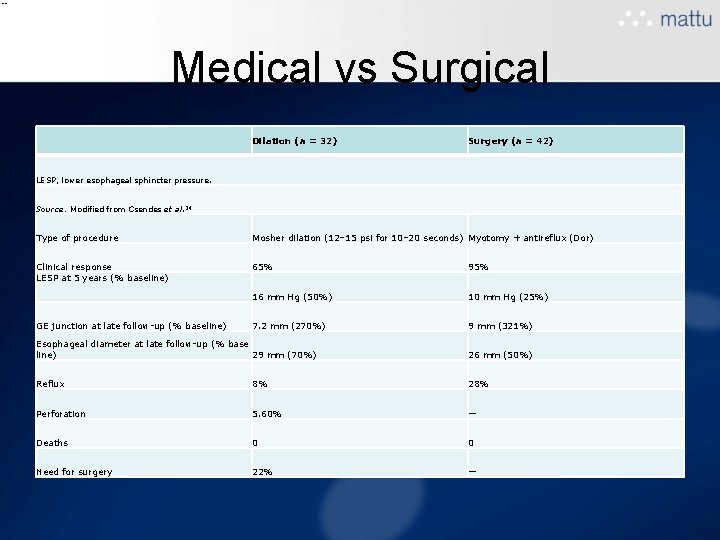
Medical vs Surgical Dilation (n = 32) Surgery (n = 42) LESP, lower esophageal sphincter pressure. Source: Modified from Csendes et al. 34 Type of procedure Mosher dilation (12– 15 psi for 10– 20 seconds) Myotomy + antireflux (Dor) Clinical response LESP at 5 years (% baseline) 65% 95% 16 mm Hg (50%) 10 mm Hg (25%) 7. 2 mm (270%) 9 mm (321%) GE junction at late follow-up (% baseline) Esophageal diameter at late follow-up (% base line) 29 mm (70%) 26 mm (50%) Reflux 8% 28% Perforation 5. 60% — Deaths 0 0 Need for surgery 22% —
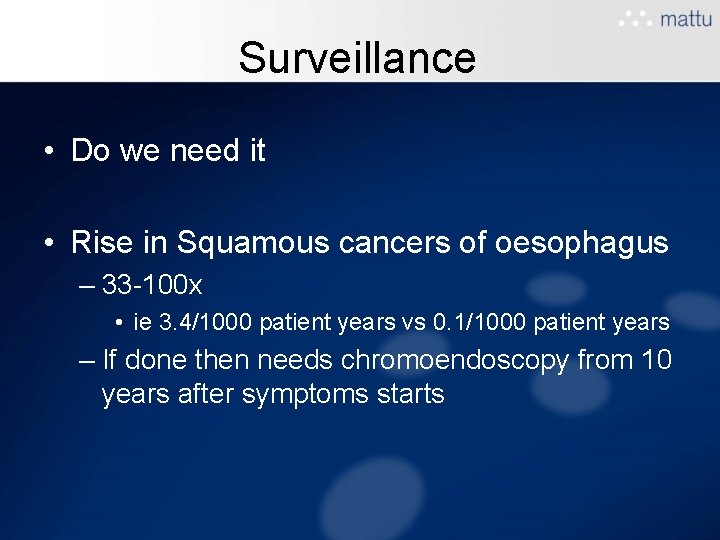
Surveillance • Do we need it • Rise in Squamous cancers of oesophagus – 33 -100 x • ie 3. 4/1000 patient years vs 0. 1/1000 patient years – If done then needs chromoendoscopy from 10 years after symptoms starts
Questions
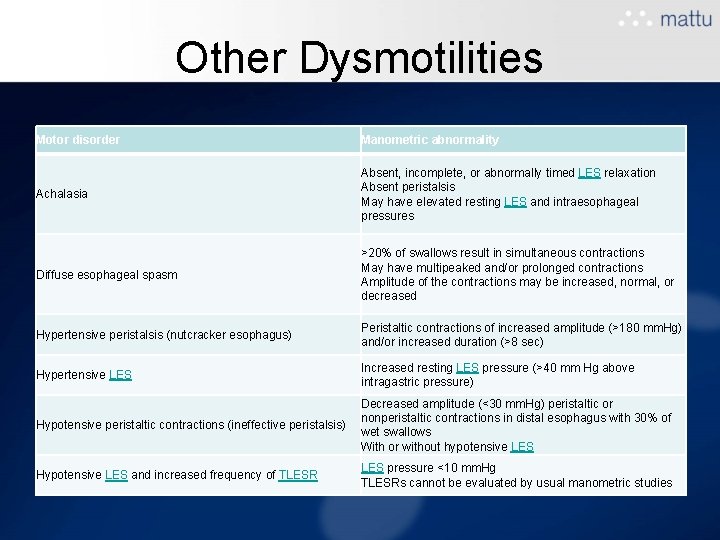
Other Dysmotilities Motor disorder Manometric abnormality Achalasia Absent, incomplete, or abnormally timed LES relaxation Absent peristalsis May have elevated resting LES and intraesophageal pressures Diffuse esophageal spasm >20% of swallows result in simultaneous contractions May have multipeaked and/or prolonged contractions Amplitude of the contractions may be increased, normal, or decreased Hypertensive peristalsis (nutcracker esophagus) Peristaltic contractions of increased amplitude (>180 mm. Hg) and/or increased duration (>8 sec) Hypertensive LES Increased resting LES pressure (>40 mm Hg above intragastric pressure) Hypotensive peristaltic contractions (ineffective peristalsis) Decreased amplitude (<30 mm. Hg) peristaltic or nonperistaltic contractions in distal esophagus with 30% of wet swallows With or without hypotensive LES Hypotensive LES and increased frequency of TLESR LES pressure <10 mm. Hg TLESRs cannot be evaluated by usual manometric studies