
ACES ESSENTIALS OF EXERCISE SCIENCE FOR FITNESS PROFESSIONALS


- Slides: 21
ACE’S ESSENTIALS OF EXERCISE SCIENCE FOR FITNESS PROFESSIONALS Chapter 5: Physiology of Training Lesson 5. 1
LEARNING OBJECTIVES • After completing this session, you will be able to: ü Discuss cardiorespiratory response to exercise and the role of the autonomic nervous system in this response ü Describe hormonal responses to acute exercise ü Explain the use of macronutrients for fuel during exercise ü Discuss performance characteristics related to muscle contractility and fatigue © 2014 ACE
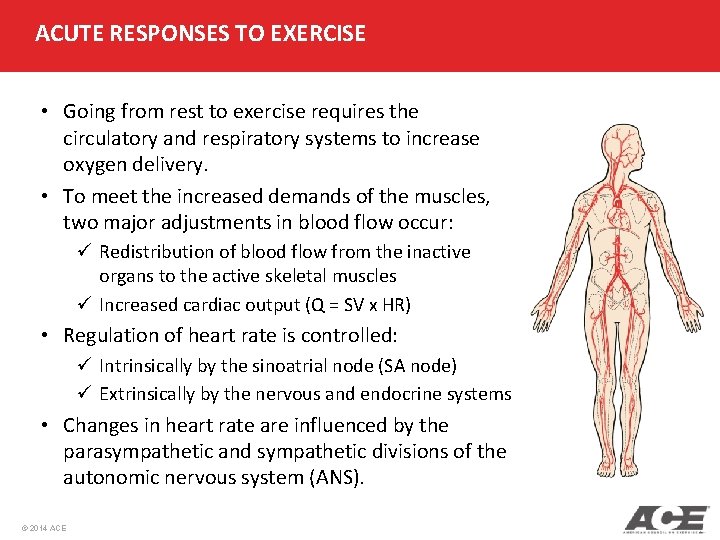
ACUTE RESPONSES TO EXERCISE • Going from rest to exercise requires the circulatory and respiratory systems to increase oxygen delivery. • To meet the increased demands of the muscles, two major adjustments in blood flow occur: ü Redistribution of blood flow from the inactive organs to the active skeletal muscles ü Increased cardiac output (Q = SV x HR) • Regulation of heart rate is controlled: ü Intrinsically by the sinoatrial node (SA node) ü Extrinsically by the nervous and endocrine systems • Changes in heart rate are influenced by the parasympathetic and sympathetic divisions of the autonomic nervous system (ANS). © 2014 ACE
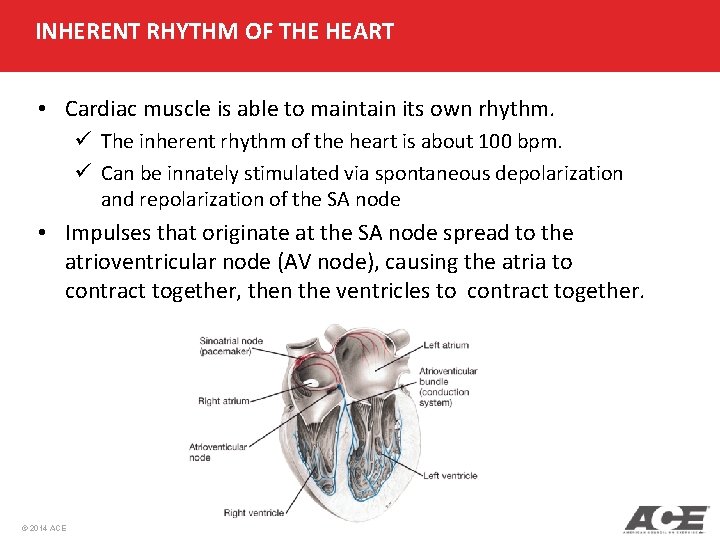
INHERENT RHYTHM OF THE HEART • Cardiac muscle is able to maintain its own rhythm. ü The inherent rhythm of the heart is about 100 bpm. ü Can be innately stimulated via spontaneous depolarization and repolarization of the SA node • Impulses that originate at the SA node spread to the atrioventricular node (AV node), causing the atria to contract together, then the ventricles to contract together. © 2014 ACE
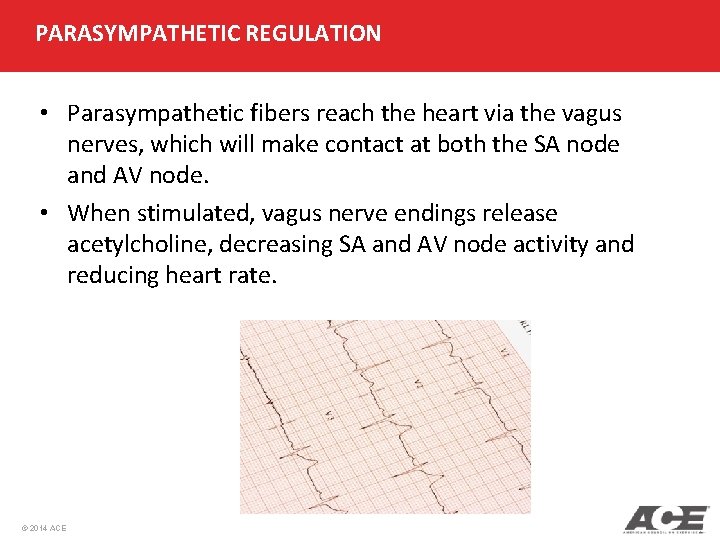
PARASYMPATHETIC REGULATION • Parasympathetic fibers reach the heart via the vagus nerves, which will make contact at both the SA node and AV node. • When stimulated, vagus nerve endings release acetylcholine, decreasing SA and AV node activity and reducing heart rate. © 2014 ACE
SYMPATHETIC REGULATION • At the onset of exercise, the initial increase in heart rate (up to 100 bpm) is due to the withdrawal of parasympathetic tone. • Increased cardiac output is influenced by an increase in end diastolic volume, which causes a stretch in cardiac fibers, thereby creating a stronger force of contraction. • Stronger contractility results in more blood pumped per beat (i. e. , a greater stroke volume). • Increased blood flow to the working muscles is a result of vasoconstriction of the vessels supplying non-working muscles (except the heart) and vasodilation of the vessels supplying the working muscles. © 2014 ACE
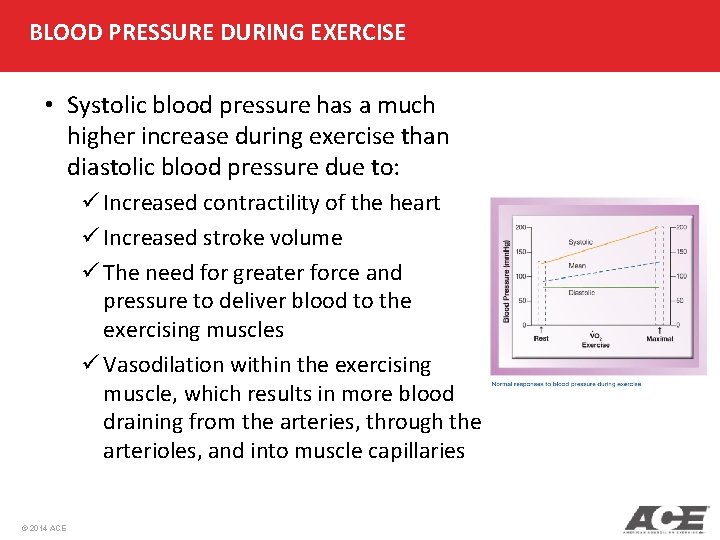
BLOOD PRESSURE DURING EXERCISE • Systolic blood pressure has a much higher increase during exercise than diastolic blood pressure due to: ü Increased contractility of the heart ü Increased stroke volume ü The need for greater force and pressure to deliver blood to the exercising muscles ü Vasodilation within the exercising muscle, which results in more blood draining from the arteries, through the arterioles, and into muscle capillaries © 2014 ACE
BLOOD DISTRIBUTION DURING EXERCISE • Exercise affects the blood flow to various organ systems differently. • Blood volume is affected by the hydrostatic pressure of a muscle contraction, accumulation of metabolites, and sweat. • The body preserves blood volume during exercise by: ü Offsetting the small decrease in stroke volume by increasing heart rate (during steady state exercise) ü Increasing vasoconstriction in non-working muscles to maintain peripheral resistance and blood pressure ü Releasing vasopressin and aldosterone to help reduce water and sodium loss © 2014 ACE
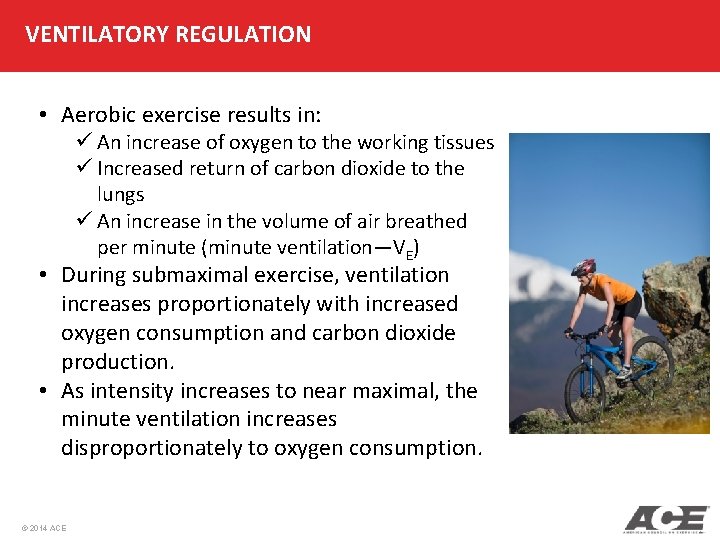
VENTILATORY REGULATION • Aerobic exercise results in: ü An increase of oxygen to the working tissues ü Increased return of carbon dioxide to the lungs ü An increase in the volume of air breathed per minute (minute ventilation—VE) • During submaximal exercise, ventilation increases proportionately with increased oxygen consumption and carbon dioxide production. • As intensity increases to near maximal, the minute ventilation increases disproportionately to oxygen consumption. © 2014 ACE
VENTILATORY RESPONSE TO EXERCISE • Ventilatory response to exercise increases linearly, with the exception of two distinct deflection points at the first and second ventilatory thresholds (VT 1 and VT 2). ü VT 1 represents the increased respiratory response to remove extra CO 2 produced by the buffering of lactate as it begins to accumulate in the blood. ü VT 2 represents the blood buffering systems becoming overwhelmed by rapidly increasing blood lactate. © 2014 ACE
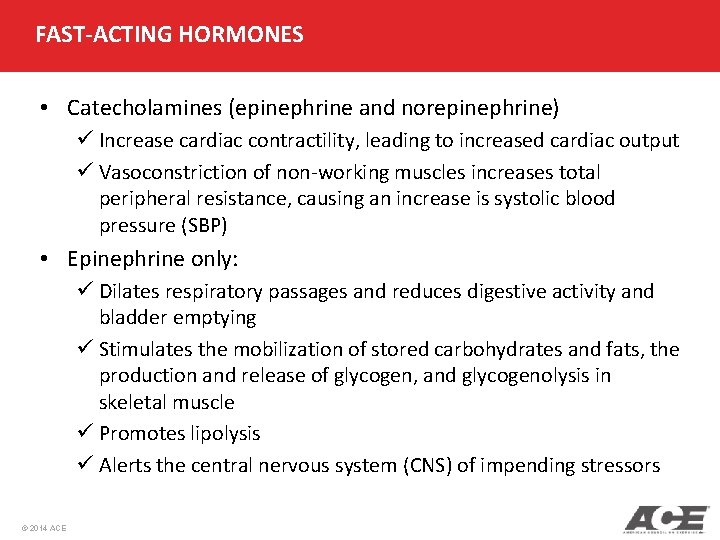
FAST-ACTING HORMONES • Catecholamines (epinephrine and norepinephrine) ü Increase cardiac contractility, leading to increased cardiac output ü Vasoconstriction of non-working muscles increases total peripheral resistance, causing an increase is systolic blood pressure (SBP) • Epinephrine only: ü Dilates respiratory passages and reduces digestive activity and bladder emptying ü Stimulates the mobilization of stored carbohydrates and fats, the production and release of glycogen, and glycogenolysis in skeletal muscle ü Promotes lipolysis ü Alerts the central nervous system (CNS) of impending stressors © 2014 ACE
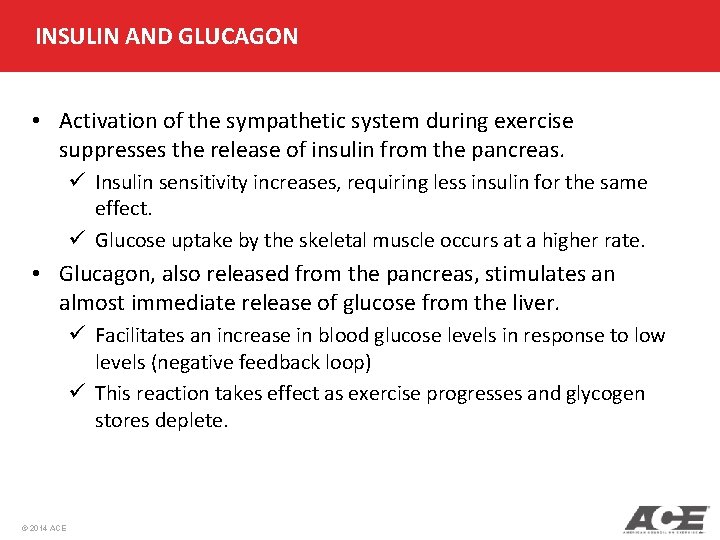
INSULIN AND GLUCAGON • Activation of the sympathetic system during exercise suppresses the release of insulin from the pancreas. ü Insulin sensitivity increases, requiring less insulin for the same effect. ü Glucose uptake by the skeletal muscle occurs at a higher rate. • Glucagon, also released from the pancreas, stimulates an almost immediate release of glucose from the liver. ü Facilitates an increase in blood glucose levels in response to low levels (negative feedback loop) ü This reaction takes effect as exercise progresses and glycogen stores deplete. © 2014 ACE
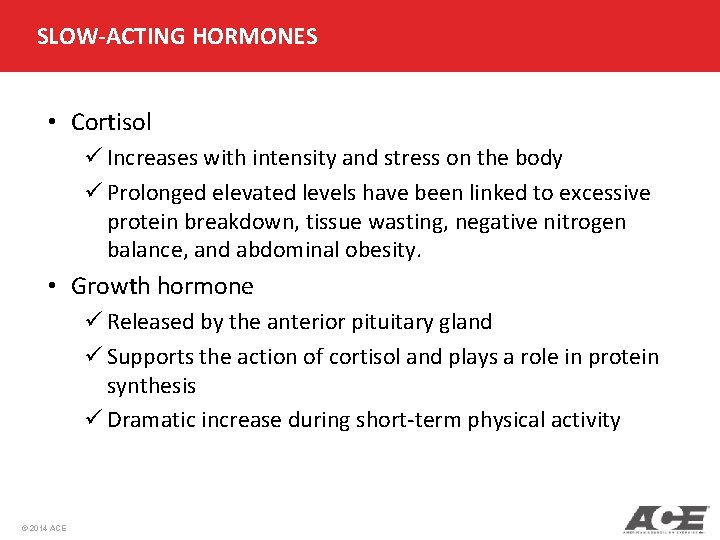
SLOW-ACTING HORMONES • Cortisol ü Increases with intensity and stress on the body ü Prolonged elevated levels have been linked to excessive protein breakdown, tissue wasting, negative nitrogen balance, and abdominal obesity. • Growth hormone ü Released by the anterior pituitary gland ü Supports the action of cortisol and plays a role in protein synthesis ü Dramatic increase during short-term physical activity © 2014 ACE
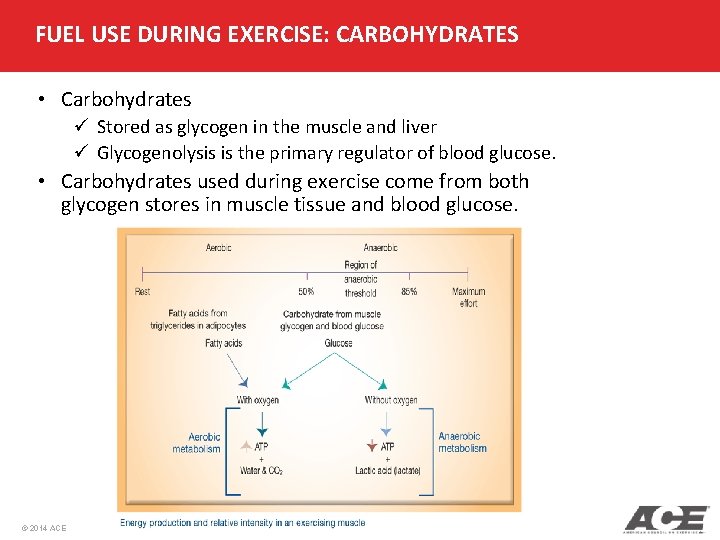
FUEL USE DURING EXERCISE: CARBOHYDRATES • Carbohydrates ü Stored as glycogen in the muscle and liver ü Glycogenolysis is the primary regulator of blood glucose. • Carbohydrates used during exercise come from both glycogen stores in muscle tissue and blood glucose. © 2014 ACE
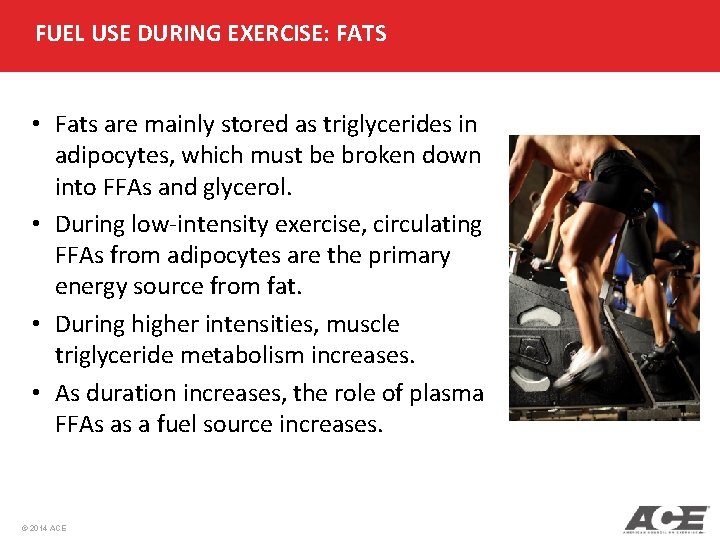
FUEL USE DURING EXERCISE: FATS • Fats are mainly stored as triglycerides in adipocytes, which must be broken down into FFAs and glycerol. • During low-intensity exercise, circulating FFAs from adipocytes are the primary energy source from fat. • During higher intensities, muscle triglyceride metabolism increases. • As duration increases, the role of plasma FFAs as a fuel source increases. © 2014 ACE
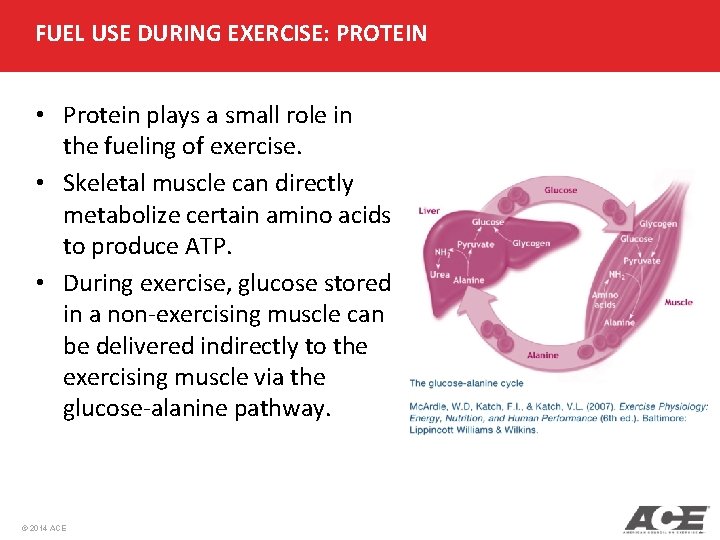
FUEL USE DURING EXERCISE: PROTEIN • Protein plays a small role in the fueling of exercise. • Skeletal muscle can directly metabolize certain amino acids to produce ATP. • During exercise, glucose stored in a non-exercising muscle can be delivered indirectly to the exercising muscle via the glucose-alanine pathway. © 2014 ACE
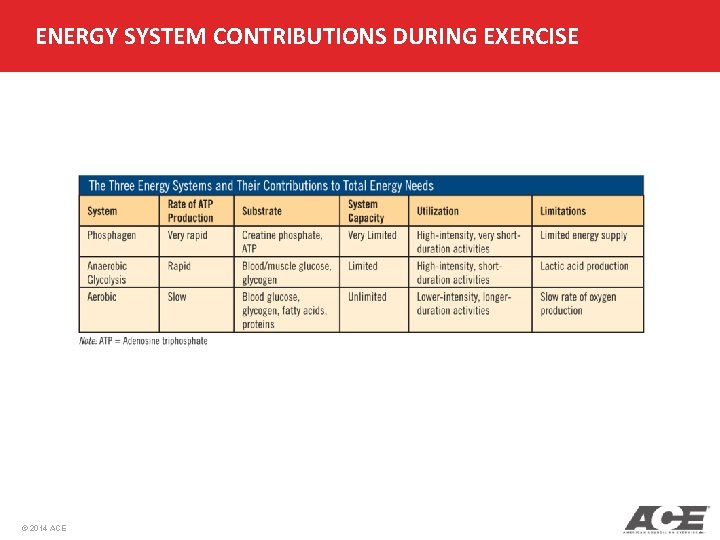
ENERGY SYSTEM CONTRIBUTIONS DURING EXERCISE © 2014 ACE
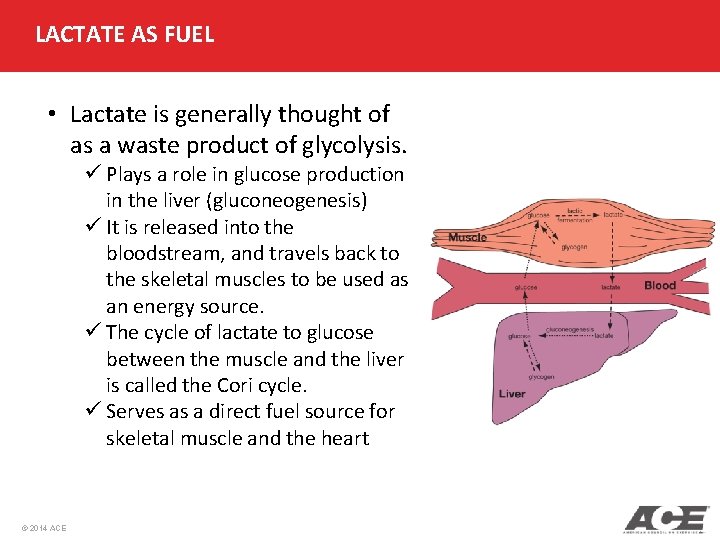
LACTATE AS FUEL • Lactate is generally thought of as a waste product of glycolysis. ü Plays a role in glucose production in the liver (gluconeogenesis) ü It is released into the bloodstream, and travels back to the skeletal muscles to be used as an energy source. ü The cycle of lactate to glucose between the muscle and the liver is called the Cori cycle. ü Serves as a direct fuel source for skeletal muscle and the heart © 2014 ACE
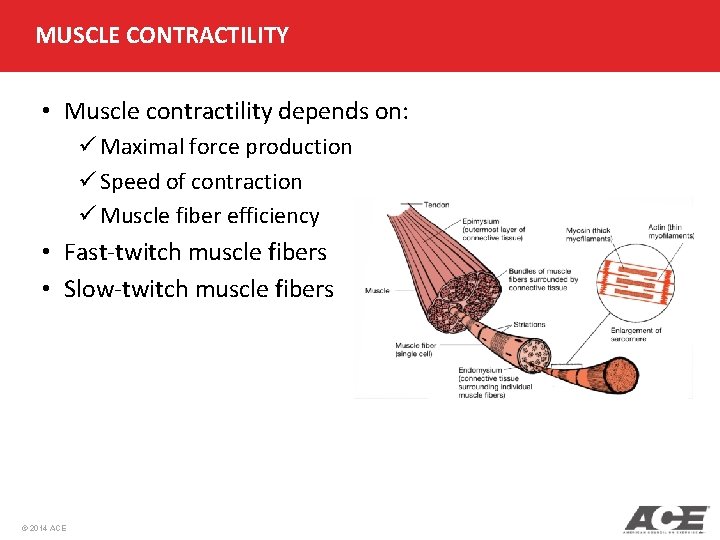
MUSCLE CONTRACTILITY • Muscle contractility depends on: ü Maximal force production ü Speed of contraction ü Muscle fiber efficiency • Fast-twitch muscle fibers • Slow-twitch muscle fibers © 2014 ACE
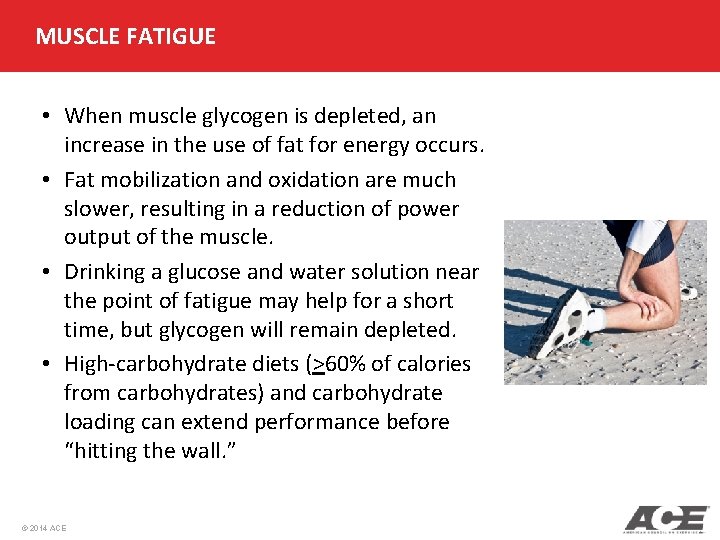
MUSCLE FATIGUE • When muscle glycogen is depleted, an increase in the use of fat for energy occurs. • Fat mobilization and oxidation are much slower, resulting in a reduction of power output of the muscle. • Drinking a glucose and water solution near the point of fatigue may help for a short time, but glycogen will remain depleted. • High-carbohydrate diets (>60% of calories from carbohydrates) and carbohydrate loading can extend performance before “hitting the wall. ” © 2014 ACE
SUMMARY • Understanding the cardiorespiratory response to exercise and the role of the autonomic nervous system in this response will help a personal trainer properly implement various intensities of exercise into a client’s fitness program. • Discussing hormonal responses to exercise with clients will aid the personal trainer in properly educating his or her clients on the role of the endocrine system in a comprehensive fitness program. • Being able to explain the use of macronutrients for fuel during exercise can help fitness professionals appropriately advise clients on the proper role of nutrition and energy use in a fitness program. • Understanding the performance characteristics related to muscle contractility and fatigue will help a fitness professional properly design an exercise program based on a client’s needs and goals. © 2014 ACE