
ACEs and Protective Factors Workforce Initiative ECAC Presentation





- Slides: 20
ACEs and Protective Factors Workforce Initiative ECAC Presentation December 14, 2017
The CDC-Kaiser Permanente Adverse Childhood Experiences (ACE) Study • One of the largest investigations of childhood abuse/neglect and later-life health and well-being. • Conducted from 1995 to 1997 with two waves of data collection. Over 17, 000 HMO members from Southern California receiving physical exams completed surveys regarding their childhood experiences and current health status and behaviors. • Participants were predominantly white, middle-aged, and college educated. • ACEs are common. Almost two-thirds of study participants reported at least one ACE, and more than one in five reported three or more ACEs.
As the number of ACEs increases so does the risk for the following: • Alcoholism and alcohol abuse • Depression • Illicit drug use • Liver disease • Financial stress violence • Sexually transmitted diseases • Suicide attempts • Poor academic achievement Liver disease Fetal death Ischemic heart disease Poor work performance Risk for intimate partner Smoking Unintended pregnancies (Etc)
Protective Factors • Developed by the Center for the Study of Social Policy as a part of the Strengthening Families Framework • Research-based approach to supporting optimal child and youth development
What is the Initiative? • Partnership Project • Policy Project • Workforce Development Project
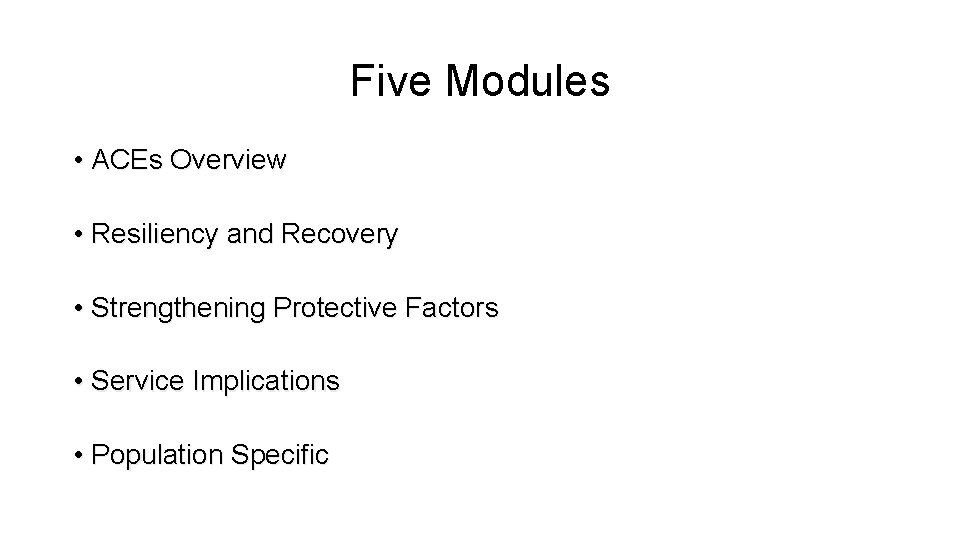
Five Modules • ACEs Overview • Resiliency and Recovery • Strengthening Protective Factors • Service Implications • Population Specific
Target Populations • Early Care Providers • Domestic Violence Staff • Kinship Care
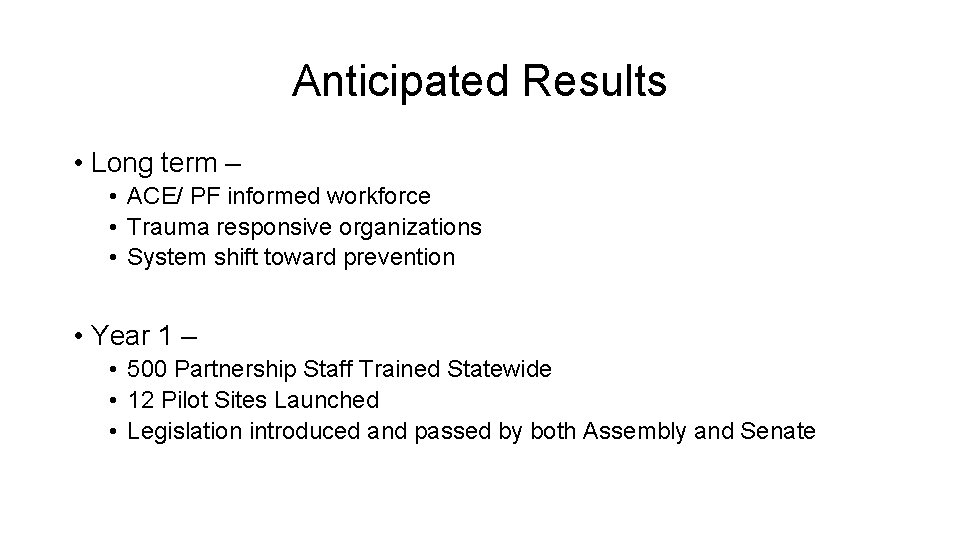
Anticipated Results • Long term – • ACE/ PF informed workforce • Trauma responsive organizations • System shift toward prevention • Year 1 – • 500 Partnership Staff Trained Statewide • 12 Pilot Sites Launched • Legislation introduced and passed by both Assembly and Senate
Jeopardy Game - ACEs
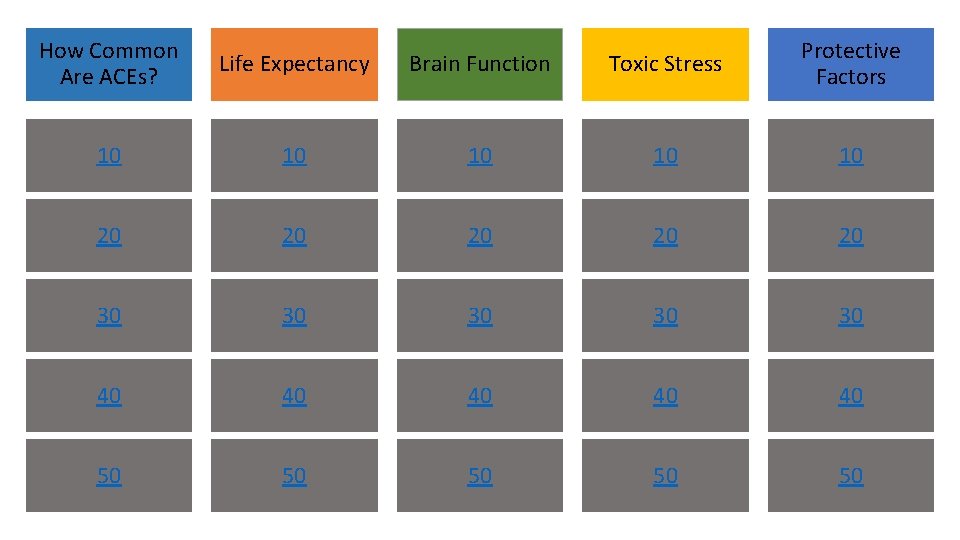
How Common Are ACEs? Life Expectancy Brain Function Toxic Stress Protective Factors 10 10 10 20 20 20 30 30 30 40 40 40 50 50 50
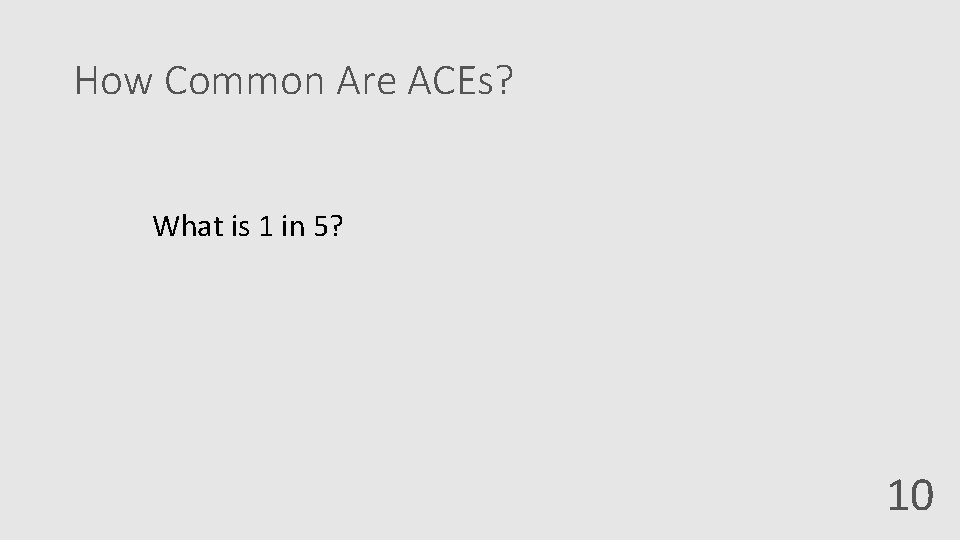
How Common Are ACEs? What is 1 in 5? 10
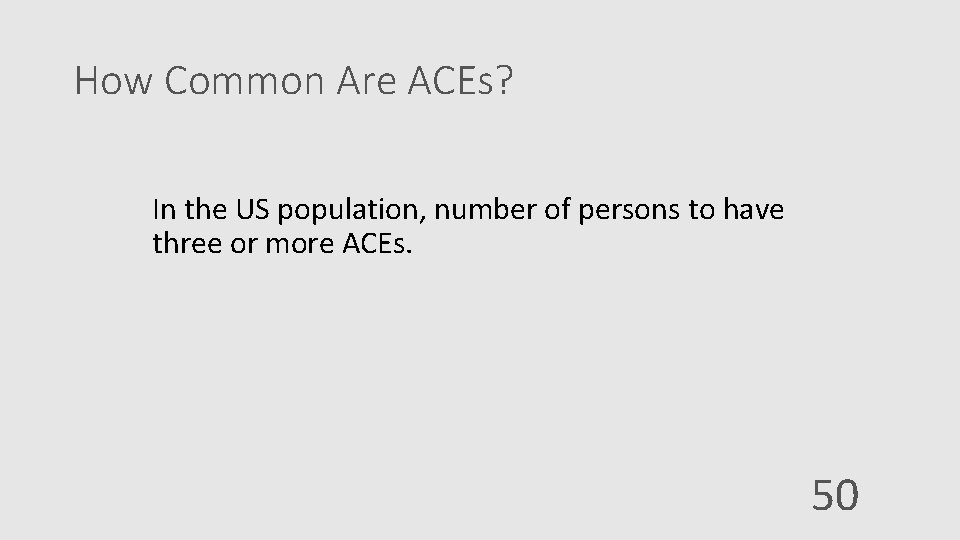
How Common Are ACEs? In the US population, number of persons to have three or more ACEs. 50
How Common Are ACEs? Life Expectancy Brain Function Toxic Stress Protective Factors 10 10 10 20 20 20 30 30 30 40 40 40 50 50 50
Toxic Stress What is Toxic Stress?
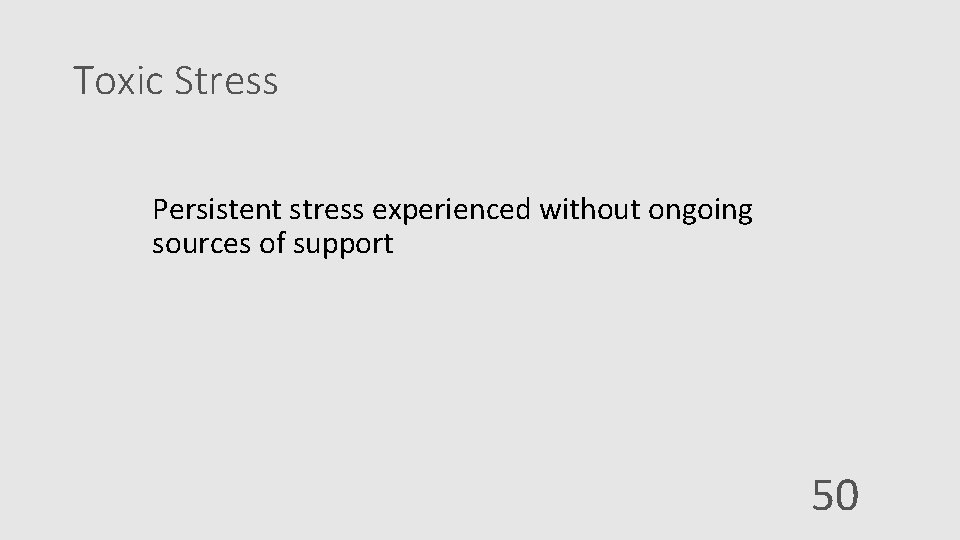
Toxic Stress Persistent stress experienced without ongoing sources of support 50
How Common Are ACEs? Life Expectancy Brain Function Toxic Stress Protective Factors 10 10 10 20 20 20 30 30 30 40 40 40 50 50 50
Protective Factors What is one nurturing relationship?
Protective Factors One major factor that mitigates the impact of ACEs 50
Contact • Tim Hathaway • thathaway@preventchildabuseny. org • Tamae Memole • tmemole@preventchildabuseny. org • Jenn O’Connor • joconnor@preventchildabuseny. org