
Accuracy of 3 D Scanning Technologies in a


- Slides: 27
Accuracy of 3 D Scanning Technologies in a Face Scanning Scenario Chris Boehnen and Patrick Flynn University of Notre Dame
Overview Scanner Overview n Defining Scanner Performance n Experiment Method n Results n Conclusions n Future Work n
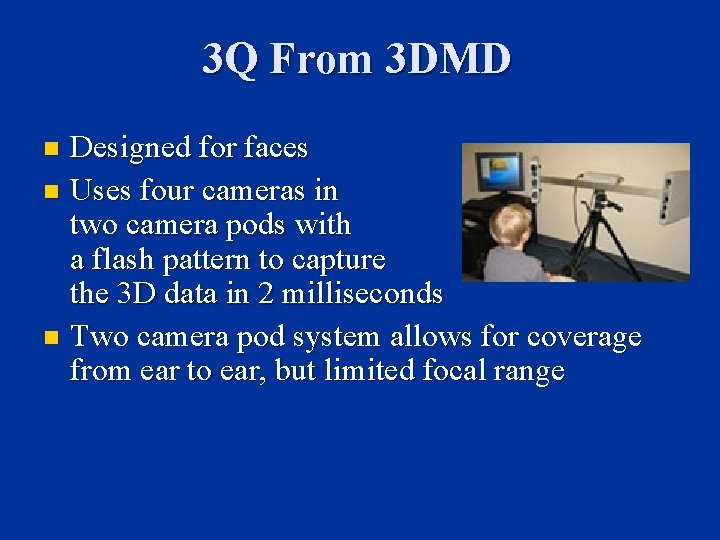
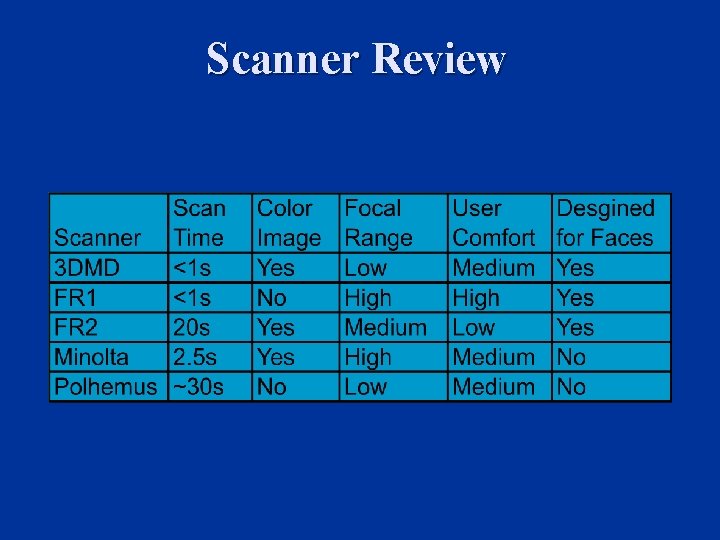
3 Q From 3 DMD Designed for faces n Uses four cameras in two camera pods with a flash pattern to capture the 3 D data in 2 milliseconds n Two camera pod system allows for coverage from ear to ear, but limited focal range n
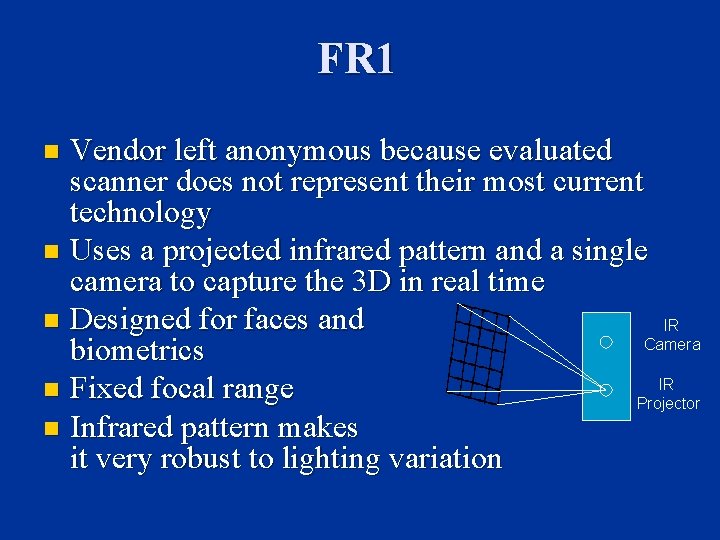
FR 1 Vendor left anonymous because evaluated scanner does not represent their most current technology n Uses a projected infrared pattern and a single camera to capture the 3 D in real time n Designed for faces and IR Camera biometrics IR n Fixed focal range Projector n Infrared pattern makes it very robust to lighting variation n
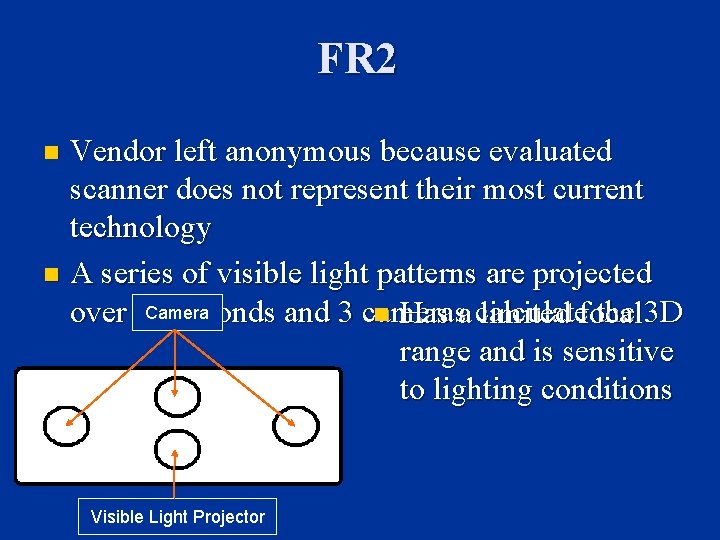
FR 2 Vendor left anonymous because evaluated scanner does not represent their most current technology n A series of visible light patterns are projected Camera over 20 seconds and 3 cameras the 3 D n Has a calculate limited focal range and is sensitive to lighting conditions n Visible Light Projector
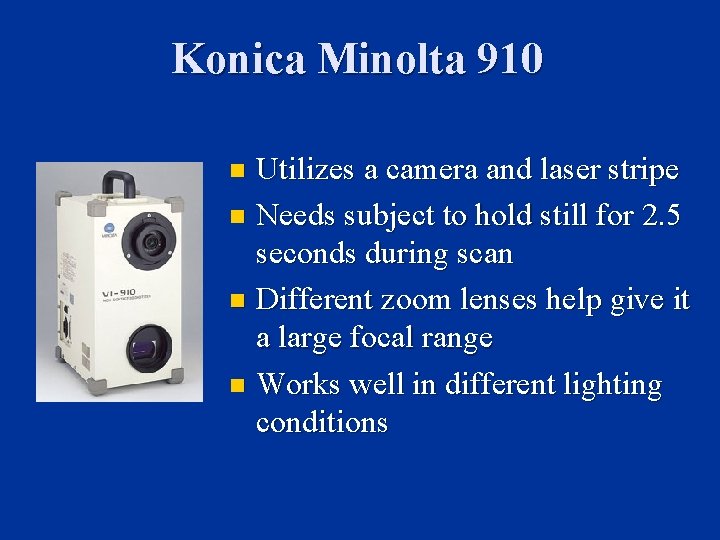
Konica Minolta 910 Utilizes a camera and laser stripe n Needs subject to hold still for 2. 5 seconds during scan n Different zoom lenses help give it a large focal range n Works well in different lighting conditions n
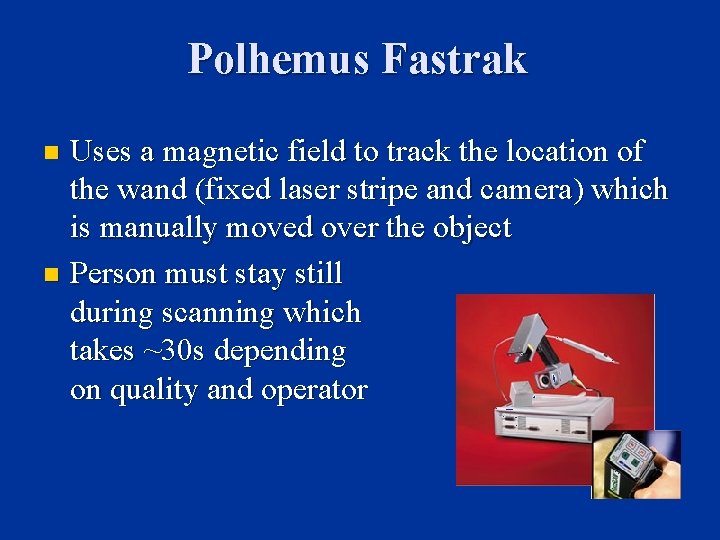
Polhemus Fastrak Uses a magnetic field to track the location of the wand (fixed laser stripe and camera) which is manually moved over the object n Person must stay still during scanning which takes ~30 s depending on quality and operator n
Defining Scanner Performance Level of detail n Repeatability n Accuracy to scanned object n Percentage of object captured n Texture image n Impact of environment n
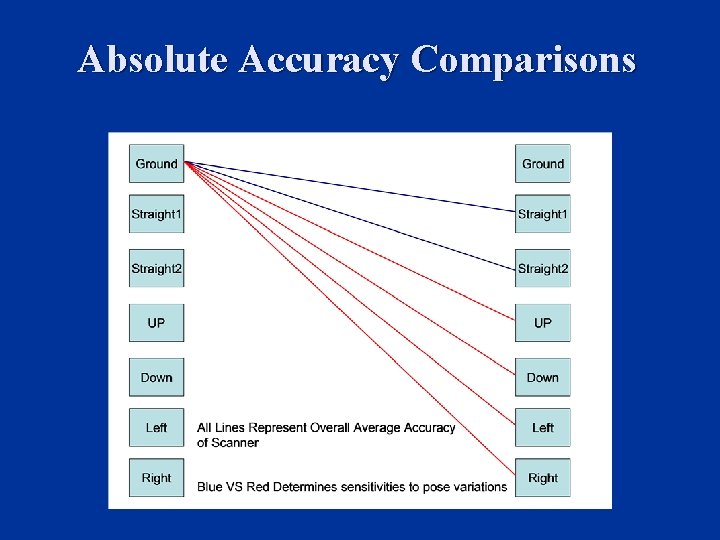
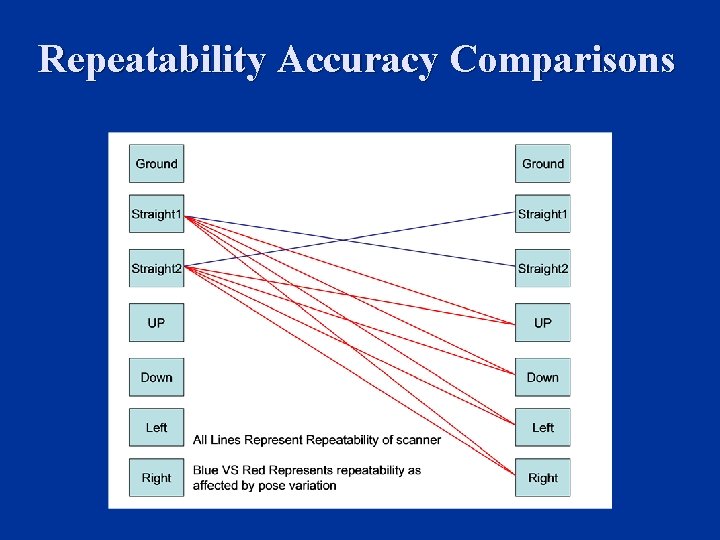
Accuracies We Explore Here Absolute Accuracy - the accuracy of the scanner with respect to a physical reference object n Repeatability Accuracy - the degree of consistency between scans n Pose Variation Accuracy – As the orientation of the scanner to the object changes how does the data change n
Experimental Method Use synthetic face masks of known ground truth as scanned objects n Allow each scanner to perform the scans under its own ideal conditions n Compare resulting scans to each other and known ground truth n
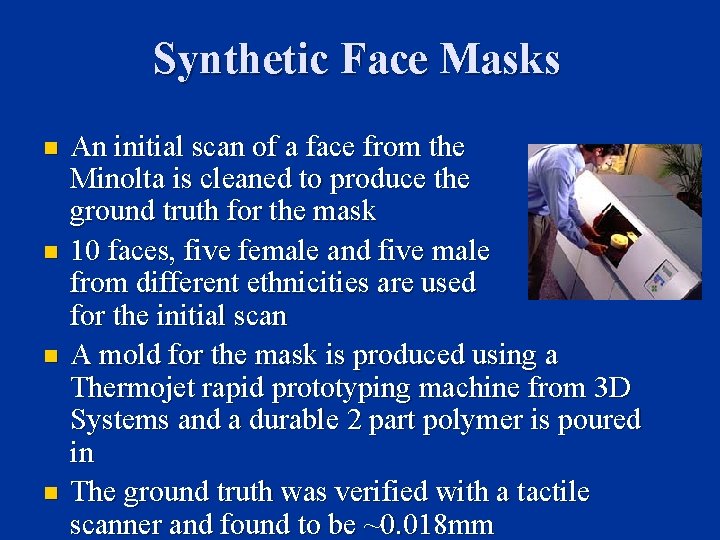
Synthetic Face Masks n n An initial scan of a face from the Minolta is cleaned to produce the ground truth for the mask 10 faces, five female and five male from different ethnicities are used for the initial scan A mold for the mask is produced using a Thermojet rapid prototyping machine from 3 D Systems and a durable 2 part polymer is poured in The ground truth was verified with a tactile scanner and found to be ~0. 018 mm
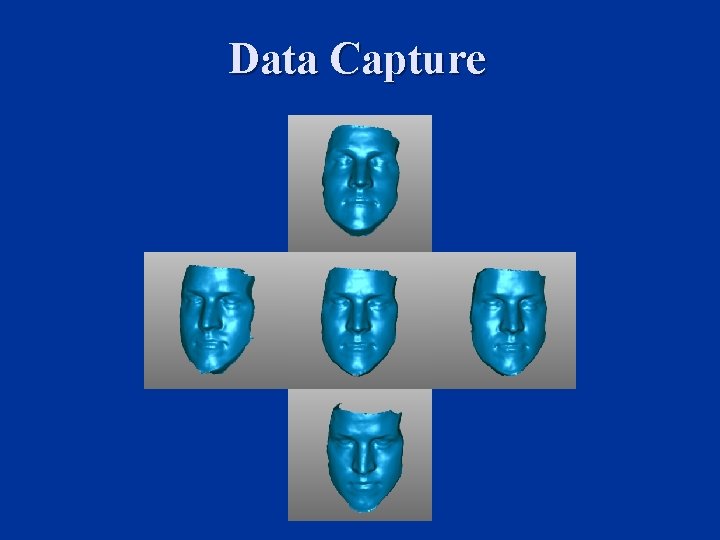
Data Collection Overview Capture a series of scans on each scanner under their ideal conditions n Run Raindrop Geomagic’s cleaning algorithm on the scans n Perform an initial alignment to the scans and the ground truth n
Data Capture
Comparing Scans Visualization Toolkit’s implementation of ICP is run to align the scans as closely as possible n The distance from each point on one surface to the other is used to calculate the mean and Root Mean Square (RMS) error distances n
Absolute Accuracy Comparisons
Repeatability Accuracy Comparisons
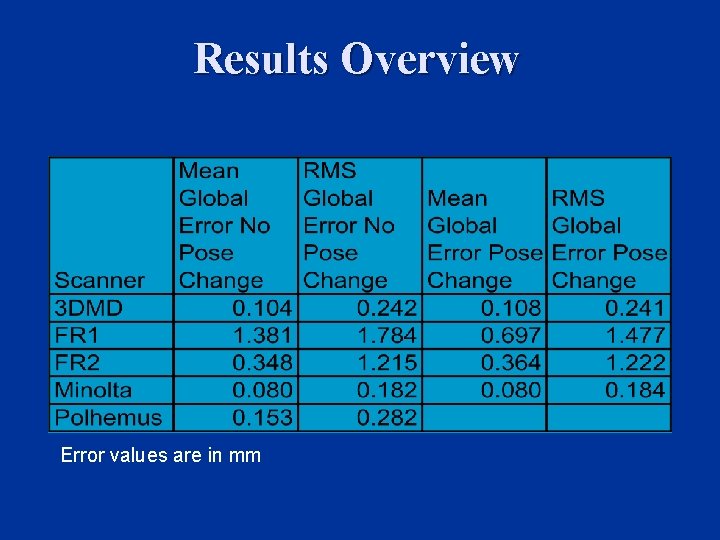
Results Overview Error values are in mm
Results Pose Change Error values are in mm
Outlier Detection and Removal n We identified outliers as anything with a distance of over 20 mm
Conclusions The most accurate scanner here in every category is the Minolta followed closely by the 3 DMD and Polhemus with the anonymous vendors far behind n In a real world setting the 3 DMD may provide slightly more accurate data with live moving subjects, but has a sufficiently lower LOD that we ranked it second here n
Conclusions The Polhemus scanner provided good data and is the smallest scanner here by far leaving open the possibility for a portable version n FR 1 provided a decent accuracy rating but the number of points was so low that we ranked it fourth here n FR 2 has a high LOD but the accuracy of those points is very low and is ranked last here n
Future Work Addition of more scanners n Exploring impact of color on accuracy n More realistic representation of skin material in face masks n
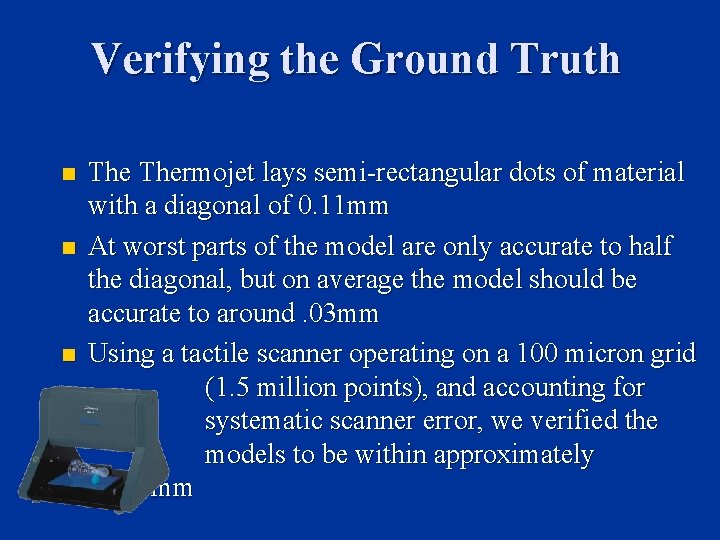
Verifying the Ground Truth n n n Thermojet lays semi-rectangular dots of material with a diagonal of 0. 11 mm At worst parts of the model are only accurate to half the diagonal, but on average the model should be accurate to around. 03 mm Using a tactile scanner operating on a 100 micron grid (1. 5 million points), and accounting for systematic scanner error, we verified the models to be within approximately 0. 018 mm
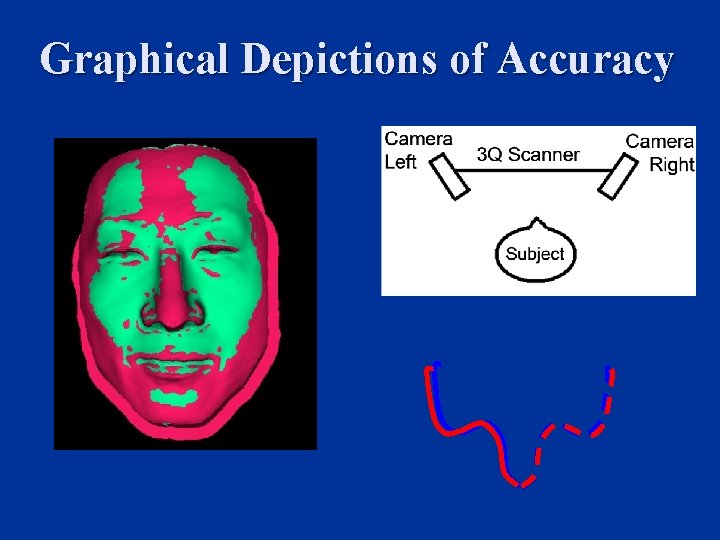
Graphical Depictions of Accuracy
Scanner Review