
Accuracy CrossValidation Overfitting and ROC Slides adopted from

- Slides: 31
Accuracy, Cross-Validation, Overfitting, and ROC Slides adopted from Data Mining for Business Analytics Stern School of Business New York University Spring 2014 P. Adamopoulos New York University
Evaluation How do we measure generalization performance? P. Adamopoulos New York University
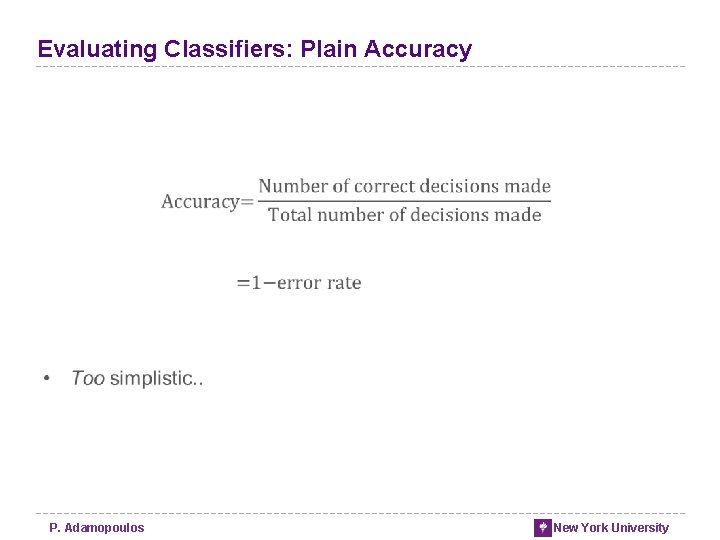
Evaluating Classifiers: Plain Accuracy P. Adamopoulos New York University
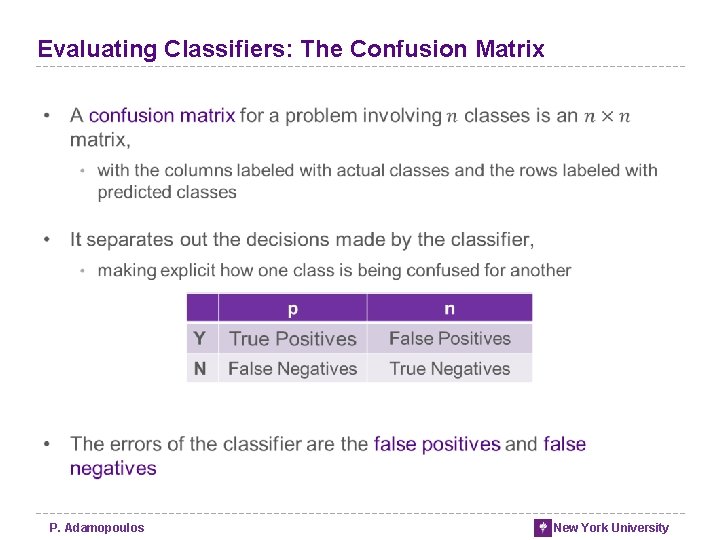
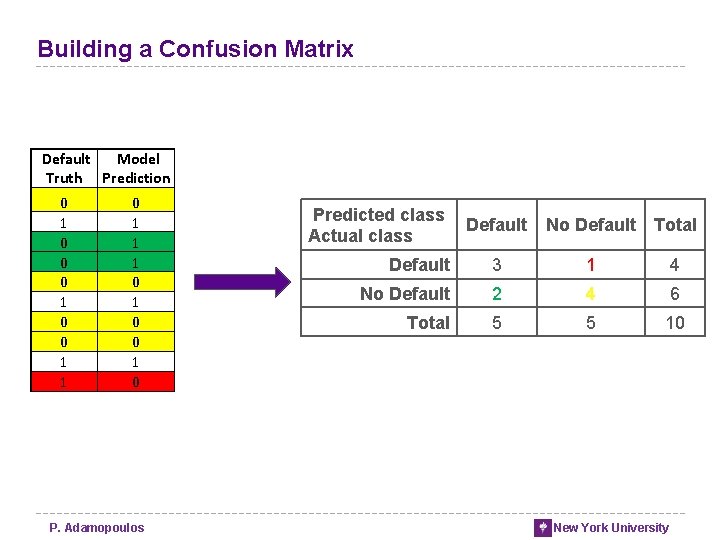
Evaluating Classifiers: The Confusion Matrix P. Adamopoulos New York University
Building a Confusion Matrix Default Model Truth Prediction 0 1 0 0 1 1 0 1 0 P. Adamopoulos Predicted class Actual class Default No Default Total Default 3 1 4 No Default 2 4 6 Total 5 5 10 New York University
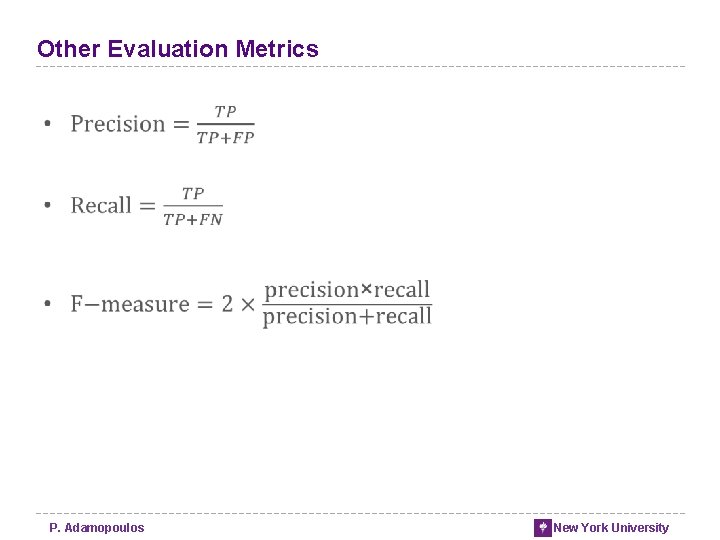
Other Evaluation Metrics P. Adamopoulos New York University
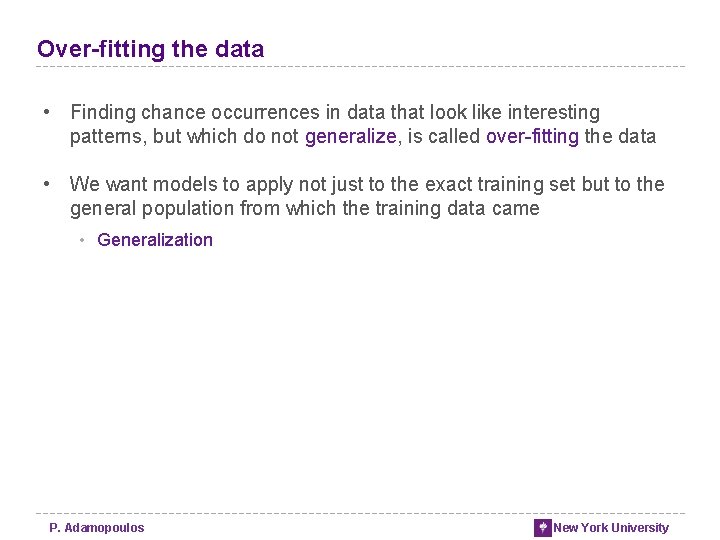
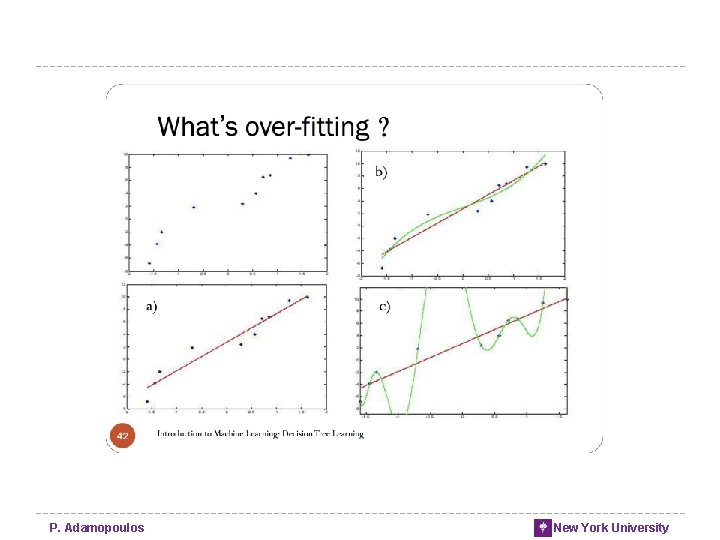
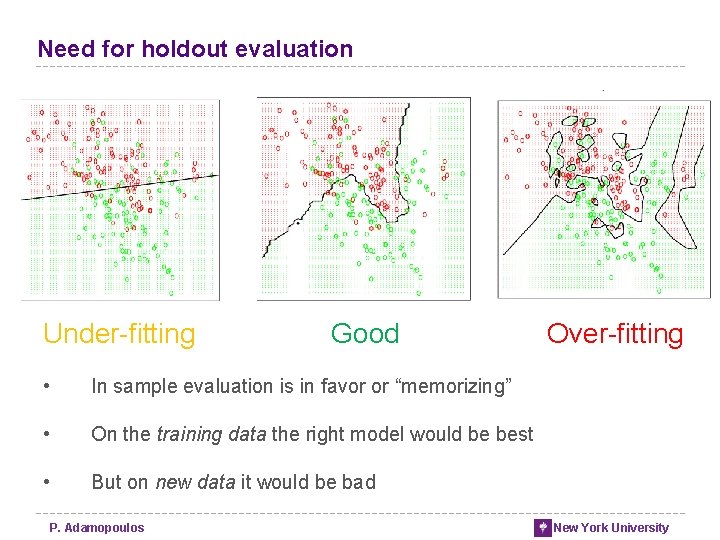
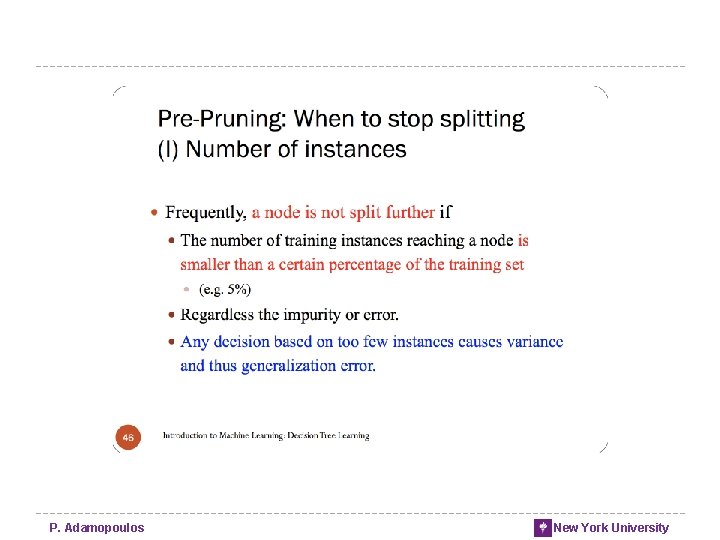
Over-fitting the data • Finding chance occurrences in data that look like interesting patterns, but which do not generalize, is called over-fitting the data • We want models to apply not just to the exact training set but to the general population from which the training data came • Generalization P. Adamopoulos New York University
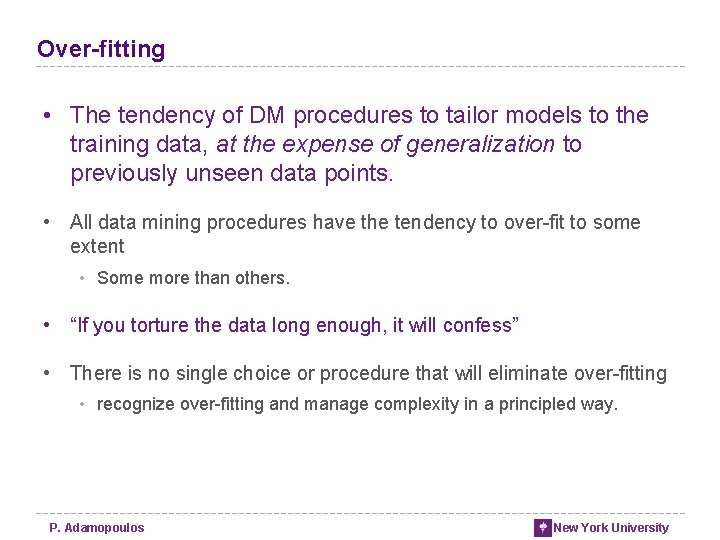
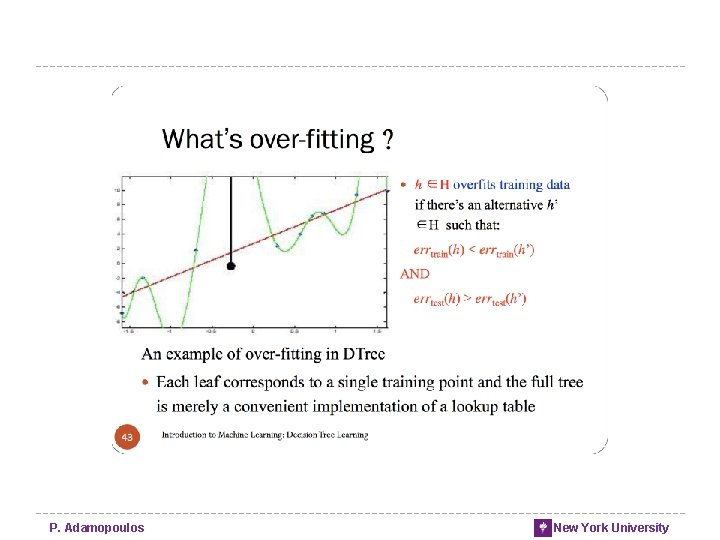
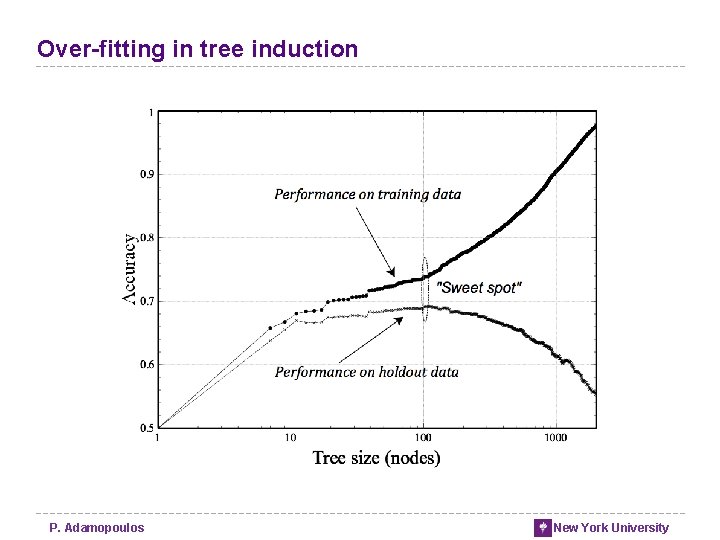
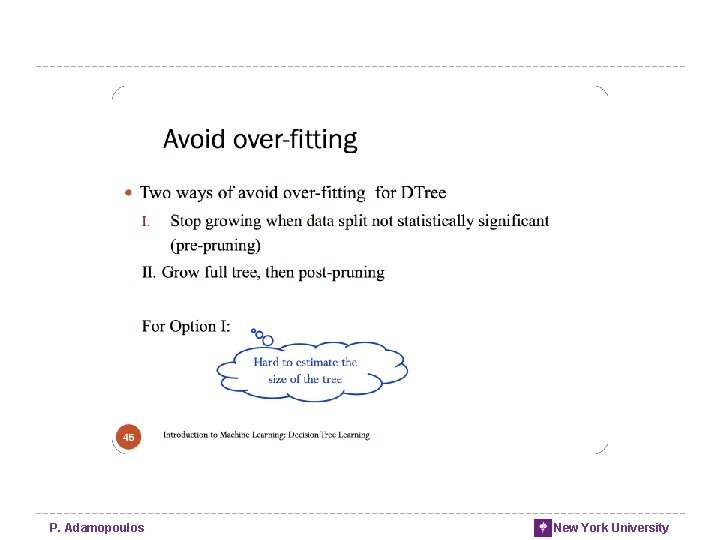
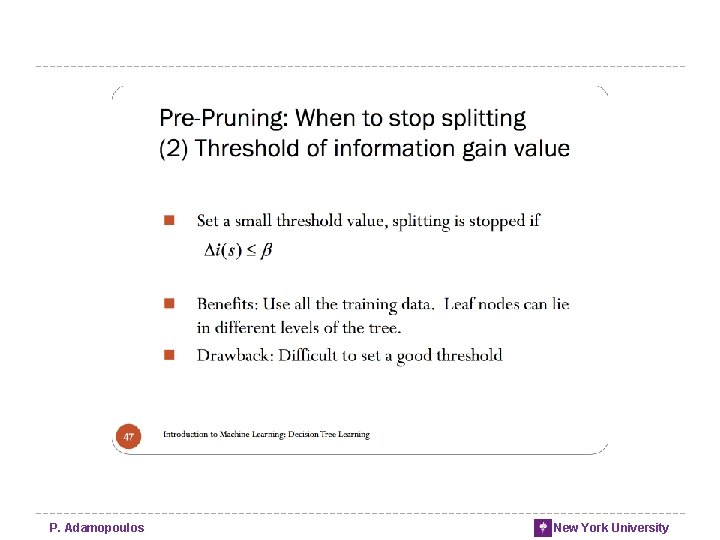
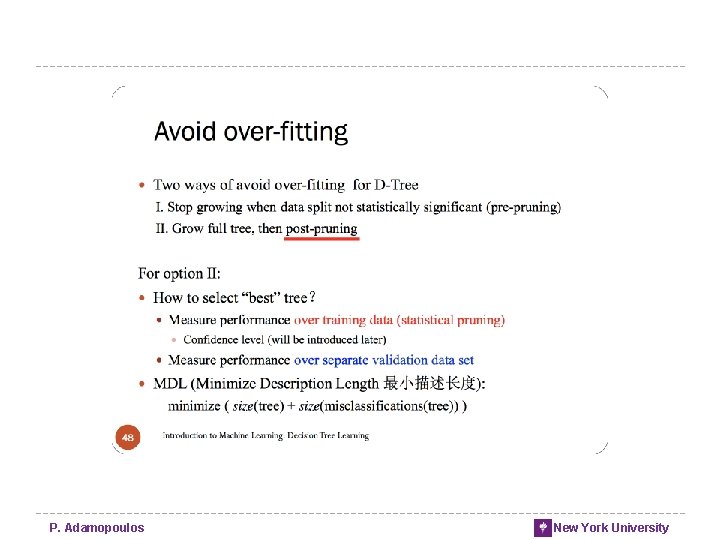
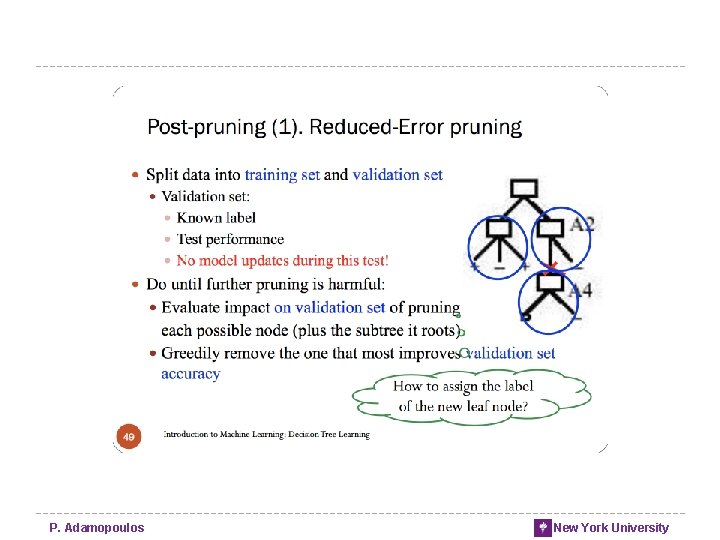
Over-fitting • The tendency of DM procedures to tailor models to the training data, at the expense of generalization to previously unseen data points. • All data mining procedures have the tendency to over-fit to some extent • Some more than others. • “If you torture the data long enough, it will confess” • There is no single choice or procedure that will eliminate over-fitting • recognize over-fitting and manage complexity in a principled way. P. Adamopoulos New York University
P. Adamopoulos New York University
P. Adamopoulos New York University
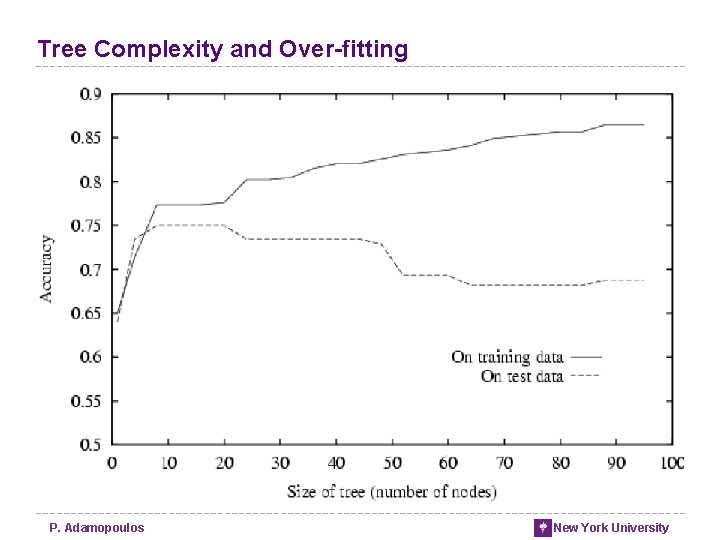
Tree Complexity and Over-fitting P. Adamopoulos New York University
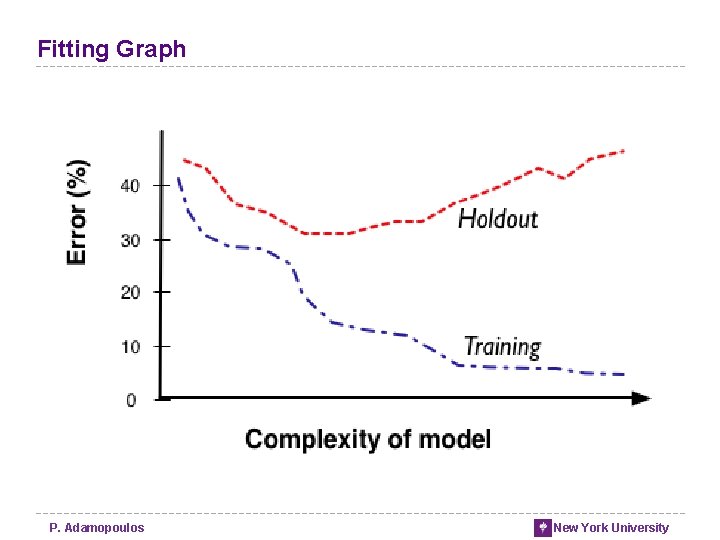
Fitting Graph P. Adamopoulos New York University
Over-fitting in tree induction P. Adamopoulos New York University
Need for holdout evaluation Under-fitting Good • In sample evaluation is in favor or “memorizing” • On the training data the right model would be best • But on new data it would be bad P. Adamopoulos Over-fitting New York University
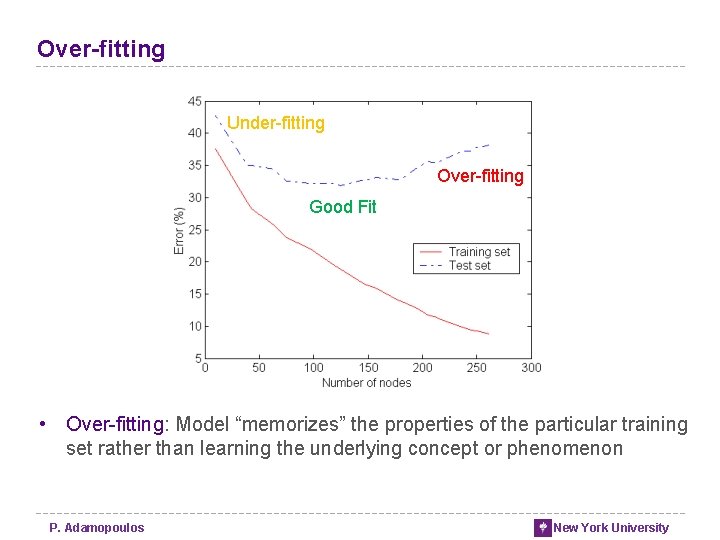
Over-fitting Under-fitting Over-fitting Good Fit • Over-fitting: Model “memorizes” the properties of the particular training set rather than learning the underlying concept or phenomenon P. Adamopoulos New York University
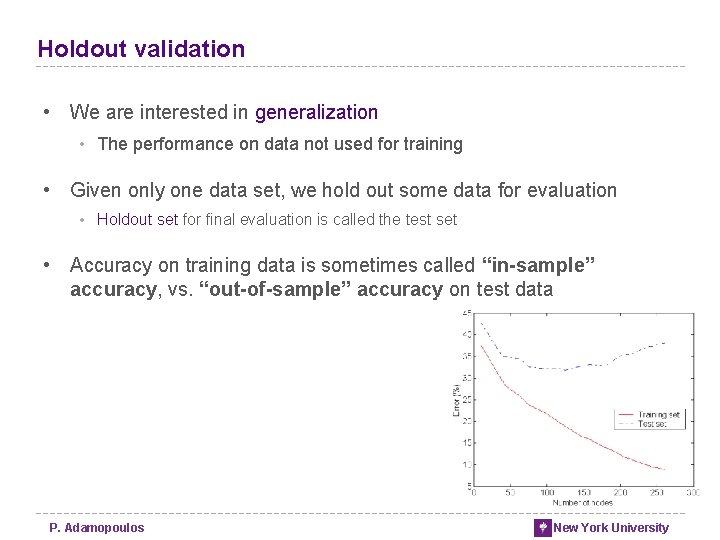
Holdout validation • We are interested in generalization • The performance on data not used for training • Given only one data set, we hold out some data for evaluation • Holdout set for final evaluation is called the test set • Accuracy on training data is sometimes called “in-sample” accuracy, vs. “out-of-sample” accuracy on test data P. Adamopoulos New York University
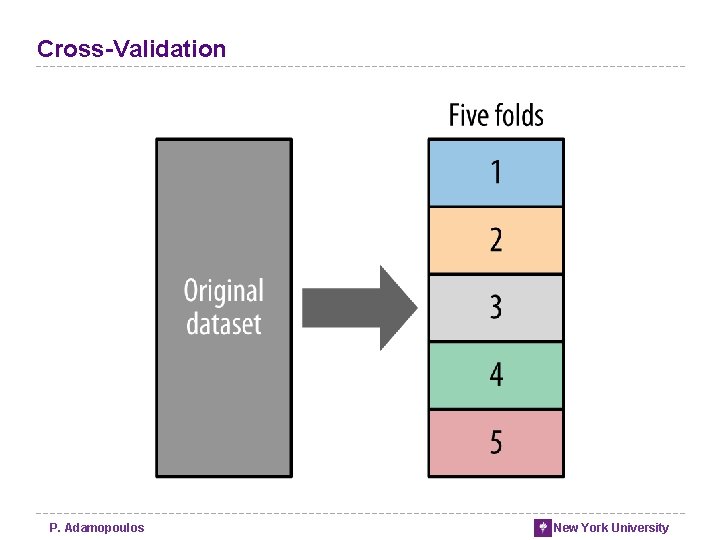
Cross-Validation P. Adamopoulos New York University
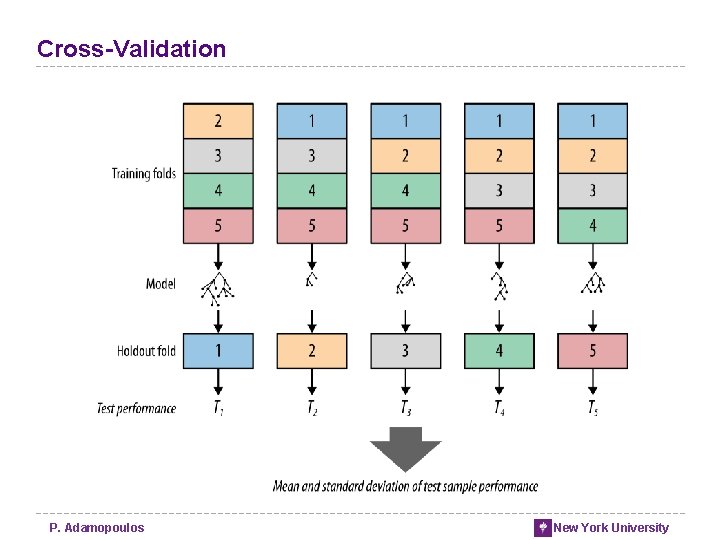
Cross-Validation P. Adamopoulos New York University
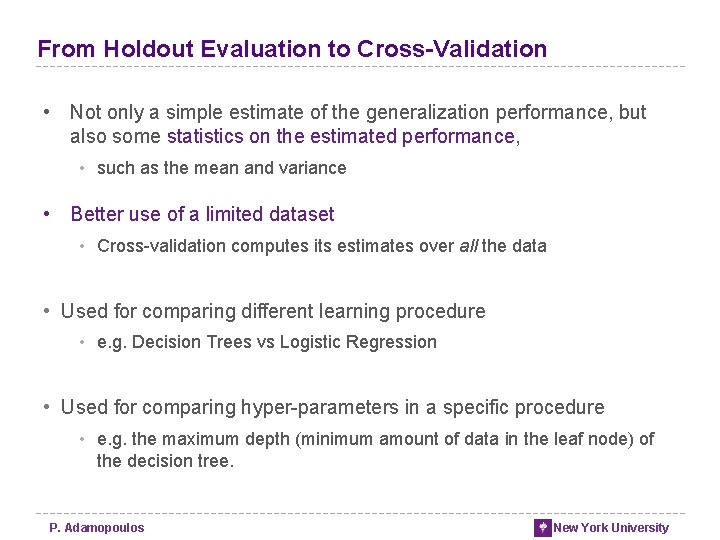
From Holdout Evaluation to Cross-Validation • Not only a simple estimate of the generalization performance, but also some statistics on the estimated performance, • such as the mean and variance • Better use of a limited dataset • Cross-validation computes its estimates over all the data • Used for comparing different learning procedure • e. g. Decision Trees vs Logistic Regression • Used for comparing hyper-parameters in a specific procedure • e. g. the maximum depth (minimum amount of data in the leaf node) of the decision tree. P. Adamopoulos New York University
P. Adamopoulos New York University
P. Adamopoulos New York University
P. Adamopoulos New York University
P. Adamopoulos New York University
P. Adamopoulos New York University
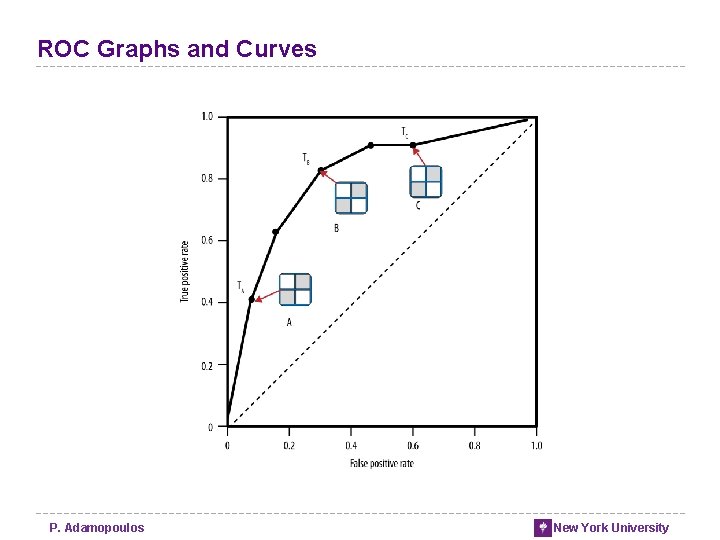
ROC Graphs and Curves P. Adamopoulos New York University
Generating ROC curve: Algorithm • For each test, count the number of true positives TP (positives with prediction above the cutoff) and false positives FP (negatives above the cutoff) • Calculate TP rate (TP/P) and FP (FP/N) rate • Plot current number of TP/P as a function of current FP/N P. Adamopoulos New York University
ROC Graphs and Curves • ROC graphs decouple classifier performance from the conditions under which the classifiers will be used • ROC graphs are independent of the class proportions as well as the costs and benefits • Not the most intuitive visualization for many business stakeholders P. Adamopoulos New York University
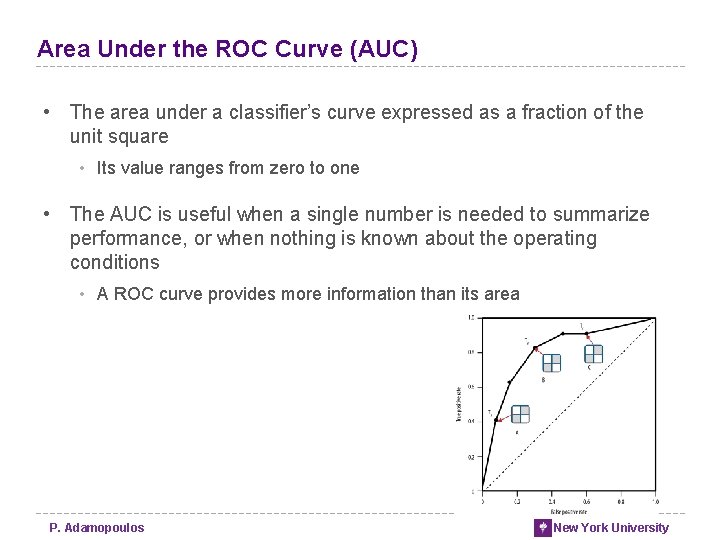
Area Under the ROC Curve (AUC) • The area under a classifier’s curve expressed as a fraction of the unit square • Its value ranges from zero to one • The AUC is useful when a single number is needed to summarize performance, or when nothing is known about the operating conditions • A ROC curve provides more information than its area P. Adamopoulos New York University
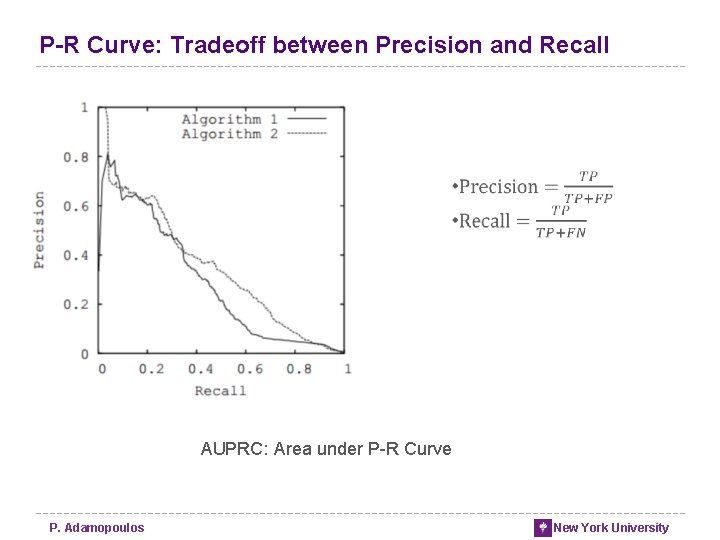
P-R Curve: Tradeoff between Precision and Recall AUPRC: Area under P-R Curve P. Adamopoulos New York University
Thanks! P. Adamopoulos New York University
Questions? P. Adamopoulos New York University