
Accuracy and Precision Accuracy Definition How close a



- Slides: 12
Accuracy and Precision
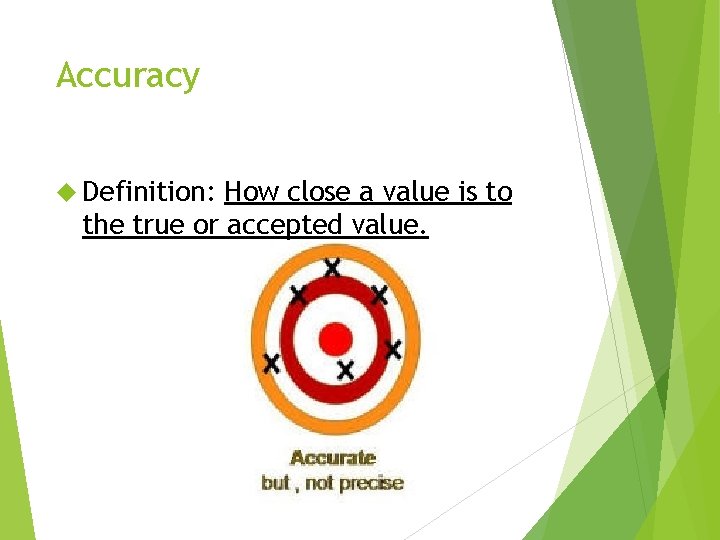
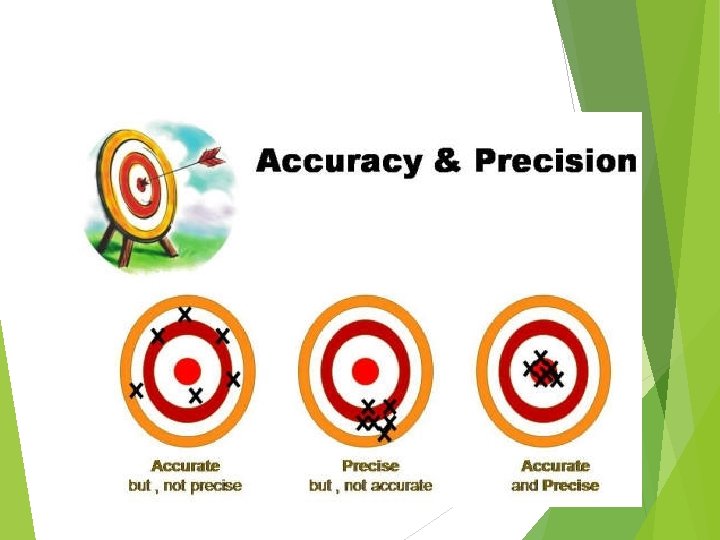
Accuracy Definition: How close a value is to the true or accepted value.
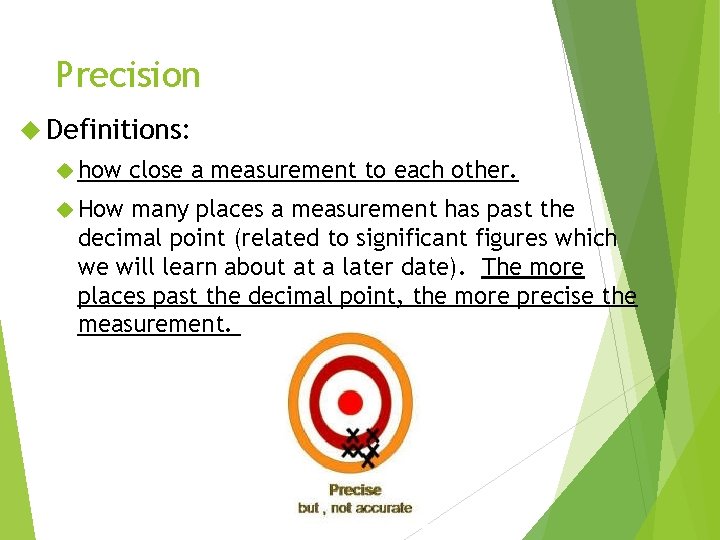
Precision Definitions: how How close a measurement to each other. many places a measurement has past the decimal point (related to significant figures which we will learn about at a later date). The more places past the decimal point, the more precise the measurement.
Three main types of error Systematic Errors (can be accounted for) Instrument Faults within the equipment for example equipment that has not been calibrated. Method Difference in the method between scientists. Human These are specific to the scientist for example lack of ability to see color changes. Random Error Cannot be controlled, accidental error
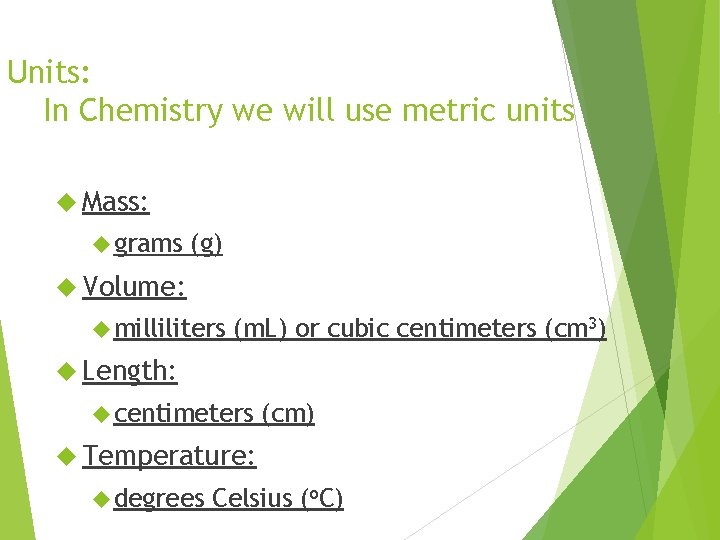
Units: In Chemistry we will use metric units Mass: grams (g) Volume: milliliters (m. L) or cubic centimeters (cm 3) Length: centimeters (cm) Temperature: degrees Celsius (o. C)
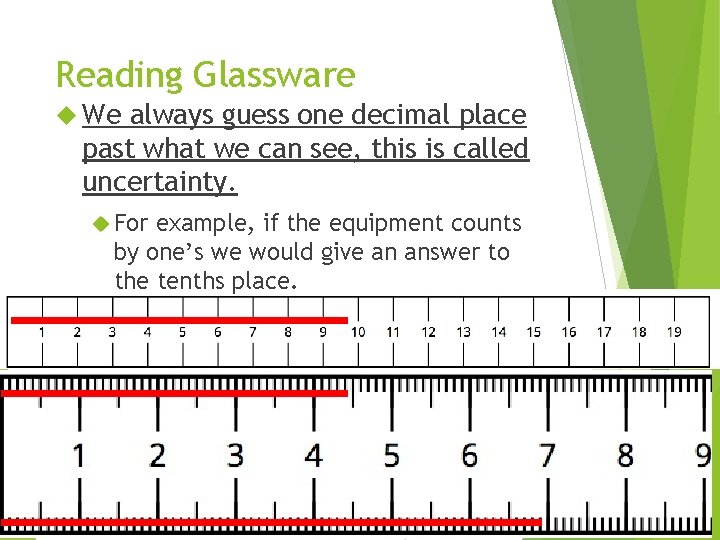
Reading Glassware We always guess one decimal place past what we can see, this is called uncertainty. For example, if the equipment counts by one’s we would give an answer to the tenths place.
Reading Liquids When we read liquids we use the meniscus. Meniscus – upper curved portion of liquids used for measuring. Ex. Meniscus
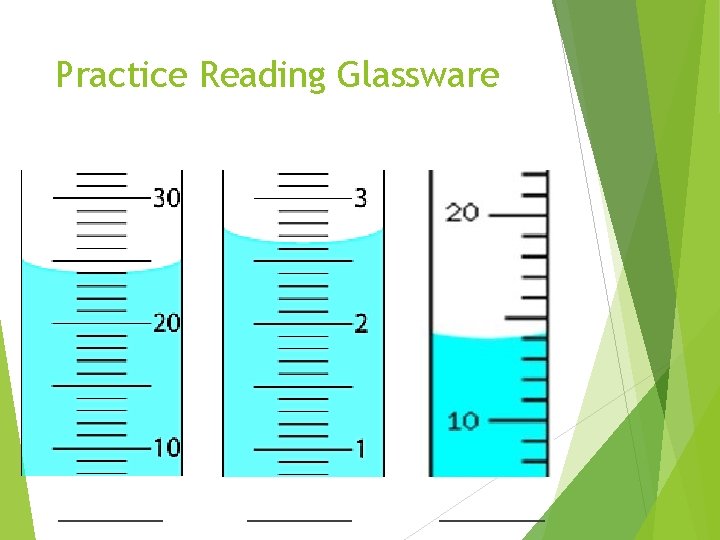
Practice Reading Glassware __________
Read the significant figures reference sheet
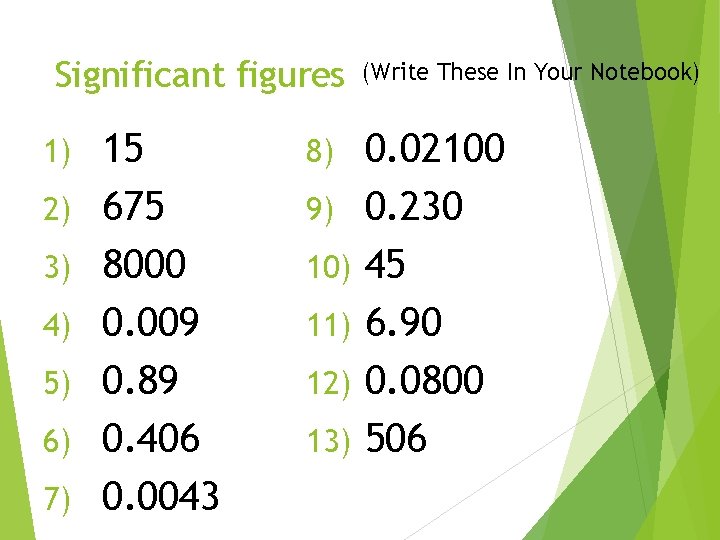
Significant figures 1) 2) 3) 4) 5) 6) 7) 15 675 8000 0. 009 0. 89 0. 406 0. 0043 8) 9) 10) 11) 12) 13) (Write These In Your Notebook) 0. 02100 0. 230 45 6. 90 0. 0800 506
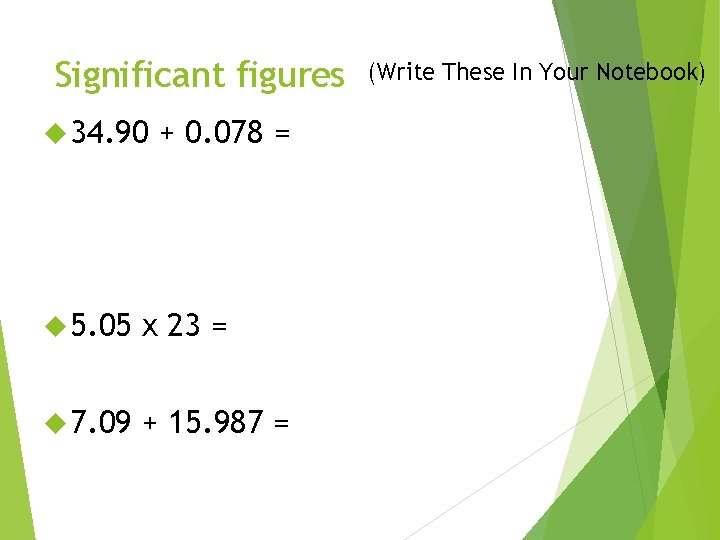
Significant figures 34. 90 + 0. 078 = 5. 05 x 23 = 7. 09 + 15. 987 = (Write These In Your Notebook)