
Accumulated Experience in Various Projects About Manure Management
Accumulated Experience in Various Projects About Manure Management Practices and Technologies In Latvia Jelgava 16. 02. 2016.
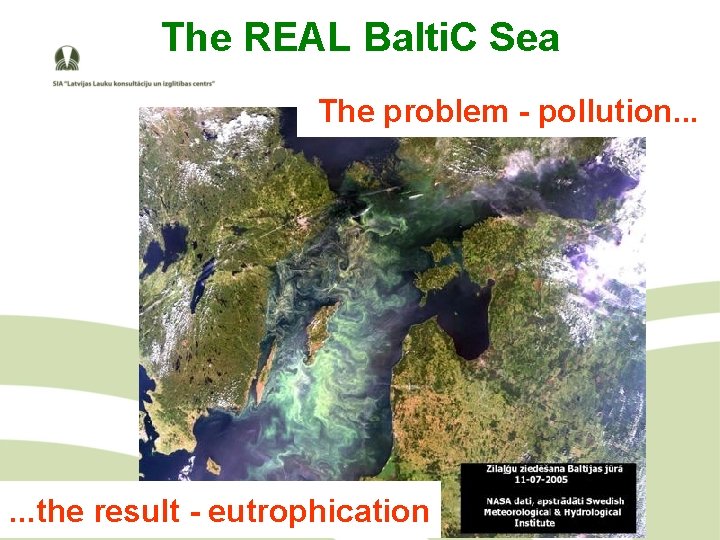
The REAL Balti. C Sea The problem - pollution. . . the result - eutrophication
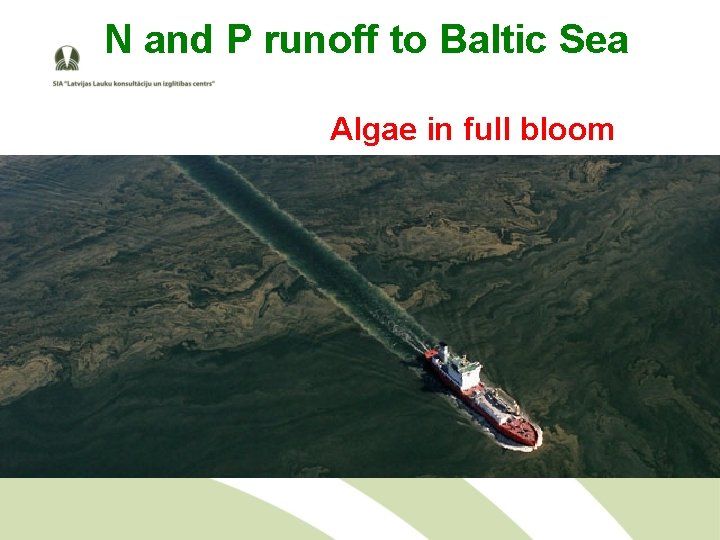
N and P runoff to Baltic Sea Algae in full bloom
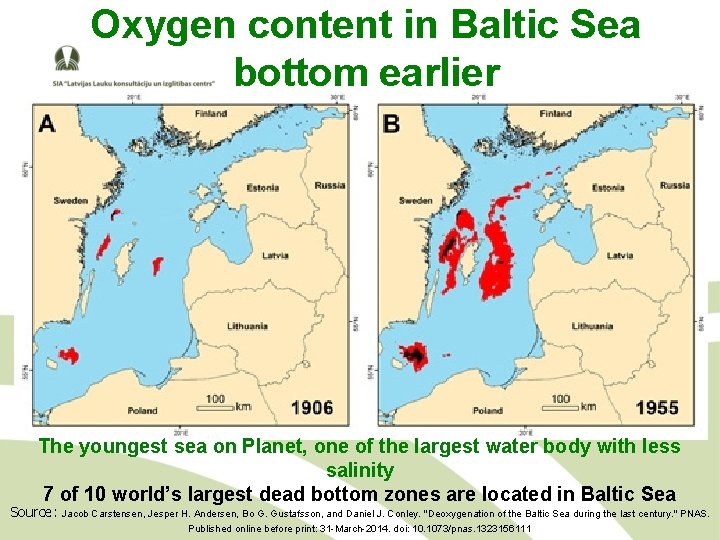
Oxygen content in Baltic Sea bottom earlier The youngest sea on Planet, one of the largest water body with less salinity 7 of 10 world’s largest dead bottom zones are located in Baltic Sea Source: Jacob Carstensen, Jesper H. Andersen, Bo G. Gustafsson, and Daniel J. Conley. "Deoxygenation of the Baltic Sea during the last century. " PNAS. Published online before print: 31 -March-2014. doi: 10. 1073/pnas. 1323156111
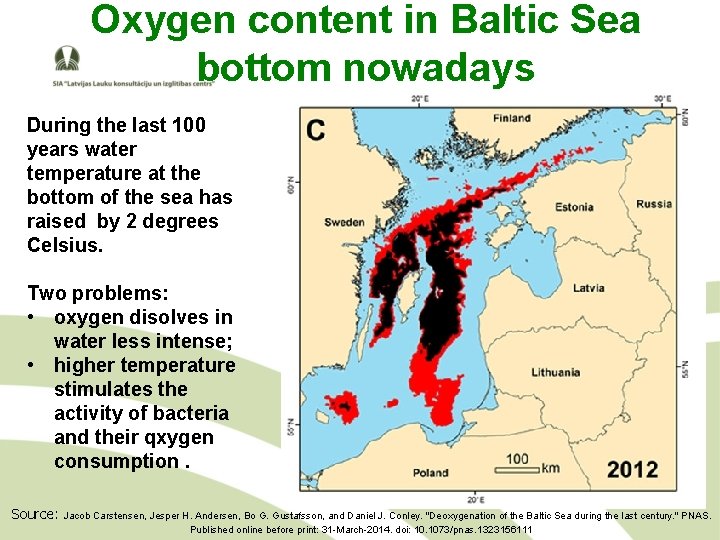
Oxygen content in Baltic Sea bottom nowadays During the last 100 years water temperature at the bottom of the sea has raised by 2 degrees Celsius. Two problems: • oxygen disolves in water less intense; • higher temperature stimulates the activity of bacteria and their qxygen consumption. Source: Jacob Carstensen, Jesper H. Andersen, Bo G. Gustafsson, and Daniel J. Conley. "Deoxygenation of the Baltic Sea during the last century. " PNAS. Published online before print: 31 -March-2014. doi: 10. 1073/pnas. 1323156111
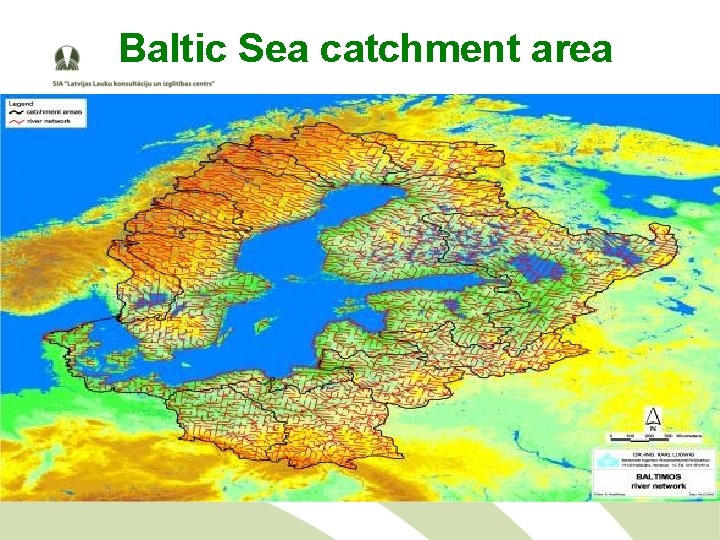
Baltic Sea catchment area
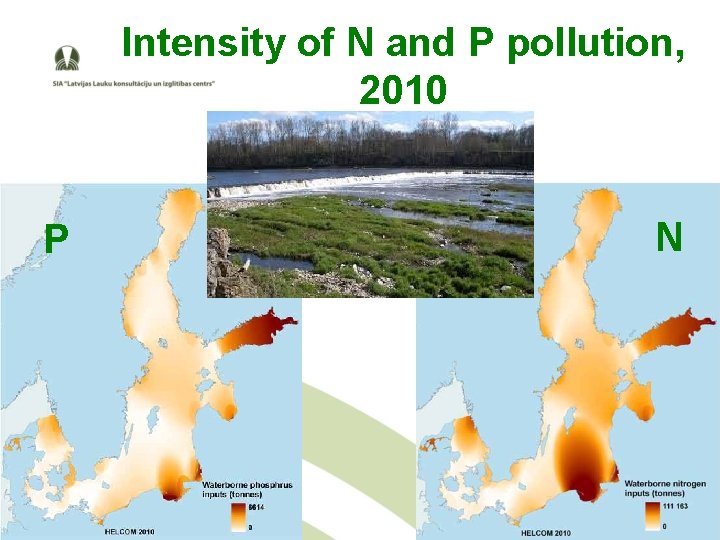
Intensity of N and P pollution, 2010 P N
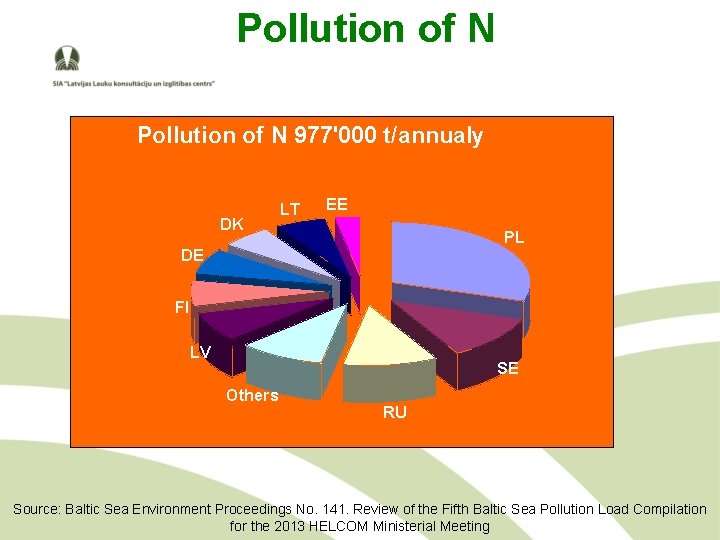
Pollution of N 977'000 t/annualy DK LT EE PL DE FI LV SE Others RU Source: Baltic Sea Environment Proceedings No. 141. Review of the Fifth Baltic Sea Pollution Load Compilation for the 2013 HELCOM Ministerial Meeting
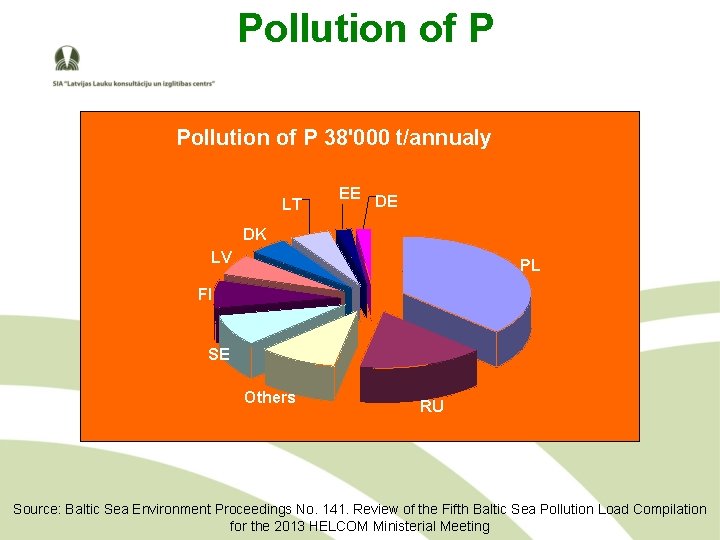
Pollution of P 38'000 t/annualy LT EE DE DK LV PL FI SE Others RU Source: Baltic Sea Environment Proceedings No. 141. Review of the Fifth Baltic Sea Pollution Load Compilation for the 2013 HELCOM Ministerial Meeting

Photo: Andreas Gursky “Rhine II”
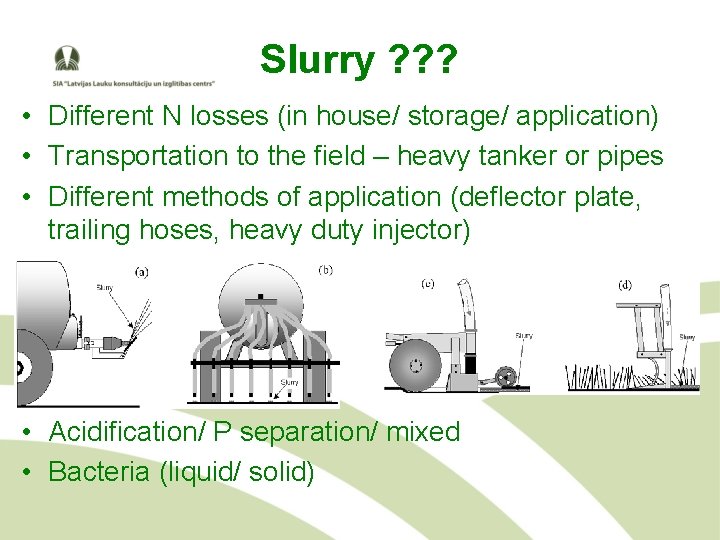
Slurry ? ? ? • Different N losses (in house/ storage/ application) • Transportation to the field – heavy tanker or pipes • Different methods of application (deflector plate, trailing hoses, heavy duty injector) • Acidification/ P separation/ mixed • Bacteria (liquid/ solid)
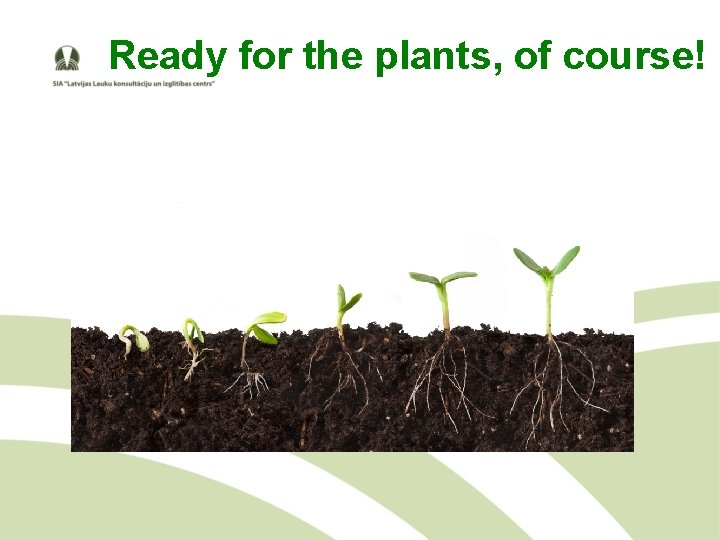
Ready for the plants, of course!
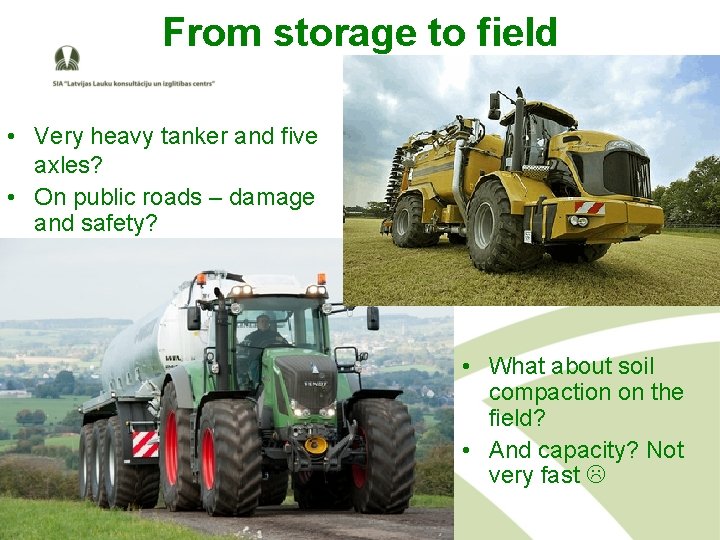
From storage to field • Very heavy tanker and five axles? • On public roads – damage and safety? • What about soil compaction on the field? • And capacity? Not very fast
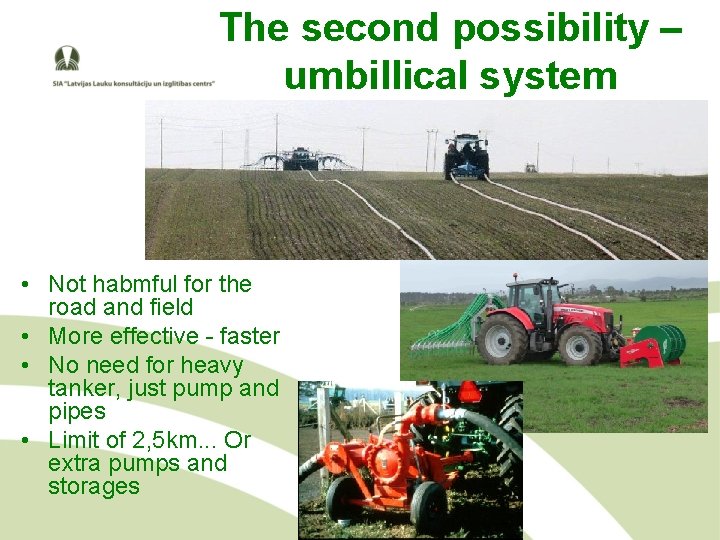
The second possibility – umbillical system • Not habmful for the road and field • More effective - faster • No need for heavy tanker, just pump and pipes • Limit of 2, 5 km. . . Or extra pumps and storages
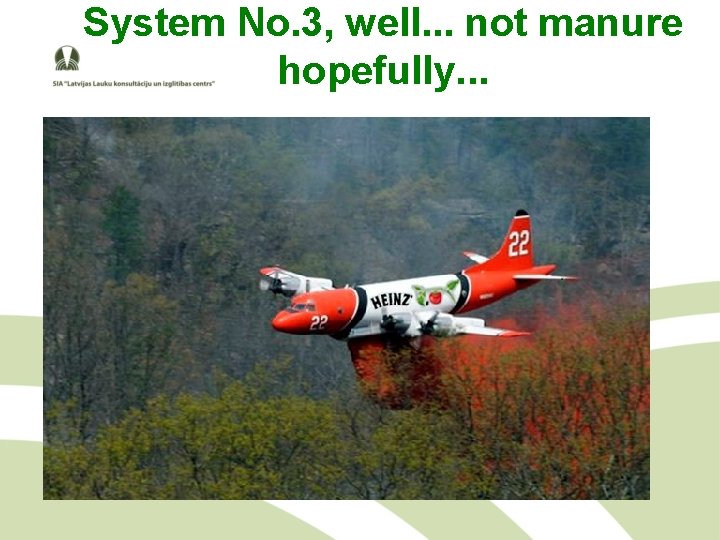
System No. 3, well. . . not manure hopefully. . .
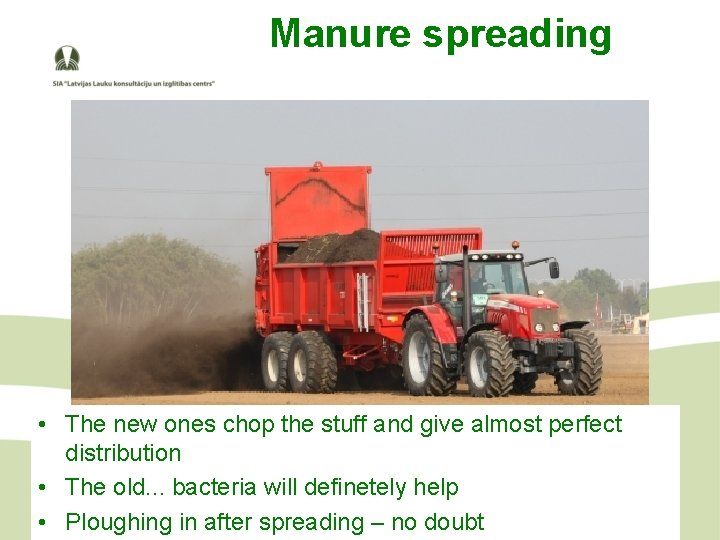
Manure spreading • The new ones chop the stuff and give almost perfect distribution • The old. . . bacteria will definetely help • Ploughing in after spreading – no doubt
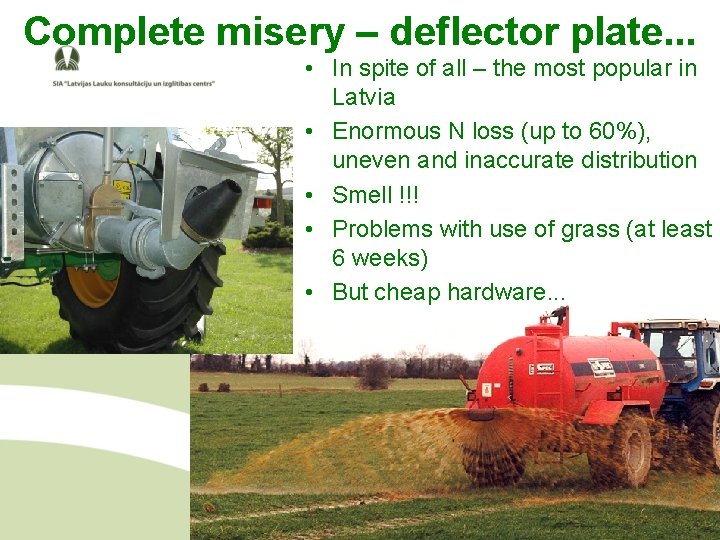
Complete misery – deflector plate. . . • In spite of all – the most popular in Latvia • Enormous N loss (up to 60%), uneven and inaccurate distribution • Smell !!! • Problems with use of grass (at least 6 weeks) • But cheap hardware. . .
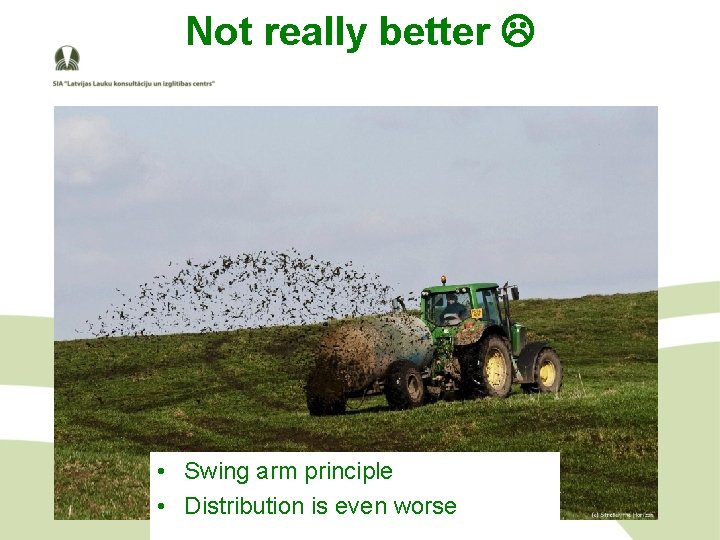
Not really better • Swing arm principle • Distribution is even worse
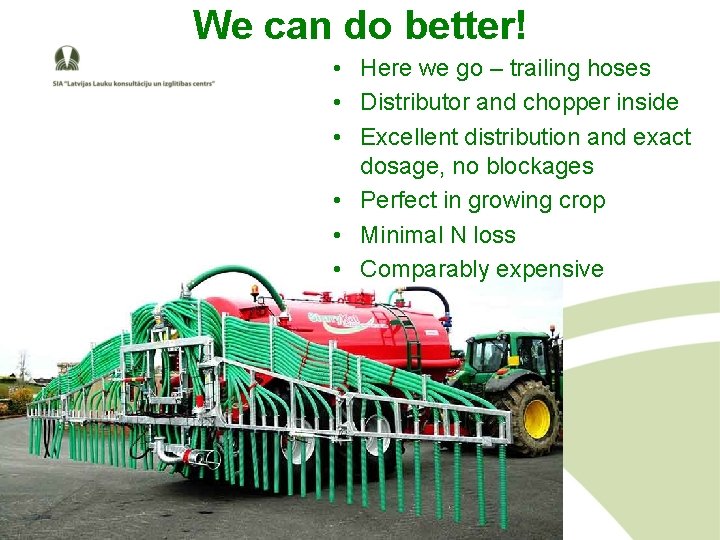
We can do better! • Here we go – trailing hoses • Distributor and chopper inside • Excellent distribution and exact dosage, no blockages • Perfect in growing crop • Minimal N loss • Comparably expensive
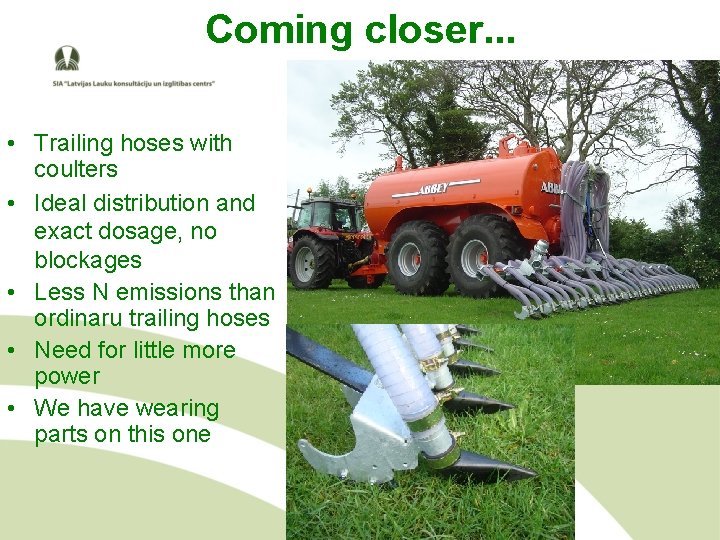
Coming closer. . . • Trailing hoses with coulters • Ideal distribution and exact dosage, no blockages • Less N emissions than ordinaru trailing hoses • Need for little more power • We have wearing parts on this one
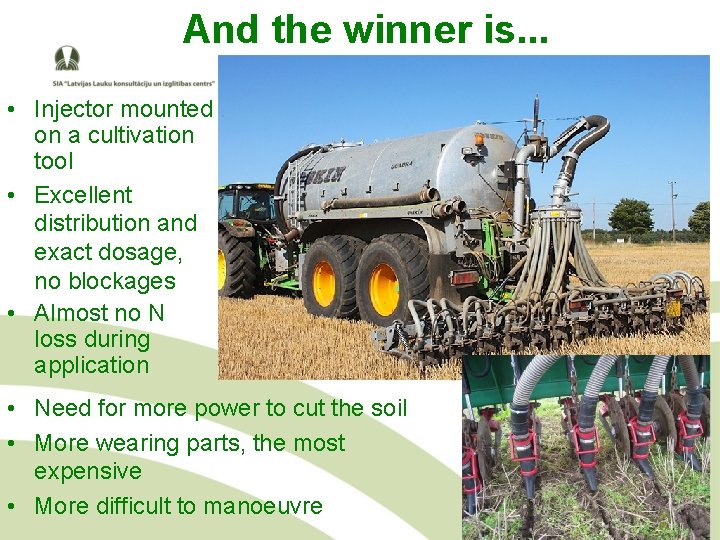
And the winner is. . . • Injector mounted on a cultivation tool • Excellent distribution and exact dosage, no blockages • Almost no N loss during application • Need for more power to cut the soil • More wearing parts, the most expensive • More difficult to manoeuvre
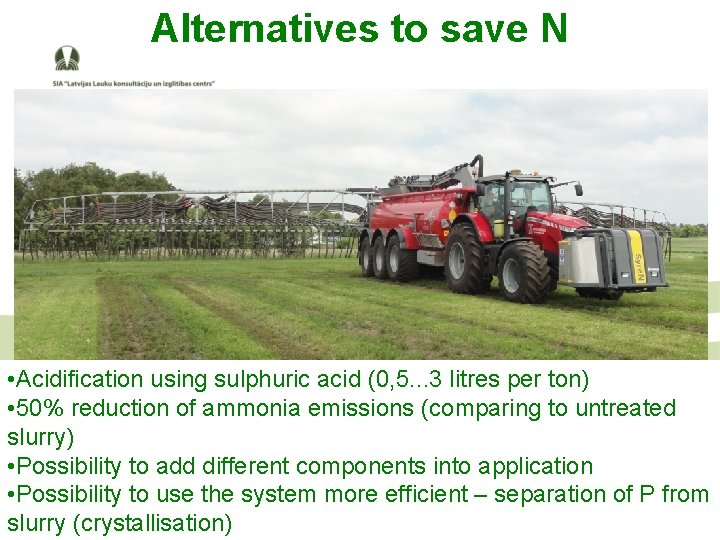
Alternatives to save N • Acidification using sulphuric acid (0, 5. . . 3 litres per ton) • 50% reduction of ammonia emissions (comparing to untreated slurry) • Possibility to add different components into application • Possibility to use the system more efficient – separation of P from slurry (crystallisation)
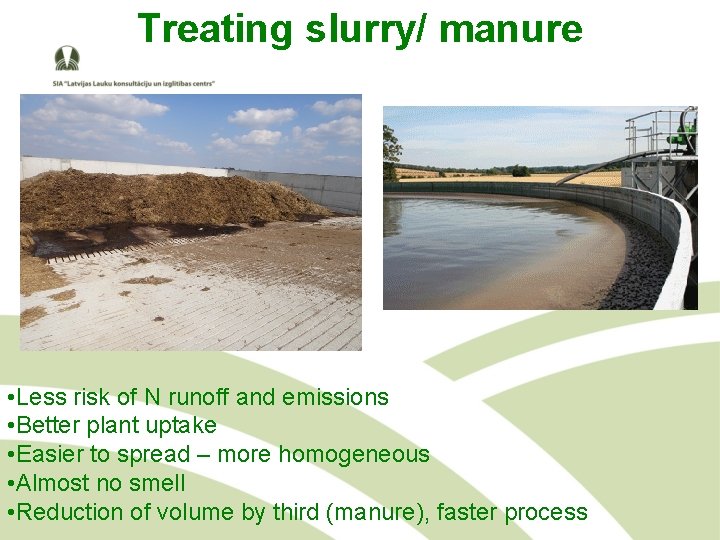
Treating slurry/ manure • Less risk of N runoff and emissions • Better plant uptake • Easier to spread – more homogeneous • Almost no smell • Reduction of volume by third (manure), faster process
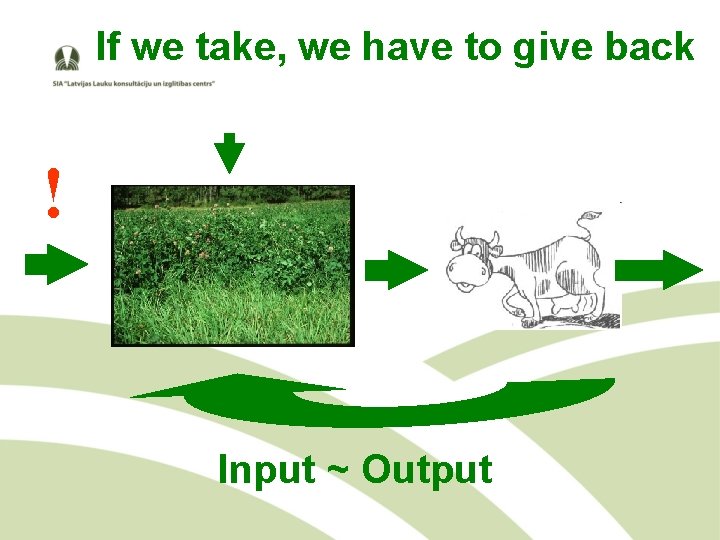
If we take, we have to give back ! Input ~ Output
To roll up The state of our Sea is bad, but: • We have the knowledge to treat it back • 60% reduction of ammonia emissions is realistic during the spreading • The choice of proper application system is not the only solution to reduce N loss during application • There is a room for improvement to use manure more efficient and plant/environment friendly • Cheaper machinery doesn’t equal more sustainable farming

There’s always sun behaind the clouds

Was great to have you here, thanks! Jānis Kažotnieks Head of Department of Engineering Latvian Rural Advisory and Training Centre GSM: +371 26 66 06 76 e-mail: janis. kazotnieks@llkc. lv skype: janis. kazotnieks
- Slides: 28