
ACCT 201 LECTURE 2 Recording Business Transactions 1
ACCT 201 LECTURE 2 Recording Business Transactions 1
LECTURE OBJECTIVES 1. 2. 3. 4. 5. 6. Use accounting terms Apply the Rules of Debit and Credit Record Transactions in the Journal Post from the Journal to the Ledger Prepare and use a Trial Balance Analyze Transactions without a Journal 2
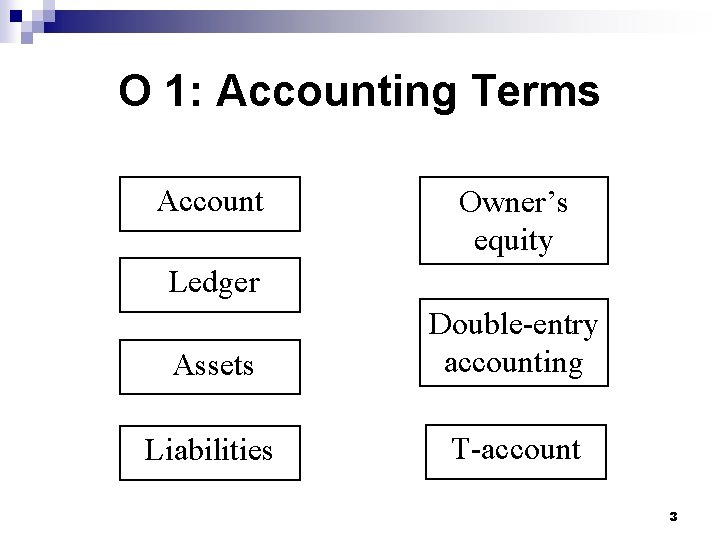
O 1: Accounting Terms Account Owner’s equity Ledger Assets Double-entry accounting Liabilities T-account 3
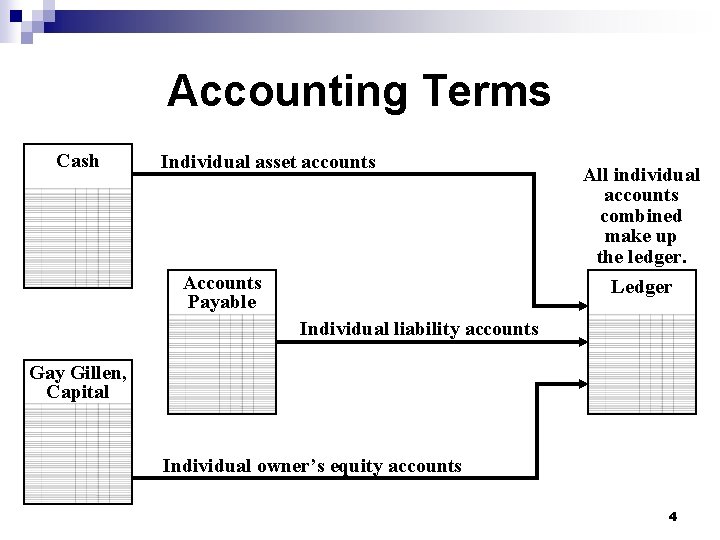
Accounting Terms Cash Individual asset accounts Accounts Payable All individual accounts combined make up the ledger. Ledger Individual liability accounts Gay Gillen, Capital Individual owner’s equity accounts 4
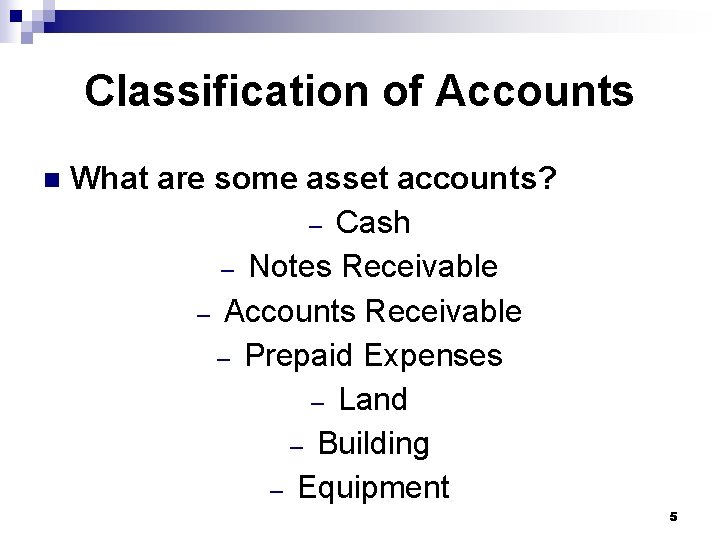
Classification of Accounts n What are some asset accounts? – Cash – Notes Receivable – Accounts Receivable – Prepaid Expenses – Land – Building – Equipment 5
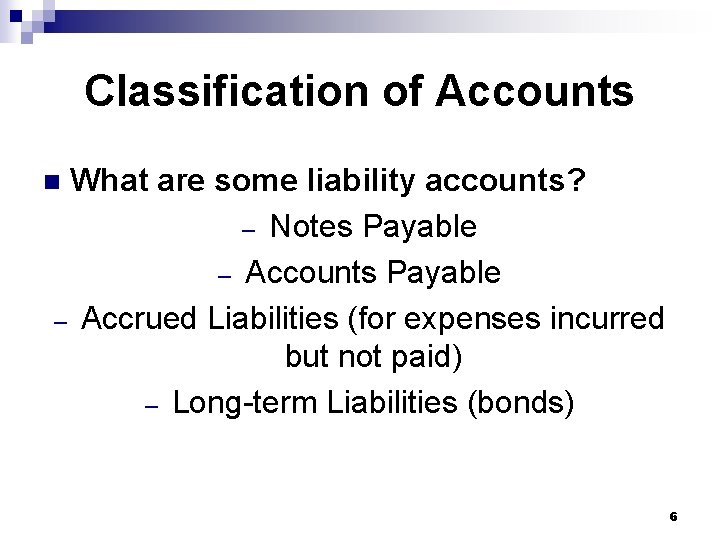
Classification of Accounts What are some liability accounts? – Notes Payable – Accounts Payable – Accrued Liabilities (for expenses incurred but not paid) – Long-term Liabilities (bonds) n 6
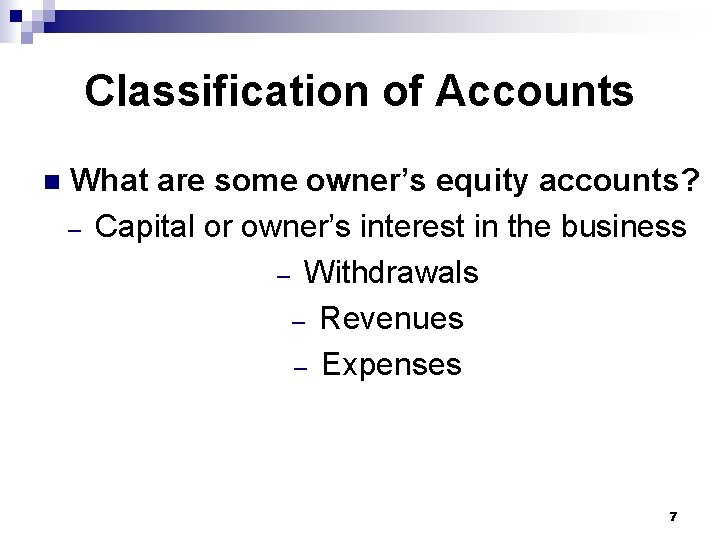
Classification of Accounts n What are some owner’s equity accounts? – Capital or owner’s interest in the business – Withdrawals – Revenues – Expenses 7
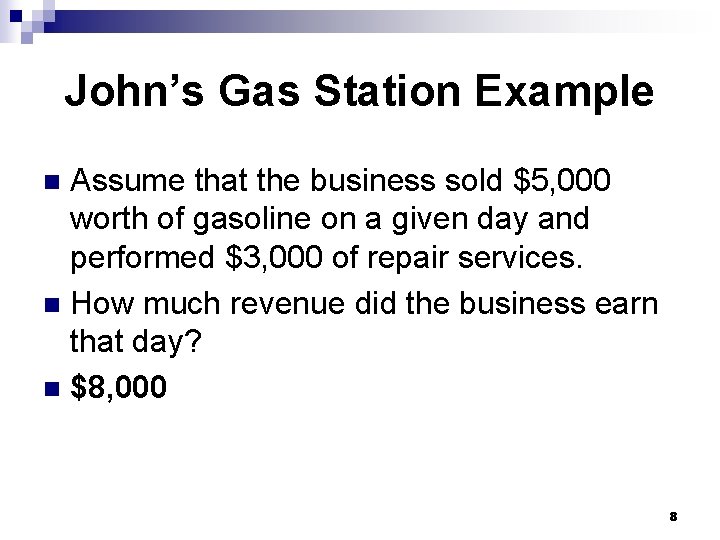
John’s Gas Station Example Assume that the business sold $5, 000 worth of gasoline on a given day and performed $3, 000 of repair services. n How much revenue did the business earn that day? n $8, 000 n 8
John’s Gas Station Example Revenues increase John’s equity in the business. n The business had to pay mechanics and vendors $3, 750 for the work performed that day. n 9
John’s Gas Station Example Expenses decrease John’s equity in the business. n How much was the net increase in John’s equity that day? n $4, 250 n 10

Classification of Accounts n In a corporation, the owner’s equity account is called Stockholders’ Equity. Contributed Capital Retained Earnings 11
Double-Entry Accounting Double entry bookkeeping means to record the dual effects of each business transaction. n Assets = Liabilities + Owner’s Equity n Assets are on the left (debit) side. n Liabilities and Equity are on the right (credit) side. n 12
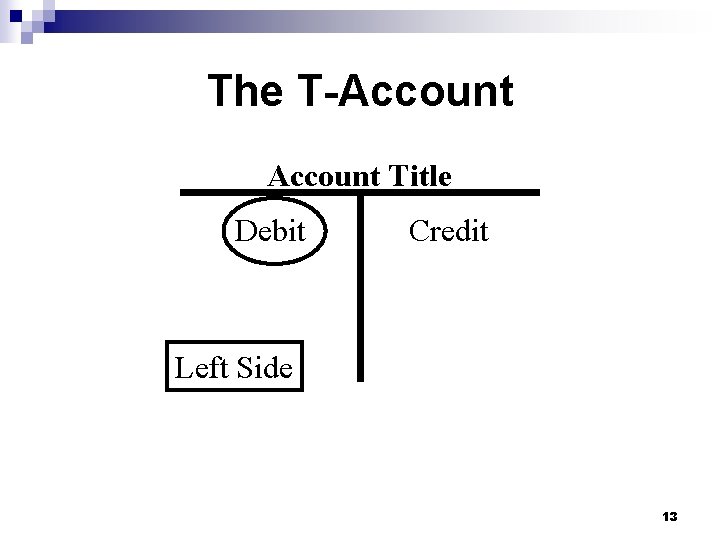
The T-Account Title Debit Credit Left Side 13
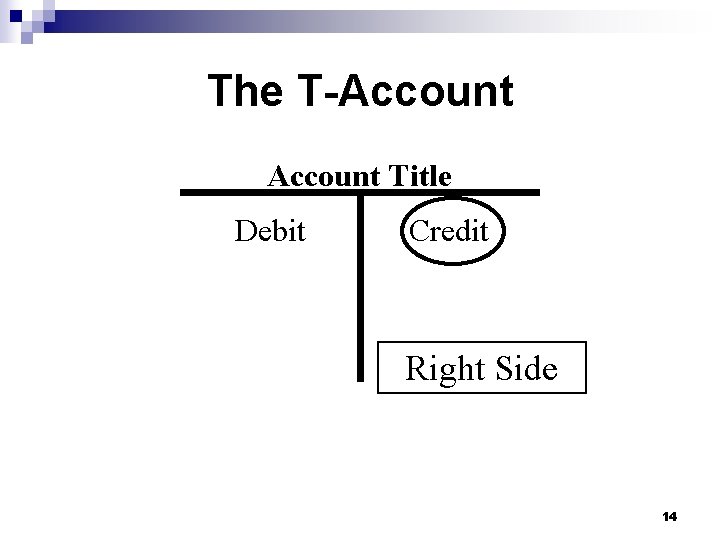
The T-Account Title Debit Credit Right Side 14
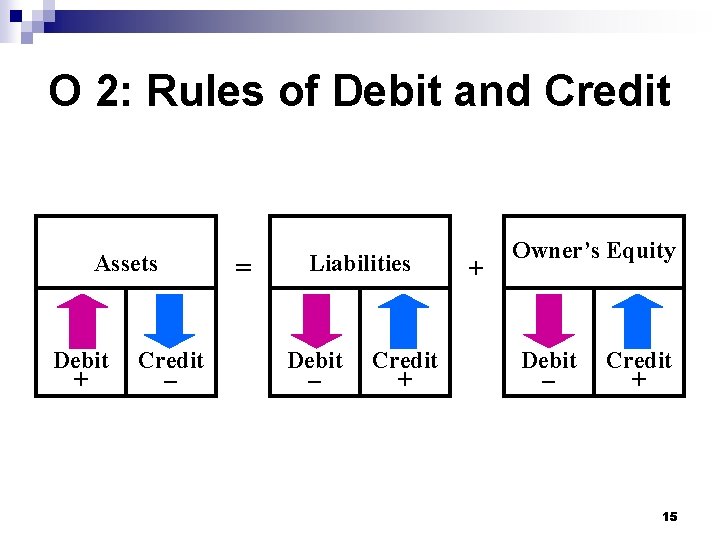
O 2: Rules of Debit and Credit Assets Debit + Credit – = Liabilities Debit – Credit + + Owner’s Equity Debit – Credit + 15
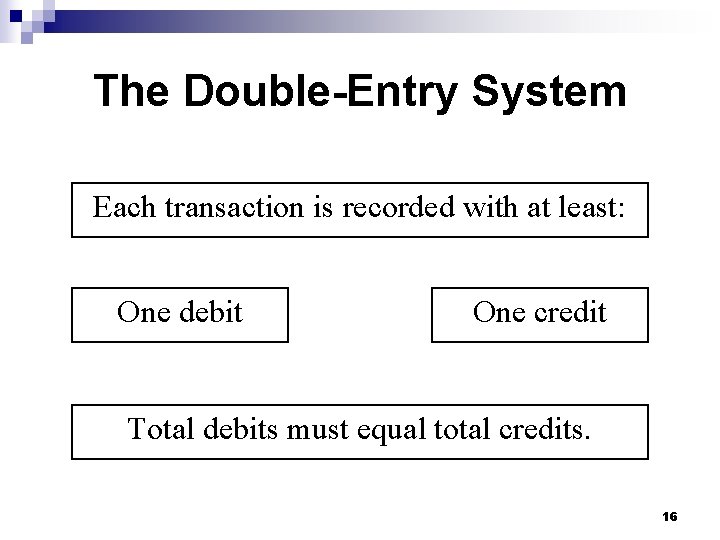
The Double-Entry System Each transaction is recorded with at least: One debit One credit Total debits must equal total credits. 16
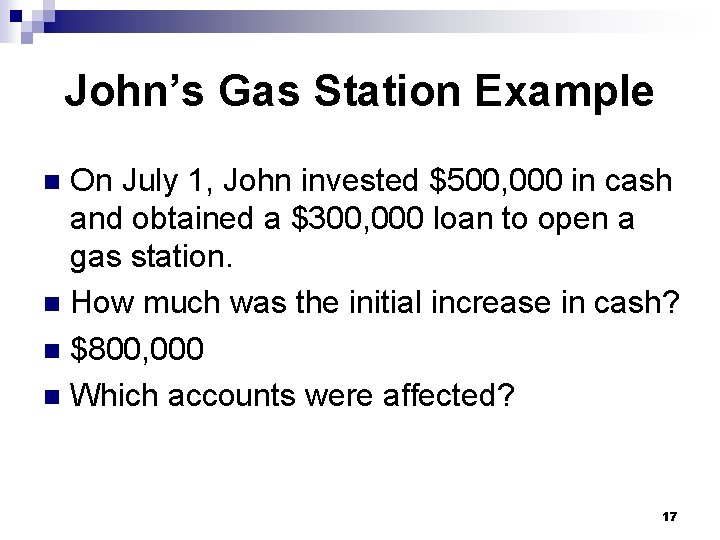
John’s Gas Station Example On July 1, John invested $500, 000 in cash and obtained a $300, 000 loan to open a gas station. n How much was the initial increase in cash? n $800, 000 n Which accounts were affected? n 17
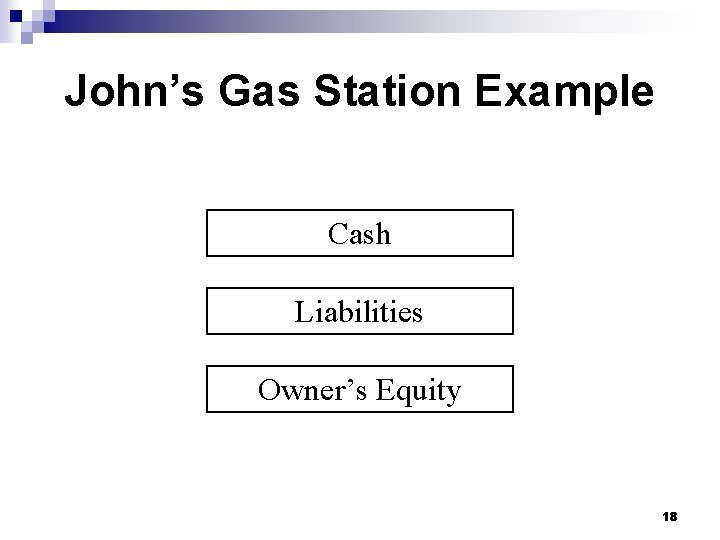
John’s Gas Station Example Cash Liabilities Owner’s Equity 18
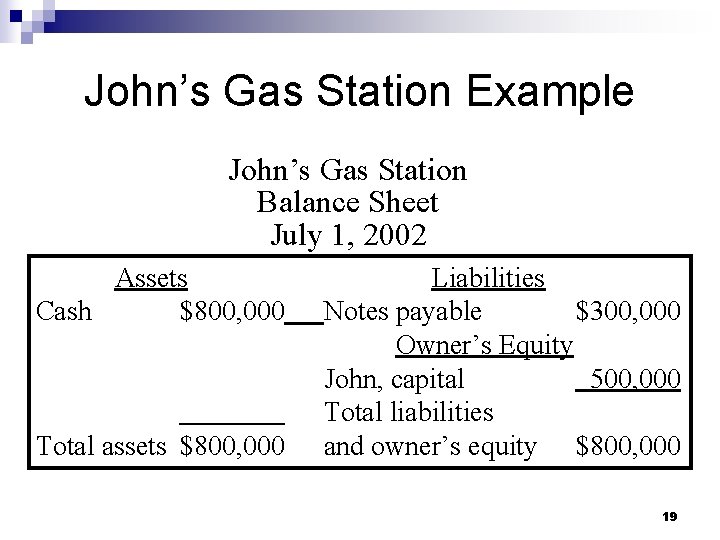
John’s Gas Station Example John’s Gas Station Balance Sheet July 1, 2002 Assets Cash $800, 000 Total assets $800, 000 Liabilities Notes payable $300, 000 Owner’s Equity John, capital 500, 000 Total liabilities and owner’s equity $800, 000 19
Journals What is a journal? n It is a list in chronological order of all the transactions for a business. 1 Identify transaction from source documents. 2 Specify accounts affected. 3 Apply debit/credit rules. 4 Record transaction with description. n 20
What does a journal entry include? – – – date of the transaction title of the account debited title of the account credited amount of the debit and credit description of the transaction dollar signs are omitted 21
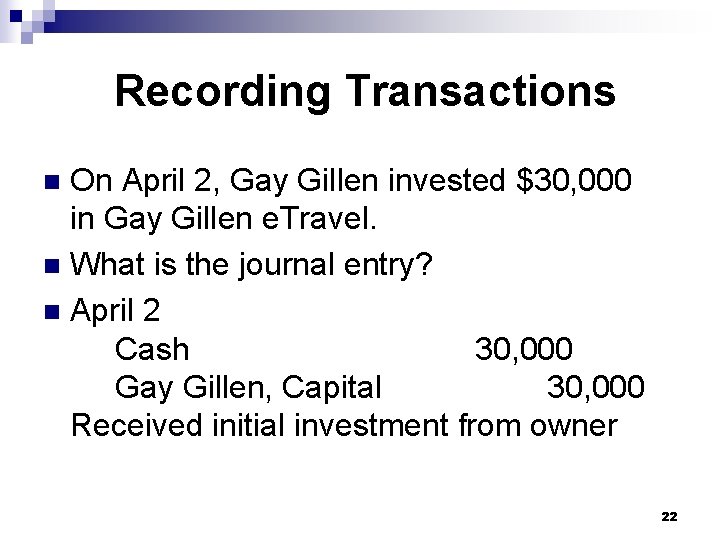
Recording Transactions On April 2, Gay Gillen invested $30, 000 in Gay Gillen e. Travel. n What is the journal entry? n April 2 Cash 30, 000 Gay Gillen, Capital 30, 000 Received initial investment from owner n 22
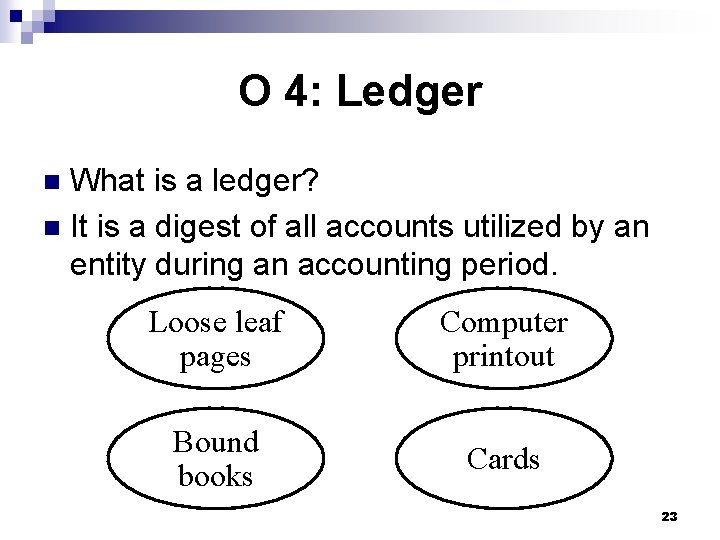
O 4: Ledger What is a ledger? n It is a digest of all accounts utilized by an entity during an accounting period. n Loose leaf pages Computer printout Bound books Cards 23
Posting What is posting? n It is the transfer of information from the journal to the appropriate accounts in the ledger. n 24
Normal Account Balances Assets = Liabilities + Owner’s Equity n Debits = Credits n The side where we expect increases to be recorded is the normal balance side. n 25
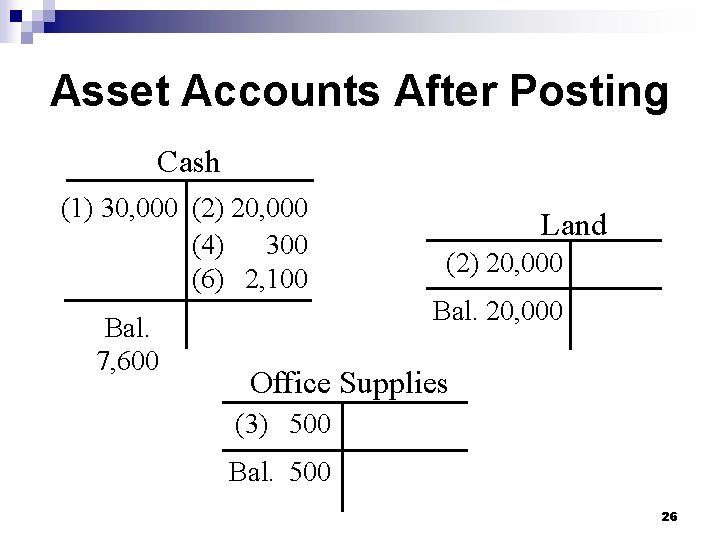
Asset Accounts After Posting Cash (1) 30, 000 (2) 20, 000 (4) 300 (6) 2, 100 Bal. 7, 600 Land (2) 20, 000 Bal. 20, 000 Office Supplies (3) 500 Bal. 500 26
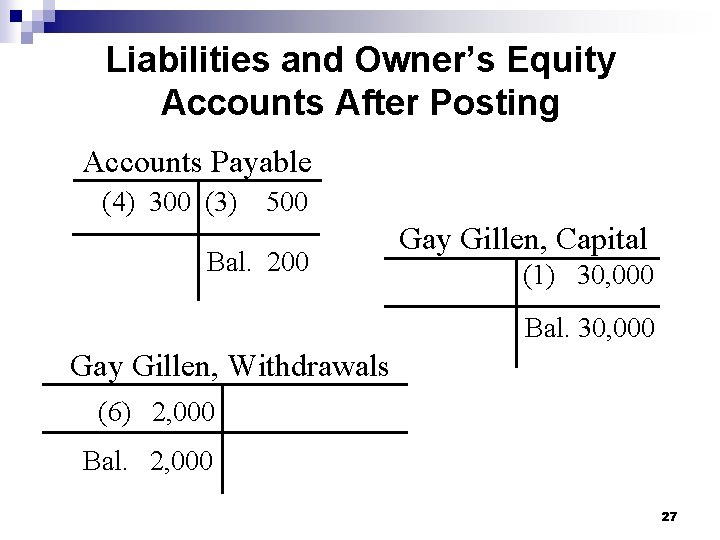
Liabilities and Owner’s Equity Accounts After Posting Accounts Payable (4) 300 (3) 500 Bal. 200 Gay Gillen, Capital (1) 30, 000 Bal. 30, 000 Gay Gillen, Withdrawals (6) 2, 000 Bal. 2, 000 27
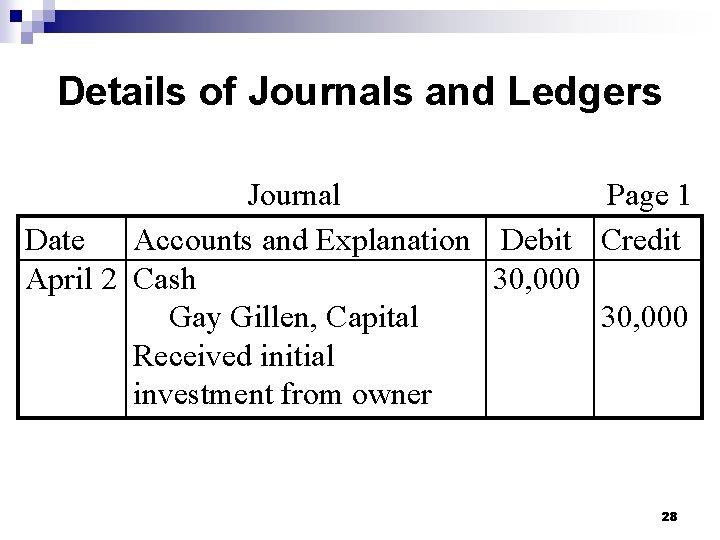
Details of Journals and Ledgers Journal Page 1 Date Accounts and Explanation Debit Credit April 2 Cash 30, 000 Gay Gillen, Capital 30, 000 Received initial investment from owner 28
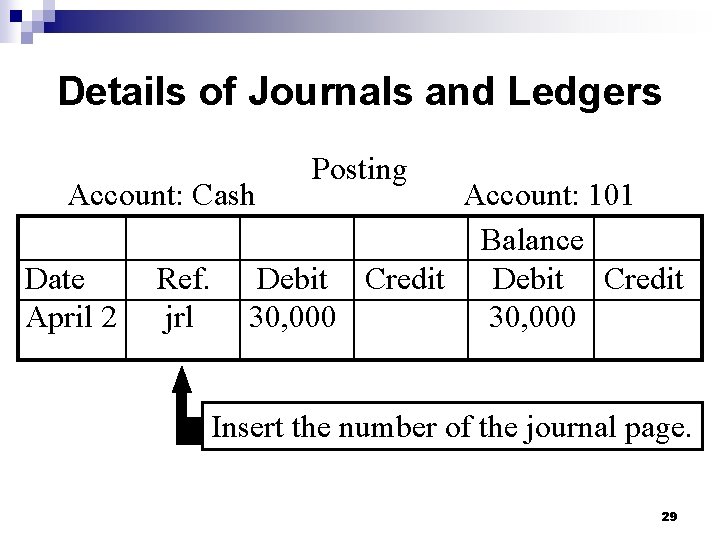
Details of Journals and Ledgers Account: Cash Date April 2 Ref. jrl Posting Account: 101 Balance Debit Credit 30, 000 Insert the number of the journal page. 29
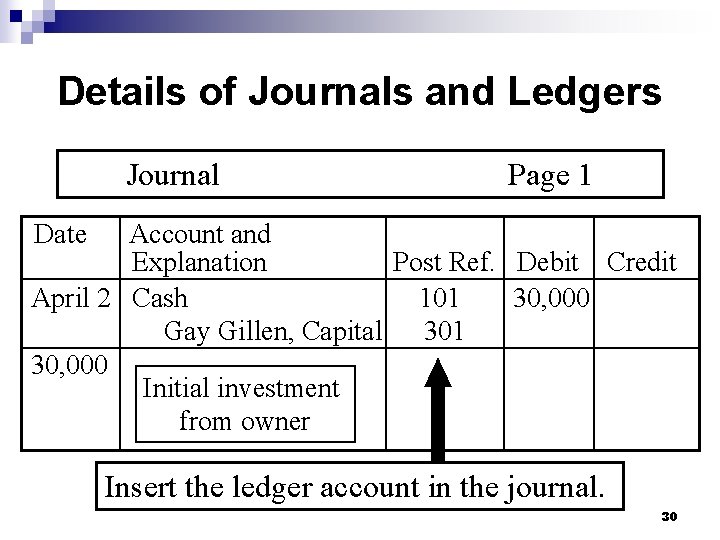
Details of Journals and Ledgers Journal Page 1 Date Account and Explanation Post Ref. Debit Credit April 2 Cash 101 30, 000 Gay Gillen, Capital 301 30, 000 Initial investment from owner Insert the ledger account in the journal. 30
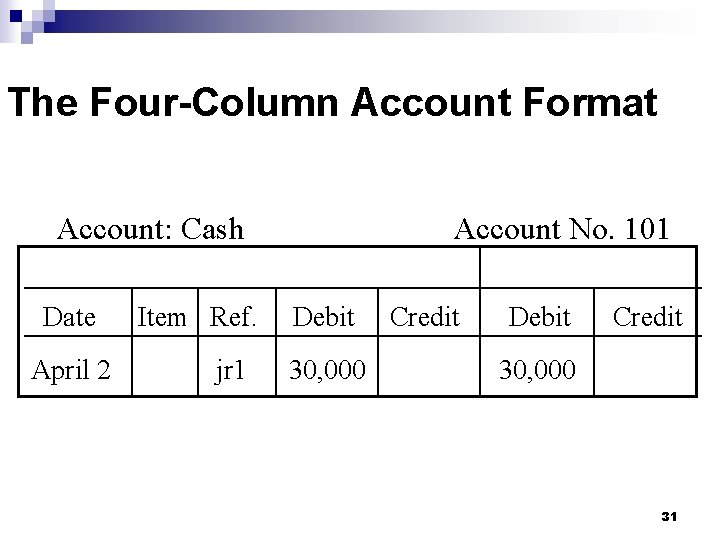
The Four-Column Account Format Account: Cash Account No. 101 Balance Date April 2 Item Ref. jr 1 Debit 30, 000 Credit Debit Credit 30, 000 31
Trial Balance What is a trial balance? n It is an internal document. n It is a listing of all the accounts with their related balances. n Before computers, it provided a check on accuracy by showing whether total debits equal total credits. n 32
Locating Trial Balance Errors What if it doesn’t balance ? n Is the addition correct? n Are all accounts listed? n Are the balances listed correctly? n DEBITS CREDITS 33
Locating Trial Balance Errors Divide the difference by two. n Is there a debit/credit balance for this amount posted in the wrong column? n Check journal postings. n Review accounts for reasonableness. n Computerized accounting programs usually prohibit out-of-balance entries. n 34
John’s Gas Station John is considering either purchasing a garage for $70, 000 or renting one for $10, 000 per year. n John does not need to record in the journal all of the transactions that would affect his decision. n Why? n 35
John’s Gas Station John has not completed a transaction yet. n However, John can visualize how the ledger accounts will be affected. n 36
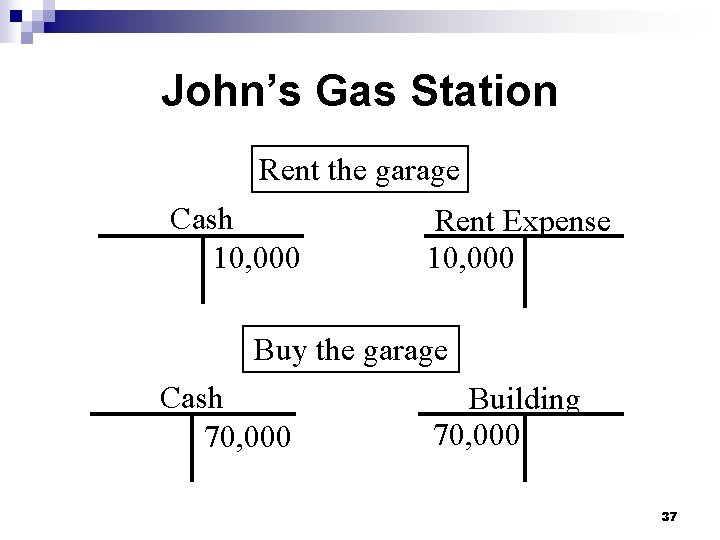
John’s Gas Station Rent the garage Cash 10, 000 Rent Expense 10, 000 Buy the garage Cash 70, 000 Building 70, 000 37
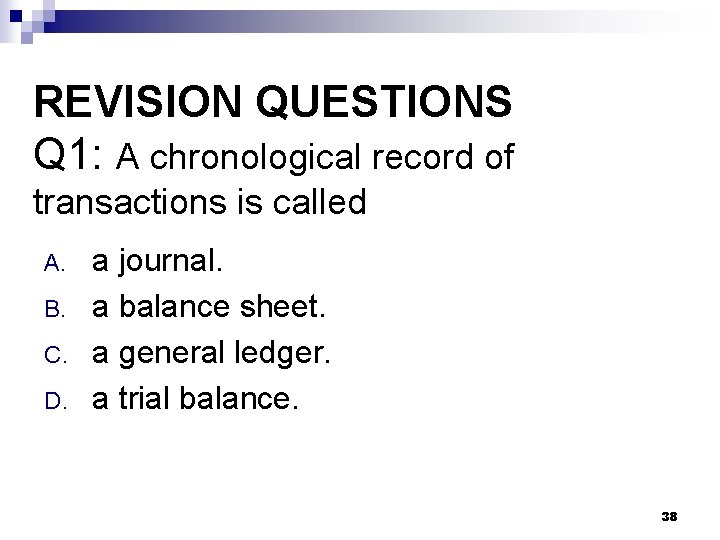
REVISION QUESTIONS Q 1: A chronological record of transactions is called A. B. C. D. a journal. a balance sheet. a general ledger. a trial balance. 38
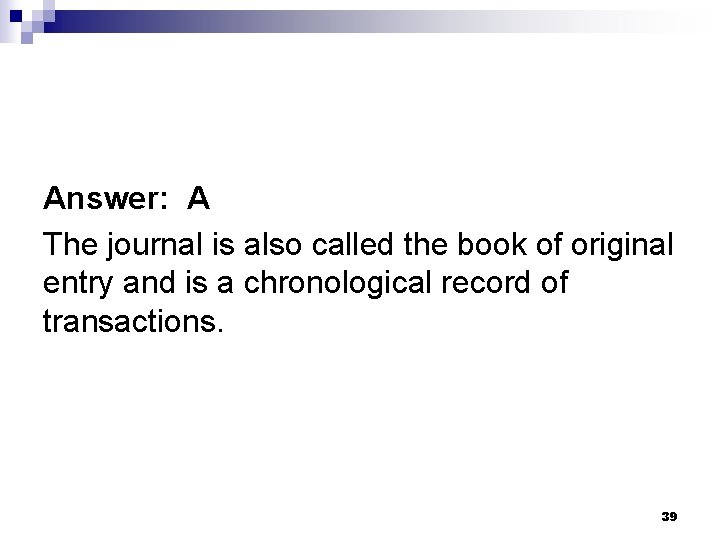
Answer: A The journal is also called the book of original entry and is a chronological record of transactions. 39
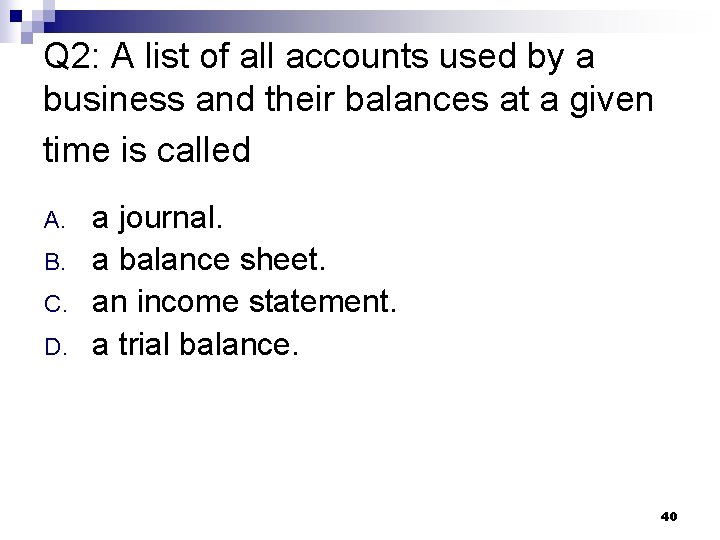
Q 2: A list of all accounts used by a business and their balances at a given time is called A. B. C. D. a journal. a balance sheet. an income statement. a trial balance. 40
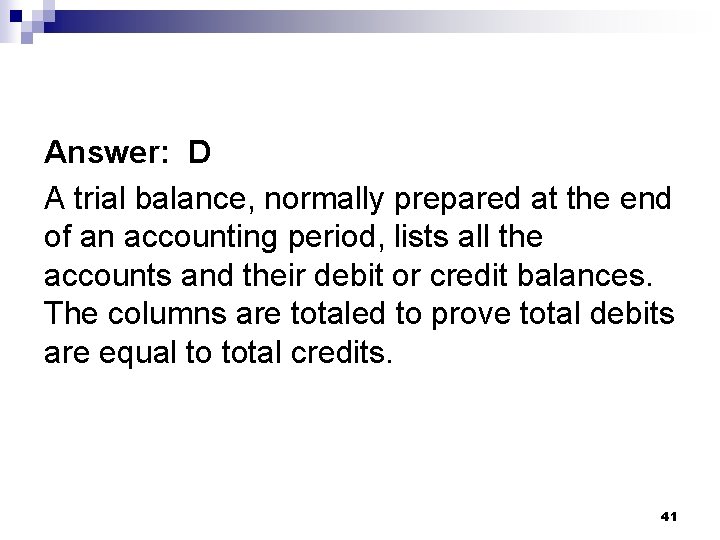
Answer: D A trial balance, normally prepared at the end of an accounting period, lists all the accounts and their debit or credit balances. The columns are totaled to prove total debits are equal to total credits. 41
Q 3: When recording a transaction in the general journal A. B. C. D. there can only be two accounts affected. the amount of the debits must equal the amount of the credits. the number of debit accounts must equal the number of credit accounts. at least one account from both sides of the accounting equation must be affected. 42
Answer: B In any journal entry there will be at least two accounts affected (there could be more), and total debit amounts must equal total credit amounts. 43
Q 4: Which sequence correctly summarizes the accounting process? A. B. C. D. Prepare a trial balance, journalize transactions, post to accounts Post to accounts, journalize transactions, prepare a trial balance Journalize transactions, post to accounts, prepare a trial balance Journalize transactions, prepare a trial balance, post to accounts 44
Answer: C Transactions are first journalized in the journal, then posted to the ledger accounts. Once their balances are determined, a trial balance is prepared to ensure that debits equal credits. 45
Q 5: The left side of a T-account is used to record A. B. C. D. Debits Credits Increases Decreases 46
Answer: A Debits are recorded on the left side of a Taccount and credits are recorded on the right side of a T-account. Whether an account is increased or decreased with a debit, depends on what type of account it is. 47
Q 6: Which type of account is inventory? A. B. C. D. Asset Liability Owner’s equity Expense 48
Answer: A Inventory is an asset. It is an economic resource that will benefit the company in the future when it is sold. 49
Q 7: In a journal entry, is an increase in Cash a debit or a credit? A. B. Debit Credit Answer: A Cash is an asset. Assets are increased with debits. 50
Q 8: In a journal entry, is an increase in Accounts Payable a debit or a credit? A. B. Debit Credit Answer: B Accounts Payable is a liability. Liabilities are increased with credits. 51
Q 9: In a journal entry, is an increase in the owner’s capital a debit or a credit? A. B. Debit Credit Answer: B Capital is an owner’s equity account. Owner’s equity is increased with a credit. 52
Q 10: In a journal entry, is an increase in Rent Expense a debit or a credit? A. B. Debit Credit Answer: A Increase expense accounts with a debit. 53
Q 11: In a journal entry, is an increase in Fees Earned a debit or a credit? A. B. Debit Credit Answer: B Fees earned is a revenue account. Revenues are increased with credits. 54
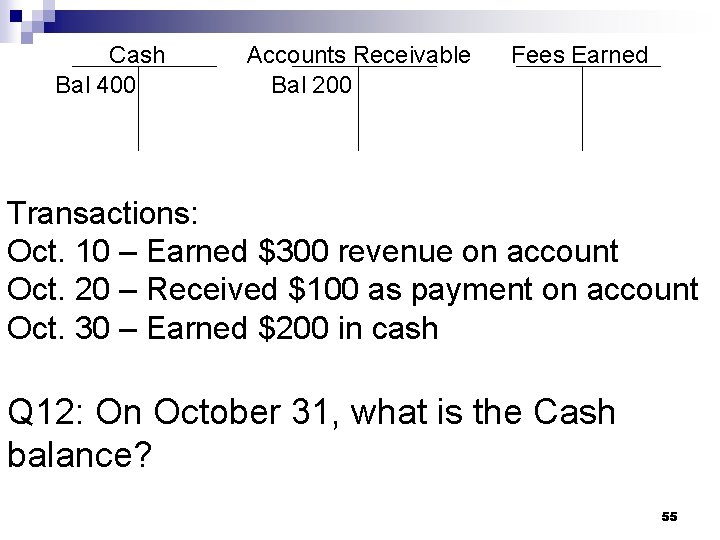
Cash Bal 400 Accounts Receivable Bal 200 Fees Earned Transactions: Oct. 10 – Earned $300 revenue on account Oct. 20 – Received $100 as payment on account Oct. 30 – Earned $200 in cash Q 12: On October 31, what is the Cash balance? 55
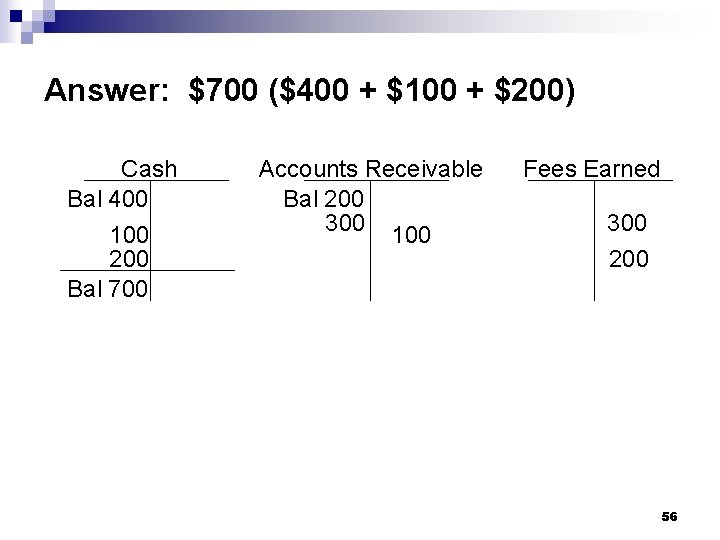
Answer: $700 ($400 + $100 + $200) Cash Bal 400 100 200 Bal 700 Accounts Receivable Bal 200 300 100 Fees Earned 300 200 56
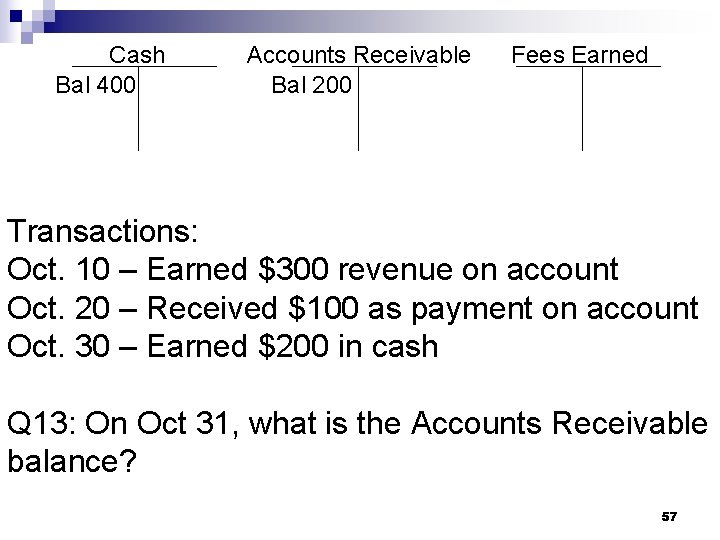
Cash Bal 400 Accounts Receivable Bal 200 Fees Earned Transactions: Oct. 10 – Earned $300 revenue on account Oct. 20 – Received $100 as payment on account Oct. 30 – Earned $200 in cash Q 13: On Oct 31, what is the Accounts Receivable balance? 57
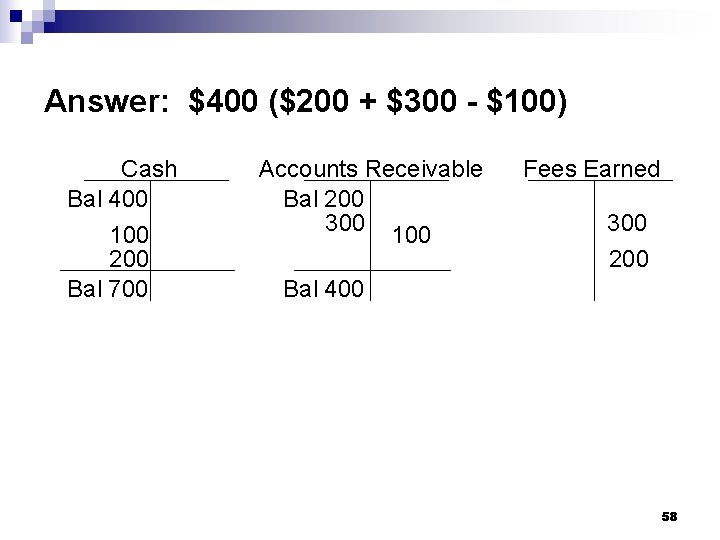
Answer: $400 ($200 + $300 - $100) Cash Bal 400 100 200 Bal 700 Accounts Receivable Bal 200 300 100 Fees Earned 300 200 Bal 400 58
- Slides: 58