
ACCSEAS eNavigation and its benefits to the environment
ACCSEAS: e-Navigation and its benefits to the environment Dr Alwyn I. Williams ACCSEAS Project Manager BE‐AWARE II Final Conference Ronneby, Sweden 18 th November 2015
What is e-Navigation? IMO definition: e-Navigation is the harmonised • collection, • integration, • exchange, • presentation and • analysis of maritime information on-board and ashore by electronic means • to enhance berth to berth navigation and related services, • for safety and security at sea and • protection of the marine environment.
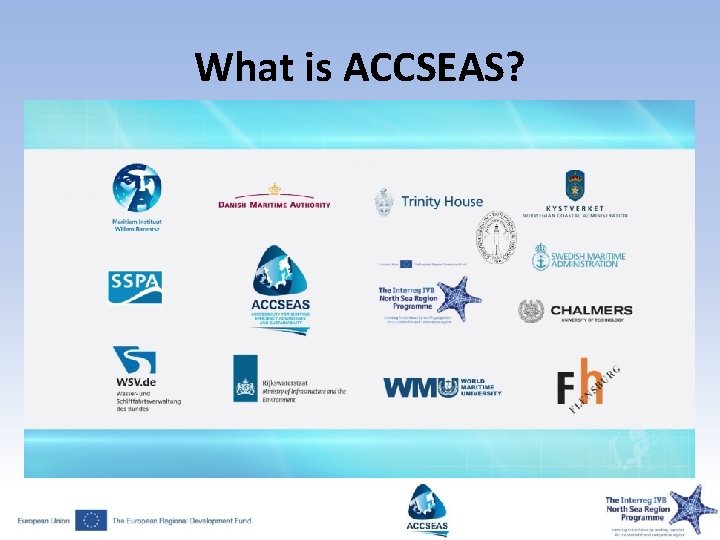
What is ACCSEAS?
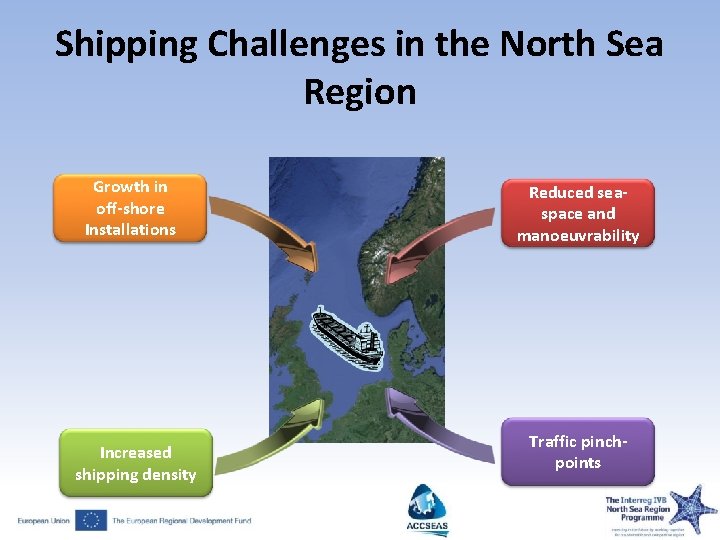
Shipping Challenges in the North Sea Region Growth in off-shore Installations Increased shipping density Reduced seaspace and manoeuvrability Traffic pinchpoints
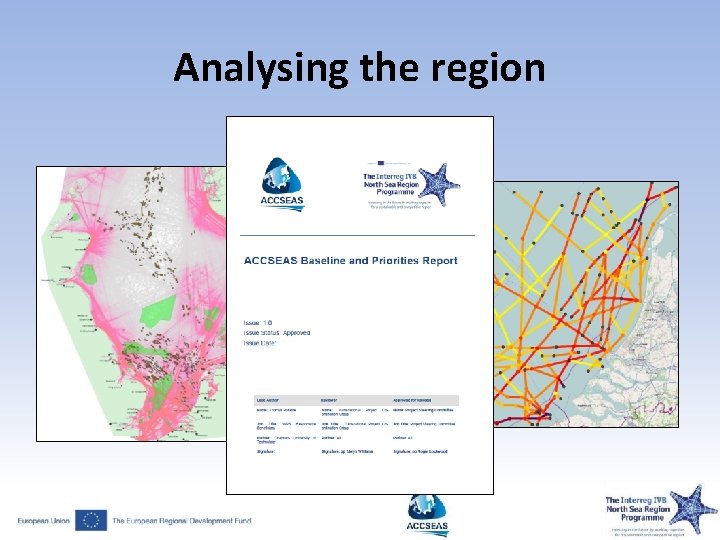
Analysing the region
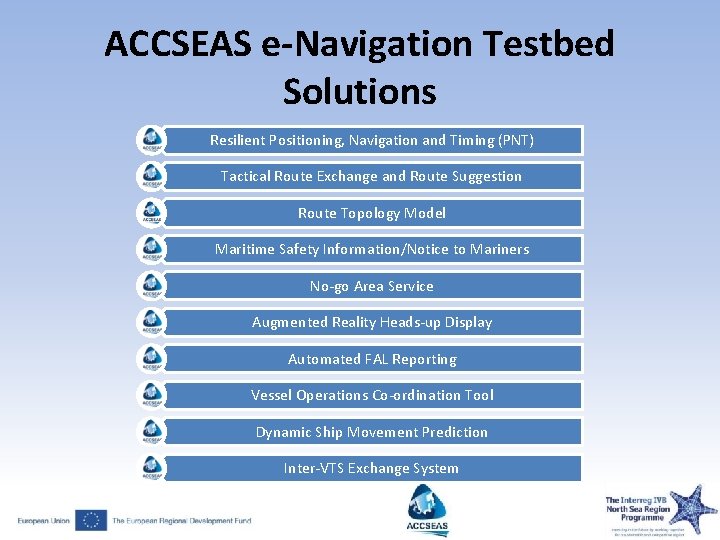
ACCSEAS e-Navigation Testbed Solutions Resilient Positioning, Navigation and Timing (PNT) Tactical Route Exchange and Route Suggestion Route Topology Model Maritime Safety Information/Notice to Mariners No‐go Area Service Augmented Reality Heads‐up Display Automated FAL Reporting Vessel Operations Co‐ordination Tool Dynamic Ship Movement Prediction Inter‐VTS Exchange System
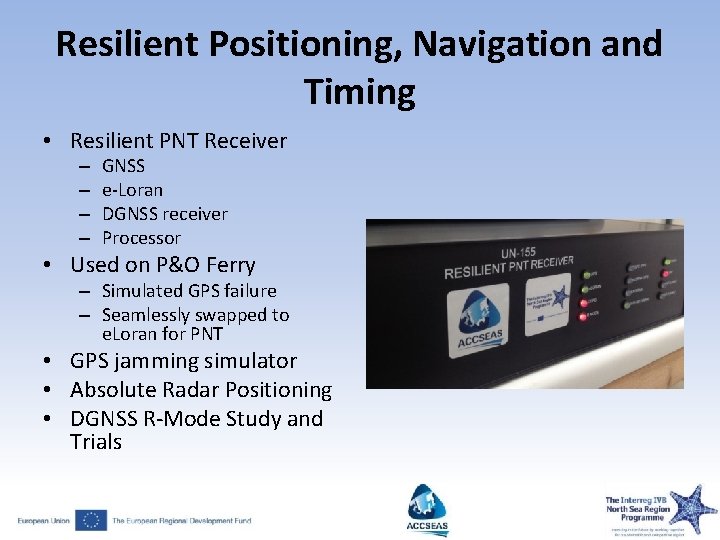
Resilient Positioning, Navigation and Timing • Resilient PNT Receiver – – GNSS e‐Loran DGNSS receiver Processor • Used on P&O Ferry – Simulated GPS failure – Seamlessly swapped to e. Loran for PNT • GPS jamming simulator • Absolute Radar Positioning • DGNSS R‐Mode Study and Trials
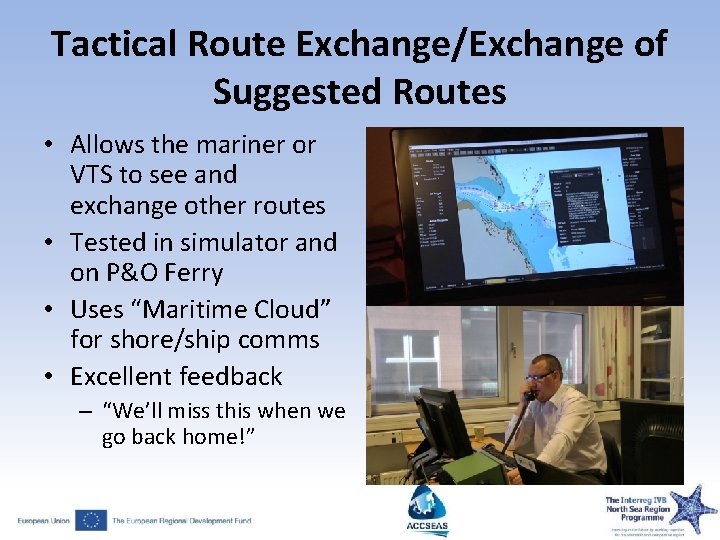
Tactical Route Exchange/Exchange of Suggested Routes • Allows the mariner or VTS to see and exchange other routes • Tested in simulator and on P&O Ferry • Uses “Maritime Cloud” for shore/ship comms • Excellent feedback – “We’ll miss this when we go back home!”
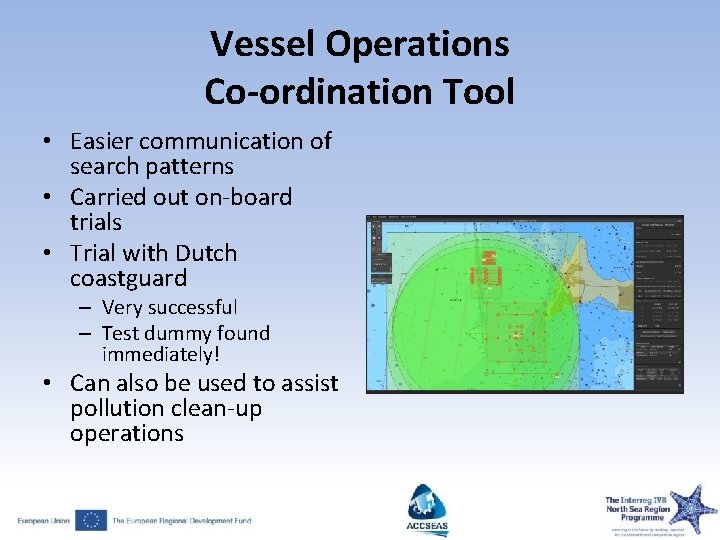
Vessel Operations Co-ordination Tool • Easier communication of search patterns • Carried out on‐board trials • Trial with Dutch coastguard – Very successful – Test dummy found immediately! • Can also be used to assist pollution clean‐up operations
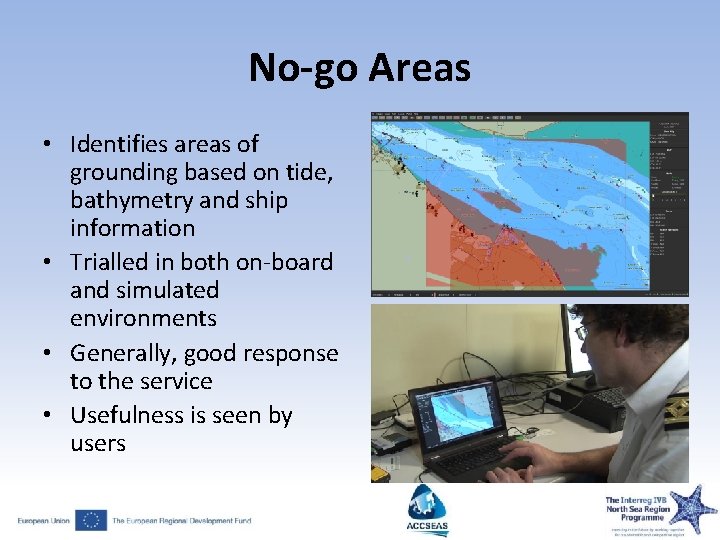
No-go Areas • Identifies areas of grounding based on tide, bathymetry and ship information • Trialled in both on‐board and simulated environments • Generally, good response to the service • Usefulness is seen by users
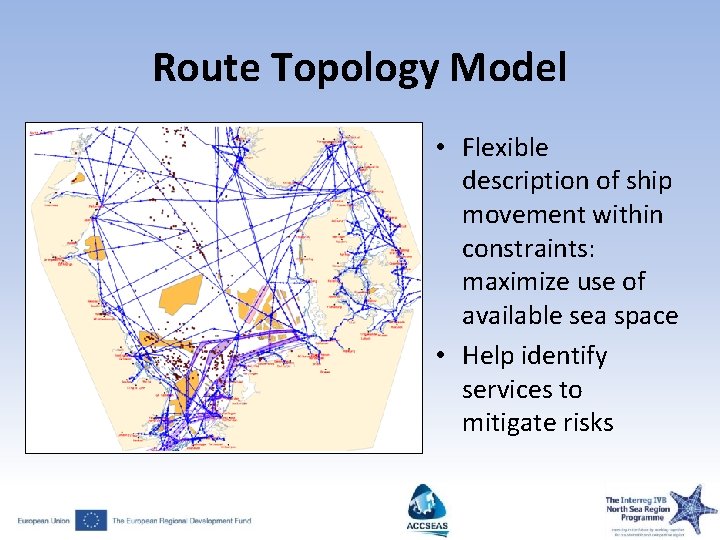
Route Topology Model • Flexible description of ship movement within constraints: maximize use of available sea space • Help identify services to mitigate risks
Demonstration Video
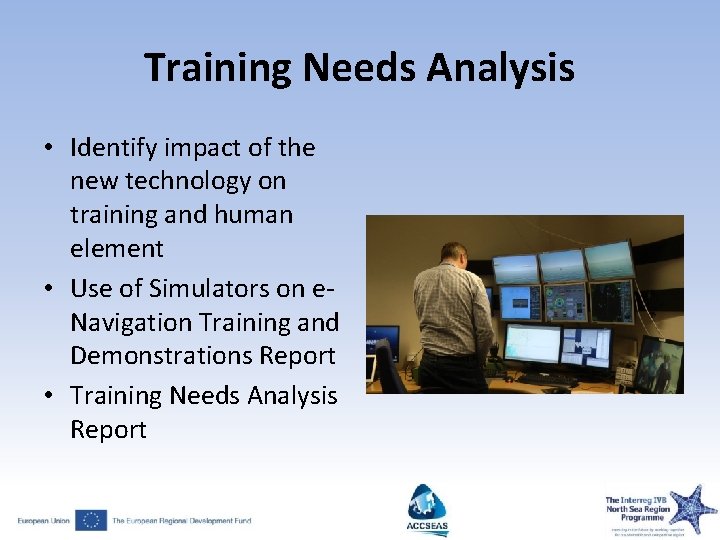
Training Needs Analysis • Identify impact of the new technology on training and human element • Use of Simulators on e‐ Navigation Training and Demonstrations Report • Training Needs Analysis Report
ACCSEAS Legacy • Final Report on ACCSEAS solutions • Support and advise EU initiatives, particularly e‐ Maritime • Inform e‐Navigation and S‐ 100 developments at IMO, IHO and IALA • Future coordination of North Sea Region e‐Navigation development • Sustainability Workplan to enhance accessibility and safety to the North Sea Region
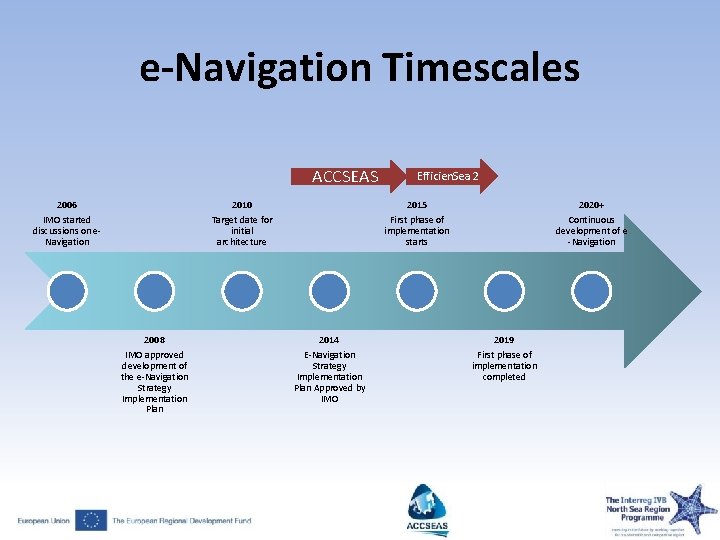
e-Navigation Timescales ACCSEAS 2006 IMO started discussions on e‐ Navigation 2010 Target date for initial architecture Efficien. Sea 2 2015 First phase of implementation starts 2020+ Continuous development of e ‐Navigation 2008 2014 2019 IMO approved development of the e‐Navigation Strategy Implementation Plan E‐Navigation Strategy Implementation Plan Approved by IMO First phase of implementation completed
Conclusions • Maritime safety and accessibility is predicted to be an increasing challenge in the North Sea Region • e‐Navigation has the potential to improve safety, accessibility and protection of the environment – e‐Navigation Services – Resilient PNT
Thank you For reports and videos of the demonstrations, please visit www. accseas. eu
- Slides: 17