
ACCS Curriculum 2021 Overview Dr Rachel Quail Consultant

- Slides: 33
ACCS Curriculum 2021: Overview
Dr Rachel Quail • Consultant Acute Medicine • JRCPTB representative to the Intercollegiate Committee for ACCS (ICACCS) and to the curriculum review group (ICACCS-CRG). • Educational supervisor to ACCS-AIM • Clinical supervisor to ACCS-ED + DRE-EM
Content • • Why is there a new curriculum Principles of new curricula Outline of curriculum content Introduction to entrustment levels
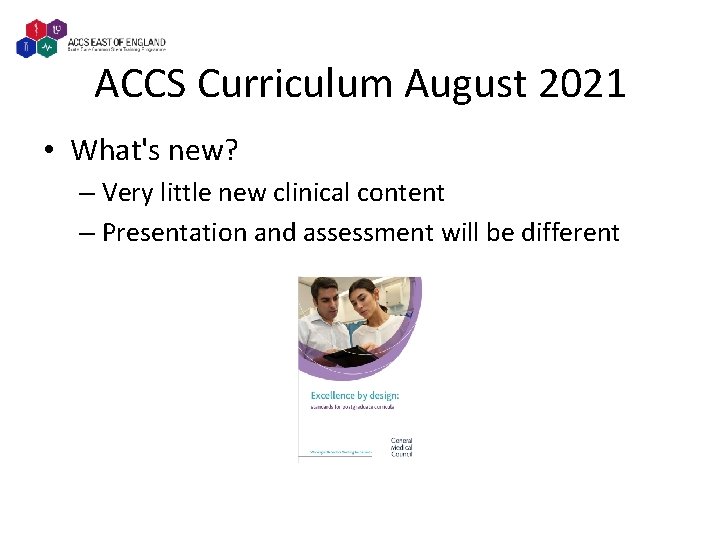
ACCS Curriculum August 2021 • What's new? – Very little new clinical content – Presentation and assessment will be different
Why change? GMC 2017 Excellence by design: standards for postgraduate curricula • must introduce Generic Professional Capabilities • must be structured round a limited number of ‘specialty learning outcomes’ • each College must demonstrate stakeholder involvement • assessment burden reduced and a ‘tick-box’ approach avoided. Implementation of the recommendations of The Shape of Training Report – the curriculum must: • take account of and describe how it will better support the needs of patients/service providers, including if appropriate the community • ensures that the proposed CCT curriculum equips doctors with the generic skills to participate in the acute unselected take and to provide continuity of care thereafter • describes how the proposal will support a more flexible approach to training • describes the role that credentialing will play
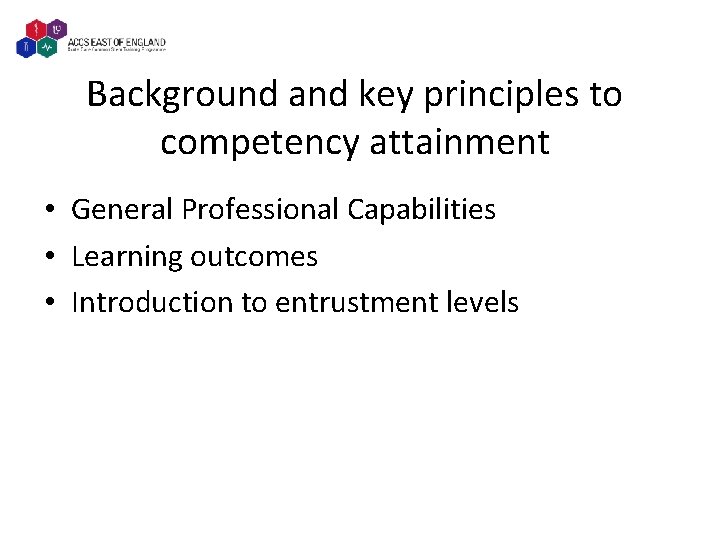
Principles of change
Background and key principles to competency attainment • General Professional Capabilities • Learning outcomes • Introduction to entrustment levels
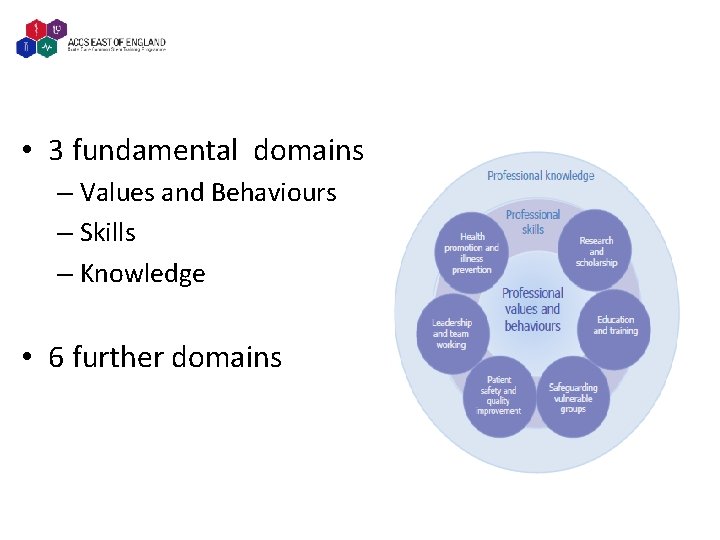
General Professional Capabilities • GPC framework: matrix of educational outcomes/descriptors that states common core content in all postgrad curricula. • The minimum GMC regulatory requirements, which are essential and critical capabilities underpinning our core professional practice in the UK
• 3 fundamental domains – Values and Behaviours – Skills – Knowledge • 6 further domains
Learning outcomes • Learning outcomes are the knowledge, skills, capabilities, behaviours and expected levels of performance a learner must acquire and demonstrate by the end of period of training. • They may be generic, shared or speciality specific: – Generic – across all specialities – Shared are common components of training across families or groups of specialities
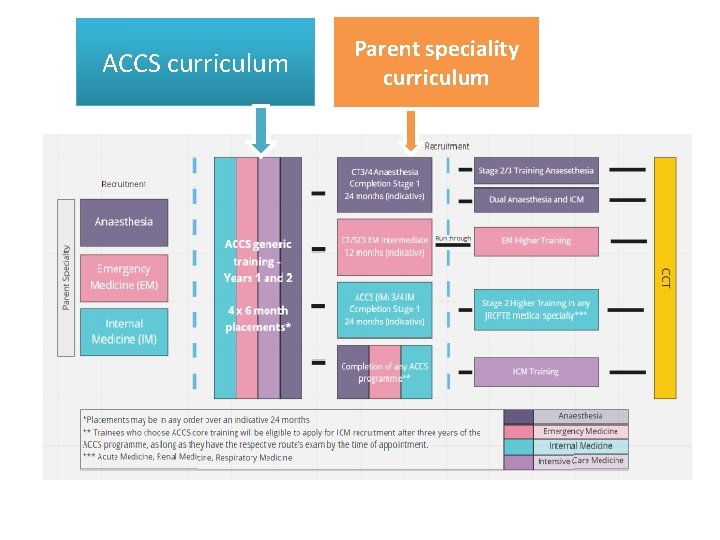
ACCS curriculum Parent speciality curriculum
Learning outcomes • ACCS LOs describe professional tasks or work within the scope of ACCS • Clinical ACCS LOs are based on “Entrustable Professional Activities” • Each clinical ACCS LO has Key Capabilities described to give clear guidance to trainees and faculty as to what is expected
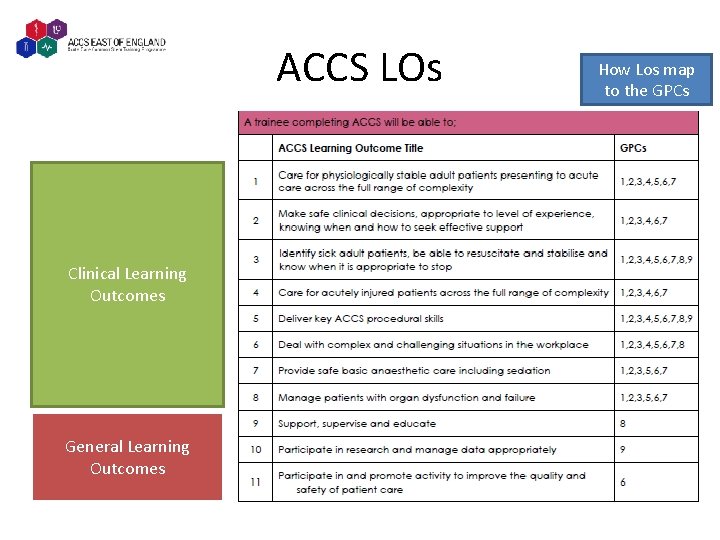
ACCS LOs Clinical Learning Outcomes General Learning Outcomes How Los map to the GPCs
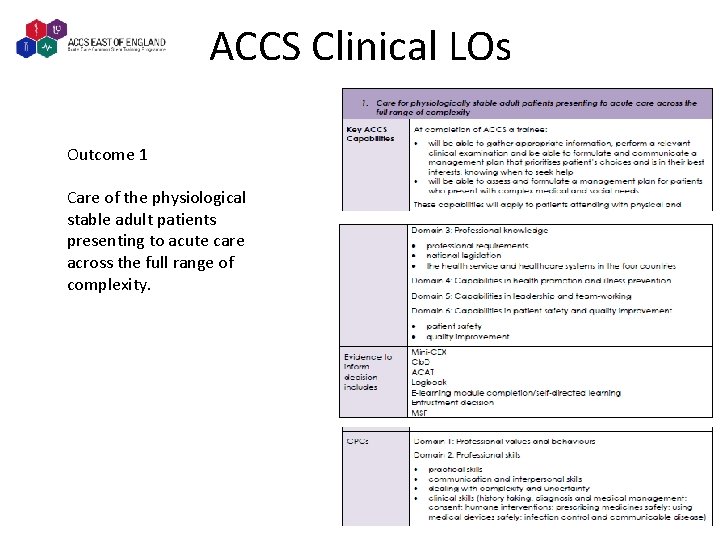
ACCS Clinical LOs Outcome 1 Care of the physiological stable adult patients presenting to acute care across the full range of complexity.
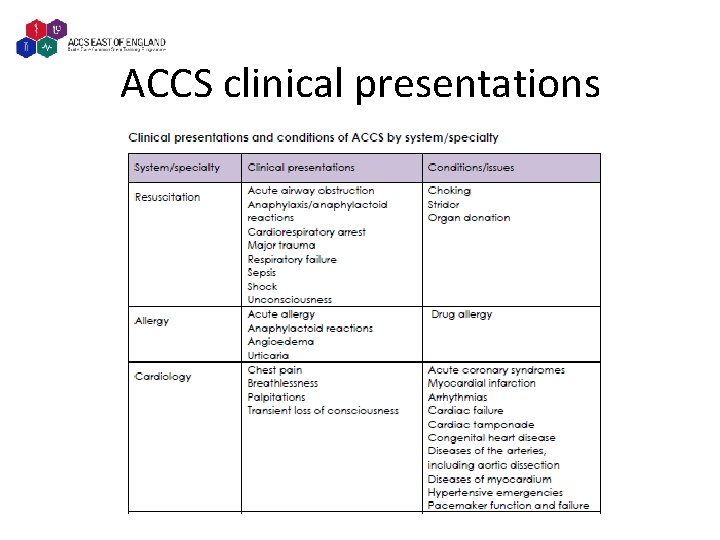
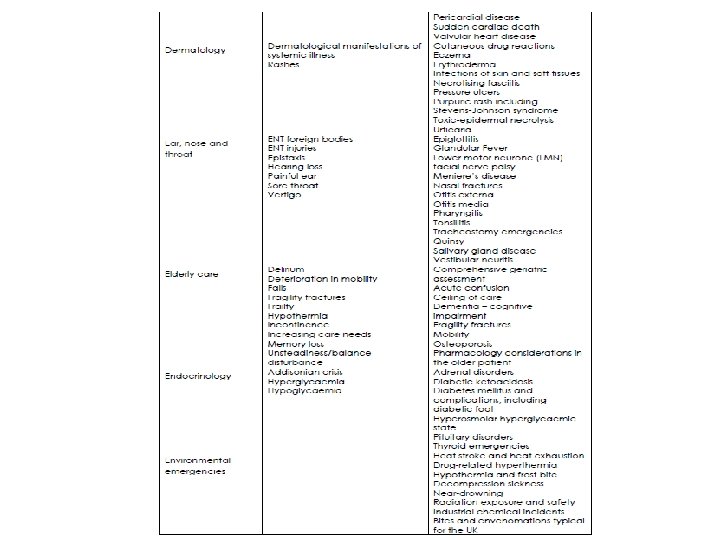
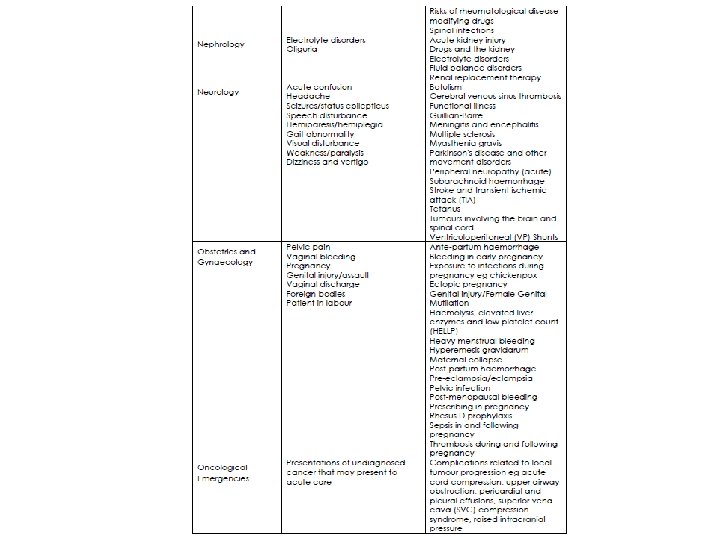
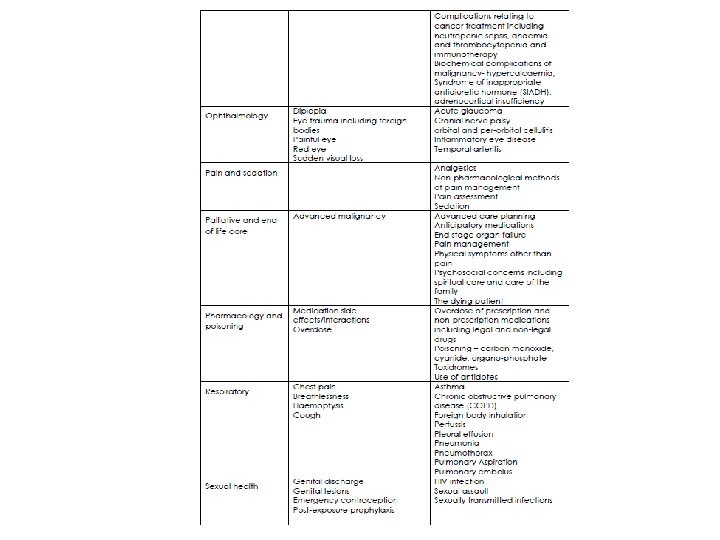
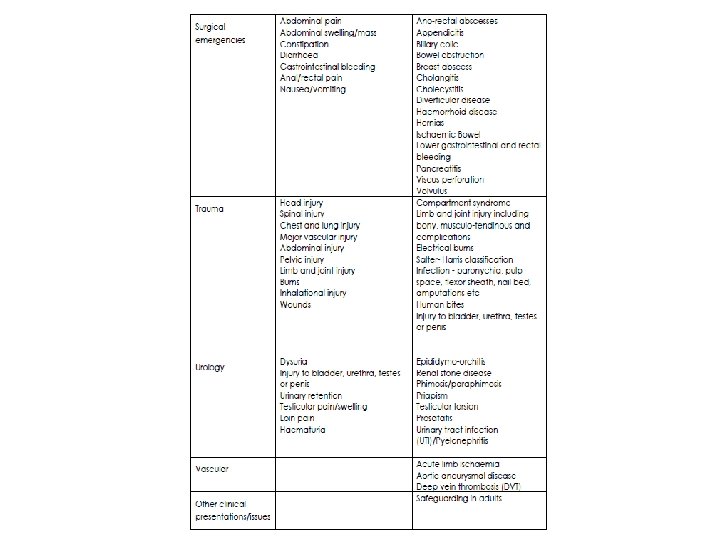
ACCS clinical presentations
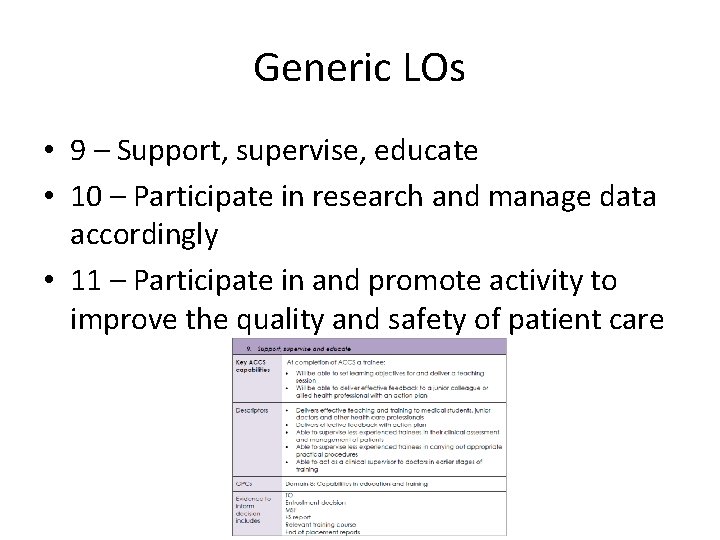
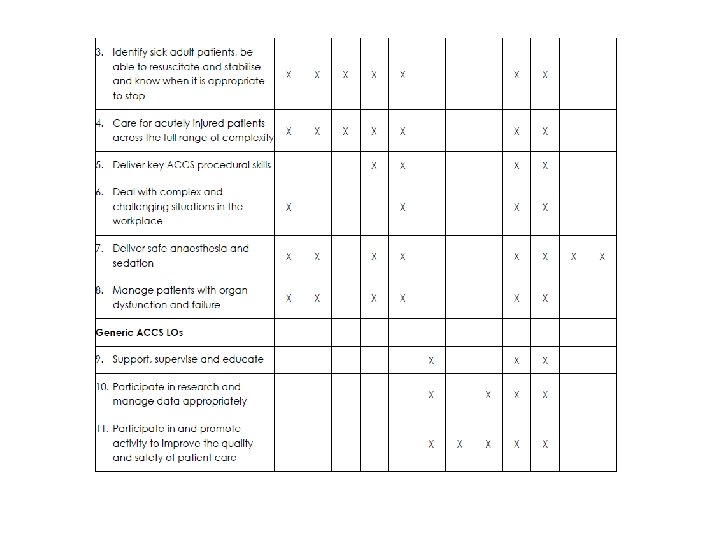
Generic LOs • 9 – Support, supervise, educate • 10 – Participate in research and manage data accordingly • 11 – Participate in and promote activity to improve the quality and safety of patient care
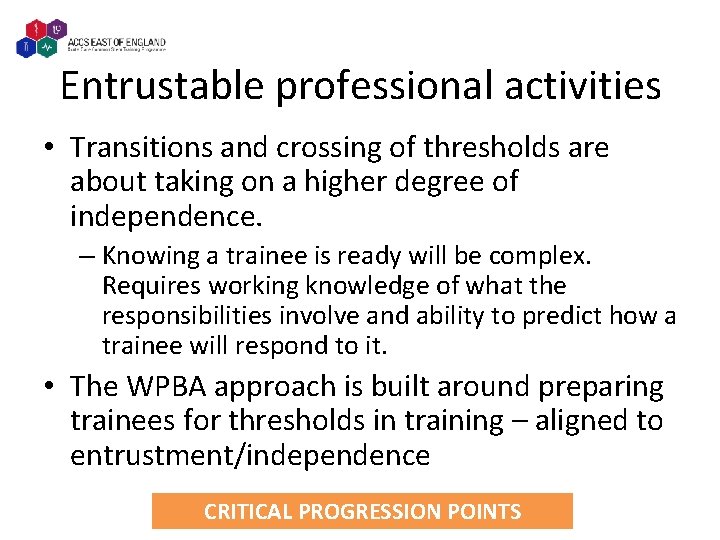
Entrustable professional activities • Transitions and crossing of thresholds are about taking on a higher degree of independence. – Knowing a trainee is ready will be complex. Requires working knowledge of what the responsibilities involve and ability to predict how a trainee will respond to it. • The WPBA approach is built around preparing trainees for thresholds in training – aligned to entrustment/independence CRITICAL PROGRESSION POINTS
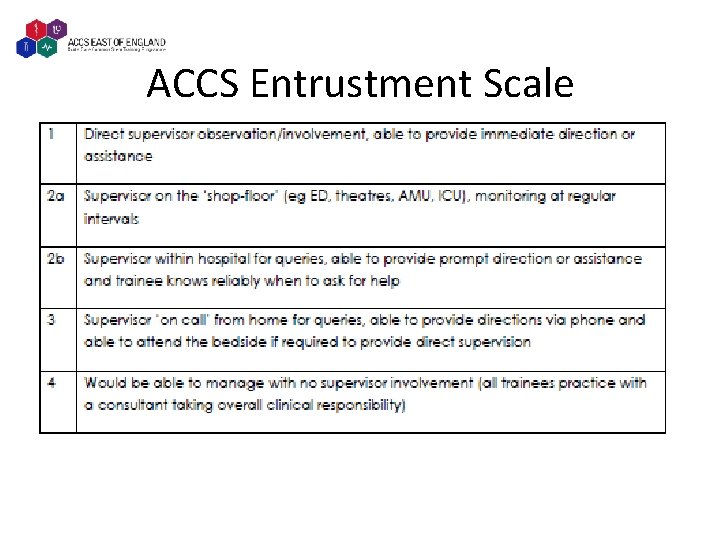
ACCS Entrustment Scale
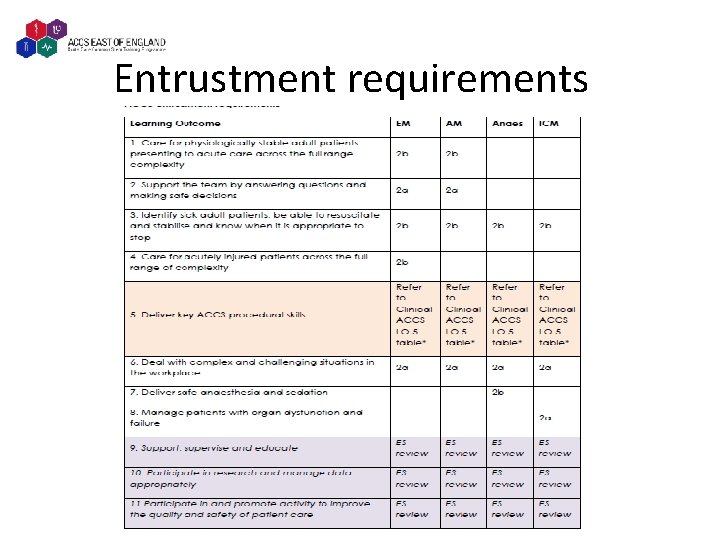
Entrustment requirements
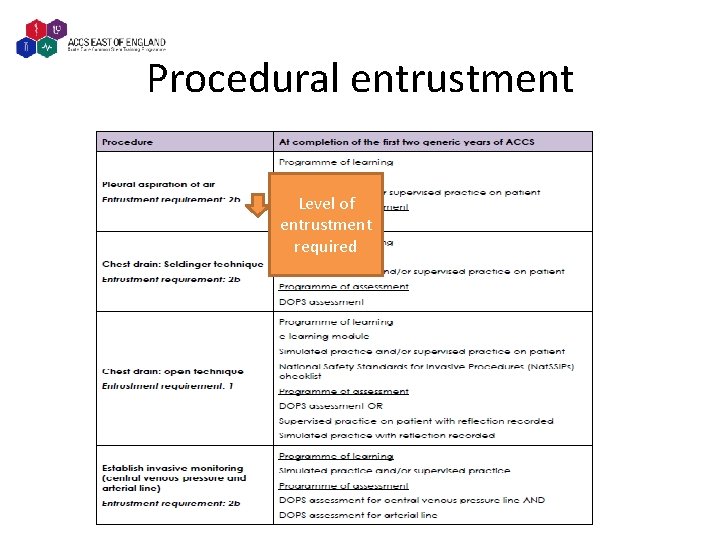
Procedural entrustment Level of entrustment required
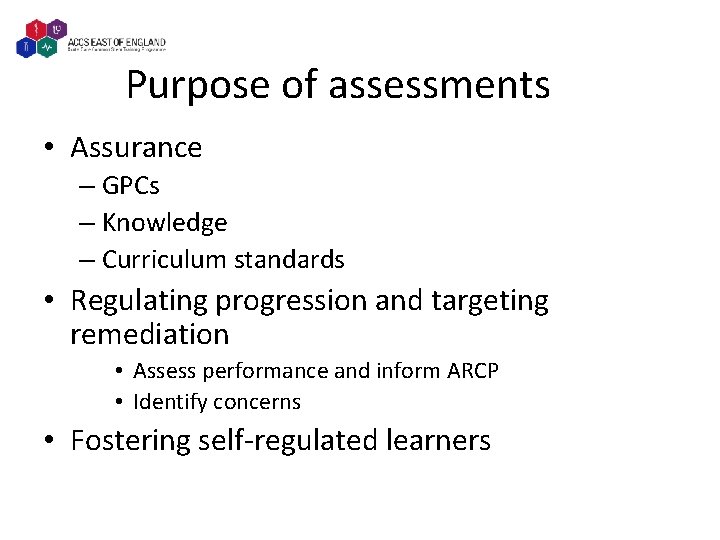
Purpose of assessments • Assurance – GPCs – Knowledge – Curriculum standards • Regulating progression and targeting remediation • Assess performance and inform ARCP • Identify concerns • Fostering self-regulated learners
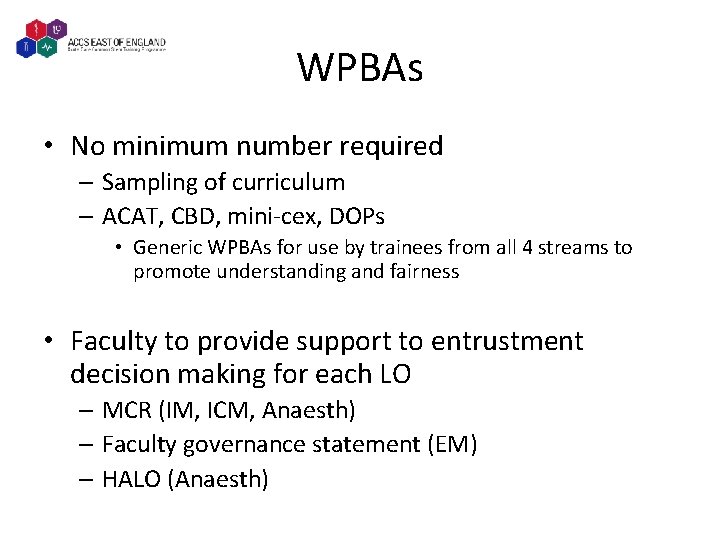
WPBAs • No minimum number required – Sampling of curriculum – ACAT, CBD, mini-cex, DOPs • Generic WPBAs for use by trainees from all 4 streams to promote understanding and fairness • Faculty to provide support to entrustment decision making for each LO – MCR (IM, ICM, Anaesth) – Faculty governance statement (EM) – HALO (Anaesth)
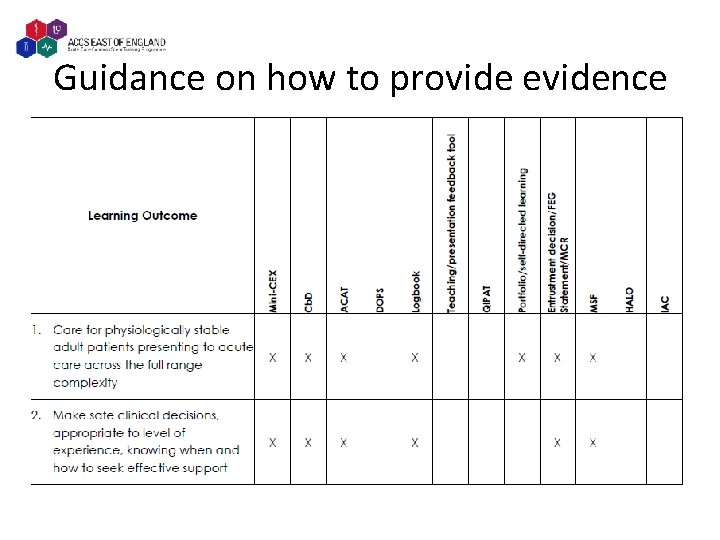
Guidance on how to provide evidence
Supervision and feedback • Educational supervisor: with overall responsibility for supervision and management of the trainees education and progress – this person should be from the parent speciality and may remain the same over the 2 years • Clinical supervisor – leads on reviewing clinical practice throughout a placement and contributes to the ES report on whether a trainee should progress.
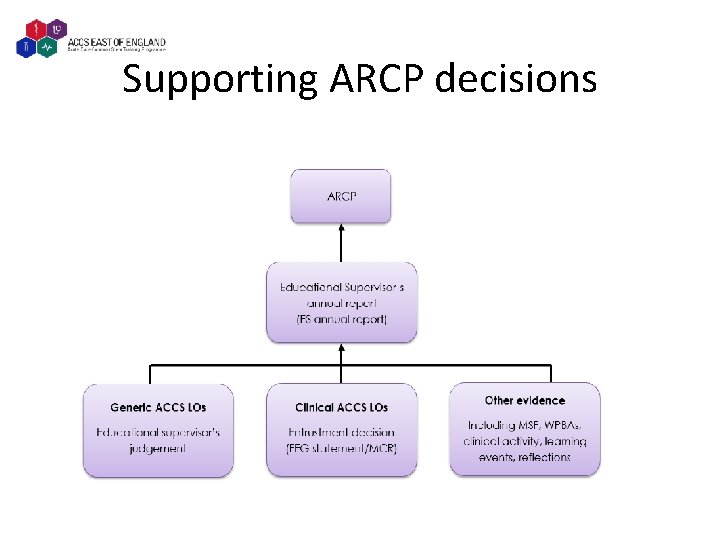
Supporting ARCP decisions
• Up-to-date • Based on LOs and Key Capabilities • Matching to all ACCS specialty Curricula
Summary • ACCS as a defined 2 year programme with global end point to allow transfer into parent speciality • Changes to the assessment process – LOs – Entrustment decisions – GPCs • Clinical content has not changed • https: //www. accs. ac. uk/accs/2021 -curriculum
Questions and comments?