
Accreditation of Biobanks according to ISO 20387 April
Accreditation of Biobanks according to ISO 20387 April 2021 Welcome

Introductions Bríd Burke Scheme Manager for laboratory accreditation in INAB Senior Assessment Manager

The purpose of today Introduction to INAB and accreditation for potential users and stakeholders. Approach to preparation for accreditation. The accreditation process
Speakers today • Ms Emma Snapes A biobanking consultant, Emma Snapes, has over 20 years of experience in creation and management of biological and data collections for different species, including microbial, plant and human, within clinical academia, semi-state and industry environs. An award winning expert in ISO biobanking standard development, Emma is Irish head of delegation to ISO TC 276 WG 2 responsible for the publication of ISO 20387 and other biobanking standards. • Mr Seán Naughton is a Specialist Medical Scientist with the Galway Blood and Tissue Establishment. He has an extensive background in the collection, testing, processing and storage of substances of human origin for human use. Seán is an INAB assessor for the 15189 scheme for medical laboratories, an adjunct lecturer in the College of Medicine, Nursing and Health Sciences in NUI Galway.
Agenda for today: • Introduction to INAB and accreditation - Bríd • ISO 20387 implementation for accreditation- Emma • Where do we start? – Seán • The process of accreditation - Bríd • Q&A – Joanne Coyle (INAB Assessment Manager)
Points to note • Timing for the day • Questions can be submitted through the Q&A panel. Please avoid questions relating to specific cases or individual examples. If you know the person best suited to answer your question, please include the name in the question. • This webinar is being recorded • Attendance is representative of a variety of Biobanking applications (Human, Animal, Plant , Viral and others)
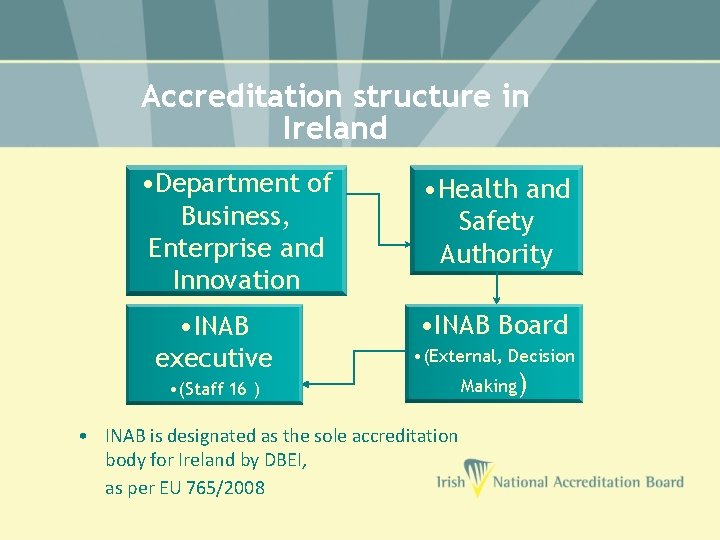
Accreditation structure in Ireland • Department of Business, Enterprise and Innovation • INAB executive • Health and Safety Authority • INAB Board • (External, Decision • (Staff 16 ) • INAB is designated as the sole accreditation body for Ireland by DBEI, as per EU 765/2008 Making)
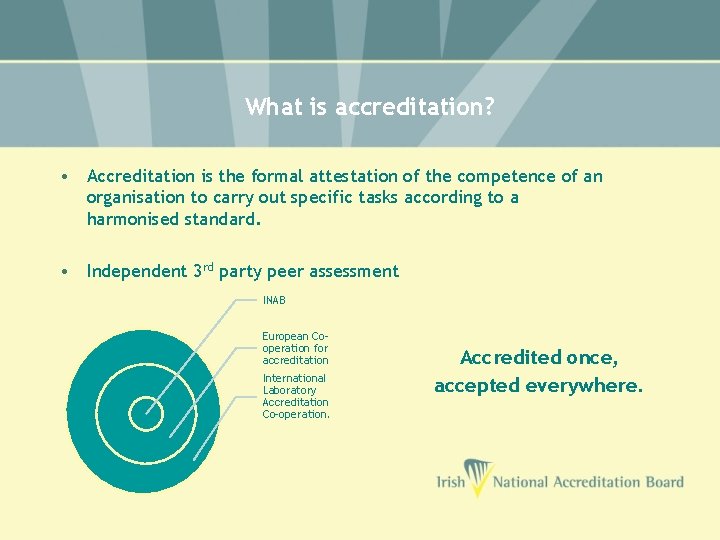
What is accreditation? • Accreditation is the formal attestation of the competence of an organisation to carry out specific tasks according to a harmonised standard. • Independent 3 rd party peer assessment INAB European Cooperation for accreditation International Laboratory Accreditation Co-operation. Accredited once, accepted everywhere.
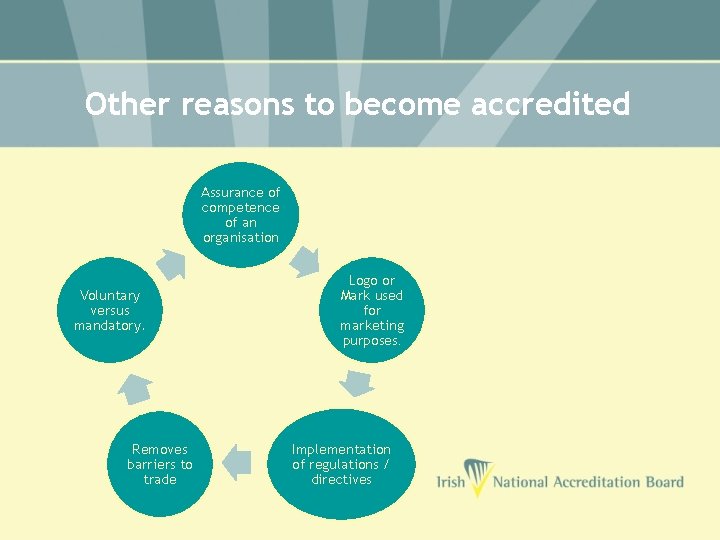
Other reasons to become accredited Assurance of competence of an organisation Voluntary versus mandatory. Removes barriers to trade Logo or Mark used for marketing purposes. Implementation of regulations / directives
Important to note Accreditation does not guarantee that every output meets requirements. It assures competence of the people and system.
Accreditation of Biobanking according to ISO 20387 • New scheme for INAB from April 2021 • New scheme worldwide
Other considerations • The Biobank shall be a legal entity that is legally responsible for all its activities. (section 5) • Legal framework in Ireland as defined by competent authorities.
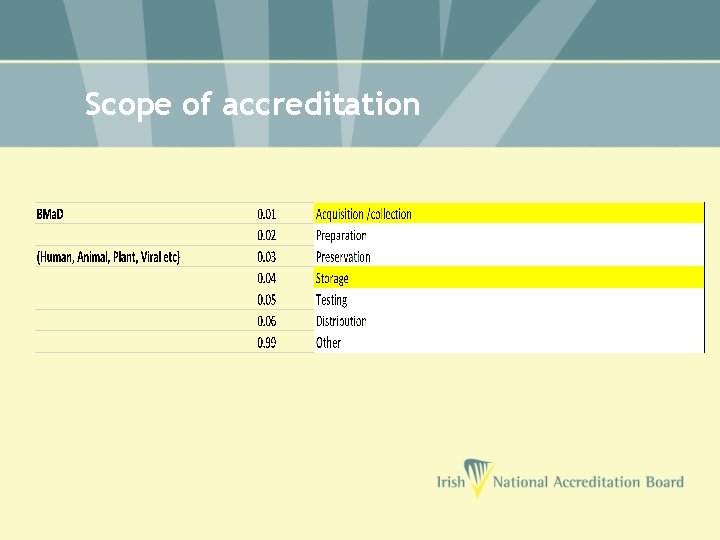
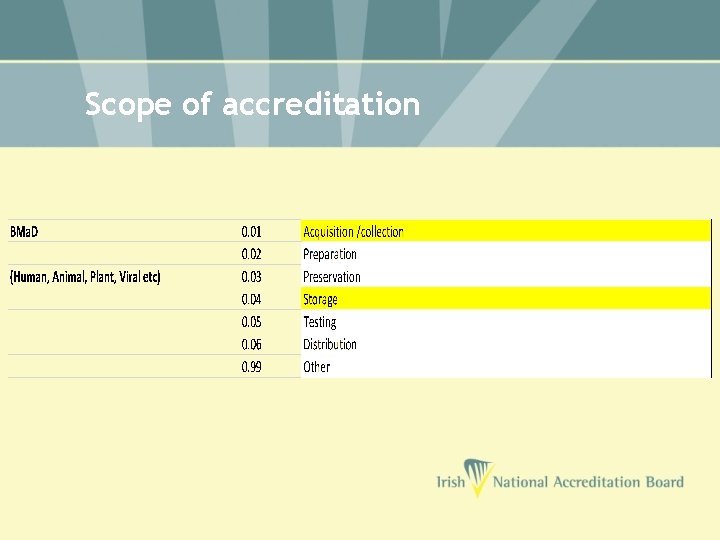
Scope of accreditation
ISO 20387 Implementation for Accreditation Emma Snapes BSc. MSc. Bio. Consulting
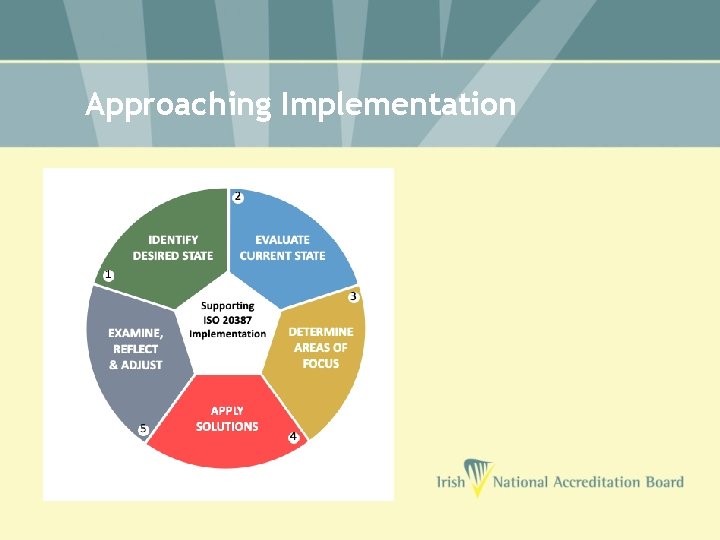
Approaching Implementation
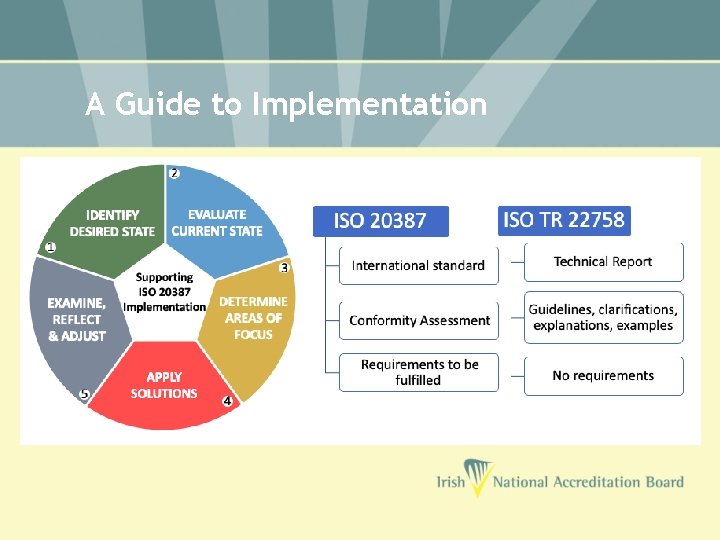
A Guide to Implementation
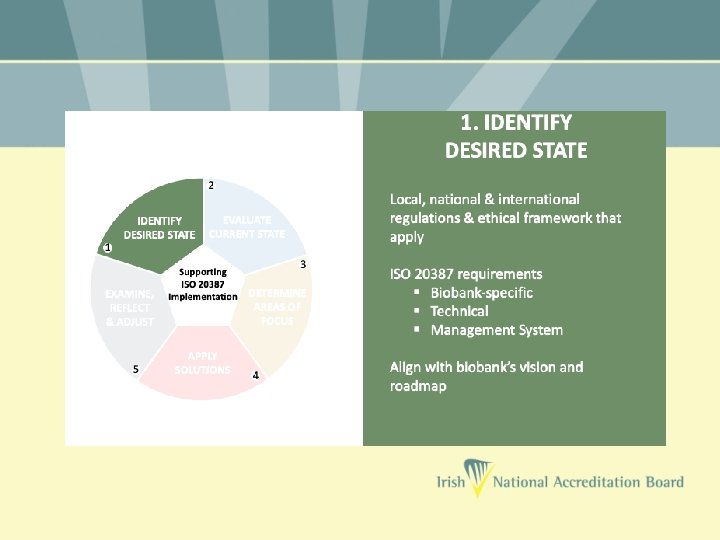
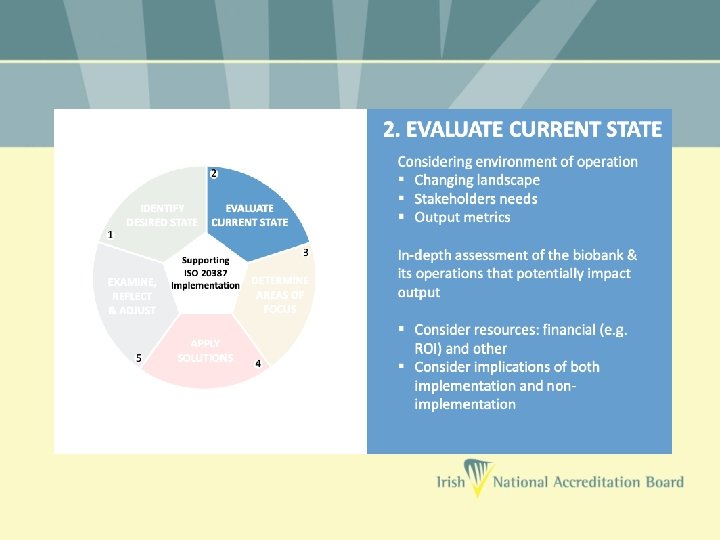
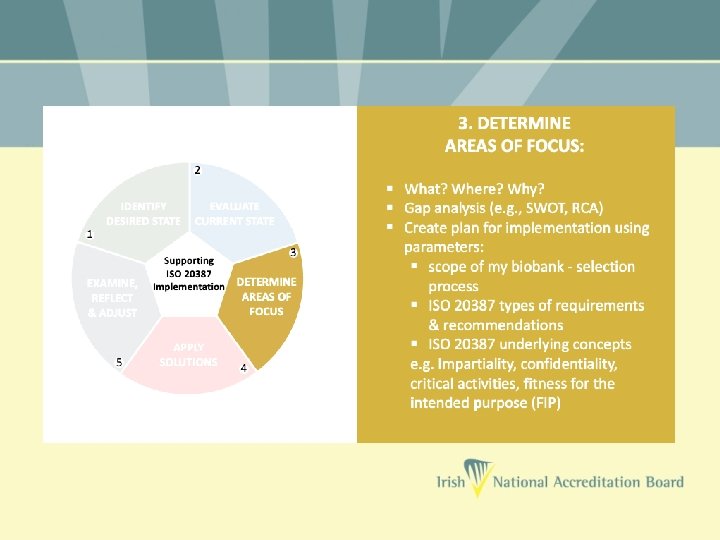
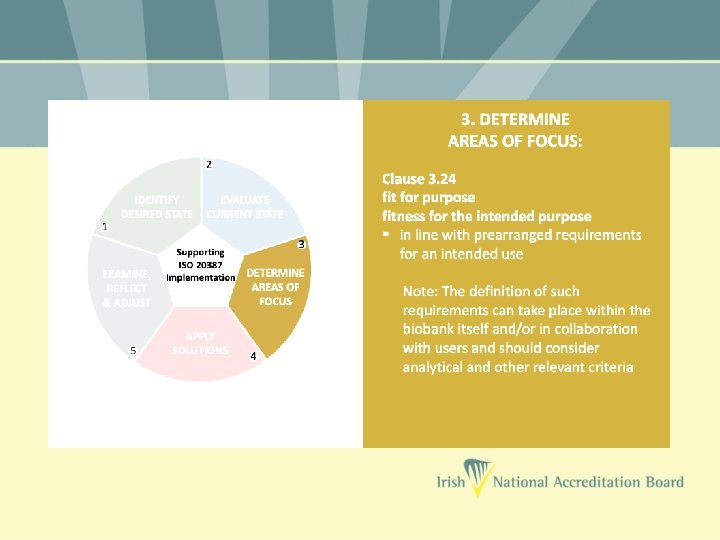
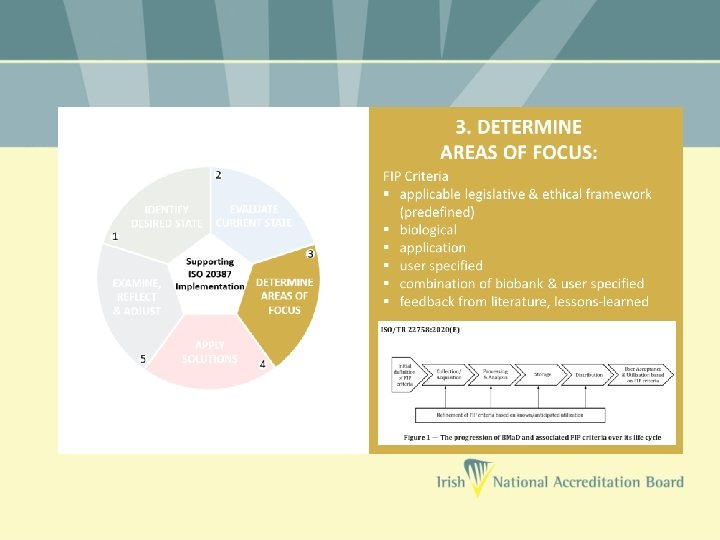
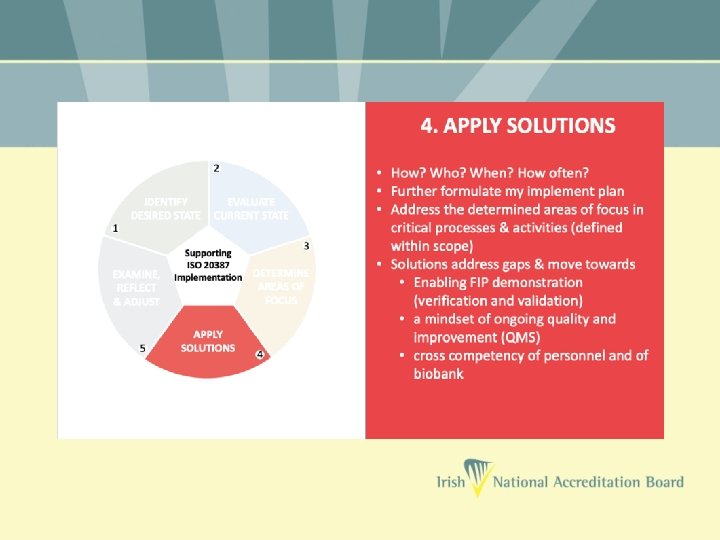
Where Do We Start? Implementing a Quality Management System for ISO 20387 Seán Naughton
Where Do We Start?

How Do You Eat an Elephant?

… One Bite at a Time! (Apologies to our vegan and vegetarian friends)
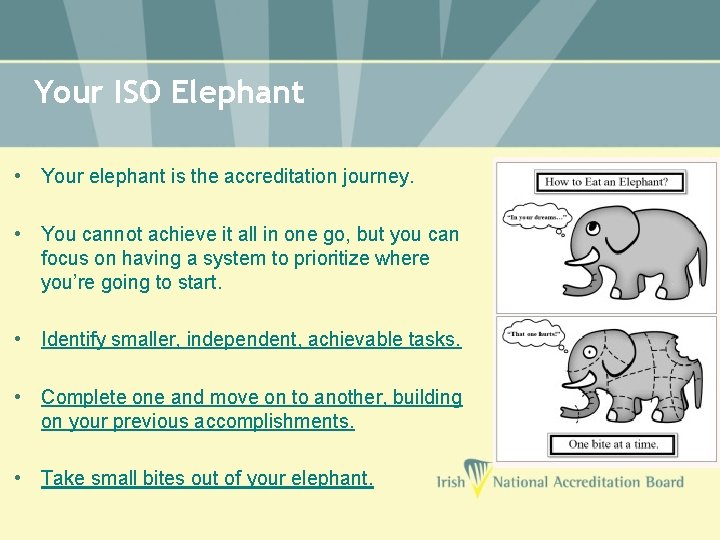
Your ISO Elephant • Your elephant is the accreditation journey. • You cannot achieve it all in one go, but you can focus on having a system to prioritize where you’re going to start. • Identify smaller, independent, achievable tasks. • Complete one and move on to another, building on your previous accomplishments. • Take small bites out of your elephant.
Start with a Process Flow
Create a Process Flow • Identify the BMa. D (Biological Material and/or associated Data) you want to accredit. • Identify the intended purpose of this BMa. D. • Develop a process flow – a diagrammatic expression of the BMa. D from collection/acquisition through to storage and distribution / disposal. • Tie this Process Flow to the scope elements for which you want accreditation. • Which scope elements apply to your processes?
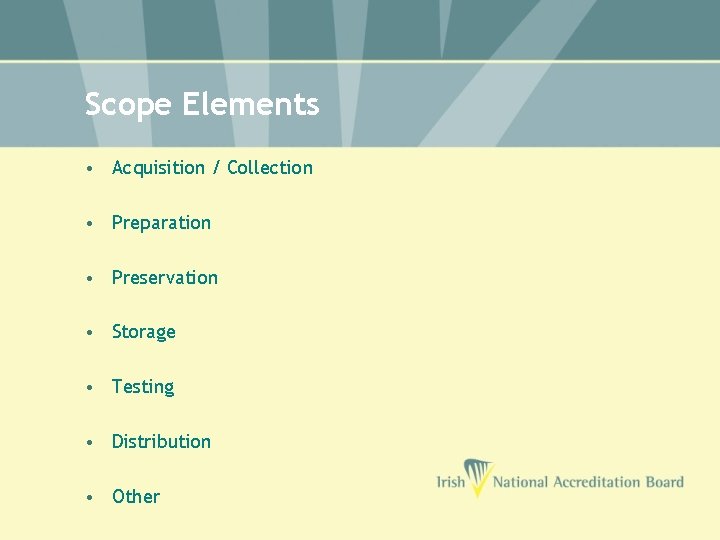
Scope Elements • Acquisition / Collection • Preparation • Preservation • Storage • Testing • Distribution • Other
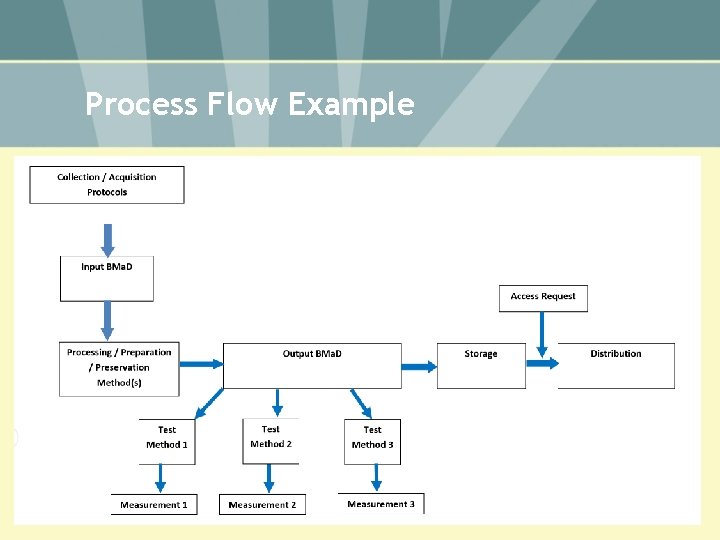
Process Flow Example
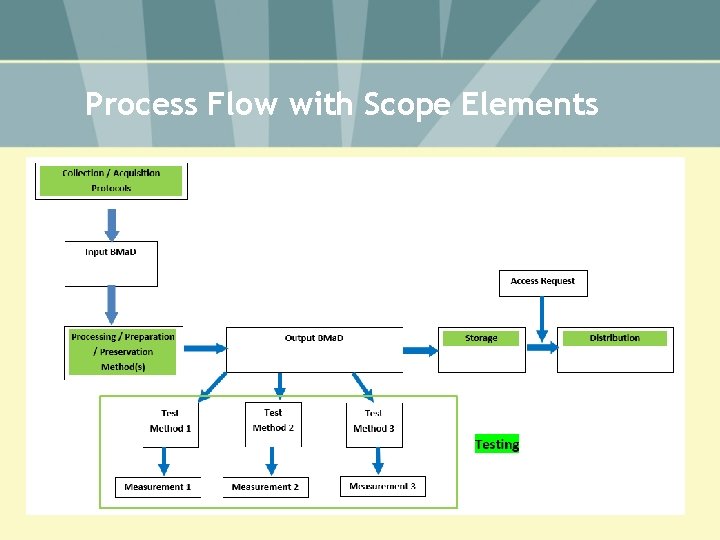
Process Flow with Scope Elements

Now that you have your process flow
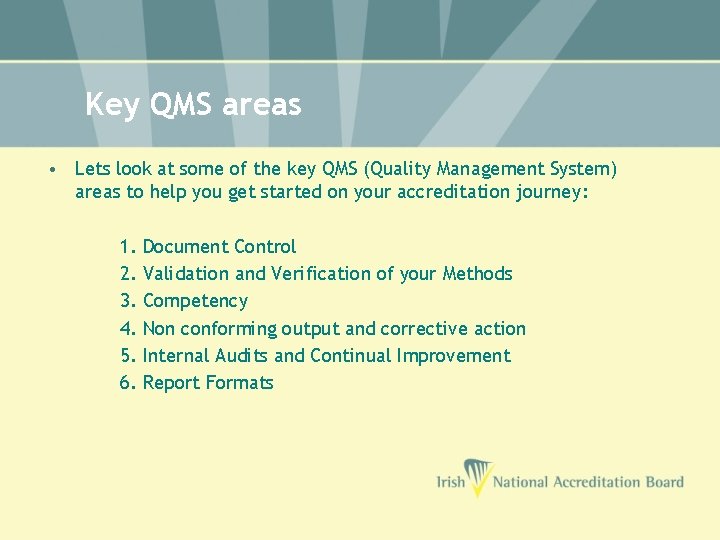
Key QMS areas • Lets look at some of the key QMS (Quality Management System) areas to help you get started on your accreditation journey: 1. 2. 3. 4. 5. 6. Document Control Validation and Verification of your Methods Competency Non conforming output and corrective action Internal Audits and Continual Improvement Report Formats
Document Control
Document Control • What is Document Control? It is a system that can: • Ensure documents are reviewed for adequacy and authorised by appropriate personnel. • Ensure periodic reviews and updating of procedures, reflective of current practice in your facility. • Review and approve changes, and identifies the current revision of the document (aka ‘Change Control’). • Uniquely identify all documents. • Prevent unintended use of obsolete documents / revisions.
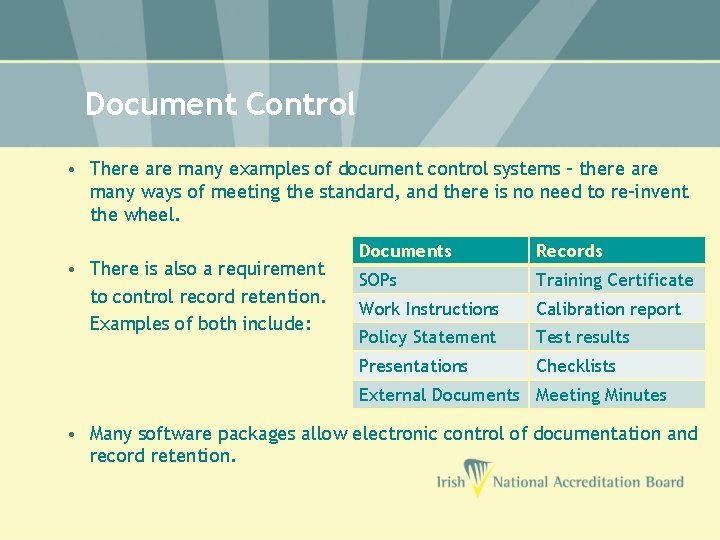
Document Control • There are many examples of document control systems – there are many ways of meeting the standard, and there is no need to re-invent the wheel. • There is also a requirement to control record retention. Examples of both include: Documents Records SOPs Training Certificate Work Instructions Calibration report Policy Statement Test results Presentations Checklists External Documents Meeting Minutes • Many software packages allow electronic control of documentation and record retention.
Document Control • For each process within your process flow, identify the technical instructions and codify them into SOPs. • Also identify the instructions for all other aspects of your work from using the Quality System to Staff Training / Competency to addressing risks and opportunities. Codify these instructions also. • For each process where you record information, codify the record keeping format. • Ask yourself, how will we ensure the integrity of the QMS such that there are no question marks over the fitness for intended purpose of the BMa. D.
Validation and Verification of your Methods and Processes
When to Validate and When to Verify?
Validation • Validation is required for all ‘non-standard’, in-house or ‘modified’ test methods. “shall be as extensive as is necessary and confirm, through the provision of objective evidence (in the form of performance characteristics), that the specific requirements for the intended use of the examination have been fulfilled. ”
Verification • Standard methods and processes (peer-reviewed methods, test kits by manufacturers, equipment operated as per manufacturer’s instruction) all require less extensive testing prior to introduction – they have already been validated, and thus require only verification of their performance characteristics. “confirmation, through the provision of objective evidence, that specified requirements have been fulfilled”.
What needs to be Validated / Verified? • The Biobank must identify all stages of each BMa. D’s lifecycle and the critical activities within each stage of the lifecycle. CRITICAL ACTIVITIES: having a potential impact on the fitness for the intended purpose of the BMa. D. LIFE CYCLE: consecutive and interlinked processes applied to the BMa. D through e. g. collection, accession, acquisition, identification, preservation, long-term storage, quality control, transport, distribution, destruction, disposal.
What needs to be Validated / Verified? • The Biobank must now identify the methods and processes employed during each critical activity and determine if validation or verification is required. • Note: Equipment and software can affect BMa. D fitness for purpose. • Bring it back to 1 st principles thinking: • Does this action/event/test result/process/equipment potentially affect the ‘fitness for intended purpose’? • If so, is the requirement here to validate or verify?
Competency
Competency • You must define the level of competence required for your facility and for the particular tasks. • You set the criteria for competence. • Can be useful to tie competency to initial training plans. E. g. As you complete training in one section, competency is achieved before progressing to the next training section. • Can also use education, training, demonstrated skills and experience to deem staff competent initially.
Competency • Periodically re-assess staff to ensure maintenance of effective competency. • Many ways to assess effective competency: • Witnessing / Observation of work. • Test / Evaluation of knowledge. • Review of work performed. • Performance in external quality assurance schemes. • Keep evidence.

Non Conforming Output and Corrective Actions
Non Conforming Output & Corrective Actions • When something goes wrong: • • • Failure to meet your own or your client’s predefined requirements. An SOP was not followed. A report not issued. Inadequate storage conditions. Personnel were not trained / competent. • Non conforming – deviating from a particular requirement (e. g. ISO requirements, your own procedures, INAB requirements). • Specifically relates to ‘non conforming output’. • You need a system for recording and remedying NC output.
Non Conforming Output & Corrective Actions • What to do with an identified NC? • React – take control and correct it / deal with the consequences • Evaluate – identify the underlying cause(s) • Determine – the extent of the NC – do similar NCs exist / have the potential to occur? Are there associated risks and opportunities? • Undertake corrective actions appropriate to the effects of the NC that deal with the underlying root cause. • Keep records of the nature of the NC, actions taken, and the effectiveness of the corrective action
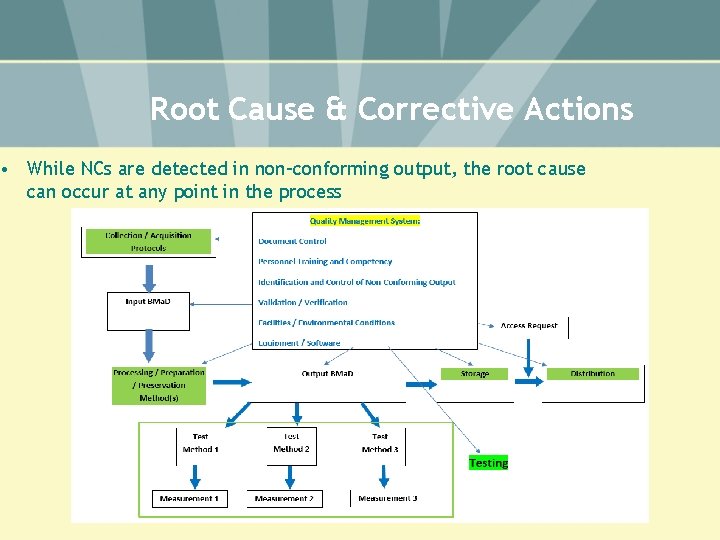
Root Cause & Corrective Actions • While NCs are detected in non-conforming output, the root cause can occur at any point in the process
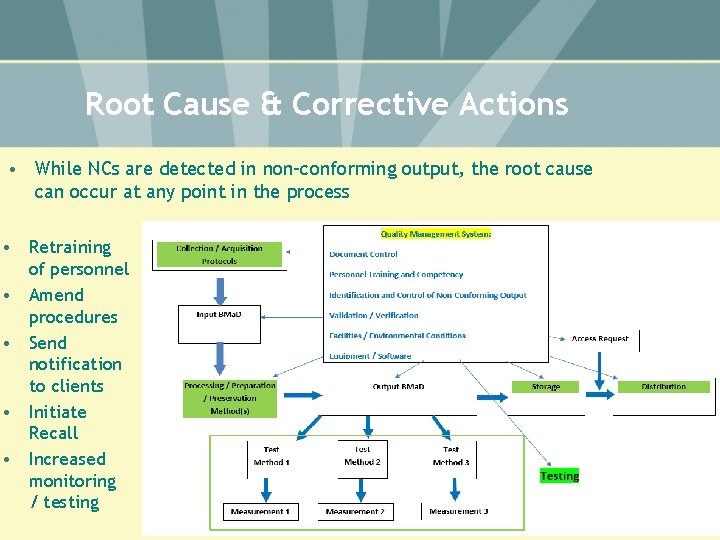
Root Cause & Corrective Actions • While NCs are detected in non-conforming output, the root cause can occur at any point in the process • Retraining of personnel • Amend procedures • Send notification to clients • Initiate Recall • Increased monitoring / testing
Internal Audits & Continual Improvement
Internal Audits • INAB assessments are a one day snapshot of your quality system. • Internal Audits are a means of identifying deficiencies in your system year round. • At regular intervals audit your system to ensure it adequately meets: • The requirements of ISO 20387. • Your own QMS requirements. • Your own, and your clients, technical requirements.
Internal Audits • Do this by: • Defining audit criteria in advance. • Know what you are looking for. • Ensure impartiality e. g. auditor is independent of the activity being audited. • Keeping evidence of your audit. • Internal Audit will: • Identify and correct deficiencies where your system does not meet requirements. • Help maintain effective accreditation inbetween annual INAB assessments.
Continual Improvement • Refers to continual improvement of the QMS, your products and services. • Identify targets for improvement through: • Review of staff suggestions • Review of operational procedures • Use of policies • Setting objectives • Internal and External audit • Corrective actions arising from NC • Proficiency testing / external quality assessment schemes • Data trending (e. g. QC or environmental data) • Dealing with complaints
Continual Improvement Process • Identify potential sources of any system weakness or error. • Develop plans to implement improvement. • Implement the plan. • Review the effectiveness of the action through the process of focused review and audit. • Adjust the action plan and modify the system in accordance with the review and audit results.
Report Format
Report Format • Begin to prepare your electronic systems early to ensure reports or certificates can comply. • Can be electronic or hard copy. • Electronic reports can be provided by electronic data transfer or access to an electronic data base. • Reports should include a statement to the user that the report may only be reproduced in full i. e. not abridged or shortened.
Report Format • What must be on the report? • A title (e. g. Material Certificate, Quality Report) • Date of Issue • Unique identifier of report, identification on each page and clear notice of the ‘end of the report’. • INAB symbol or reference to INAB accreditation. • Clear identification of any non-accredited activity.
Report Format • What must be on the report? (As applicable) • Biological material identification / specific properties. • Any relevant quality information. • Methods of ID or characterisation of material. • Testing results and methods used for testing. • Methods used for collection / acquisition, preparation / preservation. • Storage conditions. • Name and function of person authorising report.
Lots to Digest Very Do-able with Time Step by Step

Thank You and Best Wishes on Your Accreditation Journey
The Accreditation Process April 2021 Bríd Burke
Accreditation process • Quality system according to ISO 20387 developed, documented, where necessary, and in use • Application to INAB • CRM portal • Scope clarification • Assessment team – Pradeep Agrawal and Maurice Bardsley
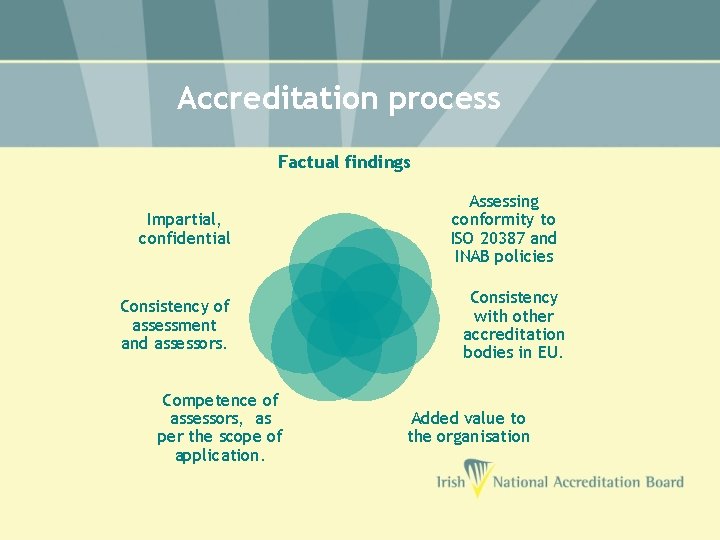
Accreditation process Factual findings Impartial, confidential Consistency of assessment and assessors. Competence of assessors, as per the scope of application. Assessing conformity to ISO 20387 and INAB policies Consistency with other accreditation bodies in EU. Added value to the organisation
Scope of accreditation
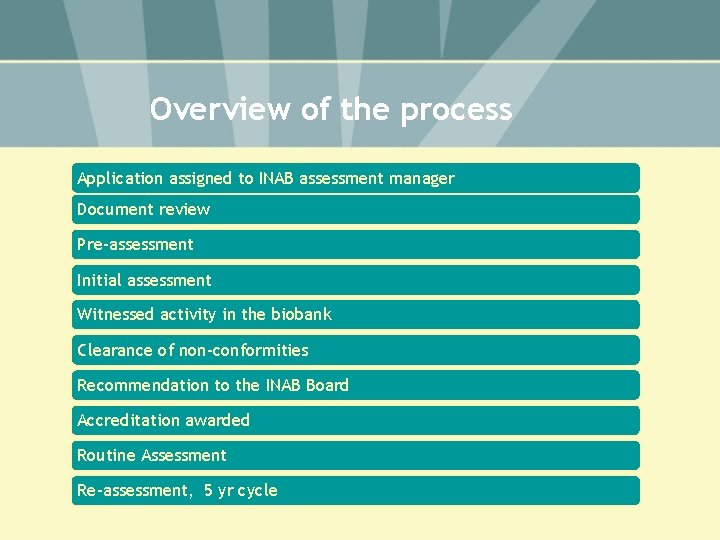
Overview of the process Application assigned to INAB assessment manager Document review Pre-assessment Initial assessment Witnessed activity in the biobank Clearance of non-conformities Recommendation to the INAB Board Accreditation awarded Routine Assessment Re-assessment, 5 yr cycle

Thank you for your attention Questions?
- Slides: 70