
ACCP Cardiology PRN Journal Club Twelve or 30

ACCP Cardiology PRN Journal Club
Twelve or 30 Months of Dual Antiplatelet Therapy After Drug. Eluting Stents Nicole Gasbarro, Pharm. D PGY-2 Cardiology Resident University of Illinois Hospital and Health Sciences System Chicago, Illinois 1/28/15 Mauri L, et al. N Eng J Med. 2014; 371 (23): 2155 -66
Disclosures • I have nothing to disclose concerning possible financial or personal relationships with commercial entities that may have a direct or indirect interest in the subject matter of this presentation.
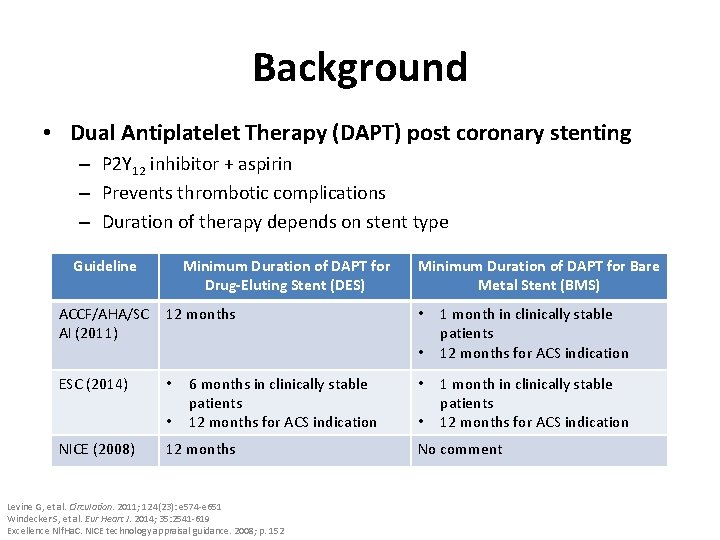
Background • Dual Antiplatelet Therapy (DAPT) post coronary stenting – P 2 Y 12 inhibitor + aspirin – Prevents thrombotic complications – Duration of therapy depends on stent type Guideline Minimum Duration of DAPT for Drug-Eluting Stent (DES) ACCF/AHA/SC AI (2011) 12 months ESC (2014) • • NICE (2008) Minimum Duration of DAPT for Bare Metal Stent (BMS) 6 months in clinically stable patients 12 months for ACS indication 12 months Levine G, et al. Circulation. 2011; 124(23): e 574 -e 651 Windecker S, et al. Eur Heart J. 2014; 35: 2541 -619 Excellence Nlf. Ha. C. NICE technology appraisal guidance. 2008; p. 152 • • 1 month in clinically stable patients 12 months for ACS indication No comment
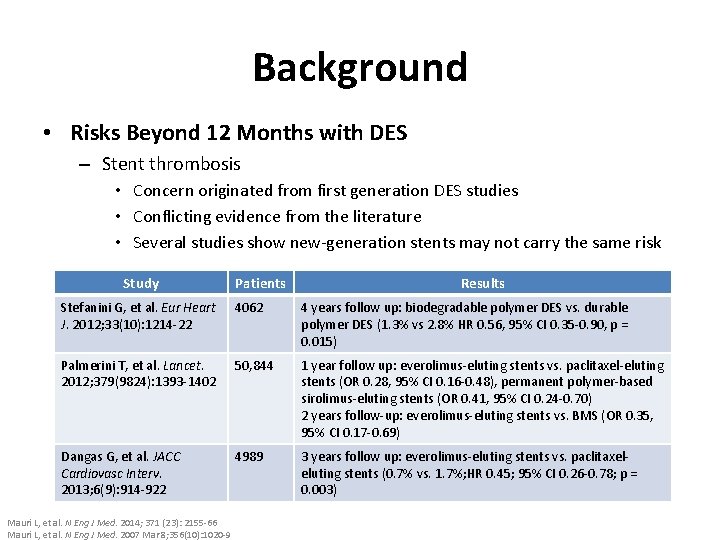
Background • Risks Beyond 12 Months with DES – Stent thrombosis • Concern originated from first generation DES studies • Conflicting evidence from the literature • Several studies show new-generation stents may not carry the same risk Study Patients Results Stefanini G, et al. Eur Heart J. 2012; 33(10): 1214 -22 4062 4 years follow up: biodegradable polymer DES vs. durable polymer DES (1. 3% vs 2. 8% HR 0. 56, 95% CI 0. 35 -0. 90, p = 0. 015) Palmerini T, et al. Lancet. 2012; 379(9824): 1393 -1402 50, 844 1 year follow up: everolimus-eluting stents vs. paclitaxel-eluting stents (OR 0. 28, 95% CI 0. 16 -0. 48), permanent polymer-based sirolimus-eluting stents (OR 0. 41, 95% CI 0. 24 -0. 70) 2 years follow-up: everolimus-eluting stents vs. BMS (OR 0. 35, 95% CI 0. 17 -0. 69) Dangas G, et al. JACC Cardiovasc Interv. 2013; 6(9): 914 -922 4989 3 years follow up: everolimus-eluting stents vs. paclitaxeleluting stents (0. 7% vs. 1. 7%; HR 0. 45; 95% CI 0. 26 -0. 78; p = 0. 003) Mauri L, et al. N Eng J Med. 2014; 371 (23): 2155 -66 Mauri L, et al. N Eng J Med. 2007 Mar 8; 356(10): 1020 -9
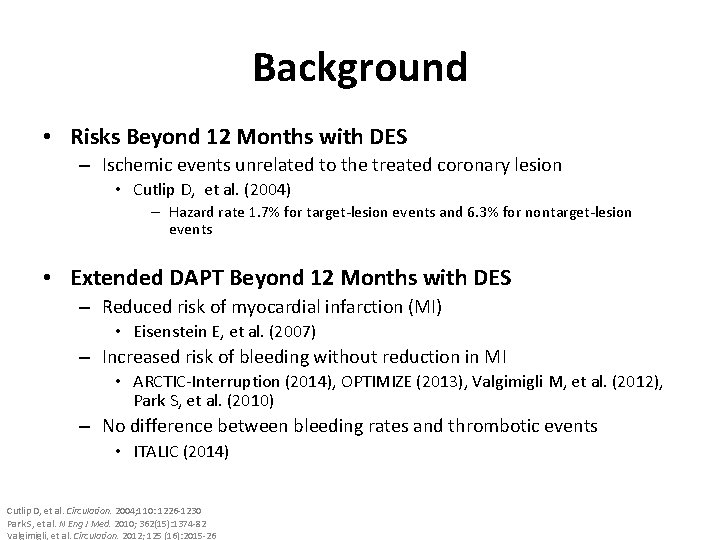
Background • Risks Beyond 12 Months with DES – Ischemic events unrelated to the treated coronary lesion • Cutlip D, et al. (2004) – Hazard rate 1. 7% for target-lesion events and 6. 3% for nontarget-lesion events • Extended DAPT Beyond 12 Months with DES – Reduced risk of myocardial infarction (MI) • Eisenstein E, et al. (2007) – Increased risk of bleeding without reduction in MI • ARCTIC-Interruption (2014), OPTIMIZE (2013), Valgimigli M, et al. (2012), Park S, et al. (2010) – No difference between bleeding rates and thrombotic events • ITALIC (2014) Cutlip D, et al. Circulation. 2004; 110: 1226 -1230 Park S, et al. N Eng J Med. 2010; 362(15): 1374 -82 Valgimigli, et al. Circulation. 2012; 125 (16): 2015 -26
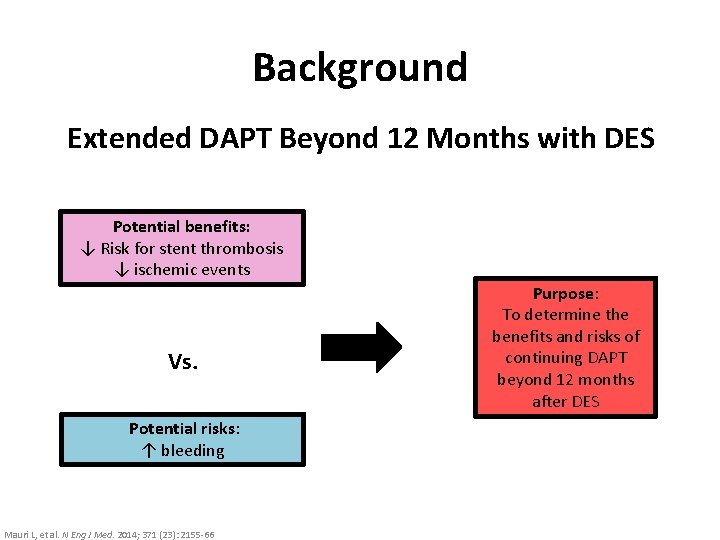
Background Extended DAPT Beyond 12 Months with DES Potential benefits: ↓ Risk for stent thrombosis ↓ ischemic events Vs. Potential risks: ↑ bleeding Mauri L, et al. N Eng J Med. 2014; 371 (23): 2155 -66 Purpose: To determine the benefits and risks of continuing DAPT beyond 12 months after DES
Objectives • Efficacy – To determine whether DAPT beyond 12 months is associated with reduction in stent thrombosis or major adverse cardiovascular and cerebrovascular events • Safety – To determine the impact of DAPT beyond 12 months on moderate or severe bleeding Mauri L, et al. N Eng J Med. 2014; 371 (23): 2155 -66
Study Design • Multicenter, international, randomized, double-blind, placebocontrolled trial of 9961 patients • Collaboration – FDA – Eight stent and pharmaceutical manufacturers – Harvard Clinical Research Institute (HCRI) • Funding – Eight stent and pharmaceutical manufacturers • Abbott Vascular, Boston Scientific Corporation, Cordis Corporation, Medtronic, Inc. , Bristol-Myers Squibb Company/Sanofi Pharmaceuticals Partnership, Eli Lilly and Company, Daiichi Sankyo Company Limited – Grant from the US Department of Health and Human Services Mauri L, et al. N Eng J Med. 2014; 371 (23): 2155 -66 Mauri L, et al. N Eng J Med. 2014; 371 Suppl: 18
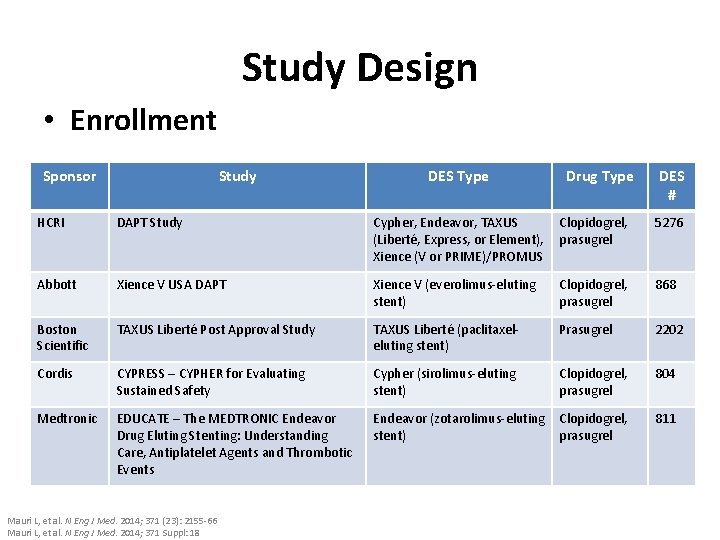
Study Design • Enrollment Sponsor Study DES Type Drug Type DES # HCRI DAPT Study Cypher, Endeavor, TAXUS (Liberté, Express, or Element), Xience (V or PRIME)/PROMUS Clopidogrel, prasugrel 5276 Abbott Xience V USA DAPT Xience V (everolimus-eluting stent) Clopidogrel, prasugrel 868 Boston Scientific TAXUS Liberté Post Approval Study TAXUS Liberté (paclitaxeleluting stent) Prasugrel 2202 Cordis CYPRESS – CYPHER for Evaluating Sustained Safety Cypher (sirolimus-eluting stent) Clopidogrel, prasugrel 804 Medtronic EDUCATE – The MEDTRONIC Endeavor Drug Eluting Stenting: Understanding Care, Antiplatelet Agents and Thrombotic Events Endeavor (zotarolimus-eluting stent) Clopidogrel, prasugrel 811 Mauri L, et al. N Eng J Med. 2014; 371 (23): 2155 -66 Mauri L, et al. N Eng J Med. 2014; 371 Suppl: 18
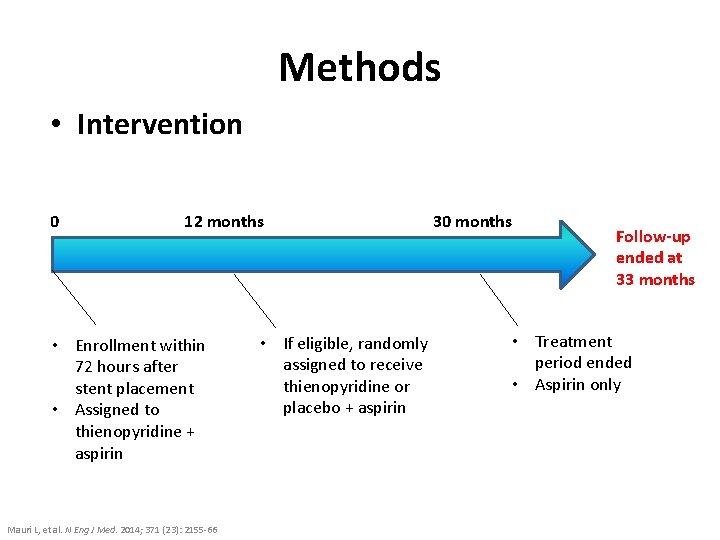
Methods • Intervention 0 12 months • Enrollment within 72 hours after stent placement • Assigned to thienopyridine + aspirin Mauri L, et al. N Eng J Med. 2014; 371 (23): 2155 -66 • If eligible, randomly assigned to receive thienopyridine or placebo + aspirin 30 months Follow-up ended at 33 months • Treatment period ended • Aspirin only
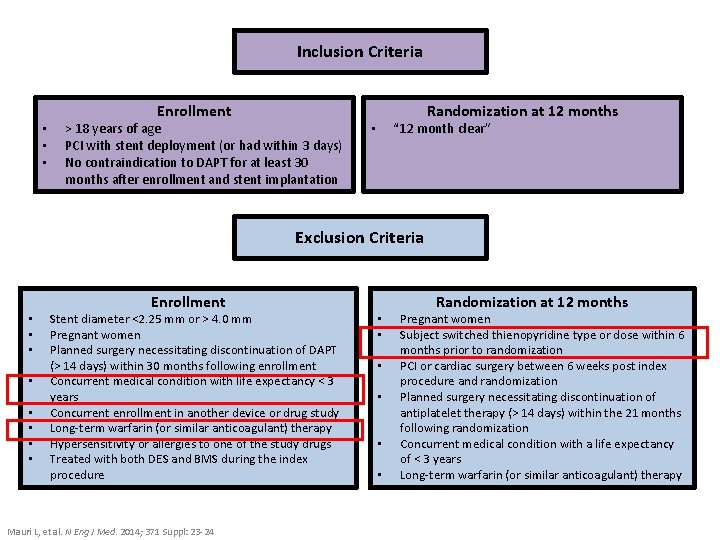
Inclusion Criteria • • • Enrollment > 18 years of age PCI with stent deployment (or had within 3 days) No contraindication to DAPT for at least 30 months after enrollment and stent implantation Randomization at 12 months “ 12 month clear” • Exclusion Criteria • • Enrollment Stent diameter <2. 25 mm or > 4. 0 mm Pregnant women Planned surgery necessitating discontinuation of DAPT (> 14 days) within 30 months following enrollment Concurrent medical condition with life expectancy < 3 years Concurrent enrollment in another device or drug study Long-term warfarin (or similar anticoagulant) therapy Hypersensitivity or allergies to one of the study drugs Treated with both DES and BMS during the index procedure Mauri L, et al. N Eng J Med. 2014; 371 Suppl: 23 -24 • • • Randomization at 12 months Pregnant women Subject switched thienopyridine type or dose within 6 months prior to randomization PCI or cardiac surgery between 6 weeks post index procedure and randomization Planned surgery necessitating discontinuation of antiplatelet therapy (> 14 days) within the 21 months following randomization Concurrent medical condition with a life expectancy of < 3 years Long-term warfarin (or similar anticoagulant) therapy
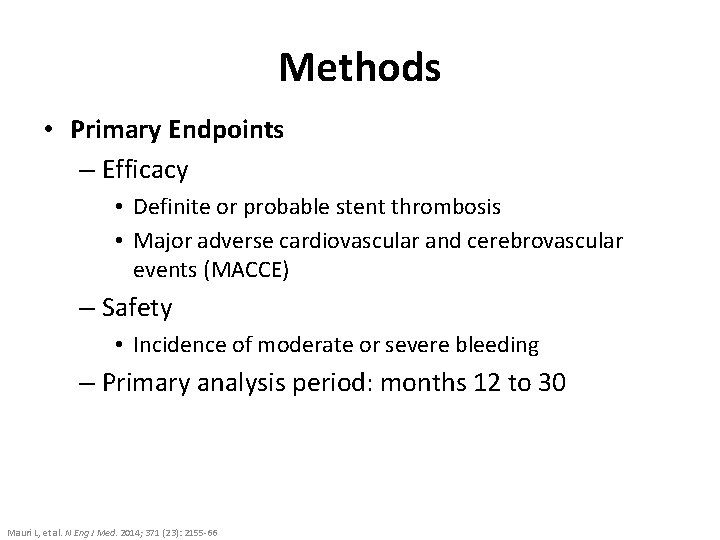
Methods • Primary Endpoints – Efficacy • Definite or probable stent thrombosis • Major adverse cardiovascular and cerebrovascular events (MACCE) – Safety • Incidence of moderate or severe bleeding – Primary analysis period: months 12 to 30 Mauri L, et al. N Eng J Med. 2014; 371 (23): 2155 -66
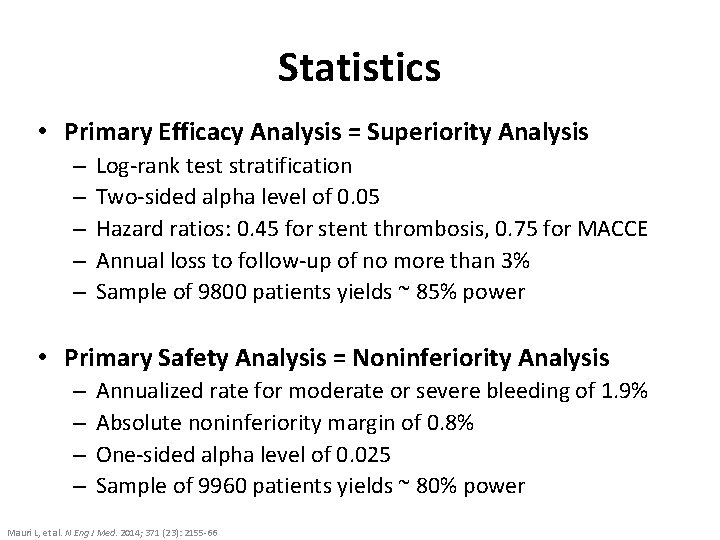
Statistics • Primary Efficacy Analysis = Superiority Analysis – – – Log-rank test stratification Two-sided alpha level of 0. 05 Hazard ratios: 0. 45 for stent thrombosis, 0. 75 for MACCE Annual loss to follow-up of no more than 3% Sample of 9800 patients yields ~ 85% power • Primary Safety Analysis = Noninferiority Analysis – – Annualized rate for moderate or severe bleeding of 1. 9% Absolute noninferiority margin of 0. 8% One-sided alpha level of 0. 025 Sample of 9960 patients yields ~ 80% power Mauri L, et al. N Eng J Med. 2014; 371 (23): 2155 -66
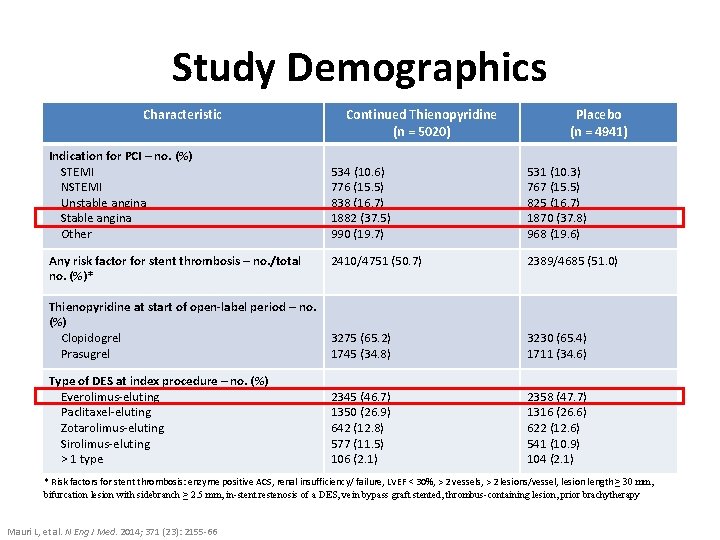
Study Demographics Characteristic Indication for PCI – no. (%) STEMI NSTEMI Unstable angina Stable angina Other Continued Thienopyridine (n = 5020) Placebo (n = 4941) 534 (10. 6) 776 (15. 5) 838 (16. 7) 1882 (37. 5) 990 (19. 7) 531 (10. 3) 767 (15. 5) 825 (16. 7) 1870 (37. 8) 968 (19. 6) 2410/4751 (50. 7) 2389/4685 (51. 0) Thienopyridine at start of open-label period – no. (%) Clopidogrel Prasugrel 3275 (65. 2) 1745 (34. 8) 3230 (65. 4) 1711 (34. 6) Type of DES at index procedure – no. (%) Everolimus-eluting Paclitaxel-eluting Zotarolimus-eluting Sirolimus-eluting > 1 type 2345 (46. 7) 1350 (26. 9) 642 (12. 8) 577 (11. 5) 106 (2. 1) 2358 (47. 7) 1316 (26. 6) 622 (12. 6) 541 (10. 9) 104 (2. 1) Any risk factor for stent thrombosis – no. /total no. (%)* * Risk factors for stent thrombosis: enzyme positive ACS, renal insufficiency/ failure, LVEF < 30%, > 2 vessels, > 2 lesions/vessel, lesion length ≥ 30 mm, bifurcation lesion with sidebranch ≥ 2. 5 mm, in-stent restenosis of a DES, vein bypass graft stented, thrombus-containing lesion, prior brachytherapy Mauri L, et al. N Eng J Med. 2014; 371 (23): 2155 -66
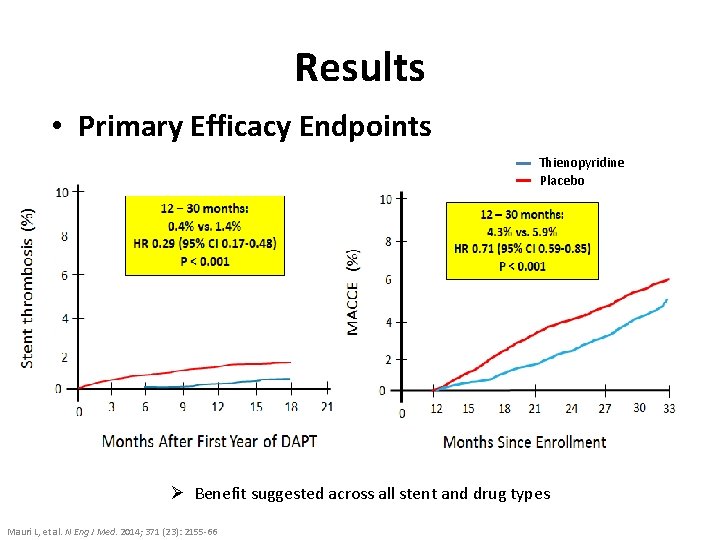
Results • Primary Efficacy Endpoints Thienopyridine Placebo Ø Benefit suggested across all stent and drug types Mauri L, et al. N Eng J Med. 2014; 371 (23): 2155 -66
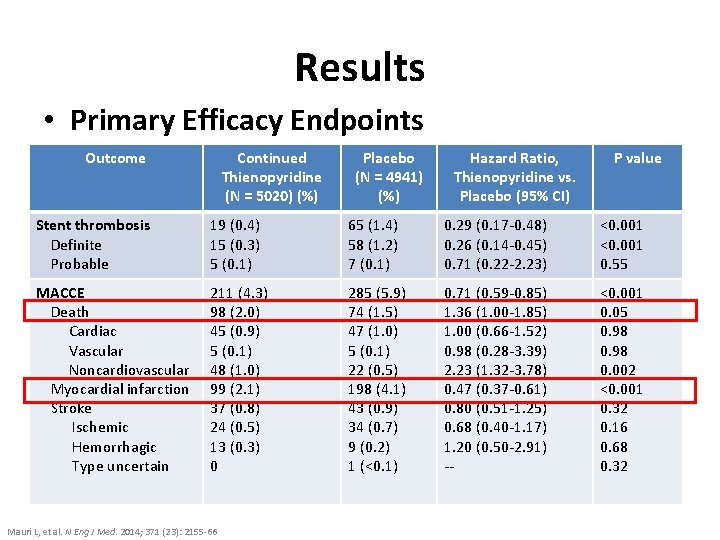
Results • Primary Efficacy Endpoints Outcome Continued Thienopyridine (N = 5020) (%) Placebo (N = 4941) (%) Hazard Ratio, Thienopyridine vs. Placebo (95% CI) P value Stent thrombosis Definite Probable 19 (0. 4) 15 (0. 3) 5 (0. 1) 65 (1. 4) 58 (1. 2) 7 (0. 1) 0. 29 (0. 17 -0. 48) 0. 26 (0. 14 -0. 45) 0. 71 (0. 22 -2. 23) <0. 001 0. 55 MACCE Death Cardiac Vascular Noncardiovascular Myocardial infarction Stroke Ischemic Hemorrhagic Type uncertain 211 (4. 3) 98 (2. 0) 45 (0. 9) 5 (0. 1) 48 (1. 0) 99 (2. 1) 37 (0. 8) 24 (0. 5) 13 (0. 3) 0 285 (5. 9) 74 (1. 5) 47 (1. 0) 5 (0. 1) 22 (0. 5) 198 (4. 1) 43 (0. 9) 34 (0. 7) 9 (0. 2) 1 (<0. 1) 0. 71 (0. 59 -0. 85) 1. 36 (1. 00 -1. 85) 1. 00 (0. 66 -1. 52) 0. 98 (0. 28 -3. 39) 2. 23 (1. 32 -3. 78) 0. 47 (0. 37 -0. 61) 0. 80 (0. 51 -1. 25) 0. 68 (0. 40 -1. 17) 1. 20 (0. 50 -2. 91) -- <0. 001 0. 05 0. 98 0. 002 <0. 001 0. 32 0. 16 0. 68 0. 32 Mauri L, et al. N Eng J Med. 2014; 371 (23): 2155 -66
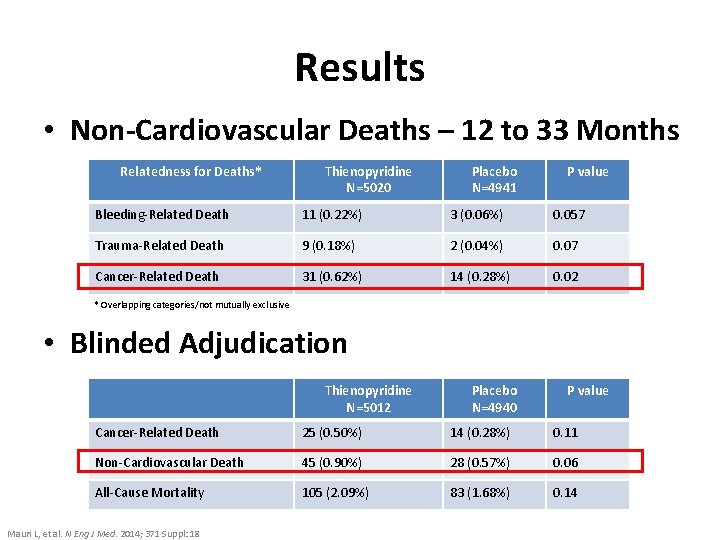
Results • Non-Cardiovascular Deaths – 12 to 33 Months Relatedness for Deaths* Thienopyridine N=5020 Placebo N=4941 P value Bleeding-Related Death 11 (0. 22%) 3 (0. 06%) 0. 057 Trauma-Related Death 9 (0. 18%) 2 (0. 04%) 0. 07 Cancer-Related Death 31 (0. 62%) 14 (0. 28%) 0. 02 * Overlapping categories/not mutually exclusive • Blinded Adjudication Thienopyridine N=5012 Placebo N=4940 P value Cancer-Related Death 25 (0. 50%) 14 (0. 28%) 0. 11 Non-Cardiovascular Death 45 (0. 90%) 28 (0. 57%) 0. 06 All-Cause Mortality 105 (2. 09%) 83 (1. 68%) 0. 14 Mauri L, et al. N Eng J Med. 2014; 371 Suppl: 18
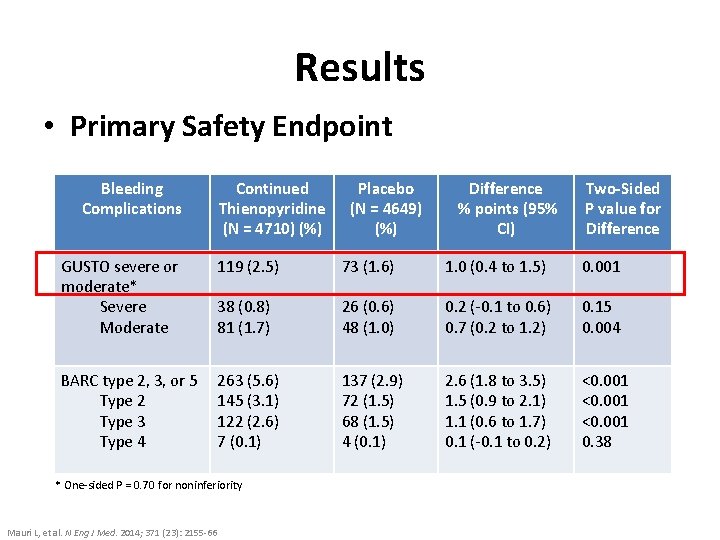
Results • Primary Safety Endpoint Bleeding Complications Continued Thienopyridine (N = 4710) (%) Placebo (N = 4649) (%) Difference % points (95% CI) Two-Sided P value for Difference GUSTO severe or moderate* Severe Moderate 119 (2. 5) 73 (1. 6) 1. 0 (0. 4 to 1. 5) 0. 001 38 (0. 8) 81 (1. 7) 26 (0. 6) 48 (1. 0) 0. 2 (-0. 1 to 0. 6) 0. 7 (0. 2 to 1. 2) 0. 15 0. 004 BARC type 2, 3, or 5 Type 2 Type 3 Type 4 263 (5. 6) 145 (3. 1) 122 (2. 6) 7 (0. 1) 137 (2. 9) 72 (1. 5) 68 (1. 5) 4 (0. 1) 2. 6 (1. 8 to 3. 5) 1. 5 (0. 9 to 2. 1) 1. 1 (0. 6 to 1. 7) 0. 1 (-0. 1 to 0. 2) <0. 001 0. 38 * One-sided P = 0. 70 for noninferiority Mauri L, et al. N Eng J Med. 2014; 371 (23): 2155 -66
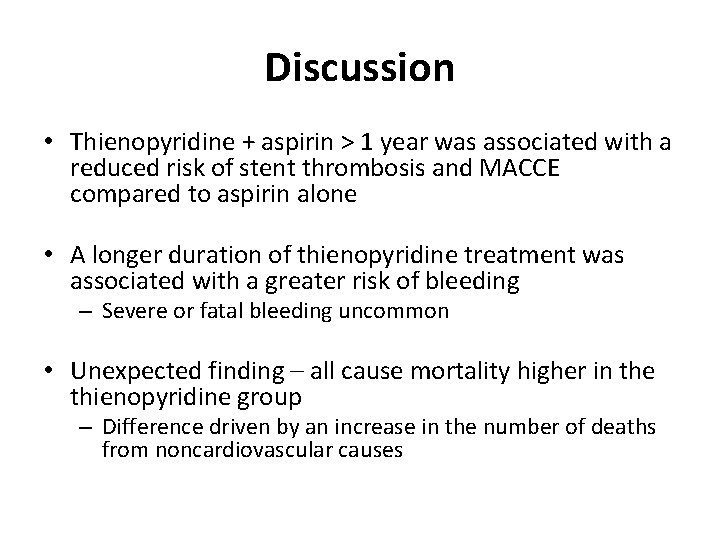
Discussion • Thienopyridine + aspirin > 1 year was associated with a reduced risk of stent thrombosis and MACCE compared to aspirin alone • A longer duration of thienopyridine treatment was associated with a greater risk of bleeding – Severe or fatal bleeding uncommon • Unexpected finding – all cause mortality higher in the thienopyridine group – Difference driven by an increase in the number of deaths from noncardiovascular causes
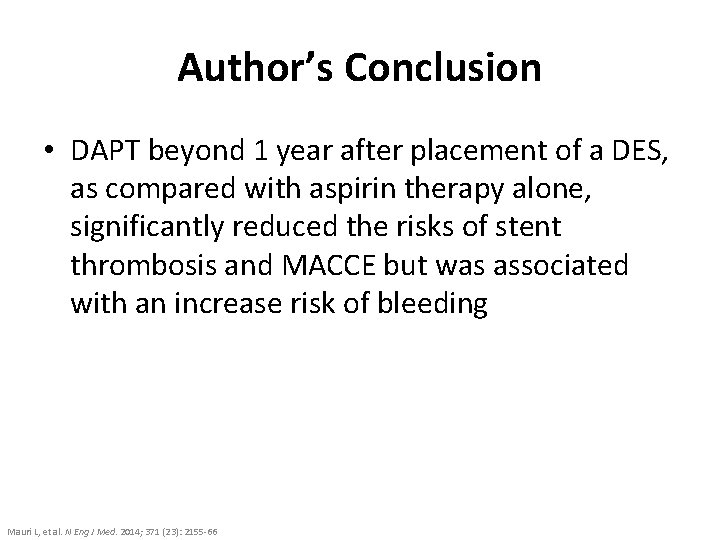
Author’s Conclusion • DAPT beyond 1 year after placement of a DES, as compared with aspirin therapy alone, significantly reduced the risks of stent thrombosis and MACCE but was associated with an increase risk of bleeding Mauri L, et al. N Eng J Med. 2014; 371 (23): 2155 -66
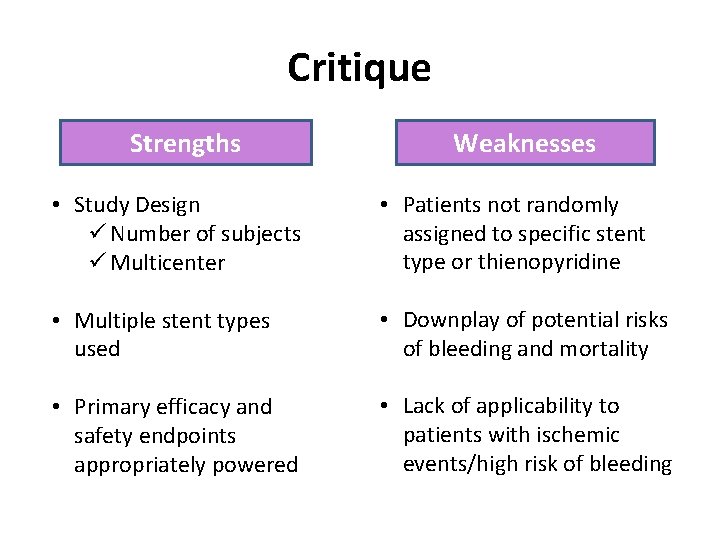
Critique Strengths Weaknesses • Study Design ü Number of subjects ü Multicenter • Patients not randomly assigned to specific stent type or thienopyridine • Multiple stent types used • Downplay of potential risks of bleeding and mortality • Primary efficacy and safety endpoints appropriately powered • Lack of applicability to patients with ischemic events/high risk of bleeding
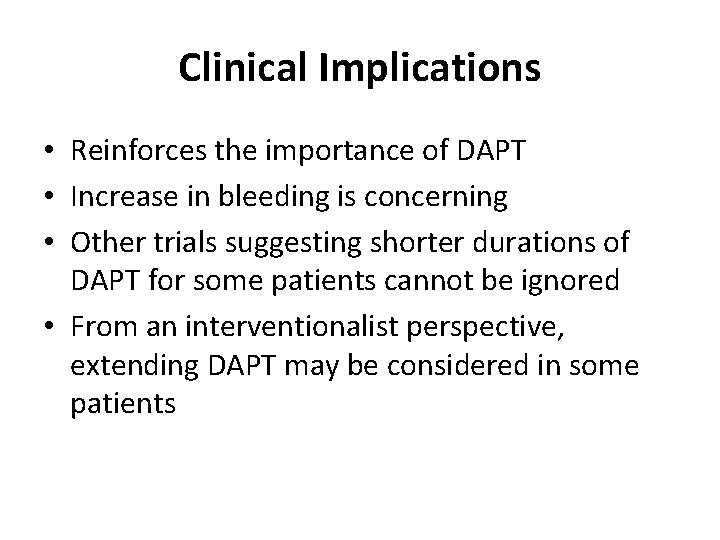
Clinical Implications • Reinforces the importance of DAPT • Increase in bleeding is concerning • Other trials suggesting shorter durations of DAPT for some patients cannot be ignored • From an interventionalist perspective, extending DAPT may be considered in some patients
Acknowledgements • Journal Club Mentors – Wes Zemrak, Pharm. D, BCPS • Maine Medical Center, Portland, ME • Program Director – Robert Di. Domenico, Pharm. D, FCCP • University of Illinois at Chicago College of Pharmacy, Chicago, IL • ACC PRN Journal Club Coordinator – Craig Beavers; Pharm. D, BCPS (AQ-Cardiology) • Tri. Star Centennial Medical Center, Nashville, TN
References • • • • Mauri L, Kereiakes D, Yeh R, et al. Twelve or 30 months of dual antiplatelet therapy after drug-eluting stents. N Eng J Med. 2014; 371 (23): 2155 -66 Levine G, Bates E, Blankenship J, et al. 2011 ACCF/AHA/SCAI guideline for percutaneous coronary intervention. A report of the American College of Cardiology Foundation/American Heart Association Task Force on Practice Guidelines and the Society for Cardiovascular Angiography and Interventions. Circulation. 2011; 124: e 574 -e 651 Windecker S, Kolh P, Alfonso F, et al. 2014 ESC/EACTS Guidelines on myocardial revascularization: The Task Force on Myocardial Revascularization of the European Society (ESC) and the European Association for Cardio-Thoracic Surgery (EACTS). Developed with the special contribution of the European Association of Percutaneous Cardiovascular Interventions. Eur Heart J. 2014 Oct 1; 35(37): 2541 -619 Excellence Nlf. Ha. C. Drug-eluting stents for the treatment of coronary artery disease. NICE technology appraisal guidance 2008; p. 152 Luscher T, Steffel J, Eberli F, et al. Drug-eluting stent and coronary thrombosis: biological mechanisms and clinical implications. Circulation. 2007; 115: 1051 -1058 Cutlip D, Chhabra A, Baim D, et al. Beyond restenosis: five-year clinical outcomes from second-generation coronary stent trials. Circulation. 2004; 110: 1226 -1230 Eisenstein E, Anstrom K, Kong D, et al. Clopidogrel use and long-term clinical outcomes after drug-eluting stent implantation. JAMA. 2007; 297: 159 -68 Collet JP, Silvain J, Barthélémy O, et al. Dual-antiplatelet treatment beyond 1 year after drug-eluting stent implantation (ARCTICInterruption): a randomized trial. Lancet. 2014 July 15 (Epub ahead of print) Feres F, Costa RA, Abizaid A, et al. Three vs twelve months of dual antiplatelet therapy after zotarolimus-eluting stents: the OPTIMIZE randomized trial. JAMA. 2013; 310: 2510 -22 Park S-J, Park D-W, Kim Y-H, et al. Duration of dual antiplatelet therapy after implantation of drug-eluting stents. N Engl J Med. 2010; 362: 1374 -82. Valgimigli M, Campo G, Monti M, et al. Short- versus long-term duration of dual-antiplatelet therapy after coronary stenting: a randomized multicenter trial. Circulation. 2012; 125: 2015 -26. Gilard M, Barragan P, Noryani A, et al. Six-month versus 24 -month dual antiplatelet therapy after implantation of drug eluting stents in patients non-resistant to aspirin: ITALIC, a randomized multicenter trial. J Am Coll Cardiol. 2014 Nov 16. doi: 10. 1016/j. jacc. 2014. 11. 008 Doboesh P, Stacy Z, Ansara A, et al. Drug-eluting stents: a mechanical and pharmacologic approach to coronary artery disease. Pharmacotherapy. 2004; 24(11): 1554 -1577
Twelve or 30 Months of Dual Antiplatelet Therapy After Drug. Eluting Stents Nicole Gasbarro, Pharm. D PGY-2 Cardiology Resident University of Illinois Hospital and Health Sciences System Chicago, Illinois 1/28/15 Mauri L, et al. N Eng J Med. 2014; 371 (23): 2155 -66
- Slides: 26