
Accessory Structures of the Eyes Eyelids Conjunctiv a


- Slides: 50
Accessory Structures of the Eyes Eyelids Conjunctiv a Eyelashes Eyebrows
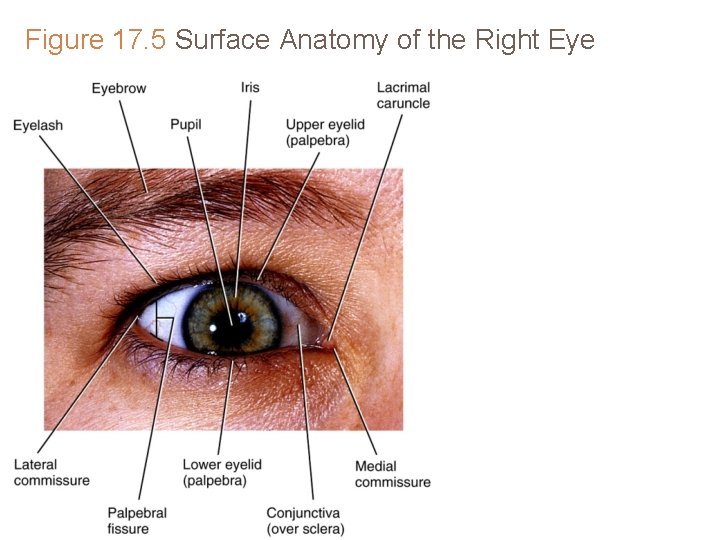
Figure 17. 5 Surface Anatomy of the Right Eye
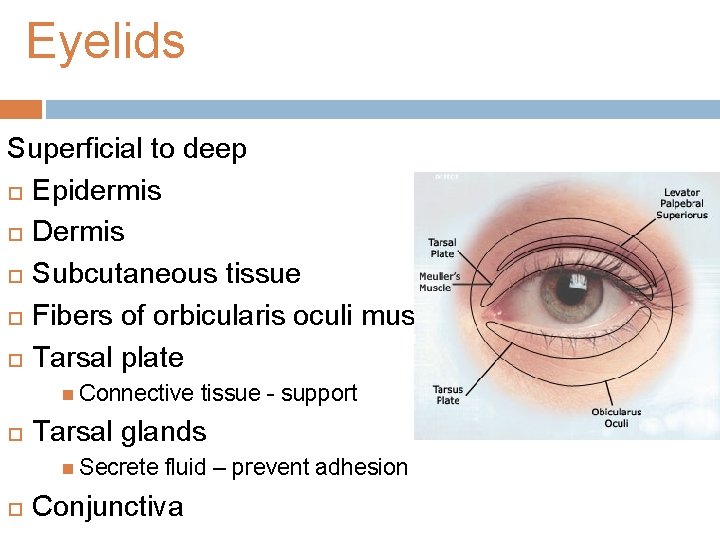
Eyelids Superficial to deep Epidermis Dermis Subcutaneous tissue Fibers of orbicularis oculi muscle Tarsal plate Connective Tarsal glands Secrete tissue - support fluid – prevent adhesion Conjunctiva
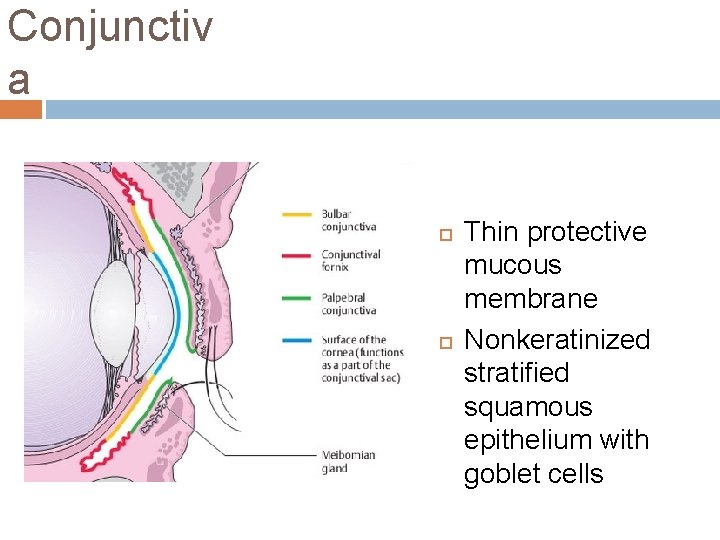
Conjunctiv a Thin protective mucous membrane Nonkeratinized stratified squamous epithelium with goblet cells
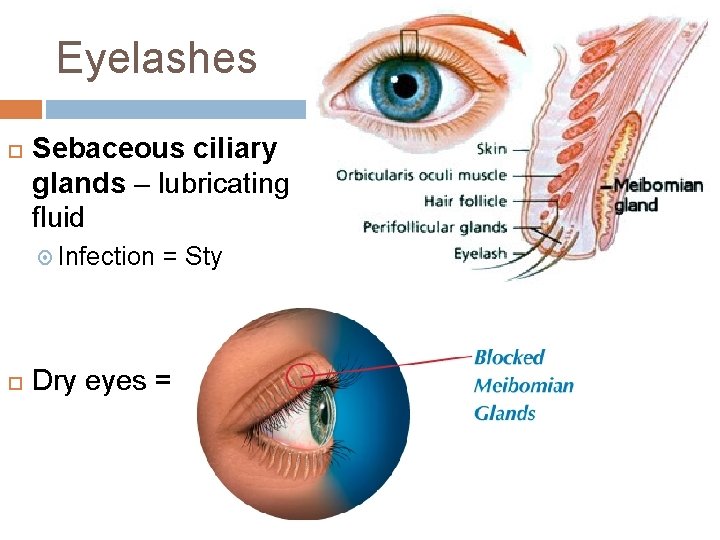
Eyelashes Sebaceous ciliary glands – lubricating fluid Infection = Sty Dry eyes =
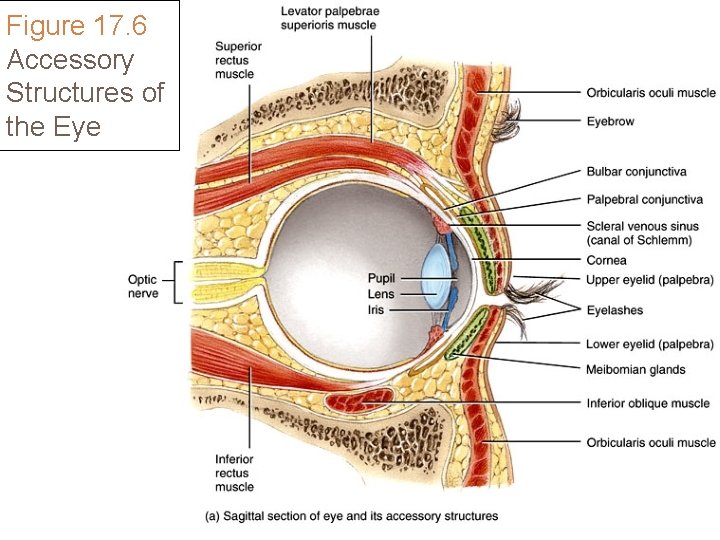
Figure 17. 6 Accessory Structures of the Eye
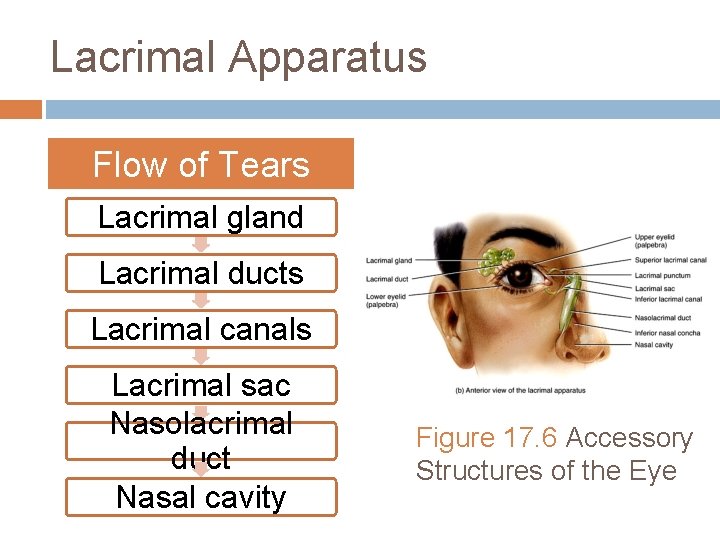
Lacrimal Apparatus Flow of Tears Lacrimal gland Lacrimal ducts Lacrimal canals Lacrimal sac Nasolacrimal duct Nasal cavity Figure 17. 6 Accessory Structures of the Eye
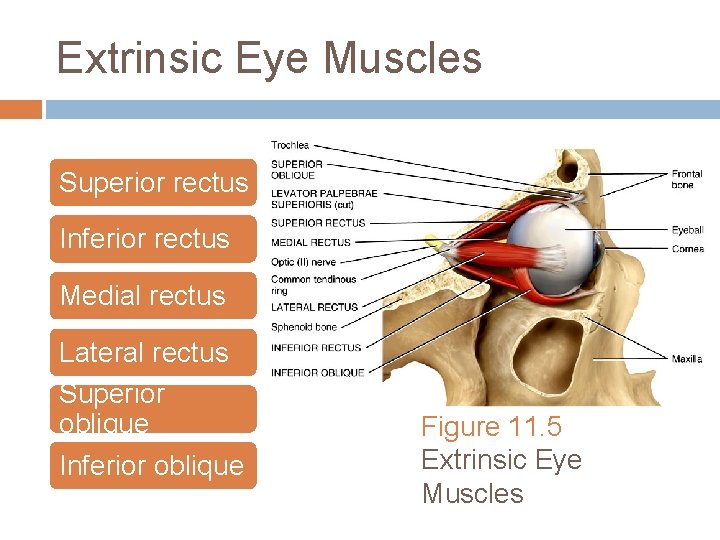
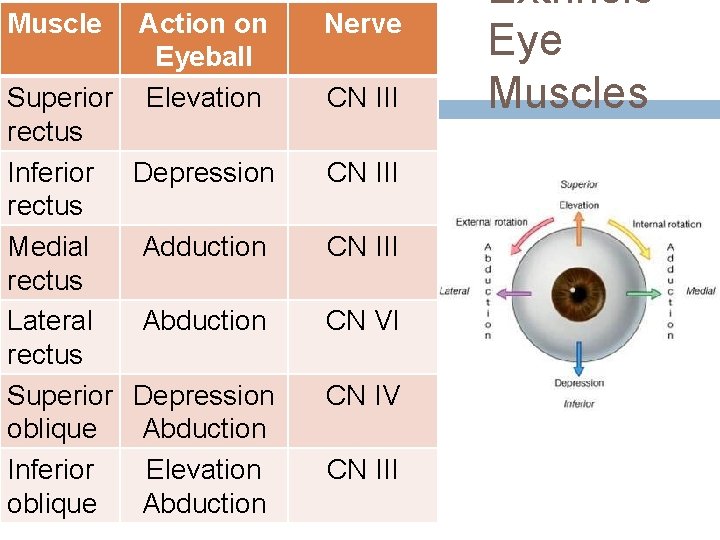
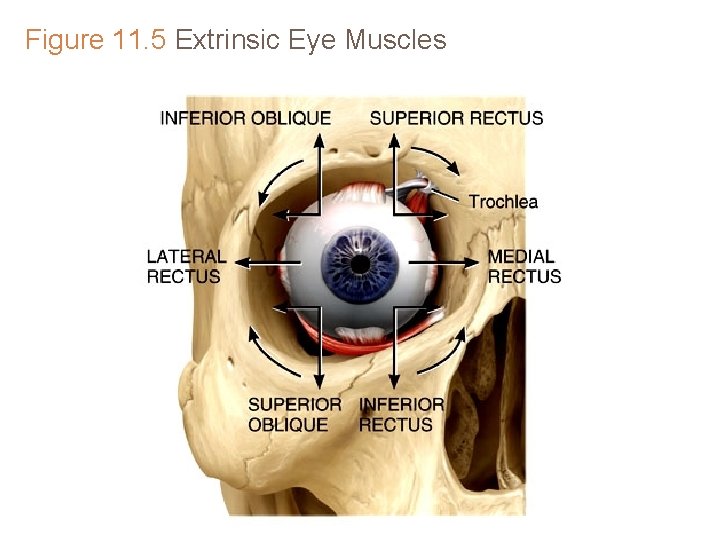
Extrinsic Eye Muscles Superior rectus Inferior rectus Medial rectus Lateral rectus Superior oblique Inferior oblique Figure 11. 5 Extrinsic Eye Muscles
Muscle Action on Eyeball Superior Elevation rectus Inferior Depression rectus Medial Adduction rectus Lateral Abduction rectus Superior Depression oblique Abduction Inferior Elevation oblique Abduction Nerve CN III CN VI CN IV CN III Extrinsic Eye Muscles
Figure 11. 5 Extrinsic Eye Muscles
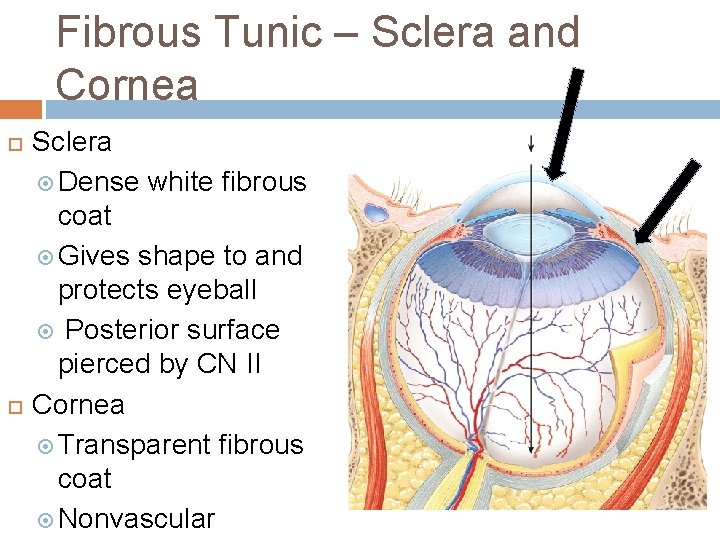
Fibrous Tunic – Sclera and Cornea Sclera Dense white fibrous coat Gives shape to and protects eyeball Posterior surface pierced by CN II Cornea Transparent fibrous coat Nonvascular
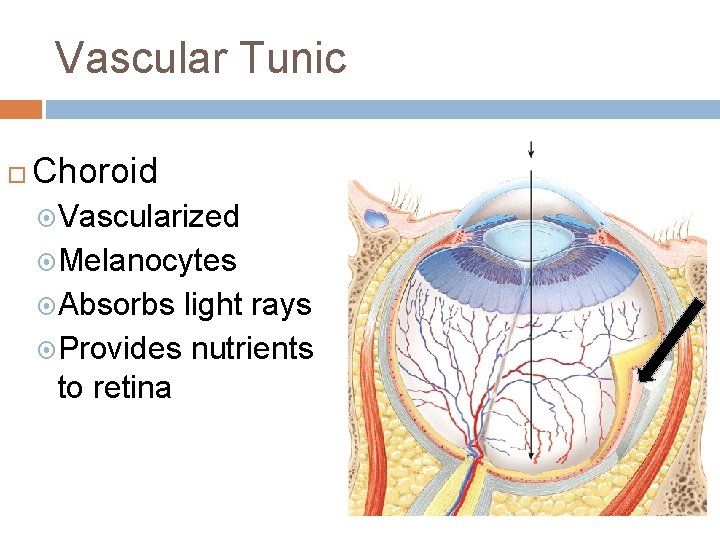
Vascular Tunic Choroid Vascularized Melanocytes Absorbs light rays Provides nutrients to retina
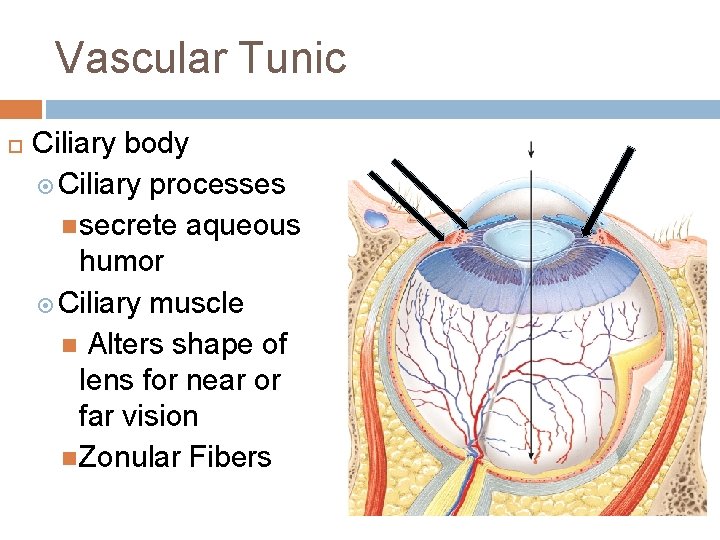
Vascular Tunic Ciliary body Ciliary processes secrete aqueous humor Ciliary muscle Alters shape of lens for near or far vision Zonular Fibers
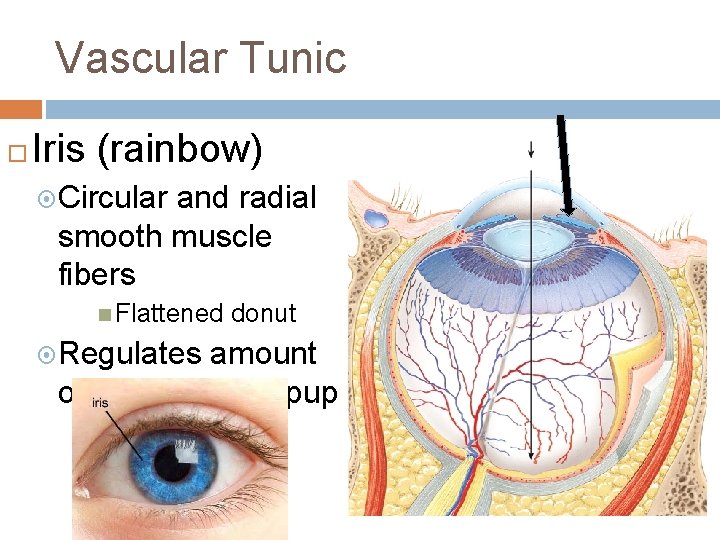
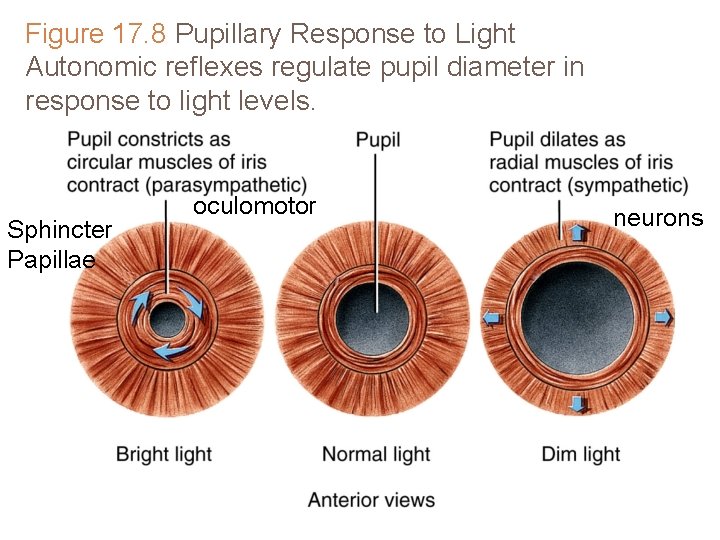
Vascular Tunic Iris (rainbow) Circular and radial smooth muscle fibers Flattened Regulates donut amount of light entering pupil
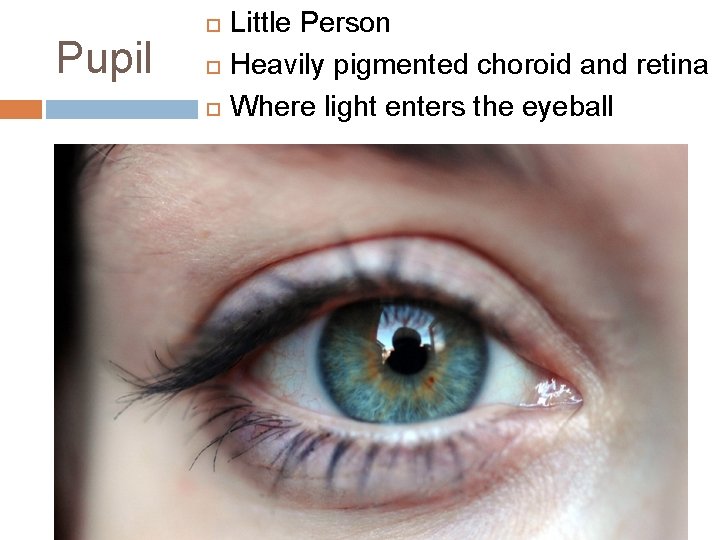
Pupil Little Person Heavily pigmented choroid and retina Where light enters the eyeball
Figure 17. 8 Pupillary Response to Light Autonomic reflexes regulate pupil diameter in response to light levels. Sphincter Papillae oculomotor neurons
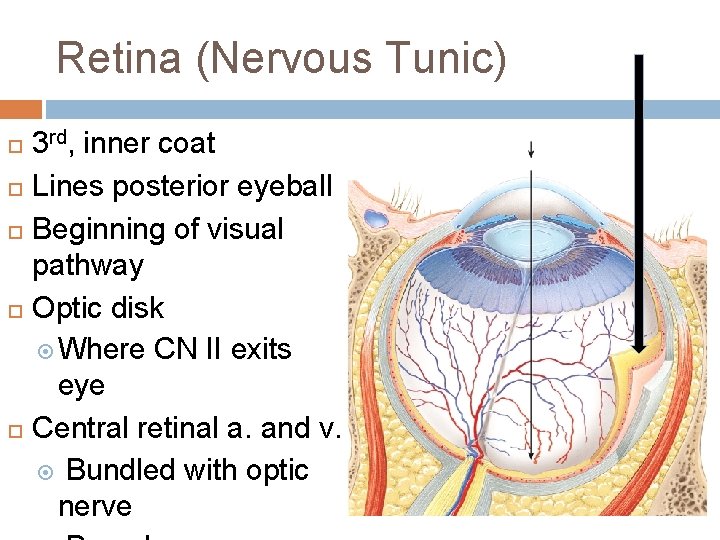
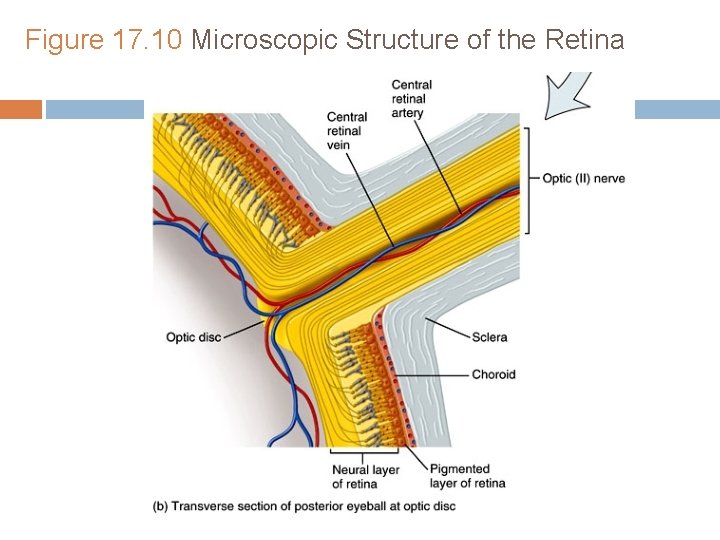
Retina (Nervous Tunic) 3 rd, inner coat Lines posterior eyeball Beginning of visual pathway Optic disk Where CN II exits eye Central retinal a. and v. Bundled with optic nerve
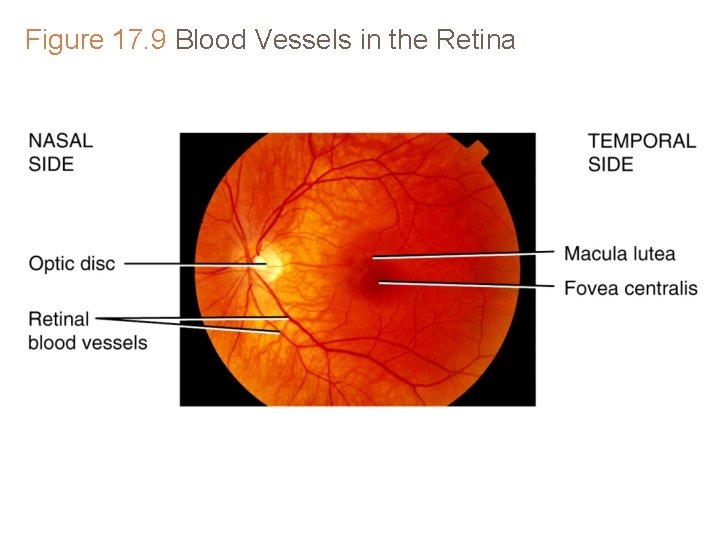
Macula Lutea and Fovea Macula “small flat spot” Lute “yellowish” exact center of posterior portion of retina visual axis of eye Fovea small depression in center of macula lutea
Figure 17. 9 Blood Vessels in the Retina
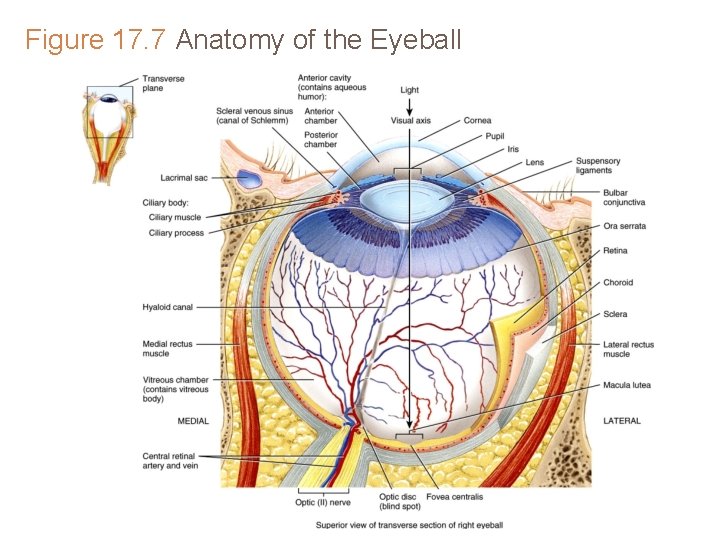
Figure 17. 7 Anatomy of the Eyeball
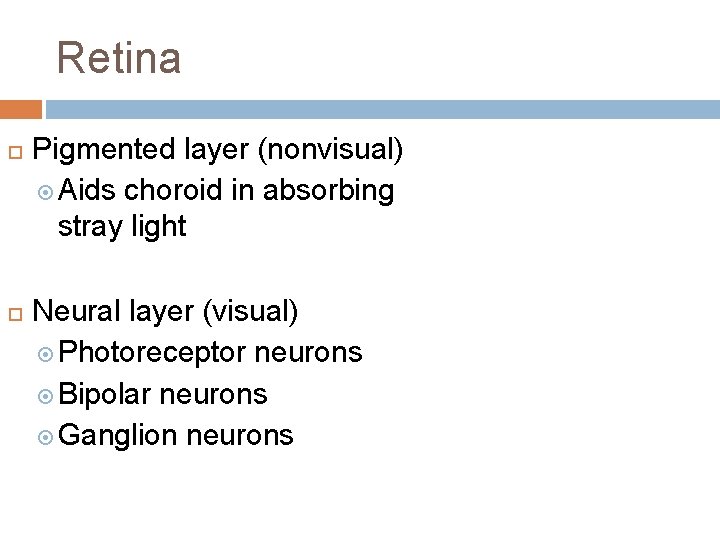
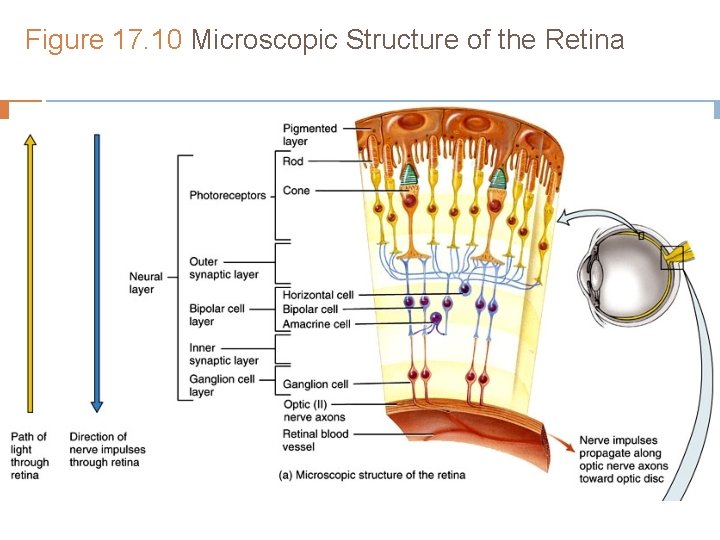
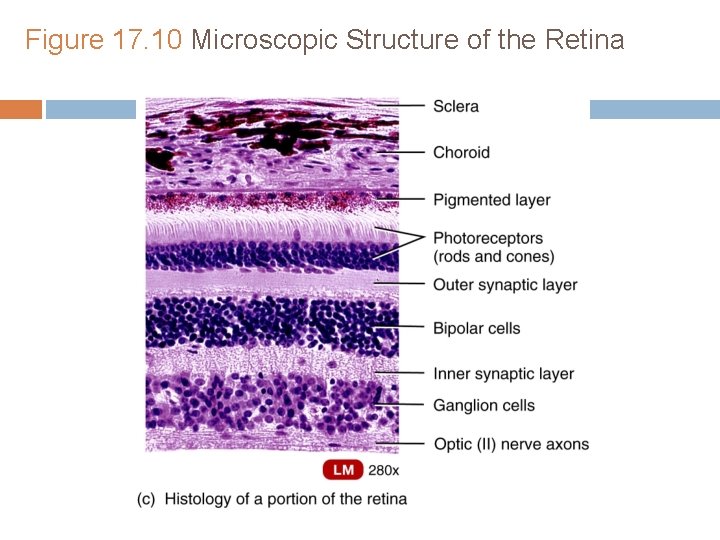
Retina Pigmented layer (nonvisual) Aids choroid in absorbing stray light Neural layer (visual) Photoreceptor neurons Bipolar neurons Ganglion neurons
Figure 17. 10 Microscopic Structure of the Retina
Figure 17. 10 Microscopic Structure of the Retina
Figure 17. 10 Microscopic Structure of the Retina
Photoreceptor Neurons Rods Black-and-white vision in dim light Allow us to see shades of gray Permit us to see shapes and movement Cones Specialized for color vision
Photoreceptor Neurons Rods Absent from fovea Increase in density towards periphery Cones Most densely concentrated in central fovea
Lens Nonvascular Behind pupil and iris Fine tunes focusing of light rays for clear vision
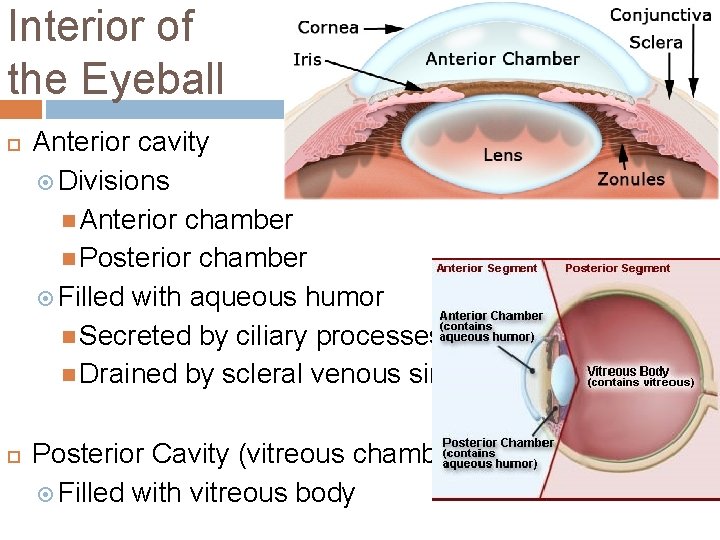
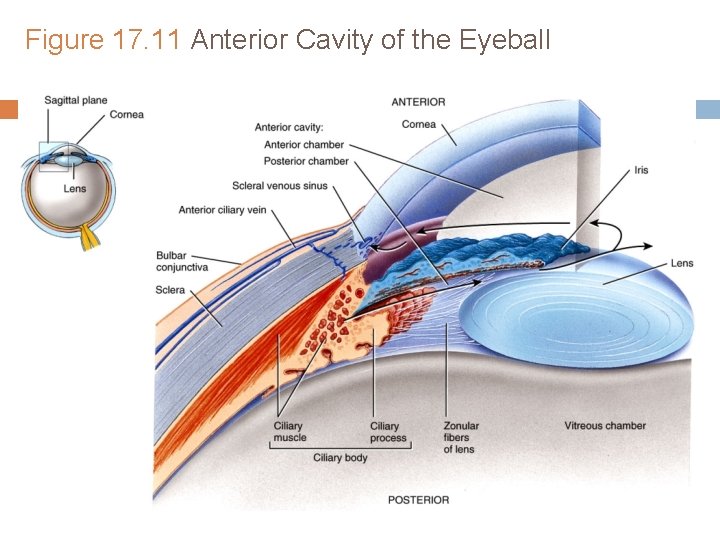
Interior of the Eyeball Anterior cavity Divisions Anterior chamber Posterior chamber Filled with aqueous humor Secreted by ciliary processes Drained by scleral venous sinus Posterior Cavity (vitreous chamber) Filled with vitreous body
Figure 17. 11 Anterior Cavity of the Eyeball
Aqueous humor filters out of capillaries Ciliary processes of ciliary body flows forward posterior chamber Pupil anterior chamber drains into scleral venous sinus (canal of Schlemm) blood
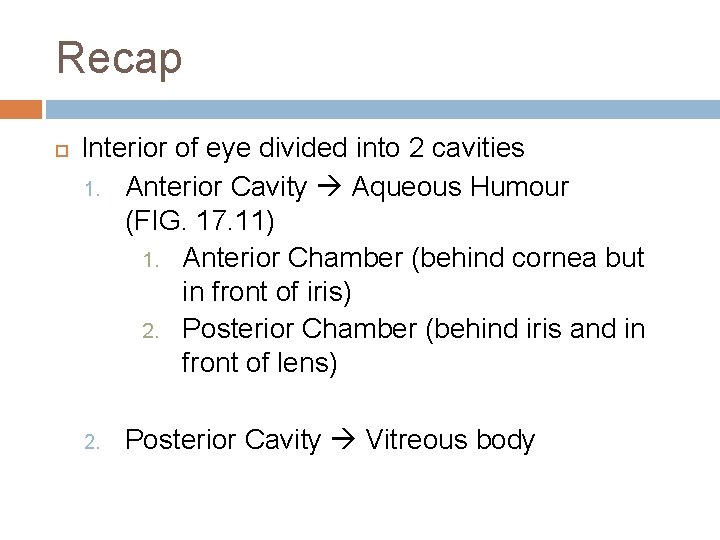
Recap Interior of eye divided into 2 cavities 1. Anterior Cavity Aqueous Humour (FIG. 17. 11) 1. Anterior Chamber (behind cornea but in front of iris) 2. Posterior Chamber (behind iris and in front of lens) 2. Posterior Cavity Vitreous body
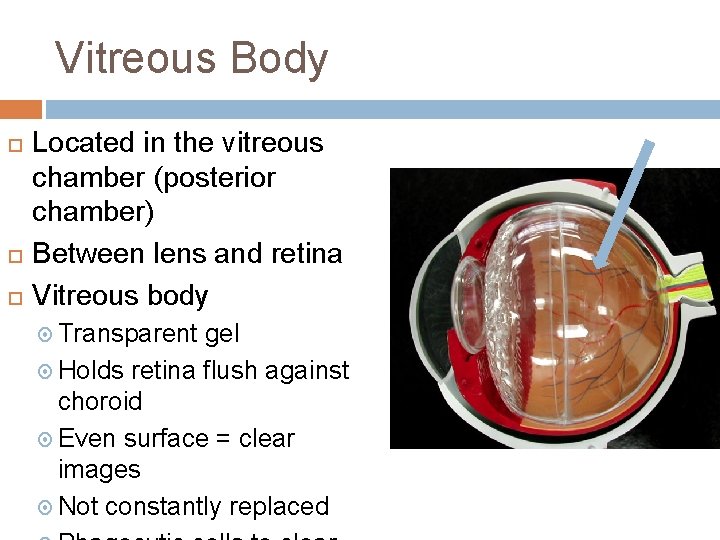
Vitreous Body Located in the vitreous chamber (posterior chamber) Between lens and retina Vitreous body Transparent gel Holds retina flush against choroid Even surface = clear images Not constantly replaced
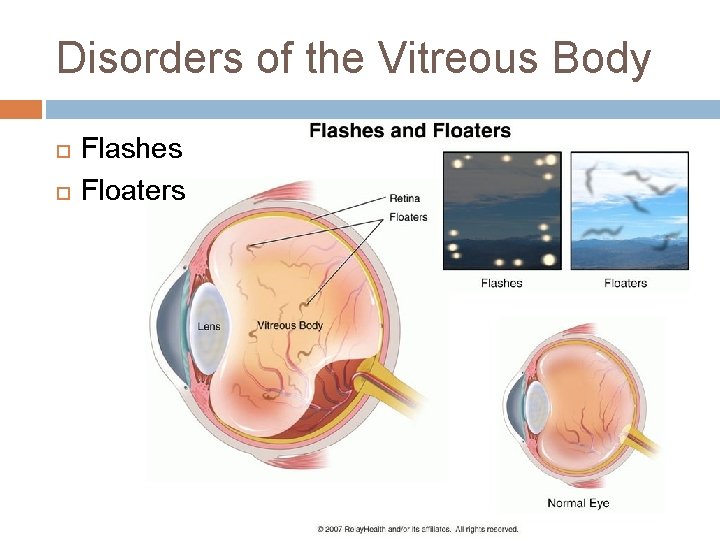
Disorders of the Vitreous Body Flashes Floaters
Image Formation Refraction Accommodation Pupillary restriction Convergence
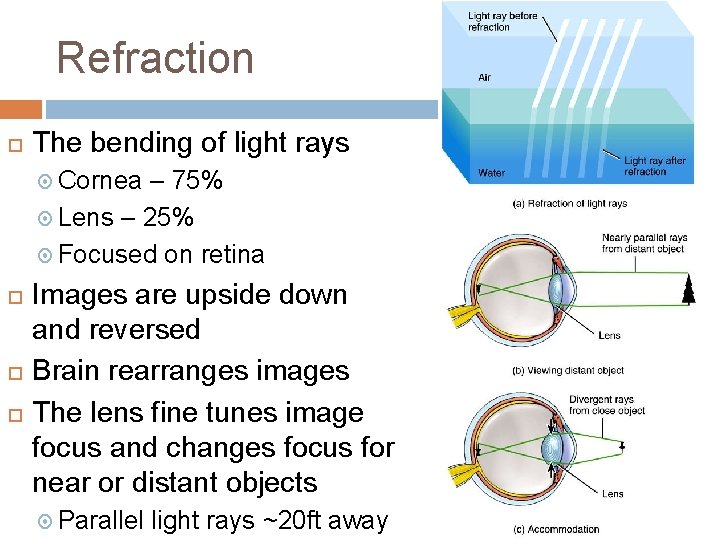
Refraction The bending of light rays Cornea – 75% Lens – 25% Focused on retina Images are upside down and reversed Brain rearranges images The lens fine tunes image focus and changes focus for near or distant objects Parallel light rays ~20 ft away
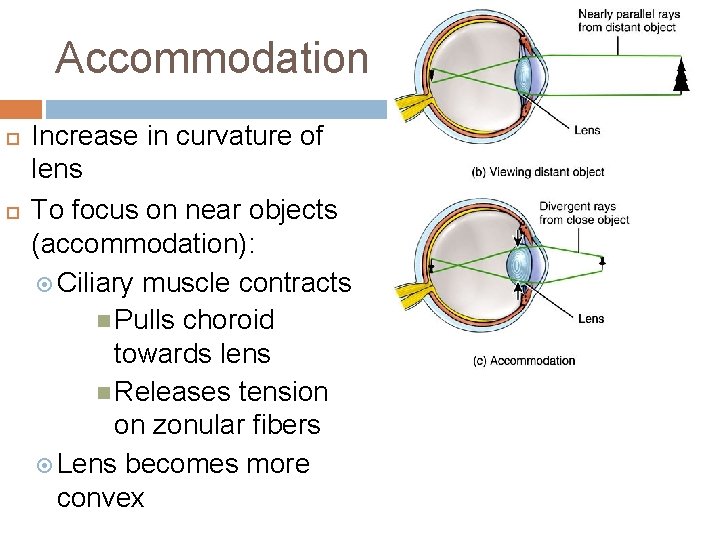
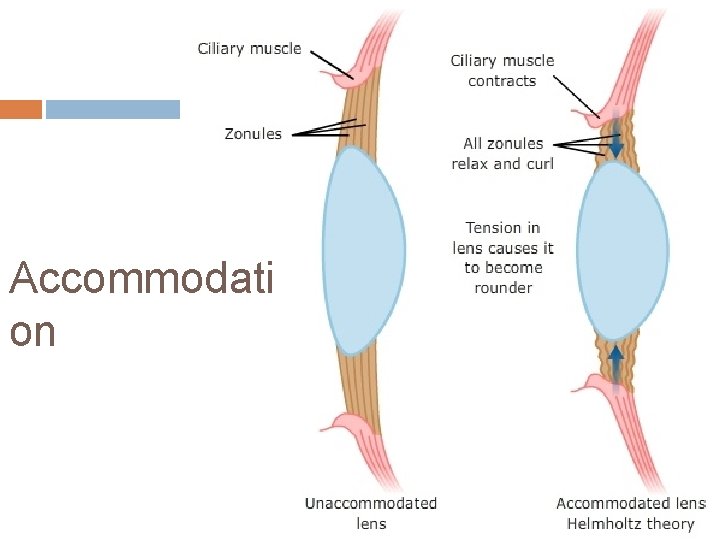
Accommodation Increase in curvature of lens To focus on near objects (accommodation): Ciliary muscle contracts Pulls choroid towards lens Releases tension on zonular fibers Lens becomes more convex
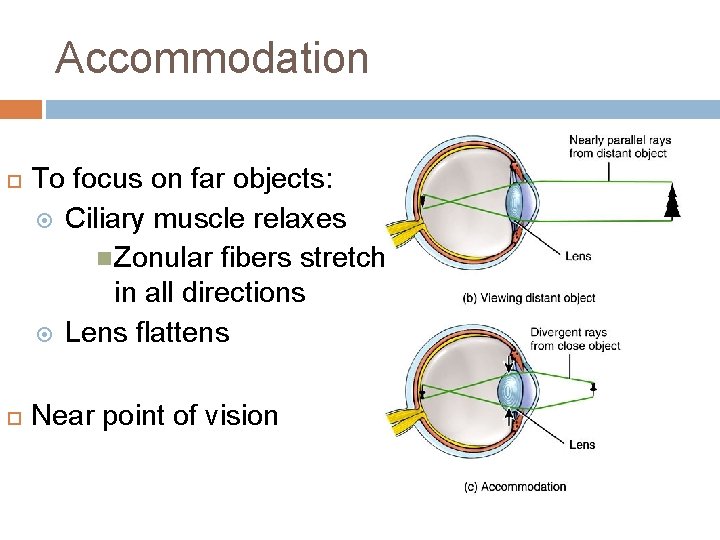
Accommodation To focus on far objects: Ciliary muscle relaxes Zonular fibers stretch in all directions Lens flattens Near point of vision
Accommodati on
Constriction of the Pupil Occurs simultaneously with accommodation Prevents light rays from entering eye through periphery of lens Results in a clearer image
Convergence Eyeballs move medially so they are both directed toward an object being viewed
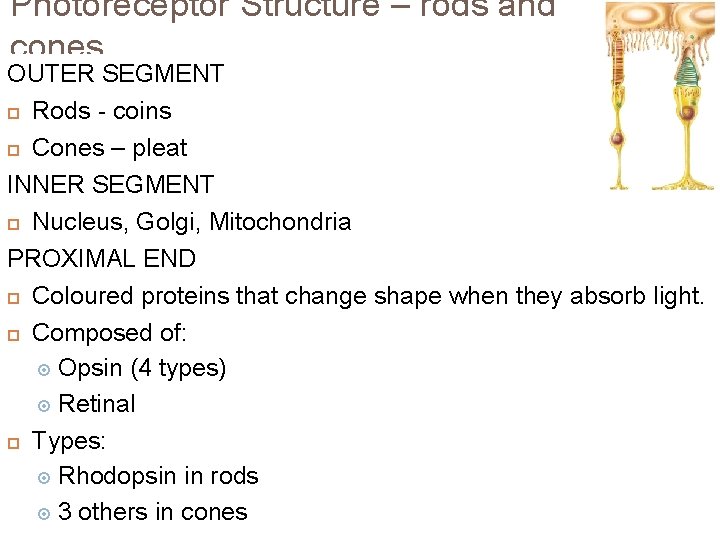
Photoreceptor Structure – rods and cones OUTER SEGMENT Rods - coins Cones – pleat INNER SEGMENT Nucleus, Golgi, Mitochondria PROXIMAL END Coloured proteins that change shape when they absorb light. Composed of: Opsin (4 types) Retinal Types: Rhodopsin in rods 3 others in cones
Cis vs. Trans Structural Isomers Cis = “on this side” Trans = “on the other side” or across
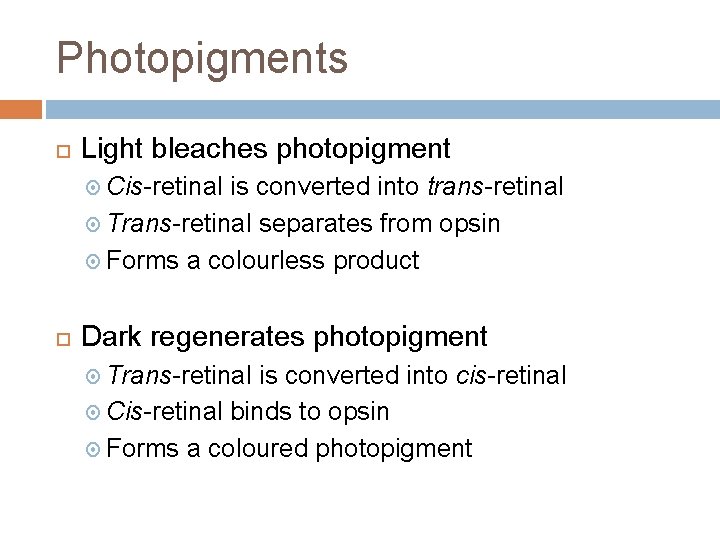
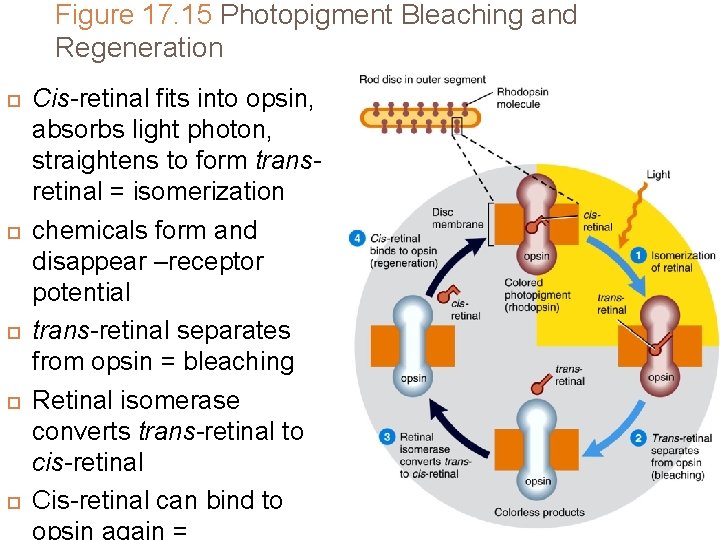
Photopigments Light bleaches photopigment Cis-retinal is converted into trans-retinal Trans-retinal separates from opsin Forms a colourless product Dark regenerates photopigment Trans-retinal is converted into cis-retinal Cis-retinal binds to opsin Forms a coloured photopigment
Figure 17. 15 Photopigment Bleaching and Regeneration Cis-retinal fits into opsin, absorbs light photon, straightens to form transretinal = isomerization chemicals form and disappear –receptor potential trans-retinal separates from opsin = bleaching Retinal isomerase converts trans-retinal to cis-retinal Cis-retinal can bind to
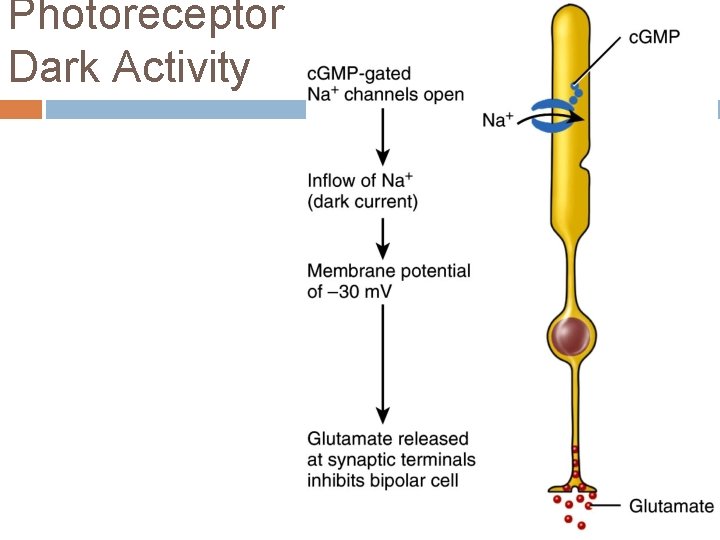
Photoreceptor Dark Activity
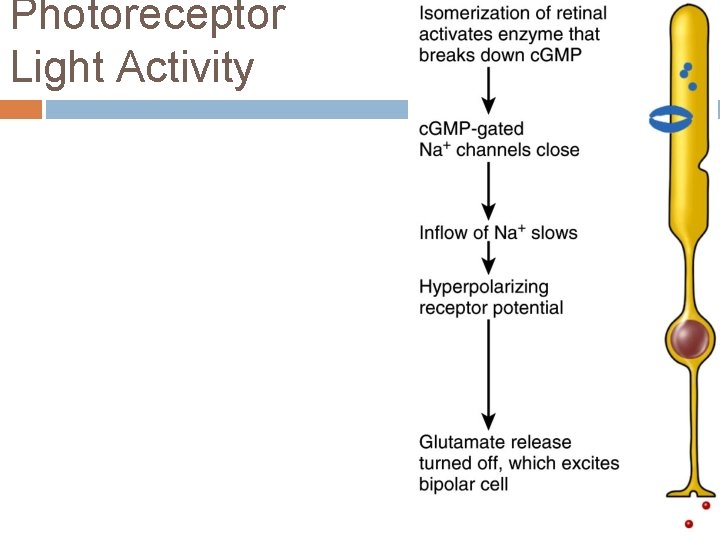
Photoreceptor Light Activity
Assigned Reading Read the Visual Pathway Pages 592 -594 Make notes for yourself Focus on understanding all of figure 17. 17 COMPARE your notes to your lab partners. See what each of you focused on. Go over eye lab again with models Look at moveable eye model and place image on retina
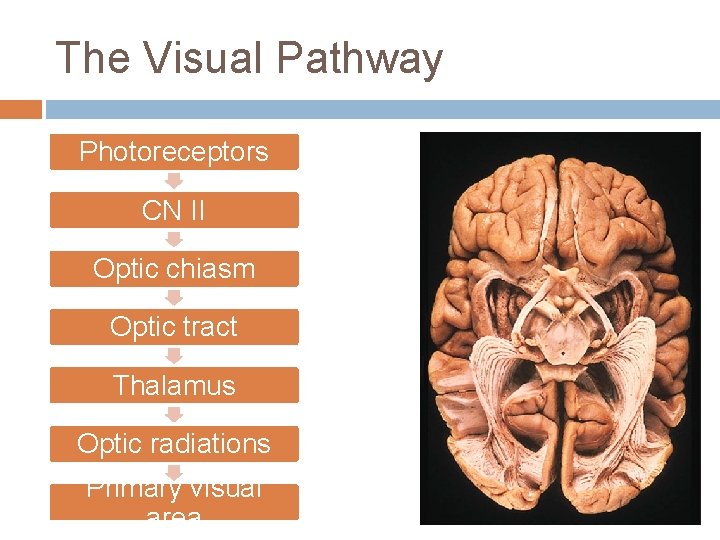
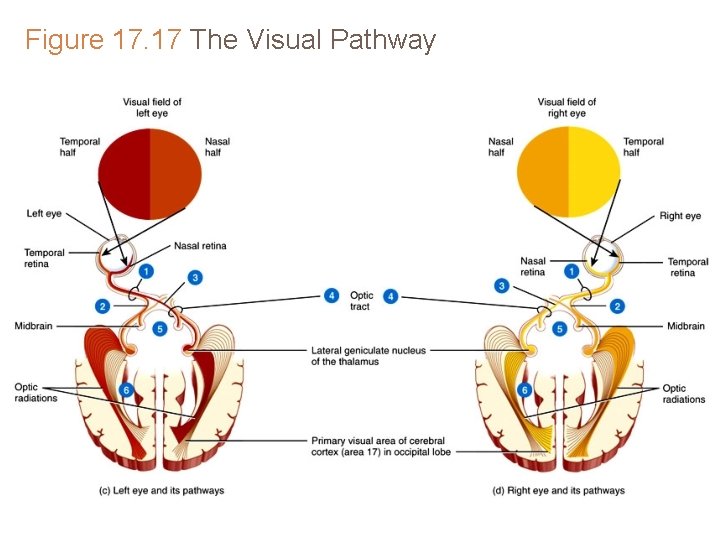
The Visual Pathway Photoreceptors CN II Optic chiasm Optic tract Thalamus Optic radiations Primary visual area
The Visual Pathway Chiasm = crossing point of optic nerves At optic chiasm “nasal” axons cross over, but “temporal” axons remain ipsilateral
Figure 17. 17 The Visual Pathway