
Accessory factors summary 1 DNA polymerase cant replicate

- Slides: 30
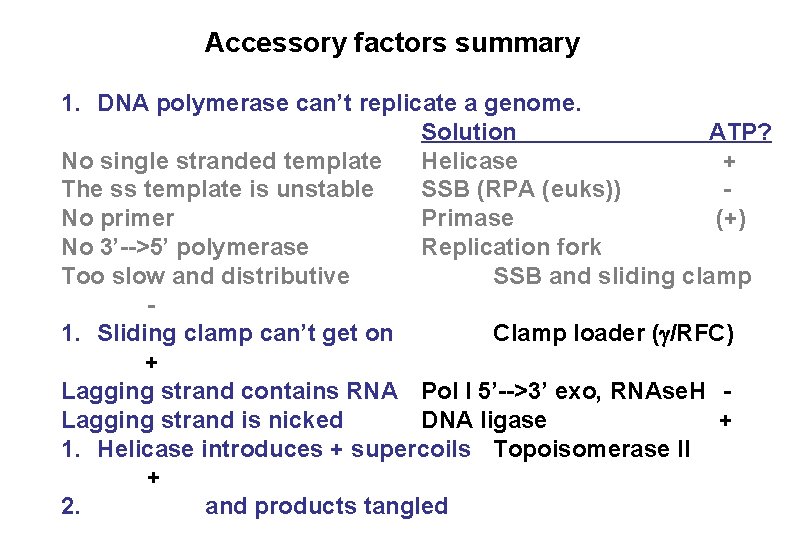
Accessory factors summary 1. DNA polymerase can’t replicate a genome. Solution ATP? No single stranded template Helicase + The ss template is unstable SSB (RPA (euks)) No primer Primase (+) No 3’-->5’ polymerase Replication fork Too slow and distributive SSB and sliding clamp 1. Sliding clamp can’t get on Clamp loader ( /RFC) + Lagging strand contains RNA Pol I 5’-->3’ exo, RNAse. H Lagging strand is nicked DNA ligase + 1. Helicase introduces + supercoils Topoisomerase II + 2. and products tangled
DNA polymerase holoenzyme
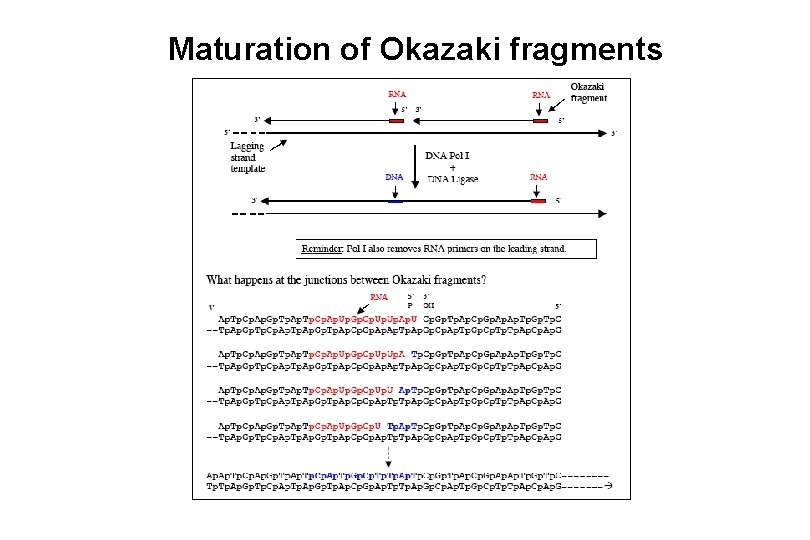
Maturation of Okazaki fragments
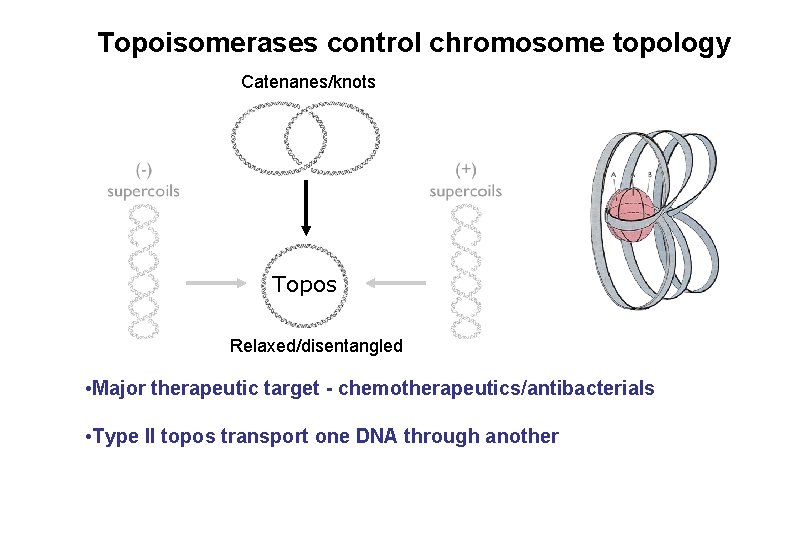
Topoisomerases control chromosome topology Catenanes/knots Topos Relaxed/disentangled • Major therapeutic target - chemotherapeutics/antibacterials • Type II topos transport one DNA through another
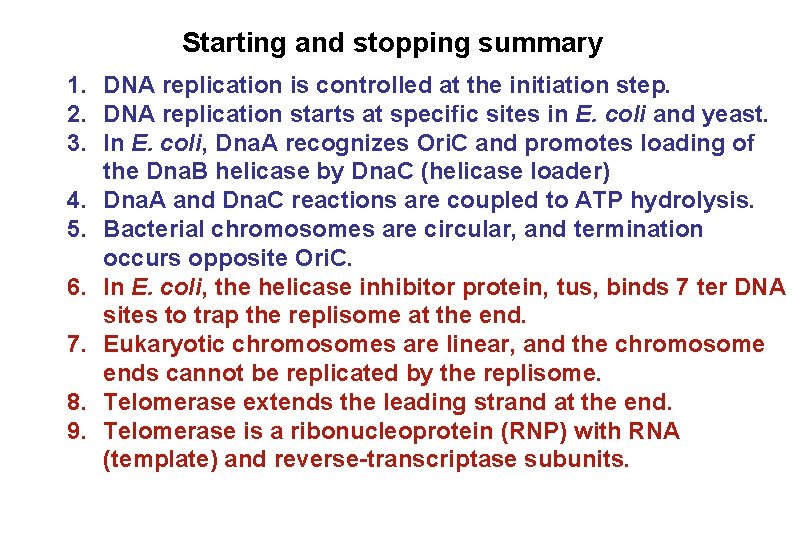
Starting and stopping summary 1. DNA replication is controlled at the initiation step. 2. DNA replication starts at specific sites in E. coli and yeast. 3. In E. coli, Dna. A recognizes Ori. C and promotes loading of the Dna. B helicase by Dna. C (helicase loader) 4. Dna. A and Dna. C reactions are coupled to ATP hydrolysis. 5. Bacterial chromosomes are circular, and termination occurs opposite Ori. C. 6. In E. coli, the helicase inhibitor protein, tus, binds 7 ter DNA sites to trap the replisome at the end. 7. Eukaryotic chromosomes are linear, and the chromosome ends cannot be replicated by the replisome. 8. Telomerase extends the leading strand at the end. 9. Telomerase is a ribonucleoprotein (RNP) with RNA (template) and reverse-transcriptase subunits.
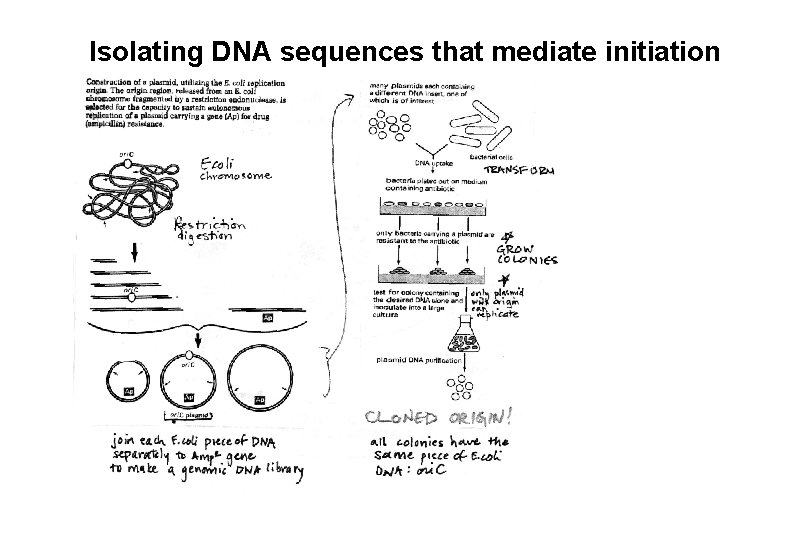
Isolating DNA sequences that mediate initiation
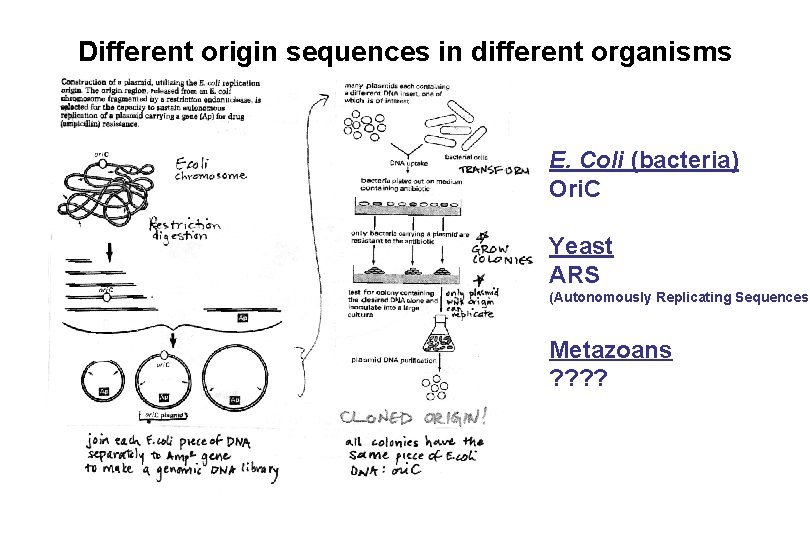
Different origin sequences in different organisms E. Coli (bacteria) Ori. C Yeast ARS (Autonomously Replicating Sequences) Metazoans ? ?
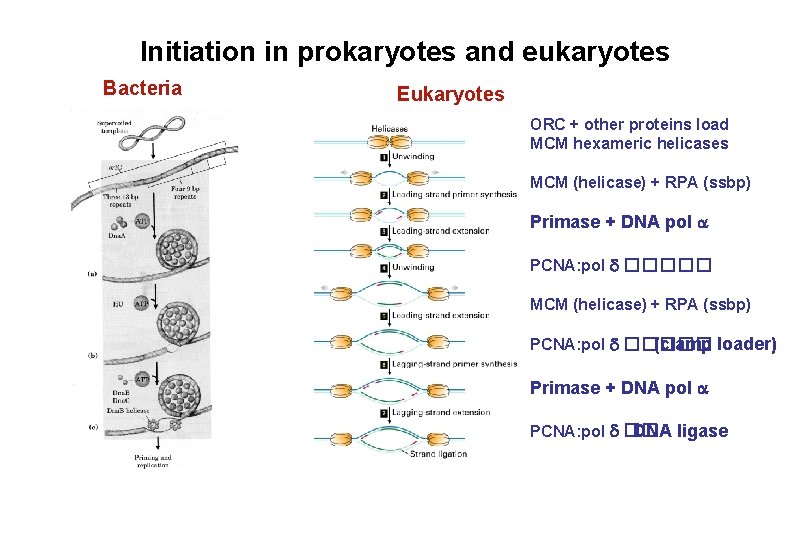
Initiation in prokaryotes and eukaryotes Bacteria Eukaryotes ORC + other proteins load MCM hexameric helicases MCM (helicase) + RPA (ssbp) Primase + DNA pol PCNA: pol ����� MCM (helicase) + RPA (ssbp) PCNA: pol ����� (clamp loader) Primase + DNA pol PCNA: pol �� DNA ligase
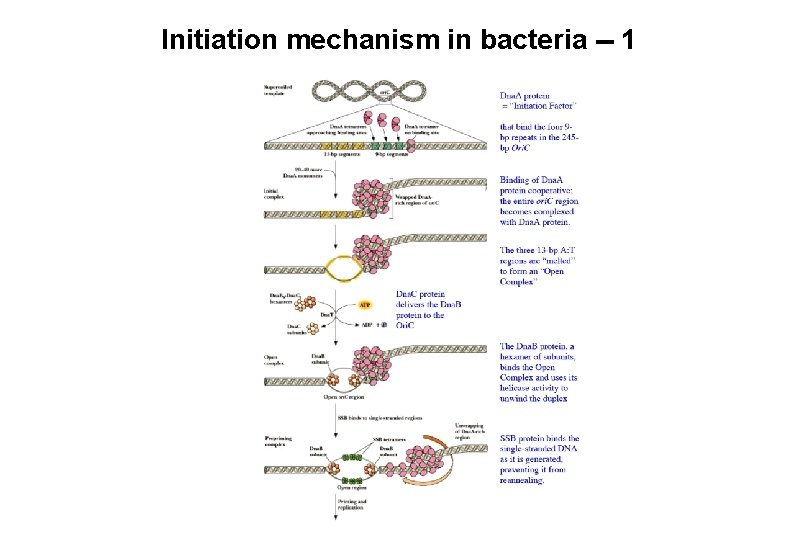
Initiation mechanism in bacteria -- 1
Crystal structure of Dna. A: ATP revealed mechanism of origin assembly 1. 2. 1. Dna. A monomer (a) forms a polar filament (b). 2. DNA binding sites occur on the outside of the filament (model).
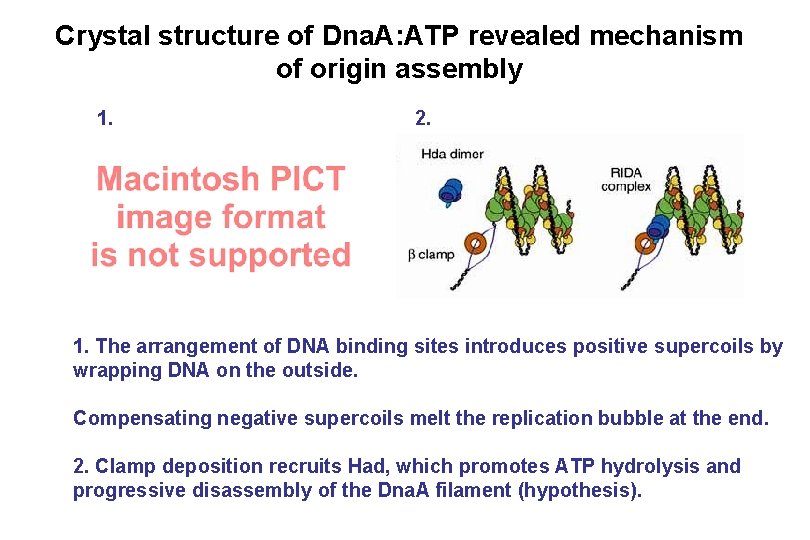
Crystal structure of Dna. A: ATP revealed mechanism of origin assembly 1. 2. 1. The arrangement of DNA binding sites introduces positive supercoils by wrapping DNA on the outside. Compensating negative supercoils melt the replication bubble at the end. 2. Clamp deposition recruits Had, which promotes ATP hydrolysis and progressive disassembly of the Dna. A filament (hypothesis).
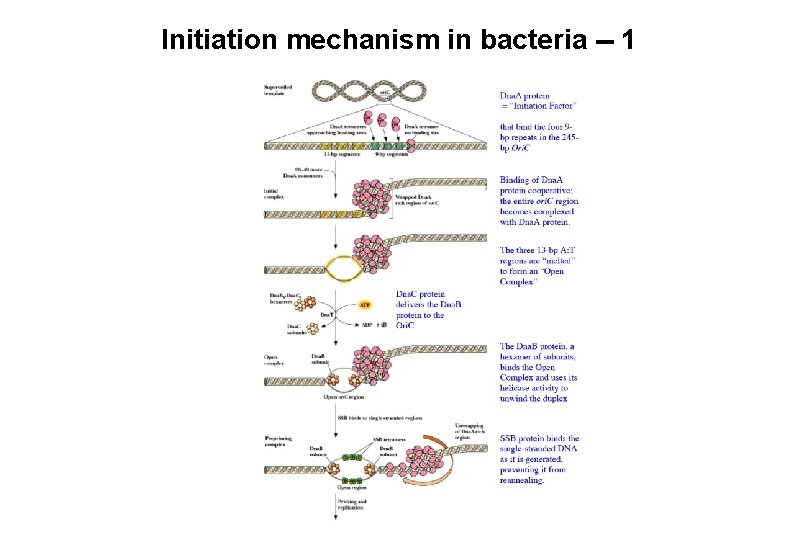
Initiation mechanism in bacteria -- 1
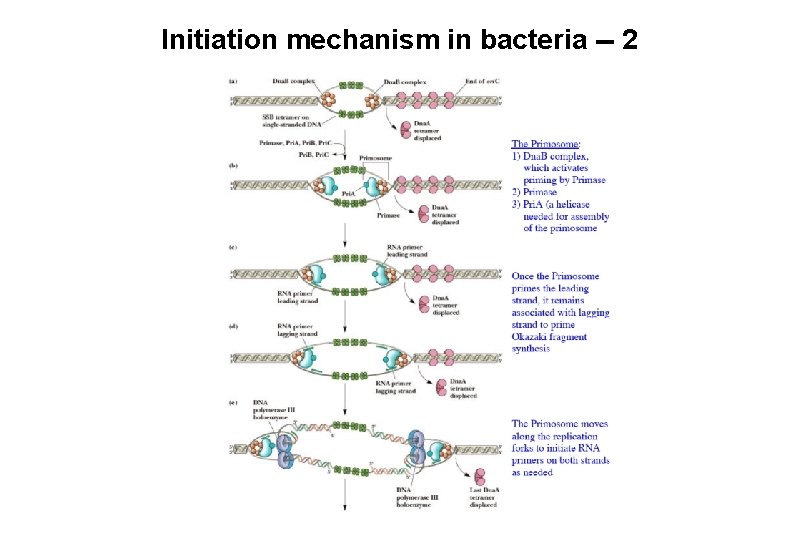
Initiation mechanism in bacteria -- 2
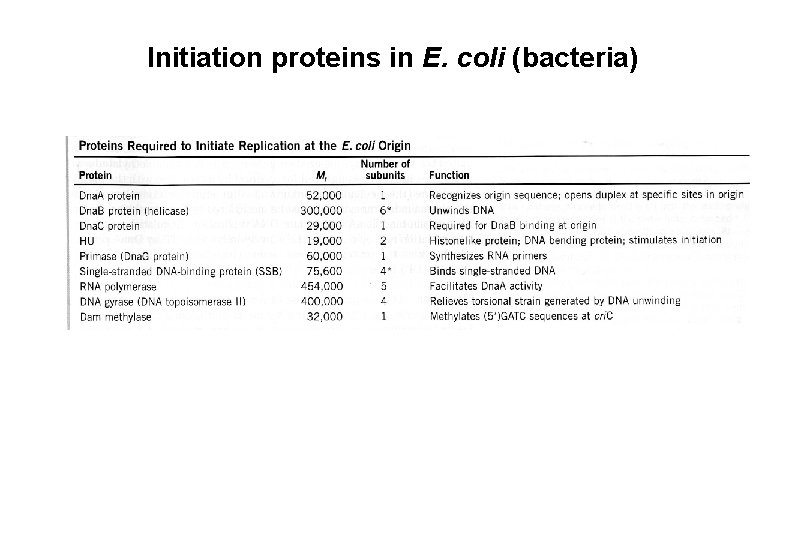
Initiation proteins in E. coli (bacteria)
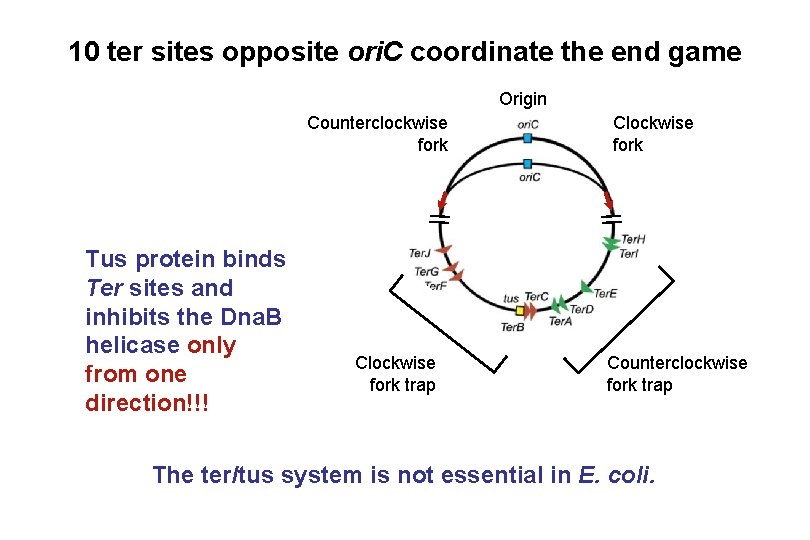
10 ter sites opposite ori. C coordinate the end game Origin Counterclockwise fork Tus protein binds Ter sites and inhibits the Dna. B helicase only from one direction!!! Clockwise fork trap Clockwise fork Counterclockwise fork trap The ter/tus system is not essential in E. coli.
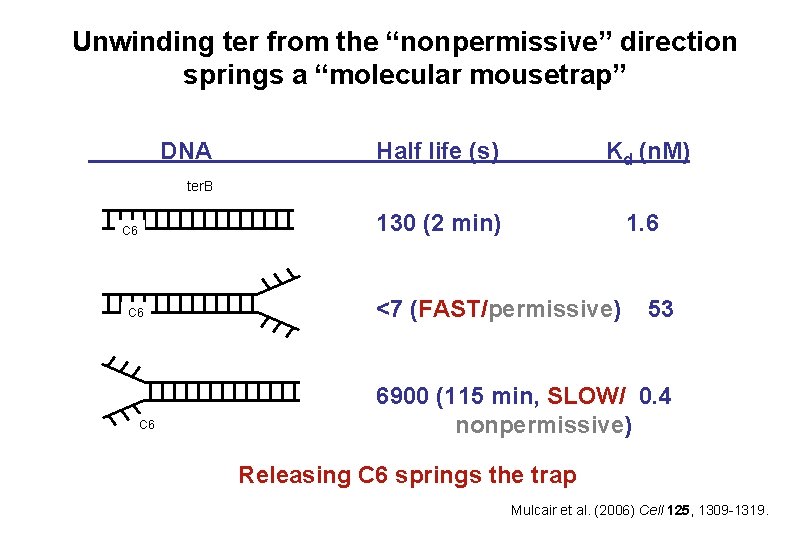
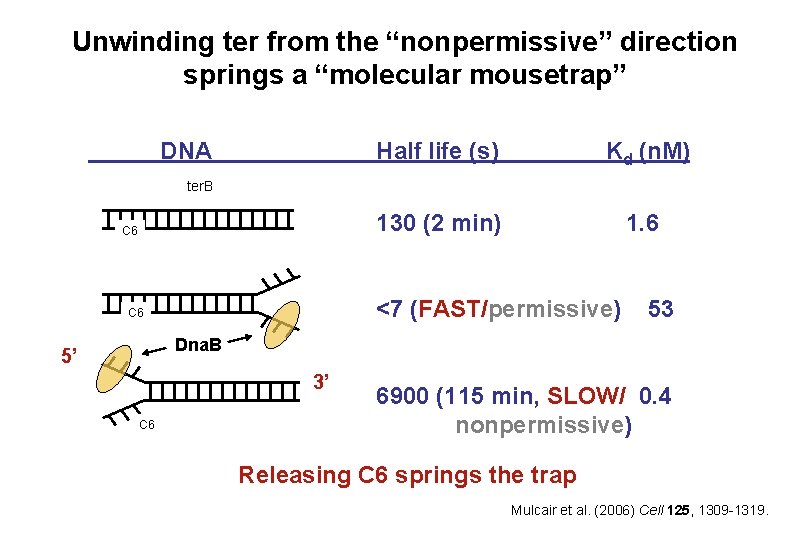
Unwinding ter from the “nonpermissive” direction springs a “molecular mousetrap” DNA Half life (s) Kd (n. M) 130 (2 min) 1. 6 ter. B C 6 C 6 <7 (FAST/permissive) 53 6900 (115 min, SLOW/ 0. 4 nonpermissive) Releasing C 6 springs the trap Mulcair et al. (2006) Cell 125, 1309 -1319.
Unwinding ter from the “nonpermissive” direction springs a “molecular mousetrap” DNA Half life (s) Kd (n. M) 130 (2 min) 1. 6 ter. B C 6 <7 (FAST/permissive) C 6 53 Dna. B 5’ 3’ C 6 6900 (115 min, SLOW/ 0. 4 nonpermissive) Releasing C 6 springs the trap Mulcair et al. (2006) Cell 125, 1309 -1319.
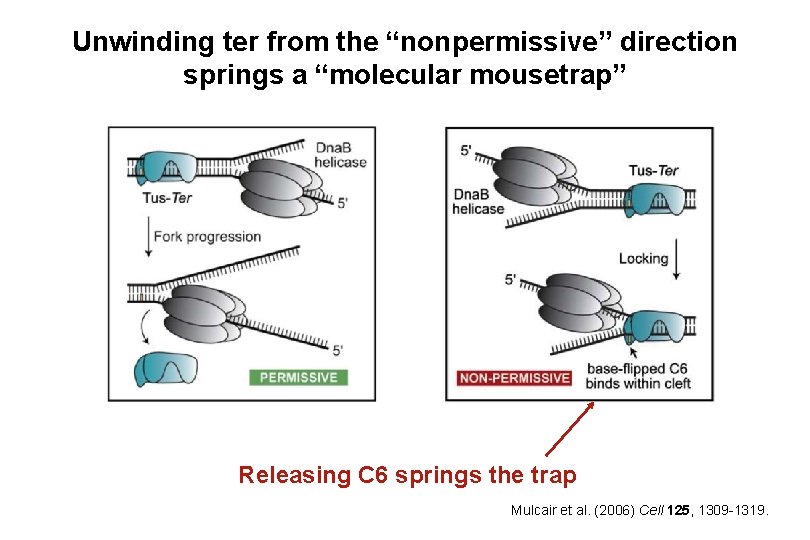
Unwinding ter from the “nonpermissive” direction springs a “molecular mousetrap” Releasing C 6 springs the trap Mulcair et al. (2006) Cell 125, 1309 -1319.
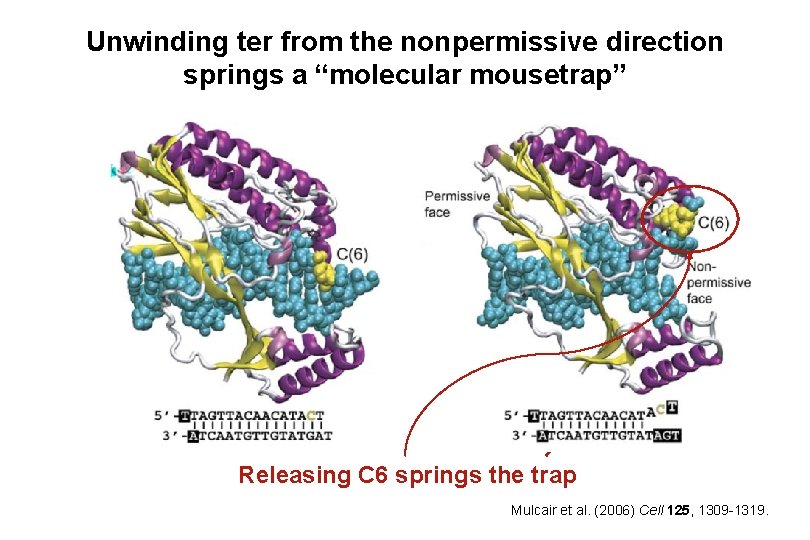
Unwinding ter from the nonpermissive direction springs a “molecular mousetrap” Releasing C 6 springs the trap Mulcair et al. (2006) Cell 125, 1309 -1319.
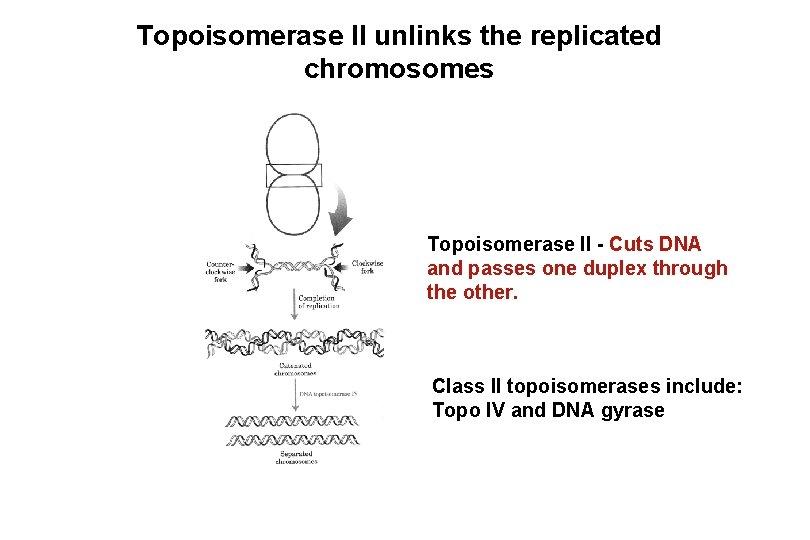
Topoisomerase II unlinks the replicated chromosomes Topoisomerase II - Cuts DNA and passes one duplex through the other. Class II topoisomerases include: Topo IV and DNA gyrase
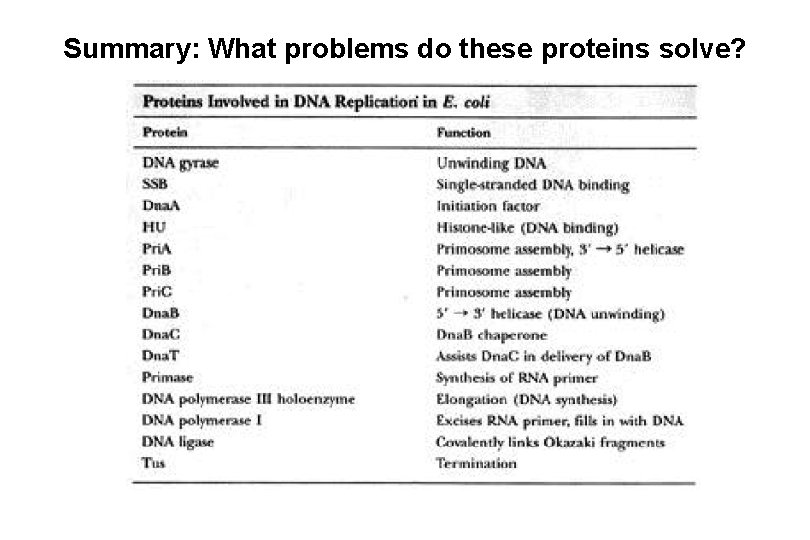
Summary: What problems do these proteins solve? Tyr OH attacks PO 4 and forms a covalent intermediate Structural changes in the protein open the gap by 20 Å!
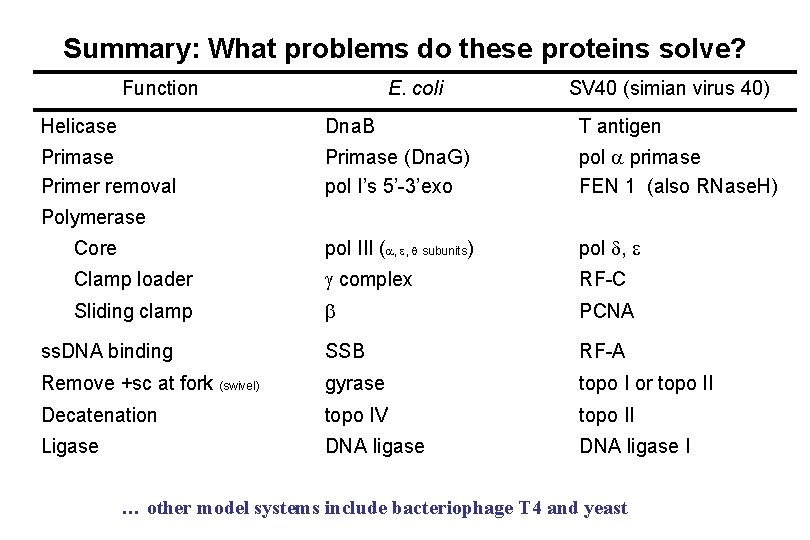
Summary: What problems do these proteins solve? Function E. coli SV 40 (simian virus 40) Helicase Dna. B T antigen Primase Primer removal Primase (Dna. G) pol I’s 5’-3’exo pol primase FEN 1 (also RNase. H) Core pol III ( , , subunits) pol , Clamp loader complex RF-C Sliding clamp PCNA ss. DNA binding SSB RF-A Remove +sc at fork (swivel) gyrase topo I or topo II Decatenation topo IV topo II Ligase DNA ligase I Polymerase … other model systems include bacteriophage T 4 and yeast
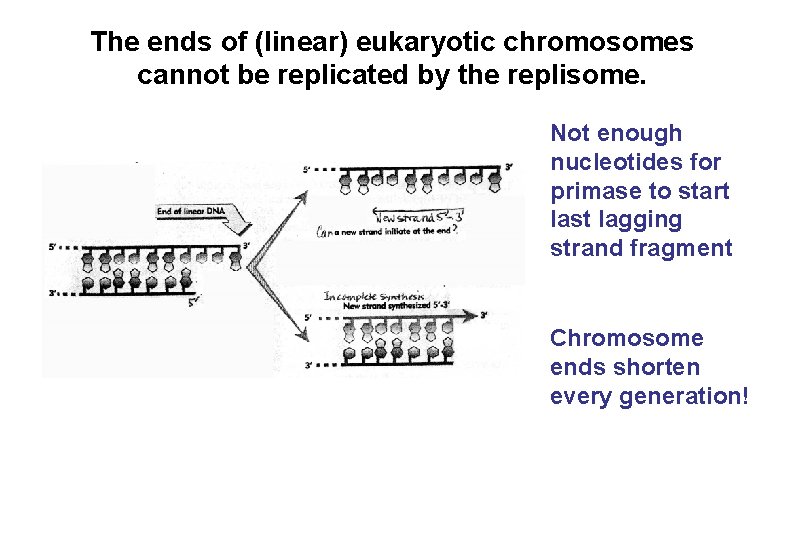
The ends of (linear) eukaryotic chromosomes cannot be replicated by the replisome. Not enough nucleotides for primase to start last lagging strand fragment Chromosome ends shorten every generation!
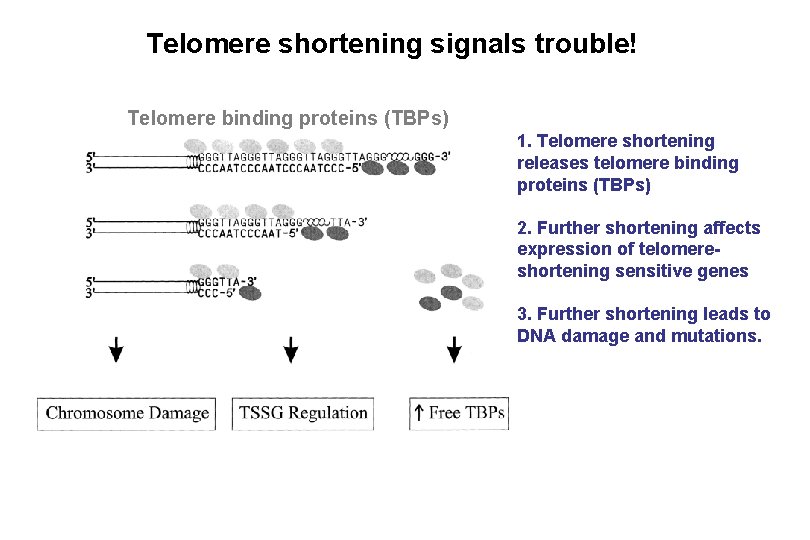
Telomere shortening signals trouble! Telomere binding proteins (TBPs) 1. Telomere shortening releases telomere binding proteins (TBPs) 2. Further shortening affects expression of telomereshortening sensitive genes 3. Further shortening leads to DNA damage and mutations.
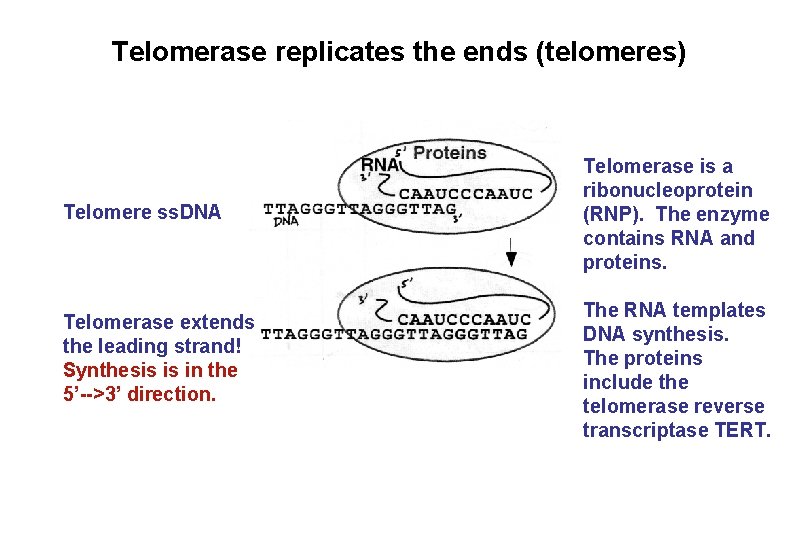
Telomerase replicates the ends (telomeres) Telomere ss. DNA Telomerase extends the leading strand! Synthesis is in the 5’-->3’ direction. Telomerase is a ribonucleoprotein (RNP). The enzyme contains RNA and proteins. The RNA templates DNA synthesis. The proteins include the telomerase reverse transcriptase TERT.
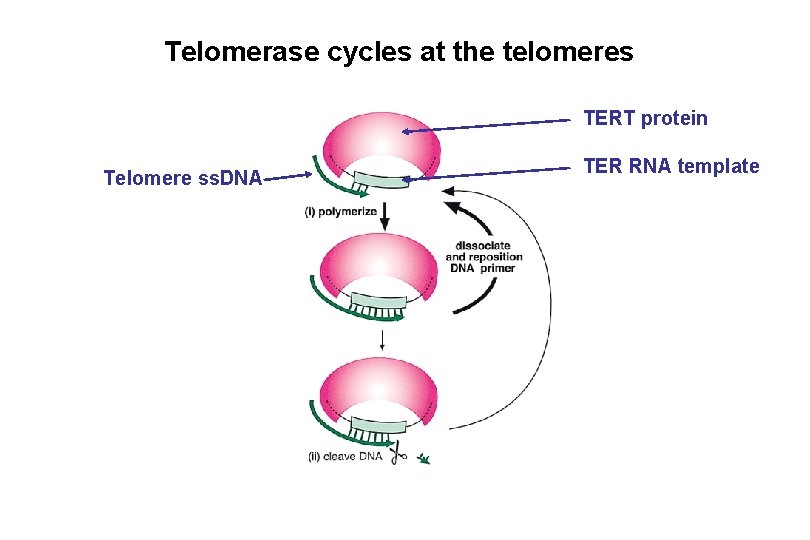
Telomerase cycles at the telomeres TERT protein Telomere ss. DNA TER RNA template
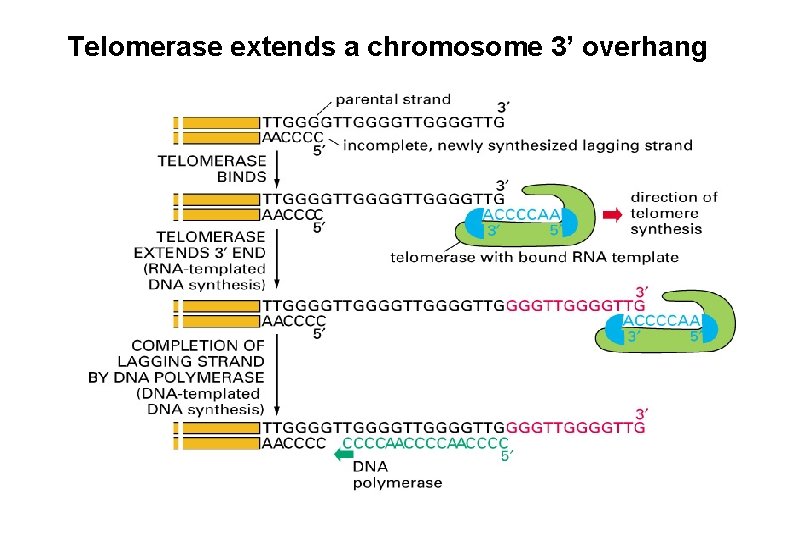
Telomerase extends a chromosome 3’ overhang
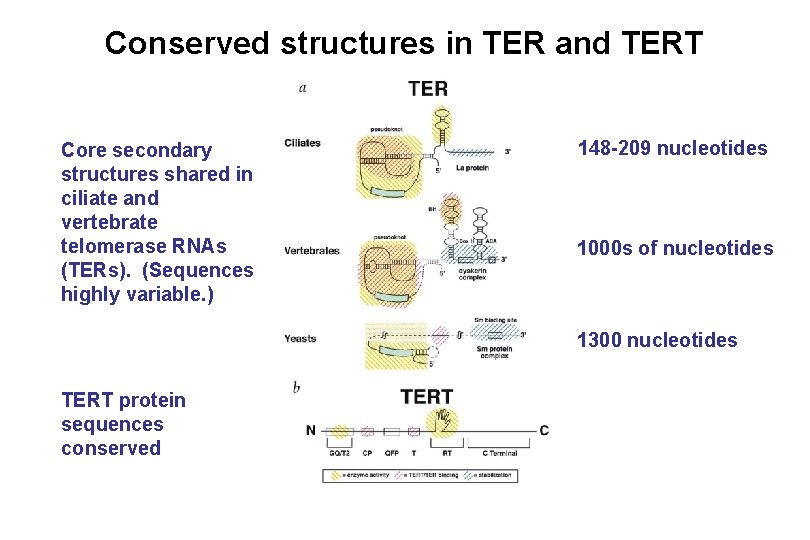
Conserved structures in TER and TERT Core secondary structures shared in ciliate and vertebrate telomerase RNAs (TERs). (Sequences highly variable. ) 148 -209 nucleotides 1000 s of nucleotides 1300 nucleotides TERT protein sequences conserved
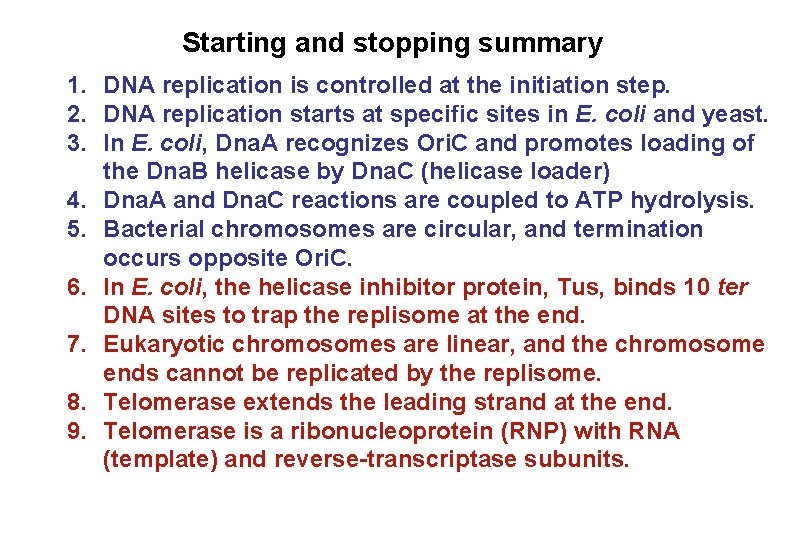
Starting and stopping summary 1. DNA replication is controlled at the initiation step. 2. DNA replication starts at specific sites in E. coli and yeast. 3. In E. coli, Dna. A recognizes Ori. C and promotes loading of the Dna. B helicase by Dna. C (helicase loader) 4. Dna. A and Dna. C reactions are coupled to ATP hydrolysis. 5. Bacterial chromosomes are circular, and termination occurs opposite Ori. C. 6. In E. coli, the helicase inhibitor protein, Tus, binds 10 ter DNA sites to trap the replisome at the end. 7. Eukaryotic chromosomes are linear, and the chromosome ends cannot be replicated by the replisome. 8. Telomerase extends the leading strand at the end. 9. Telomerase is a ribonucleoprotein (RNP) with RNA (template) and reverse-transcriptase subunits.