
Access to Health Care Improving Access to Preventive
- Slides: 48
Access to Health Care Improving Access to Preventive Services: A Lifecourse Approach Lessons Learned From States Reaching and Engaging Millennials in Health Care: Notes from the Field
Improving Access to Preventive Services: A Lifecourse Approach Charles E. Irwin, Jr. , MD Project Director, AYAH-NRC September 23, 2015
“Adolescence (& Young Adulthood) is a time in life that harbours many risks and dangers, but also one that presents great opportunities for sustained health and well being. ” The Lancet, 2007 Source: Kleinert: The Lancet.
Session Overview Contexts: A Quick Review Development: A Quick Review The Health Care System
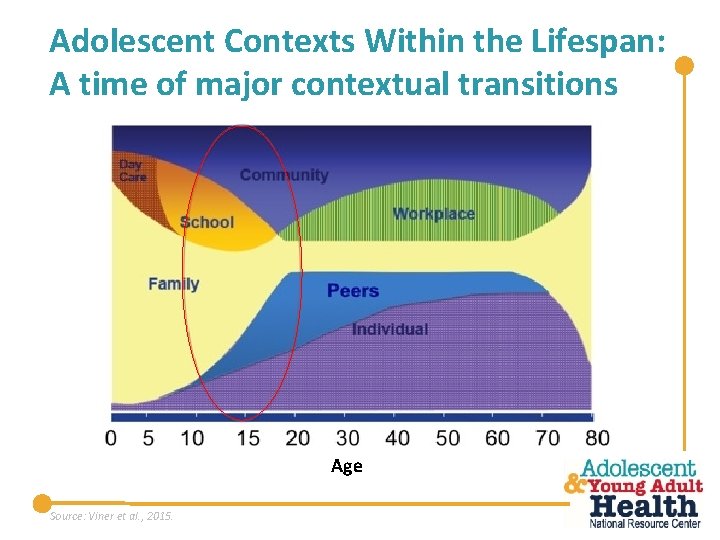
Adolescent Contexts Within the Lifespan: A time of major contextual transitions Age Source: Viner et al. , 2015.
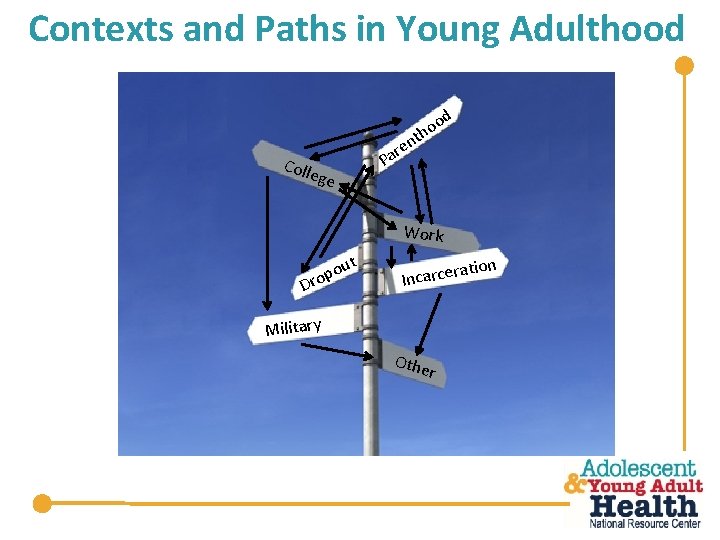
Contexts and Paths in Young Adulthood d o tho n re Pa Coll ege Work t pou o r D ation r e c r a c In Military Othe r
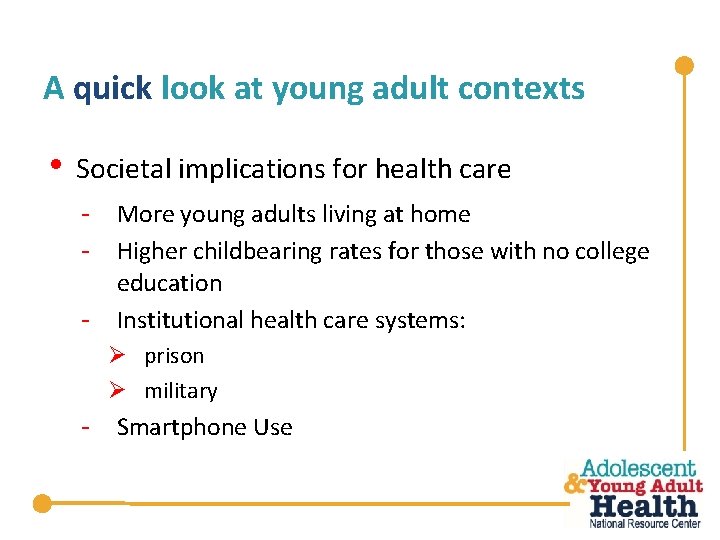
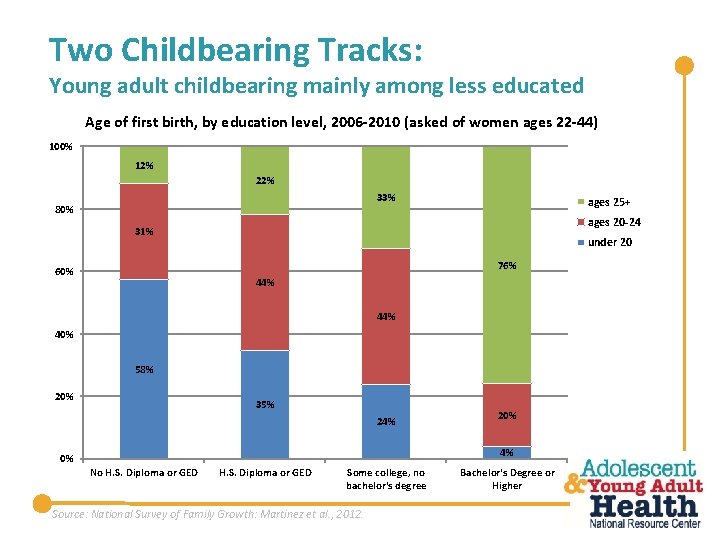
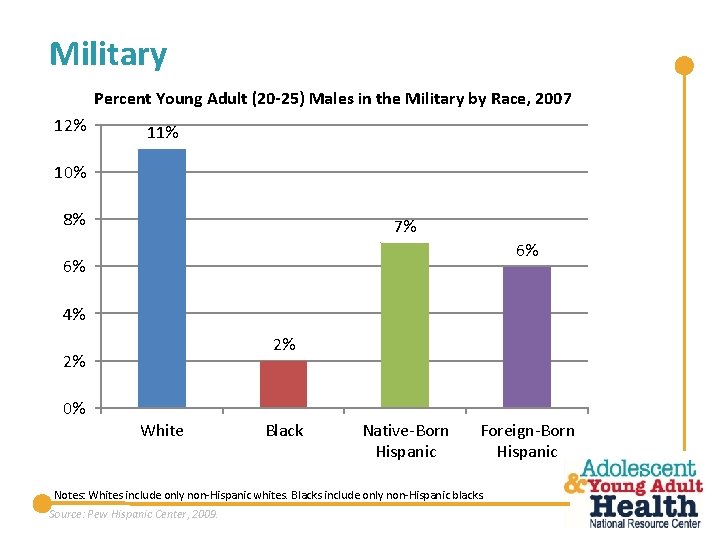
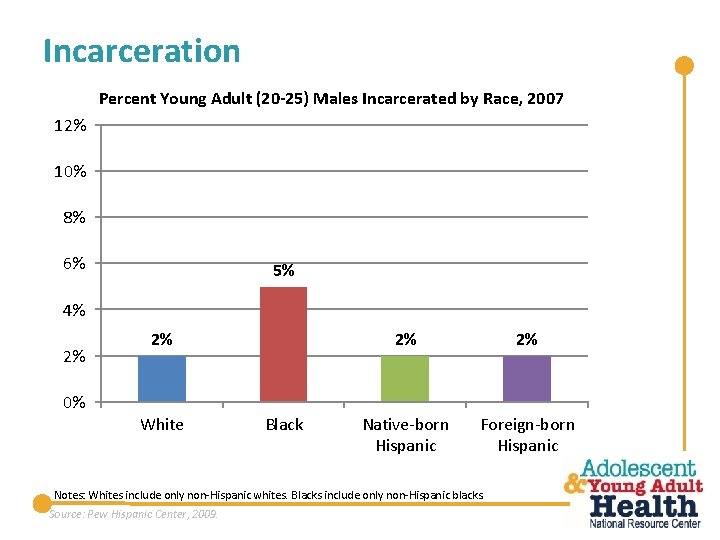
A quick look at young adult contexts • Societal implications for health care - More young adults living at home Higher childbearing rates for those with no college education Institutional health care systems: Ø prison Ø military - Smartphone Use
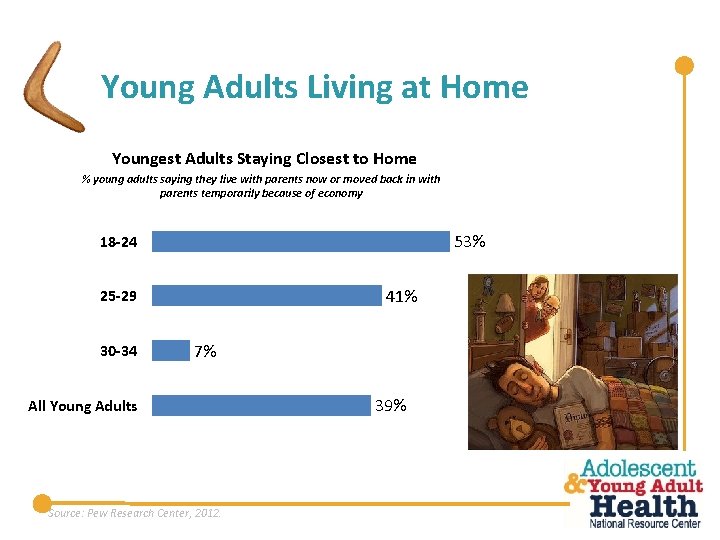
Young Adults Living at Home Youngest Adults Staying Closest to Home % young adults saying they live with parents now or moved back in with parents temporarily because of economy 53% 18 -24 41% 25 -29 30 -34 7% All Young Adults Source: Pew Research Center, 2012. 39%
Two Childbearing Tracks: Young adult childbearing mainly among less educated Age of first birth, by education level, 2006 -2010 (asked of women ages 22 -44) 100% 12% 22% 33% 80% ages 25+ ages 20 -24 31% under 20 76% 60% 44% 40% 58% 20% 35% 24% 20% 4% 0% No H. S. Diploma or GED Some college, no bachelor's degree Source: National Survey of Family Growth: Martinez et al. , 2012. Bachelor's Degree or Higher
Military Percent Young Adult (20 -25) Males in the Military by Race, 2007 12% 11% 10% 8% 7% 6% 6% 4% 2% 2% 0% White Black Native-Born Hispanic Foreign-Born Hispanic Notes: Whites include only non-Hispanic whites. Blacks include only non-Hispanic blacks. Source: Pew Hispanic Center, 2009.
Incarceration Percent Young Adult (20 -25) Males Incarcerated by Race, 2007 12% 10% 8% 6% 5% 4% 2% 0% 2% White Black 2% 2% Native-born Hispanic Foreign-born Hispanic Notes: Whites include only non-Hispanic whites. Blacks include only non-Hispanic blacks. Source: Pew Hispanic Center, 2009.
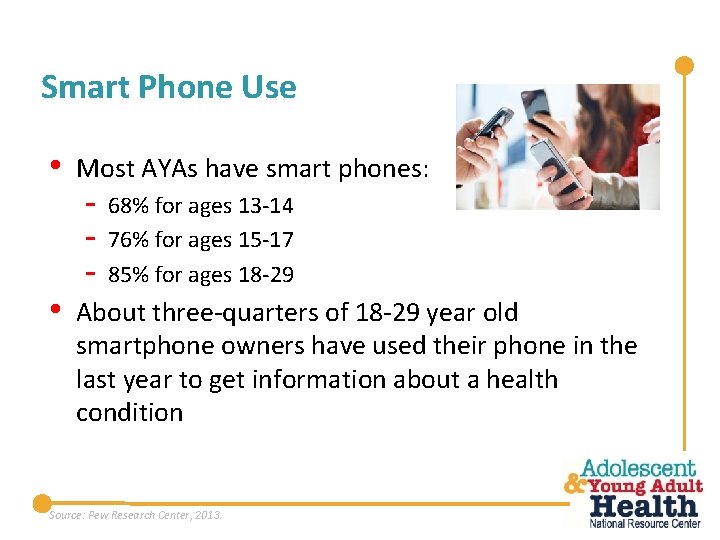
Smart Phone Use • • Most AYAs have smart phones: - 68% for ages 13 -14 76% for ages 15 -17 85% for ages 18 -29 About three-quarters of 18 -29 year old smartphone owners have used their phone in the last year to get information about a health condition Source: Pew Research Center, 2013.
Contexts: A Quick Review Development: A Quick Review Implications of development for health care delivery The Health Care System
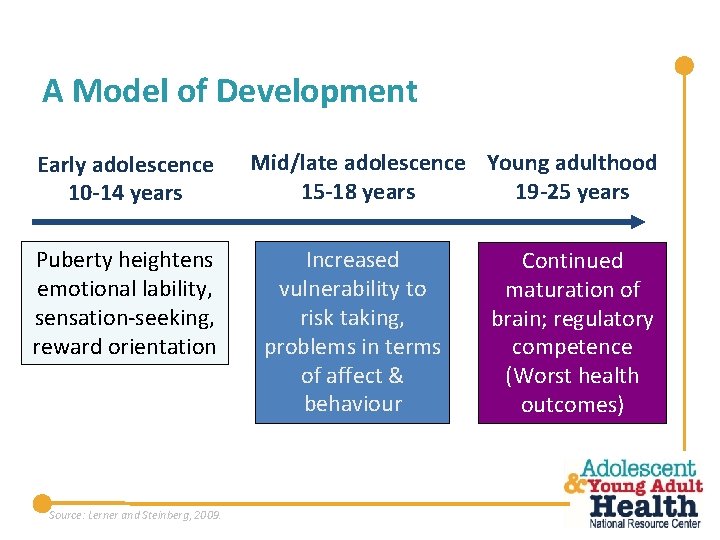
A Model of Development Early adolescence 10 -14 years Puberty heightens emotional lability, sensation-seeking, reward orientation Source: Lerner and Steinberg, 2009. Mid/late adolescence Young adulthood 15 -18 years 19 -25 years Increased vulnerability to risk taking, problems in terms of affect & behaviour Continued maturation of brain; regulatory competence (Worst health outcomes)
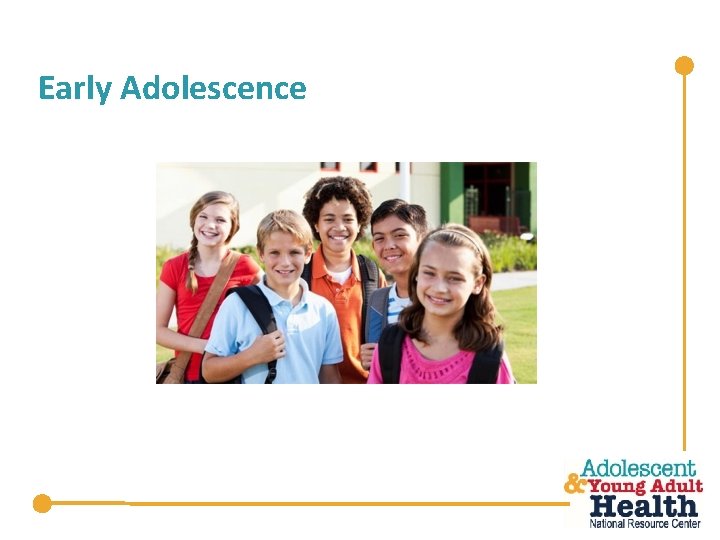
Early Adolescence
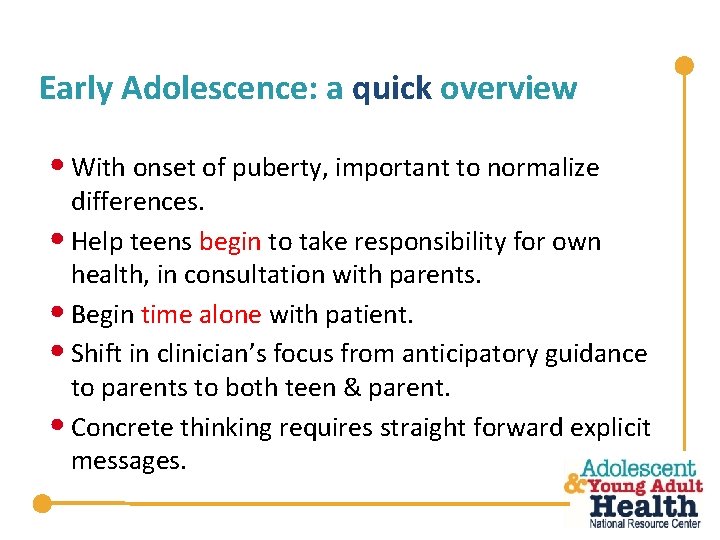
Early Adolescence: a quick overview • With onset of puberty, important to normalize differences. • Help teens begin to take responsibility for own health, in consultation with parents. • Begin time alone with patient. • Shift in clinician’s focus from anticipatory guidance to parents to both teen & parent. • Concrete thinking requires straight forward explicit messages.
Mid/late Adolescence
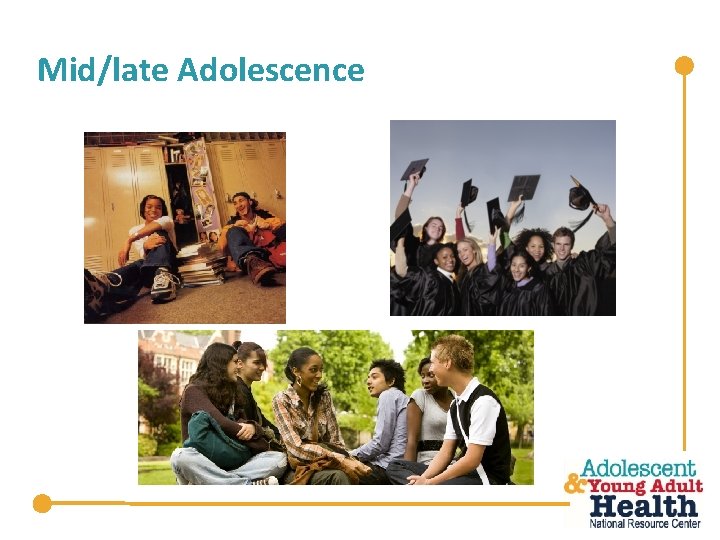
Mid/late Adolescence: a quick overview • Emerging interest in ability to attract others and sexual experimentation: Address sexual health • Greater peer group influences (positive and negative): Stress good choices and responsibility. • Increasing interdependence: - Encourage negotiation, Increase involvement in setting health goals and managing health situations, Reinforce growing competencies.
Young Adulthood
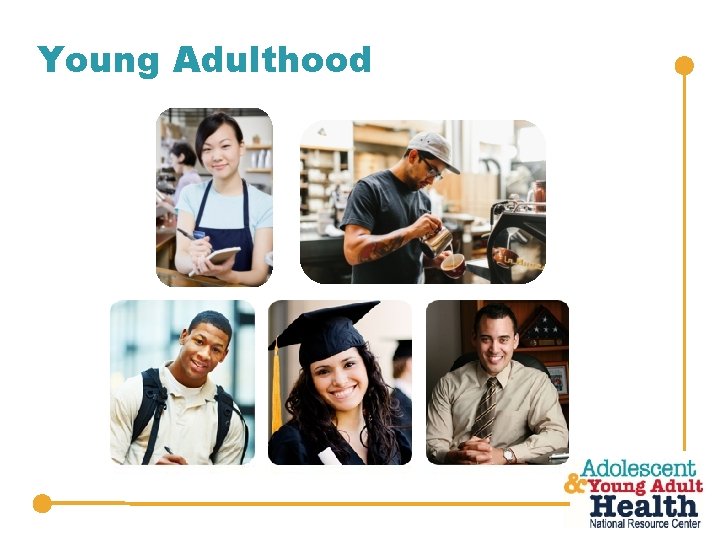
Young Adulthood: a quick overview • Greater ability to understand others/less egocentrism: - more open to questioning regarding behavior and more able to work with clinician on setting goals and adopting/sustaining healthy behavior. • Beginning to define identity and life roles, - Greater interest in discussion of how life goals impact health.
Young Adulthood: a quick overview • Increased executive function and opportunities for health literacy - Most capable of understanding a full range of options for health issues. Important to help them become competent in negotiating the health care system.
General Principles of Working with Adolescent and Young Adults • • • Assess strengths & assets as well as risks & problems Reinforce and bolster connections Educate about importance of protecting your Brain during adolescence/young adulthood Engage and support family members Be Authoritative not Authoritarian
Contexts: A Quick Review Development: A Quick Review The Health Care System A lifecourse approach to the health care system and opportunities to improve ACCESS through the AYAH-Co. IIN
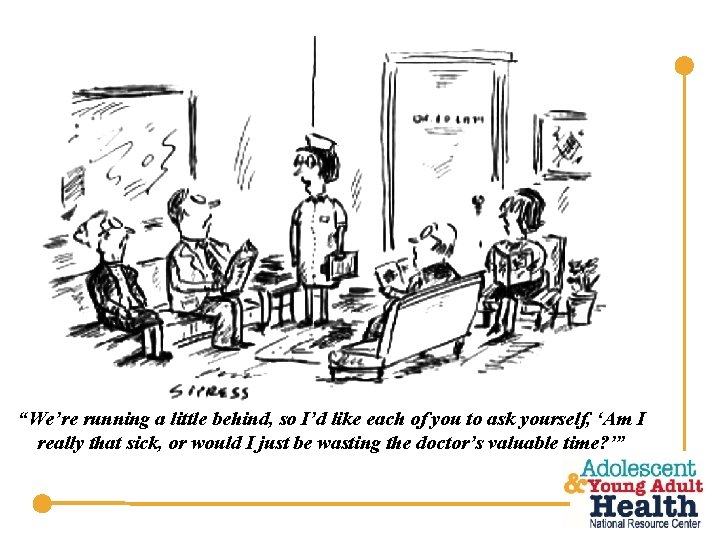
“We’re running a little behind, so I’d like each of you to ask yourself, ‘Am I really that sick, or would I just be wasting the doctor’s valuable time? ’”
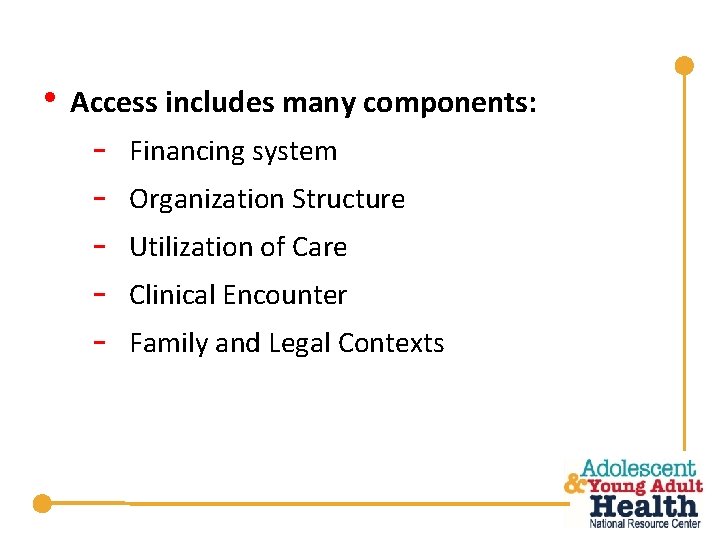
• Access includes many components: - Financing system Organization Structure Utilization of Care Clinical Encounter Family and Legal Contexts
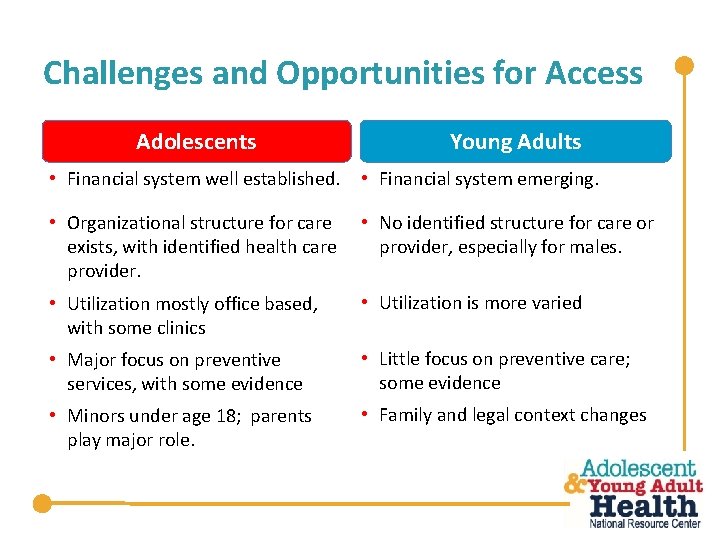
Challenges and Opportunities for Access Adolescents Young Adults • Financial system well established. • Financial system emerging. • Organizational structure for care exists, with identified health care provider. • No identified structure for care or provider, especially for males. • Utilization mostly office based, with some clinics • Utilization is more varied • Major focus on preventive services, with some evidence • Little focus on preventive care; some evidence • Minors under age 18; parents play major role. • Family and legal context changes
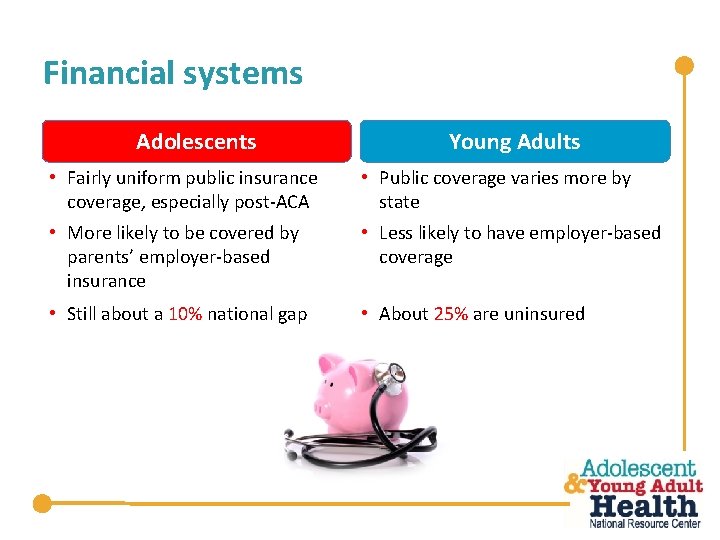
Financial systems Adolescents Young Adults • Fairly uniform public insurance coverage, especially post-ACA • Public coverage varies more by state • More likely to be covered by parents’ employer-based insurance • Less likely to have employer-based coverage • Still about a 10% national gap • About 25% are uninsured
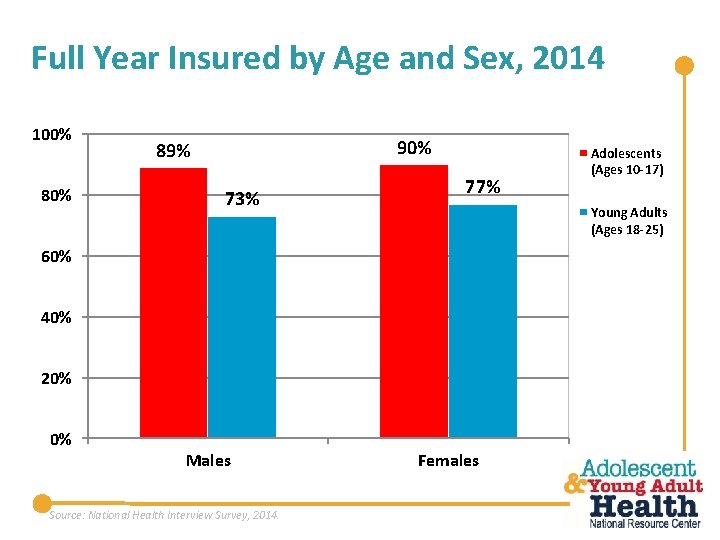
Full Year Insured by Age and Sex, 2014 100% 80% 90% 89% 73% 77% Young Adults (Ages 18 -25) 60% 40% 20% 0% Males Source: National Health Interview Survey, 2014. Adolescents (Ages 10 -17) Females
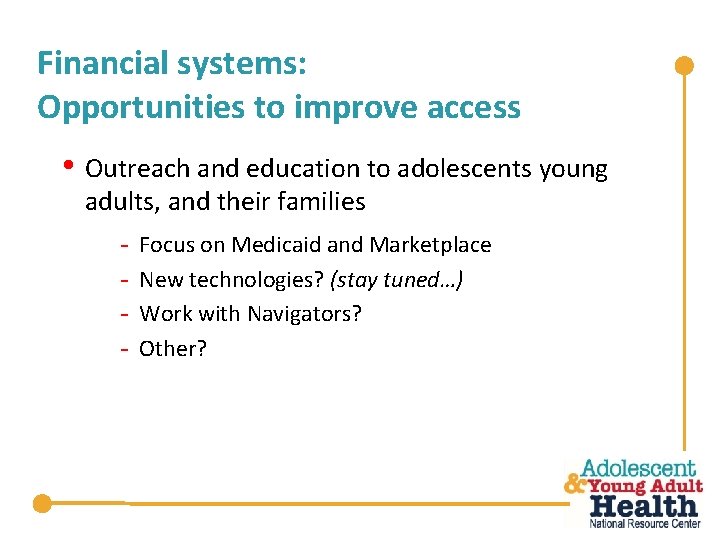
Financial systems: Opportunities to improve access • Outreach and education to adolescents young adults, and their families - Focus on Medicaid and Marketplace New technologies? (stay tuned…) Work with Navigators? Other?
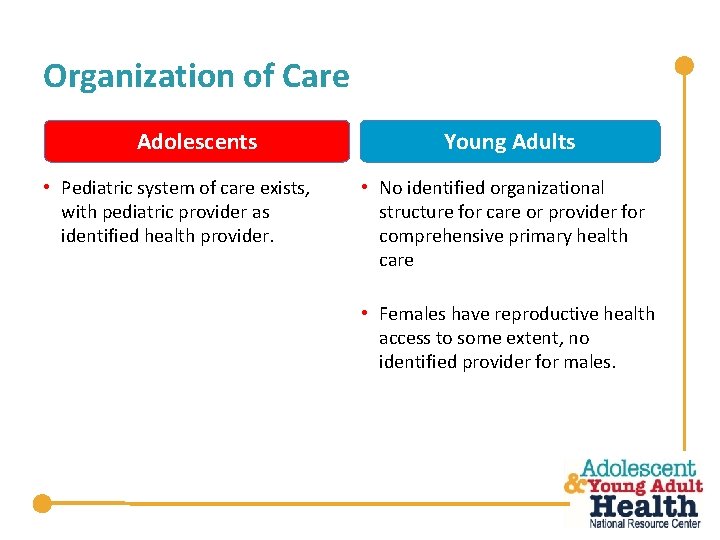
Organization of Care Adolescents • Pediatric system of care exists, with pediatric provider as identified health provider. Young Adults • No identified organizational structure for care or provider for comprehensive primary health care • Females have reproductive health access to some extent, no identified provider for males.
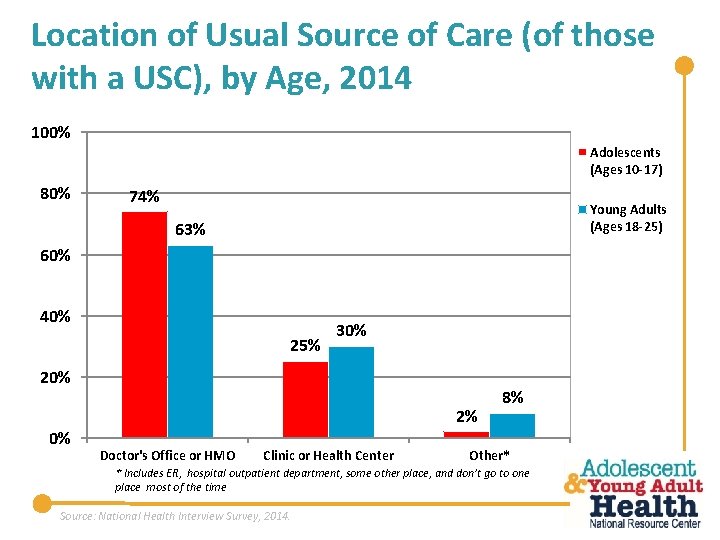
Utilization of Care Adolescents • Utilization mostly office based, with some clinics Young Adults • Utilization is more varied
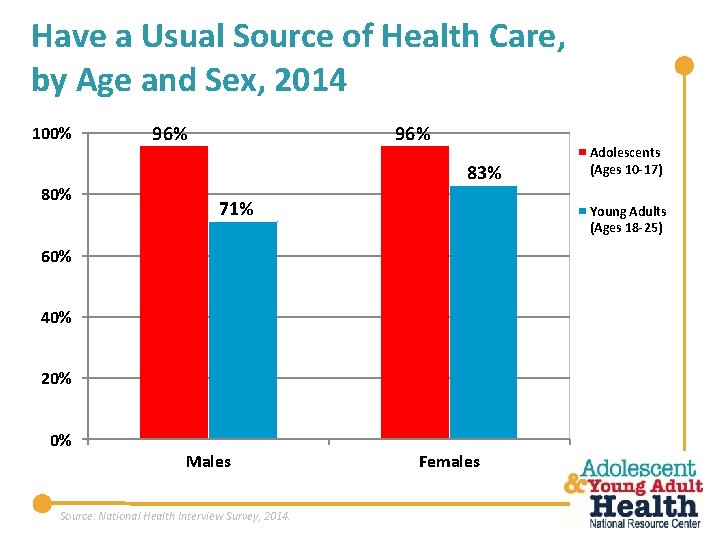
Have a Usual Source of Health Care, by Age and Sex, 2014 100% 80% 96% 83% 71% Young Adults (Ages 18 -25) 60% 40% 20% 0% Males Source: National Health Interview Survey, 2014. Adolescents (Ages 10 -17) Females
Location of Usual Source of Care (of those with a USC), by Age, 2014 100% Adolescents (Ages 10 -17) 80% 74% Young Adults (Ages 18 -25) 63% 60% 40% 25% 30% 2% 0% Doctor's Office or HMO Clinic or Health Center 8% Other* * Includes ER, hospital outpatient department, some other place, and don’t go to one place most of the time Source: National Health Interview Survey, 2014.
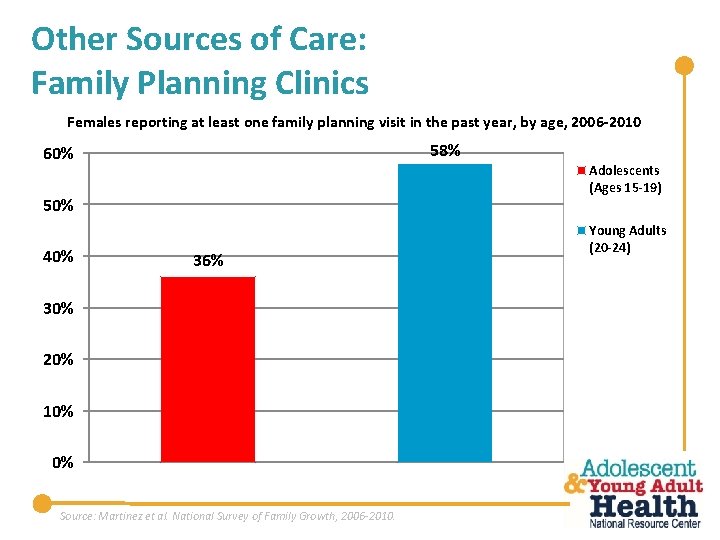
Other Sources of Care: Family Planning Clinics Females reporting at least one family planning visit in the past year, by age, 2006 -2010 58% 60% Adolescents (Ages 15 -19) 50% 40% 36% 30% 20% 10% 0% Source: Martinez et al. National Survey of Family Growth, 2006 -2010. Young Adults (20 -24)
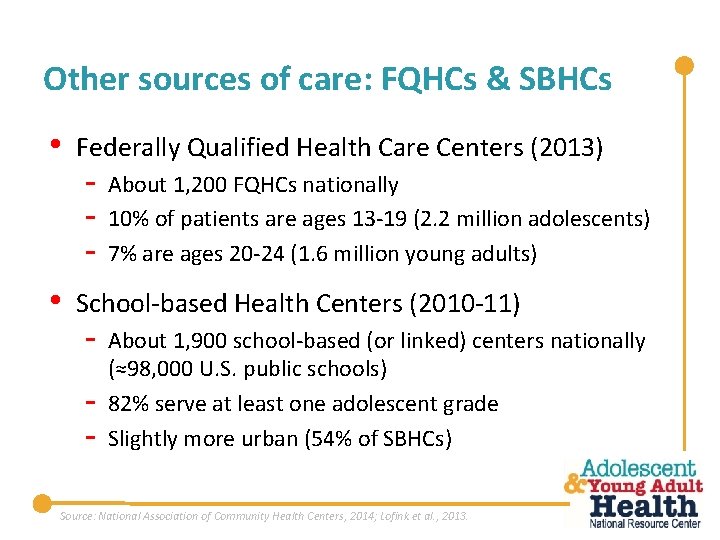
Other sources of care: FQHCs & SBHCs • • Federally Qualified Health Care Centers (2013) - About 1, 200 FQHCs nationally 10% of patients are ages 13 -19 (2. 2 million adolescents) 7% are ages 20 -24 (1. 6 million young adults) School-based Health Centers (2010 -11) - About 1, 900 school-based (or linked) centers nationally (≈98, 000 U. S. public schools) 82% serve at least one adolescent grade Slightly more urban (54% of SBHCs) Source: National Association of Community Health Centers, 2014; Lofink et al. , 2013.
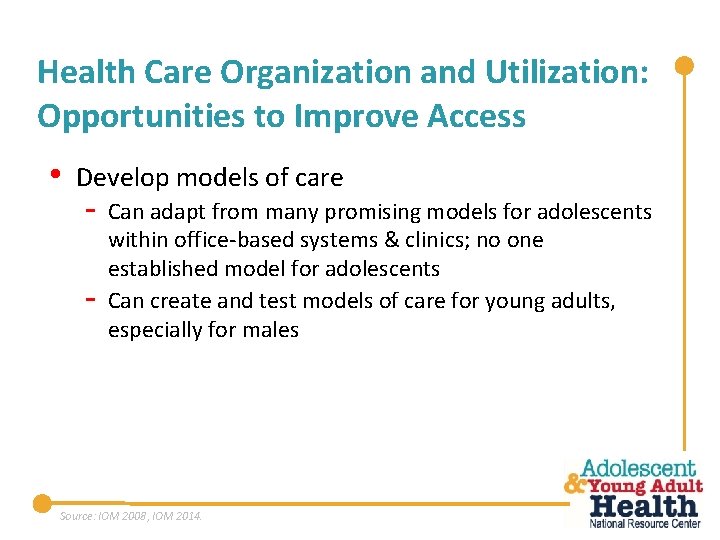
Health Care Organization and Utilization: Opportunities to Improve Access • Develop models of care - Can adapt from many promising models for adolescents within office-based systems & clinics; no one established model for adolescents Can create and test models of care for young adults, especially for males Source: IOM 2008, IOM 2014.
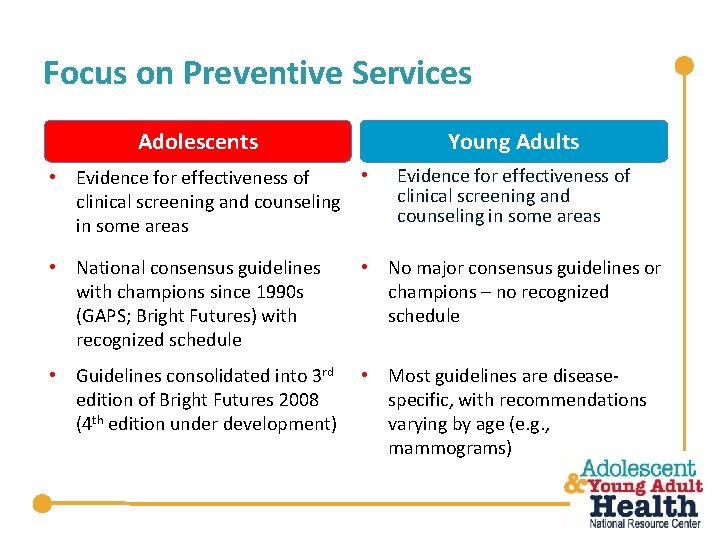
Focus on Preventive Services Adolescents Young Adults Evidence for effectiveness of clinical screening and counseling in some areas • • National consensus guidelines with champions since 1990 s (GAPS; Bright Futures) with recognized schedule • No major consensus guidelines or champions – no recognized schedule • Guidelines consolidated into 3 rd edition of Bright Futures 2008 (4 th edition under development) • Most guidelines are diseasespecific, with recommendations varying by age (e. g. , mammograms)
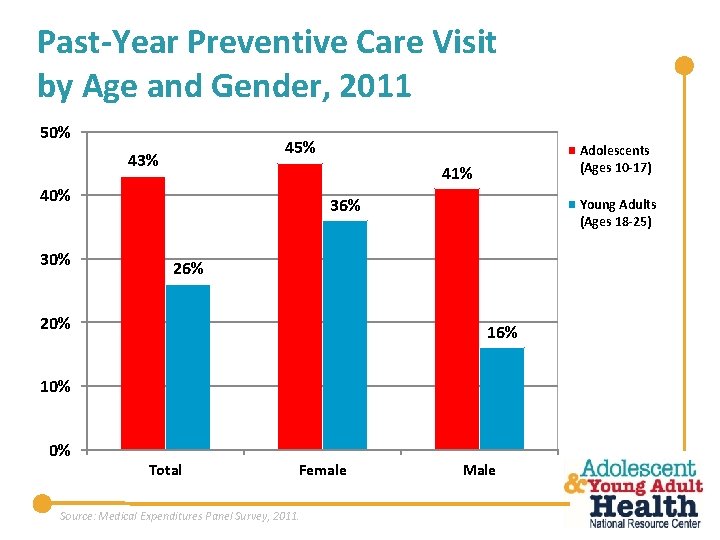
Past-Year Preventive Care Visit by Age and Gender, 2011 50% 45% 43% 41% 40% 30% Adolescents (Ages 10 -17) 36% Young Adults (Ages 18 -25) 26% 20% 16% 10% 0% Total Female Source: Medical Expenditures Panel Survey, 2011. Male
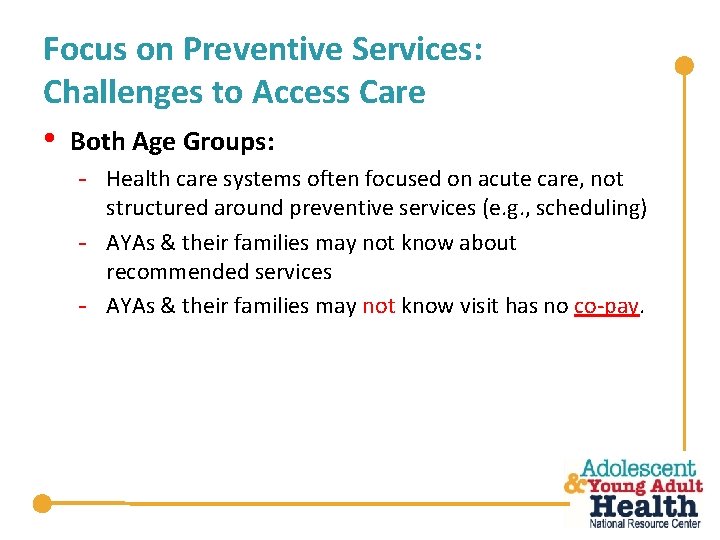
Focus on Preventive Services: Challenges to Access Care • Both Age Groups: - Health care systems often focused on acute care, not structured around preventive services (e. g. , scheduling) - AYAs & their families may not know about recommended services - AYAs & their families may not know visit has no co-pay.
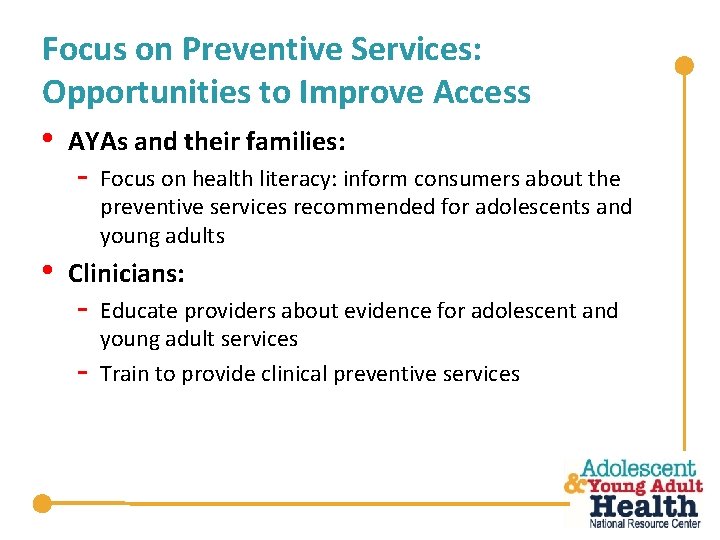
Focus on Preventive Services: Opportunities to Improve Access • AYAs and their families: - • Focus on health literacy: inform consumers about the preventive services recommended for adolescents and young adults Clinicians: - Educate providers about evidence for adolescent and young adult services Train to provide clinical preventive services
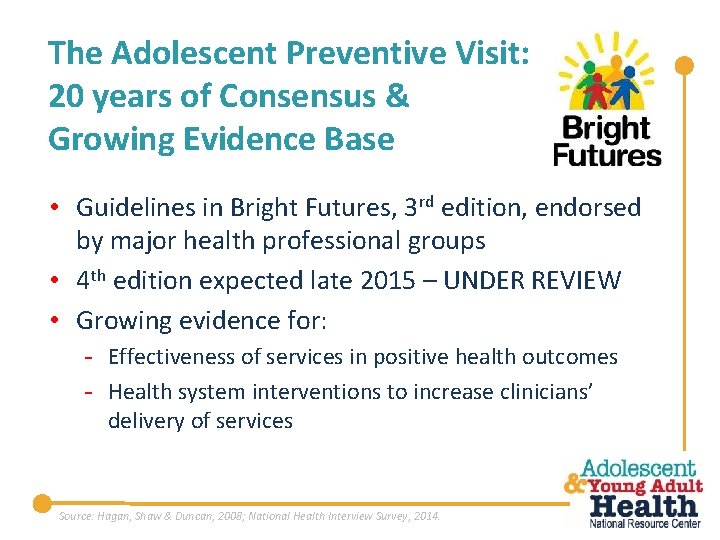
The Adolescent Preventive Visit: 20 years of Consensus & Growing Evidence Base • Guidelines in Bright Futures, 3 rd edition, endorsed by major health professional groups • 4 th edition expected late 2015 – UNDER REVIEW • Growing evidence for: - Effectiveness of services in positive health outcomes - Health system interventions to increase clinicians’ delivery of services Source: Hagan, Shaw & Duncan, 2008; National Health Interview Survey, 2014.
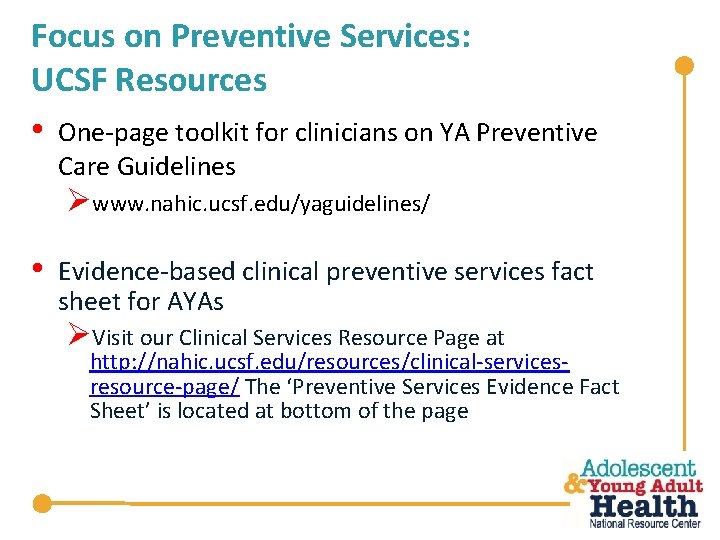
Focus on Preventive Services: UCSF Resources • One-page toolkit for clinicians on YA Preventive Care Guidelines Øwww. nahic. ucsf. edu/yaguidelines/ • Evidence-based clinical preventive services fact sheet for AYAs ØVisit our Clinical Services Resource Page at http: //nahic. ucsf. edu/resources/clinical-servicesresource-page/ The ‘Preventive Services Evidence Fact Sheet’ is located at bottom of the page
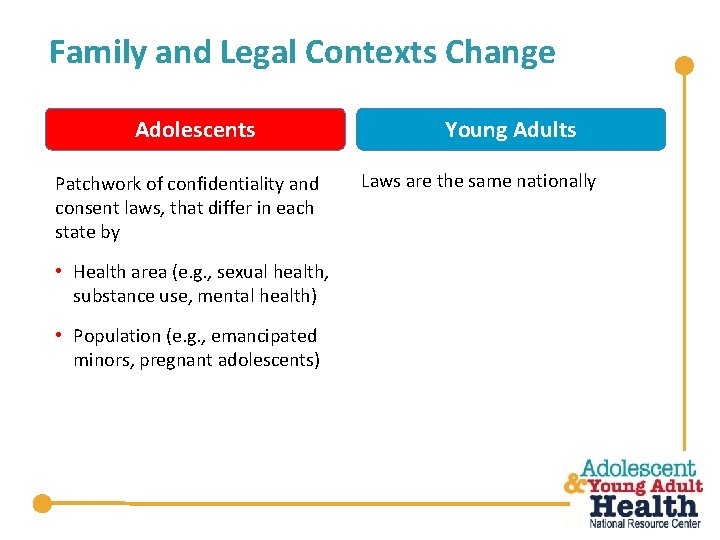
Family and Legal Contexts Change Adolescents Patchwork of confidentiality and consent laws, that differ in each state by • Health area (e. g. , sexual health, substance use, mental health) • Population (e. g. , emancipated minors, pregnant adolescents) Young Adults Laws are the same nationally
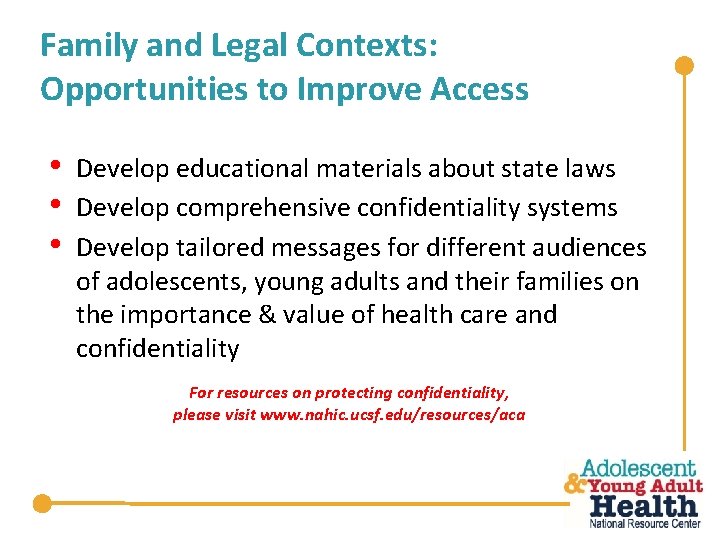
Family and Legal Contexts: Opportunities to Improve Access • • • Develop educational materials about state laws Develop comprehensive confidentiality systems Develop tailored messages for different audiences of adolescents, young adults and their families on the importance & value of health care and confidentiality For resources on protecting confidentiality, please visit www. nahic. ucsf. edu/resources/aca
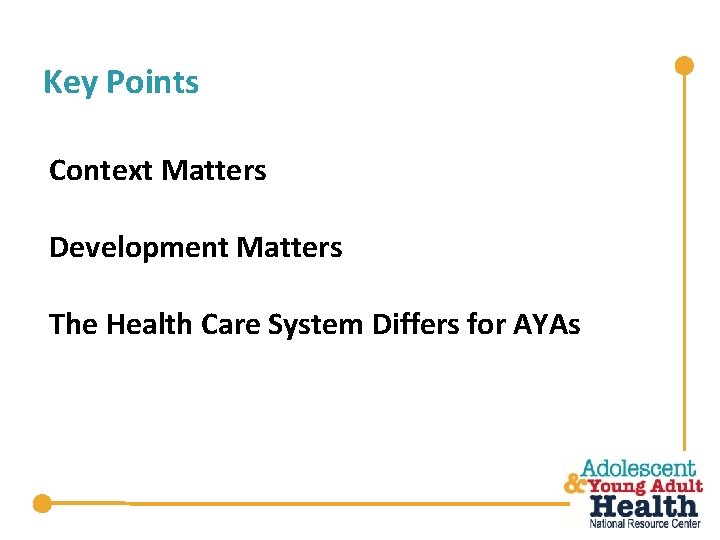
Key Points Context Matters Development Matters The Health Care System Differs for AYAs
Questions? Thoughts?
References Brindis et al. A Changing Landscape: Overview and Cross-cutting Themes. Workshop on Improving the Health, Safety and Well-Being of Young Adults. Presented at Institute of Medicine. May 7, 2013. http: //iom. nationalacademies. org/~/media/E 41512377813433 B 826 C 637 CDD 28 A 86 F. ashx Institute of Medicine and National Research Council. (2008). Adolescent Health Services: Missing Opportunities. Washington, D. C. : National Academies Press. http: //iom. nationalacademies. org/Reports/2008/Adolescent-Health-Services-Missing-Opportunities. aspx. Institute of Medicine and National Research Council. (2014). Investing in the Health and Well-Being of Young Adults. Washington, D. C. : National Academies Press. http: //iom. nationalacademies. org/Reports/2014/Investingin-the-Health-and-Well-Being-of-Young-Adults. aspx. Kleinert S. Adolescent Health: an opportunity not to be missed. The Lancet 2007; 369: 1057 -1058. Lerner RM, Steinberg L. Handbook of adolescent psychology. 3 rd ed. Hoboken, NJ: John Wiley & Sons; 2009. Lofink H, Kuebler J, Juszczak L, et al. 2010 -2011 School-Based Health Alliance Census Report. Washington, D. C. : School-Based Health Alliance, 2013. Available at http: //www. sbh 4 all. org/wpcontent/uploads/2015/02/Census. Report_2010 -11 Census. Report_7. 13. pdf. Martinez et al. Fertility of Men and Women aged 15 -44 years in the United States: National Survey of Family Growth, 2006 -2010. National health statistics reports; No. 51. Hyattsville, MD: National Center for Health Statistics. 2012. http: //www. cdc. gov/nchs/data/nhsr 051. pdf National Adolescent and Young Health Information Center, University of San Francisco. National Health Interview Survey [private data run] 2014. Centers for Disease Control and Prevention. Available at: http: //www. cdc. gov/nchs/nhis. htm. National Adolescent and Young Health Information Center, University of San Francisco. Medical Expenditures Panel Survey [private data run] 2011. Centers for Disease Control and Prevention. Available at: http: //meps. ahrq. gov/mepsweb/. National Adolescent and Young Adult Health Information Center (2014). Summary of Recommended Guidelines for Clinical Preventive Services for Young Adults ages 18 -26. San Francisco, CA: National Adolescent and Young Adult Health Information Center, University of California, San Francisco. Retrieved from http: //nahic. ucsf. edu/cps/Yaguidelines.
References National Adolescent and Young Adult Health Information Center (2015). Evidence Based Clinical Preventive Services for Adolescents and Young Adults. San Francisco, CA: National Adolescent and Young Adult Health Information Center, University of California, San Francisco. Retrieved from http: //nahic. ucsf. edu/wpcontent/uploads/2015/01/AYAHNRC_evidence. NG_F. pdf. National Association of Community Health Centers. United States Health Center Fact Sheet, 2014. Available at http: //www. nachc. com/client//United_States_FS_2014. pdf. Pew Hispanic Center (2009). “The Changing Pathways of Hispanic Youths Into Adulthood. ” Washington, DC: Pew Research Center. Retrieved from: http: //www. pewhispanic. org/files/reports/114. pdf. Pew Research Center (2012). “The Demographics of Social Media Users – 2012. ” Washington, DC: Pew Research Center. Retrieved from: http: //www. pewinternet. org/~/media//Files/Reports/2013/PIP_Social. Media. Users. pdf. Pew Research Center (2012). “The Boomerang Generation: Feeling OK about Living with Mom and Dad. ” Washington, DC: Pew Research Center. Retrieved from: http: //www. pewsocialtrends. org/files/2012/03/Pew. Social. Trends-2012 -Boomerang. Generation. pdf. Viner et al. Adolescents and the Global Health Transition. Presented at SAHM 2015 Annual Meeting; March 18 -21, 2015; Los Angeles, CA. Adapted from Halfon.