
Accelerating Time to Experiment The my Experiment Approach

- Slides: 37
Accelerating Time to Experiment – The my. Experiment Approach to Open Science David De Roure Carole Goble Jiten Bhagat
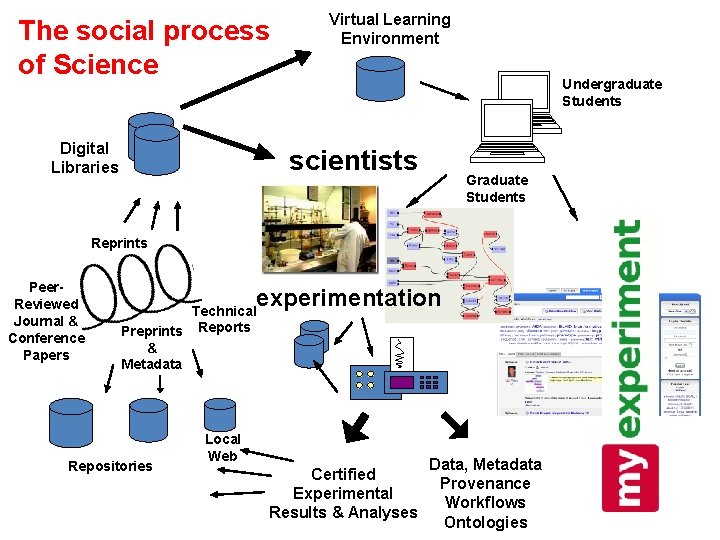
The social process of Science 2. 0 Digital Libraries Virtual Learning Environment Undergraduate Students scientists Graduate Students Reprints Peer. Reviewed Journal & Conference Papers experimentation Technical Preprints Reports & Metadata Repositories Local Web Certified Experimental Results & Analyses Data, Metadata Provenance Workflows Ontologies
• What is it? • How we built it • Towards the e-Laboratory
• What is it?
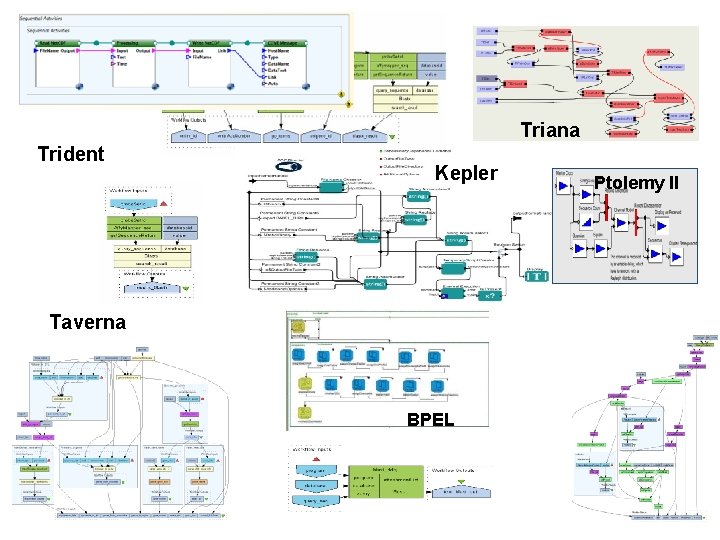
Triana Trident Kepler Taverna BPEL Ptolemy II
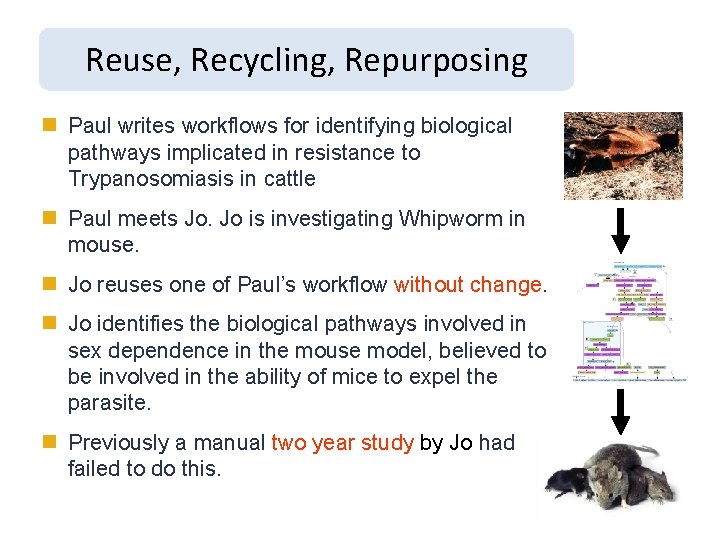
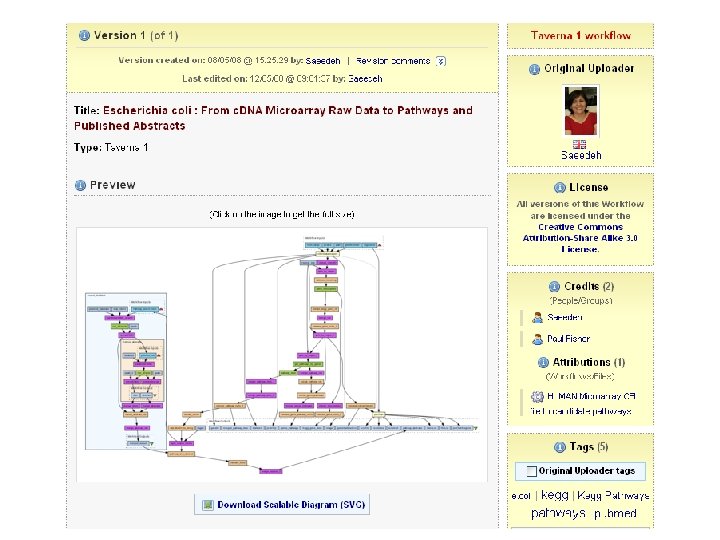
Reuse, Recycling, Repurposing n Paul writes workflows for identifying biological pathways implicated in resistance to Trypanosomiasis in cattle n Paul meets Jo. Jo is investigating Whipworm in mouse. n Jo reuses one of Paul’s workflow without change. n Jo identifies the biological pathways involved in sex dependence in the mouse model, believed to be involved in the ability of mice to expel the parasite. n Previously a manual two year study by Jo had failed to do this.
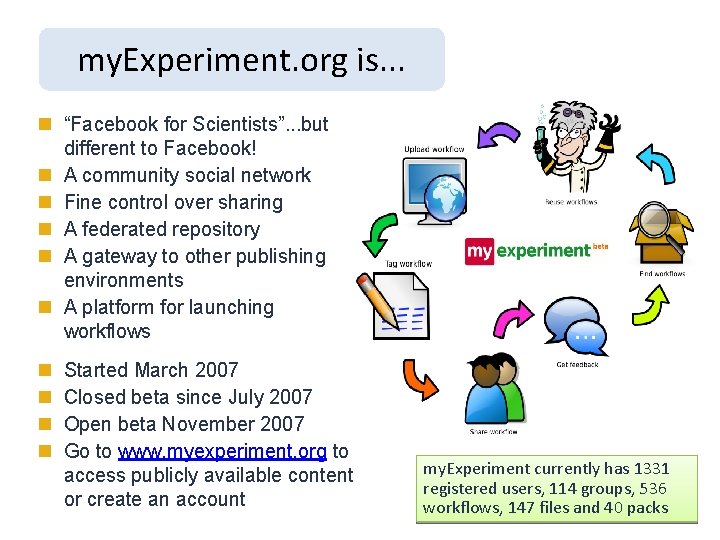
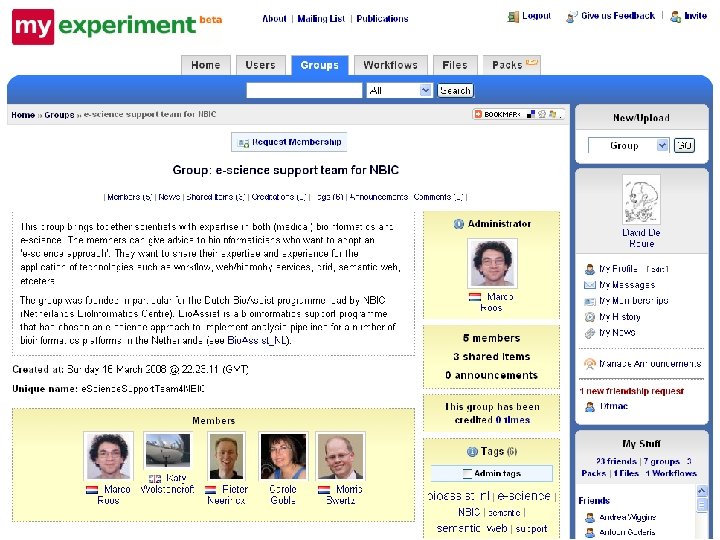
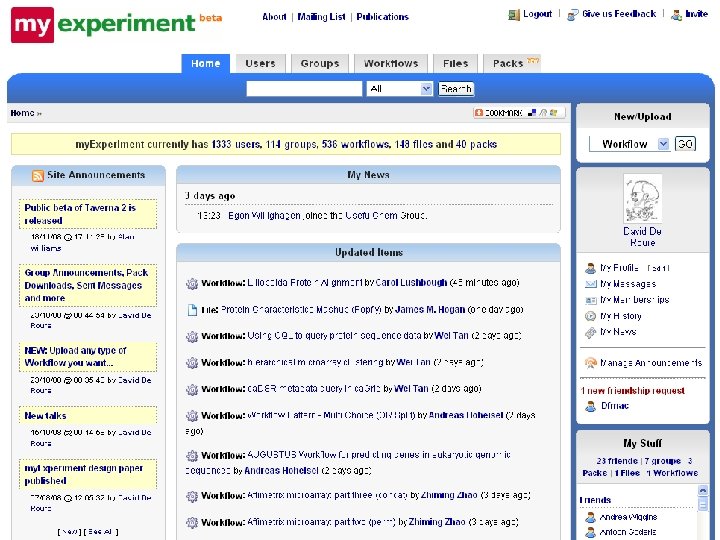
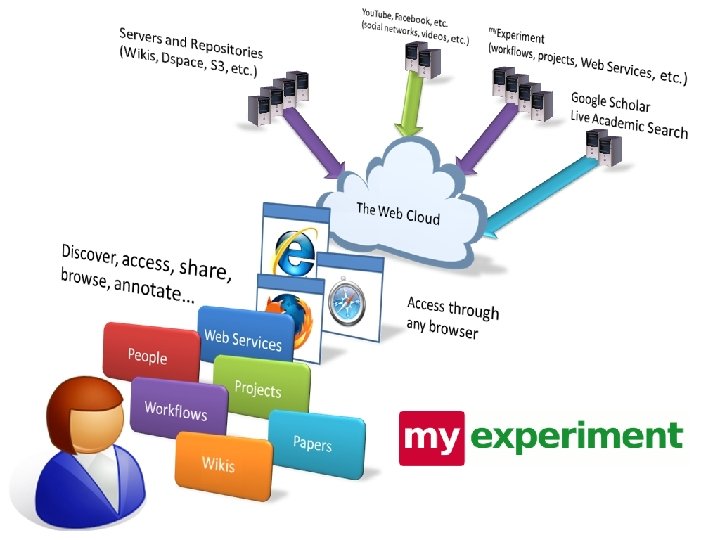
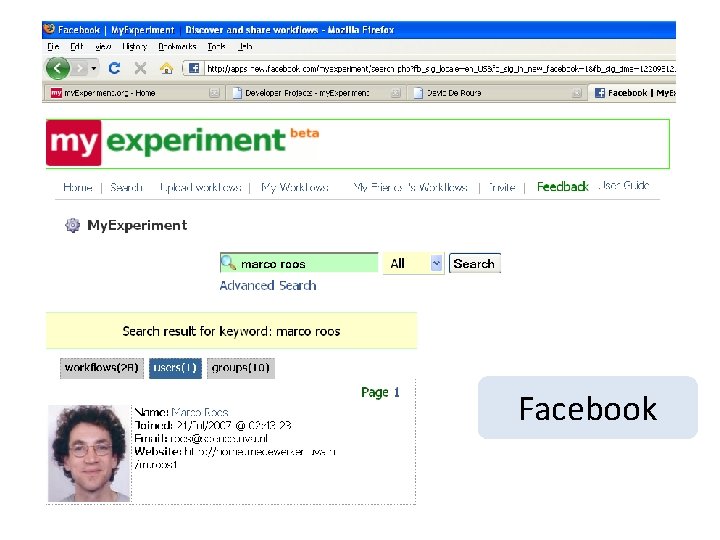
my. Experiment. org is…is. . . n “Facebook for Scientists”. . . but different to Facebook! n A community social network n Fine control over sharing n A federated repository n A gateway to other publishing environments n A platform for launching workflows n n Started March 2007 Closed beta since July 2007 Open beta November 2007 Go to www. myexperiment. org to access publicly available content or create an account my. Experiment currently has 1331 registered users, 114 groups, 536 workflows, 147 files and 40 packs
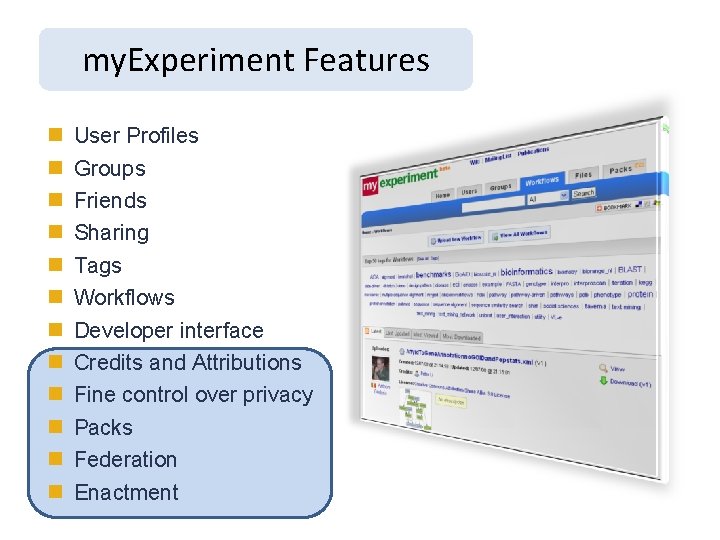
my. Experiment Features my. Experiment. org is… n n n User Profiles Groups Friends Sharing Tags Workflows Developer interface Credits and Attributions Fine control over privacy Packs Federation Enactment
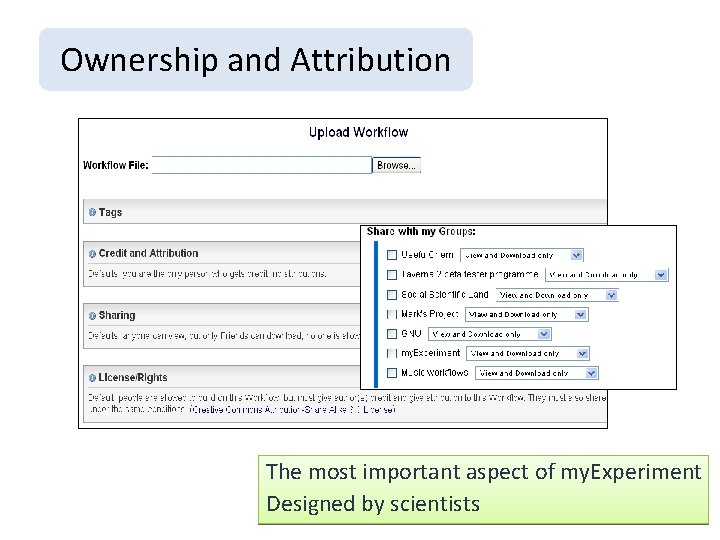
Ownership and Attribution The most important aspect of my. Experiment Designed by scientists
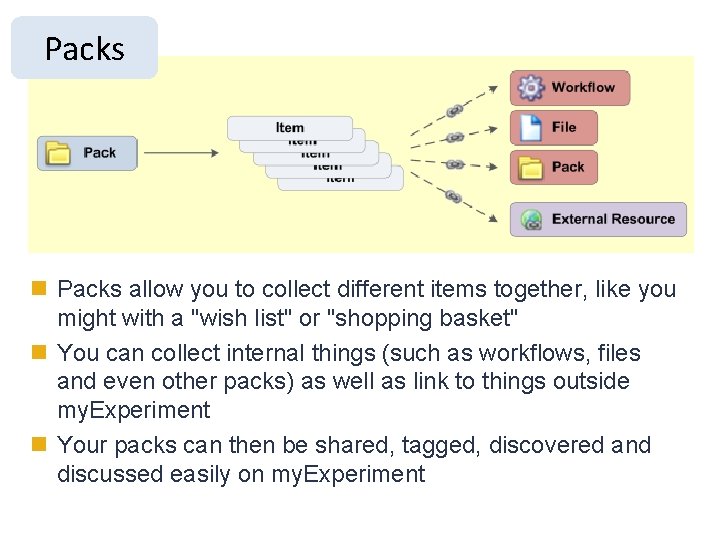
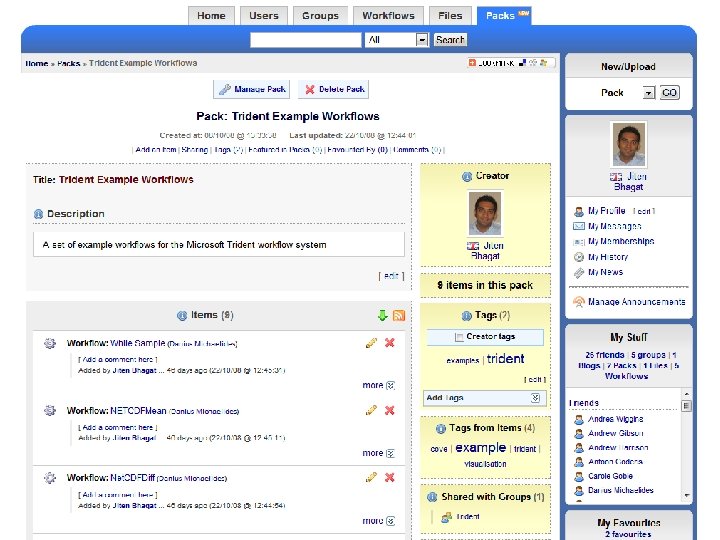
Packs n Packs allow you to collect different items together, like you might with a "wish list" or "shopping basket" n You can collect internal things (such as workflows, files and even other packs) as well as link to things outside my. Experiment n Your packs can then be shared, tagged, discovered and discussed easily on my. Experiment
• How we built it
24/5/2007 | my. Experiment | Slide 21
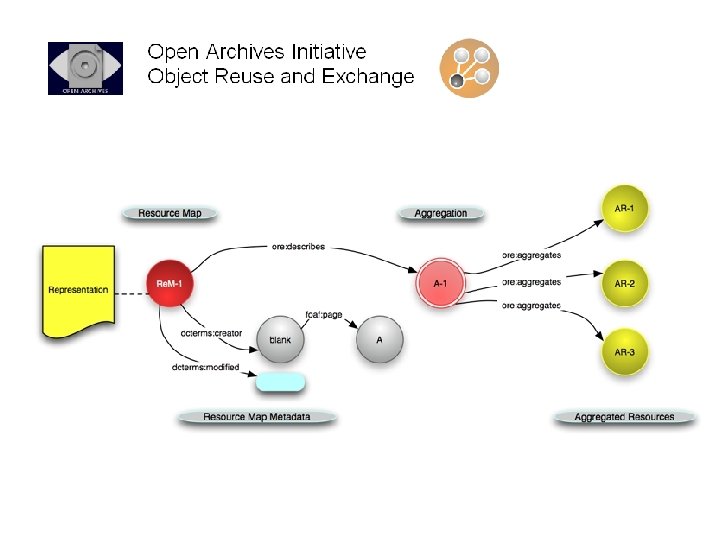
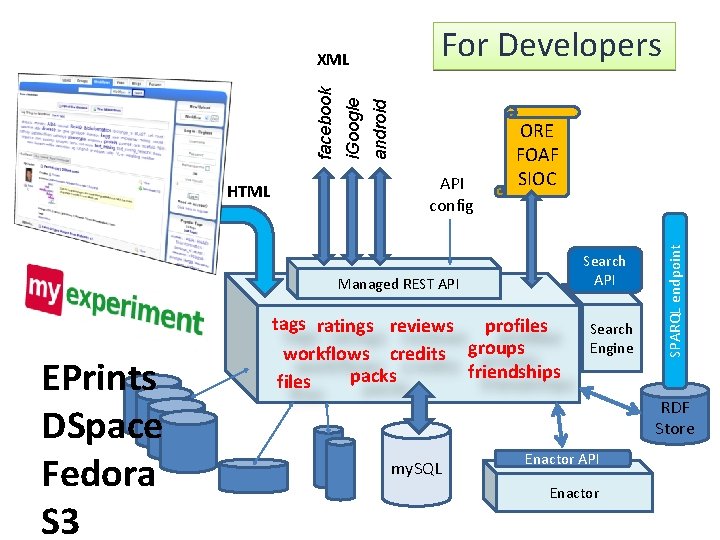
For Developers android API config ORE FOAF SIOC Search API Managed REST API EPrints ` DSpace Fedora S 3 tags ratings reviews profiles workflows credits groups friendships packs files Search Engine SPARQL endpoint HTML i. Google facebook XML RDF Store my. SQL Enactor API Enactor
For Developers n All the my. Experiment services are accessible through simple RESTful programming interfaces n use your existing environment and augment it with my. Experiment functionality n build entirely new interfaces and functionality mashups n The open source Web 2. 0 Software that powers the myexperiment. org web site is downloadable so you can run your own my. Experiment – perhaps for your own lab or projects n Go to wiki. myexperiment. org for information about our Developer Community
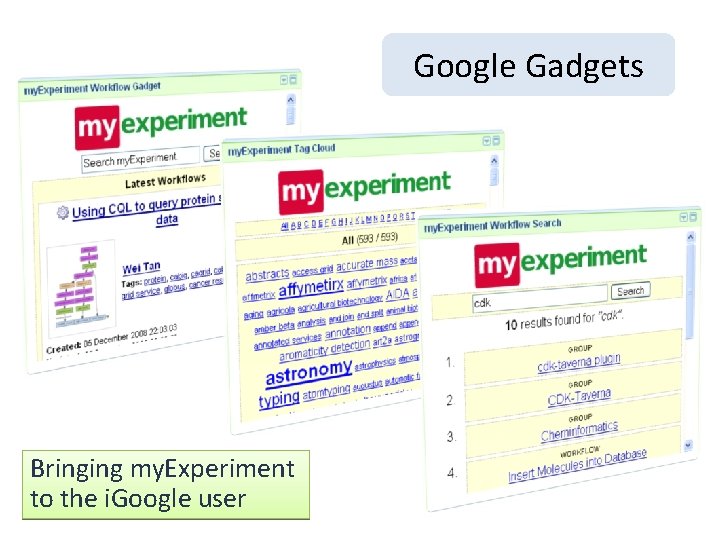
Google Gadgets Bringing my. Experiment to the i. Google user
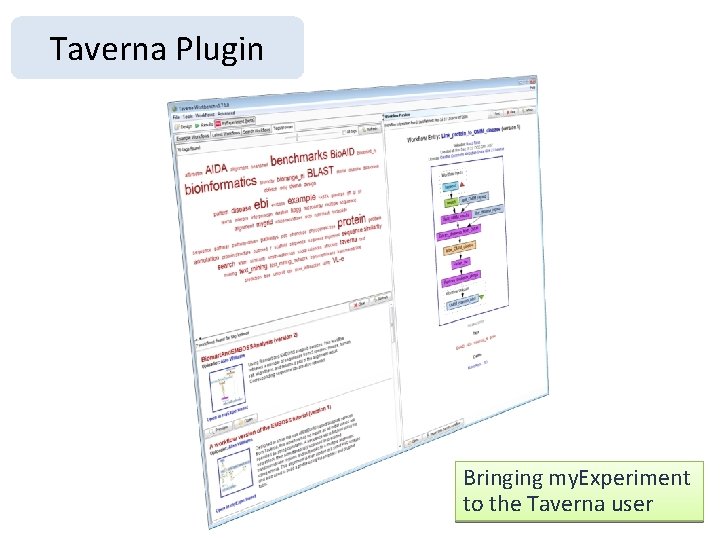
Taverna Plugin Bringing my. Experiment to the Taverna user
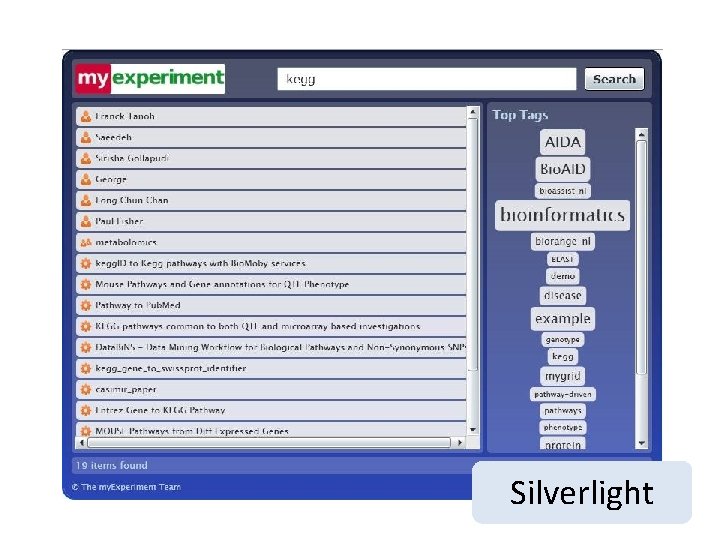
Silverlight
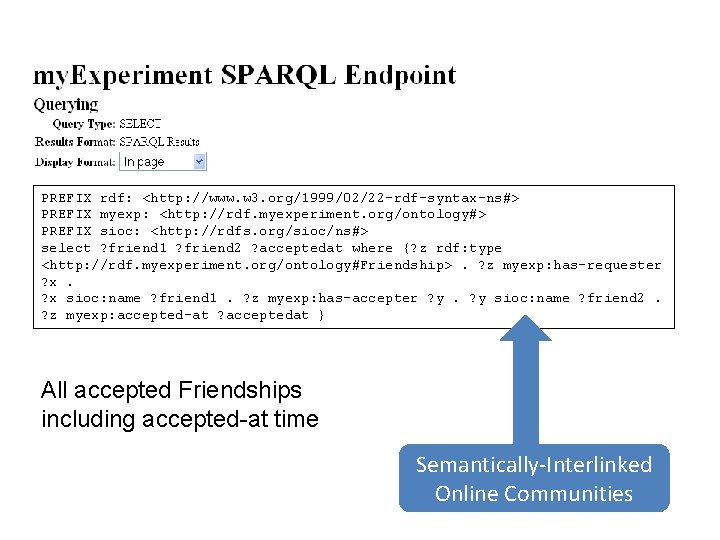
PREFIX rdf: <http: //www. w 3. org/1999/02/22 -rdf-syntax-ns#> PREFIX myexp: <http: //rdf. myexperiment. org/ontology#> PREFIX sioc: <http: //rdfs. org/sioc/ns#> select ? friend 1 ? friend 2 ? acceptedat where {? z rdf: type <http: //rdf. myexperiment. org/ontology#Friendship>. ? z myexp: has-requester ? x sioc: name ? friend 1. ? z myexp: has-accepter ? y sioc: name ? friend 2. ? z myexp: accepted-at ? acceptedat } All accepted Friendships including accepted-at time Semantically-Interlinked Online Communities
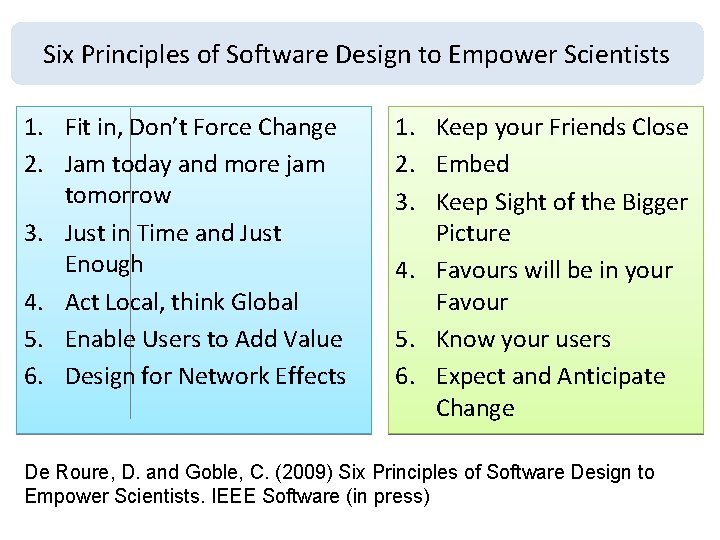
Six Principles of Software Design to Empower Scientists 1. Fit in, Don’t Force Change 2. Jam today and more jam tomorrow 3. Just in Time and Just Enough 4. Act Local, think Global 5. Enable Users to Add Value 6. Design for Network Effects 1. Keep your Friends Close 2. Embed 3. Keep Sight of the Bigger Picture 4. Favours will be in your Favour 5. Know your users 6. Expect and Anticipate Change De Roure, D. and Goble, C. (2009) Six Principles of Software Design to Empower Scientists. IEEE Software (in press)
• Towards the e-Laboratory
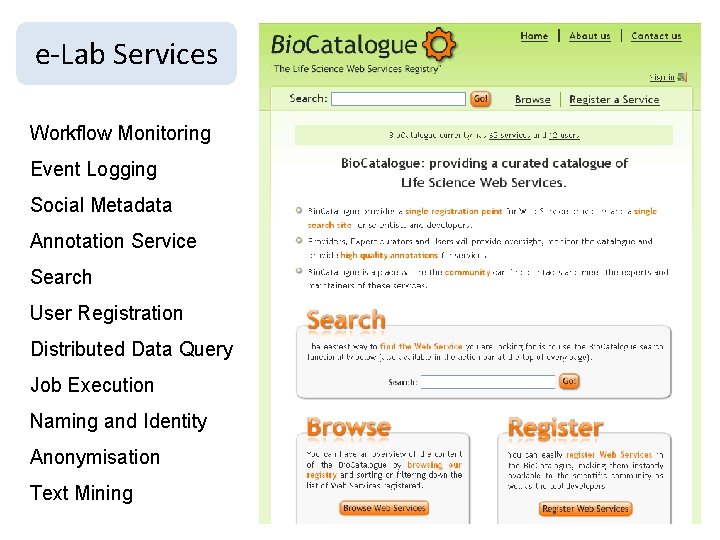
e-Lab Services Workflow Monitoring Event Logging Social Metadata Annotation Service Search User Registration Distributed Data Query Job Execution Naming and Identity Anonymisation Text Mining
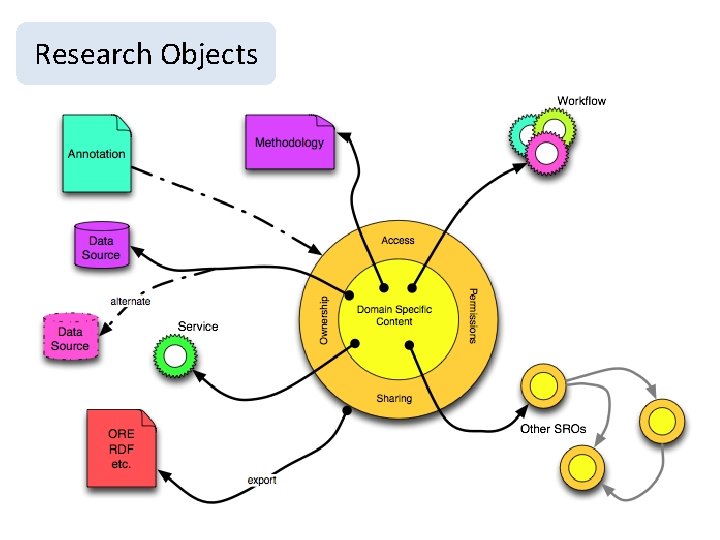
Research Objects
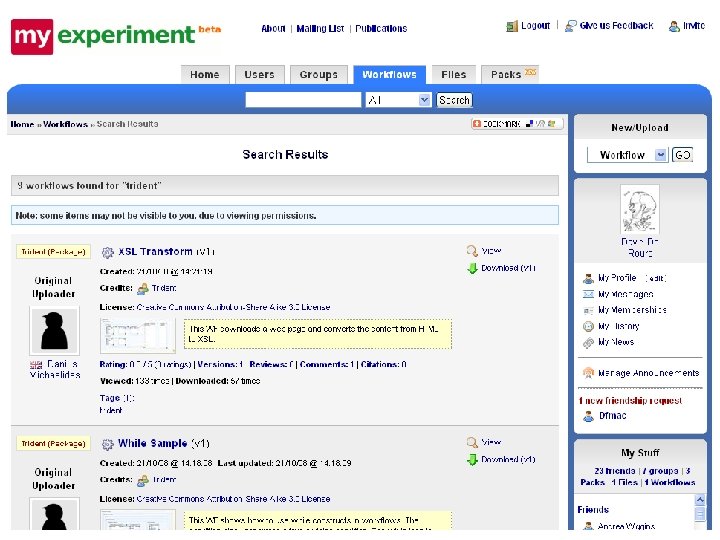
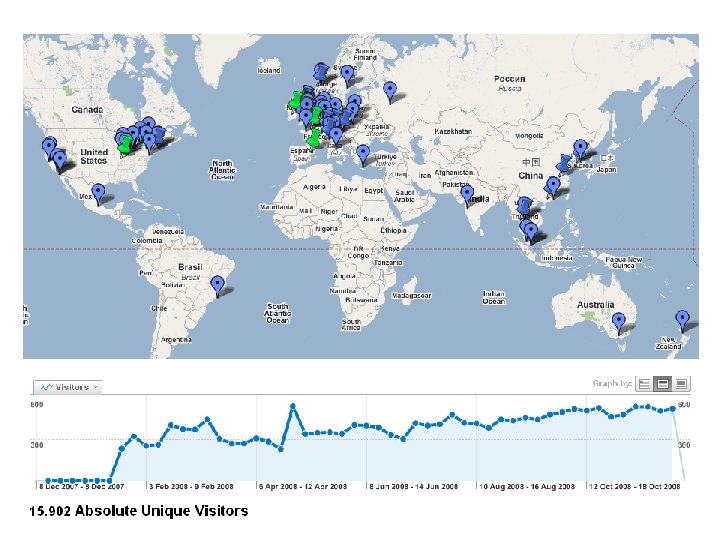
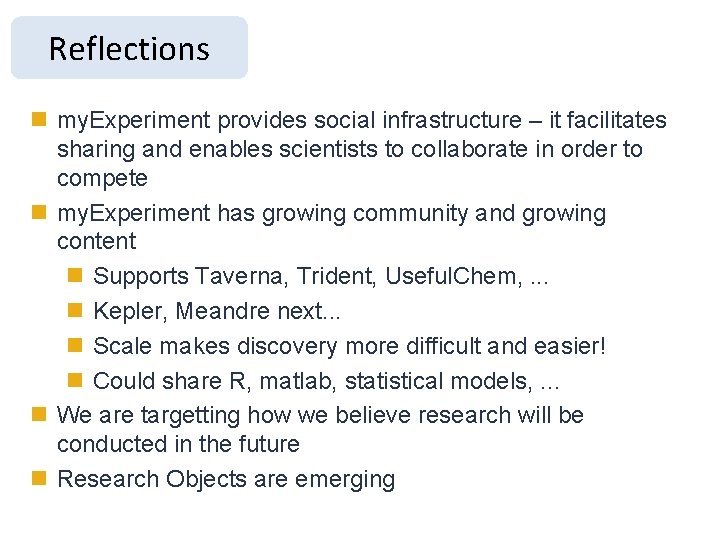
Reflections n my. Experiment provides social infrastructure – it facilitates sharing and enables scientists to collaborate in order to compete n my. Experiment has growing community and growing content n Supports Taverna, Trident, Useful. Chem, . . . n Kepler, Meandre next. . . n Scale makes discovery more difficult and easier! n Could share R, matlab, statistical models, . . . n We are targetting how we believe research will be conducted in the future n Research Objects are emerging
Contact David De Roure dder@ecs. soton. ac. uk Carole Goble carole. goble@manchester. ac. uk Thanks The my. Grid Family, National Centre for e-Social Science, Combe. Chem, Scientific Workflow Community