
ACAT FRRP Automatic Collision Avoidance Technology Fighter Risk




- Slides: 43
ACAT FRRP Automatic Collision Avoidance Technology Fighter Risk Reduction Program Automatic Ground Collision Avoidance: Research to the Real Thing Copyright 2009 Lockheed Martin Corporation.
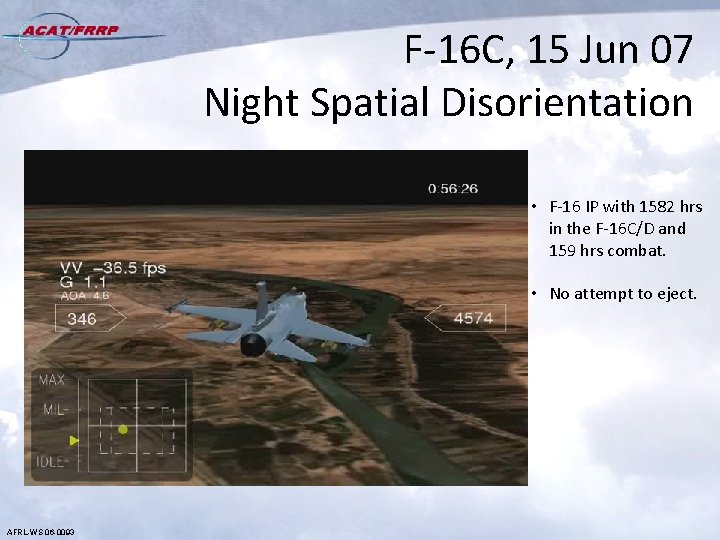
F-16 C, 15 Jun 07 Night Spatial Disorientation • F-16 IP with 1582 hrs in the F-16 C/D and 159 hrs combat. • No attempt to eject. AFRL-WS 06 -0093
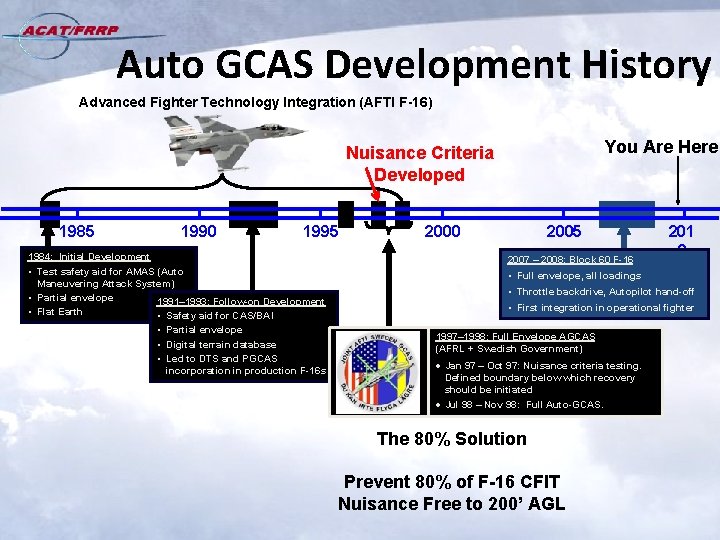
Auto GCAS Development History Advanced Fighter Technology Integration (AFTI F-16) You Are Here Nuisance Criteria Developed 1985 1990 1995 1984: Initial Development • Test safety aid for AMAS (Auto Maneuvering Attack System) • Partial envelope 1991– 1993: Follow-on Development • Flat Earth • Safety aid for CAS/BAI • Partial envelope • Digital terrain database • Led to DTS and PGCAS incorporation in production F-16 s 2000 2005 2007 – 2008: Block 60 F-16 201 0 • Full envelope, all loadings • Throttle backdrive, Autopilot hand-off • First integration in operational fighter 1997– 1998: Full Envelope AGCAS (AFRL + Swedish Government) · Jan 97 – Oct 97: Nuisance criteria testing. Defined boundary below which recovery should be initiated · Jul 98 – Nov 98: Full Auto-GCAS. The 80% Solution Prevent 80% of F-16 CFIT Nuisance Free to 200’ AGL
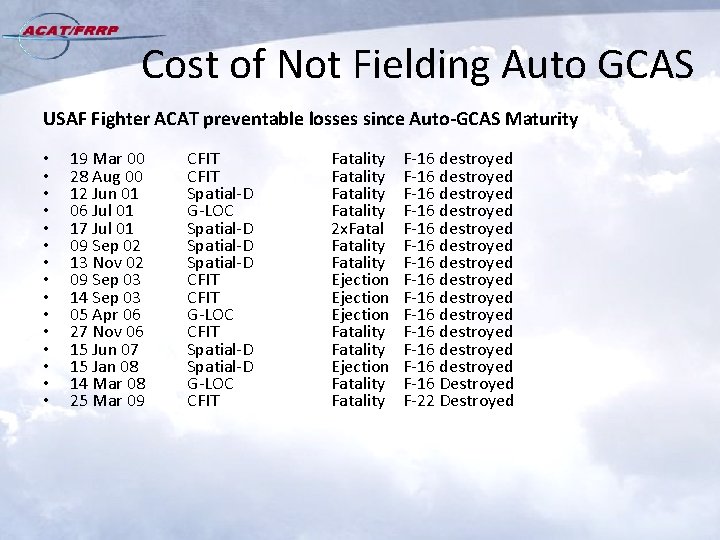
Cost of Not Fielding Auto GCAS USAF Fighter ACAT preventable losses since Auto-GCAS Maturity • • • • 19 Mar 00 28 Aug 00 12 Jun 01 06 Jul 01 17 Jul 01 09 Sep 02 13 Nov 02 09 Sep 03 14 Sep 03 05 Apr 06 27 Nov 06 15 Jun 07 15 Jan 08 14 Mar 08 25 Mar 09 CFIT Spatial-D G-LOC Spatial-D CFIT G-LOC CFIT Spatial-D G-LOC CFIT Fatality 2 x. Fatality Ejection Fatality F-16 destroyed F-16 destroyed F-16 destroyed F-16 destroyed F-16 Destroyed F-22 Destroyed
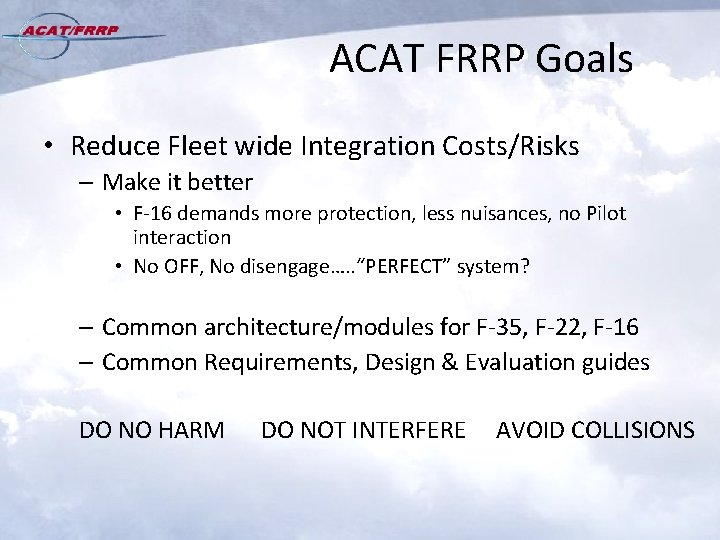
ACAT FRRP Goals • Reduce Fleet wide Integration Costs/Risks – Make it better • F-16 demands more protection, less nuisances, no Pilot interaction • No OFF, No disengage…. . “PERFECT” system? – Common architecture/modules for F-35, F-22, F-16 – Common Requirements, Design & Evaluation guides DO NO HARM DO NOT INTERFERE AVOID COLLISIONS
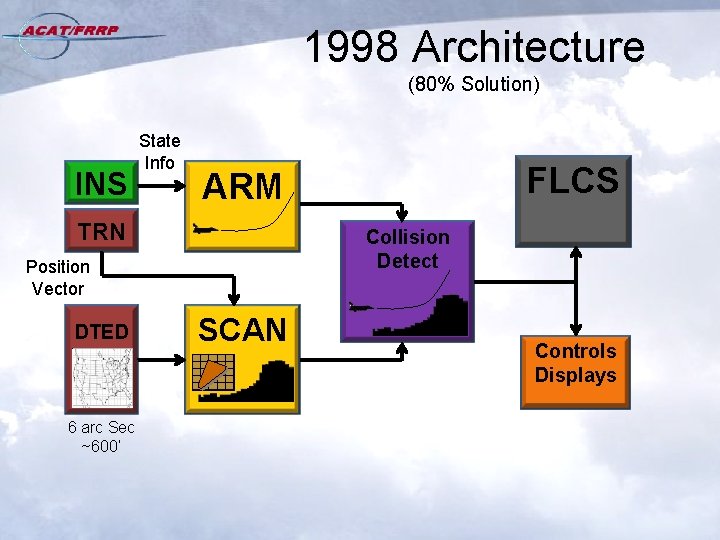
1998 Architecture (80% Solution) INS State Info TRN Collision Detect Position Vector DTED 6 arc Sec ~600’ FLCS ARM SCAN Controls Displays
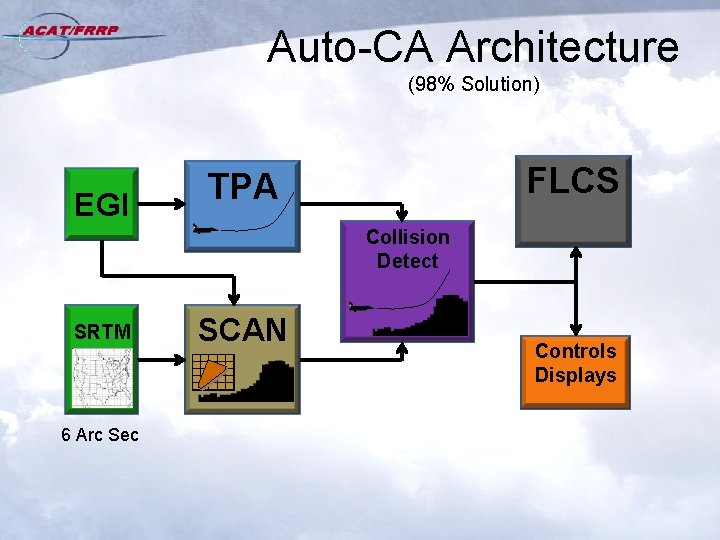
Auto-CA Architecture (98% Solution) EGI FLCS TPA Collision Detect SRTM 6 Arc Sec SCAN Controls Displays
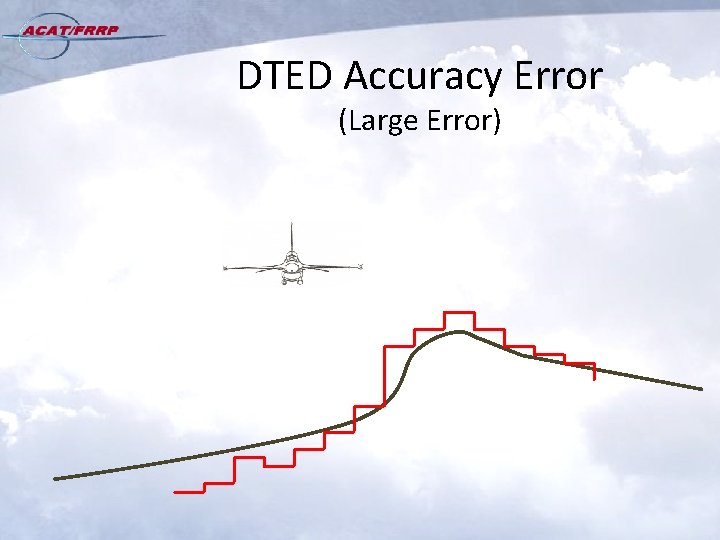
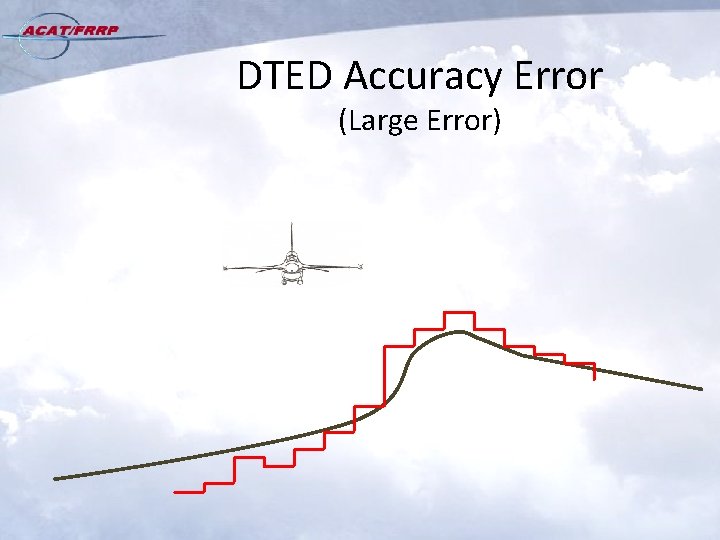
DTED Accuracy Error (Large Error)
DTED Accuracy Error (Large Error)
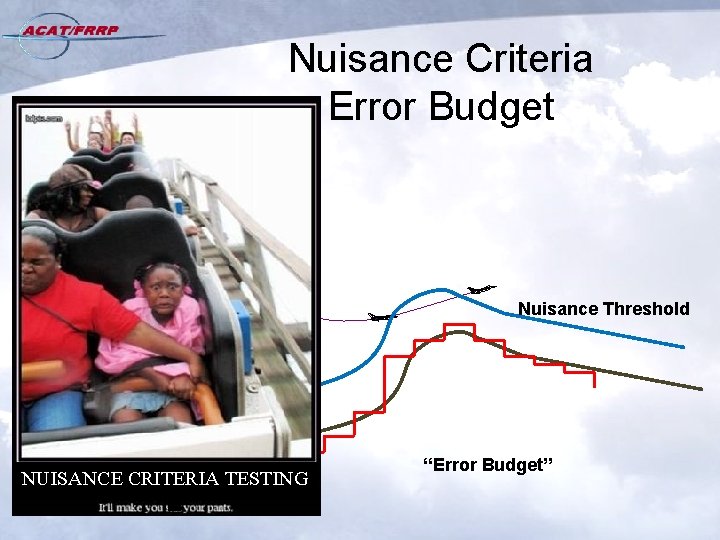
Nuisance Criteria Error Budget Nuisance Threshold Mission Command Guidance Nuisance Criteria NUISANCE CRITERIA TESTING “Error Budget”
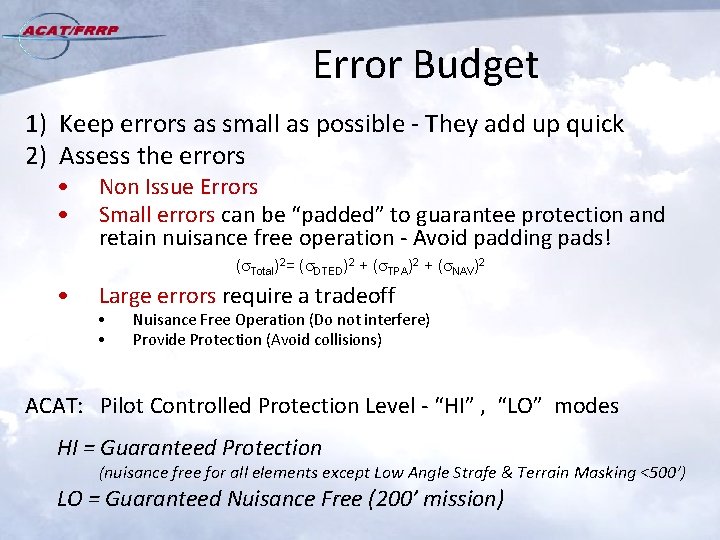
Error Budget 1) Keep errors as small as possible - They add up quick 2) Assess the errors • • Non Issue Errors Small errors can be “padded” to guarantee protection and retain nuisance free operation - Avoid padding pads! (s. Total)2= (s. DTED)2 + (s. TPA)2 + (s. NAV)2 • Large errors require a tradeoff • • Nuisance Free Operation (Do not interfere) Provide Protection (Avoid collisions) ACAT: Pilot Controlled Protection Level - “HI” , “LO” modes HI = Guaranteed Protection (nuisance free for all elements except Low Angle Strafe & Terrain Masking <500’) LO = Guaranteed Nuisance Free (200’ mission)
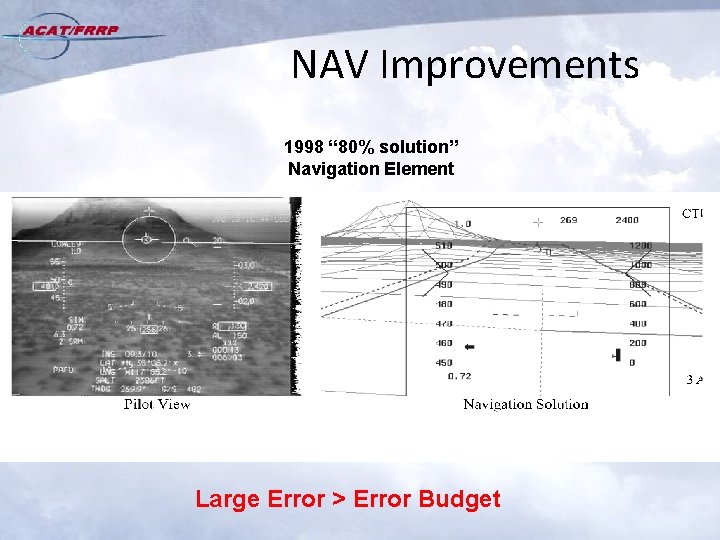
NAV Improvements 1998 “ 80% solution” Navigation Element Large Error > Error Budget
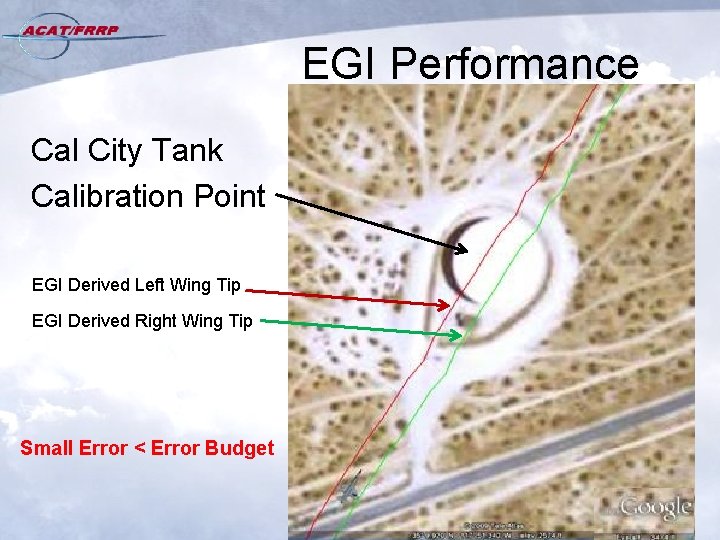
EGI Performance Cal City Tank Calibration Point EGI Derived Left Wing Tip EGI Derived Right Wing Tip Small Error < Error Budget
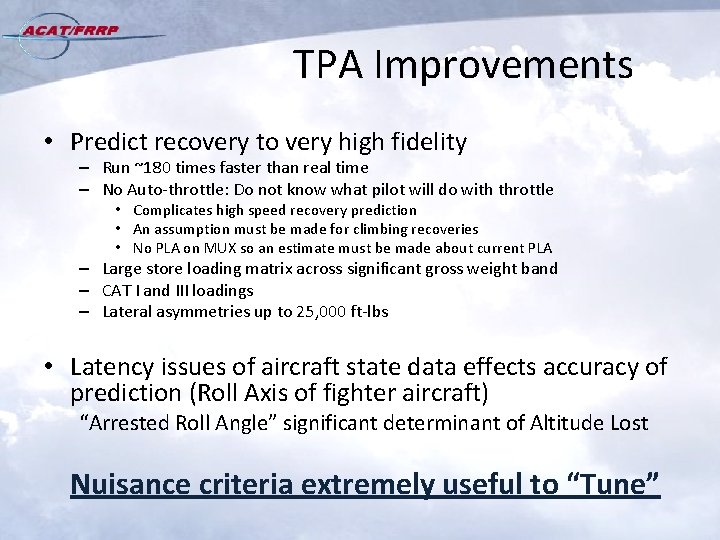
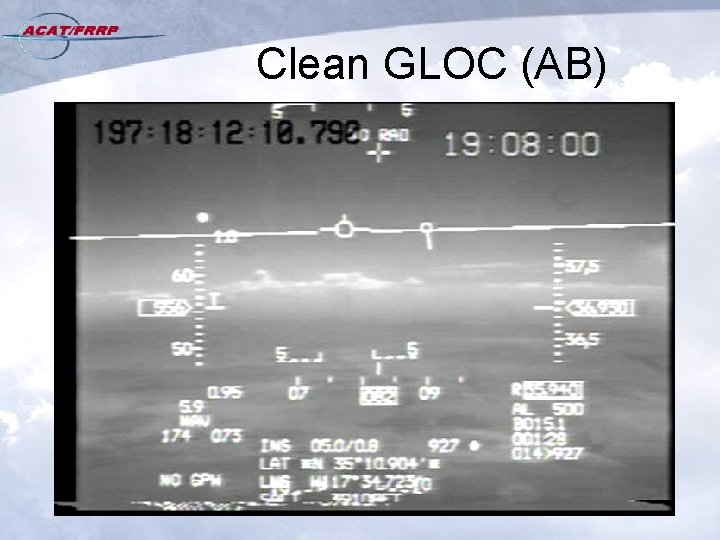
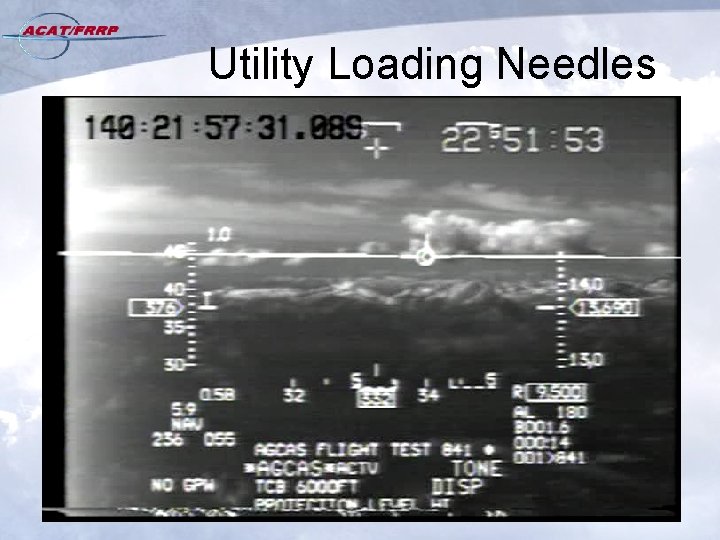
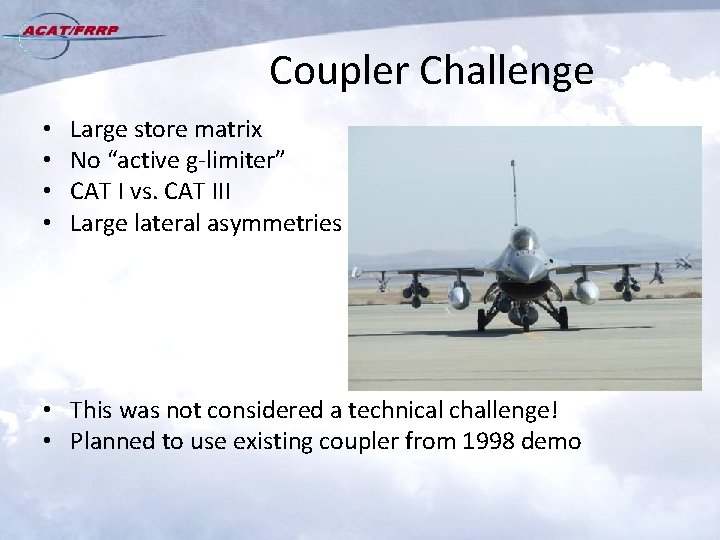
TPA Improvements • Predict recovery to very high fidelity – Run ~180 times faster than real time – No Auto-throttle: Do not know what pilot will do with throttle • Complicates high speed recovery prediction • An assumption must be made for climbing recoveries • No PLA on MUX so an estimate must be made about current PLA – Large store loading matrix across significant gross weight band – CAT I and III loadings – Lateral asymmetries up to 25, 000 ft-lbs • Latency issues of aircraft state data effects accuracy of prediction (Roll Axis of fighter aircraft) “Arrested Roll Angle” significant determinant of Altitude Lost Nuisance criteria extremely useful to “Tune”
Clean GLOC (AB)
Utility Loading Needles
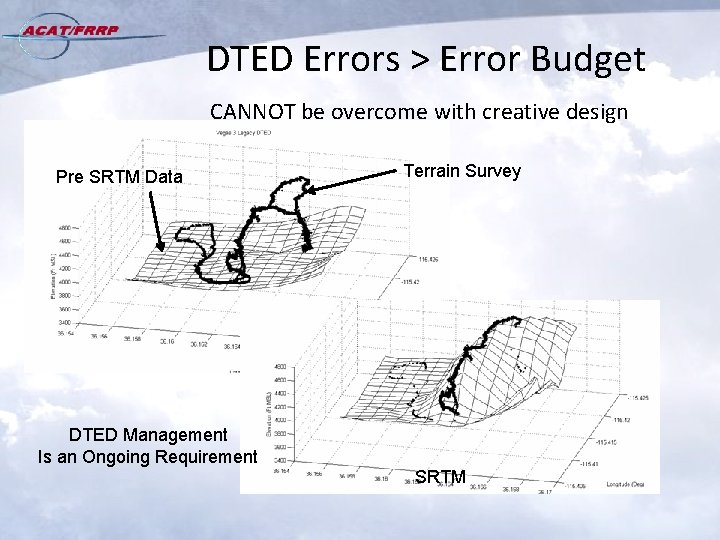
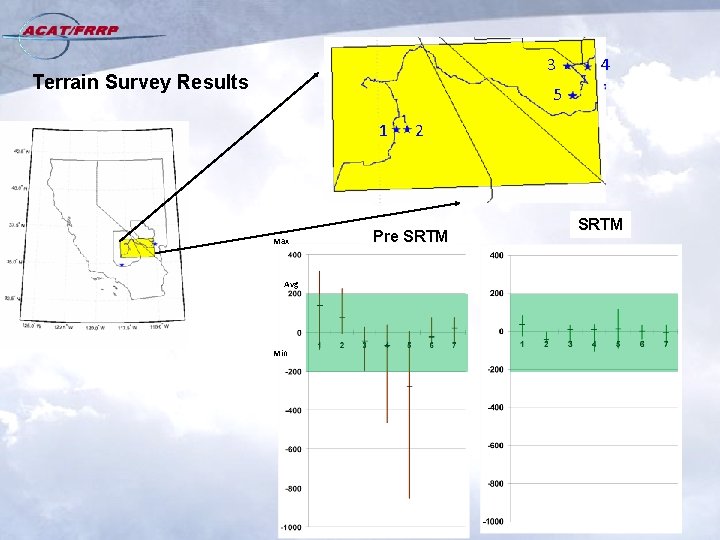
DTED Errors > Error Budget CANNOT be overcome with creative design Pre SRTM Data Terrain Survey DTED Management Is an Ongoing Requirement SRTM
3 Terrain Survey Results 4 5 1 Max Avg Min 2 Pre SRTM
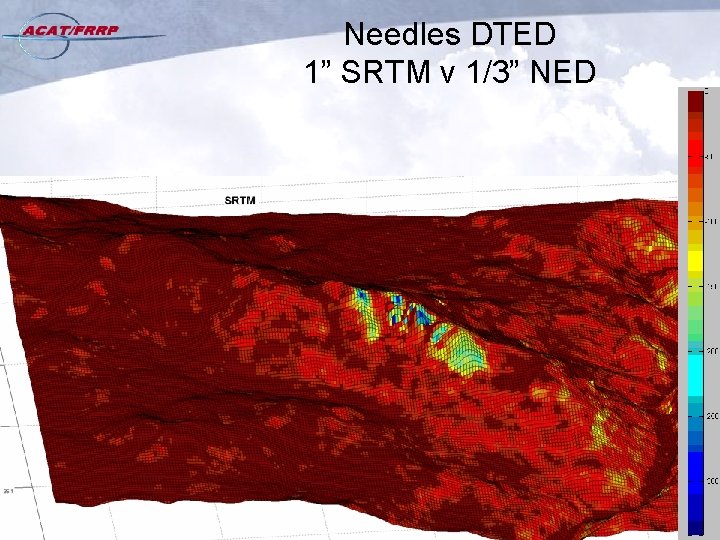
Needles DTED 1” SRTM v 1/3” NED
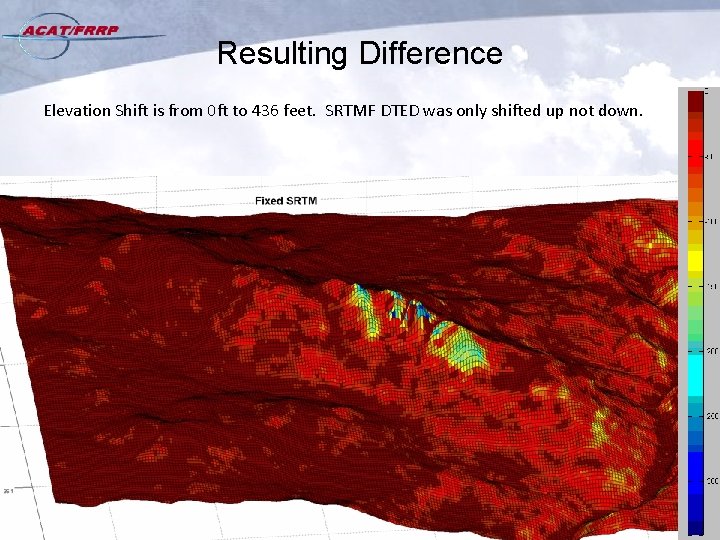
Resulting Difference Elevation Shift is from 0 ft to 436 feet. SRTMF DTED was only shifted up not down.
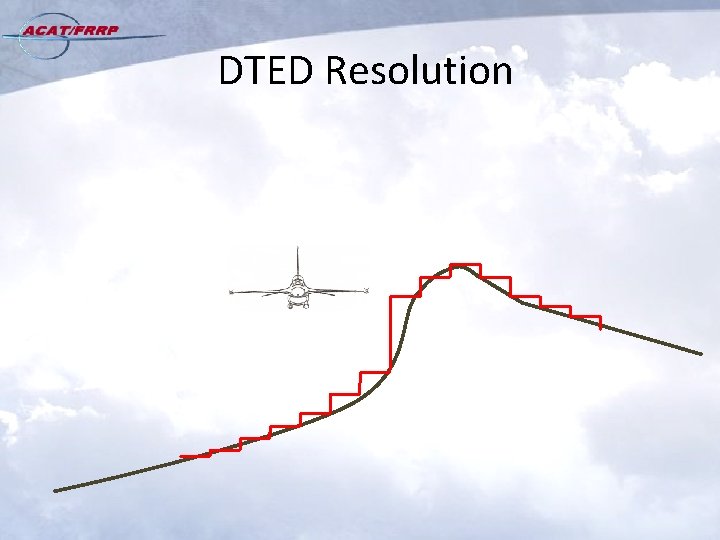
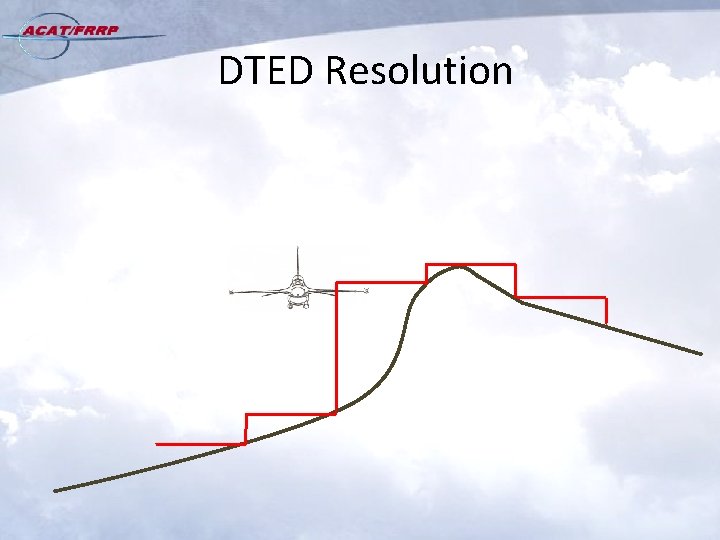
DTED Conclusions • Pre-SRTM DTED – Unsuitable for Nuisance free operation below 500’/200’ (Rough/Smooth Terrain) – Get SRTM data from NGA • SRTM Data – Capable of supporting 200’/100’ Nuisance free operations (rough/smooth terrain) – Enhancements required to provide full protection over select features in a low level mode. DTED Management! • SRTM Inaccuracy – Average Error (Small)– Add Pad – Errors on Peaks (Large but isolated) – Tradeoff in favor of protection in HI, in favor of nuisance free in LO – Foliage Study Ongoing
DTED Resolution
DTED Resolution
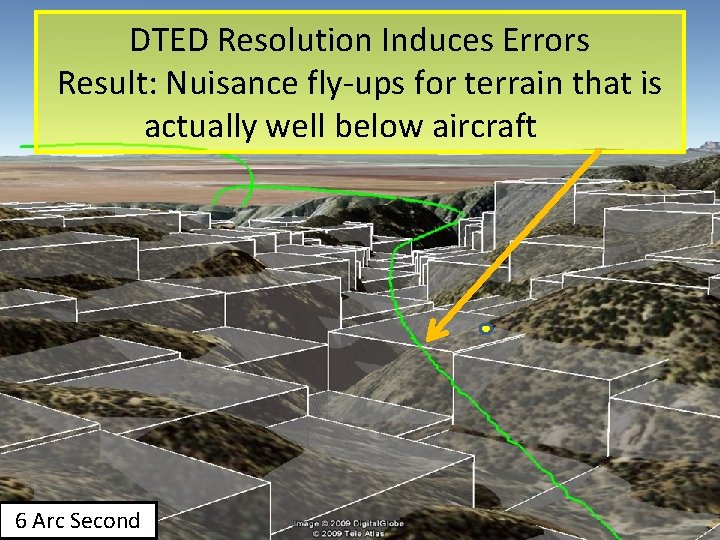
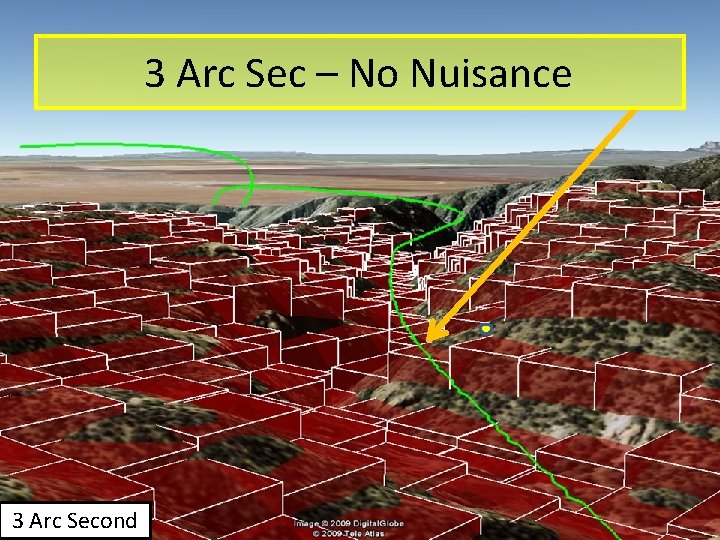
DTED Resolution Induces Errors Result: Nuisance fly-ups for terrain that is actually well below aircraft 6 Arc Second
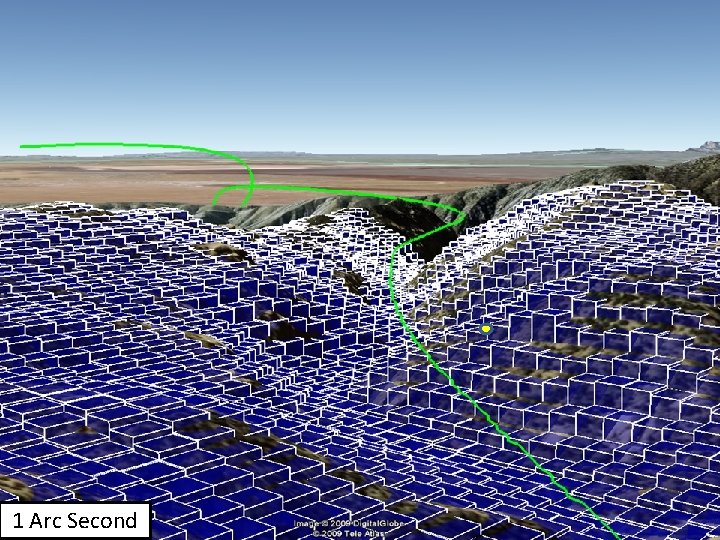
3 Arc Sec – No Nuisance 3 Arc Second
1 Arc Second
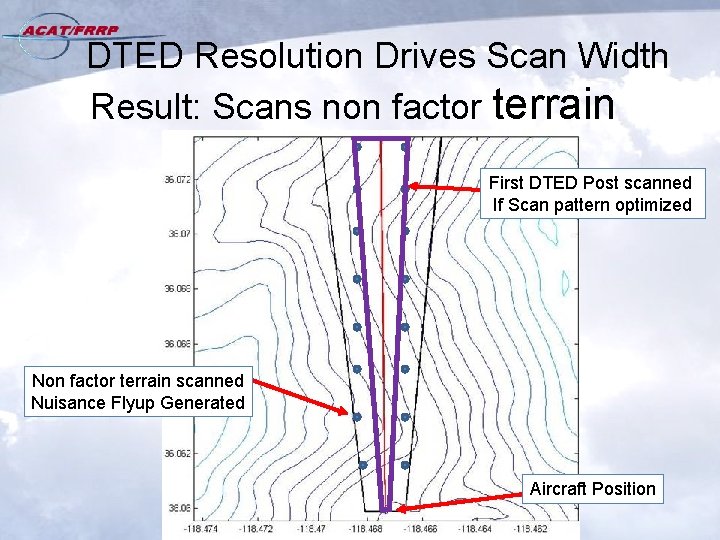
DTED Resolution Drives Scan Width Result: Scans non factor terrain First DTED Post scanned If Scan pattern optimized Non factor terrain scanned Nuisance Flyup Generated Aircraft Position
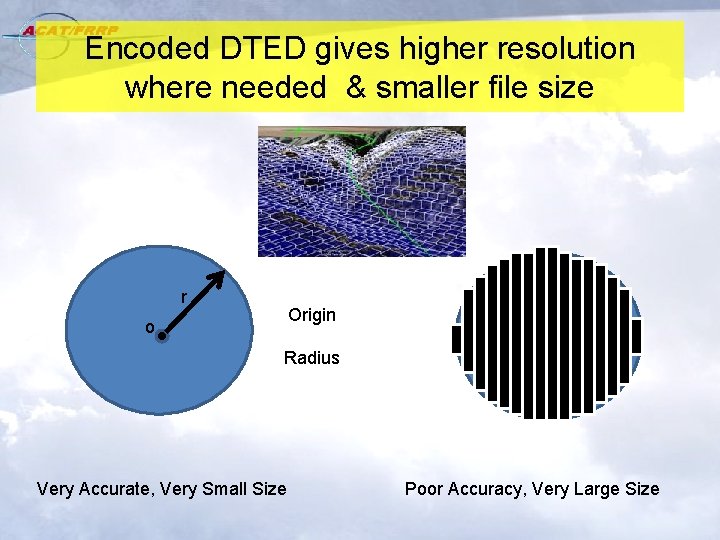
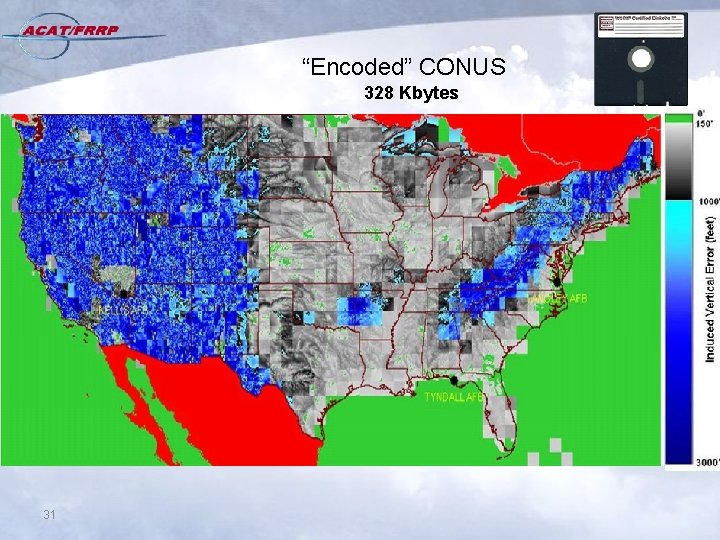
Encoded DTED gives higher resolution where needed & smaller file size r Origin o Radius Very Accurate, Very Small Size Poor Accuracy, Very Large Size
“Encoded” CONUS 328 Kbytes 31
Coupler Challenge • • Large store matrix No “active g-limiter” CAT I vs. CAT III Large lateral asymmetries • This was not considered a technical challenge! • Planned to use existing coupler from 1998 demo
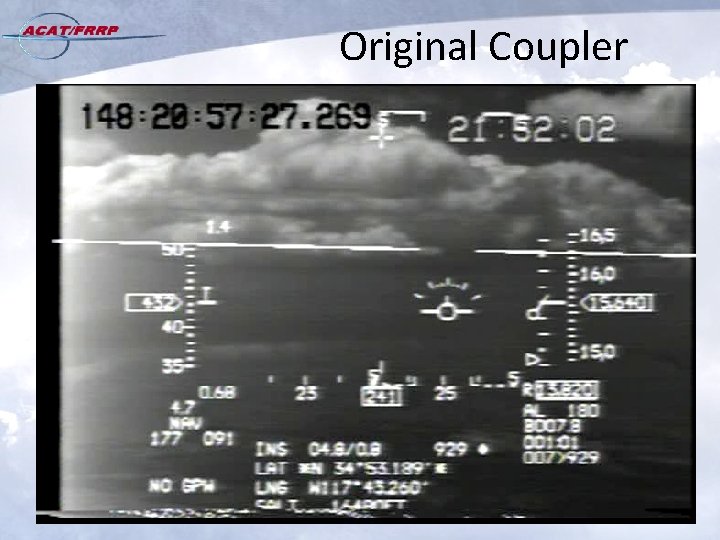
Original Coupler
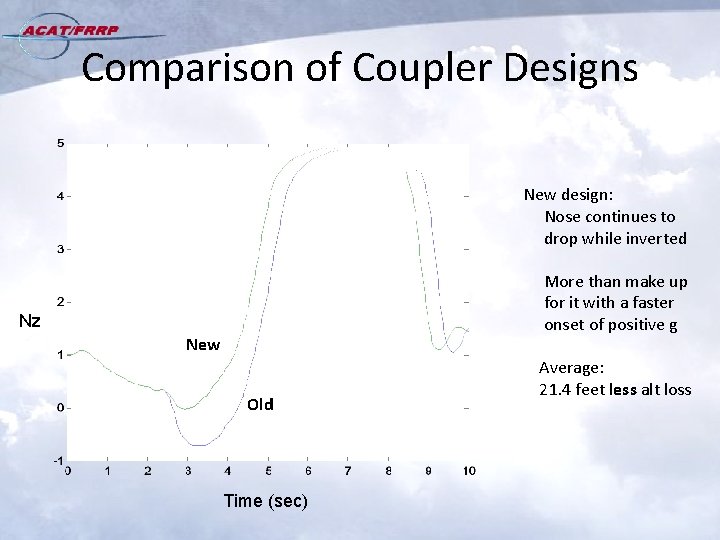
Coupler Design Improvements • Longitudinal: Zero g unload vice -1 g push When at high g, Unload prior to beginning roll • Lateral: Roll-Through logic improved to prevent dwells inverted G-limiter as a function of roll rate Transonic Improvements External wing tank rolling g limits >. 95 M with fuel • Reduced altitude lost • Significantly better ride quality • Significant improvement in Over-g protection
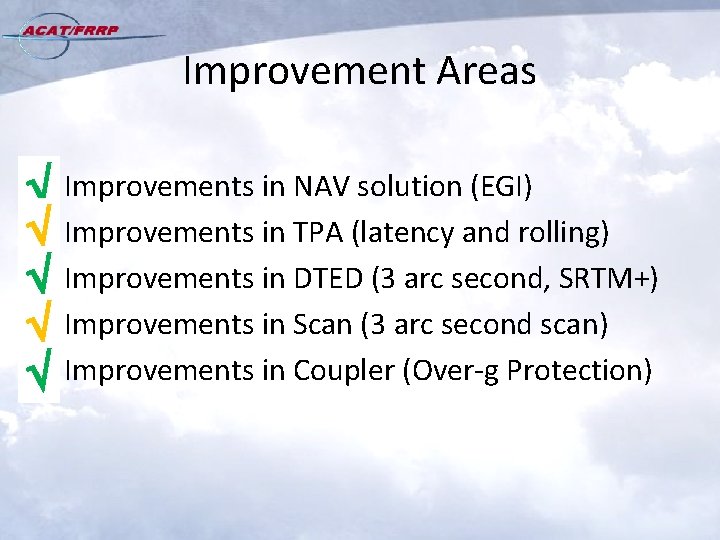
Improvement Areas Ö • Ö • Ö • Improvements in NAV solution (EGI) Improvements in TPA (latency and rolling) Improvements in DTED (3 arc second, SRTM+) Improvements in Scan (3 arc second scan) Improvements in Coupler (Over-g Protection)
Lessons Learned • Develop, evaluate, refine Auto-maneuver first – Trajectory predictions, scan patterns depend on this • Don’t assume that something tested previously isn’t broke • Garbage in, Garbage out – Cannot avoid a hill you do not know exists – DTED is King – Do not accept Status Quo – DTED is not “off limits”
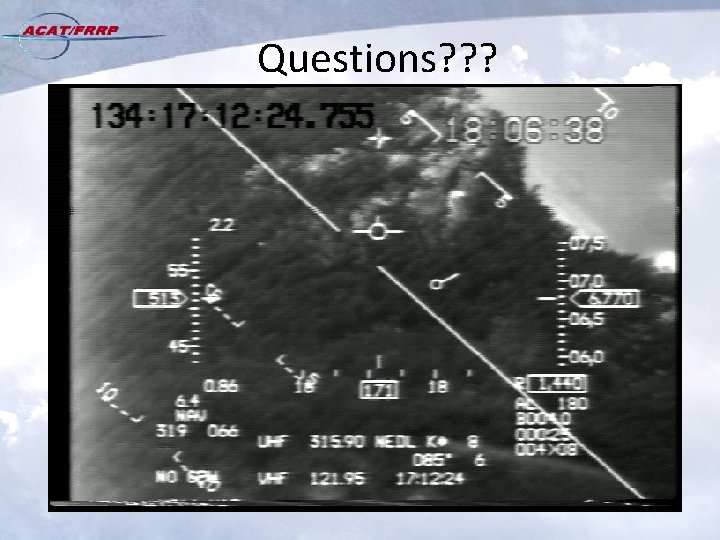
Questions? ? ?
Improvement Areas • • • Improvements in NAV solution Improvements in TPA Improvements in DTED Improvements in Scan Improvements in Coupler
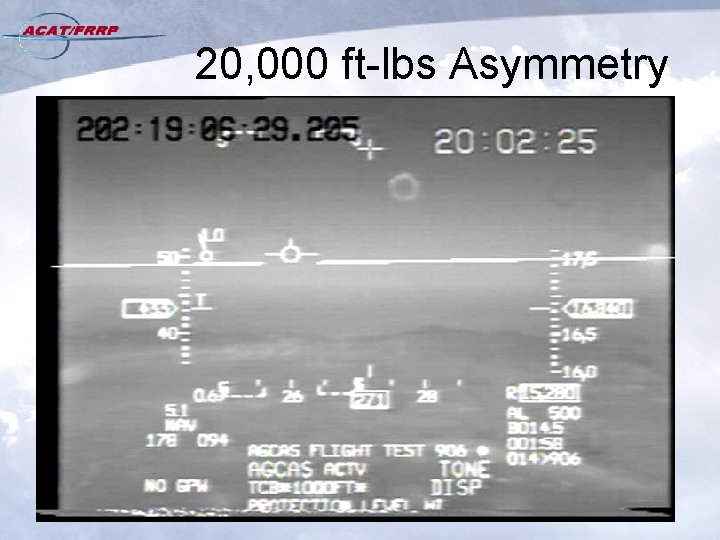
20, 000 ft-lbs Asymmetry
Comparison of Coupler Designs New design: Nose continues to drop while inverted More than make up for it with a faster onset of positive g Nz New Old Time (sec) Average: 21. 4 feet less alt loss
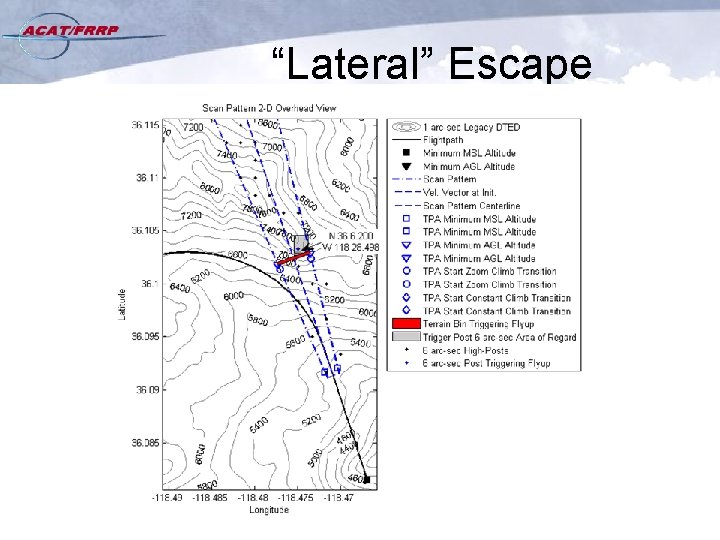
“Lateral” Escape