
ACARI MITES TICKS Mites and ticks collectively known


- Slides: 47
ACARI MITES & TICKS
• Mites and ticks, collectively known as the Acari, constitute the second most diverse group of animals on the planet today and are of interest to humans for a variety of reasons. They directly affect our well being as parasites, vectors of disease, and producers of allergens.
Three things distinguish acari from insects: (1)The head, thorax, and abdomen are fused into one body segment; (2) they do not have wings and antennae; and (3) in the nymph and adult stages they have four pairs of legs.
Ticks
• Ticks are blood feeding external parasites of mammals, birds, and reptiles throughout the world. Approximately 850 species have been described worldwide. There are two well established families of ticks, the Ixodidae (hard ticks), and Argasidae (soft ticks).
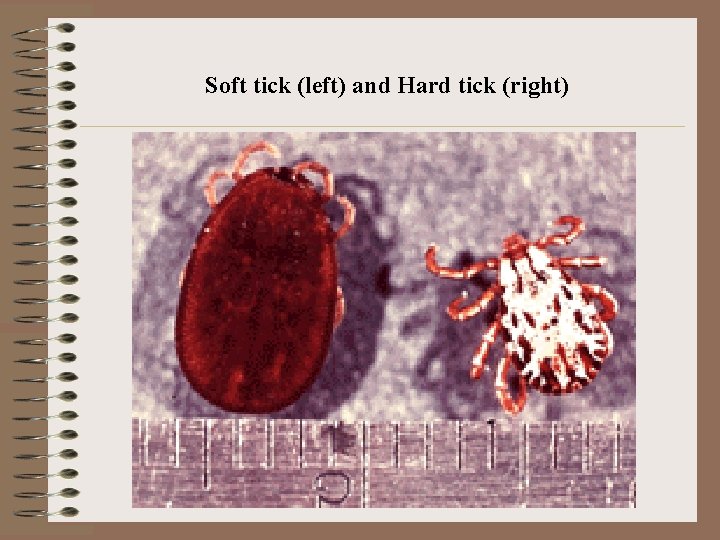
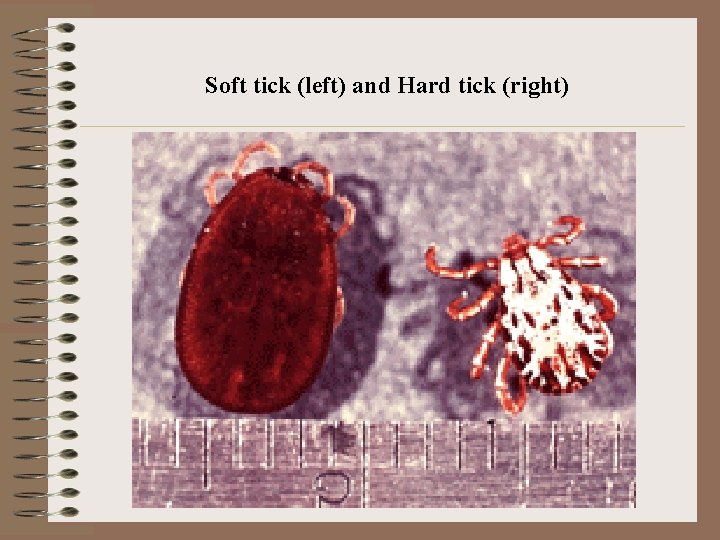
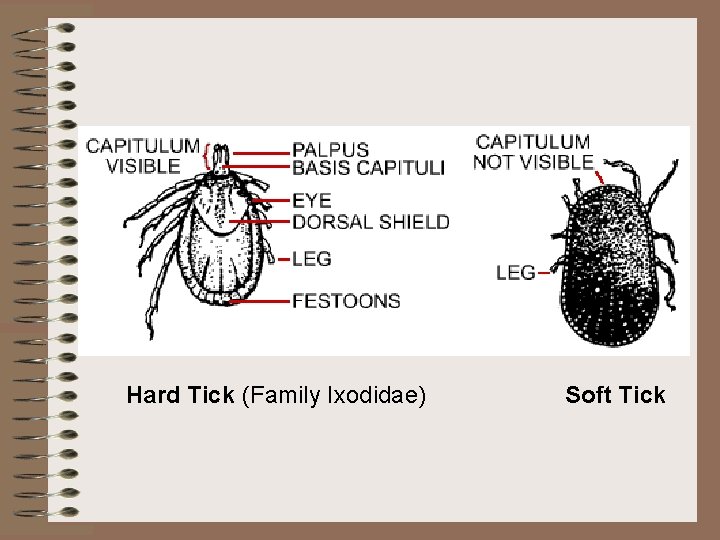
Soft tick (left) and Hard tick (right)
• Both are important vectors of disease causing agents to humans and animals throughout the world. Ticks transmit the widest variety of pathogens of any blood sucking arthropod, including bacteria, rickettsiae, protozoa, and viruses.
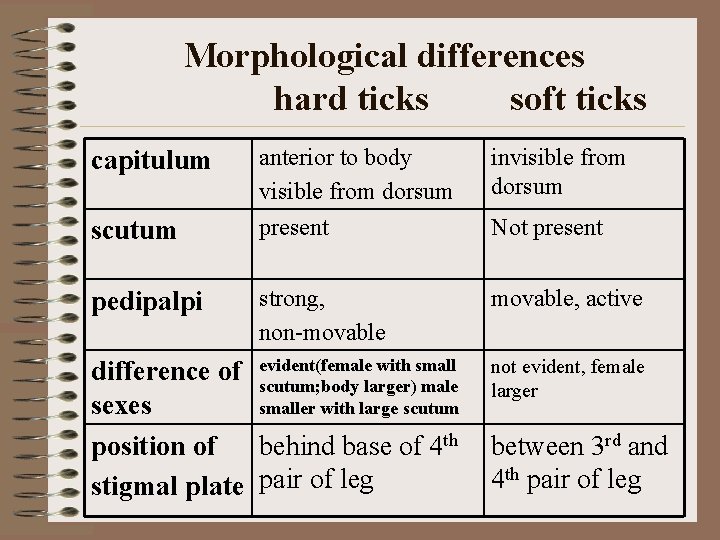
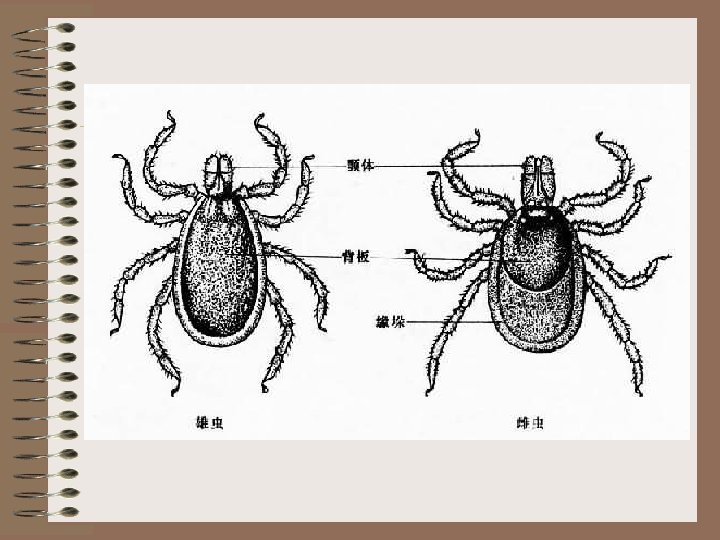
Hard Ticks • Hard Ticks are distinguished by a dorsal shield. The dorsal shield is small in the female, but in the male it covers the entire dorsal surface. Hard ticks are also tapered anteriorly and the mouthparts are readily visible from the dorsal view.
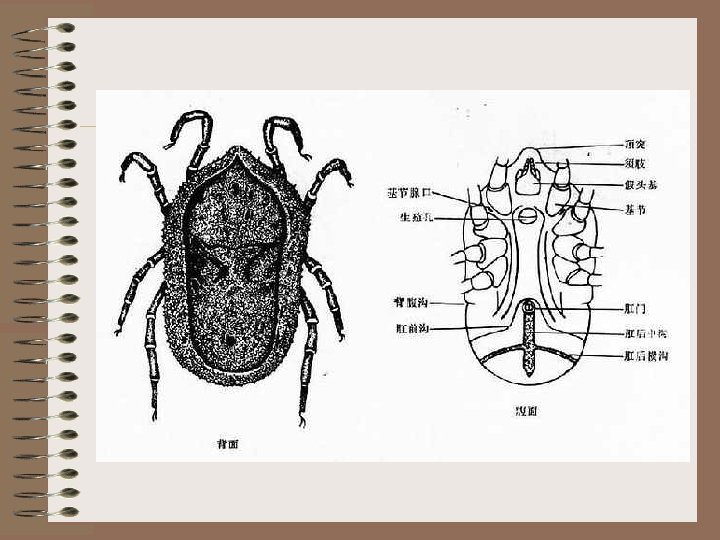
Soft Ticks • Soft Ticks are leathery and without a dorsal shield. Their mouthparts are subterminally attached and not visible from the dorsal view.
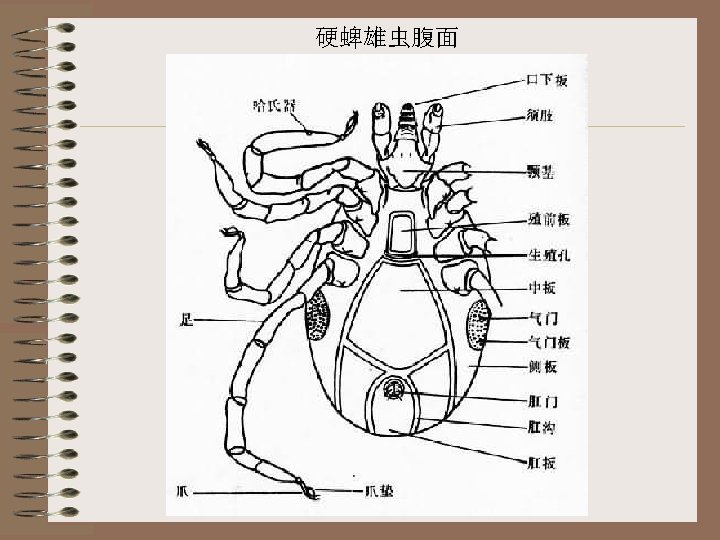
Morphological differences hard ticks soft ticks capitulum scutum pedipalpi anterior to body visible from dorsum present invisible from dorsum strong, non-movable, active Not present with small not evident, female difference of evident(female scutum; body larger) male larger smaller with large scutum sexes position of behind base of 4 th between 3 rd and th pair of leg 4 stigmal plate
Soft tick (left) and Hard tick (right)
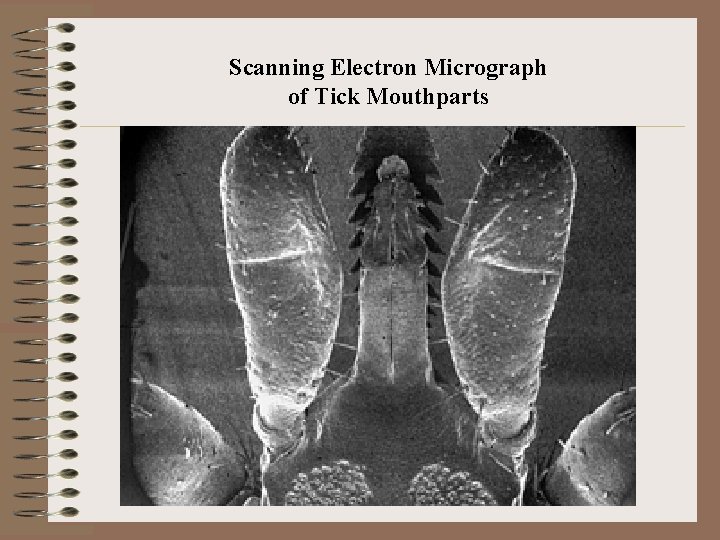
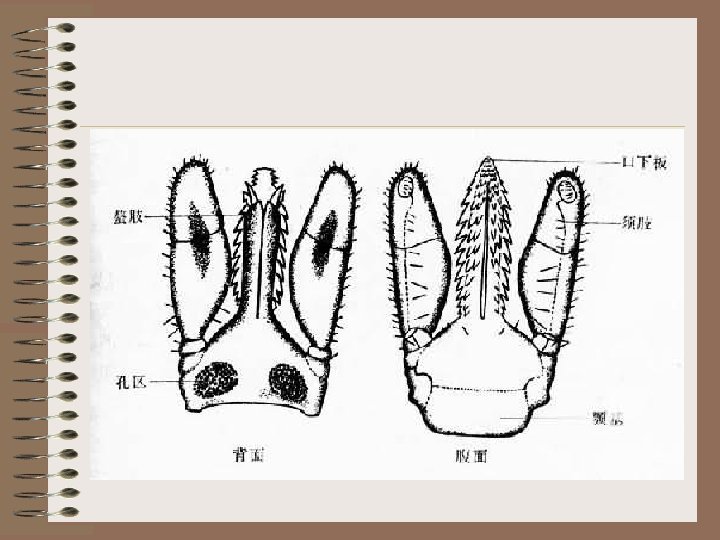
Scanning Electron Micrograph of Tick Mouthparts
Hard Tick (Family Ixodidae) Soft Tick
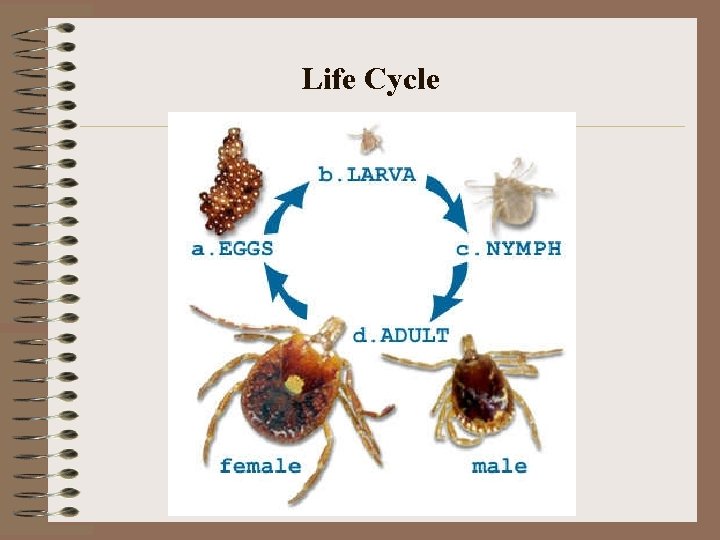
Life Cycle
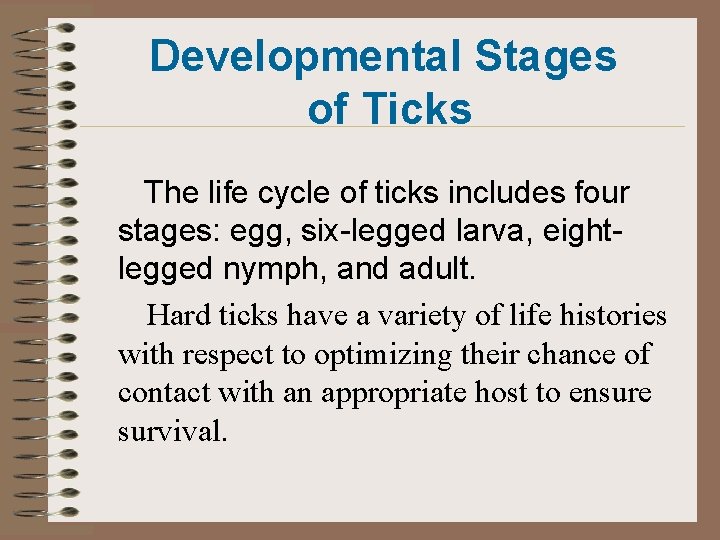
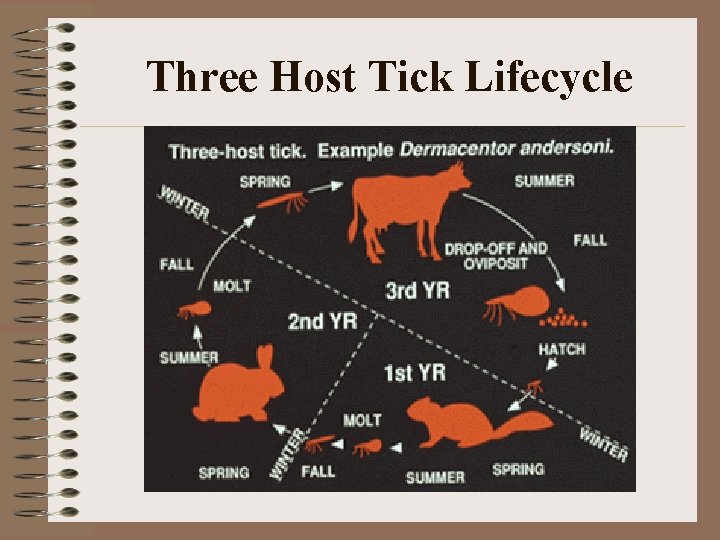
Developmental Stages of Ticks The life cycle of ticks includes four stages: egg, six-legged larva, eightlegged nymph, and adult. Hard ticks have a variety of life histories with respect to optimizing their chance of contact with an appropriate host to ensure survival.
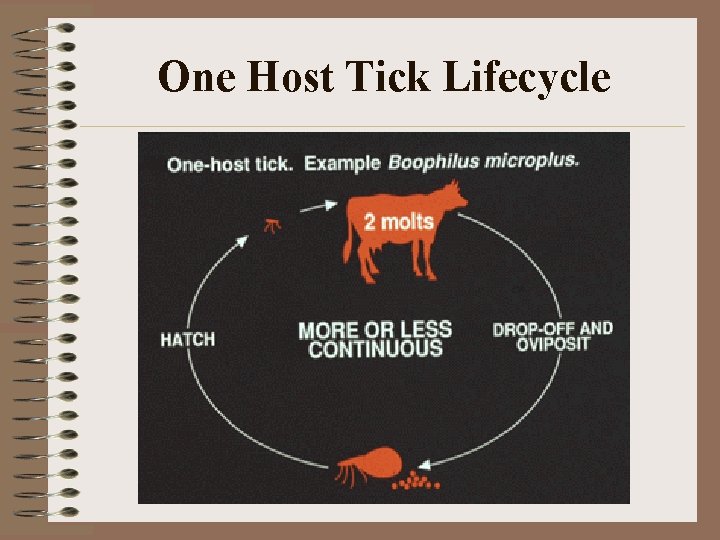
One Host Tick Lifecycle
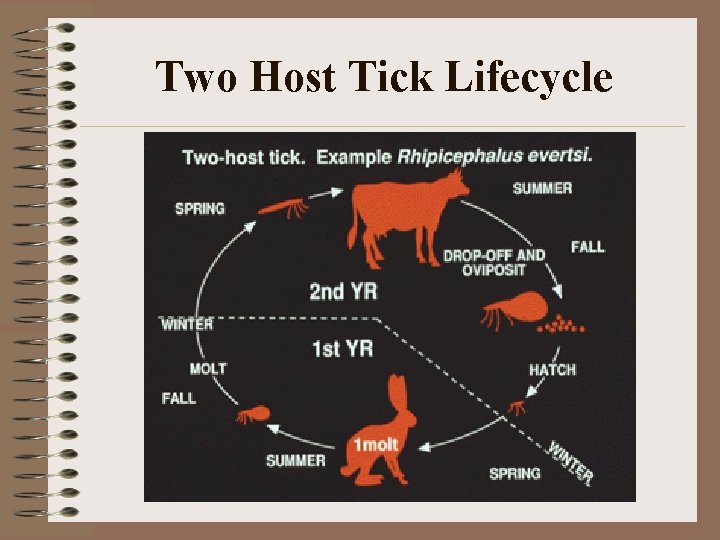
Two Host Tick Lifecycle
Three Host Tick Lifecycle
The Egg Mating of hard ticks usually occurs while they are on the host animal. Afterwards the female drops to the ground and, after a brief pre-oviposition period of three to 10 days, begins to deposit eggs on or near the earth. The female hard tick feeds once, lays one large batch of eggs sometimes numbering in the thousands, and dies.
The Egg • Most of the soft ticks engorge with blood several times and deposit about 20 to 50 eggs in a batch after each blood meal. Eggs hatch in two weeks to several months, depending upon temperature, humidity and other environmental factors.
The Larva • The larvae, or “seed ticks, ” have only six legs, and the sexes are indistinguishable. Their chances of attaching to a host are precarious (不稳 定的), sometimes resulting in prolonged fasts(禁食).
The Larva • Despite tolerance to starvation, a very high percentage die. Some individuals climb on vegetation, waiting for a small rodent to pass within reach. Some actively seek a vertebrate host, being guided by the sent of the animal. After a blood meal, the engorged larvae usually drop to the soil and molt to the eight-legged nymph stage. The larvae of one -host ticks remain on the host to molt.
The Nymph • The nymph has eight legs like the adult but has no genital opening. This stage also must undergo a critical waiting period for a suitable host. After engorgement, the nymph drops from the host, molts, and becomes an adult. Nymphs may rest for long periods before becoming adults. Some species of hard ticks live less than one year while others live three years or more.
The Nymph • Each time a tick leaves its host it risks its survival on finding another host. Some species have the advantage of molting on the host. For example, the cattle tick is a one-host tick. Multiplehost tick species are able to exist because of their great reproductive capacity and their ability to survive for a long time without food.
The Nymph • Hard ticks have only one nymphal instar, the nymph becoming an adult after molting. Soft ticks may have several nymphal instars.
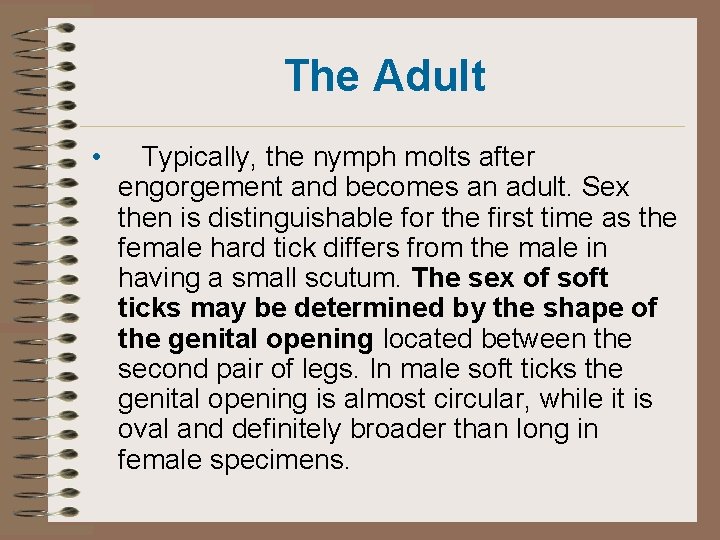
The Adult • Typically, the nymph molts after engorgement and becomes an adult. Sex then is distinguishable for the first time as the female hard tick differs from the male in having a small scutum. The sex of soft ticks may be determined by the shape of the genital opening located between the second pair of legs. In male soft ticks the genital opening is almost circular, while it is oval and definitely broader than long in female specimens.
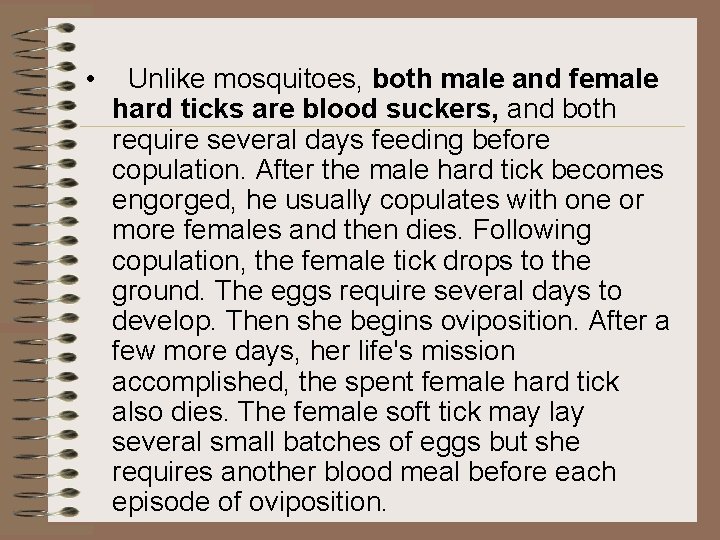
• Unlike mosquitoes, both male and female hard ticks are blood suckers, and both require several days feeding before copulation. After the male hard tick becomes engorged, he usually copulates with one or more females and then dies. Following copulation, the female tick drops to the ground. The eggs require several days to develop. Then she begins oviposition. After a few more days, her life's mission accomplished, the spent female hard tick also dies. The female soft tick may lay several small batches of eggs but she requires another blood meal before each episode of oviposition.
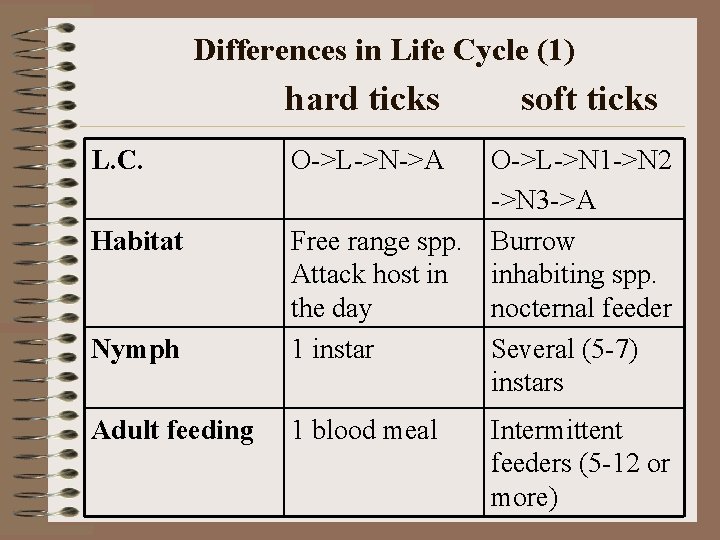
Differences in Life Cycle (1) hard ticks L. C. Habitat Nymph Adult feeding soft ticks O->L->N->A O->L->N 1 ->N 2 ->N 3 ->A Free range spp. Burrow Attack host in inhabiting spp. the day nocternal feeder 1 instar Several (5 -7) instars 1 blood meal Intermittent feeders (5 -12 or more)
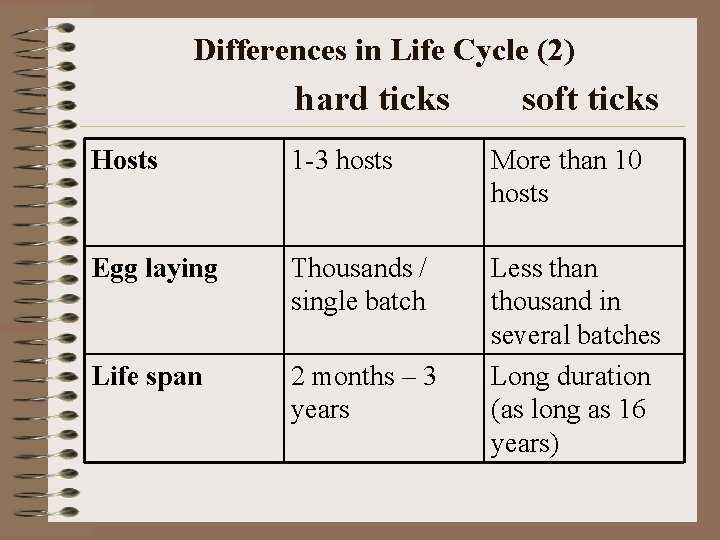
Differences in Life Cycle (2) hard ticks soft ticks Hosts 1 -3 hosts More than 10 hosts Egg laying Thousands / single batch Life span 2 months – 3 years Less than thousand in several batches Long duration (as long as 16 years)
Family Argasidae (Soft Ticks)
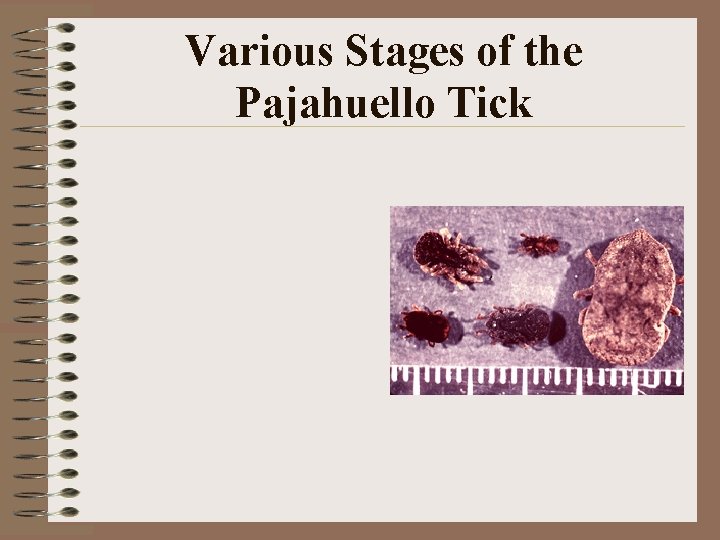
Various Stages of the Pajahuello Tick
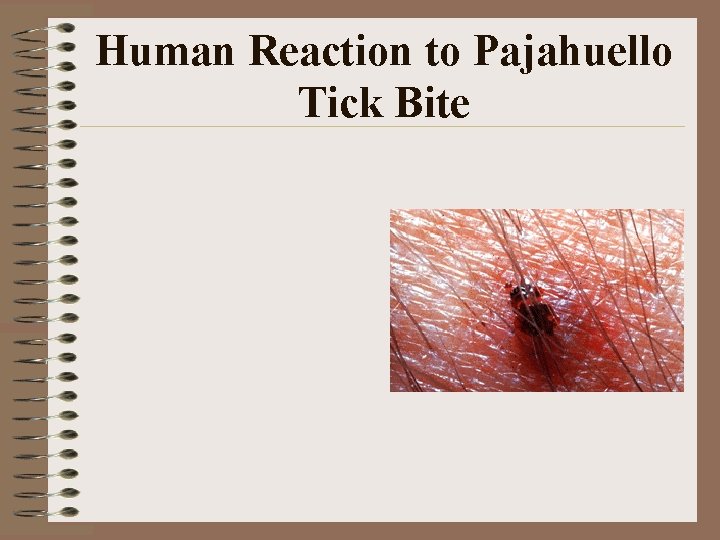
Human Reaction to Pajahuello Tick Bite
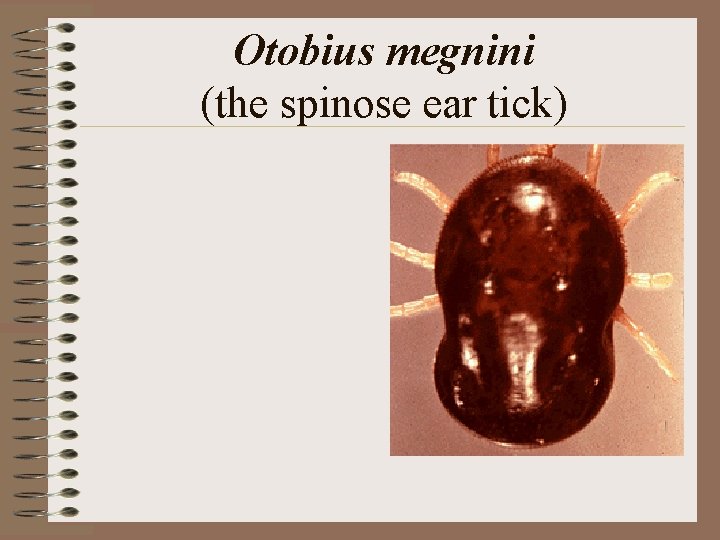
Otobius megnini (the spinose ear tick)
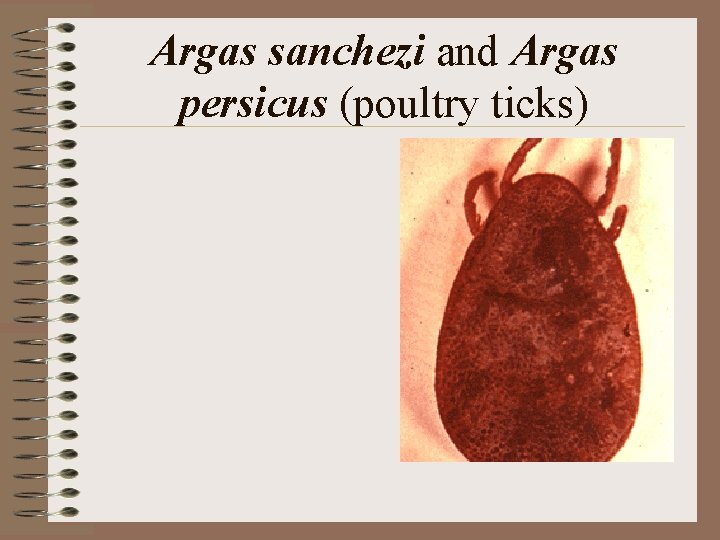
Argas sanchezi and Argas persicus (poultry ticks)
Family Ixodidae (Hard Ticks)
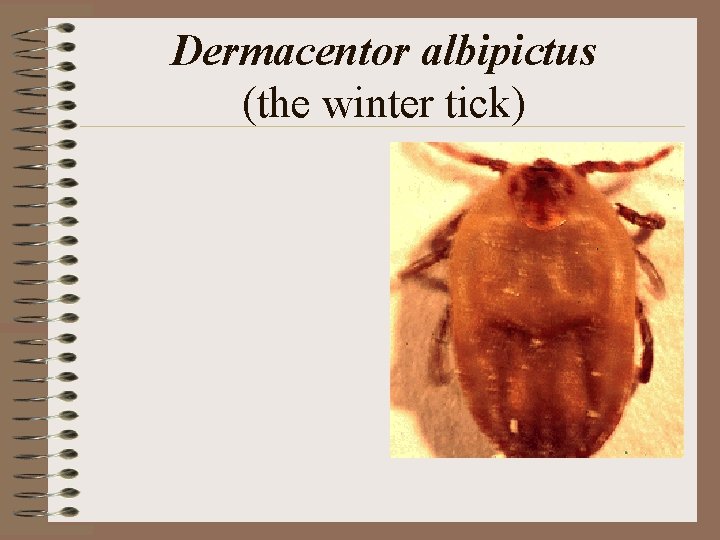
Dermacentor albipictus (the winter tick)
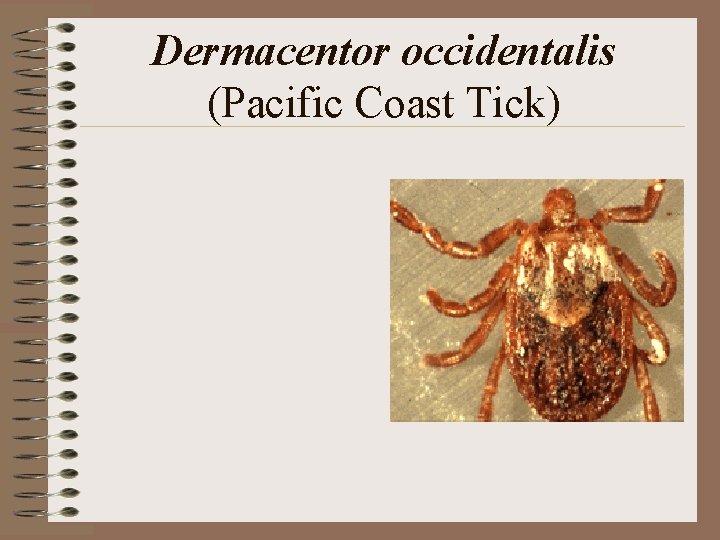
Dermacentor occidentalis (Pacific Coast Tick)
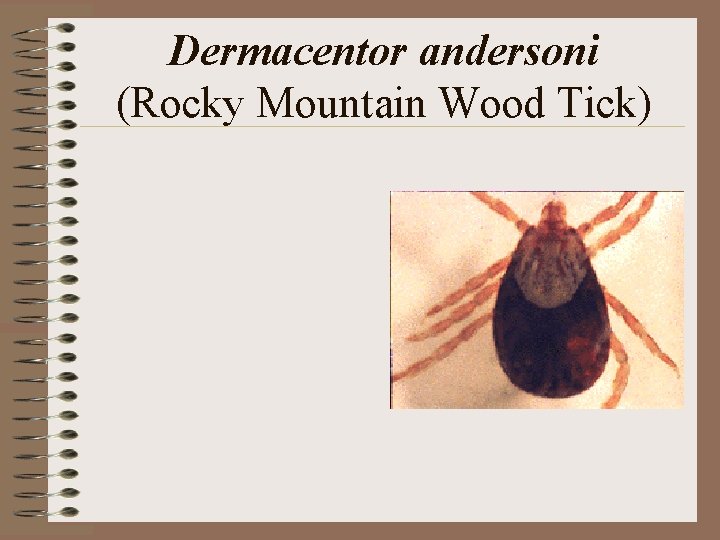
Dermacentor andersoni (Rocky Mountain Wood Tick)
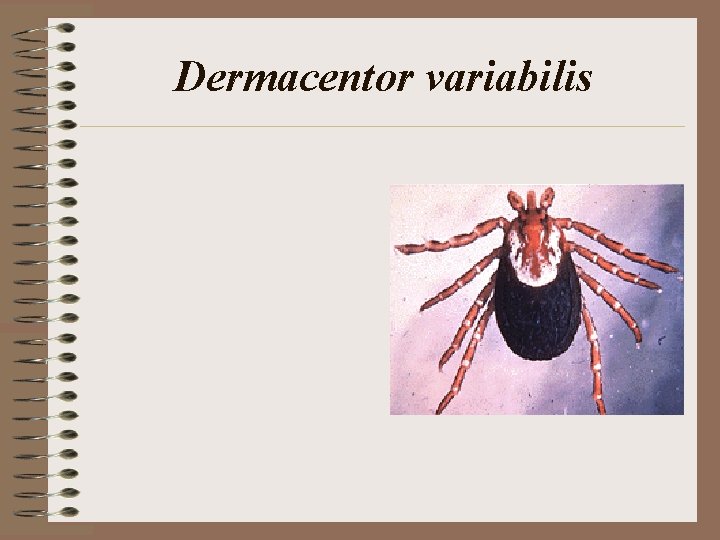
Dermacentor variabilis
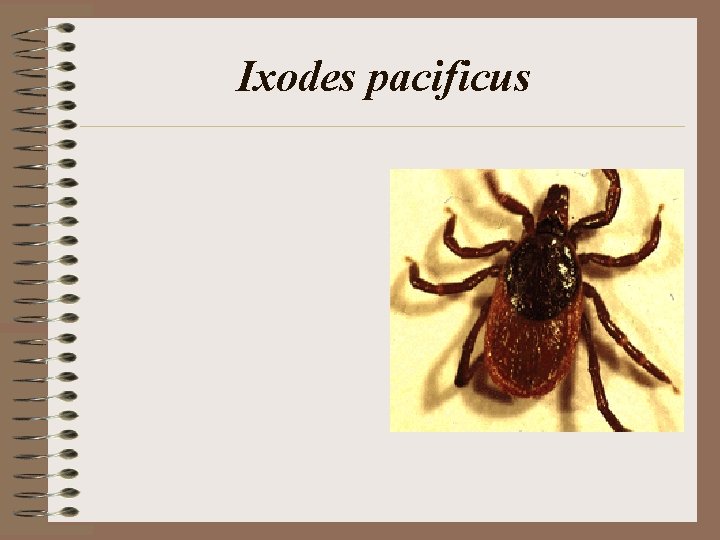
Ixodes pacificus
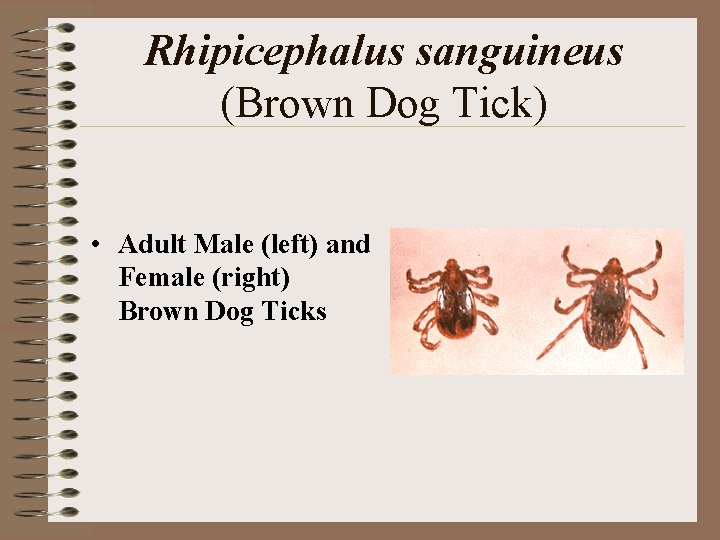
Rhipicephalus sanguineus (Brown Dog Tick) • Adult Male (left) and Female (right) Brown Dog Ticks
Ticks and diseases • • Tick Paralysis Rocky Mountain Spotted Fever Lyme Disease (spirochaete) Tick-borne encephalitis Tick-borne relapsing fever Tularemia(野兔病) Babesiosis
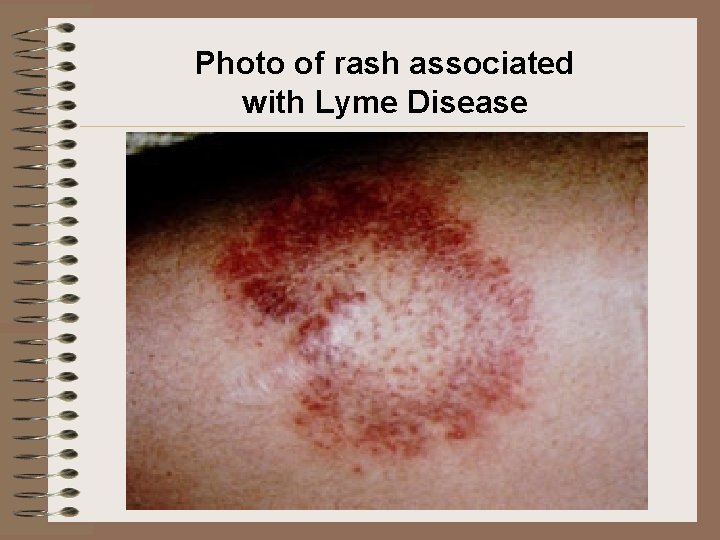
Photo of rash associated with Lyme Disease