
Academic Writing Ontology and Epistemology Original Contribution to
Academic Writing, Ontology and Epistemology: Original Contribution to Knowledge: What exactly does this mean? Prof P Msweli School of Business Leadership University of South Africa
The purpose of these sessions is to explain research and knowledge creation in the context of business research in simple terms

Let us look at the purpose of scholarly research? The fundamental aim of scholarly research is to contribute to existing knowledge in ways that bring solutions to business research problems
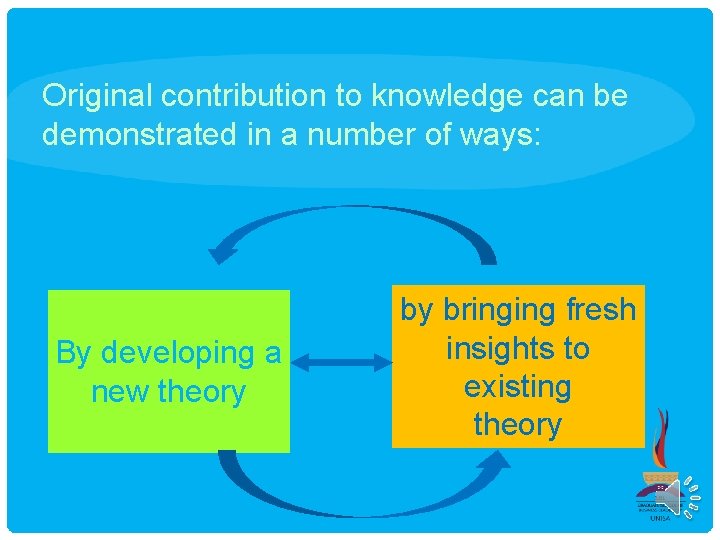
Original contribution to knowledge can be demonstrated in a number of ways: By developing a new theory by bringing fresh insights to existing theory
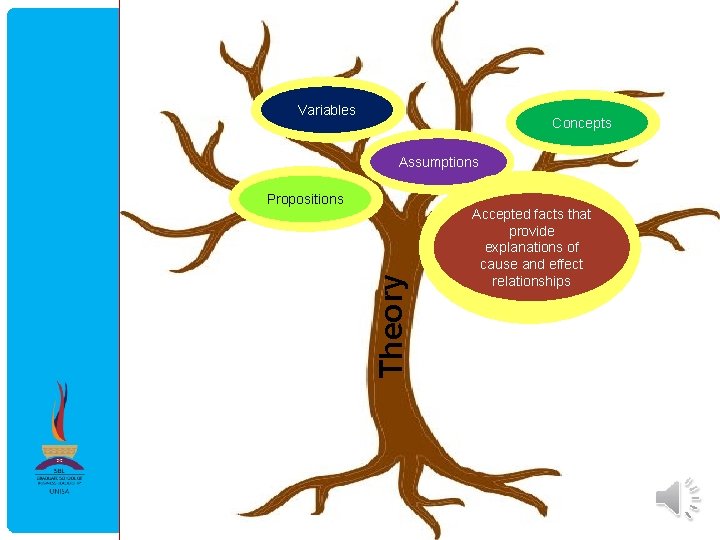
Variables Concepts Assumptions Theory Propositions Accepted facts that provide explanations of cause and effect relationships
Additional ways to demonstrate original contribution to knowledge Policy implications of your work and how it fills policy gaps You contribute to knowledge when you provide evidence that contradicts an existing model Carrying out empirical work that has not been done before Show historical perspective of how theory arrived at its present level of understanding Understanding of the controversies and inconsistencies in the research or data Demonstrate clarity of thought and a clear understanding of existing knowledge in the field of study
Additional ways to demonstrate original contribution to knowledge Publishability new questions could generate original and significant knowledge Applying new methods to data Producing new findings Applying existing methods to new data Originality may be evident in the study’s design and the implications derived from the design Application of knowledge with initiative and creativity Implementing a theoretical principle – showing how it can be applied in practice
- Slides: 7