
Academic vs Informal Voice English II 1 Do

- Slides: 7
Academic vs Informal Voice English II
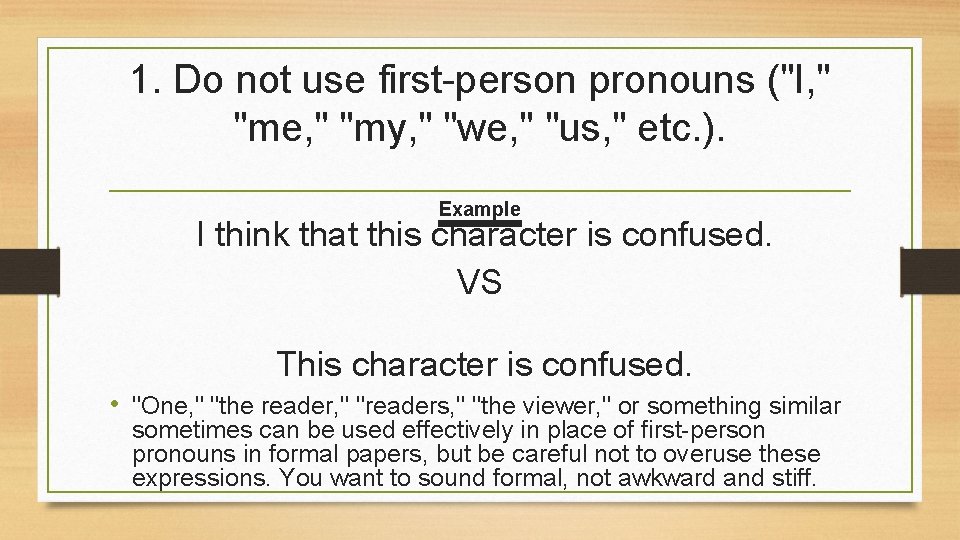
1. Do not use first-person pronouns ("I, " "me, " "my, " "we, " "us, " etc. ). Example I think that this character is confused. VS This character is confused. • "One, " "the reader, " "readers, " "the viewer, " or something similar sometimes can be used effectively in place of first-person pronouns in formal papers, but be careful not to overuse these expressions. You want to sound formal, not awkward and stiff.
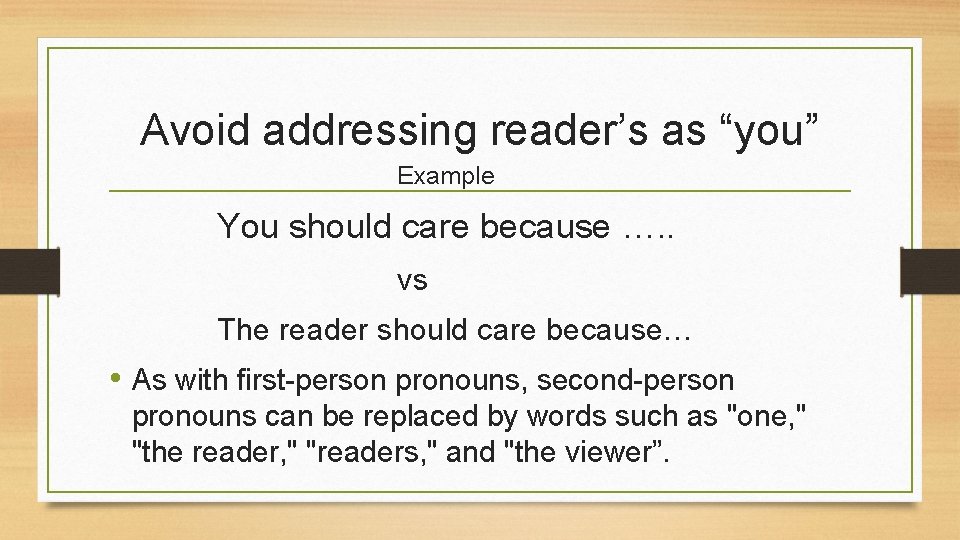
Avoid addressing reader’s as “you” Example You should care because …. . vs The reader should care because… • As with first-person pronouns, second-person pronouns can be replaced by words such as "one, " "the reader, " "readers, " and "the viewer”.
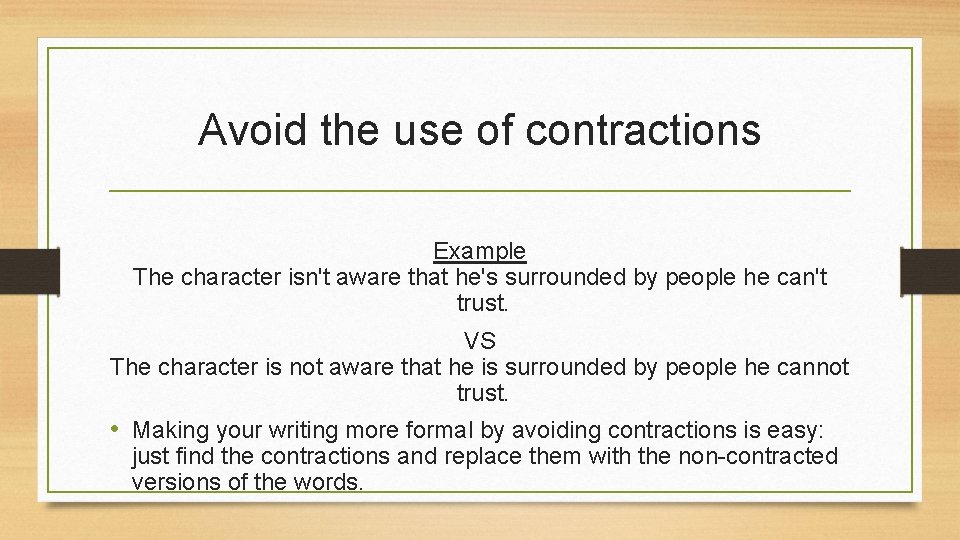
Avoid the use of contractions Example The character isn't aware that he's surrounded by people he can't trust. VS The character is not aware that he is surrounded by people he cannot trust. • Making your writing more formal by avoiding contractions is easy: just find the contractions and replace them with the non-contracted versions of the words.
Avoid abbreviated words • For example, instead of writing "photo, " "phone" and "TV, " write "photograph, " "telephone, " and "television. "
• Turn to your elbow partner. Introduce yourself twice – once in a academic language, once in informal language.
Using Different Types of Voice • Convince your parents to buy you something you’ve been really wanting (keep it school appropriate). *Write in academic voice *In informal voice.