
ACADEMIC VOCABULARY CONNECTIONS IN LITERATURE LEARNING GOAL RL
ACADEMIC VOCABULARY CONNECTIONS IN LITERATURE
LEARNING GOAL • RL. 8. 3: I can analyze how particular lines of dialogue or incidents in a story propel the action, reveal aspects of a character, or provoke a decision.
ANALYZE • Analyze means to unpack the meaning of evidence in a text by interpreting what the evidence suggests through inferential thinking.
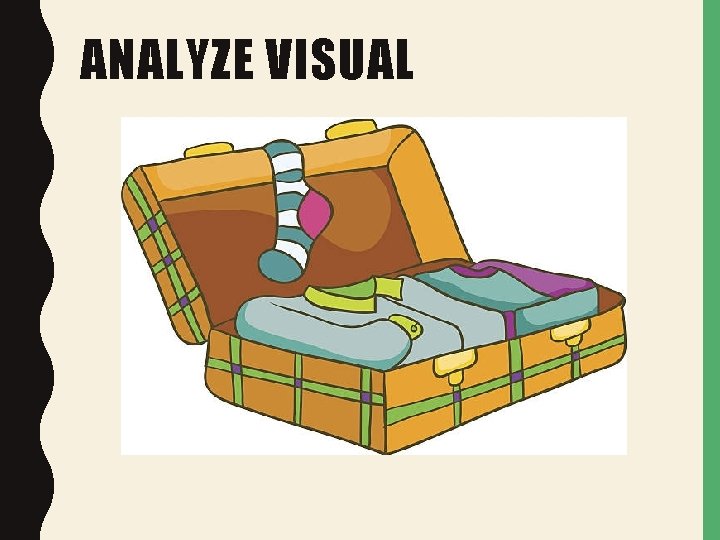
ANALYZE VISUAL
INCIDENT • An incident is an individual event or occurrence.
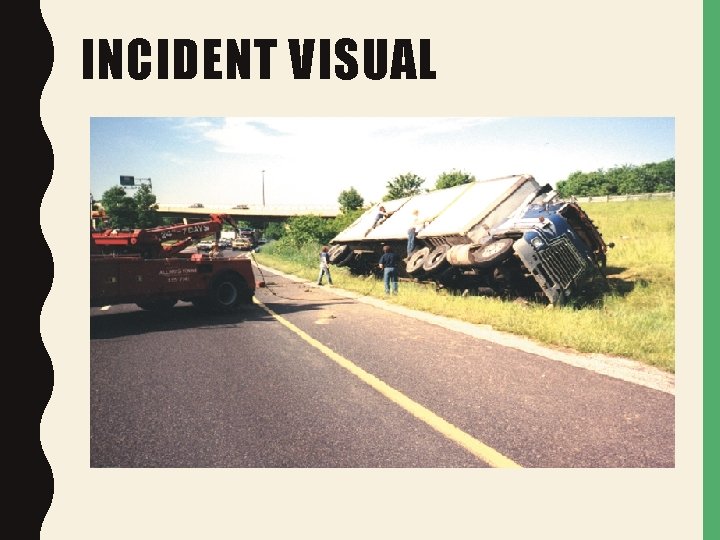
INCIDENT VISUAL
DIALOGUE • Dialogue refers to the spoken parts in a text. • The things characters say and the way they say them can help a reader determine what their personalities are like. • For Example: When Mae Jemison’s teacher asked her, “‘Don’t you mean a nurse? ’” after Mae revealed she wanted to be a scientist when she grew up, the teacher’s comments reveal that she is closed-minded.

DIALOGUE: VISUAL
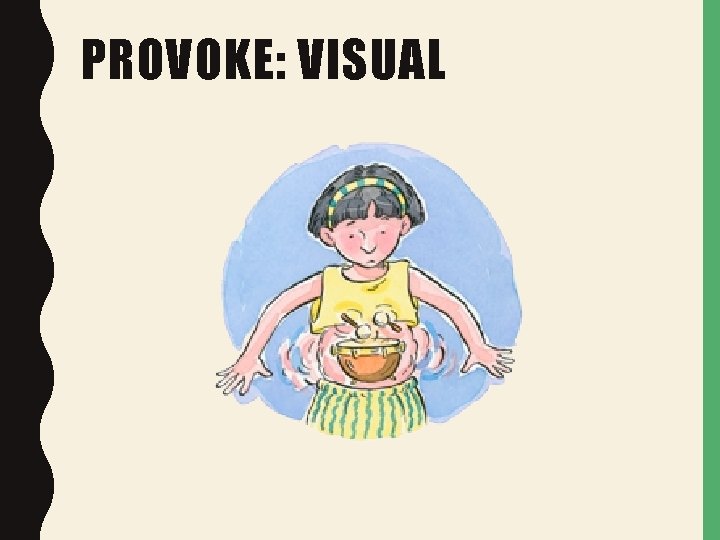
PROVOKE • Provoke means to cause the occurrence of a feeling or action; to make something happen. • For Example: When Andrew Skurka encountered “rotten snow” and less-than-ideal conditions in Alaska, the environment provoked him to feel somewhat defeated because he was not able to hike his normal distances.
PROVOKE: VISUAL
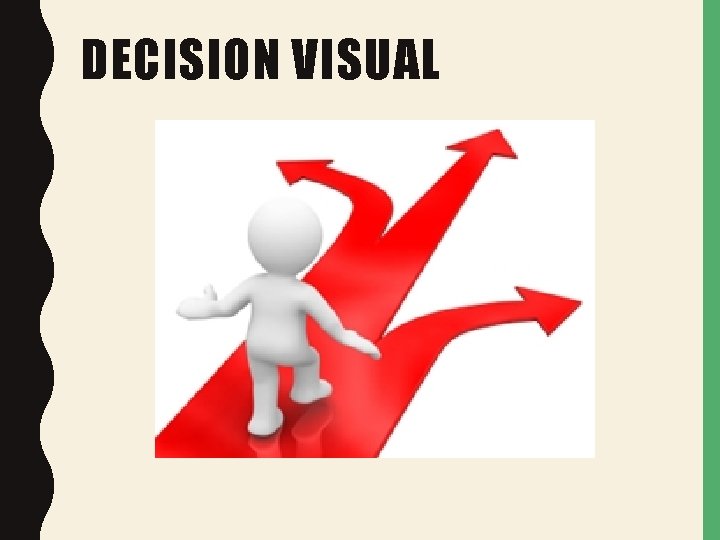
DECISION • A decision is a choice, conclusion, or determination. • How a character decides to react to incidents in a text or to what other characters say can reveal information about that character’s personality. • For Example: Even though people doubted Mae Jemison’s dream to become a scientist, she still decided to pursue a career in the sciences. • Jemison’s decision shows that she is determined and self-confident.
DECISION VISUAL
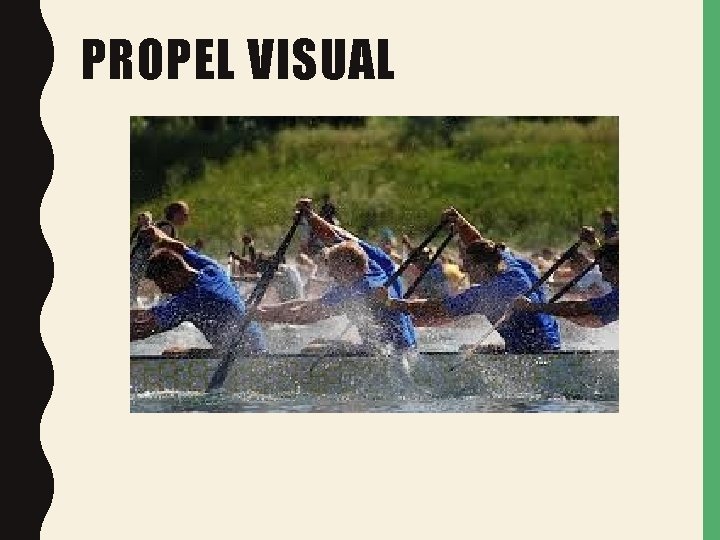
PROPEL • Propel means to drive, push, or cause to move in a particular direction, typically forward.
PROPEL VISUAL
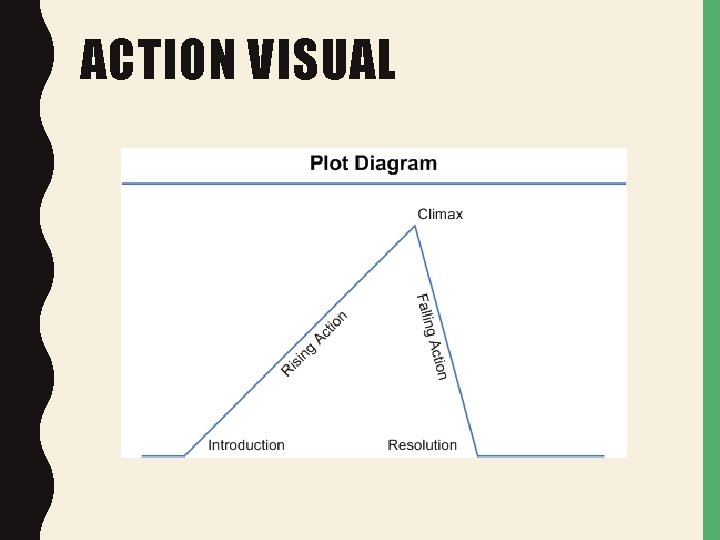
ACTION • Action is the unfolding of the events of a drama or work of fiction or the movement of incidents in a plot.
ACTION VISUAL
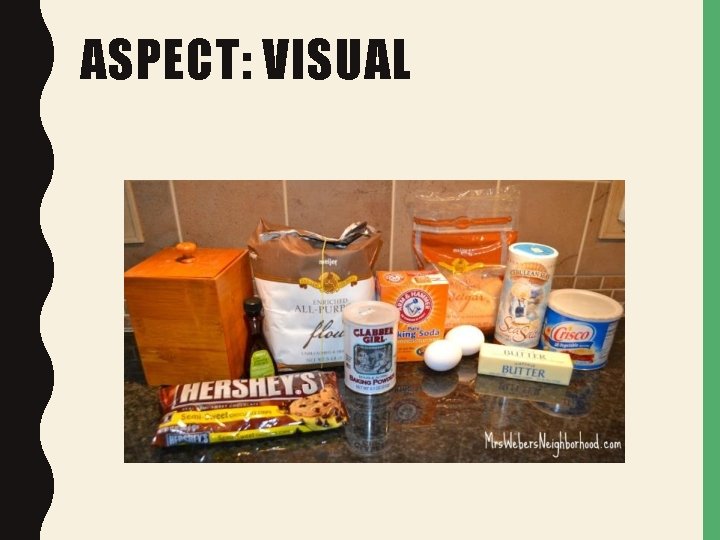
ASPECT • An aspect is a part or facet of something. When we talk about aspects of character, we are talking about parts or facets of a character’s personality or demeanor. • For example: Aspects of Andrew Skurka’s character include intensity, determination, resilience, athleticism, and more.
ASPECT: VISUAL
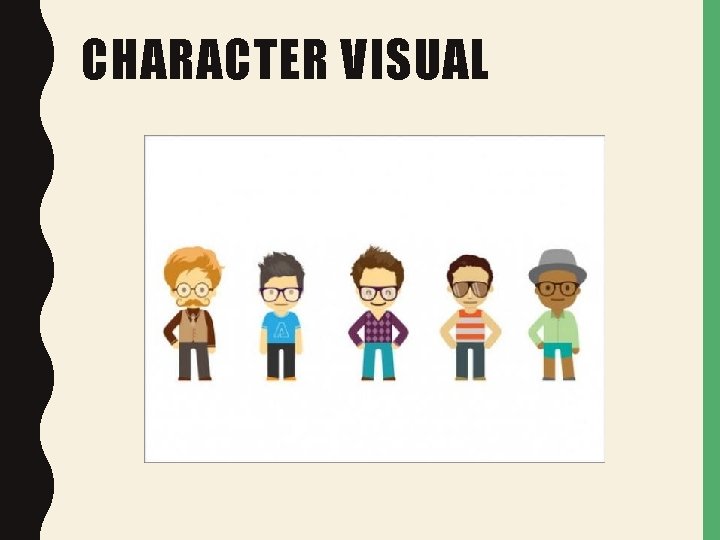
CHARACTER • A character is a person in a novel, play, or movie.
CHARACTER VISUAL
DIRECT CHARACTERIZATION • Direct Characterization occurs when an author explicitly tells readers what a character’s personality is like. • When an author uses direct characterization, the author directly states personality traits that the character possesses. • For Example: from “Rip Van Winkle” by Washington Irving: “[Rip] was a simple, good-natured man; he was moreover a kind neighbor and an obedient, henpecked husband. ”
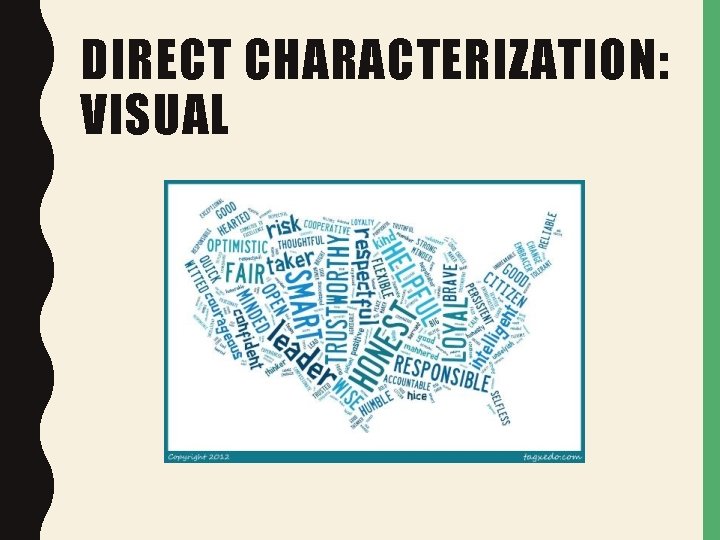
DIRECT CHARACTERIZATION: VISUAL
INDIRECT CHARACTERIZATION • When an author uses indirect characterization, the reader must infer what a character is like through their features, actions, thoughts, speech, and other characters’ opinions (FATSO). • For Example: from “The Scarlet Ibis” by James Hurst: “It was bad enough having an invalid [sickly, disabled] brother, but having one who possibly was not all there was unbearable, so I began to make plans to kill him by smothering him with a pillow. ” • What can be inferred about the speaker’s personality based on this thoughts?
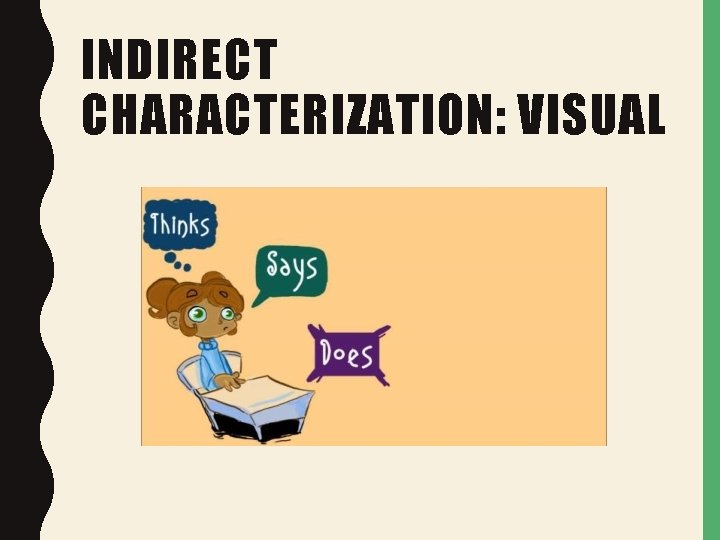
INDIRECT CHARACTERIZATION: VISUAL
RUBE GOLDBERG MACHINE • https: //www. youtube. com/watch? v=qyb. UFn. Y 7 Y 8 w
NATIONAL ANTHEM • https: //www. youtube. com/watch? v=m 9 QDq. As. A KUI
- Slides: 26