
Academic Success Center Study Skills PRESENTED BY ACADEMIC

Academic Success Center: Study Skills PRESENTED BY: ACADEMIC SUCCESS CENTER STAFF
What Does the ASC Provide? Location: 1060 Hixson-Lied (across from Maple/Willow/Larch, off the 23 bus route) Hours: 8: 00 -5: 00, Monday-Friday. Website Resources 24/7 Services: Academic Coaching Psych 131: Academic Skills Presentations, Workshops, & Handouts Tutoring Services Supplemental Instruction (SI)
Overview Student Learning Outcome: Students will learn new study skills and identify at least one strategy to increase application of course material Studying vs. Doing Homework Study Environment Motivation Bloom’s Taxonomy Overview Application General Study Skills THIEVES Cornell Note-Taking Additional Strategies
Studying Versus Homework What is the difference between studying and homework? Why does this matter?
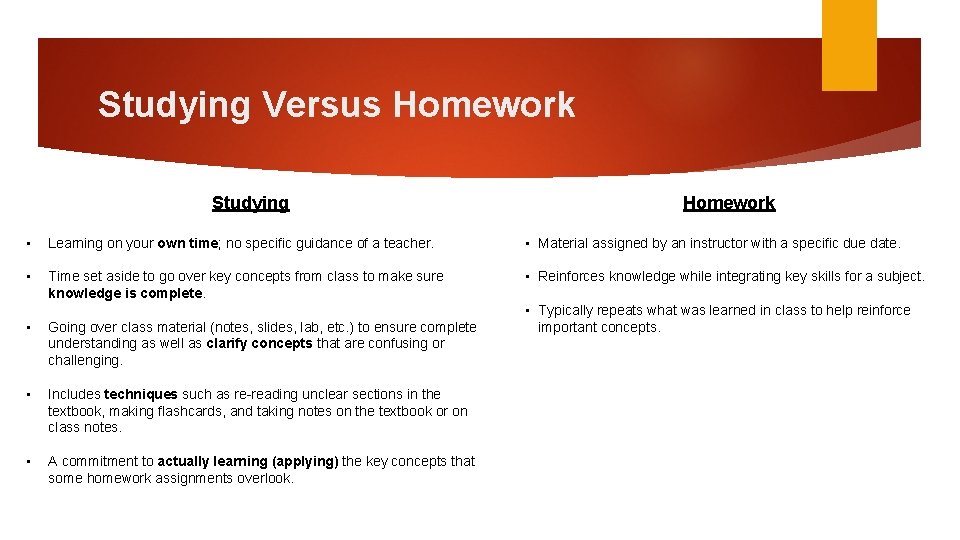
Studying Versus Homework Studying Homework • Learning on your own time; no specific guidance of a teacher. • Material assigned by an instructor with a specific due date. • Time set aside to go over key concepts from class to make sure knowledge is complete. • Reinforces knowledge while integrating key skills for a subject. • Going over class material (notes, slides, lab, etc. ) to ensure complete understanding as well as clarify concepts that are confusing or challenging. • Includes techniques such as re-reading unclear sections in the textbook, making flashcards, and taking notes on the textbook or on class notes. • A commitment to actually learning (applying) the key concepts that some homework assignments overlook. • Typically repeats what was learned in class to help reinforce important concepts.
Your Study Environment Picture your “happy place” to study Consider: Distractions Interruptions Temperature Seating Lighting
Finding Motivation - Where Do I Begin? 1. Set one goal It can be overwhelming to think about everything you have to accomplish. Write down one single thing you can work on now to re-focus. 2. Start small Very small. If something feels overwhelming, you may be thinking too big picture. Break your goal into ministeps and designate a deadline to have the first step completed. 3. Post your goal Print out your goal or write it in big letters. Post it in your room, on your desk, in your planner, or at your refrigerator. 4. Tell others about your desires Commit publicly by discussing your goals with those around you. They can hold you accountable.
Finding Motivation - Continued 5. Think about your goal daily Maintain excitement by reflecting on how your goal will benefit you or others as a result. It’s one small thing that can make a huge difference! 6. Get support Recognize that you have individuals around you that can help. Communicate your fears, anxieties, and challenges with friends or family members. Chances are they have once struggled with similar experiences. 7. Think about the benefits, not the difficulties Think about what you will get out of accomplishing your goal. Focus on how good you will feel when it is done, the benefits of something can re-energize you!
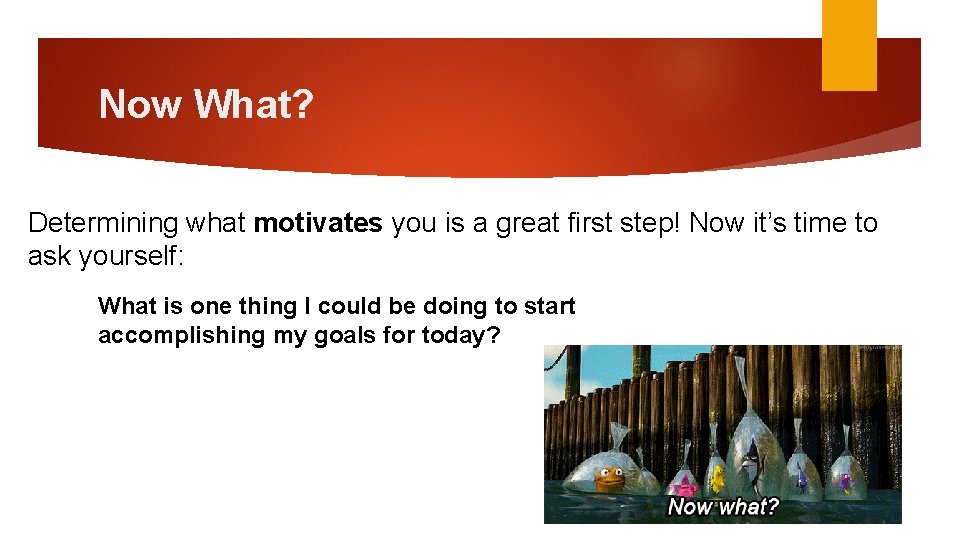
Now What? Determining what motivates you is a great first step! Now it’s time to ask yourself: What is one thing I could be doing to start accomplishing my goals for today?
General Study Skills CONCEPTUAL, READING & NOTE-TAKING APPROACHES
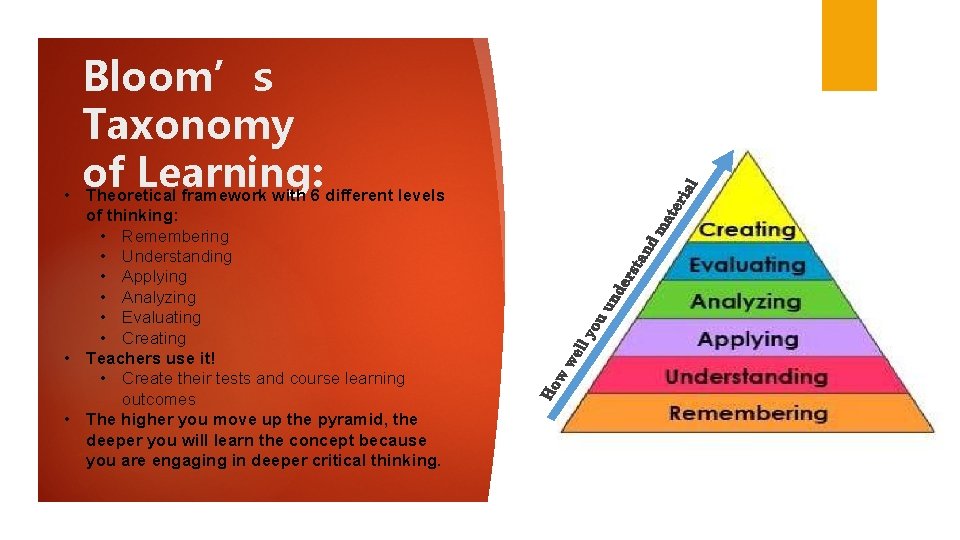
• Bloom’s Taxonomy of Learning: Theoretical framework with 6 different levels of thinking: • Remembering • Understanding • Applying • Analyzing • Evaluating • Creating • Teachers use it! • Create their tests and course learning outcomes • The higher you move up the pyramid, the deeper you will learn the concept because you are engaging in deeper critical thinking.
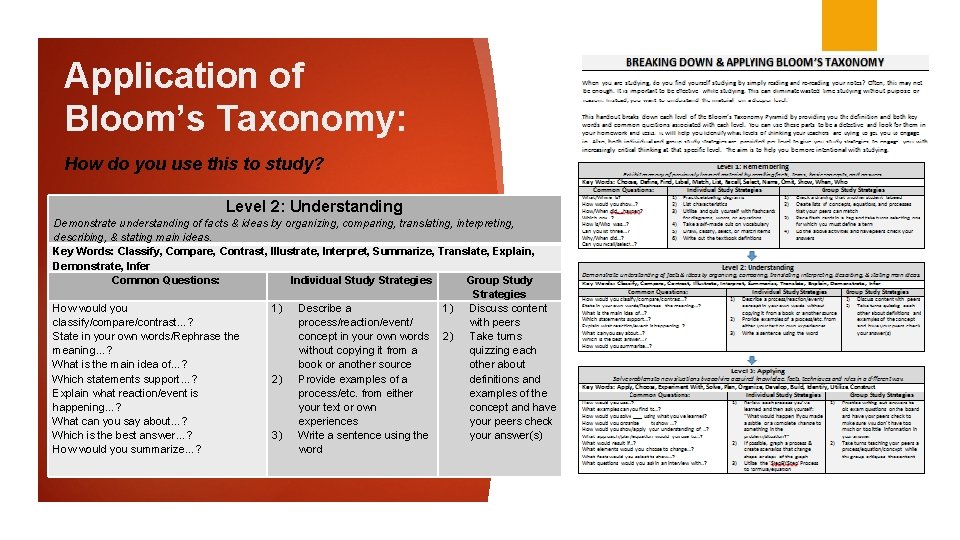
Application of Bloom’s Taxonomy: How do you use this to study? Level 2: Understanding Demonstrate understanding of facts & ideas by organizing, comparing, translating, interpreting, describing, & stating main ideas. Key Words: Classify, Compare, Contrast, Illustrate, Interpret, Summarize, Translate, Explain, Demonstrate, Infer Common Questions: Individual Study Strategies Group Study Strategies How would you 1) Describe a 1) Discuss content classify/compare/contrast…? process/reaction/event/ with peers State in your own words/Rephrase the concept in your own words 2) Take turns meaning…? without copying it from a quizzing each What is the main idea of…? book or another source other about Which statements support…? 2) Provide examples of a definitions and Explain what reaction/event is process/etc. from either examples of the happening…? your text or own concept and have What can you say about…? experiences your peers check Which is the best answer…? 3) Write a sentence using the your answer(s) How would you summarize…? word
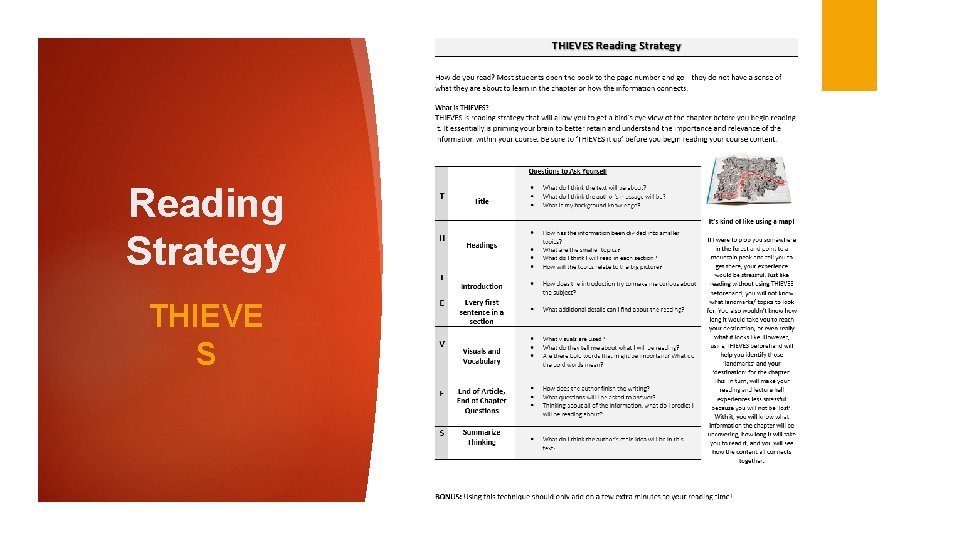
Reading Strategy THIEVE S
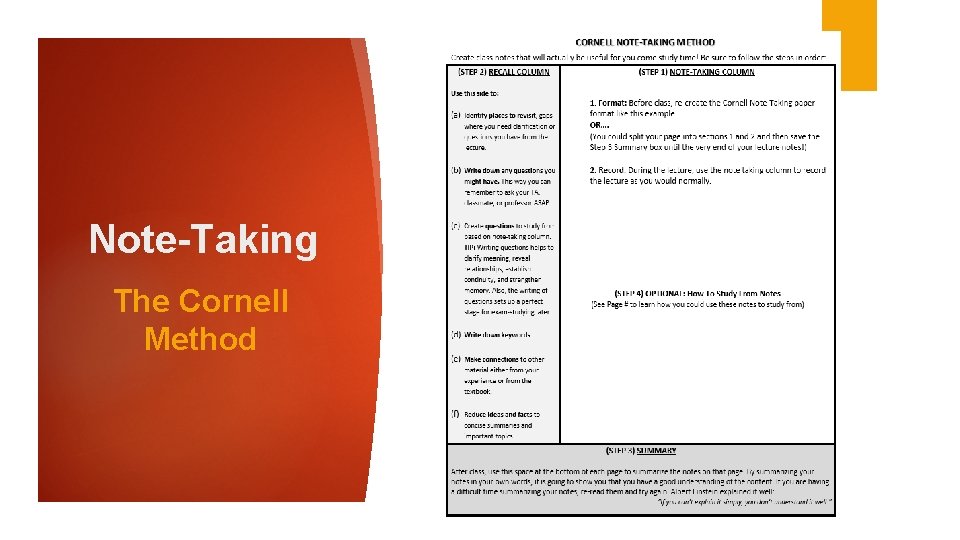
Note-Taking The Cornell Method
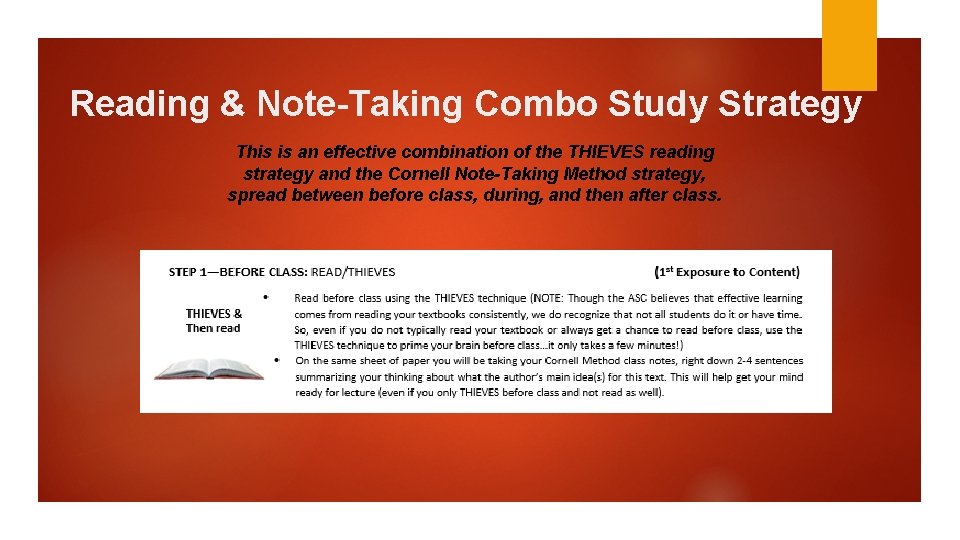
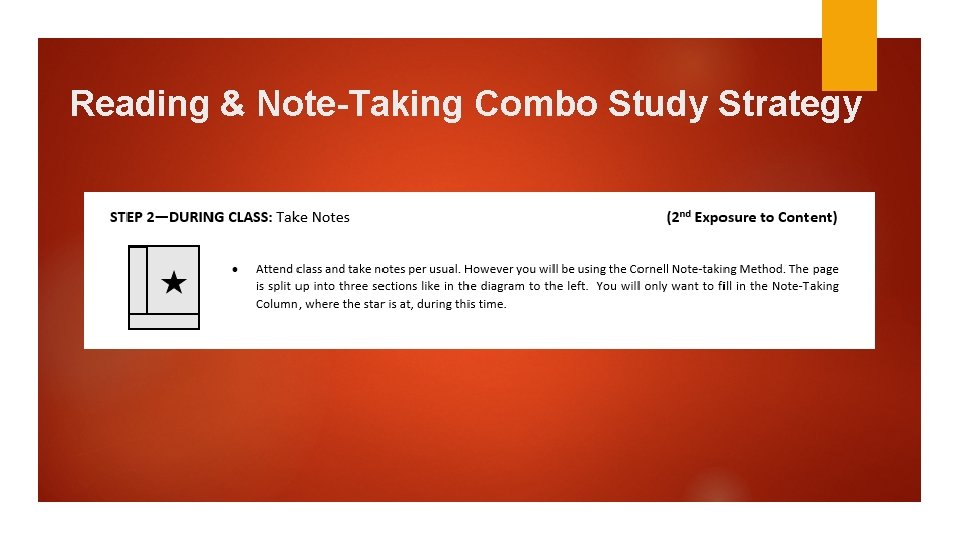
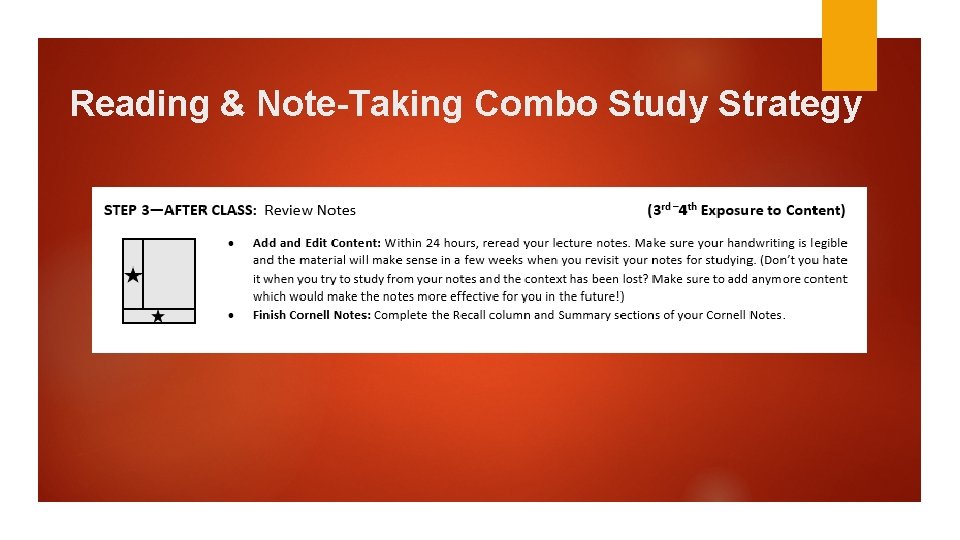
Reading & Note-Taking Combo Study Strategy This is an effective combination of the THIEVES reading strategy and the Cornell Note-Taking Method strategy, spread between before class, during, and then after class.
Reading & Note-Taking Combo Study Strategy
Reading & Note-Taking Combo Study Strategy
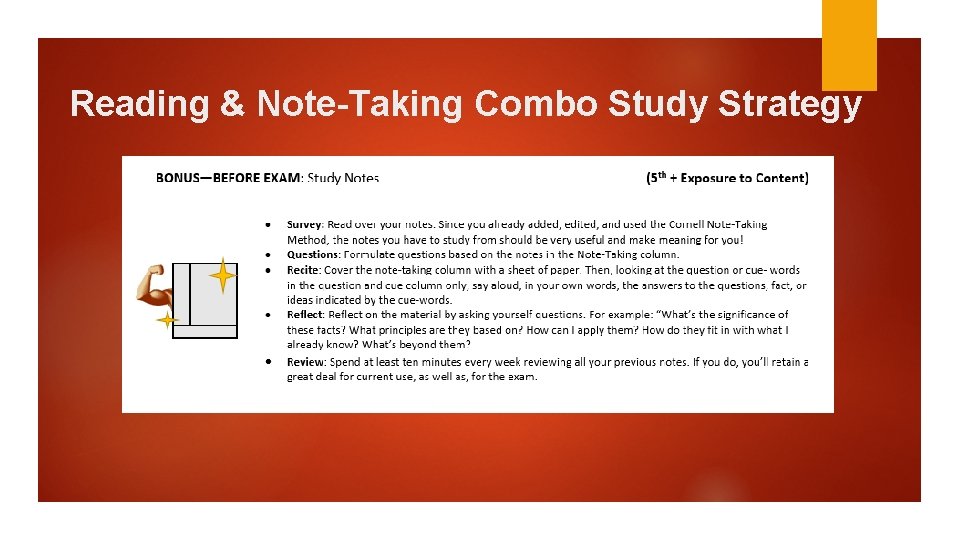
Reading & Note-Taking Combo Study Strategy
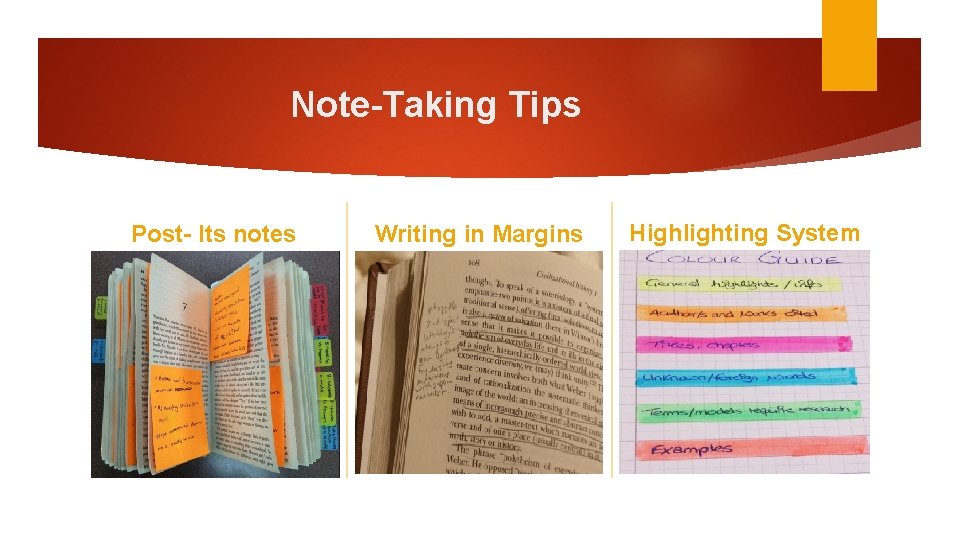
Note-Taking Tips Post- Its notes Writing in Margins Highlighting System
Best Way to Approach Exam Prep Question: “When do you start studying for your tests? ” Common Response: “At most, a few days before the test. ” Ideal Response (where we are headed): “ Starting from the very first day of class. ” The Academic Success Center has many resources for exam preparation online; for guidance on setting up a study plan or schedule we recommend: 5 Day Study Plan 7 Day Study Plan

Thank you! 1060 Hixson-Lied Student Success Center Phone: 515 -294 -6624 success@iastate. edu www. asc. dso. iastate. edu @Iowa. State. ASC
- Slides: 21