
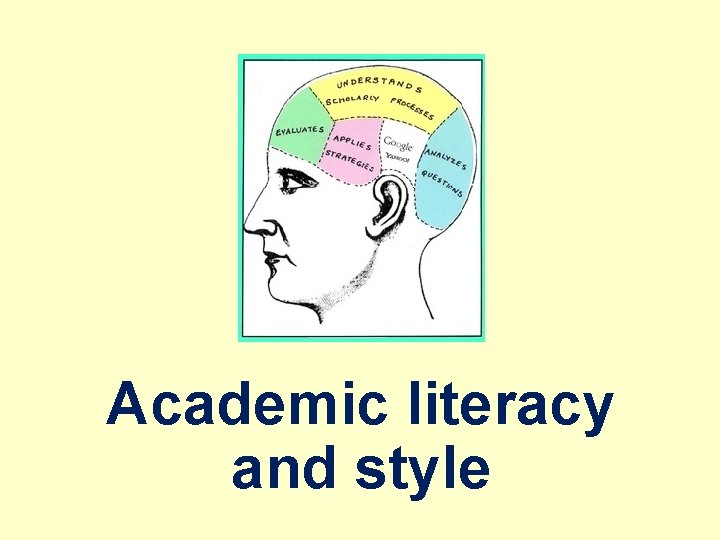
Academic literacy and style January 2022 Academic literacy
- Slides: 26
Academic literacy and style
January 2022 Academic literacy and style • Rule off • Underline title & date
What is academic literacy? • Rules of writing like a university student
• The ability to read and write academic texts
• Acquaintance with academic texts
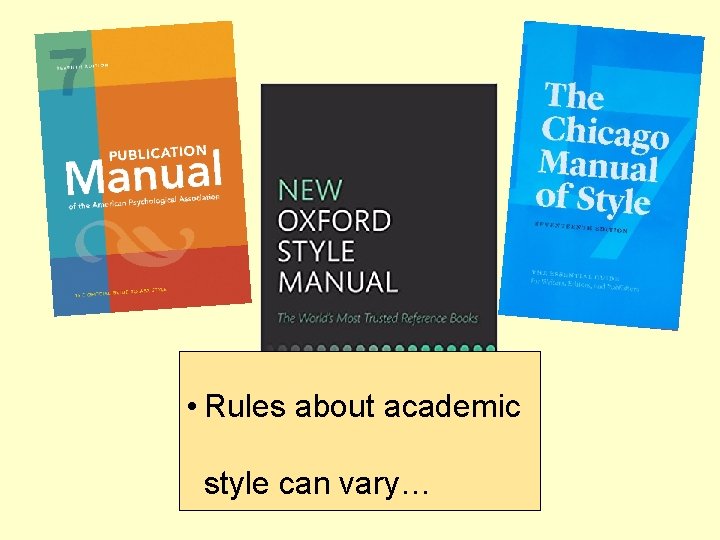
• Rules about academic style can vary…
• Here is some general guidance for a typical essay… • Make detailed notes as we talk through everything
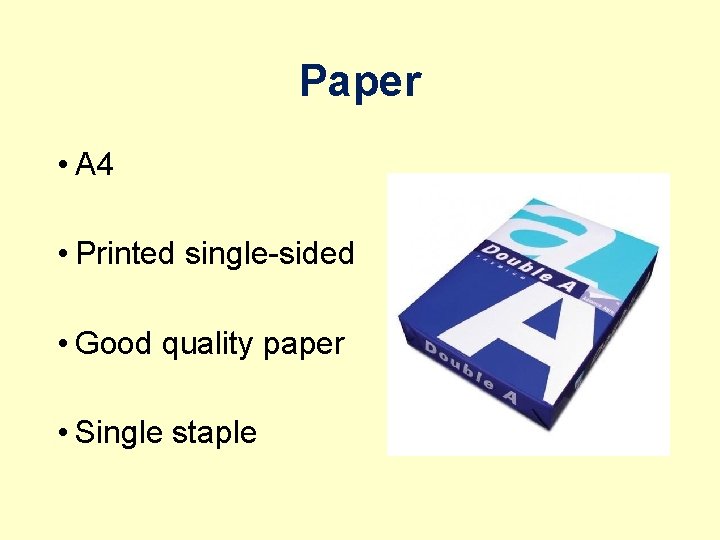
Paper • A 4 • Printed single-sided • Good quality paper • Single staple
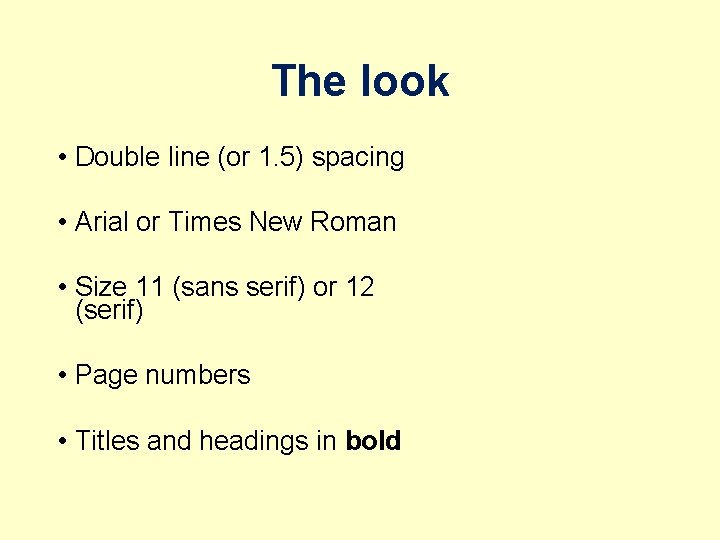
The look • Double line (or 1. 5) spacing • Arial or Times New Roman • Size 11 (sans serif) or 12 (serif) • Page numbers • Titles and headings in bold
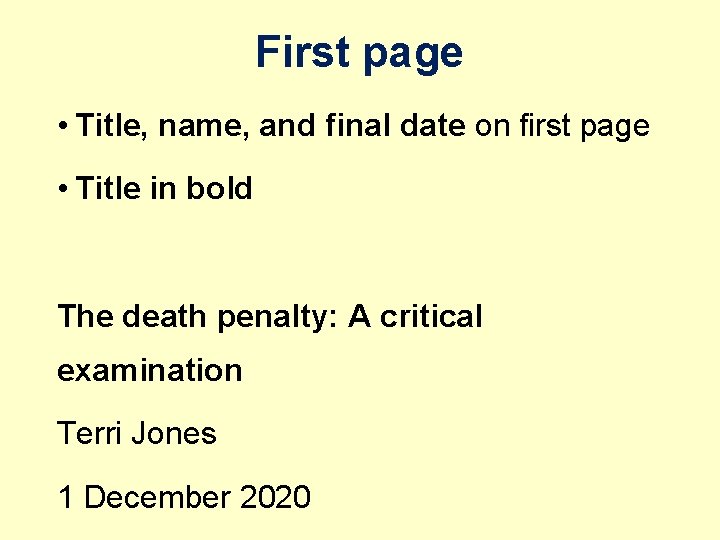
First page • Title, name, and final date on first page • Title in bold The death penalty: A critical examination Terri Jones 1 December 2020
Headings • Use headings if they suit your subject matter/essay structure • Bold
Introduction • You could • set out the structure and content of your text or • Explain why the topic is important • Make your intended argument clear
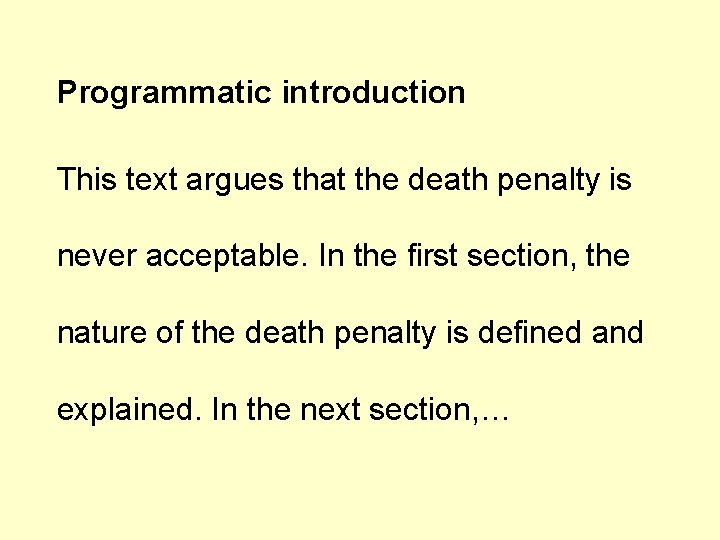
Programmatic introduction This text argues that the death penalty is never acceptable. In the first section, the nature of the death penalty is defined and explained. In the next section, …
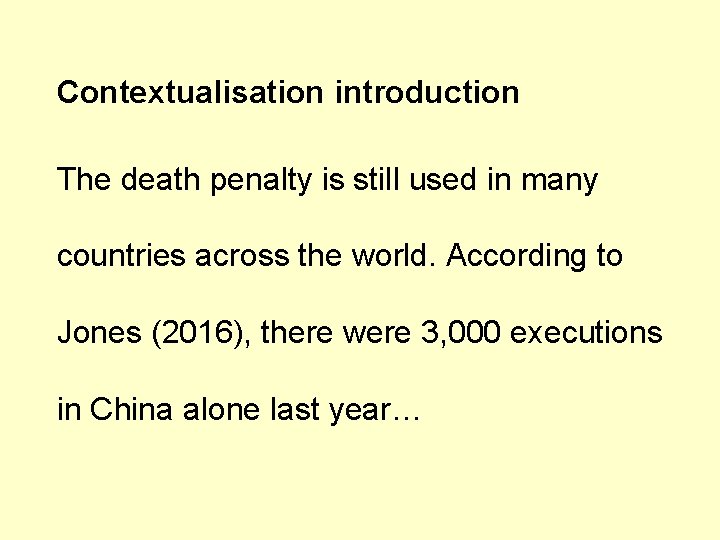
Contextualisation introduction The death penalty is still used in many countries across the world. According to Jones (2016), there were 3, 000 executions in China alone last year…
Conclusion • Clear conclusion in which your overall argument/verdict is expressed
Abbreviations • Spell out the term in full the first time you use it e. g. • “There are 67 million people living the United Kingdom (UK). ”
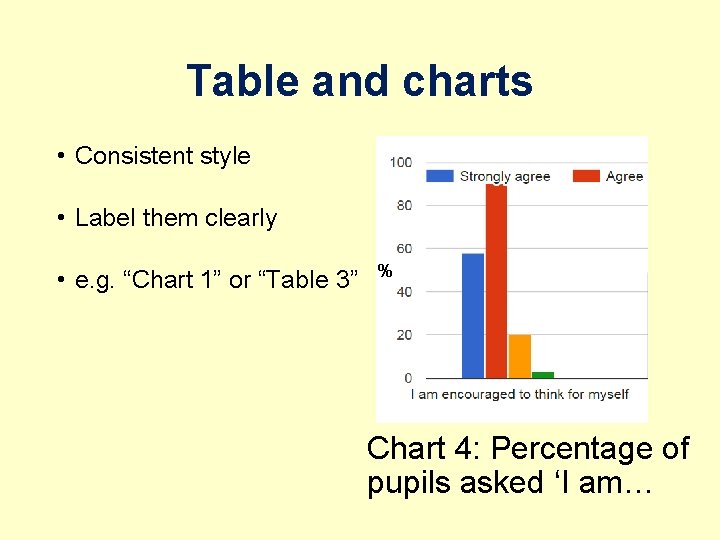
Table and charts • Consistent style • Label them clearly • e. g. “Chart 1” or “Table 3” % Chart 4: Percentage of pupils asked ‘I am…
Write formally • Avoid contractions: • e. g. don’t write “don’t”, write “do not” • And avoid informal words: • E. g. don’t write ‘a lot’, write ‘many’
Paragraphing • Avoid paragraphs that are too long… • …or too short… • 80 words is often good • The first sentence of each paragraph can be crucial.
I • Avoid using the words ‘I’, ‘me’, ‘my’, etc. • Avoid phrases such as ‘I think that’, or ‘In my opinion’ • Instead, write objectively in the third person • There are (arguably) lots of exceptions to this rule though!
Third person • “I interviewed three people” becomes • “Three people were interviewed” • “I think that Everton are excellent” becomes • “Evidence shows that Everton are excellent”
Tone • Plain and clear • “There are superlative reasons” becomes • “There are strong reasons” • Avoid language of exaggeration e. g. ‘extremely good’
Hedge • “Arsenal are the best team in the division” versus • “It is possible that Arsenal are the best team in the division” • “perhaps”
Referencing • Remember the Reference List goes at the end • Include in-text Make sure you learn how to reference before you start uni referencing https: //medium. com/sable-university-writing-tips/different-types-of-harvardreferencing-5 e 155 b 130 dd 4
Design an academic literacy guide for a strong sixth form student
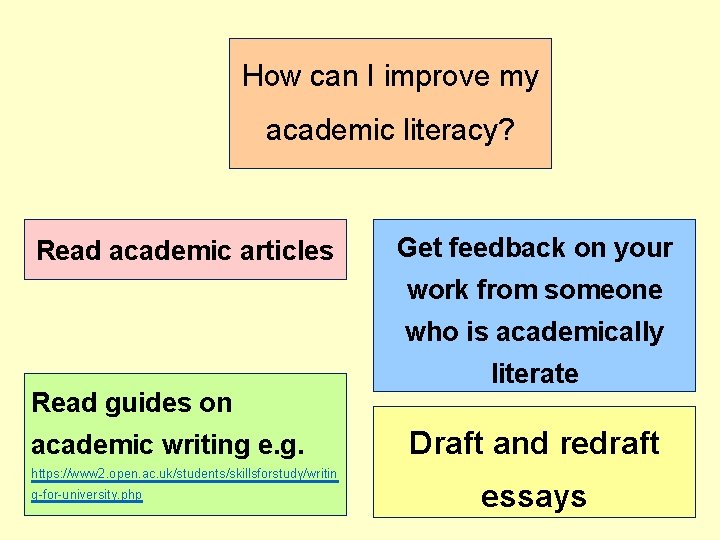
How can I improve my academic literacy? Read academic articles Get feedback on your work from someone who is academically Read guides on academic writing e. g. https: //www 2. open. ac. uk/students/skillsforstudy/writin g-for-university. php literate Draft and redraft essays