
Academic Language and its Relationship with HispanicLatinx Students
- Slides: 34
Academic Language and its Relationship with Hispanic/Latinx Students’ Sense of Belongingness Arnold Sánchez Ordaz, Ph. D. Andrea Vazquez, M. A. , Chancellor's Graduate Intern René Moreno, Assistant Director of HSI Initiatives
Learning Outcomes ● How to utilize the concept of academic language to investigate the intersectionality of student experiences in the reading and writing domain. ● How to leverage from data to help practitioners make informed decisions about program improvement. ● How to evaluate a reading and writing program as it relates to students sense of belongingness.
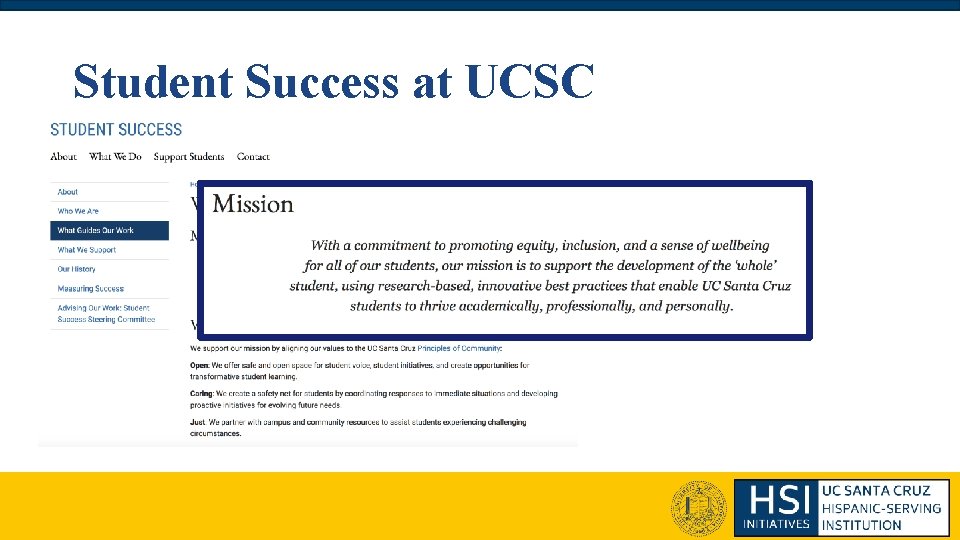
Student Success at UCSC
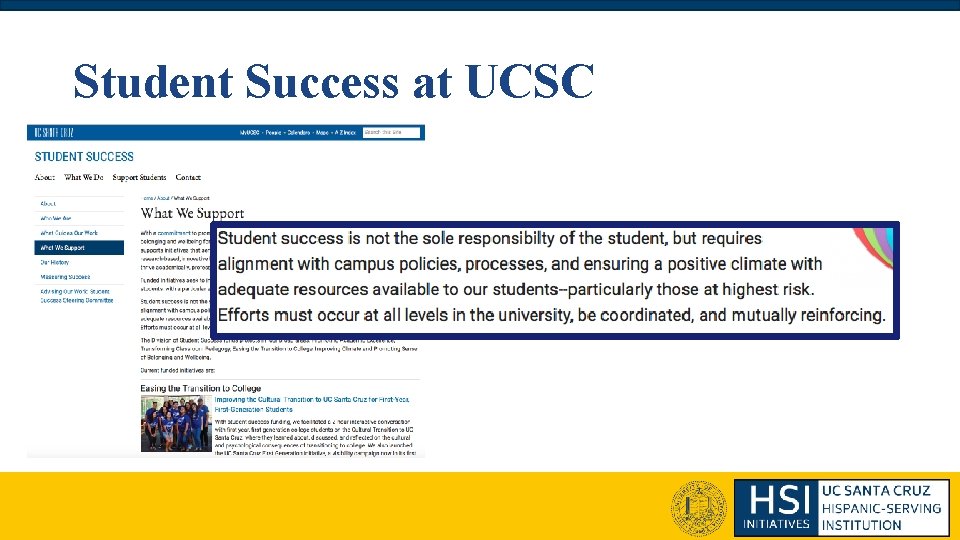
Student Success at UCSC
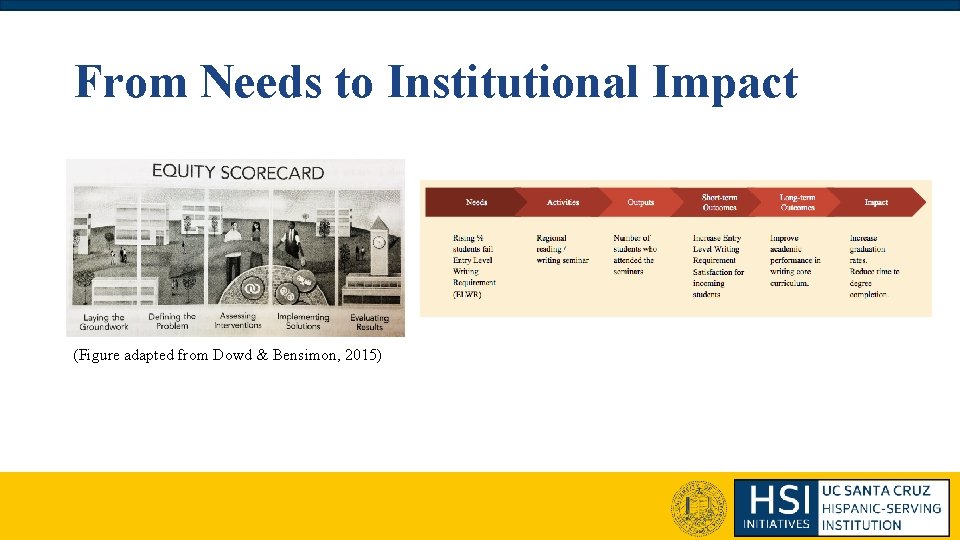
From Needs to Institutional Impact (Figure adapted from Dowd & Bensimon, 2015)
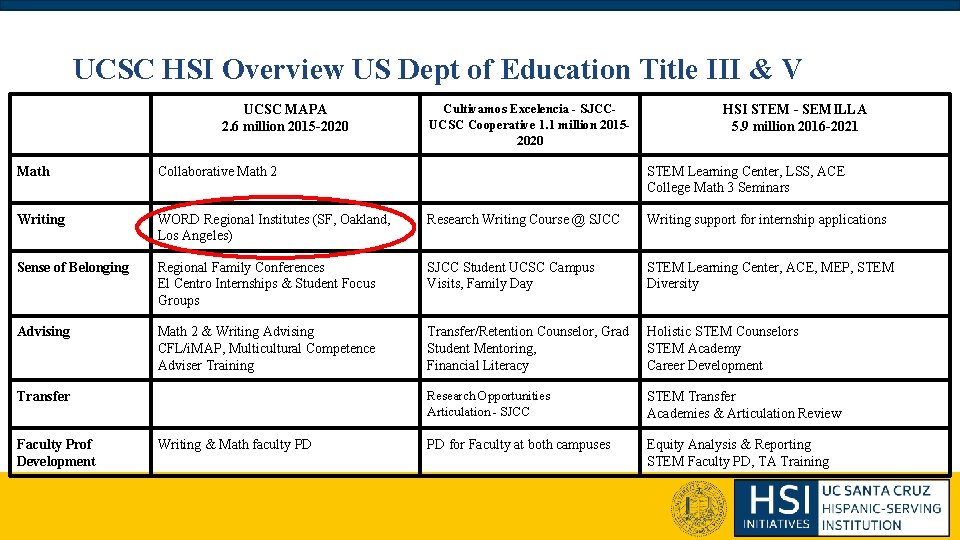
UCSC HSI Overview US Dept of Education Title III & V UCSC MAPA 2. 6 million 2015 -2020 Cultivamos Excelencia - SJCCUCSC Cooperative 1. 1 million 20152020 HSI STEM - SEMILLA 5. 9 million 2016 -2021 Math Collaborative Math 2 Writing WORD Regional Institutes (SF, Oakland, Los Angeles) Research Writing Course @ SJCC Writing support for internship applications Sense of Belonging Regional Family Conferences El Centro Internships & Student Focus Groups SJCC Student UCSC Campus Visits, Family Day STEM Learning Center, ACE, MEP, STEM Diversity Advising Math 2 & Writing Advising CFL/i. MAP, Multicultural Competence Adviser Training Transfer/Retention Counselor, Grad Student Mentoring, Financial Literacy Holistic STEM Counselors STEM Academy Career Development Research Opportunities Articulation - SJCC STEM Transfer Academies & Articulation Review PD for Faculty at both campuses Equity Analysis & Reporting STEM Faculty PD, TA Training Transfer Faculty Prof Development Writing & Math faculty PD STEM Learning Center, LSS, ACE College Math 3 Seminars
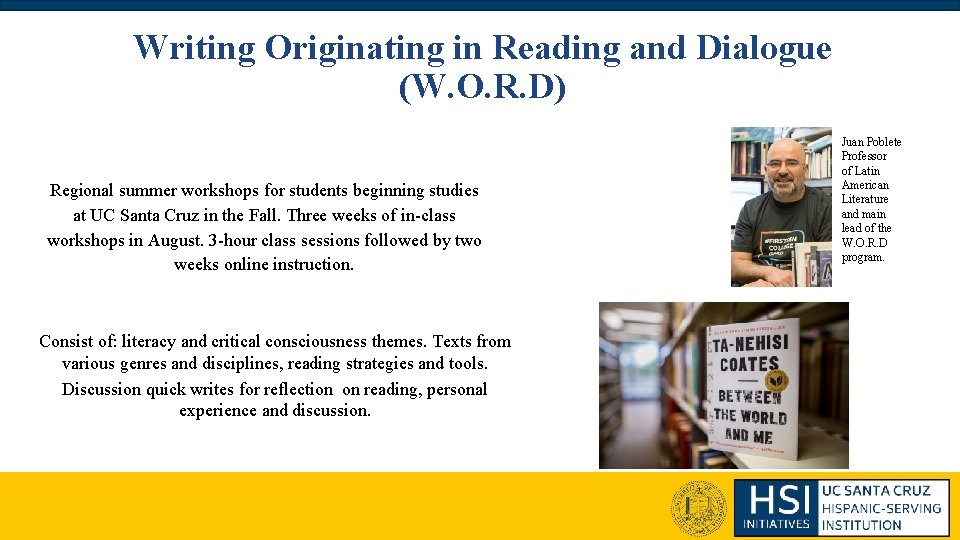
Writing Originating in Reading and Dialogue (W. O. R. D) Regional summer workshops for students beginning studies at UC Santa Cruz in the Fall. Three weeks of in-class workshops in August. 3 -hour class sessions followed by two weeks online instruction. Consist of: literacy and critical consciousness themes. Texts from various genres and disciplines, reading strategies and tools. Discussion quick writes for reflection on reading, personal experience and discussion. Juan Poblete Professor of Latin American Literature and main lead of the W. O. R. D program.
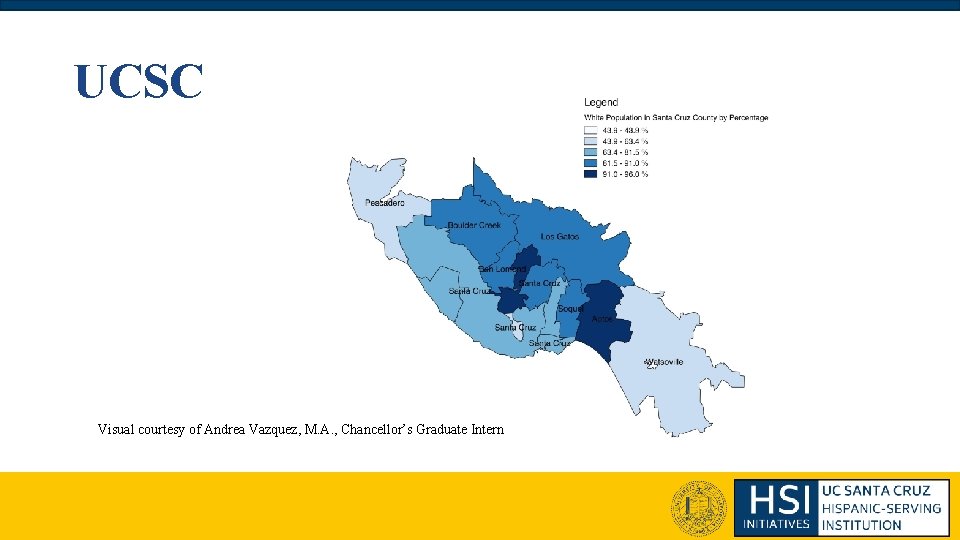
UCSC Visual courtesy of Andrea Vazquez, M. A. , Chancellor’s Graduate Intern
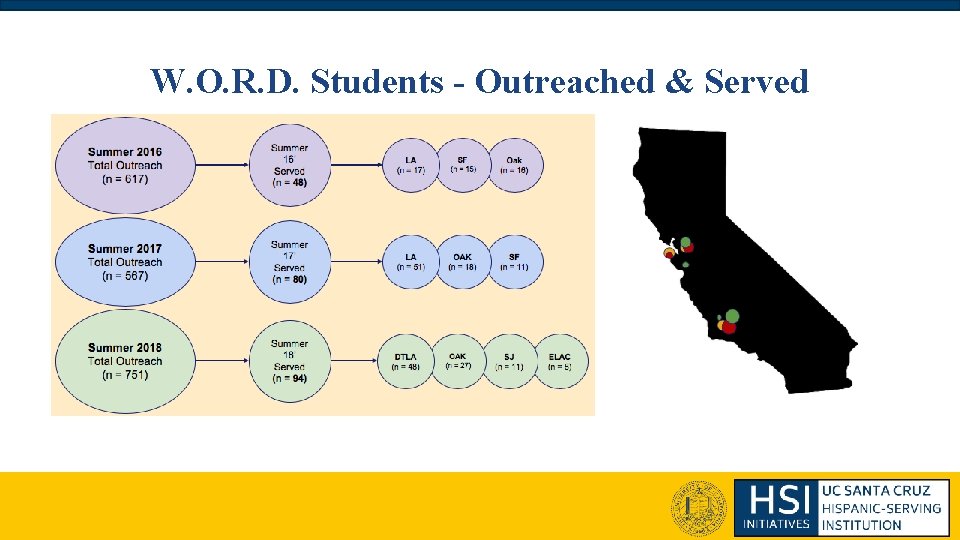
W. O. R. D. Students - Outreached & Served
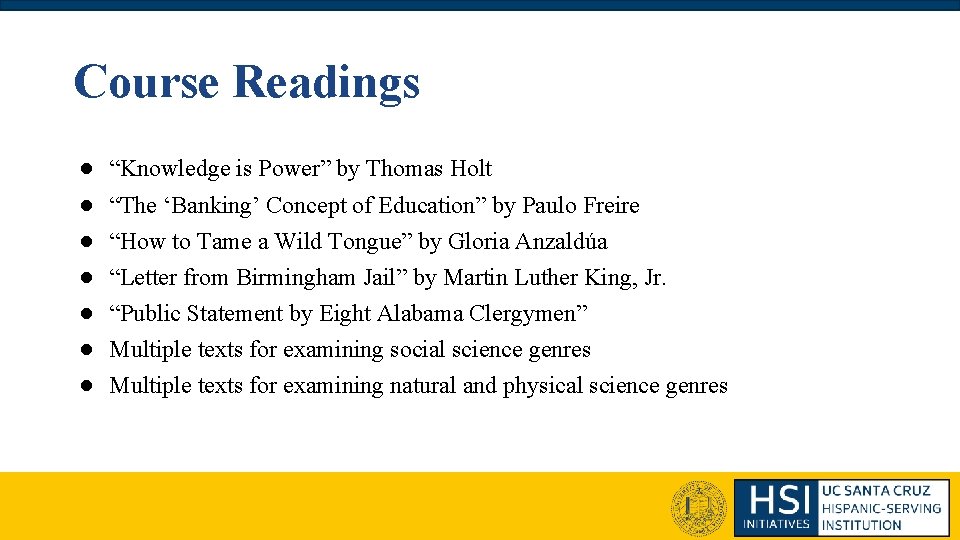
Course Readings ● “Knowledge is Power” by Thomas Holt ● “The ‘Banking’ Concept of Education” by Paulo Freire ● “How to Tame a Wild Tongue” by Gloria Anzaldúa ● “Letter from Birmingham Jail” by Martin Luther King, Jr. ● “Public Statement by Eight Alabama Clergymen” ● Multiple texts for examining social science genres ● Multiple texts for examining natural and physical science genres
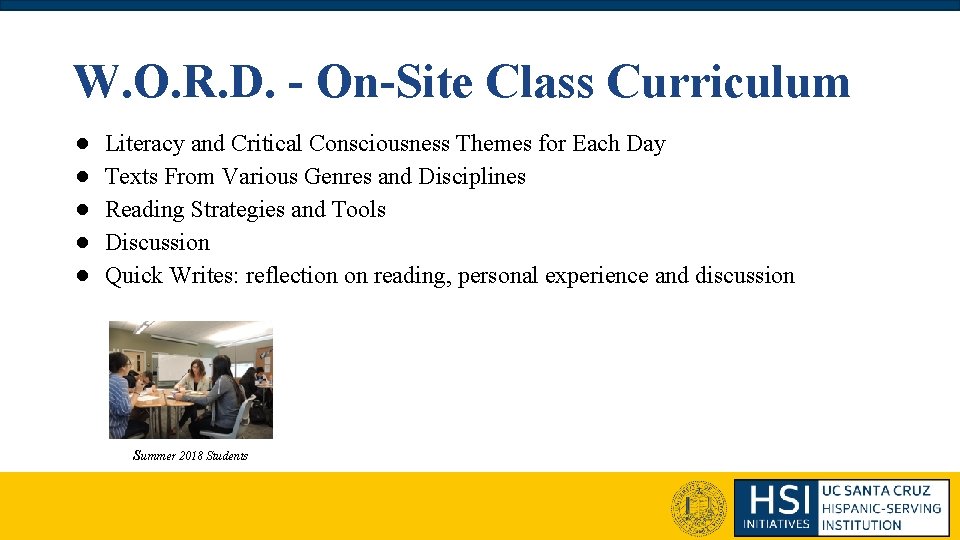
W. O. R. D. - On-Site Class Curriculum ● ● ● Literacy and Critical Consciousness Themes for Each Day Texts From Various Genres and Disciplines Reading Strategies and Tools Discussion Quick Writes: reflection on reading, personal experience and discussion Summer 2018 Students
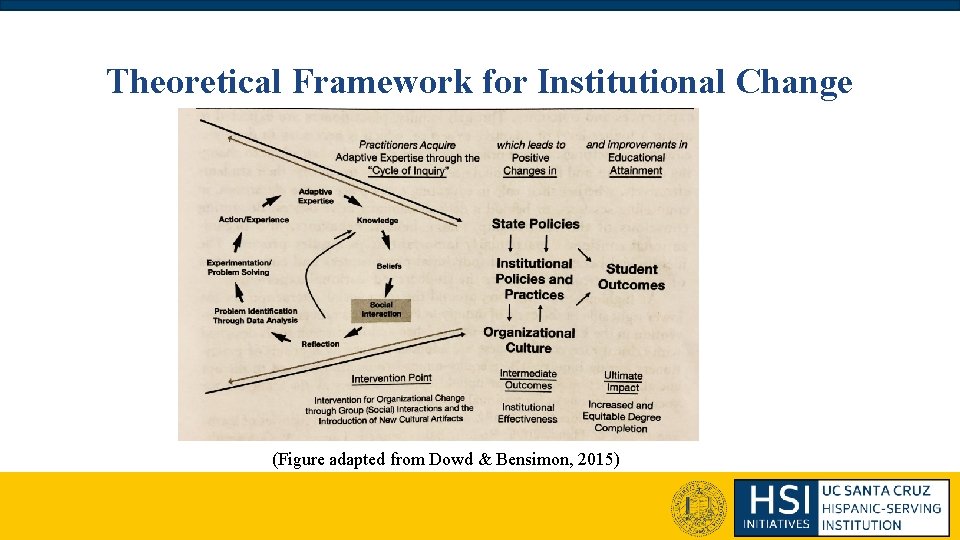
Theoretical Framework for Institutional Change (Figure adapted from Dowd & Bensimon, 2015)
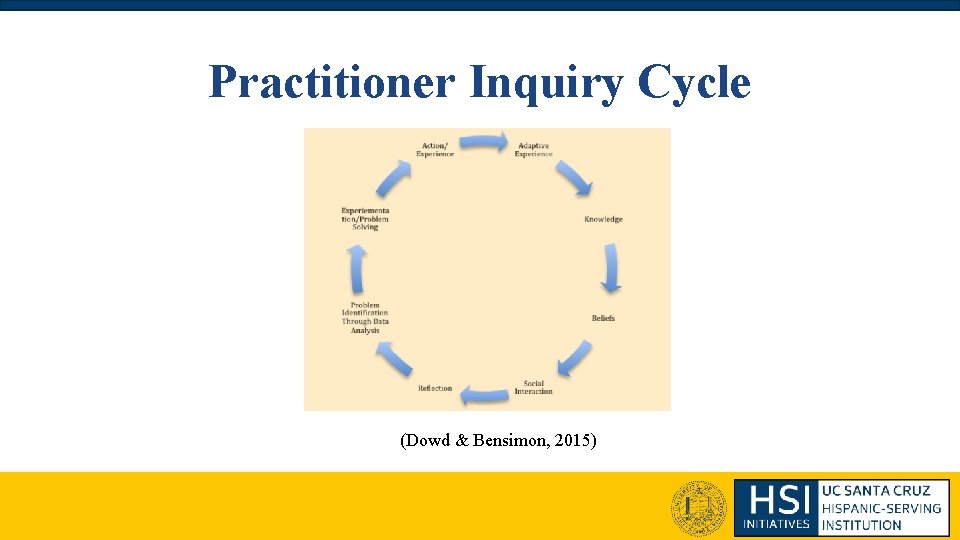
Practitioner Inquiry Cycle (Dowd & Bensimon, 2015)
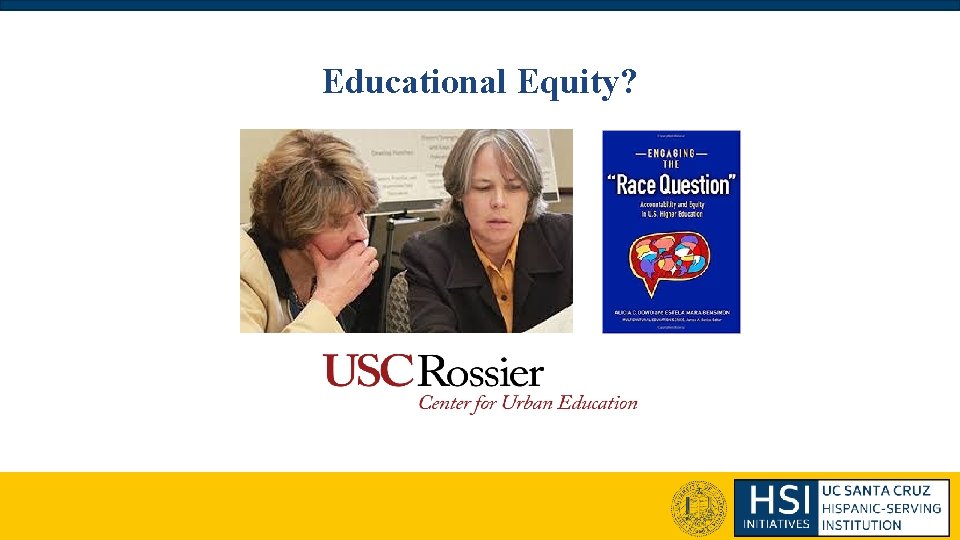
Educational Equity?
Defining Equity The inability to predict students’ achievement and participation based solely upon characteristics such as race, class, ethnicity, gender, beliefs and proficiency in the dominant language. When we can no longer detect or predict student outcomes, such as GPA, graduation, retention, based solely on these markers then we will achieve parity. Ultimately, equity in education is not just an abstract goal but an ongoing process. A process that consciously entails the empowerment of practitioners to be agents of change. (Dowd & Bensimon, 2015; Gutierrez, 2002; Rodriguez, 1998)
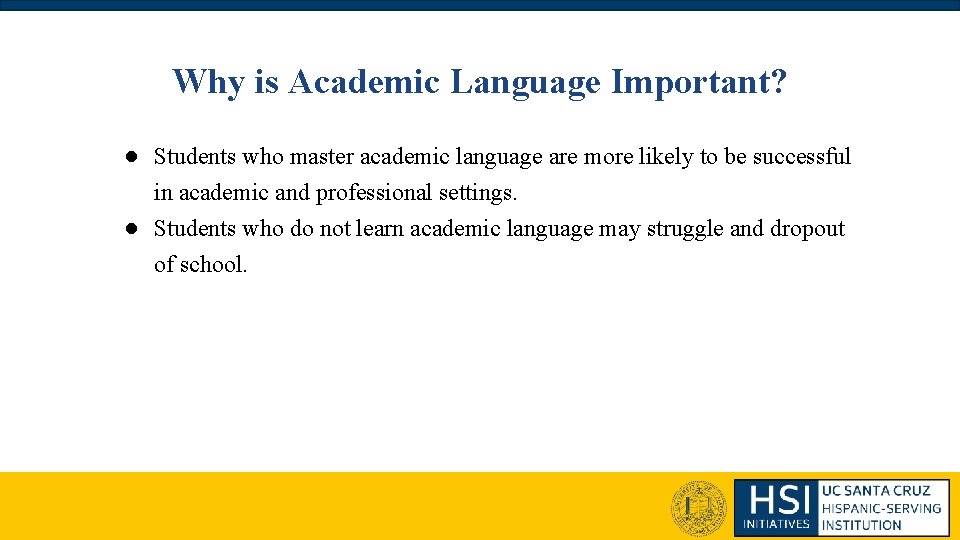
Academic Language Academic language is the language needed by students to do the work in educational settings. It includes, discipline- specific vocabulary, grammar and punctuation, and applications of rhetorical conversations and devices that are typical for a content area.
Why is Academic Language Important? ● Students who master academic language are more likely to be successful in academic and professional settings. ● Students who do not learn academic language may struggle and dropout of school.
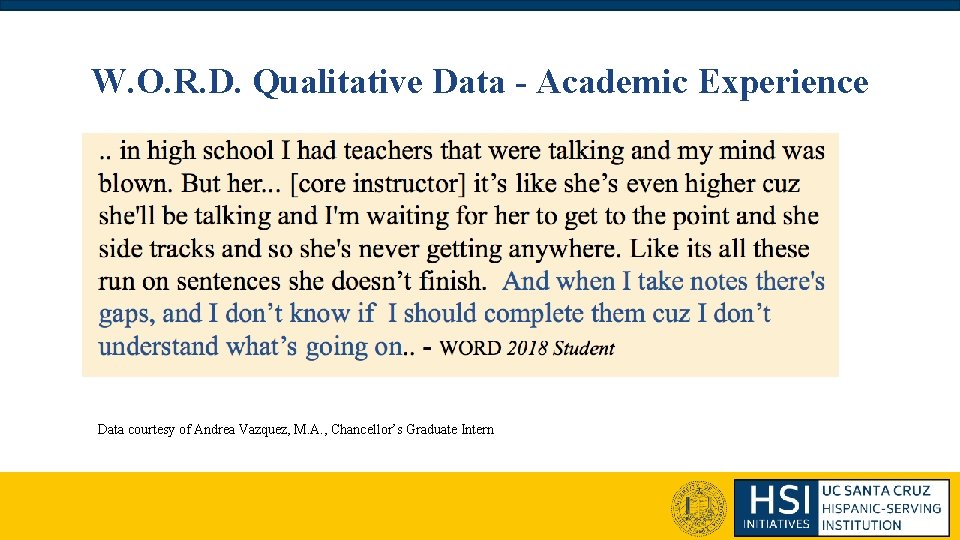
W. O. R. D. Qualitative Data - Academic Experience Data courtesy of Andrea Vazquez, M. A. , Chancellor’s Graduate Intern
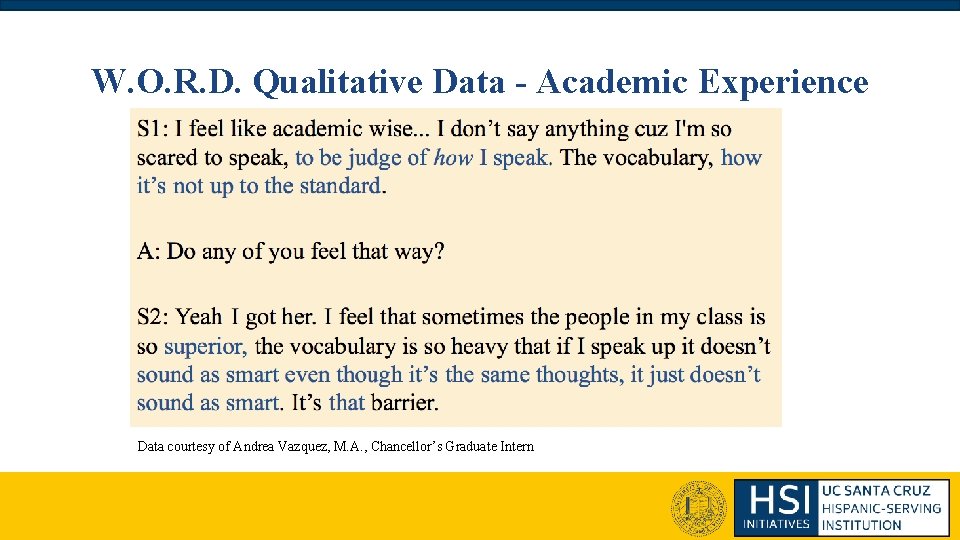
W. O. R. D. Qualitative Data - Academic Experience Data courtesy of Andrea Vazquez, M. A. , Chancellor’s Graduate Intern
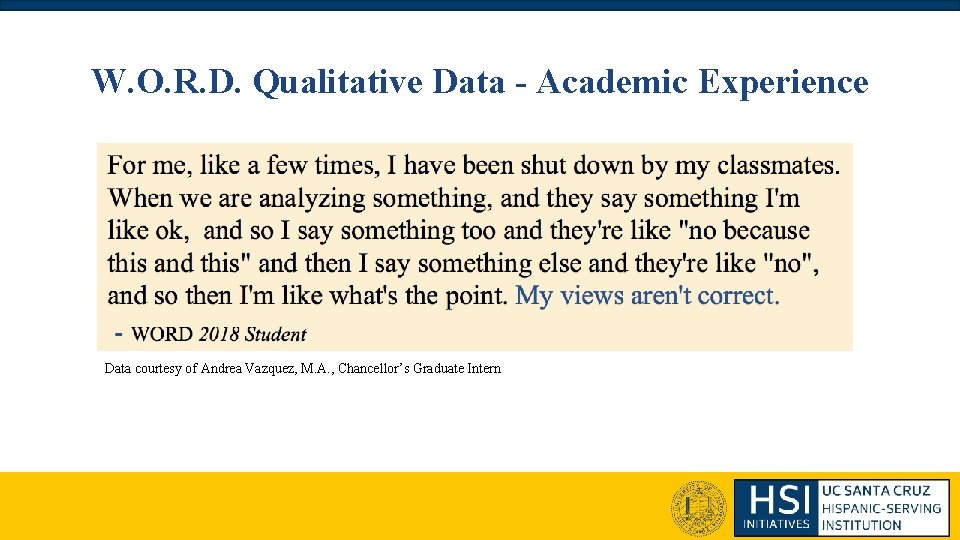
W. O. R. D. Qualitative Data - Academic Experience Data courtesy of Andrea Vazquez, M. A. , Chancellor’s Graduate Intern
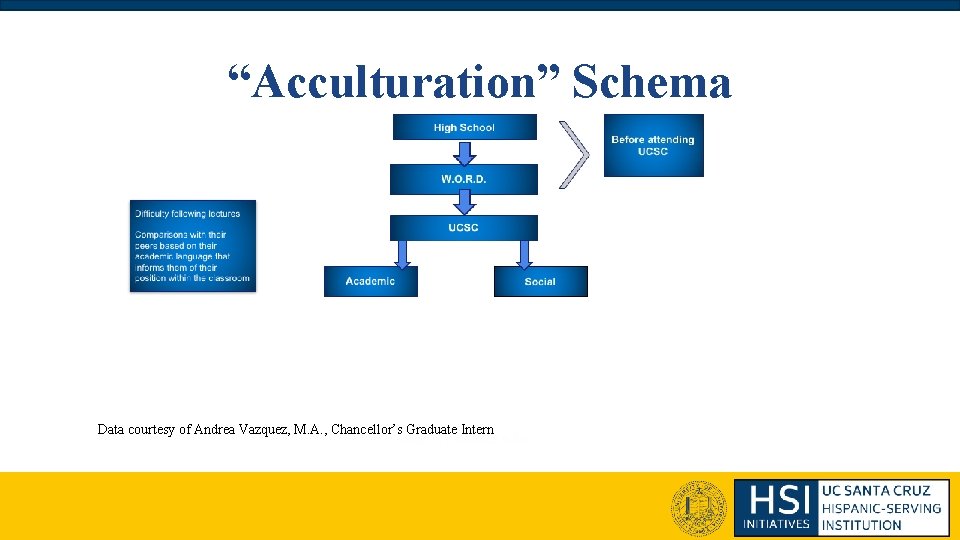
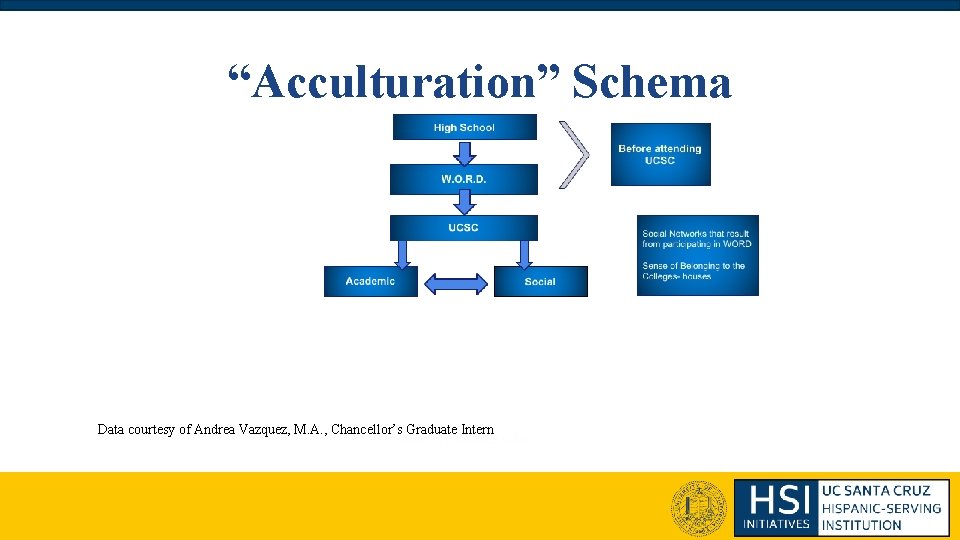
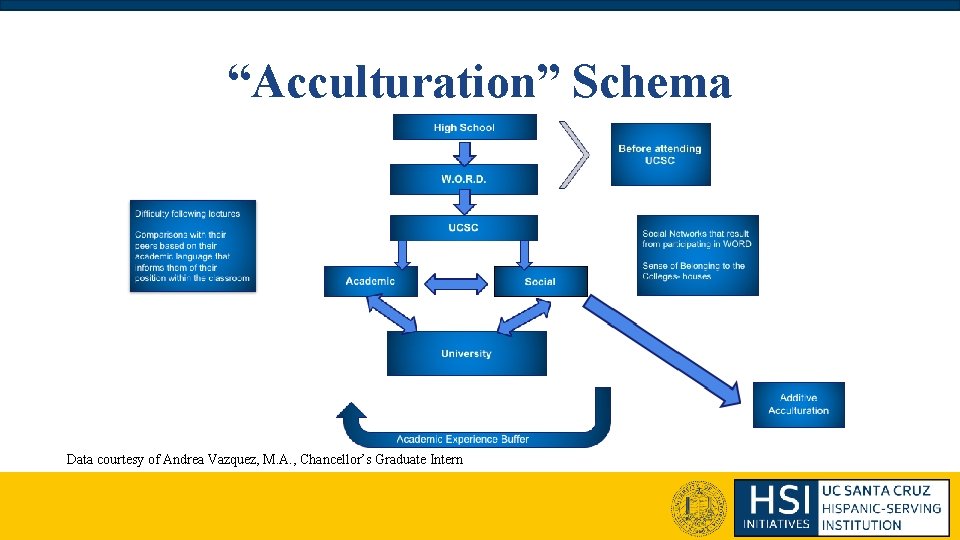
“Acculturation” Schema Data courtesy of Andrea Vazquez, M. A. , Chancellor’s Graduate Intern
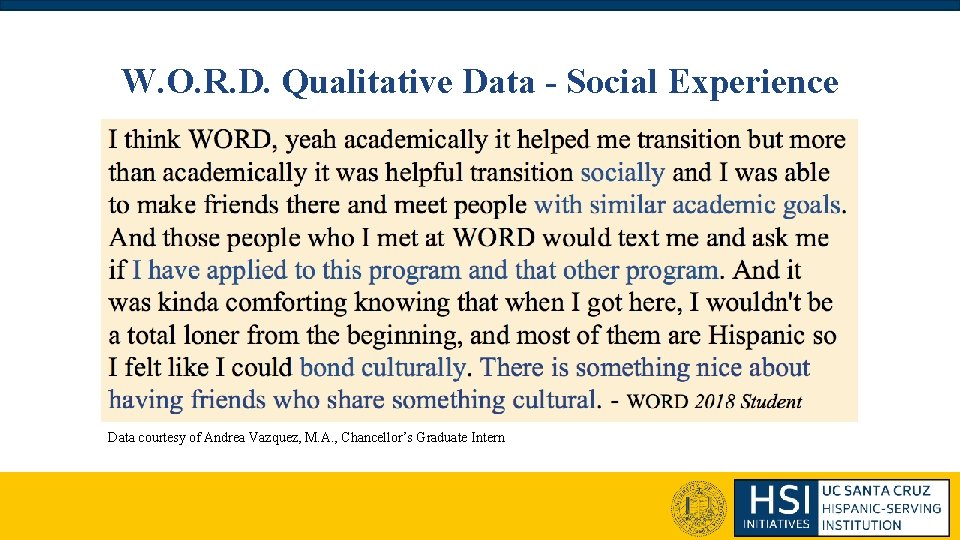
W. O. R. D. Qualitative Data - Social Experience Data courtesy of Andrea Vazquez, M. A. , Chancellor’s Graduate Intern
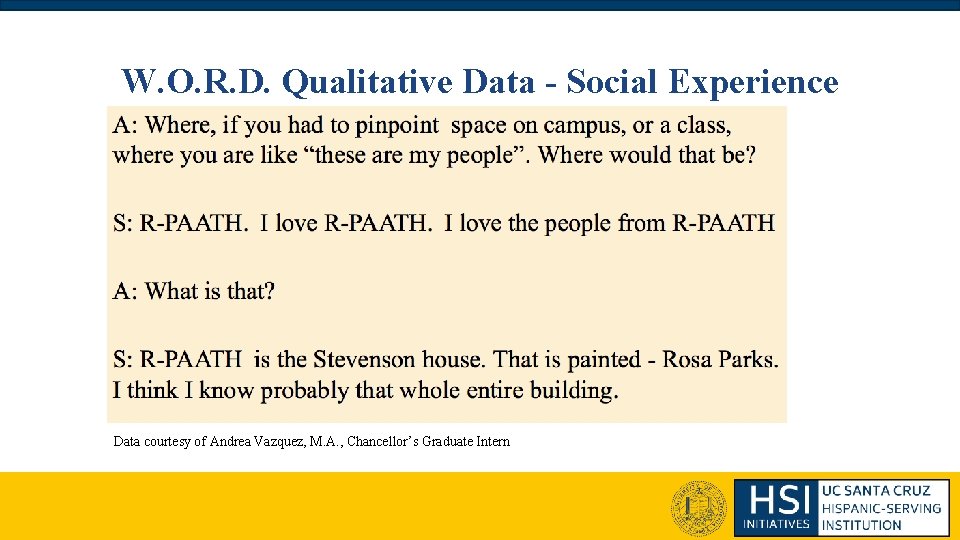
W. O. R. D. Qualitative Data - Social Experience Data courtesy of Andrea Vazquez, M. A. , Chancellor’s Graduate Intern
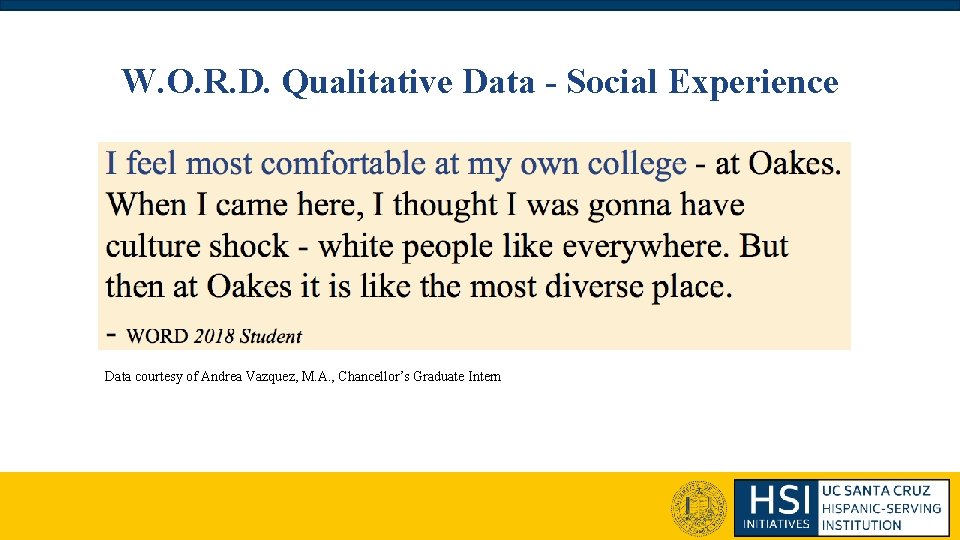
W. O. R. D. Qualitative Data - Social Experience Data courtesy of Andrea Vazquez, M. A. , Chancellor’s Graduate Intern
“Acculturation” Schema Data courtesy of Andrea Vazquez, M. A. , Chancellor’s Graduate Intern
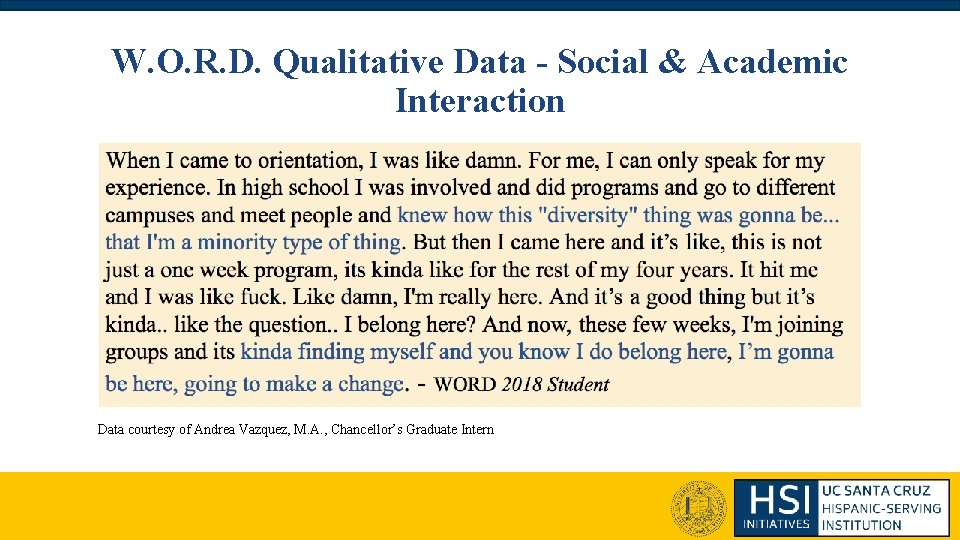
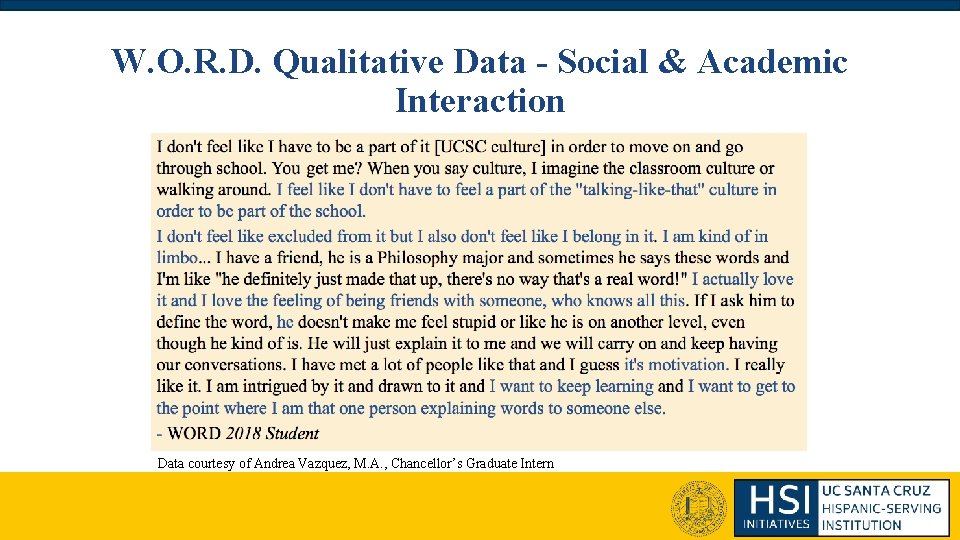
W. O. R. D. Qualitative Data - Social & Academic Interaction Data courtesy of Andrea Vazquez, M. A. , Chancellor’s Graduate Intern
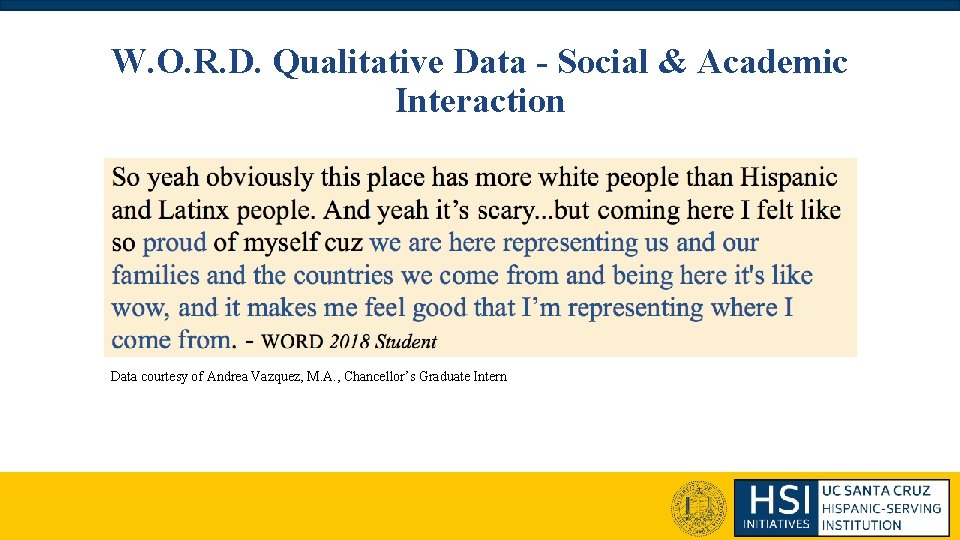
W. O. R. D. Qualitative Data - Social & Academic Interaction Data courtesy of Andrea Vazquez, M. A. , Chancellor’s Graduate Intern
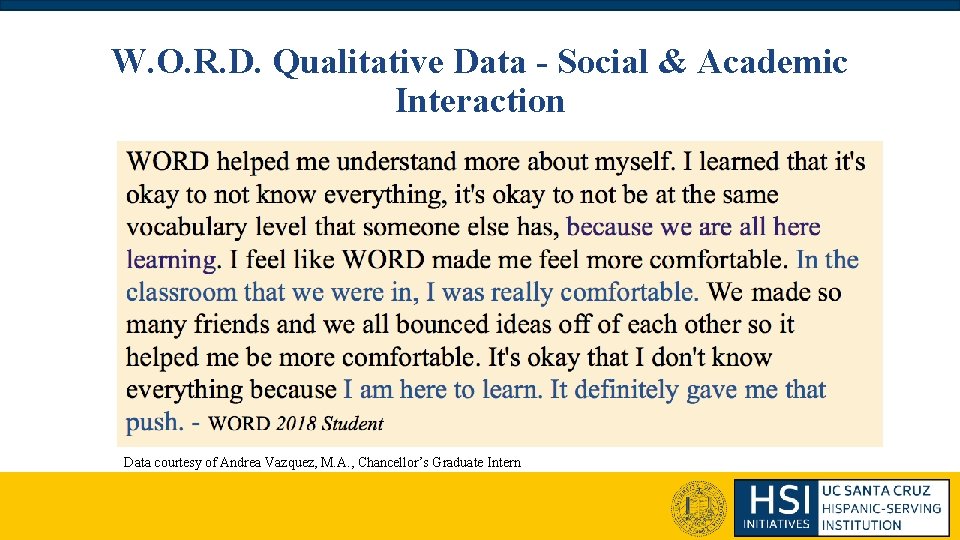
W. O. R. D. Qualitative Data - Social & Academic Interaction Data courtesy of Andrea Vazquez, M. A. , Chancellor’s Graduate Intern
W. O. R. D. Qualitative Data - Social & Academic Interaction Data courtesy of Andrea Vazquez, M. A. , Chancellor’s Graduate Intern
“Acculturation” Schema Data courtesy of Andrea Vazquez, M. A. , Chancellor’s Graduate Intern
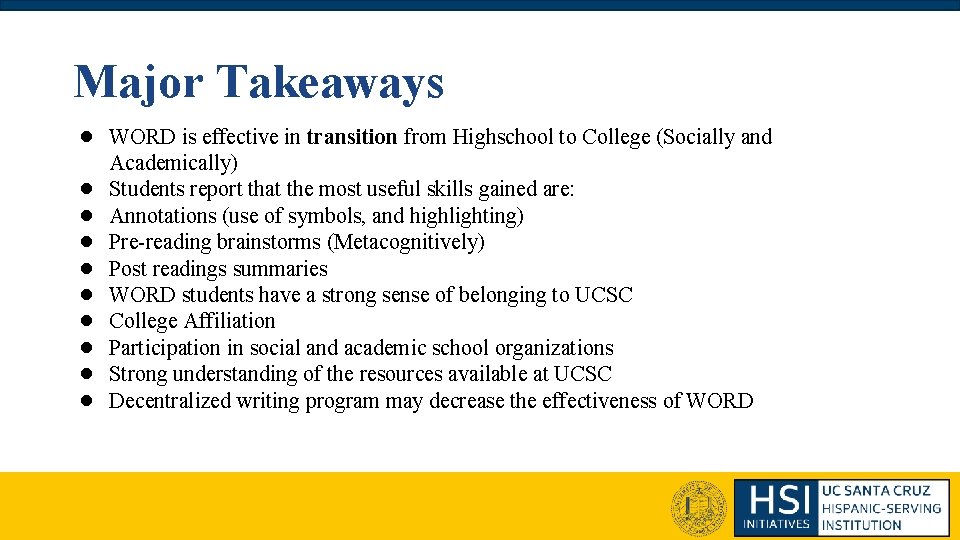
Major Takeaways ● WORD is effective in transition from Highschool to College (Socially and ● ● ● ● ● Academically) Students report that the most useful skills gained are: Annotations (use of symbols, and highlighting) Pre-reading brainstorms (Metacognitively) Post readings summaries WORD students have a strong sense of belonging to UCSC College Affiliation Participation in social and academic school organizations Strong understanding of the resources available at UCSC Decentralized writing program may decrease the effectiveness of WORD
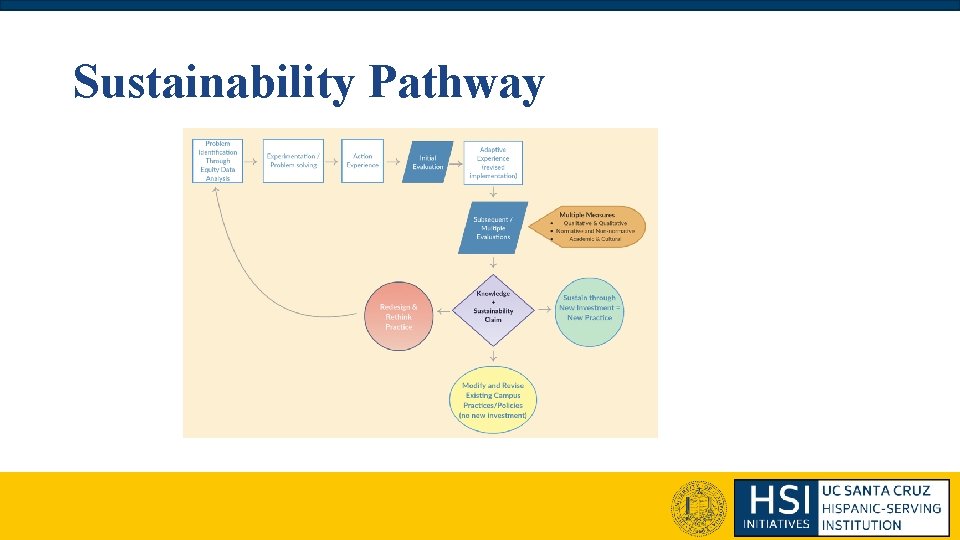
Sustainability Pathway
Learning Outcomes ● How to utilize the concept of academic language to investigate the intersectionality of student experiences in the reading and writing domain. ● How to leverage from data to help practitioners make informed decisions about program improvement. ● How to evaluate a reading and writing program as it relates to students sense of belongingness.
Learning Outcomes Arnold Sanchez Ordaz, Ph. D. Senior Equity Data Analyst aresanch@ucsc. edu (831) 459 -2986 Andrea Del Carmen Vazquez Ph. D. Student (Education) & Chancellor’s Graduate Intern andrea. vazquez@ucsc. edu (831) 459 -2986 René Moreno Assistant Director of HSI Initiatives rmoreno@ucsc. edu (831) 502 -7033