
Academic Data Update STAR November 2020 About Renaissance
Academic Data Update: STAR November 2020
About Renaissance: STAR Reading: “is an assessment of the reading achievement of students…” It “…allows teachers to assess students’ reading comprehension, overall reading achievement, and a wide range of discrete reading skills that are aligned to state and national curriculum standards. . . ” STAR Math: “…provides feedback to teachers and administrators regarding a student’s mathematical ability…”, including “…estimates of a student’s instructional math levels and math levels relative to national norms…” STAR Early Literacy: “…measure K-3 students’ early literacy and early numeracy skills with a computer-adaptive assessment…” 2
Overview of Renaissance: STAR in NPS uses Renaissance: STAR as a universal screener. • Grades 2 through 9, three times a year – Fall, Winter, and Spring (aka screening window). • In addition to grade level STAR Math, there is also STAR Math Algebra I and STAR Math Geometry. SY 20 -21: Students in grades 6 – 8 and high school students, who are in an EOC: Algebra I or Geometry, participated in STAR Algebra I or Geometry.

STAR Student Performance Measures STAR is a computer-adaptive test that will adjust the level of difficulty depending on the student’s answer. Scaled Scores for STAR Reading and Math range from 0 – 1400. Other data and information from STAR assessment: o Domain Scores o Percentile Rank (PR) o Instructional Reading Level (IRL) o Math Instructional Level (MIL) o Student Growth Percentile (SGP) o Grade Equivalent (GE)
STAR Results: Reading
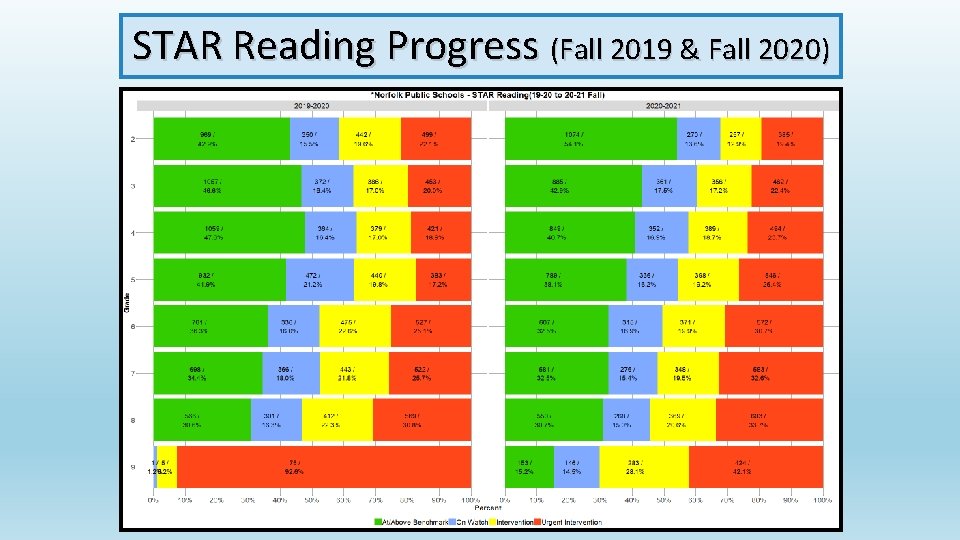
STAR Reading Progress (Fall 2019 & Fall 2020)
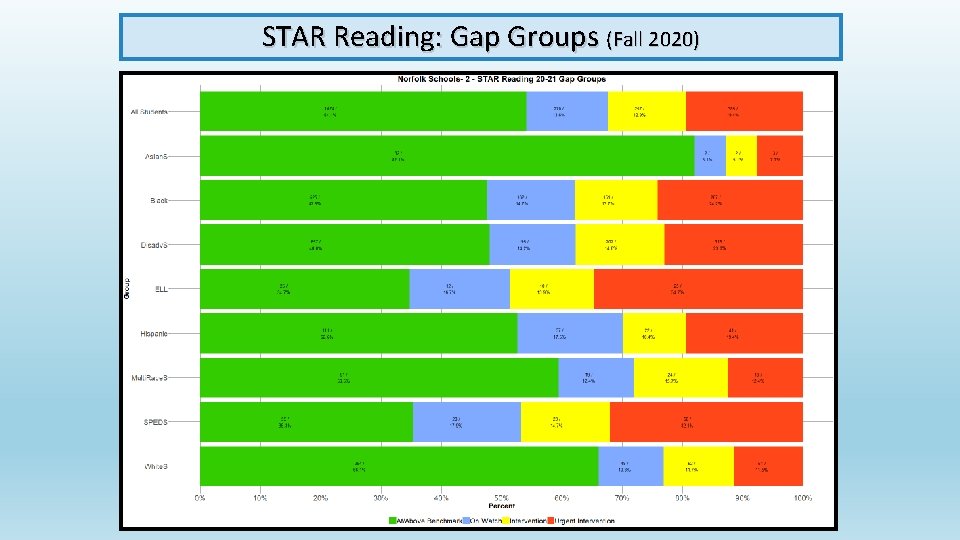
STAR Reading: Gap Groups (Fall 2020)
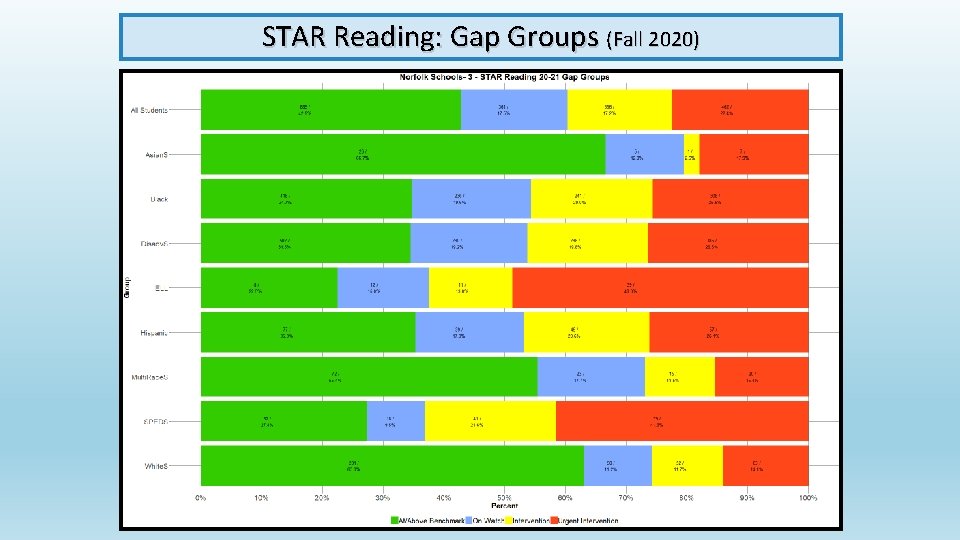
STAR Reading: Gap Groups (Fall 2020)
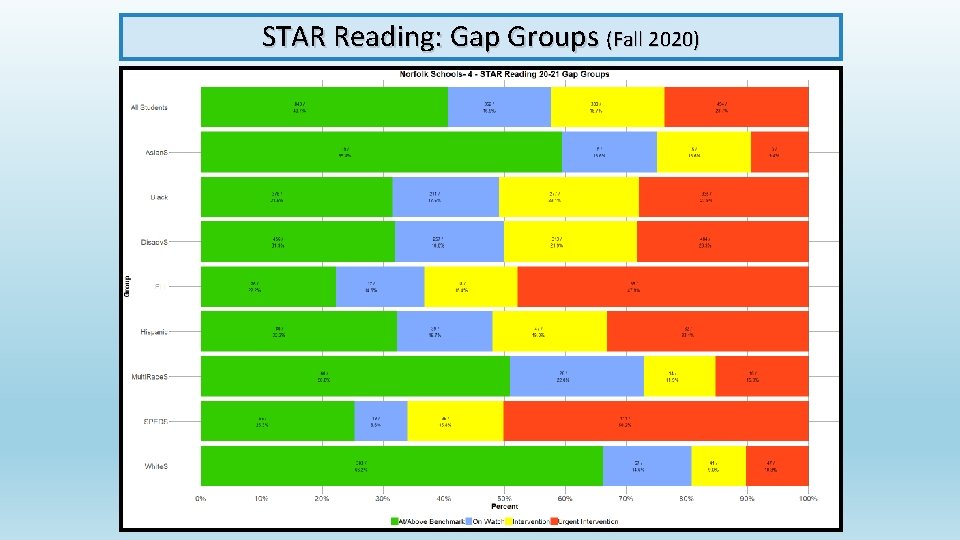
STAR Reading: Gap Groups (Fall 2020)
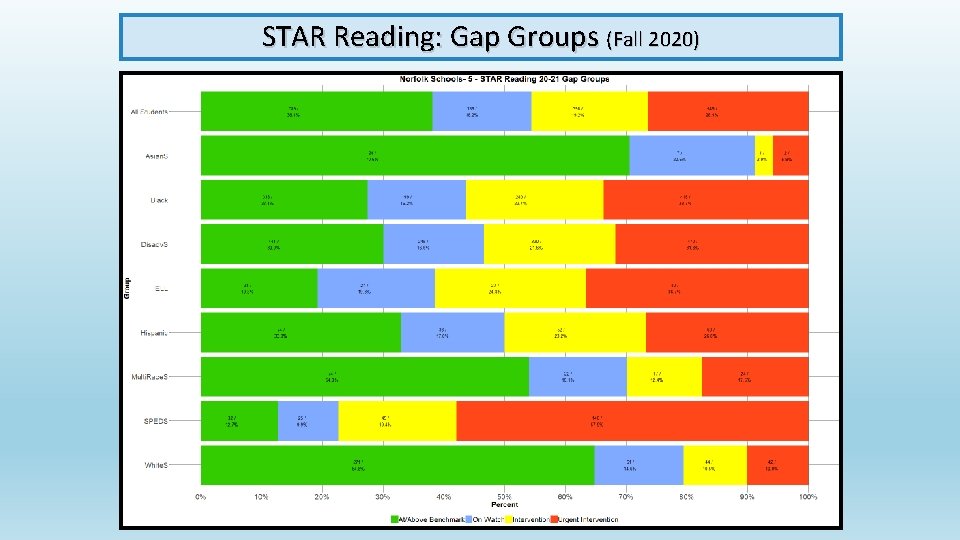
STAR Reading: Gap Groups (Fall 2020)
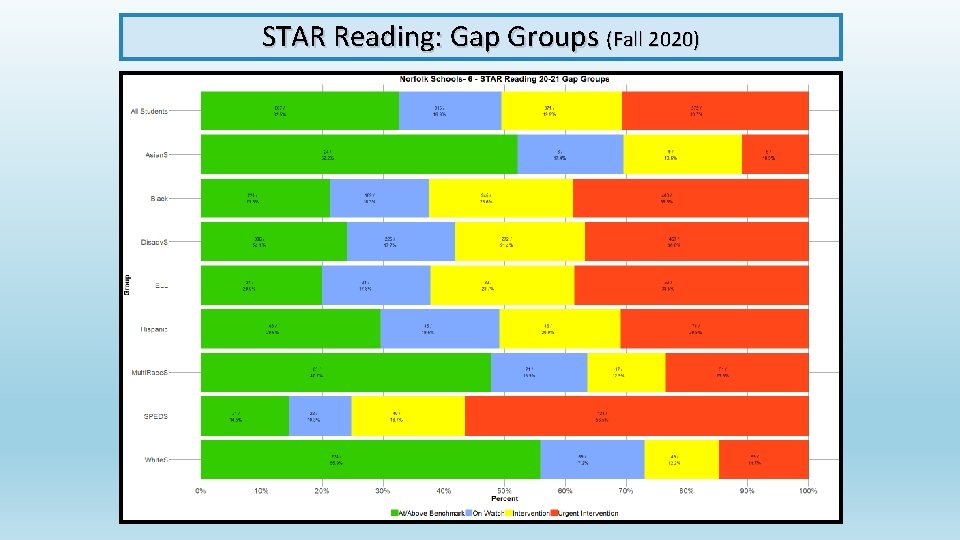
STAR Reading: Gap Groups (Fall 2020)
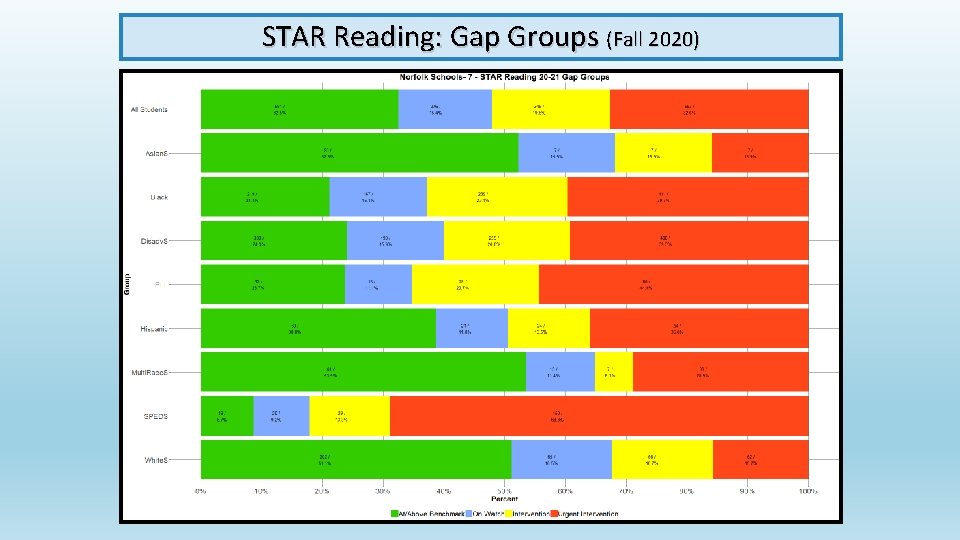
STAR Reading: Gap Groups (Fall 2020)
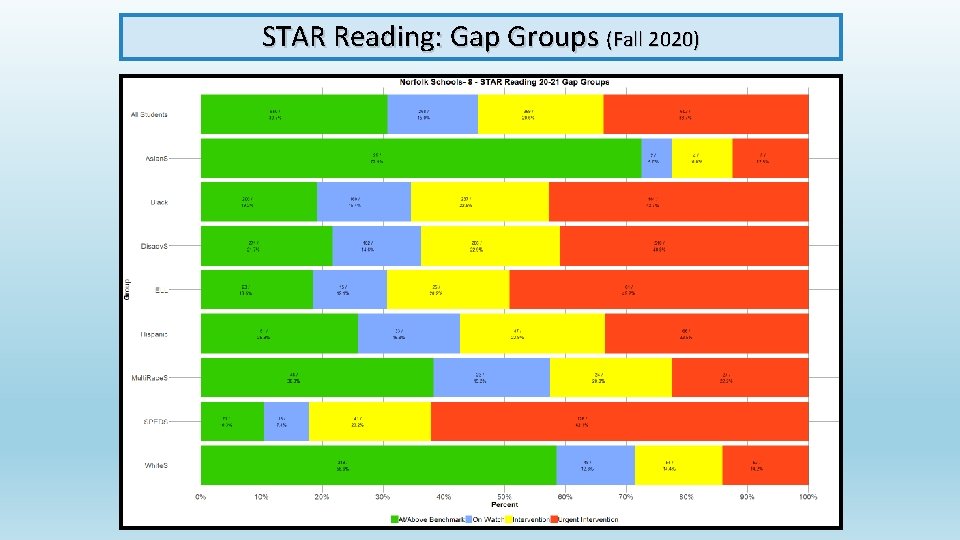
STAR Reading: Gap Groups (Fall 2020)
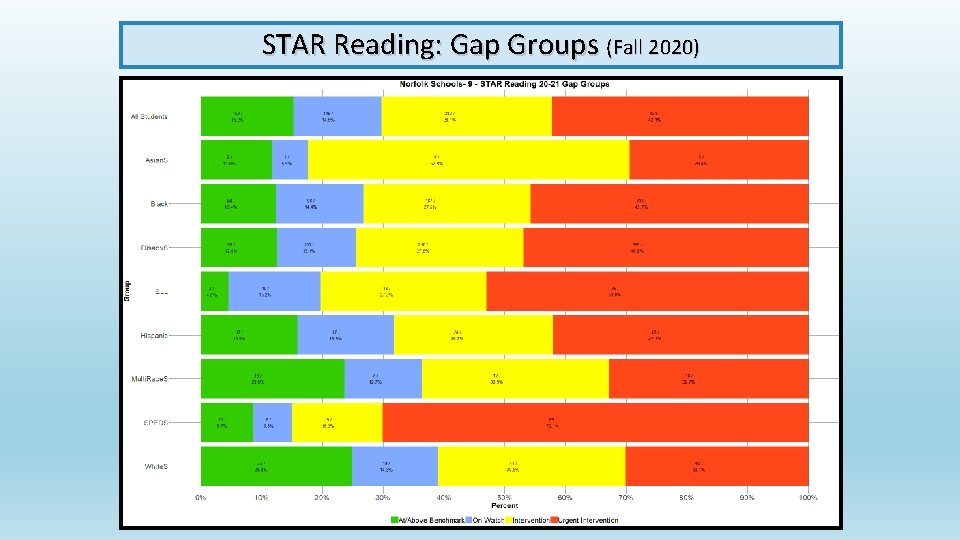
STAR Reading: Gap Groups (Fall 2020)
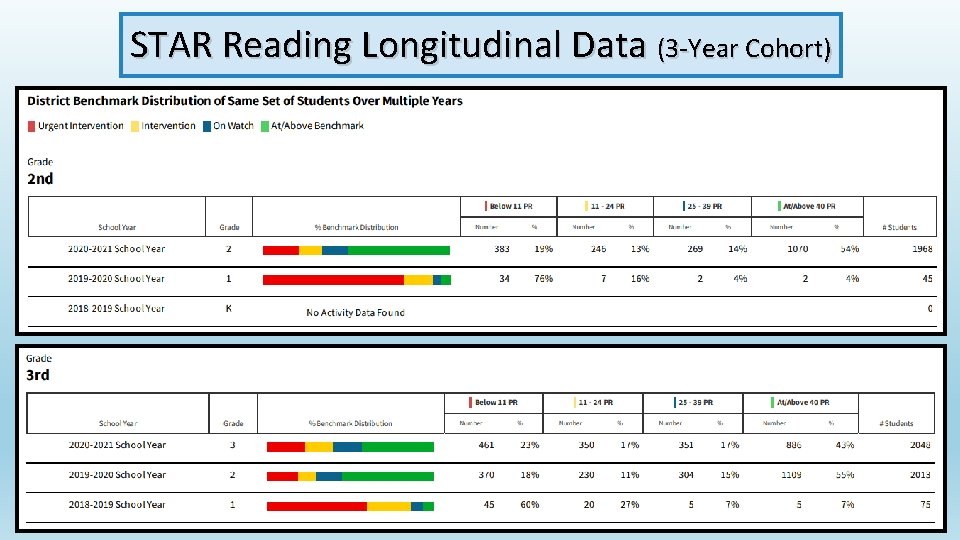
STAR Reading Longitudinal Data (3 -Year Cohort)
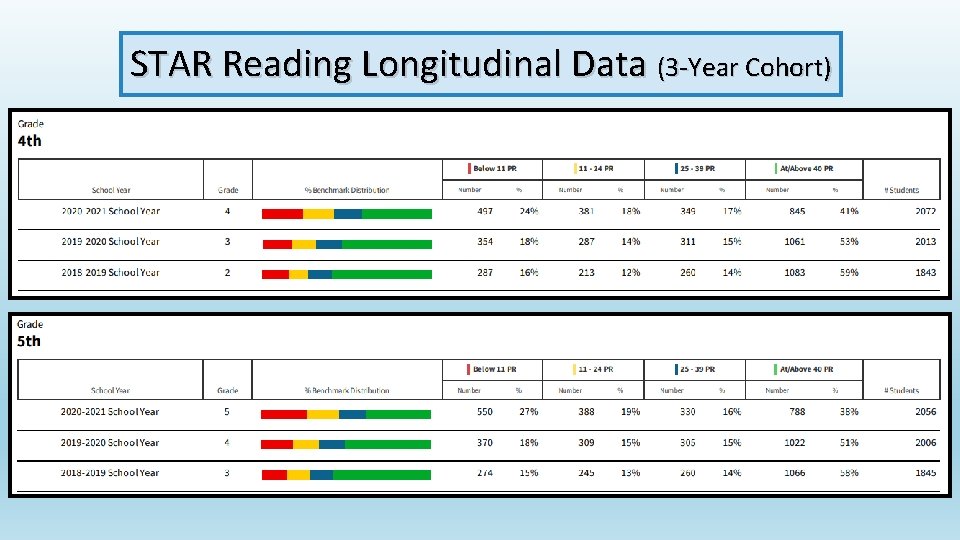
STAR Reading Longitudinal Data (3 -Year Cohort)
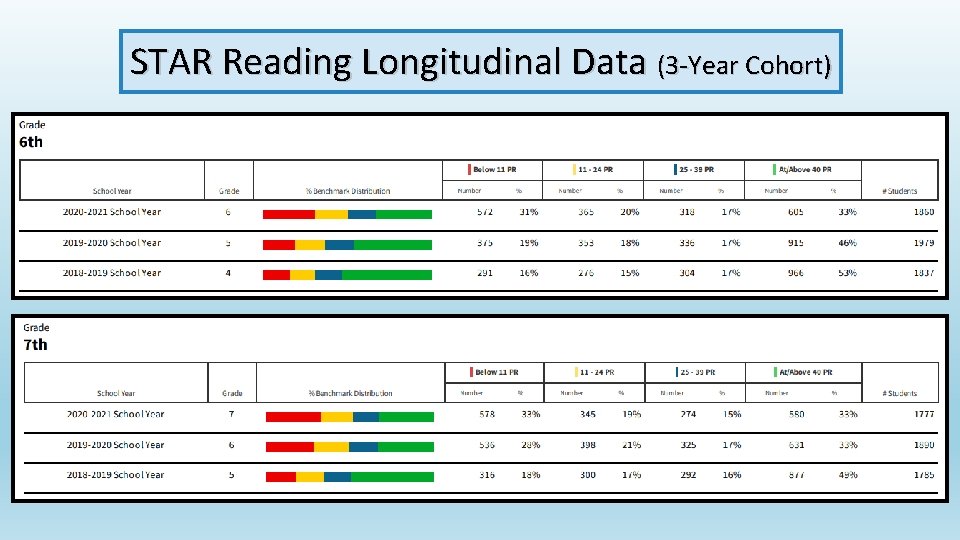
STAR Reading Longitudinal Data (3 -Year Cohort)
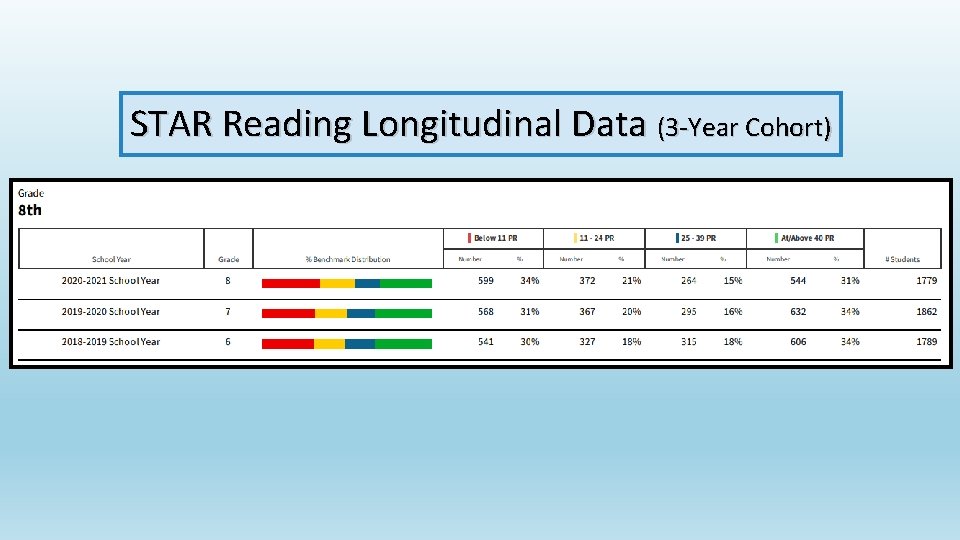
STAR Reading Longitudinal Data (3 -Year Cohort)
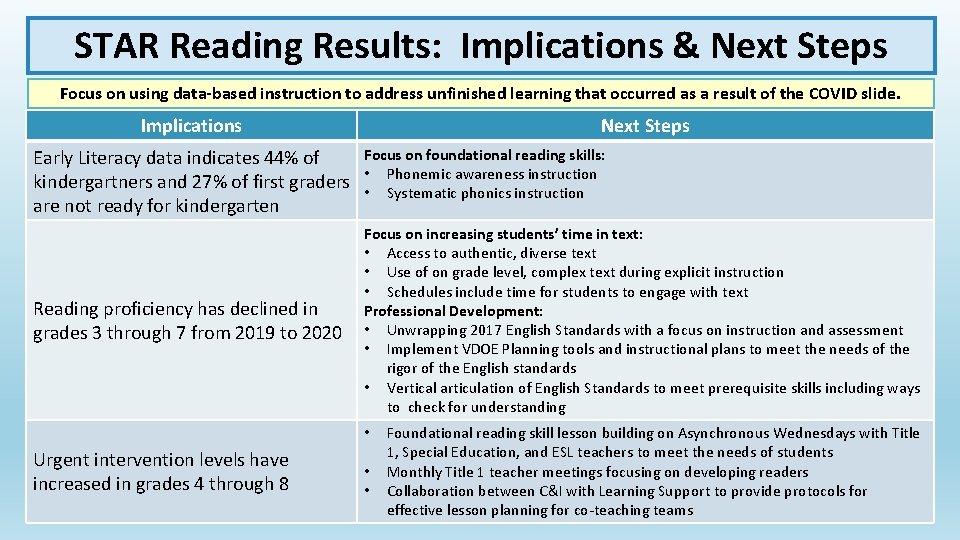
STAR Reading Results: Implications & Next Steps Focus on using data-based instruction to address unfinished learning that occurred as a result of the COVID slide. Implications Next Steps Focus on foundational reading skills: Early Literacy data indicates 44% of kindergartners and 27% of first graders • Phonemic awareness instruction • Systematic phonics instruction are not ready for kindergarten Reading proficiency has declined in grades 3 through 7 from 2019 to 2020 Focus on increasing students’ time in text: • Access to authentic, diverse text • Use of on grade level, complex text during explicit instruction • Schedules include time for students to engage with text Professional Development: • Unwrapping 2017 English Standards with a focus on instruction and assessment • Implement VDOE Planning tools and instructional plans to meet the needs of the rigor of the English standards • Vertical articulation of English Standards to meet prerequisite skills including ways to check for understanding • Urgent intervention levels have increased in grades 4 through 8 • • Foundational reading skill lesson building on Asynchronous Wednesdays with Title 1, Special Education, and ESL teachers to meet the needs of students Monthly Title 1 teacher meetings focusing on developing readers Collaboration between C&I with Learning Support to provide protocols for effective lesson planning for co-teaching teams
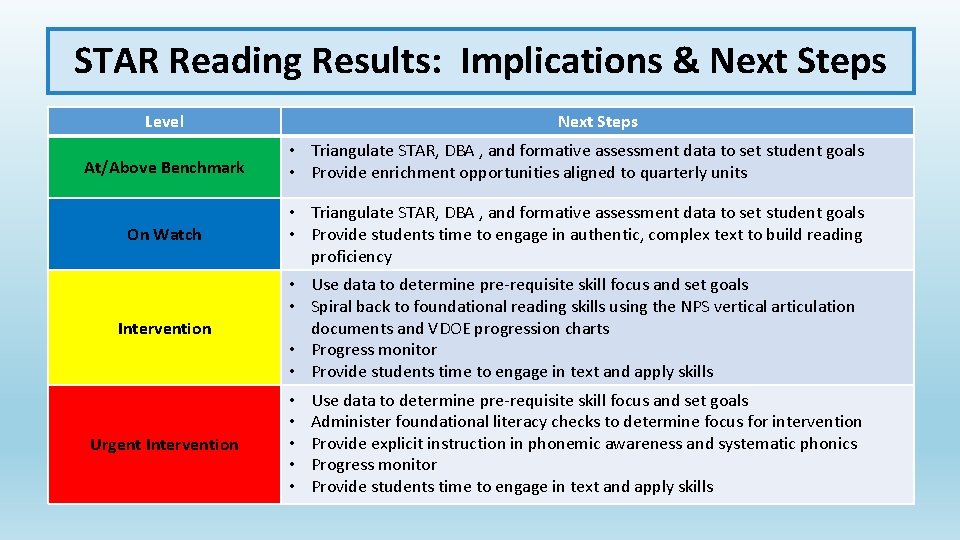
STAR Reading Results: Implications & Next Steps Level Next Steps At/Above Benchmark • Triangulate STAR, DBA , and formative assessment data to set student goals • Provide enrichment opportunities aligned to quarterly units On Watch • Triangulate STAR, DBA , and formative assessment data to set student goals • Provide students time to engage in authentic, complex text to build reading proficiency Intervention • Use data to determine pre-requisite skill focus and set goals • Spiral back to foundational reading skills using the NPS vertical articulation documents and VDOE progression charts • Progress monitor • Provide students time to engage in text and apply skills Urgent Intervention • • • Use data to determine pre-requisite skill focus and set goals Administer foundational literacy checks to determine focus for intervention Provide explicit instruction in phonemic awareness and systematic phonics Progress monitor Provide students time to engage in text and apply skills

STAR Results: Math
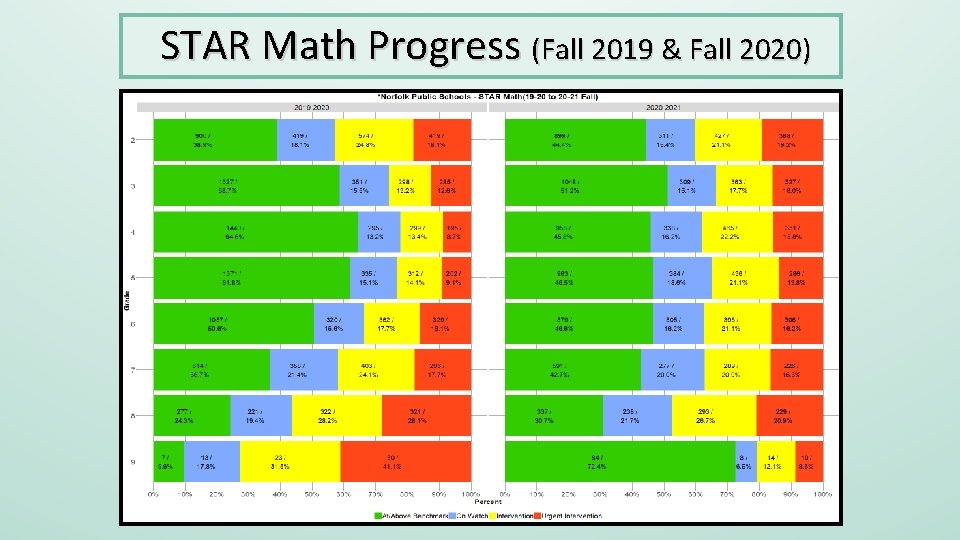
STAR Math Progress (Fall 2019 & Fall 2020)
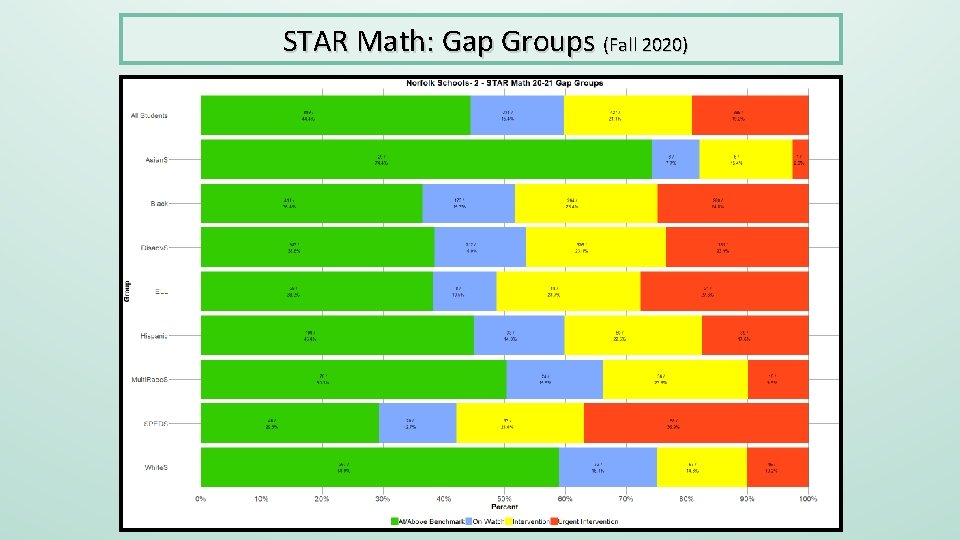
STAR Math: Gap Groups (Fall 2020)
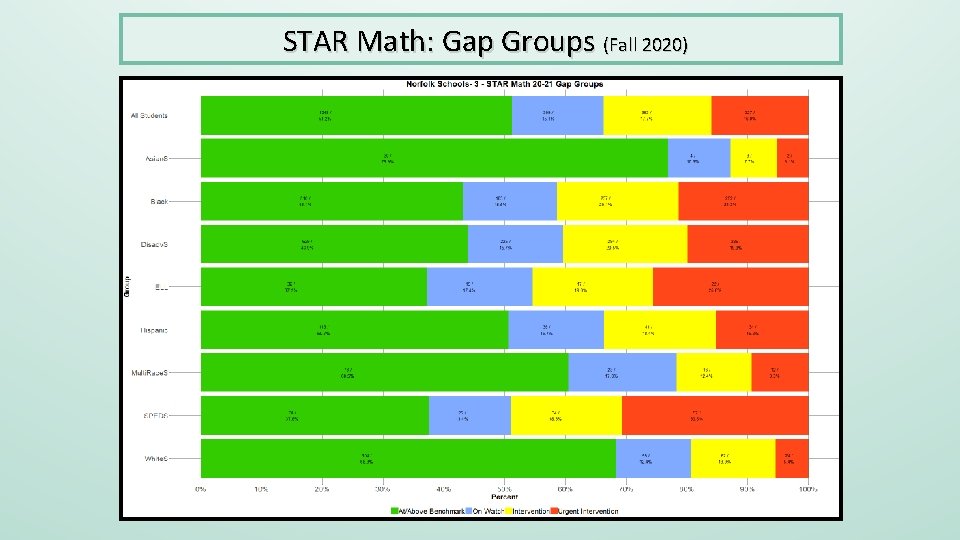
STAR Math: Gap Groups (Fall 2020)
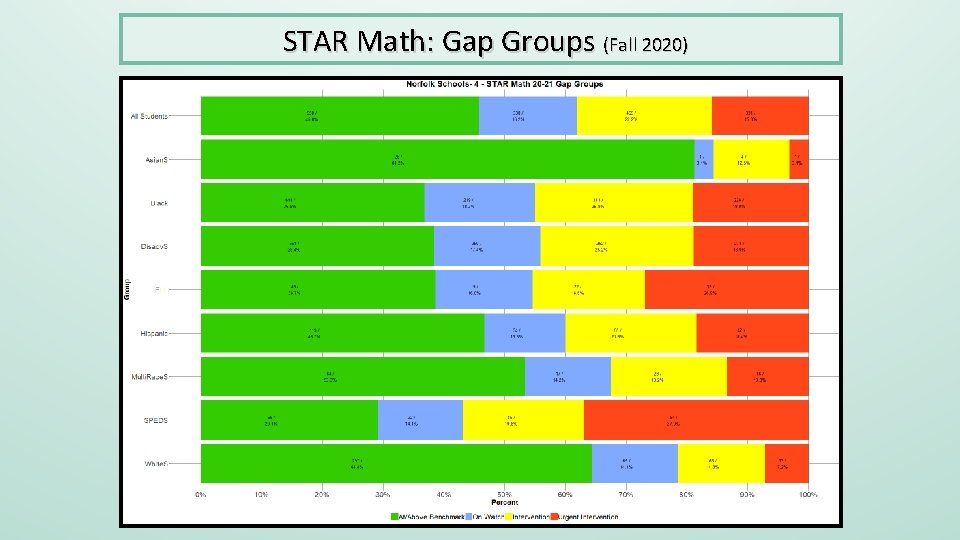
STAR Math: Gap Groups (Fall 2020)
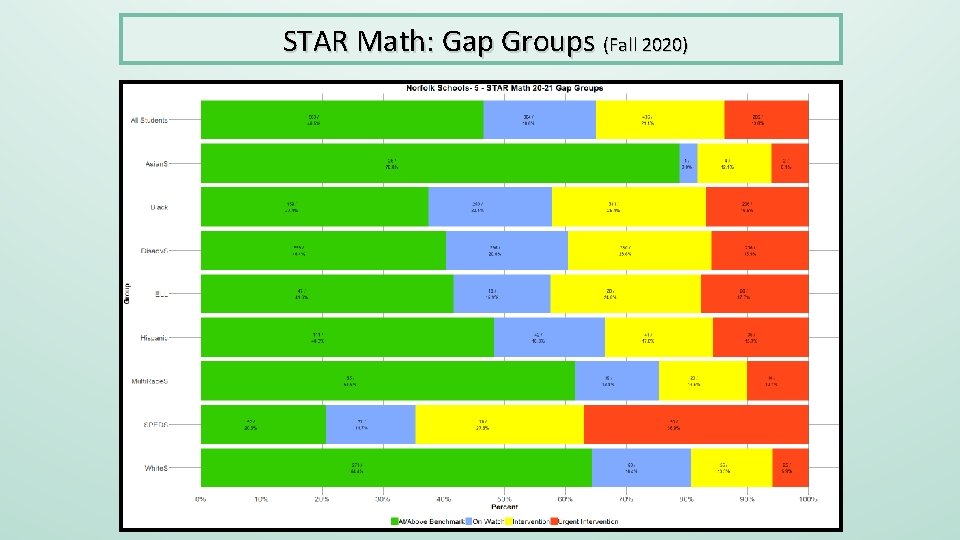
STAR Math: Gap Groups (Fall 2020)
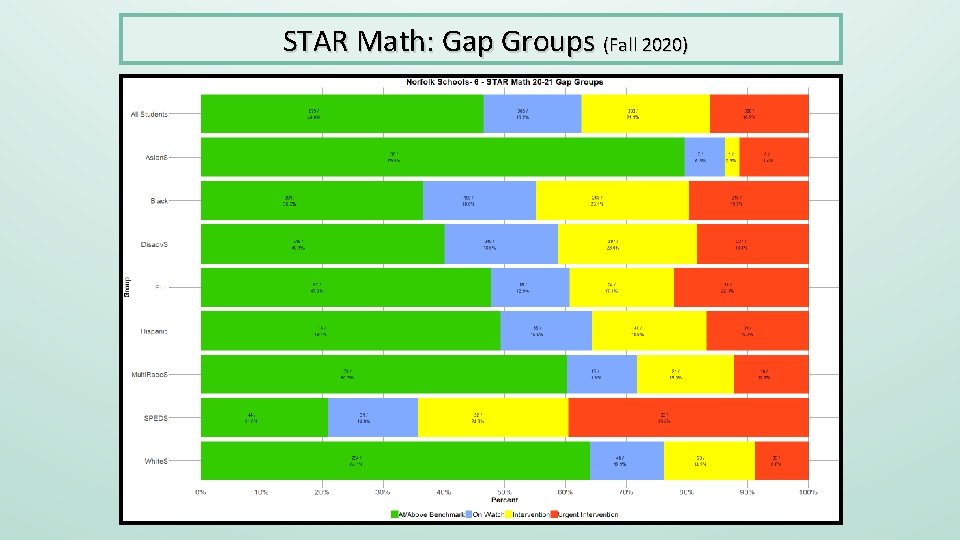
STAR Math: Gap Groups (Fall 2020)
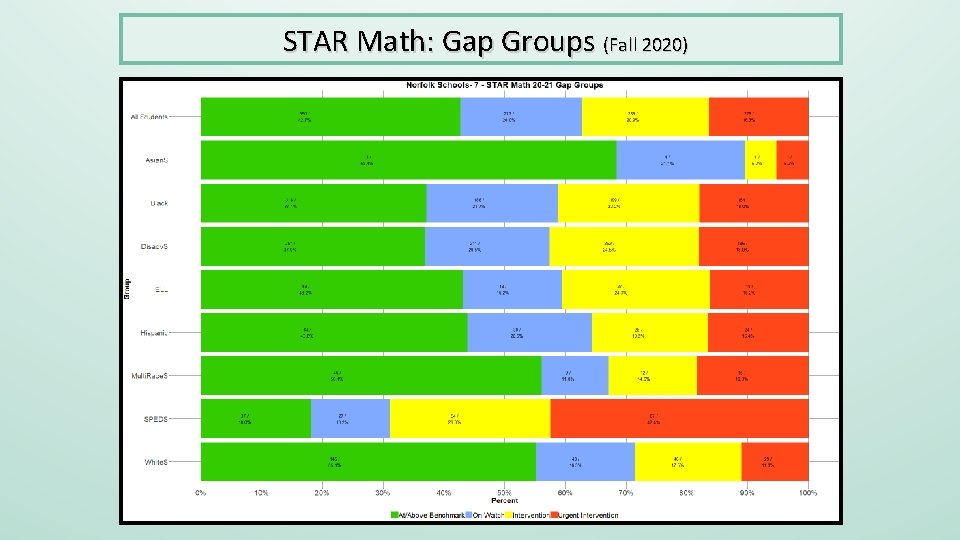
STAR Math: Gap Groups (Fall 2020)
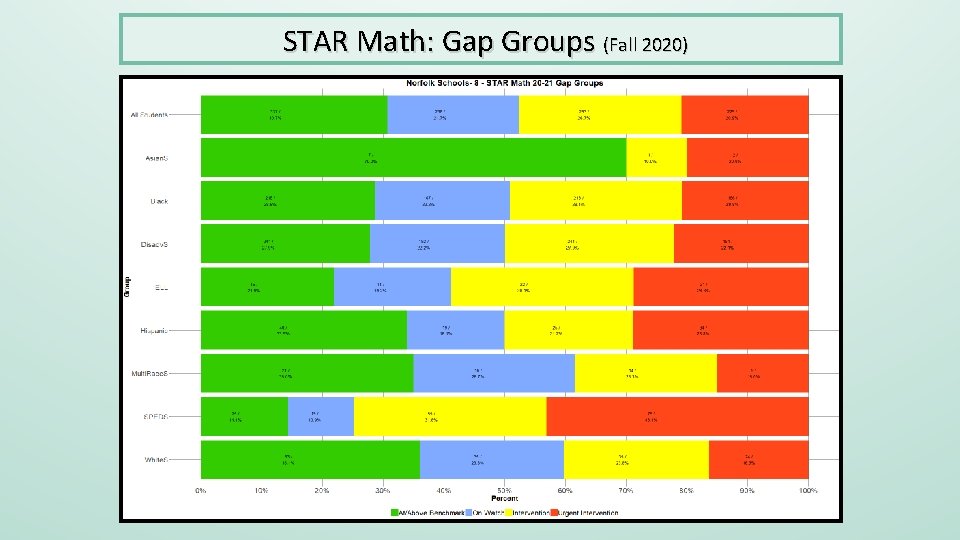
STAR Math: Gap Groups (Fall 2020)
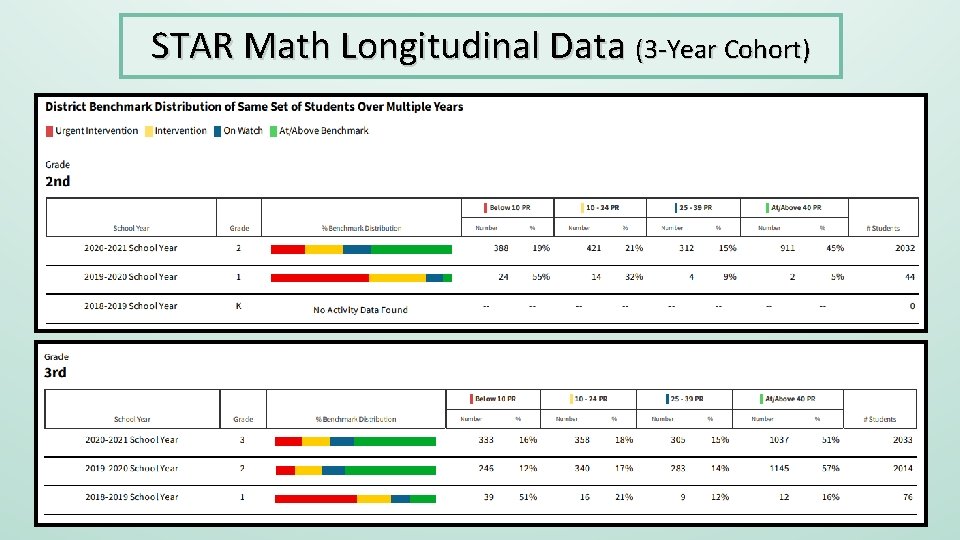
STAR Math Longitudinal Data (3 -Year Cohort)
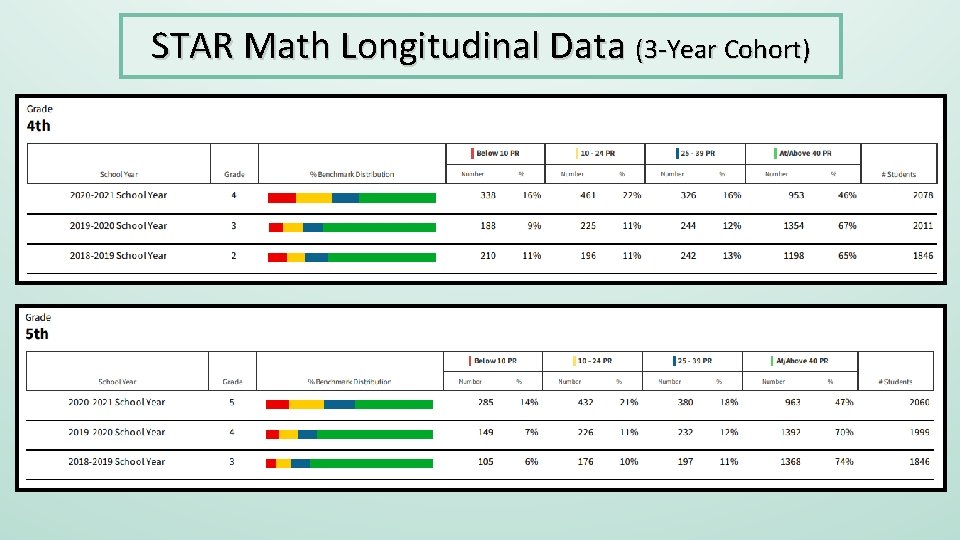
STAR Math Longitudinal Data (3 -Year Cohort)
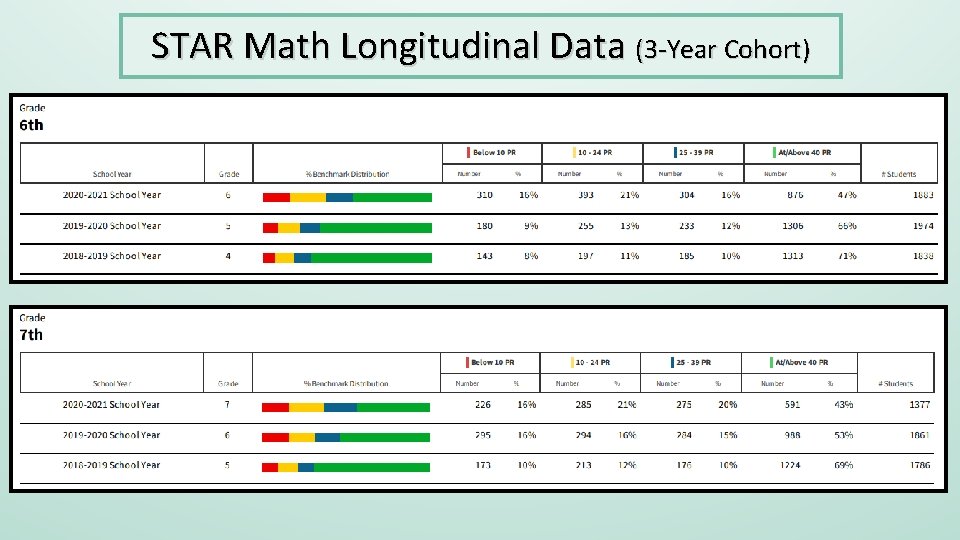
STAR Math Longitudinal Data (3 -Year Cohort)
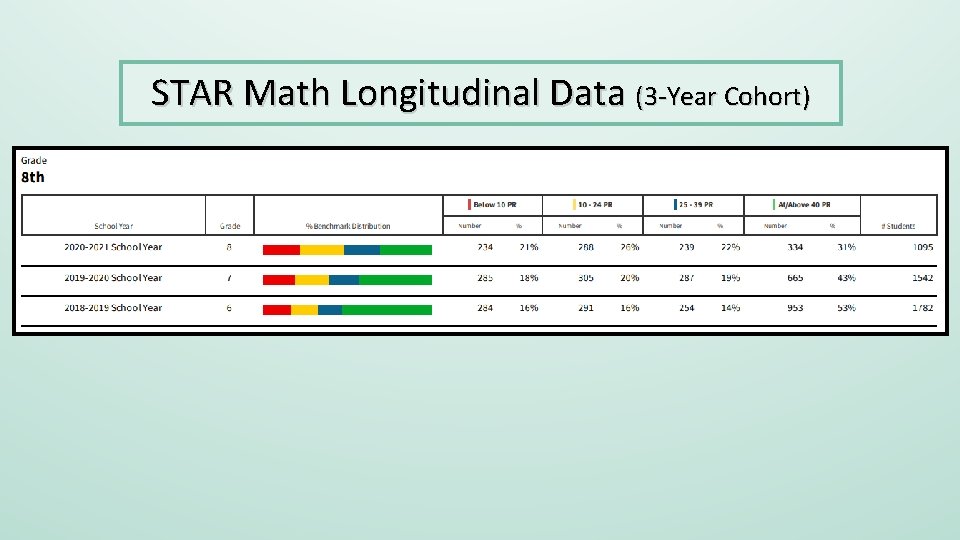
STAR Math Longitudinal Data (3 -Year Cohort)
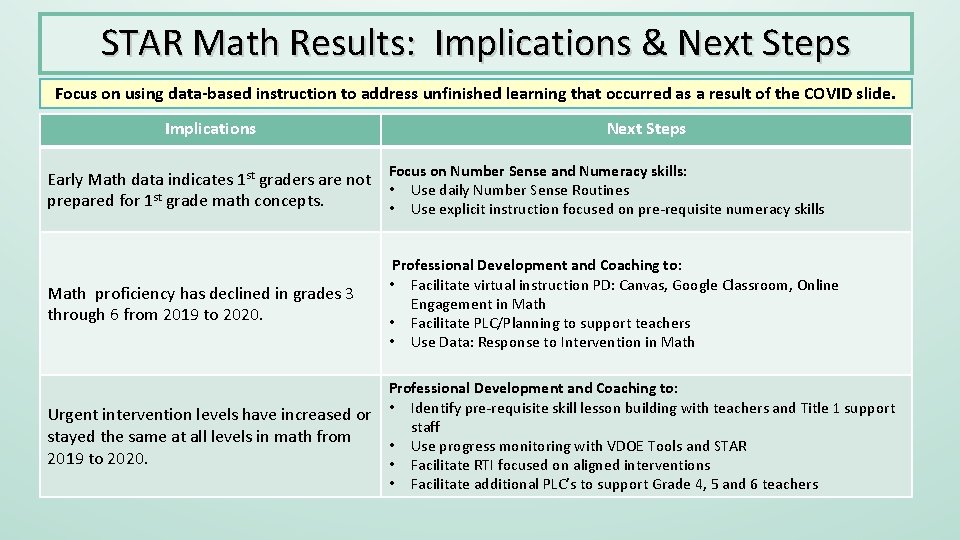
STAR Math Results: Implications & Next Steps Focus on using data-based instruction to address unfinished learning that occurred as a result of the COVID slide. Implications Next Steps Focus on Number Sense and Numeracy skills: Early Math data indicates 1 st graders are not • Use daily Number Sense Routines prepared for 1 st grade math concepts. • Use explicit instruction focused on pre-requisite numeracy skills Math proficiency has declined in grades 3 through 6 from 2019 to 2020. Professional Development and Coaching to: • Facilitate virtual instruction PD: Canvas, Google Classroom, Online Engagement in Math • Facilitate PLC/Planning to support teachers • Use Data: Response to Intervention in Math Urgent intervention levels have increased or stayed the same at all levels in math from 2019 to 2020. Professional Development and Coaching to: • Identify pre-requisite skill lesson building with teachers and Title 1 support staff • Use progress monitoring with VDOE Tools and STAR • Facilitate RTI focused on aligned interventions • Facilitate additional PLC’s to support Grade 4, 5 and 6 teachers
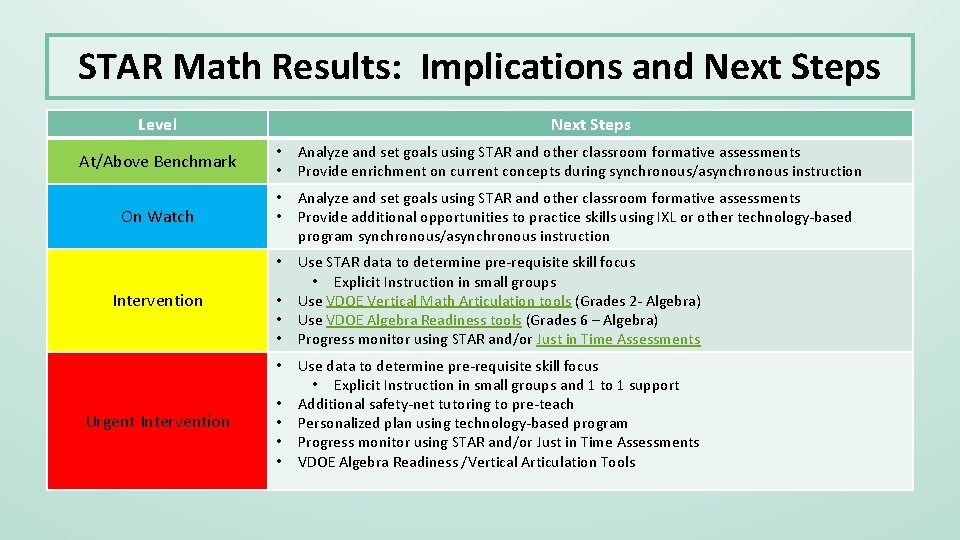
STAR Math Results: Implications and Next Steps Level Next Steps At/Above Benchmark • • Analyze and set goals using STAR and other classroom formative assessments Provide enrichment on current concepts during synchronous/asynchronous instruction On Watch • • Analyze and set goals using STAR and other classroom formative assessments Provide additional opportunities to practice skills using IXL or other technology-based program synchronous/asynchronous instruction • Use STAR data to determine pre-requisite skill focus • Explicit Instruction in small groups Use VDOE Vertical Math Articulation tools (Grades 2 - Algebra) Use VDOE Algebra Readiness tools (Grades 6 – Algebra) Progress monitor using STAR and/or Just in Time Assessments Intervention • • Urgent Intervention • • Use data to determine pre-requisite skill focus • Explicit Instruction in small groups and 1 to 1 support Additional safety-net tutoring to pre-teach Personalized plan using technology-based program Progress monitor using STAR and/or Just in Time Assessments VDOE Algebra Readiness /Vertical Articulation Tools
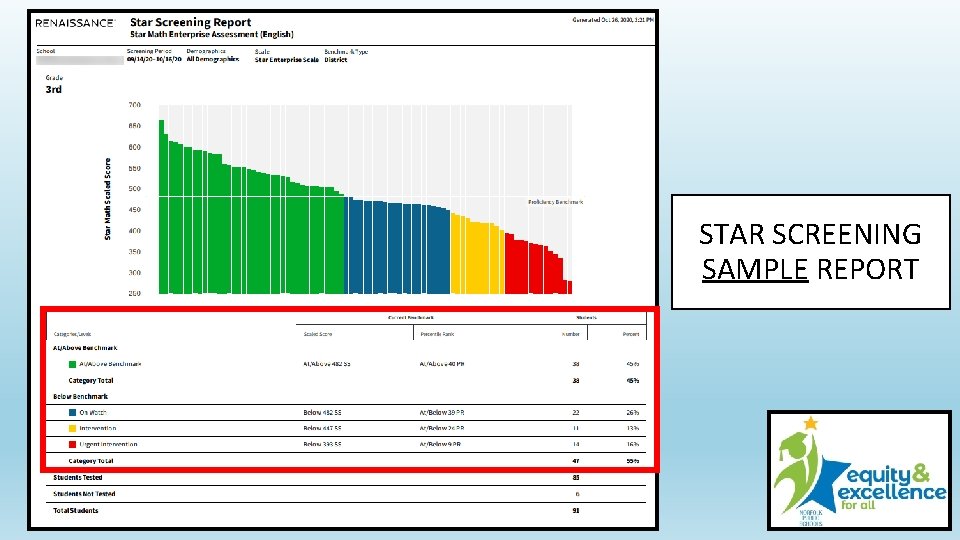
STAR SCREENING SAMPLE REPORT
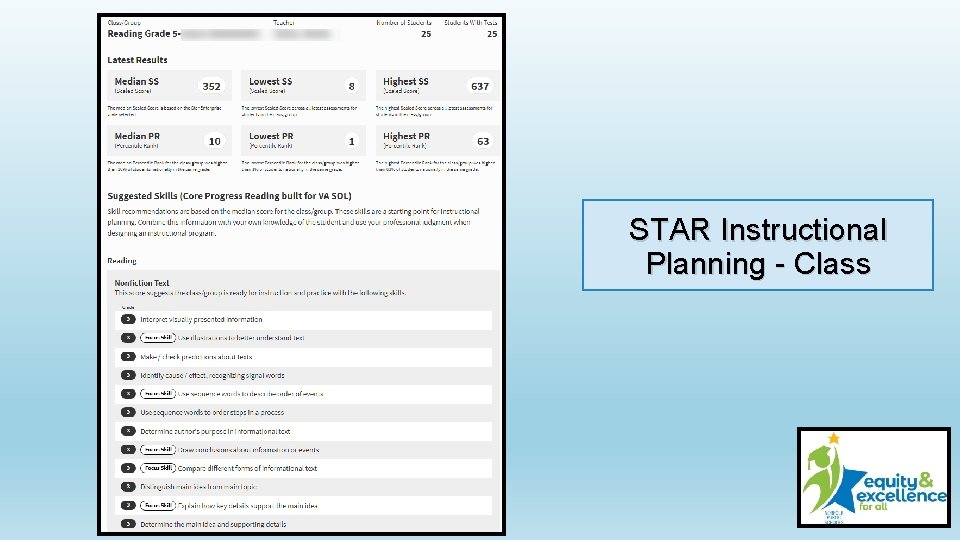
STAR Instructional Planning - Class
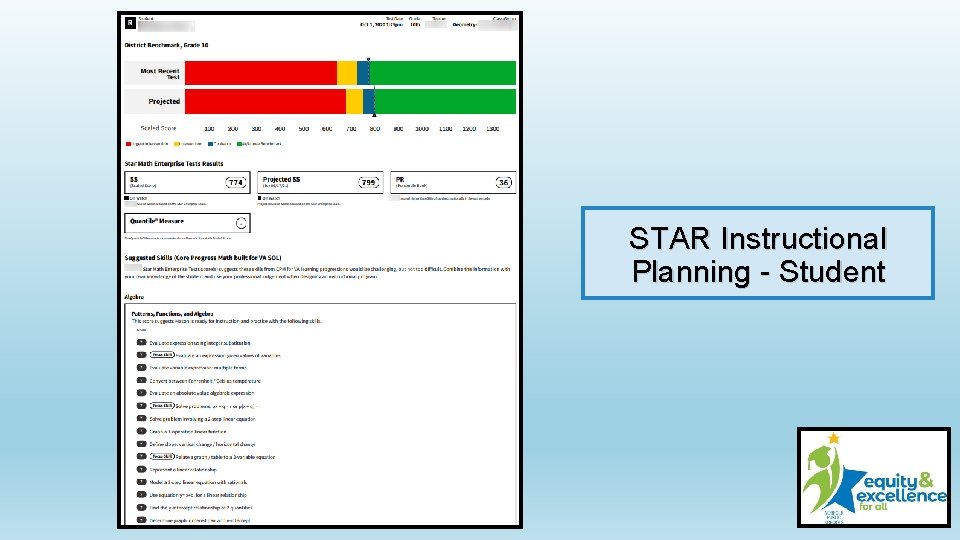
STAR Instructional Planning - Student
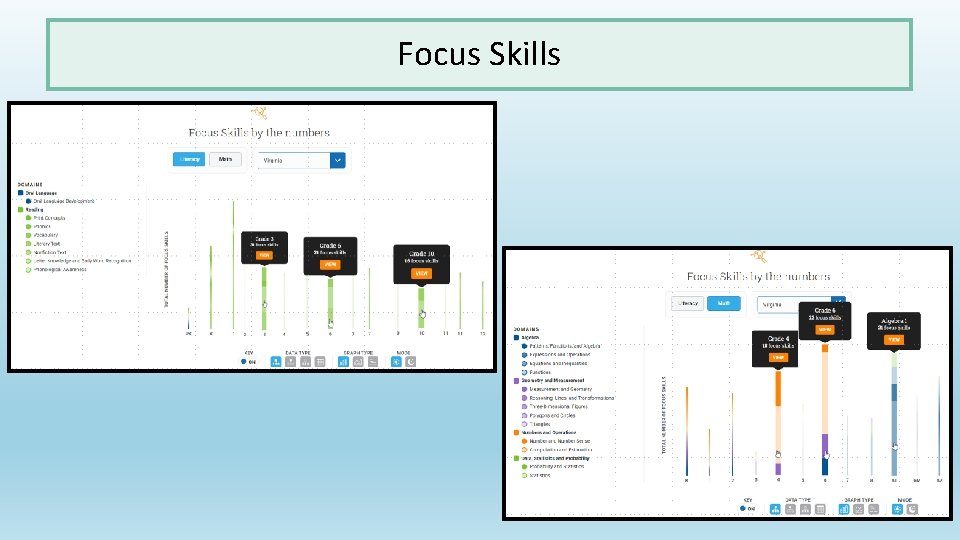
Focus Skills
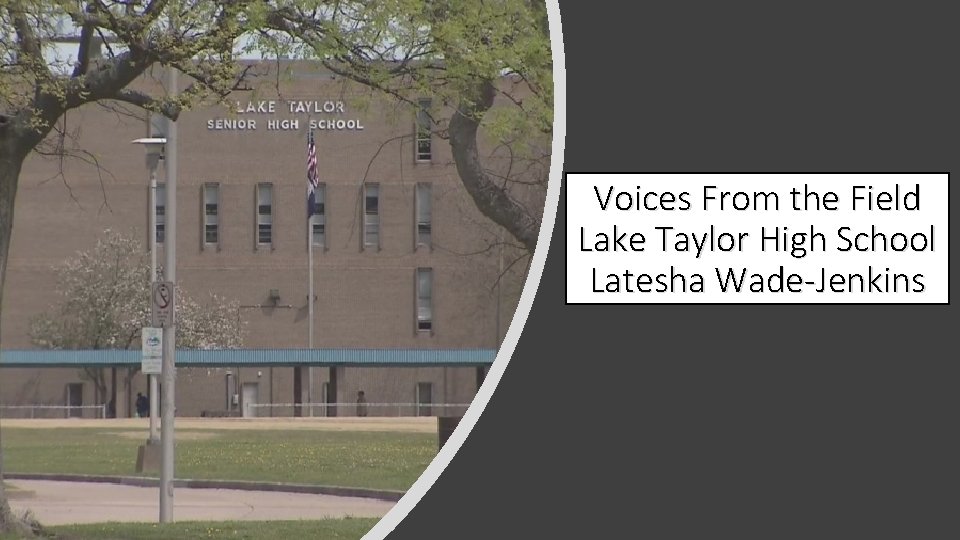
Voices From the Field Lake Taylor High School Latesha Wade-Jenkins
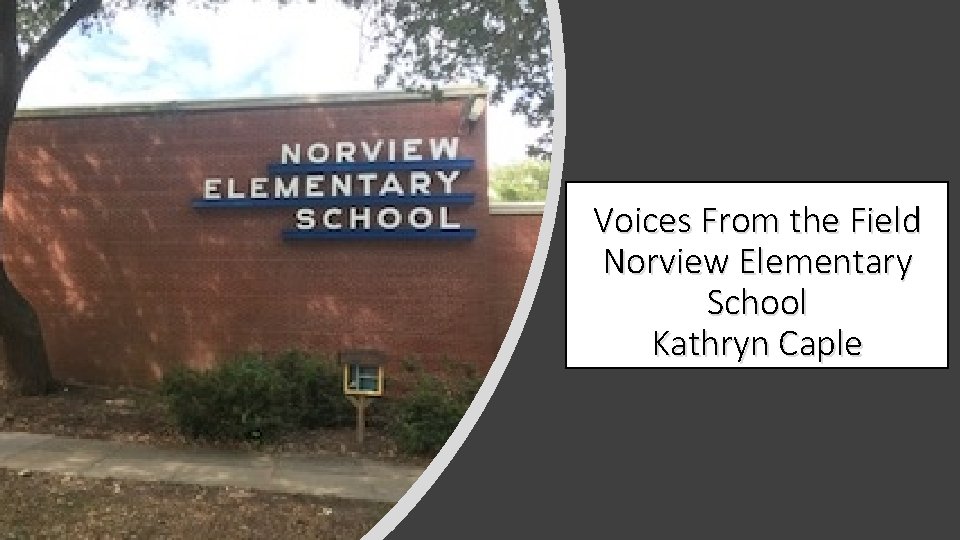
Voices From the Field Norview Elementary School Kathryn Caple
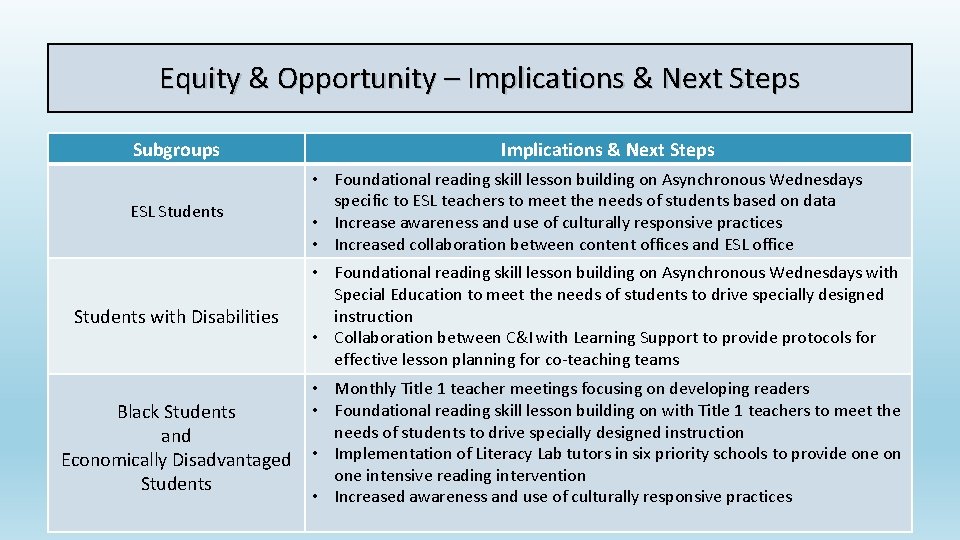
Equity & Opportunity – Implications & Next Steps Subgroups ESL Students Implications & Next Steps • Foundational reading skill lesson building on Asynchronous Wednesdays specific to ESL teachers to meet the needs of students based on data • Increase awareness and use of culturally responsive practices • Increased collaboration between content offices and ESL office Students with Disabilities • Foundational reading skill lesson building on Asynchronous Wednesdays with Special Education to meet the needs of students to drive specially designed instruction • Collaboration between C&I with Learning Support to provide protocols for effective lesson planning for co-teaching teams Black Students and Economically Disadvantaged Students • Monthly Title 1 teacher meetings focusing on developing readers • Foundational reading skill lesson building on with Title 1 teachers to meet the needs of students to drive specially designed instruction • Implementation of Literacy Lab tutors in six priority schools to provide on one intensive reading intervention • Increased awareness and use of culturally responsive practices
Resources and Strategies • Addition of 12 Instructional Coaches who will provide coaching, professional development, and support to priority schools. • Title 1 Teacher Monthly Meetings led by English and Math to provide instructional supports to meet the needs of students including progress monitoring of interventions. • LETRS Training • Grow Your Own Reading Specialist Cohort in conjunction with the College of William & Mary. • Accepted candidates will be notified at the end of November • Coursework begins January 2021 with completion in August of 2022
Division-Wide Resources and Strategies • Grow Your Own Math Specialist Cohort. • RFP in Progress • Monthly Support at Administrators’ Professional Development Sessions. • Provide expectations for interpreting data and utilizing data to drive instruction, intervention, and specially designed instruction. • Asynchronous Wednesday professional development offerings include: • Canvas and Zoom Training • Best practices for virtual instruction • Collaborative planning opportunities for teachers with content specialists • Pre-requisite skill strategies and support • Data-driven instructional practices
Questions and Comments
- Slides: 45