
AC 4 1 Biological Theories ASSESS THE USE
AC 4. 1 – Biological Theories ASSESS THE USE OF CRIMINOLOGICAL THEORIES IN INFORMING POLICY DEVELOPMENT
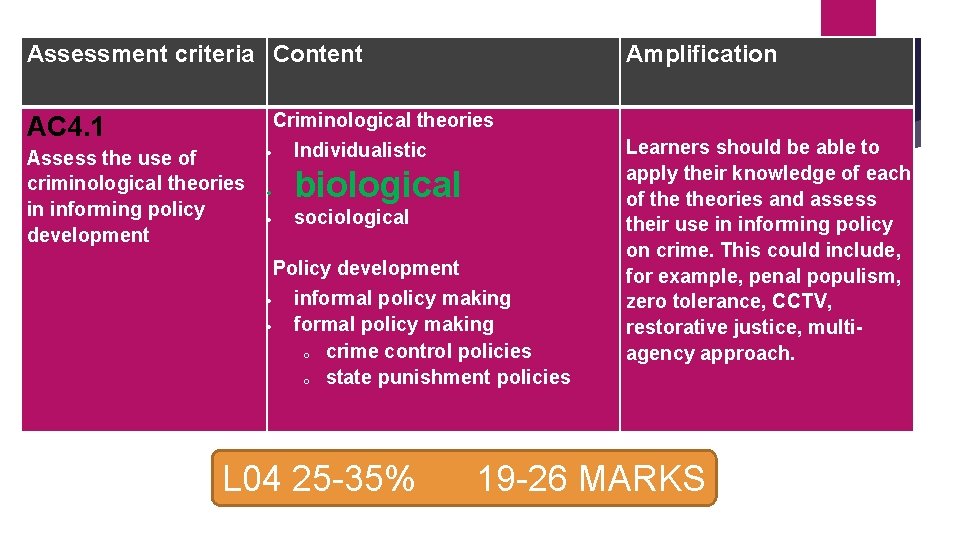
Assessment criteria Content AC 4. 1 Assess the use of criminological theories in informing policy development Amplification Criminological theories Individualistic biological sociological Policy development informal policy making o crime control policies o state punishment policies L 04 25 -35% Learners should be able to apply their knowledge of each of theories and assess their use in informing policy on crime. This could include, for example, penal populism, zero tolerance, CCTV, restorative justice, multiagency approach. 19 -26 MARKS
Assess the use of criminological theories in informing policy development Individualistic Biological Sociological
What is policy? Crime control policies refer to the laws, regulations and other governmental actions that are designed to reduce criminal acts. Because public safety is a key responsibility of government, policy makers at state and local levels are involved in formulating and implementing crime control policies.

Biological theories - EUGENICS Improving the genetic quality of the human population – Francis Galton Can you think of any historical examples of ‘eugenics’?
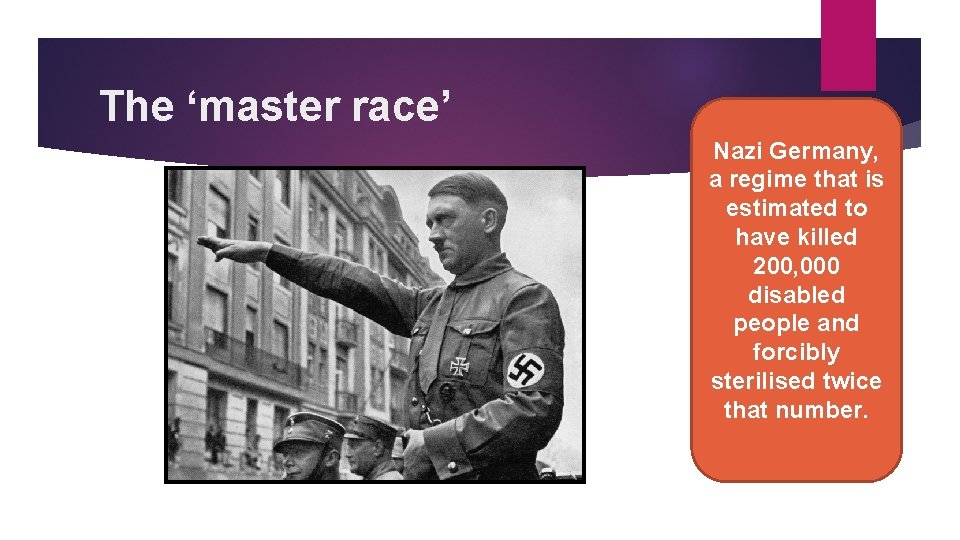
The ‘master race’ Nazi Germany, a regime that is estimated to have killed 200, 000 disabled people and forcibly sterilised twice that number.
Eugenics in Britain Supporters of eugenics called for government policies to improve the biological quality of the human race through selective parenthood. They linked physical and learning disabilities to a range of social problems including crime, vagrancy, alcoholism, prostitution and unemployment. They hoped that a eugenic approach could build up the strong section of the population and gradually remove the weak. As the end of the 19 th century approached, eugenicists were becoming increasingly influential in British politics – intermarriage between people with disabilities was strongly discouraged Sir James Crichton-Brown, in a 1908 Royal Commission on the Care and Control of the Feeble. Minded, recommended the compulsory sterilisation of those with learning disabilities and mental illness, describing them as "our social rubbish"
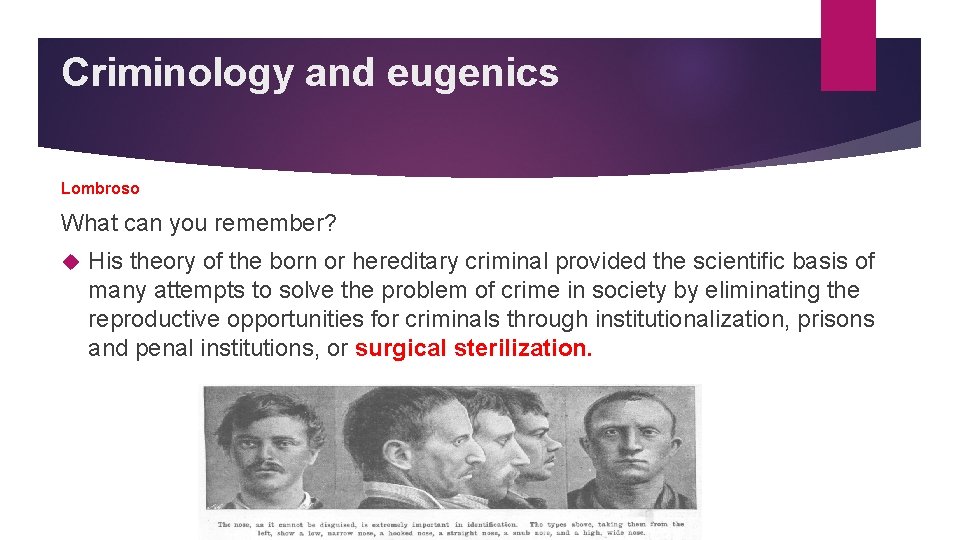
Criminology and eugenics Lombroso What can you remember? His theory of the born or hereditary criminal provided the scientific basis of many attempts to solve the problem of crime in society by eliminating the reproductive opportunities for criminals through institutionalization, prisons and penal institutions, or surgical sterilization.
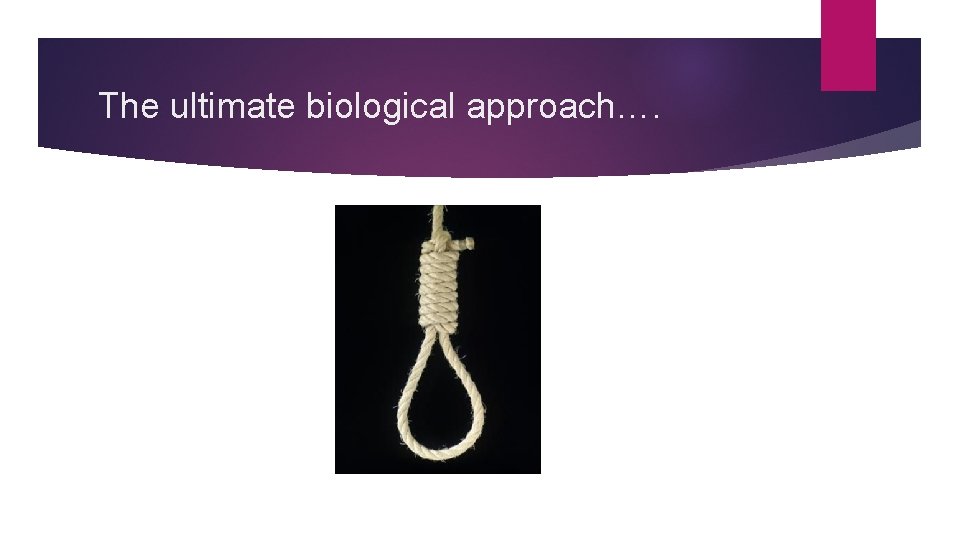
The ultimate biological approach….
Debate: Should we bring back the death penalty?
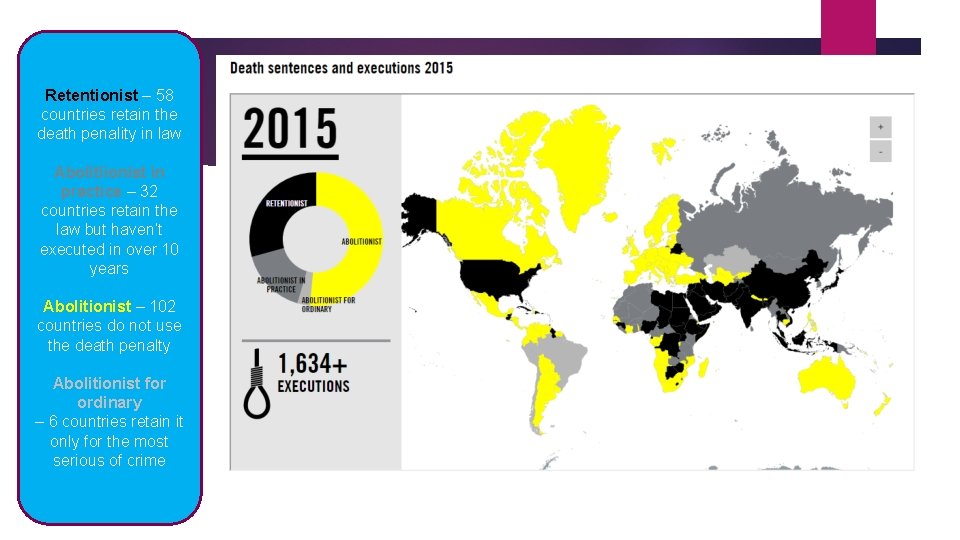
Retentionist – 58 countries retain the death penality in law Abolitiionist in practice – 32 countries retain the law but haven’t executed in over 10 years Abolitionist – 102 countries do not use the death penalty Abolitionist for ordinary – 6 countries retain it only for the most serious of crime
Death penalty – methods • Beheading • Electrocution • Hanging • Lethal injection • Shooting in the back of the head and by firing squad https: //www. amnesty. org/en/what-we-do/death-penalty/ good link for info
Draw up a table in pairs for the pros and cons of capital punishment Pros Cons
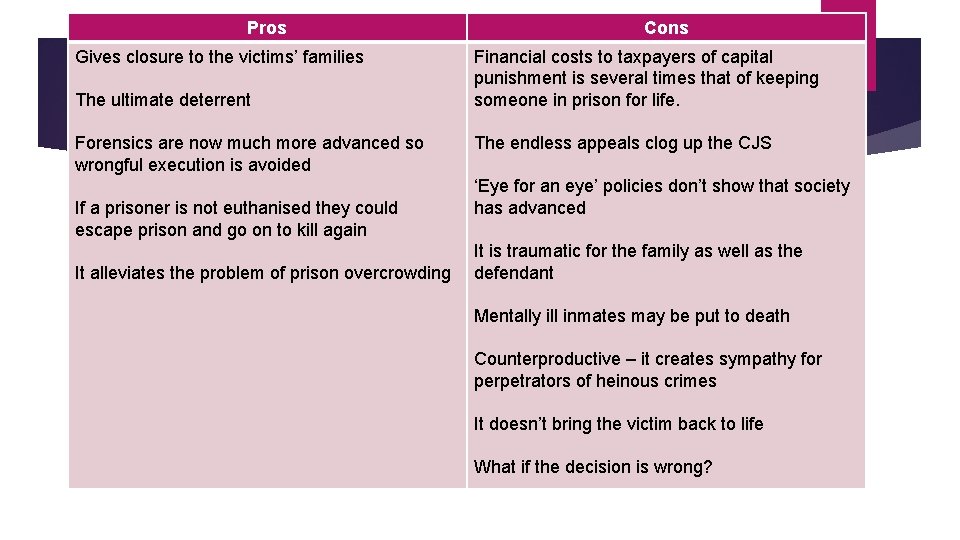
Pros Gives closure to the victims’ families The ultimate deterrent Forensics are now much more advanced so wrongful execution is avoided If a prisoner is not euthanised they could escape prison and go on to kill again It alleviates the problem of prison overcrowding Cons Financial costs to taxpayers of capital punishment is several times that of keeping someone in prison for life. The endless appeals clog up the CJS ‘Eye for an eye’ policies don’t show that society has advanced It is traumatic for the family as well as the defendant Mentally ill inmates may be put to death Counterproductive – it creates sympathy for perpetrators of heinous crimes It doesn’t bring the victim back to life What if the decision is wrong?
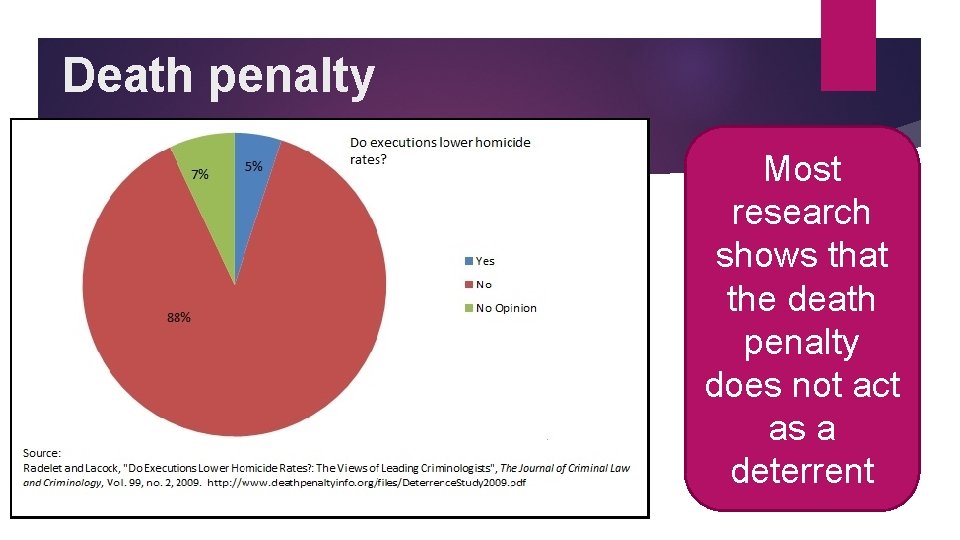
Death penalty Most research shows that the death penalty does not act as a deterrent
Extension ISP activity Watch the trailer for “The Fear of 13” https: //www. bing. com/videos/search? q=the+fear+of+13&adlt=strict&qpvt=the+fear+ of+13&view=detail&mid=46827 D 8 F 77 C 4 C 2955 AEC&FO RM=VRDGAR Watch the whole documentary on Netflix
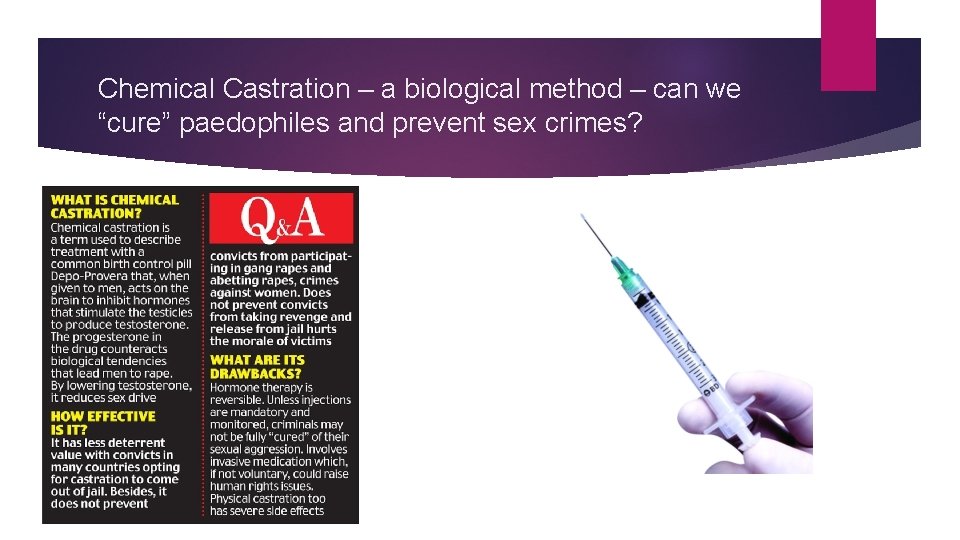
Chemical Castration – a biological method – can we “cure” paedophiles and prevent sex crimes?
Research task – Chemical castration Pros Use the articles below to research chemical castration and record the pros and cons of the policy in the table http: //www. dailymail. co. uk/femail/article-2311148/Manundergoes-voluntary-chemical-castration-Dr-Federofffearing-day-murder-woman. html https: //www. theguardian. com/society/2013/jan/18/che mical-castration-soft-option-sex-offenders Cons
Survey task- Chemical castration Read the article below http: //www. telegraph. co. uk/news/uknews/lawand-order/9139845/Paedophiles-chemically-castrated-in-British-jail. html What were the findings? State 3 reasons why you agree or disagree with the majority view
Research…. Is chemical castration available in the UK? Where is it mandatory? (compulsory for all serious sexual offenders)
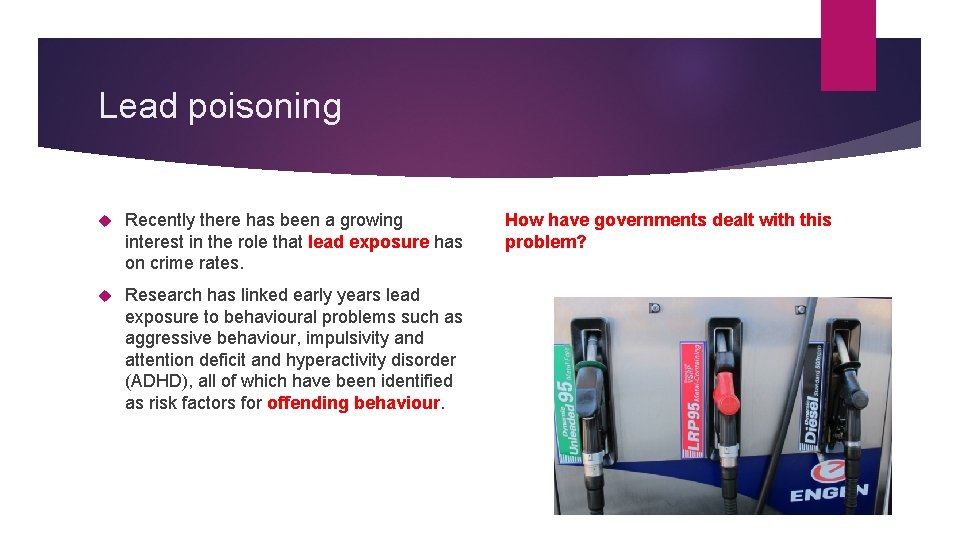
Lead poisoning Recently there has been a growing interest in the role that lead exposure has on crime rates. Research has linked early years lead exposure to behavioural problems such as aggressive behaviour, impulsivity and attention deficit and hyperactivity disorder (ADHD), all of which have been identified as risk factors for offending behaviour. How have governments dealt with this problem?
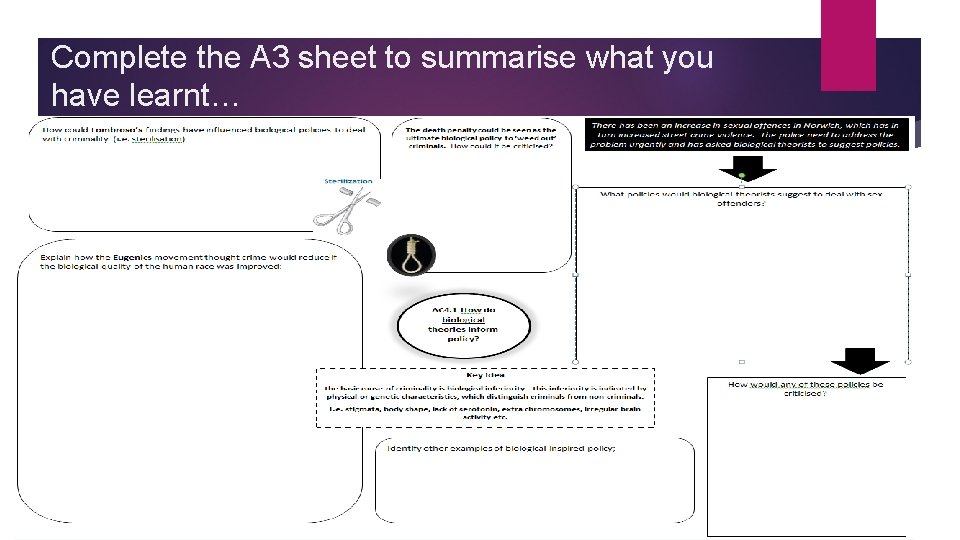
Complete the A 3 sheet to summarise what you have learnt…

Assessment practice – plan your answer
- Slides: 23