
Absurdism and Expressionism The Magic of Imagination A
Absurdism and Expressionism “The Magic of Imagination” A G 3 Presentation Endorsed By: The Non-realism Theatre Society
Let’s get the basics down!
Basics Around this time period there were many things happening. WWI and WWII The shift in theatre focus occurred. ; from realism to non-realism. The times of war caused people to look for things to take their mind off of tragedy.
The Shift Realism to Non-realism. What did this involve? ! Three types of theatre included… Symbolism Absurdism Expressionism
The Anti-realists These men and women wanted to…. . Focus on higher spiritual powers. Provide a depth in imagination. Have a creative outlet and develop dramatic techniques and styles.
Questions 1: What did the antirealists want to focus on? a. Provide depth of imagination. b. Prevent people from thinking realistically. c. Distract people from the war. Answer: Provide depth of imagination.
Questions 2: Describe briefly the effects that the world wars had on theatre? Answer: The world wars gave people the urge to want to escape and think of things other than war. Provide a necessary and appropriate distraction for difficult times.
Questions 3: What were three types of theatre the stage shifted to? a. Absurdism, realism, and sentimentalism. b. Absurdism, Expressionism, and melodrama. c. Absurdism, Expressionism, and Symbolism. Answer: Absurdism, Expressionism, and Symbolism.
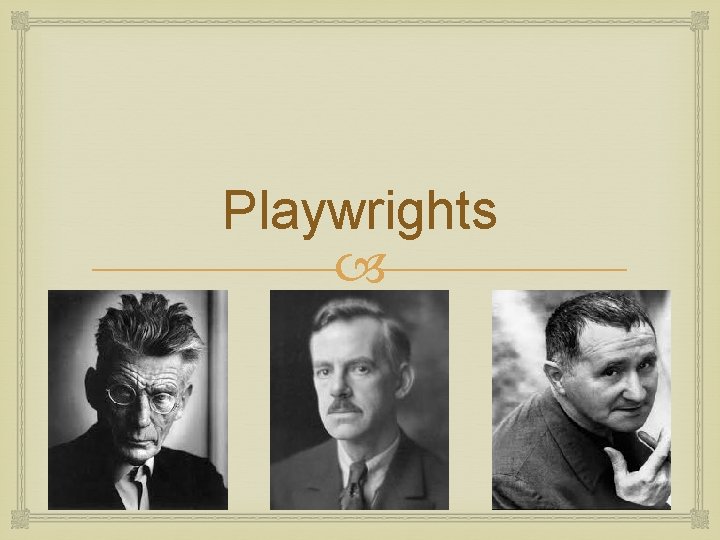
Playwrights
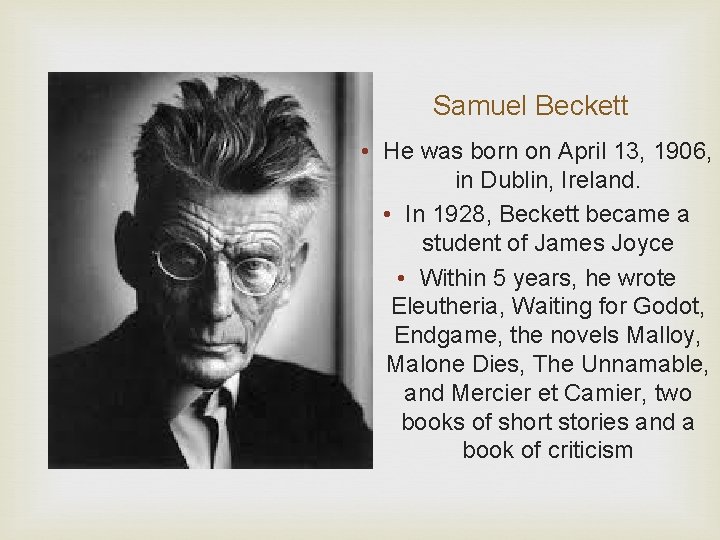
Samuel Beckett • He was born on April 13, 1906, in Dublin, Ireland. • In 1928, Beckett became a student of James Joyce • Within 5 years, he wrote Eleutheria, Waiting for Godot, Endgame, the novels Malloy, Malone Dies, The Unnamable, and Mercier et Camier, two books of short stories and a book of criticism
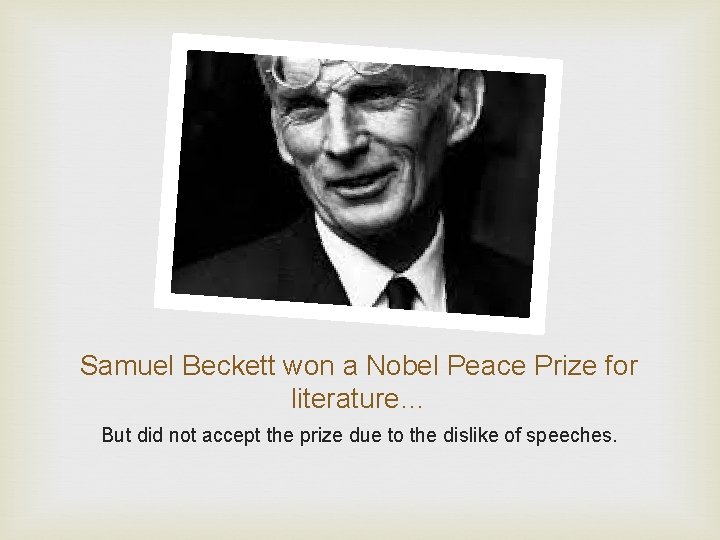
Samuel Beckett won a Nobel Peace Prize for literature… But did not accept the prize due to the dislike of speeches.
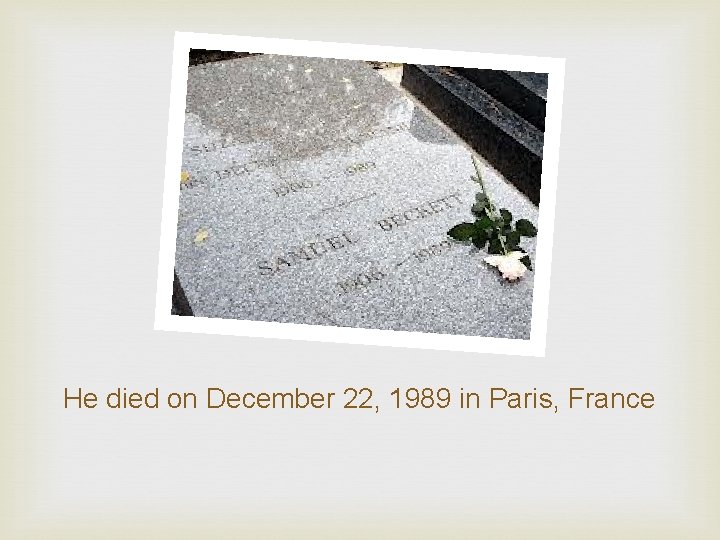
He died on December 22, 1989 in Paris, France
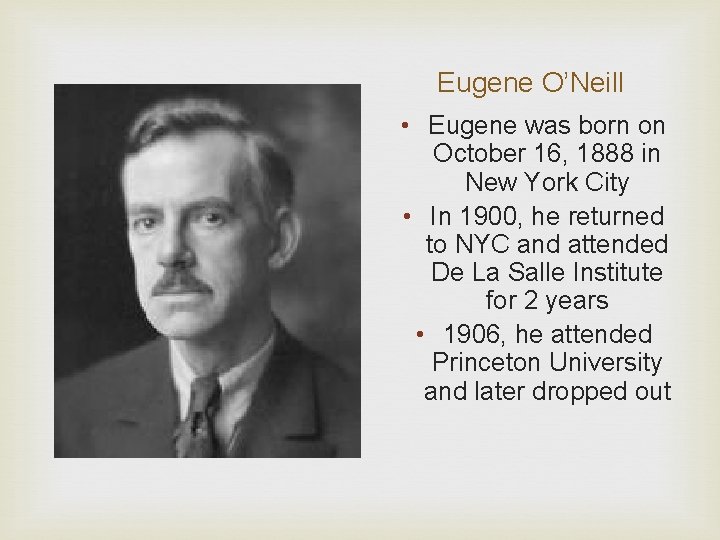
Eugene O’Neill • Eugene was born on October 16, 1888 in New York City • In 1900, he returned to NYC and attended De La Salle Institute for 2 years • 1906, he attended Princeton University and later dropped out
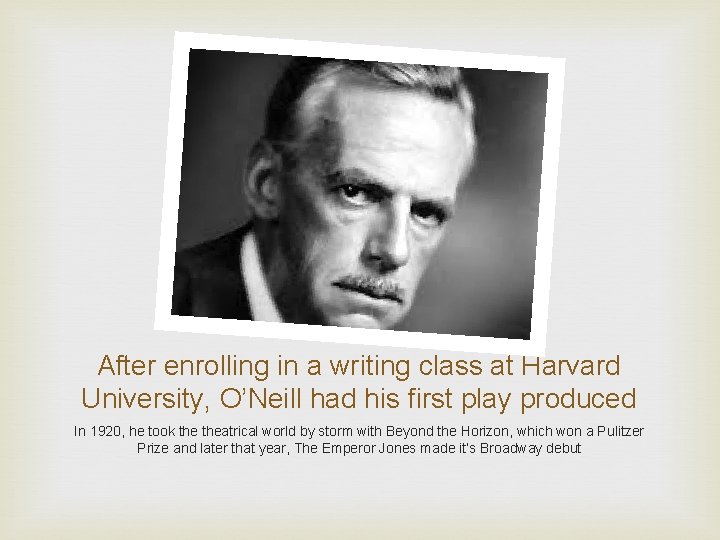
After enrolling in a writing class at Harvard University, O’Neill had his first play produced In 1920, he took theatrical world by storm with Beyond the Horizon, which won a Pulitzer Prize and later that year, The Emperor Jones made it’s Broadway debut
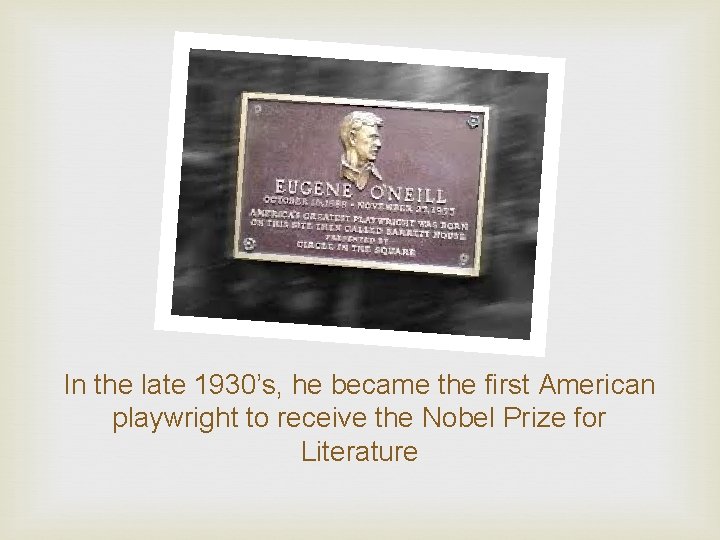
In the late 1930’s, he became the first American playwright to receive the Nobel Prize for Literature
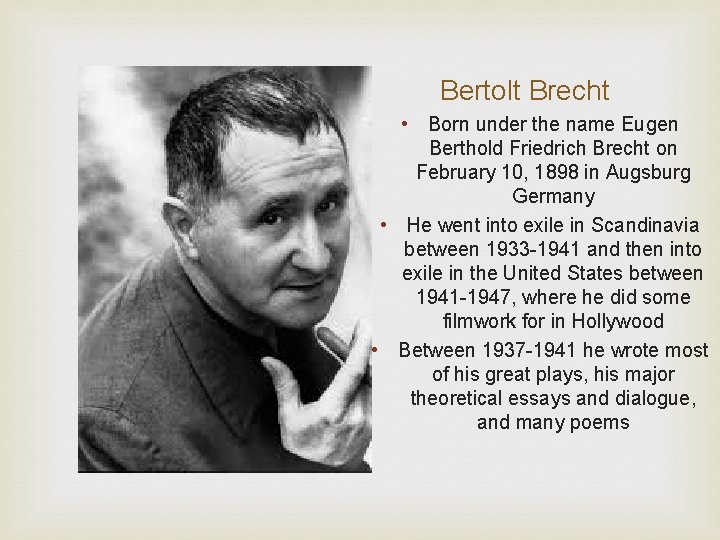
Bertolt Brecht • Born under the name Eugen Berthold Friedrich Brecht on February 10, 1898 in Augsburg Germany • He went into exile in Scandinavia between 1933 -1941 and then into exile in the United States between 1941 -1947, where he did some filmwork for in Hollywood • Between 1937 -1941 he wrote most of his great plays, his major theoretical essays and dialogue, and many poems
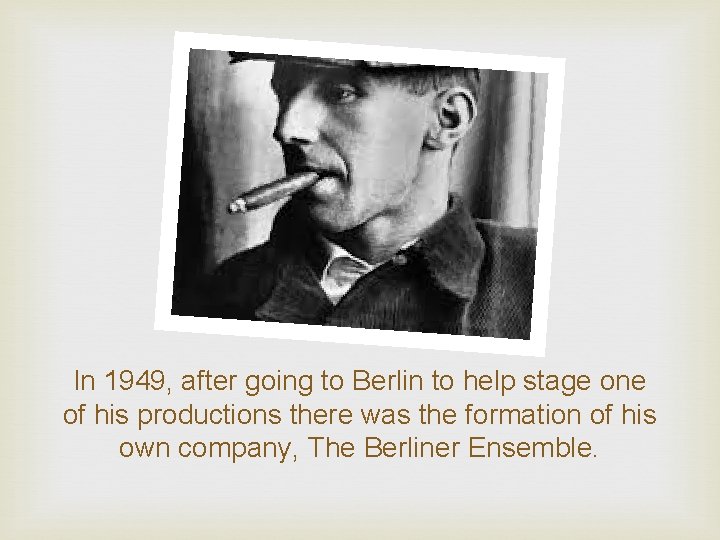
In 1949, after going to Berlin to help stage one of his productions there was the formation of his own company, The Berliner Ensemble.

In 1955, he received a Stalin Peace Prize The following year, he died of a heart attack in East Berlin
Questions 1: True or false: Samuel Beckett declined accepting the Nobel Prize for literature personally to avoid making a speech Answer: True
Questions 2: Who was the first American to be rewarded to Nobel Prize for Literature? a. George Washington b. Samuel Beckett c. Eugene O’Neill Answer: Eugene O’Neill
Questions 3: How many times did Bertolt Brecht go into exile? a. 1 b. 2 c. 3 Answer: 2
Plays
“The End Game” “A Dream Play” “The Three Penny Opera”

Here are some play trailers! Enjoy!
Questions 1: Describe the irony of “The End Game”
Questions 2: The plot of the “Dream Play”?
Questions 3: “The Three Penny Opera” is what kind of play?
Conventions
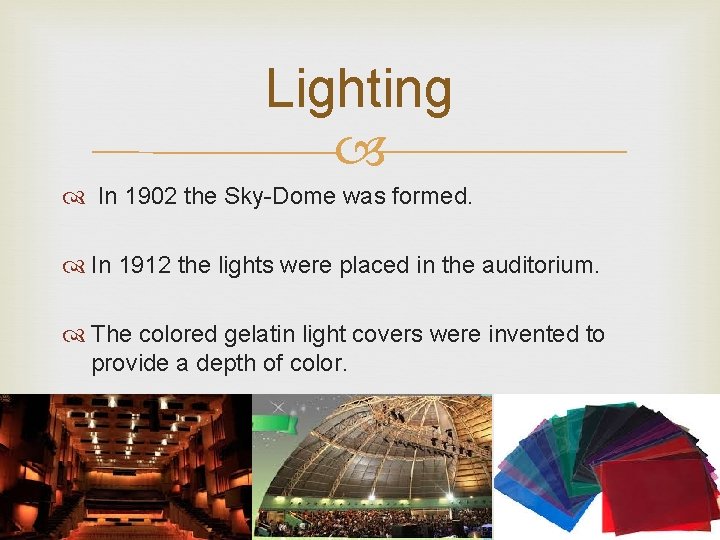
Lighting In 1902 the Sky-Dome was formed. In 1912 the lights were placed in the auditorium. The colored gelatin light covers were invented to provide a depth of color.
Sound Until this time period the sound development had not changed for over 2, 000 years Sound effects began to be used. Pre-show music began to be being recorded.
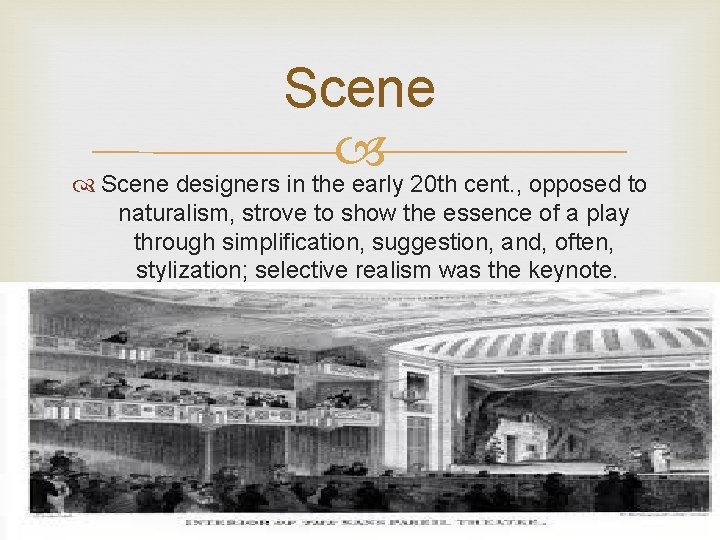
Scene designers in the early 20 th cent. , opposed to naturalism, strove to show the essence of a play through simplification, suggestion, and, often, stylization; selective realism was the keynote.
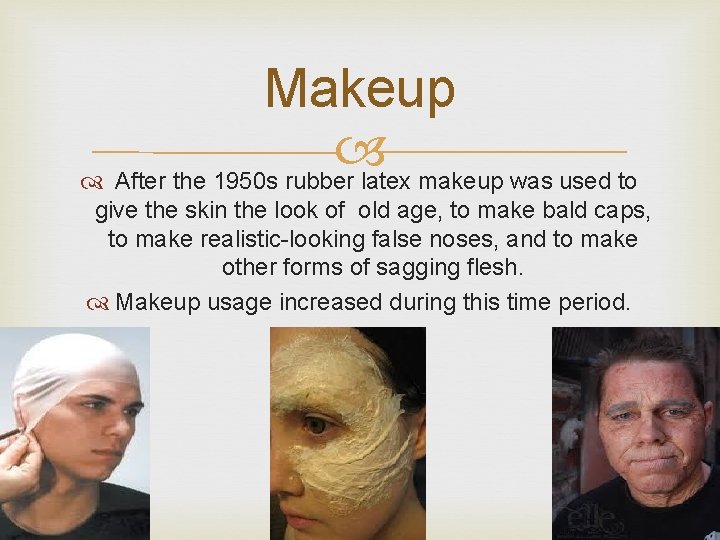
Makeup After the 1950 s rubber latex makeup was used to give the skin the look of old age, to make bald caps, to make realistic-looking false noses, and to make other forms of sagging flesh. Makeup usage increased during this time period.
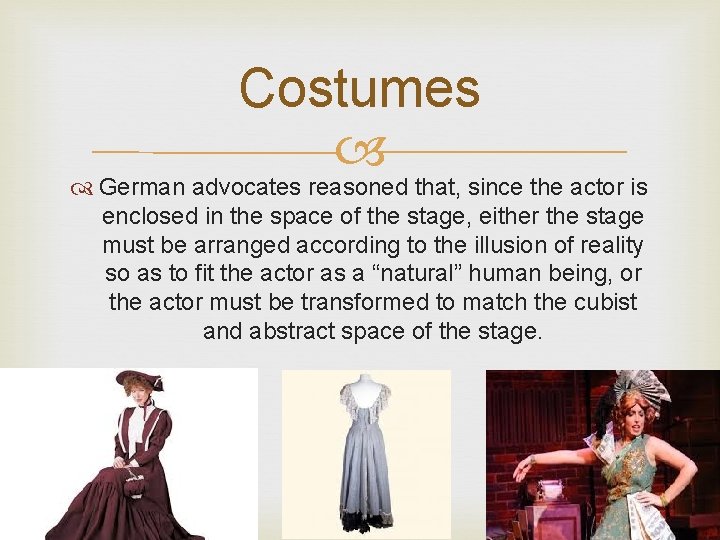
Costumes German advocates reasoned that, since the actor is enclosed in the space of the stage, either the stage must be arranged according to the illusion of reality so as to fit the actor as a “natural” human being, or the actor must be transformed to match the cubist and abstract space of the stage.
Questions 1: In what year was the sky-dome formed? a. 1903 b. 1905 c. 1902 d. 1917 Answer: !902
Questions 2: What type of makeup began to be used in this time period? Answer: Latex makeup
Questions 3: How many years had the elements of sound for theatre not have changed? a. 3, 000 b. 2, 001 c. 2, 000 d. 3, 400 Answer: 2, 000
Let’s talk this out…
And now G 3 presents. . .
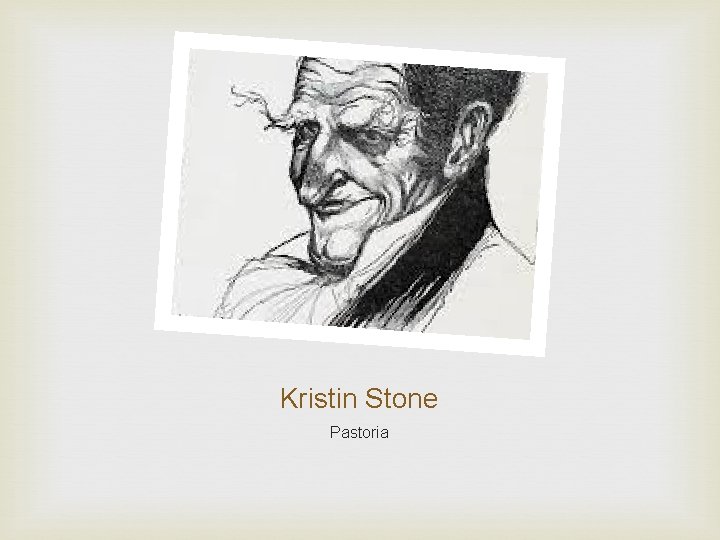
Kristin Stone Pastoria
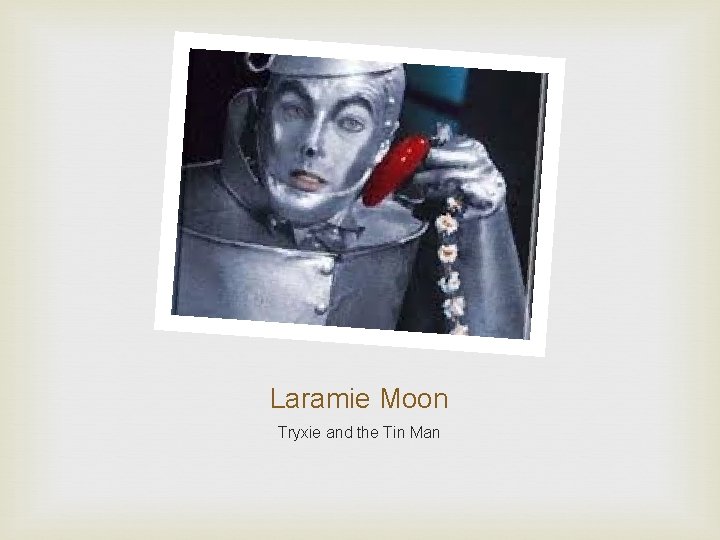
Laramie Moon Tryxie and the Tin Man
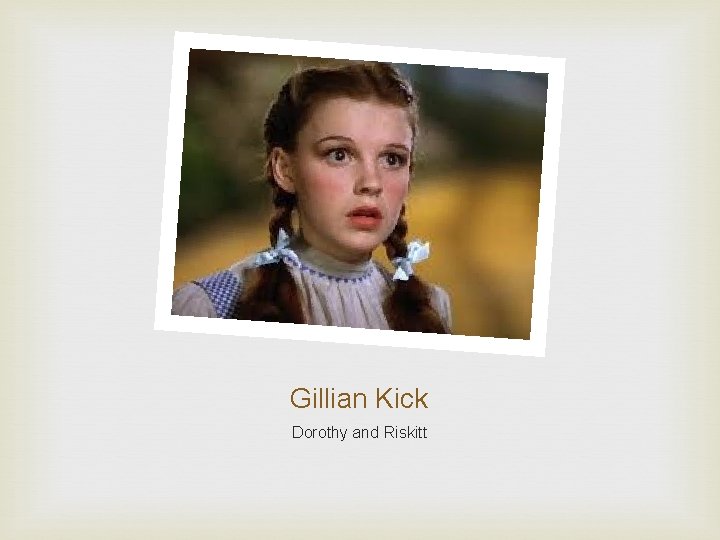
Gillian Kick Dorothy and Riskitt
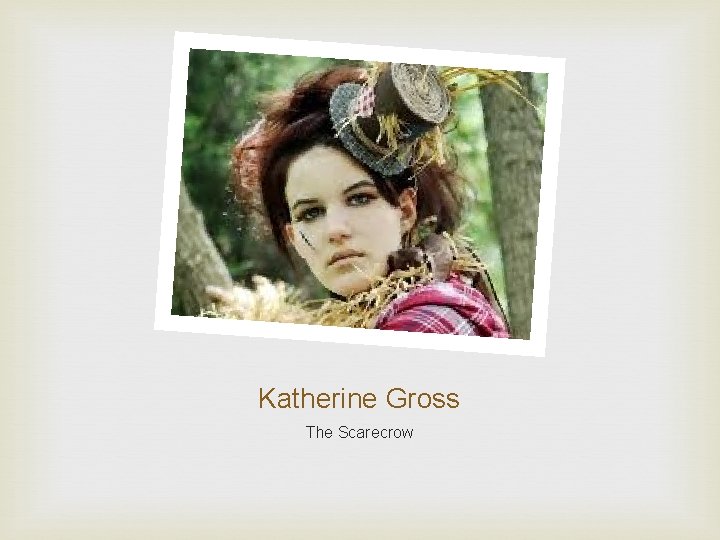
Katherine Gross The Scarecrow
“The Wizard of Oz”
Questions 1: What retort does the Scarecrow come back with when Dorothy asks her to go look for the groan? a. I fear lighted matches! If ever I bump against one of thosepeace to my ashes! b. I fear nothing! Peace to my ashes! c. I fear nothing, but a lighted match, or a cigarette smoker. If ever I bump up against either of those twopeace to my ashes. d. I fear nothing, but a lighted match, or a cigarette smoker. If ever I bump against either of those twopeace to my straw. Answer: C
Questions 2: What is happening in the beginning sequence with Pastoria and Riskitt?
Questions 3: What is relatively ironic about the scene in which Tryxie is complaining about being hungry? a. She just ate dinner. b. She was fat. c. She was currently eating. d. She was complaining in the kitchen. Answer: C
Sources https: //prezi. com/sira 4 xnm 8 pnl/non-realism-in-theatre/ http: //highered. mheducation. com/sites/0767430069/student_view 0/part 3/ch apter 9/index. html http: //www. infoplease. com/encyclopedia/entertainment/scene-design-stage -lighting-the-twentieth-century. html http: //www. infoplease. com/encyclopedia/society/costume-twentieth-century -costume. html http: //www. britannica. com/EBchecked/topic/562420/stagecraft/278583/Rea lism#toc 278584 http: //www. samuel-beckett. com/ http: //www. biography. com/people/samuel-beckett-9204239#synopsis http: //www. biography. com/people/eugene-oneill-9428728#leadingplaywright http: //www. britannica. com/EBchecked/topic/78614/Bertolt-Brecht http: //boucher. webs. com/realismandantirealism. htm
- Slides: 47