
ABSTRACTS Questions to consider a What is an
ABSTRACTS
Questions to consider: a. What is an abstract? b. Why do people read abstracts? c. How are abstracts typically structured? d. What types of abstracts do you know and how do they differ?
a. What is an abstract? An abstract is a concise summary of a larger document – thesis, essay, book, research report, journal publication – that highlights major points covered in the work.

b. Why do people read abstracts? - Stand-alone mini-texts: summarizing the given research for readers/conference attendees - Screening devices: helping them decide whether to read an article/attend a presentation - Previews: giving them a road-map to better understand an article/a presentation
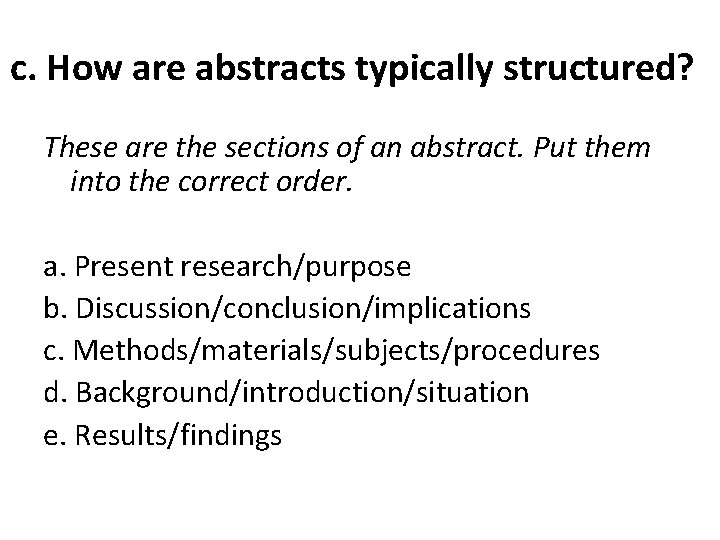
c. How are abstracts typically structured? These are the sections of an abstract. Put them into the correct order. a. Present research/purpose b. Discussion/conclusion/implications c. Methods/materials/subjects/procedures d. Background/introduction/situation e. Results/findings
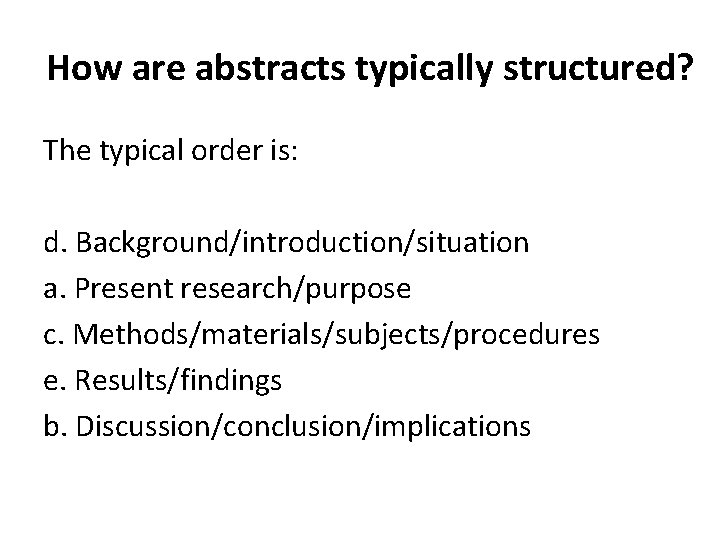
How are abstracts typically structured? The typical order is: d. Background/introduction/situation a. Present research/purpose c. Methods/materials/subjects/procedures e. Results/findings b. Discussion/conclusion/implications
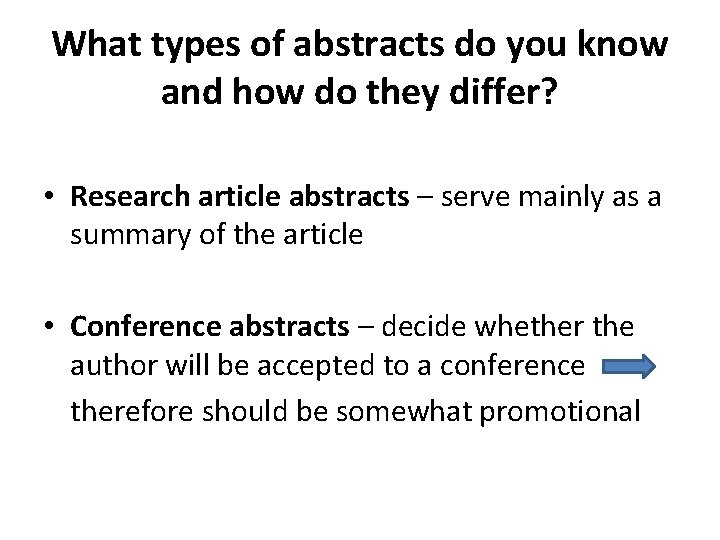
What types of abstracts do you know and how do they differ? • Research article abstracts – serve mainly as a summary of the article • Conference abstracts – decide whether the author will be accepted to a conference therefore should be somewhat promotional
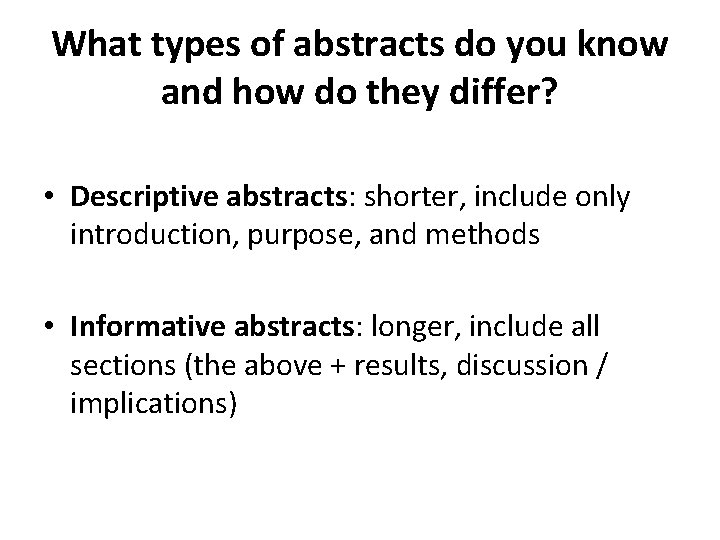
What types of abstracts do you know and how do they differ? • Descriptive abstracts: shorter, include only introduction, purpose, and methods • Informative abstracts: longer, include all sections (the above + results, discussion / implications)
SOURCES • http: //writingcenter. unc. edu/handouts/abstracts/ • http: //www. ncbi. nlm. nih. gov/pmc/articles/PMC 3136 027/ • https: //owl. english. purdue. edu/owl/resource/656/1/ • http: //www. writing. utoronto. ca/advice/specifictypes-of-writing/abstract
- Slides: 9