
Abstracted Natural Object after Georgia OKeeffe Oil Pastel
Abstracted Natural Object (after Georgia O’Keeffe): Oil Pastel Drawing 1
When you think of abstract art, what comes to mind? “A little kid could do that!” “I don’t get it. ” “How is this art? ” “It’s nice to look at. ” “It makes me think of _____”
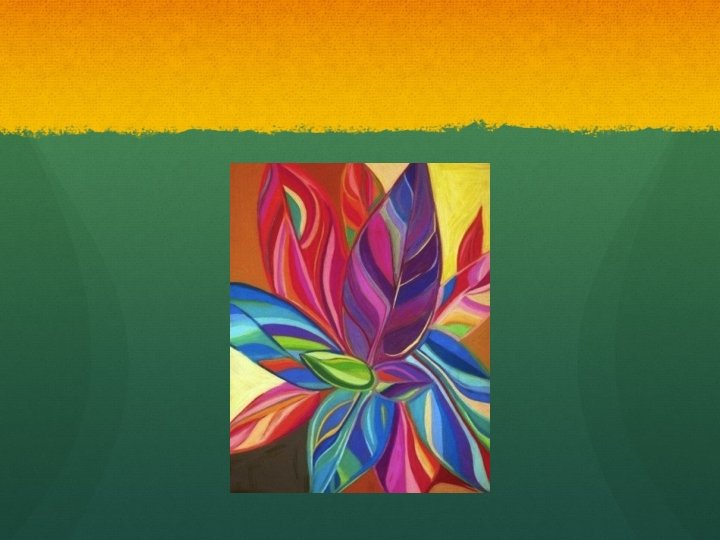
You will… You will be creating an original composition inspired by a natural object. You will utilize facets of abstraction to make your composition creative, unique and interesting to look at. Your work will have facets of realism and abstraction (“objective”) You will use water-soluble oil pastels in both a wet and dry manner. Your work will show value through color as well as texture.
What is abstraction? Can be: Objective- comes from the real; represents something tangible Non-objective- comes from non-tangible ideas such as emotions or moods Both types involve choices that the artist is making as far as depicting the subject matter (they are not photorealistic) We just created a photorealistic still life drawing; you were striving to make your work look as accurate as possible. Now, we are moving towards making choices about subject and how we depict it.
Objective Abstraction References real life The subject has been simplified or altered/distorted (textures/details might be eliminated, colors might be changed etc. ) The subject might be depicted from a nonconventional point of view so it is not easily recognizable or multiple points of view Your drawing will utilize objective abstraction
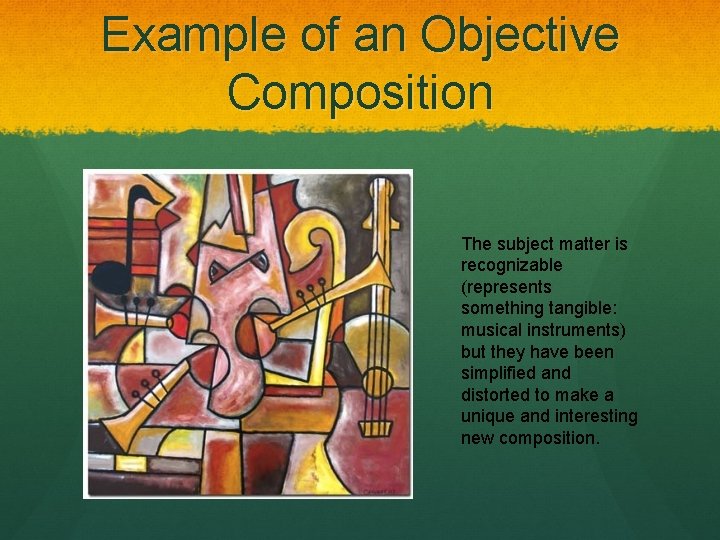
Example of an Objective Composition The subject matter is recognizable (represents something tangible: musical instruments) but they have been simplified and distorted to make a unique and interesting new composition.
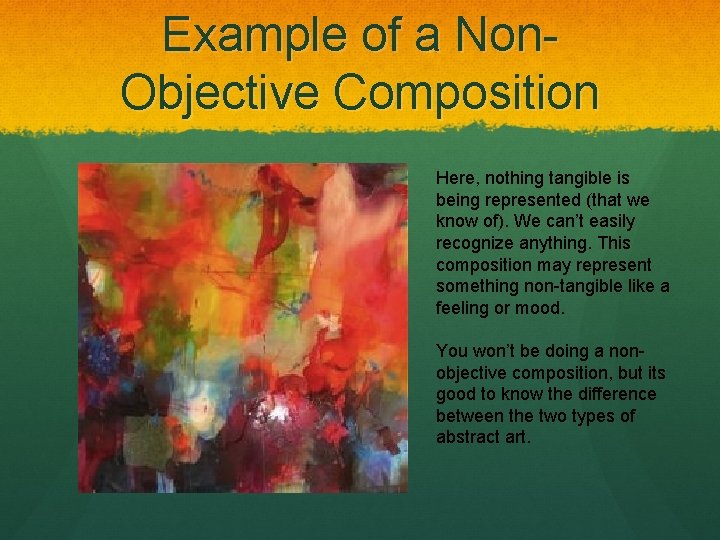
Example of a Non. Objective Composition Here, nothing tangible is being represented (that we know of). We can’t easily recognize anything. This composition may represent something non-tangible like a feeling or mood. You won’t be doing a nonobjective composition, but its good to know the difference between the two types of abstract art.
Georgia O’Keeffe Born in 1887; died in 1986 American One of the first female artists to gain prominence in the American art world Created large-scale paintings of natural objects (shells, flowers, animal bones) Known for her eccentric personality Married to Alfred Steiglitz, artist who worked to have photography accepted as an art form
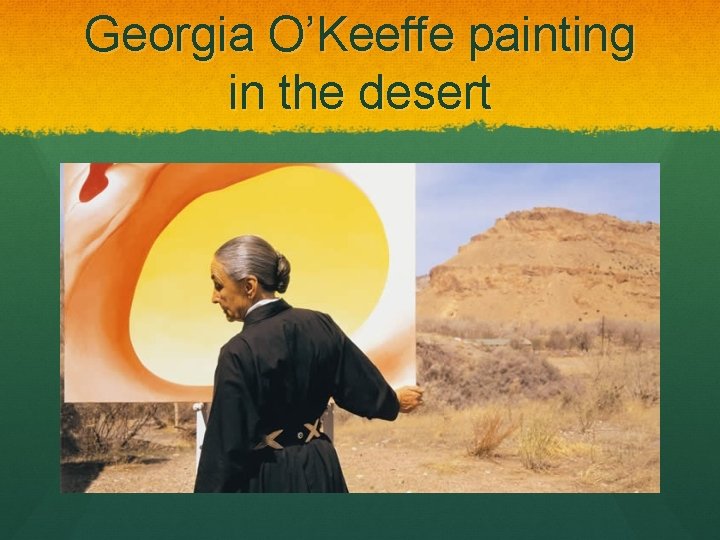
Georgia O’Keeffe painting in the desert
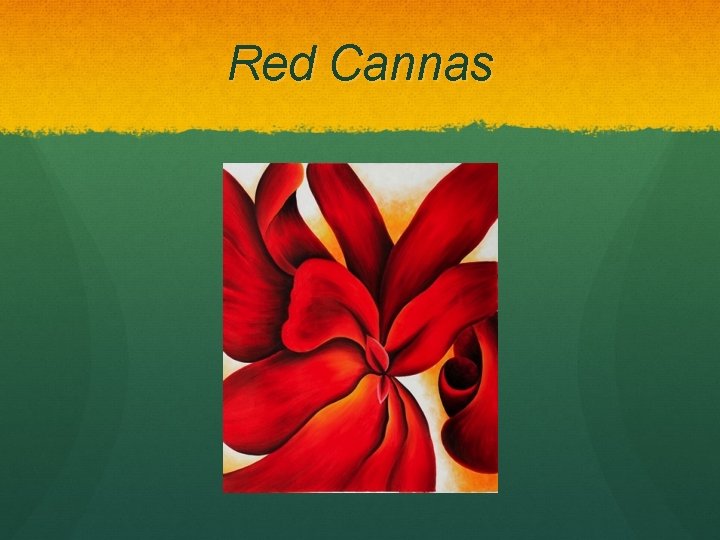
Red Cannas
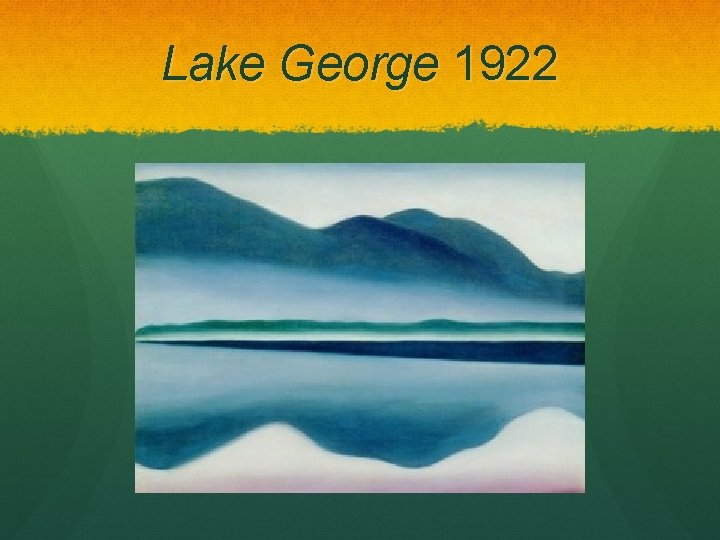
Lake George 1922
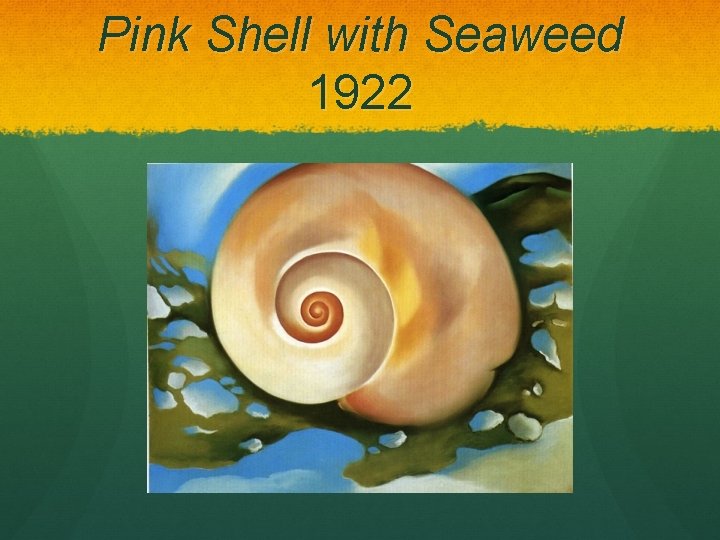
Pink Shell with Seaweed 1922
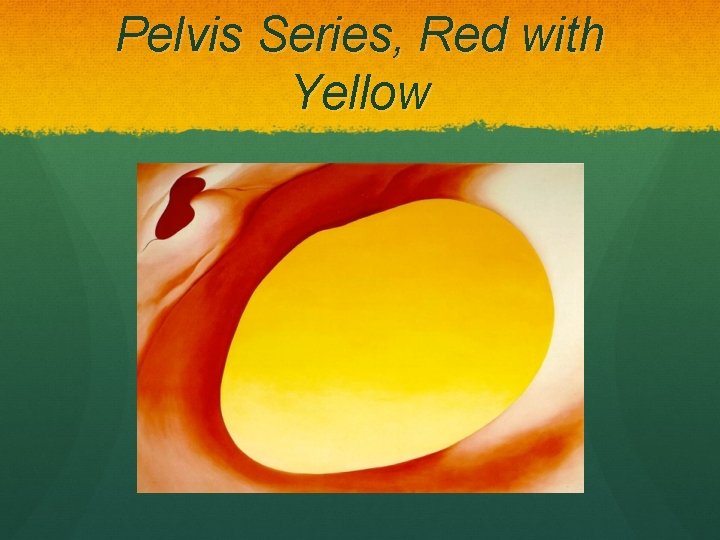
Pelvis Series, Red with Yellow
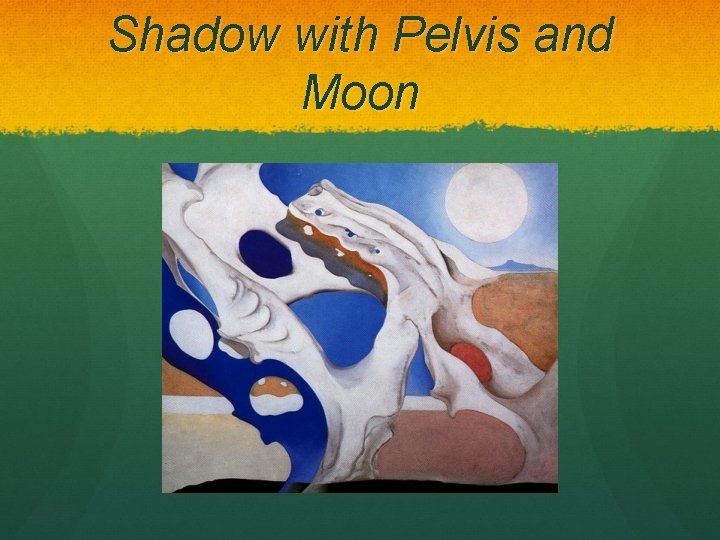
Shadow with Pelvis and Moon
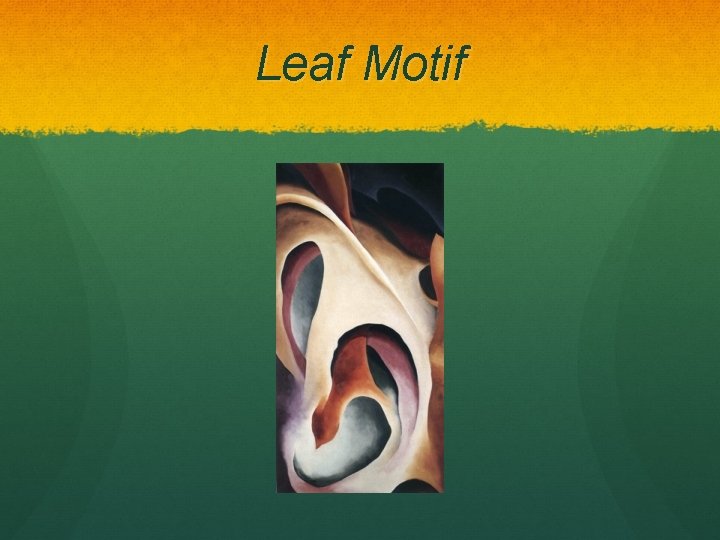
Leaf Motif
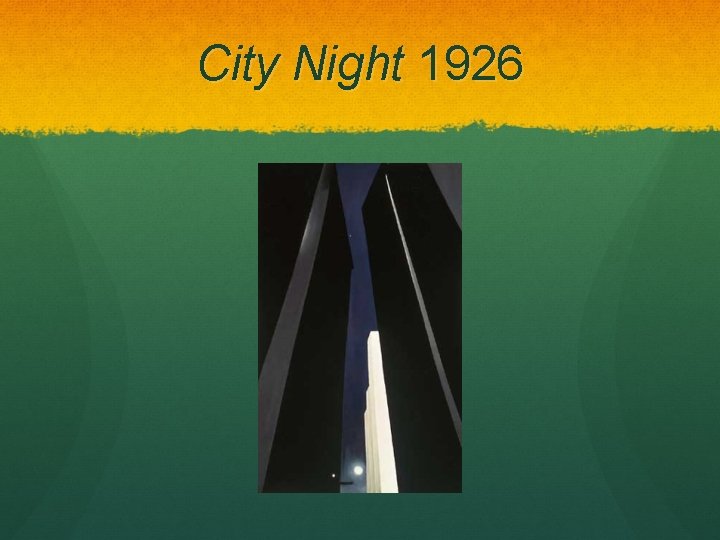
City Night 1926
Set Up… Choose a natural object or bring in one of your own. The object should be recognizable. Try to find something that interests you. Look for colors, shapes and textures that will make an engaging drawing. You could also choose more than one object, but I wouldn’t use any more than three. In pencil, create several thumbnail sketches (mini compositions) of your object from different angles using different cropping's. I want to see at least SIX different thumbnail sketches. Next, take different sections of your thumbnails (some can be the entire portion). You can stretch, exaggerate and distort. Try to some up with FOUR new thumbnails from your originals. Flip to a new page in your sketchbook (or get out a new piece of paper). Look at ALL your thumbnails carefully. You should have several different images. Arrange them in a new way to make one big composition that takes up most of a new page. You can flip/elongate/alter areas if you need to so your everything works together successfully. Try to create an overall composition that is balanced, unified, and flows.
Applying Color to Sketch You will add color to your large sketch (oil pastel; both wet and dry) to help you plan how you will use color in the final drawing. Remember the color schemes that we worked with in the mini project. You should utilize this knowledge when deciding what colors to use in your composition (colors should work together as color schemes and not be all over the place). You have some choices: Realistic or distorted? (keep the colors similar to what you actually see, or distort them and make them very abstract? ) Monochromatic or several colors? (one consistent color scheme or changing the color scheme in different areas of the composition? ) Warm or cool? (Reds, pinks, yellows, oranges or blues, greens and violets? ) Analogous or complementary? (Colors that are near each other on the color wheel, or opposite on the color wheel? )
Moving on to the Final Drawing When you have chosen a color scheme that you are happy with, get the large paper (18 x 18) and re-draw your composition lightly in pencil. When you’re ready, start adding color. Remember to build the color up little by little (pastel/wash/texture/wash again? /refine? ) Keep strokes in a consistent direction (both with pastel and a brush) Value through color needs to be demonstrated (not flatness) although it may or may not be related to real life Pause often and look at your work (take a picture/stand back). It should be balanced and unified, but the overall imagery should be clear, even though it is abstracted.
What am I looking for? Creative decision making in depicting your subject (objective abstraction AND observation that comes from the real) A composition that is balanced, unified and strong throughout (eye should “flow” around the page and not get stuck in one spot) Value through color (utilizing color schemes as learned in class) Oil pastel techniques (mark consistency, layering, use of washes etc. as learned in class) Positive AND negative spaces should be fully resolved A piece that demonstrates care, effort and thought

Due Date Information Your work is due March _____ This will go on Q 3 and will be your last major project grade. Work looses 5 points each day it is turned in late and will not be accepted after two weeks. You will submit your completed work with a completed rubric in order to receive full credit.
- Slides: 23