
Absorption and Transport Chapter 11 H 2 O
Absorption and Transport Chapter 11
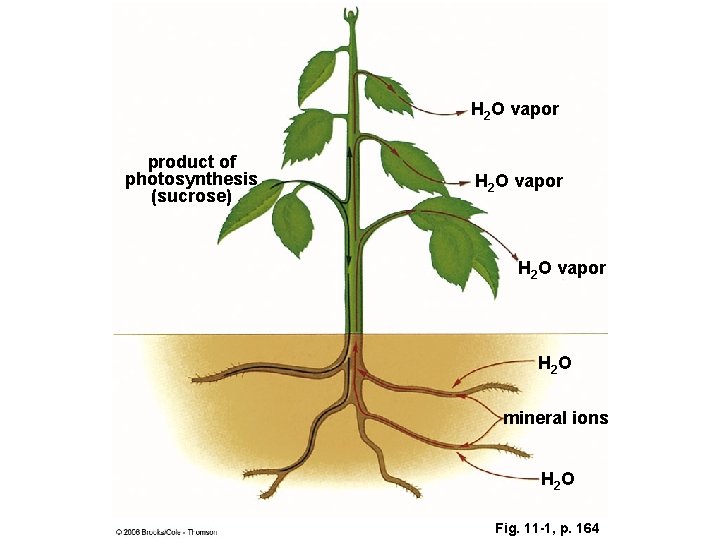
H 2 O vapor product of photosynthesis (sucrose) H 2 O vapor H 2 O mineral ions H 2 O Fig. 11 -1, p. 164
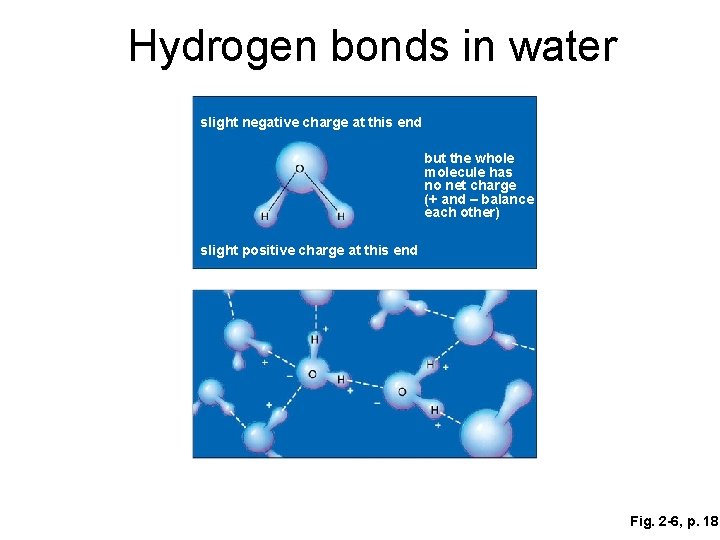
Hydrogen bonds in water slight negative charge at this end but the whole molecule has no net charge (+ and – balance each other) slight positive charge at this end Fig. 2 -6, p. 18
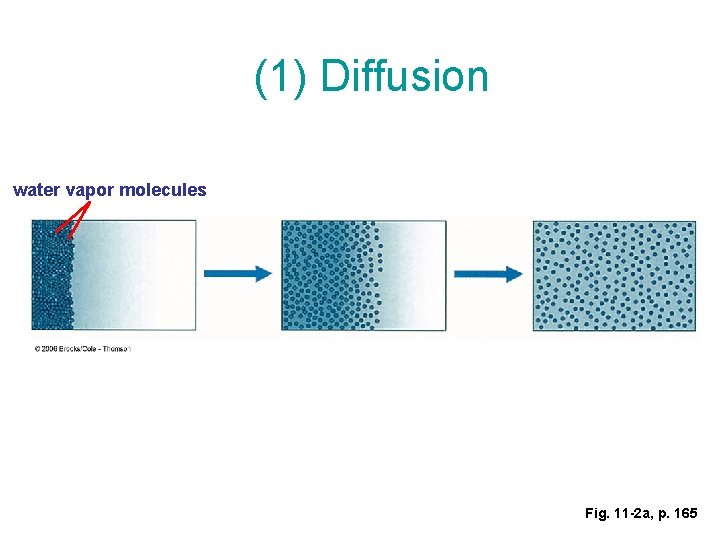
(1) Diffusion water vapor molecules Fig. 11 -2 a, p. 165
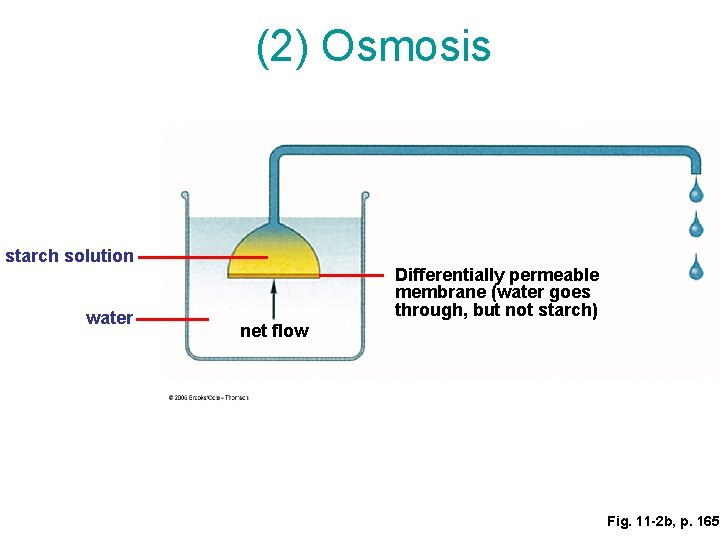
(2) Osmosis starch solution water Differentially permeable membrane (water goes through, but not starch) net flow Fig. 11 -2 b, p. 165
(3) Hydrostatic pressure • Involves osmosis and the cell wall. Fig. 11 -2 b, p. 165
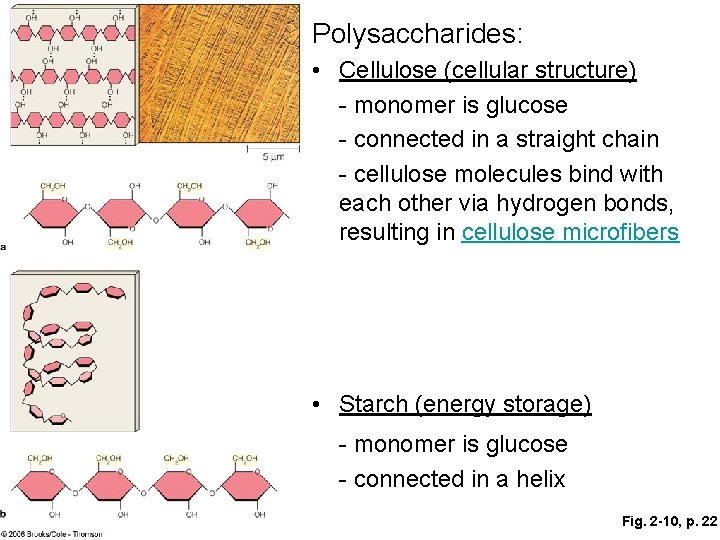
Polysaccharides: • Cellulose (cellular structure) - monomer is glucose - connected in a straight chain - cellulose molecules bind with each other via hydrogen bonds, resulting in cellulose microfibers • Starch (energy storage) - monomer is glucose - connected in a helix Fig. 2 -10, p. 22
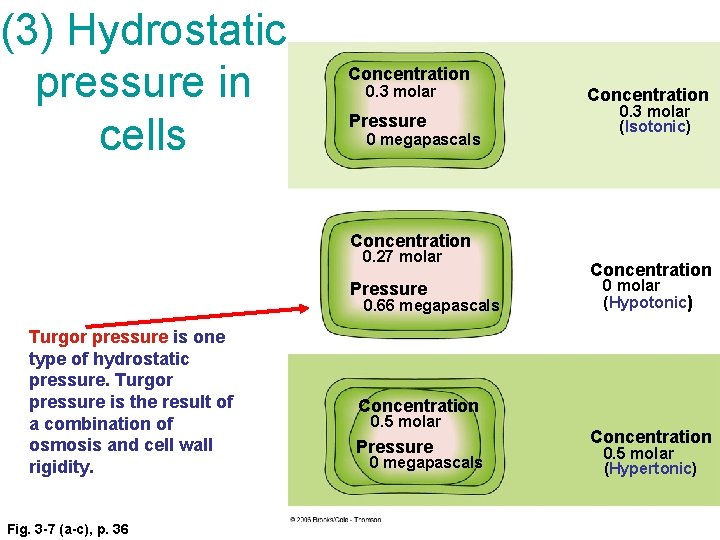
(3) Hydrostatic pressure in cells PROTOPLAST SOLUTION Concentration 0. 3 molar Pressure 0 megapascals Concentration 0. 3 molar (Isotonic) Concentration 0. 27 molar Pressure 0. 66 megapascals Turgor pressure is one type of hydrostatic pressure. Turgor pressure is the result of a combination of osmosis and cell wall rigidity. Fig. 3 -7 (a-c), p. 36 Concentration 0 molar (Hypotonic) Concentration 0. 5 molar Pressure 0 megapascals Concentration 0. 5 molar (Hypertonic)
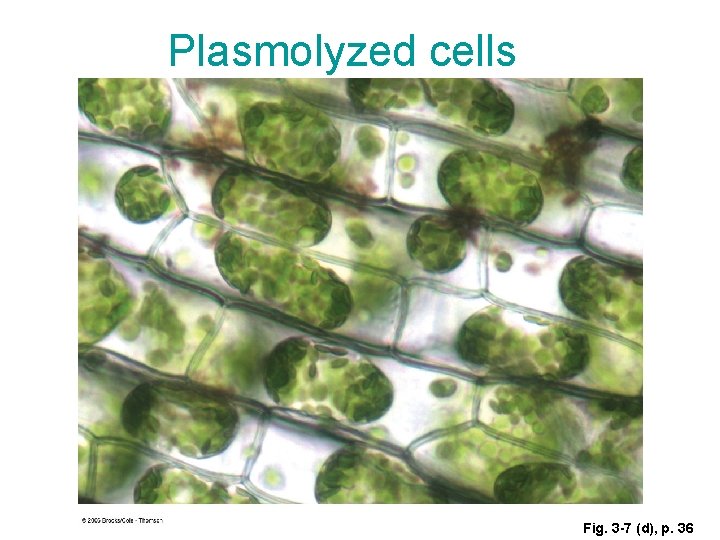
Plasmolyzed cells Fig. 3 -7 (d), p. 36
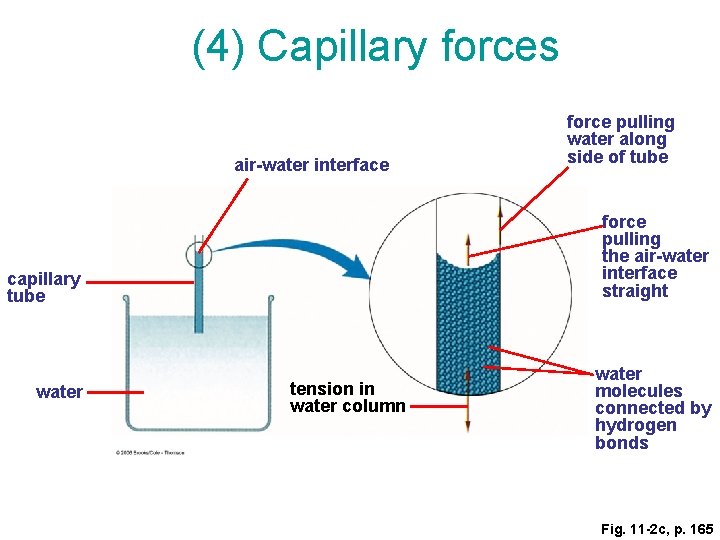
(4) Capillary forces air-water interface force pulling the air-water interface straight capillary tube water force pulling water along side of tube tension in water column water molecules connected by hydrogen bonds Fig. 11 -2 c, p. 165
(5) Gravity • Gravity – Takes force to move water upward – Significant factor in tall trees
Transpiration
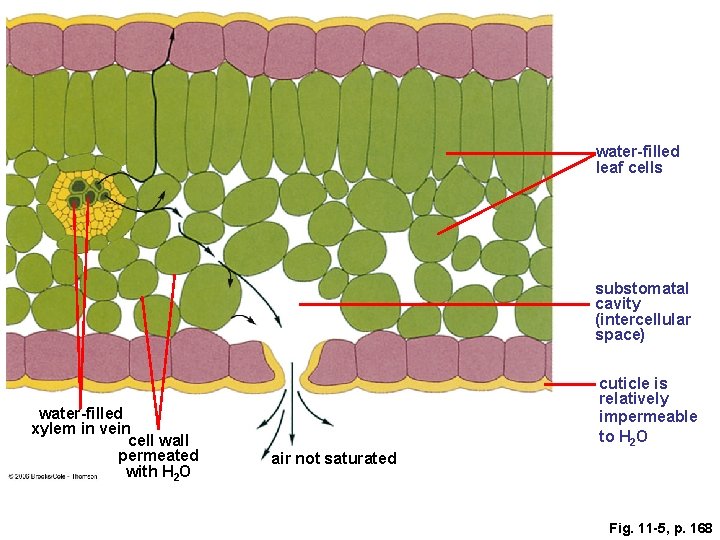
water-filled leaf cells substomatal cavity (intercellular space) water-filled xylem in vein cell wall permeated with H 2 O cuticle is relatively impermeable to H 2 O air not saturated Fig. 11 -5, p. 168
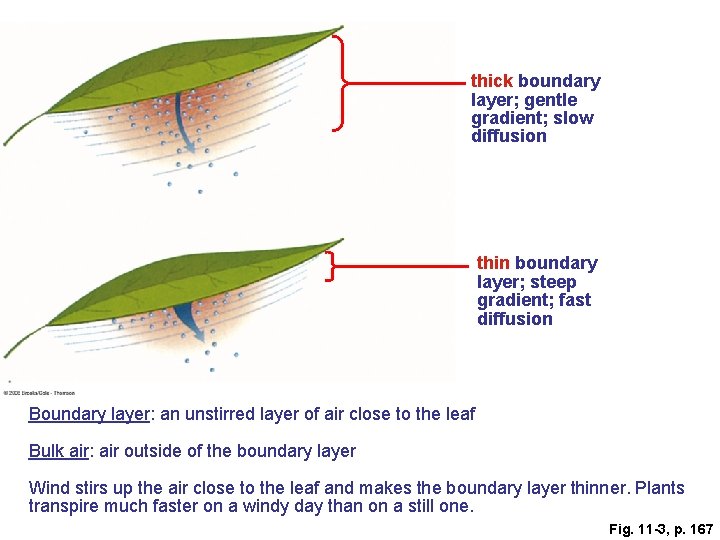
thick boundary layer; gentle gradient; slow diffusion thin boundary layer; steep gradient; fast diffusion Boundary layer: an unstirred layer of air close to the leaf Bulk air: air outside of the boundary layer Wind stirs up the air close to the leaf and makes the boundary layer thinner. Plants transpire much faster on a windy day than on a still one. Fig. 11 -3, p. 167
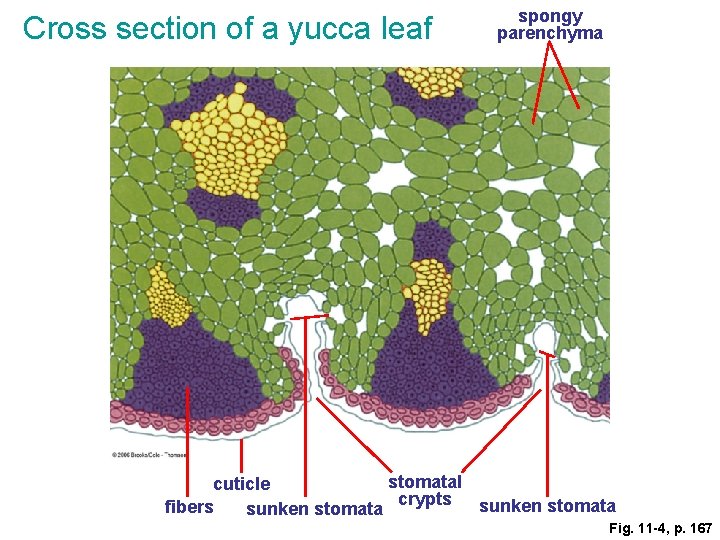
Cross section of a yucca leaf spongy parenchyma stomatal cuticle crypts sunken stomata fibers sunken stomata Fig. 11 -4, p. 167
Flow of Water Into Leaves
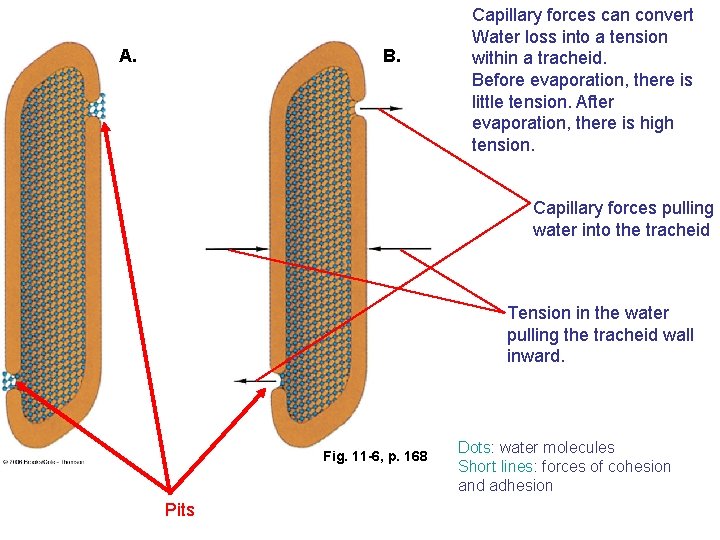
A. B. Capillary forces can convert Water loss into a tension within a tracheid. Before evaporation, there is little tension. After evaporation, there is high tension. Capillary forces pulling water into the tracheid Tension in the water pulling the tracheid wall inward. Fig. 11 -6, p. 168 Pits Dots: water molecules Short lines: forces of cohesion and adhesion
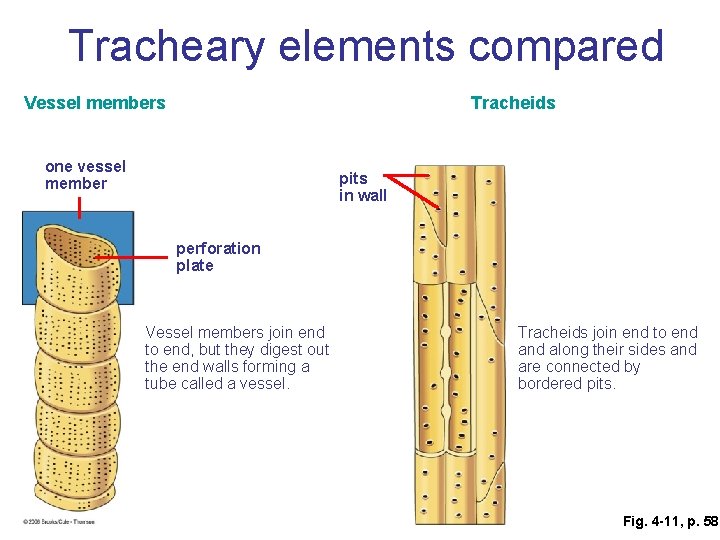
Tracheary elements compared Vessel members Tracheids one vessel member pits in wall perforation plate Vessel members join end to end, but they digest out the end walls forming a tube called a vessel. Tracheids join end to end along their sides and are connected by bordered pits. Fig. 4 -11, p. 58
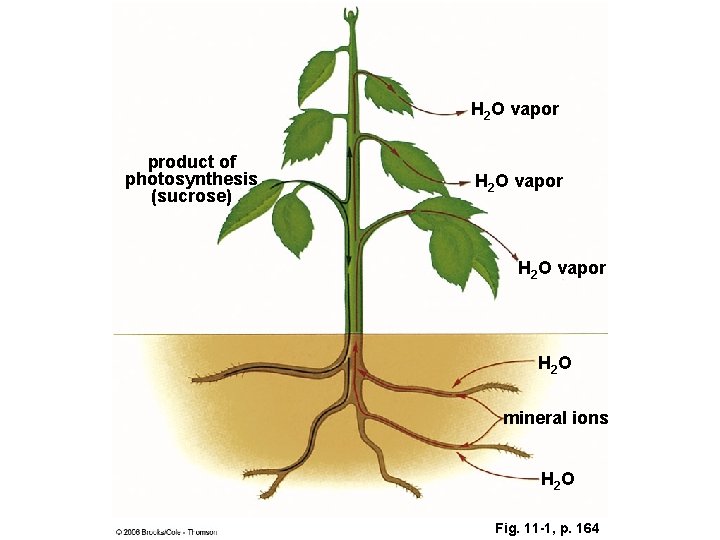
H 2 O vapor product of photosynthesis (sucrose) H 2 O vapor H 2 O mineral ions H 2 O Fig. 11 -1, p. 164
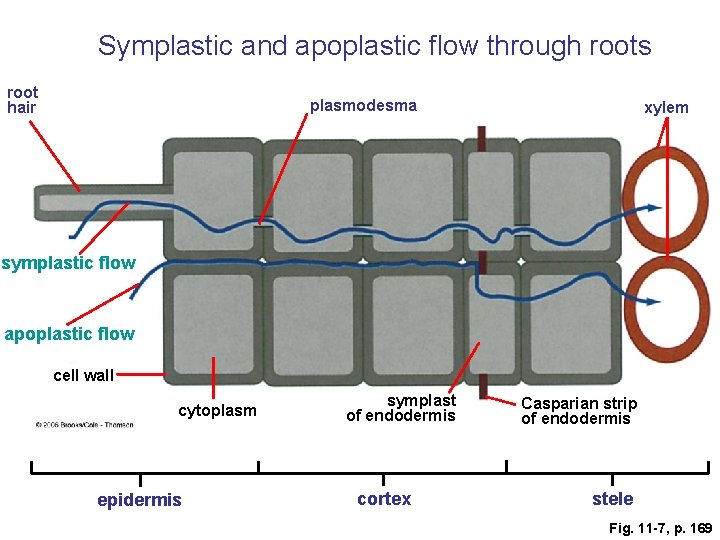
Symplastic and apoplastic flow through roots root hair plasmodesma xylem symplastic flow apoplastic flow cell wall cytoplasm epidermis symplast of endodermis cortex Casparian strip of endodermis stele Fig. 11 -7, p. 169
Control of Water Flow • Environmental factors affecting rate of transpiration – Temperature – Relative humidity of bulk air – Wind speed
Control of Water Flow • Transpiration – Slow at night – Increases after sun comes up – Peaks middle of day – Decreases to night level over afternoon • Rate of transpiration directly related to intensity of light on leaves
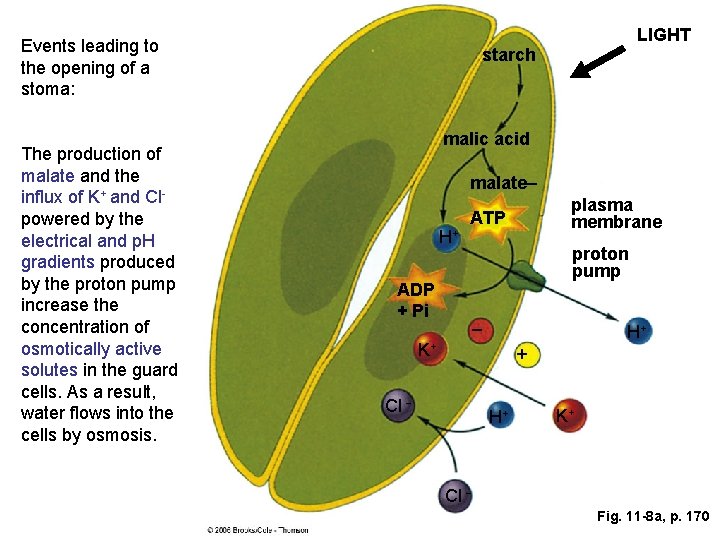
Events leading to the opening of a stoma: The production of malate and the influx of K+ and Clpowered by the electrical and p. H gradients produced by the proton pump increase the concentration of osmotically active solutes in the guard cells. As a result, water flows into the cells by osmosis. LIGHT starch malic acid malate– H+ ADP + Pi plasma membrane ATP proton pump K+ H+ + CI H+ K+ CI Fig. 11 -8 a, p. 170
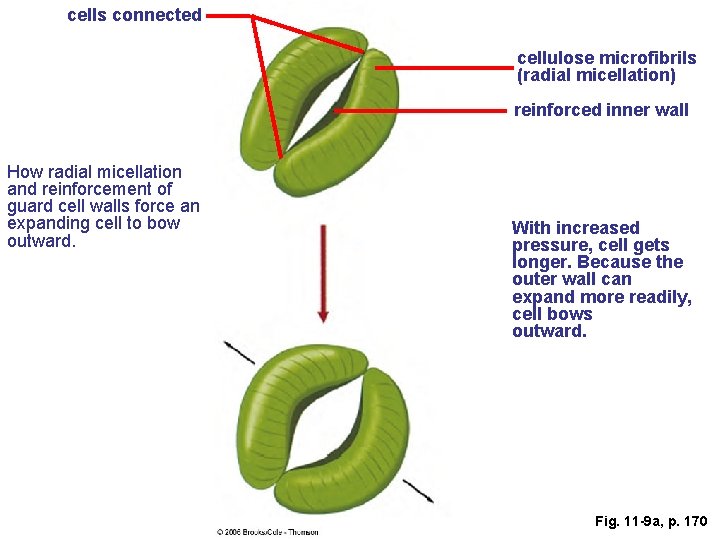
cells connected cellulose microfibrils (radial micellation) reinforced inner wall How radial micellation and reinforcement of guard cell walls force an expanding cell to bow outward. With increased pressure, cell gets longer. Because the outer wall can expand more readily, cell bows outward. Fig. 11 -9 a, p. 170
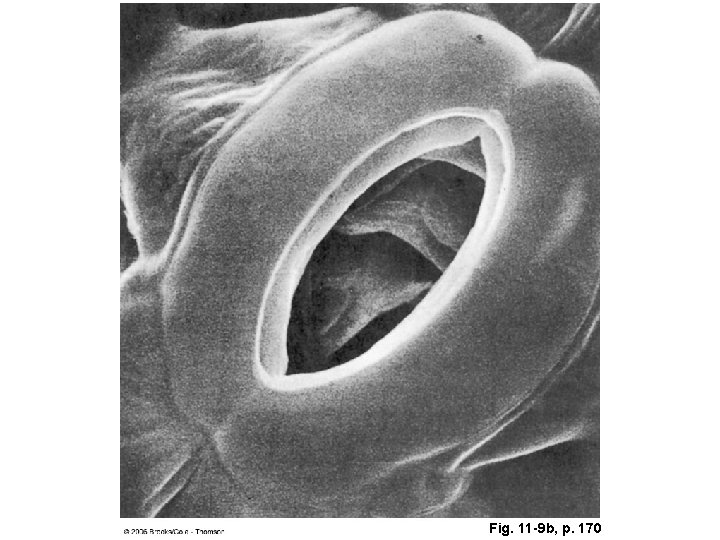
Fig. 11 -9 b, p. 170
- Slides: 25