
Absolute Volume Method for Concrete Mix Design References
Absolute Volume Method for Concrete Mix Design References TDOT Standard Specifications TDOT Supplemental Specifications PCA, Design and Control of Concrete Mixtures, 13 th Ed. NRMCA, Proportioning Concrete Mixtures
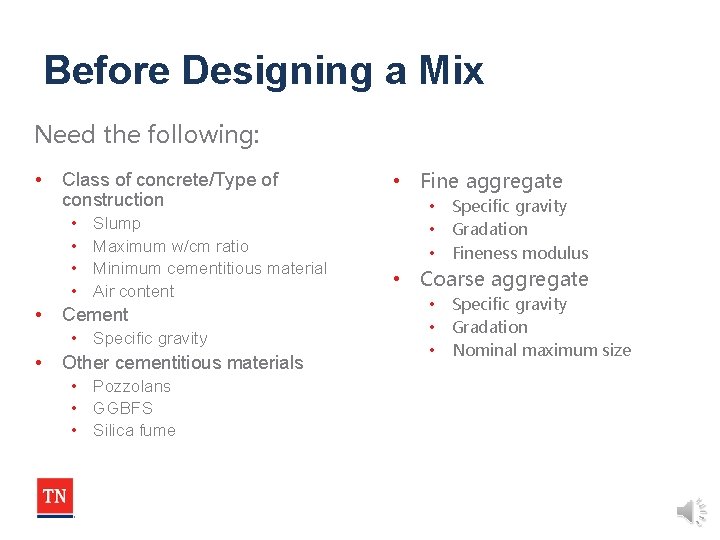
Before Designing a Mix Need the following: • Class of concrete/Type of construction • • • Slump Maximum w/cm ratio Minimum cementitious material Air content Cement • Specific gravity • Other cementitious materials • Pozzolans • GGBFS • Silica fume • Fine aggregate • • • Specific gravity Gradation Fineness modulus • Coarse aggregate • • • Specific gravity Gradation Nominal maximum size
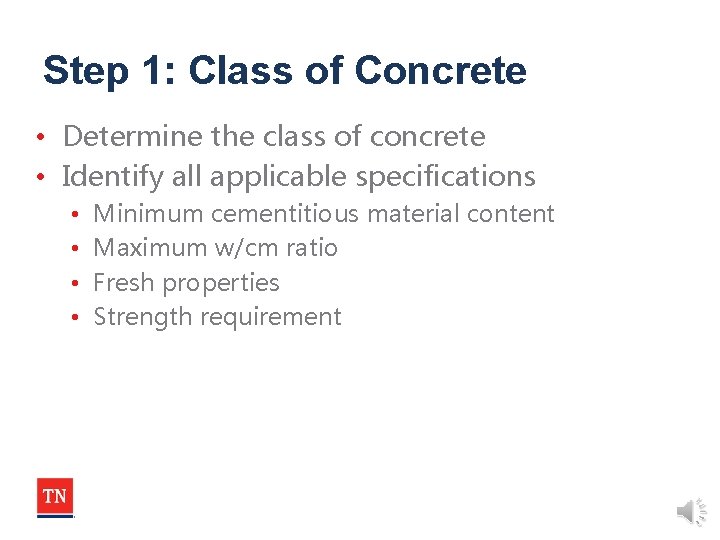
Step 1: Class of Concrete • Determine the class of concrete • Identify all applicable specifications • • Minimum cementitious material content Maximum w/cm ratio Fresh properties Strength requirement
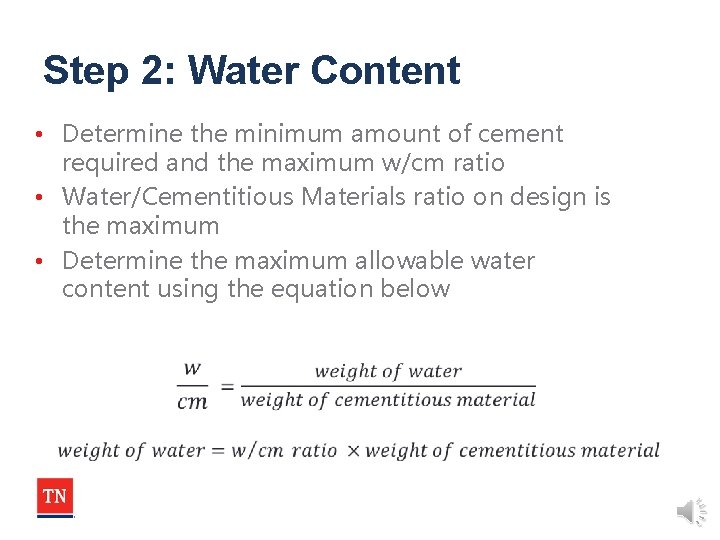
Step 2: Water Content • Determine the minimum amount of cement required and the maximum w/cm ratio • Water/Cementitious Materials ratio on design is the maximum • Determine the maximum allowable water content using the equation below
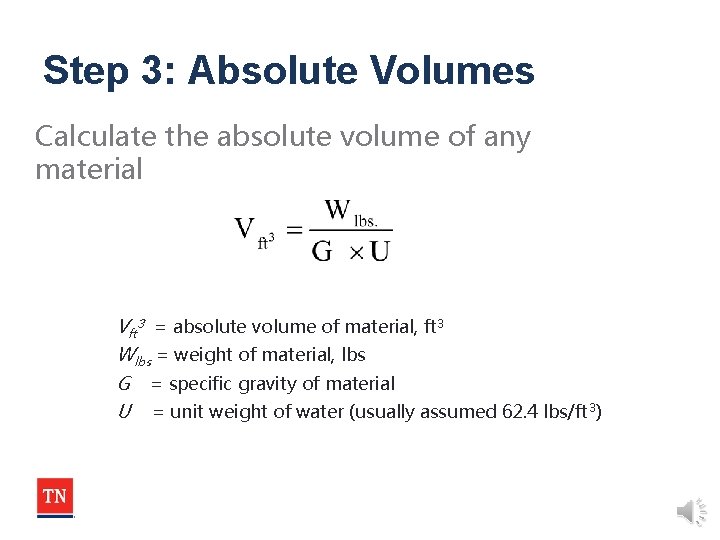
Step 3: Absolute Volumes Calculate the absolute volume of any material Vft 3 = absolute volume of material, ft 3 Wlbs = weight of material, lbs G = specific gravity of material U = unit weight of water (usually assumed 62. 4 lbs/ft 3)
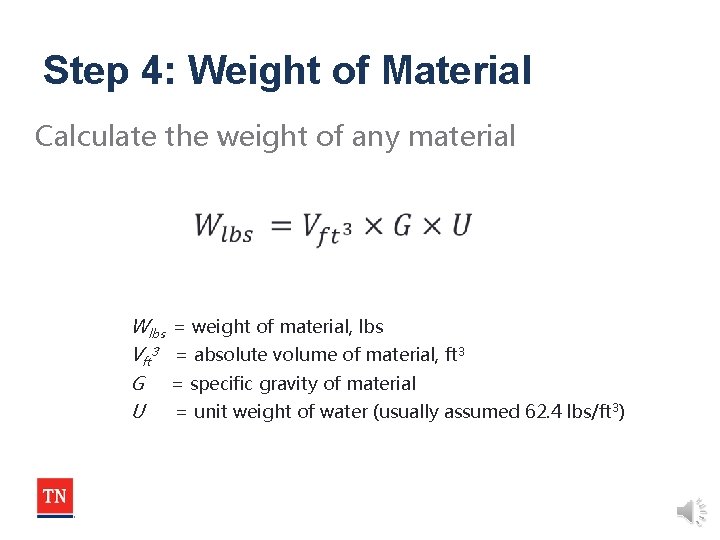
Step 4: Weight of Material Calculate the weight of any material Wlbs Vft 3 G U = weight of material, lbs = absolute volume of material, ft 3 = specific gravity of material = unit weight of water (usually assumed 62. 4 lbs/ft 3)
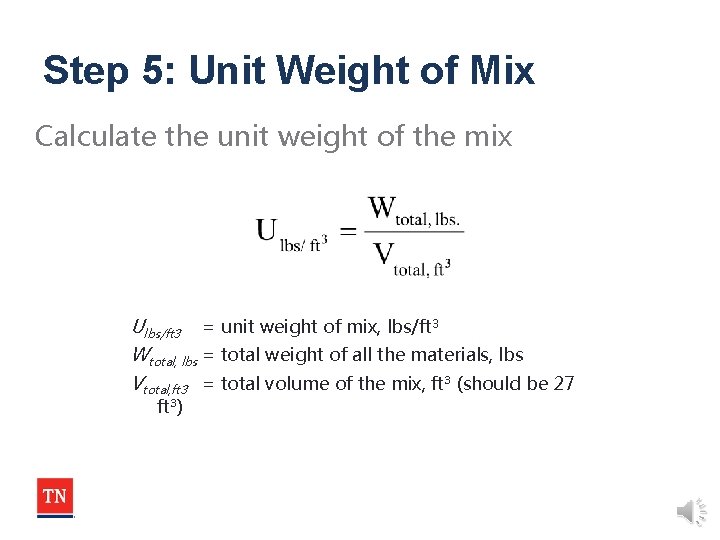
Step 5: Unit Weight of Mix Calculate the unit weight of the mix Ulbs/ft 3 = unit weight of mix, lbs/ft 3 Wtotal, lbs = total weight of all the materials, lbs Vtotal, ft 3 = total volume of the mix, ft³ (should be 27 ft³)

Questions
- Slides: 8