
Absolute Monarchy and Theocracy of the Middle East
Absolute Monarchy and Theocracy of the Middle East
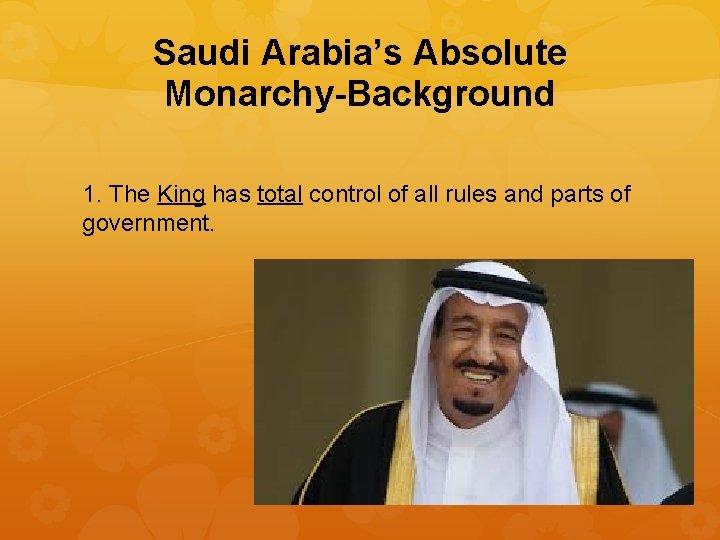
Saudi Arabia’s Absolute Monarchy-Background 1. The King has total control of all rules and parts of government.
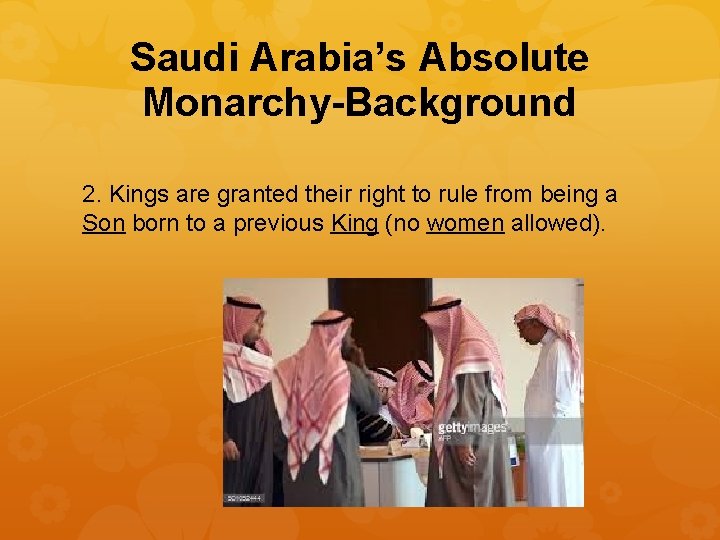
Saudi Arabia’s Absolute Monarchy-Background 2. Kings are granted their right to rule from being a Son born to a previous King (no women allowed).
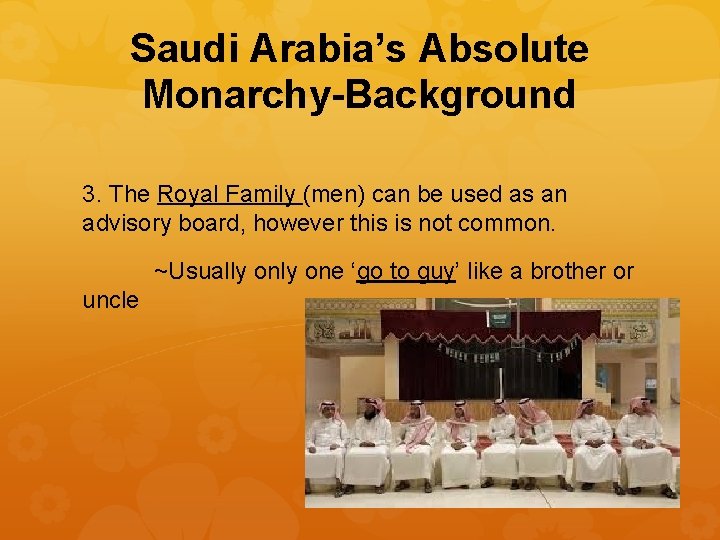
Saudi Arabia’s Absolute Monarchy-Background 3. The Royal Family (men) can be used as an advisory board, however this is not common. ~Usually one ‘go to guy’ like a brother or uncle
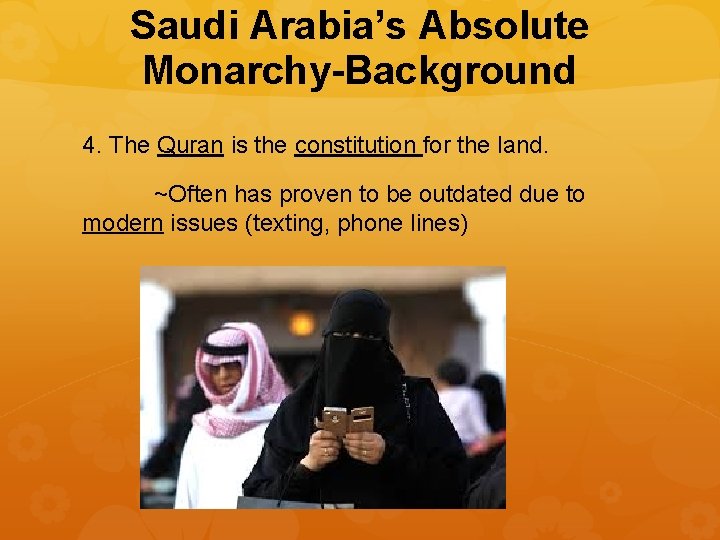
Saudi Arabia’s Absolute Monarchy-Background 4. The Quran is the constitution for the land. ~Often has proven to be outdated due to modern issues (texting, phone lines)
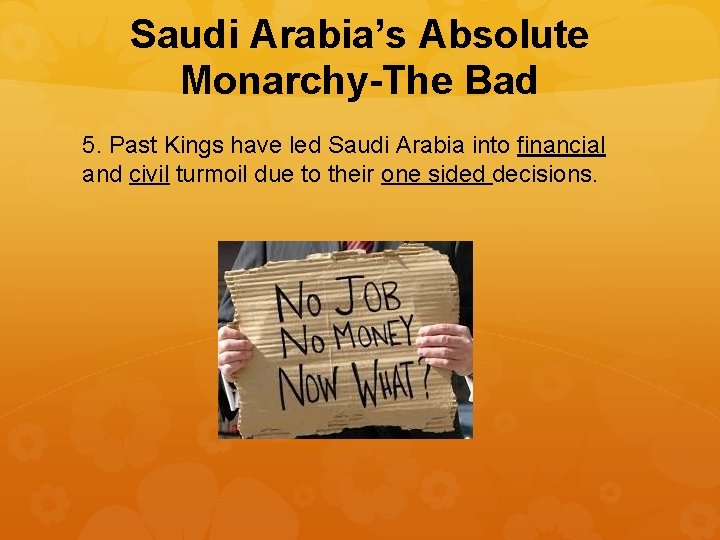
Saudi Arabia’s Absolute Monarchy-The Bad 5. Past Kings have led Saudi Arabia into financial and civil turmoil due to their one sided decisions.
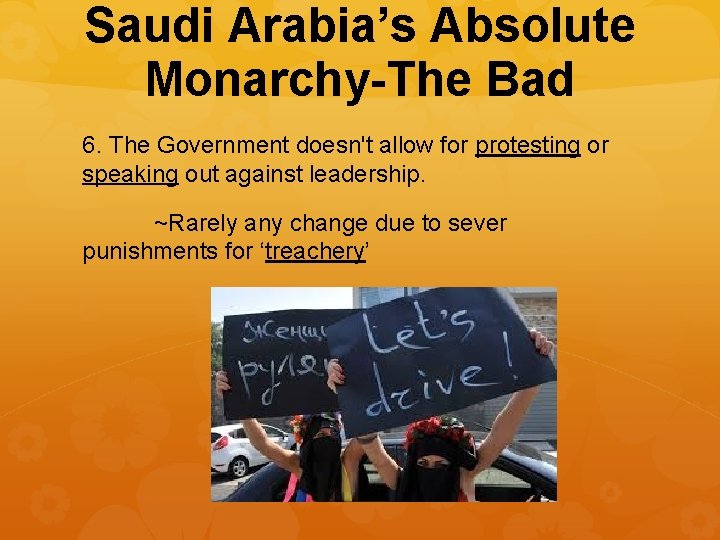
Saudi Arabia’s Absolute Monarchy-The Bad 6. The Government doesn't allow for protesting or speaking out against leadership. ~Rarely any change due to sever punishments for ‘treachery’
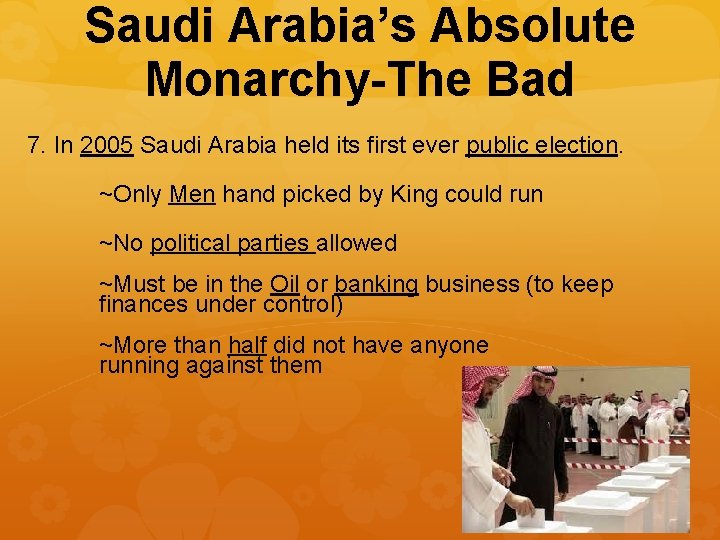
Saudi Arabia’s Absolute Monarchy-The Bad 7. In 2005 Saudi Arabia held its first ever public election. ~Only Men hand picked by King could run ~No political parties allowed ~Must be in the Oil or banking business (to keep finances under control) ~More than half did not have anyone running against them
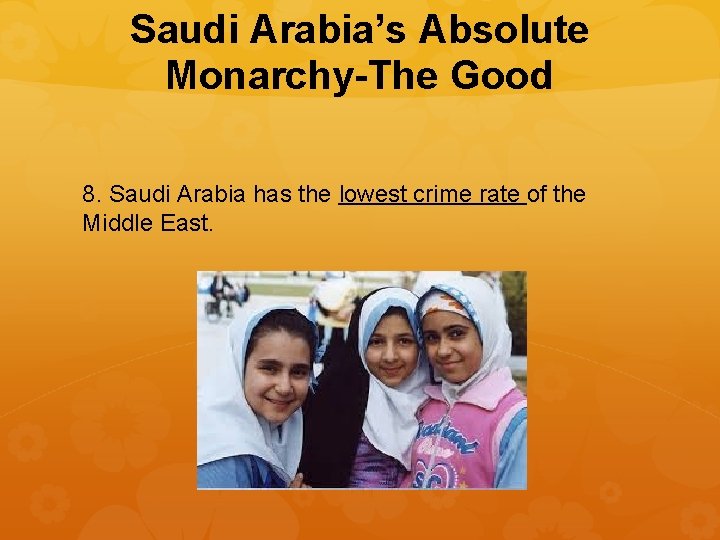
Saudi Arabia’s Absolute Monarchy-The Good 8. Saudi Arabia has the lowest crime rate of the Middle East.
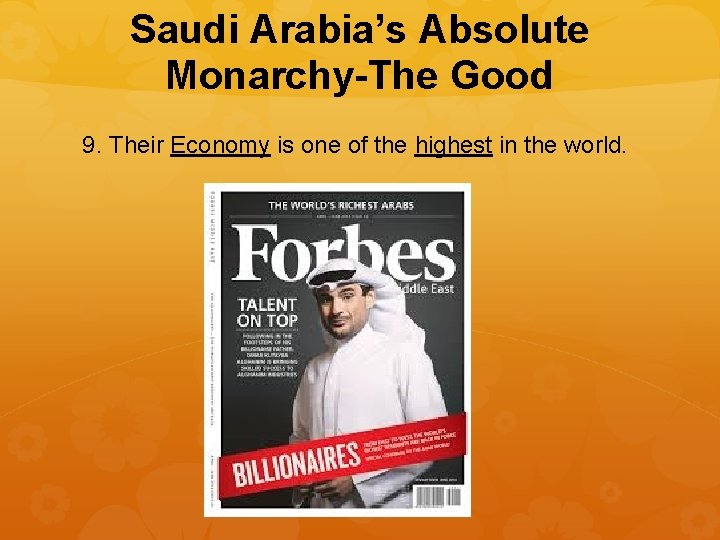
Saudi Arabia’s Absolute Monarchy-The Good 9. Their Economy is one of the highest in the world.
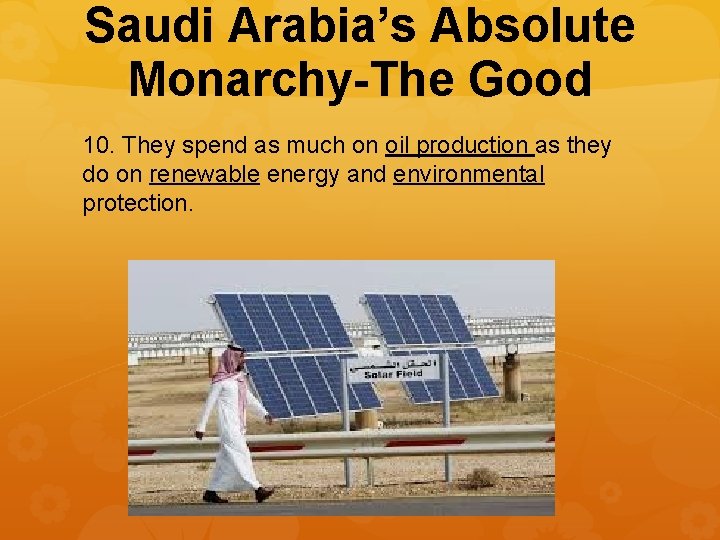
Saudi Arabia’s Absolute Monarchy-The Good 10. They spend as much on oil production as they do on renewable energy and environmental protection.
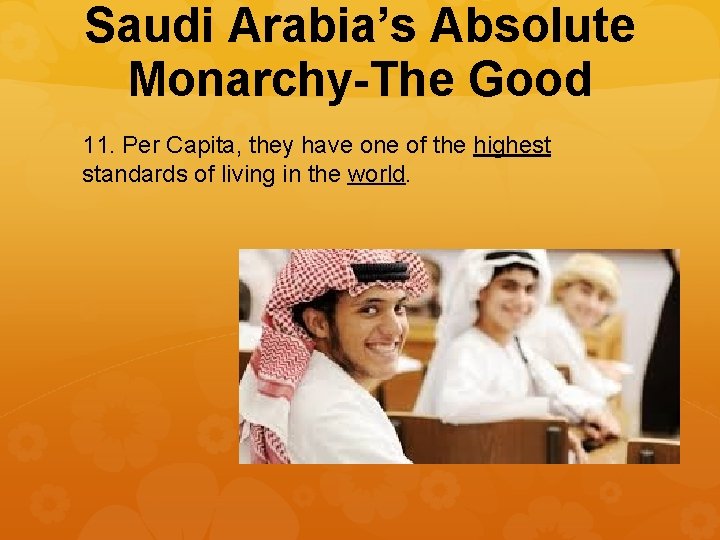
Saudi Arabia’s Absolute Monarchy-The Good 11. Per Capita, they have one of the highest standards of living in the world.
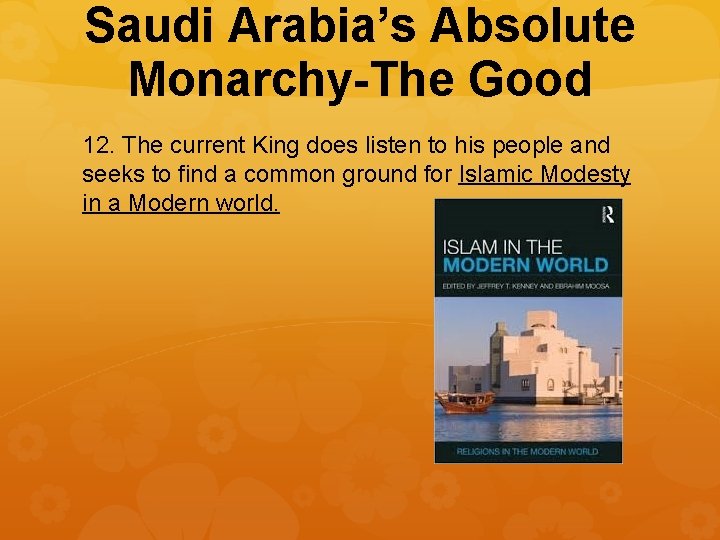
Saudi Arabia’s Absolute Monarchy-The Good 12. The current King does listen to his people and seeks to find a common ground for Islamic Modesty in a Modern world.
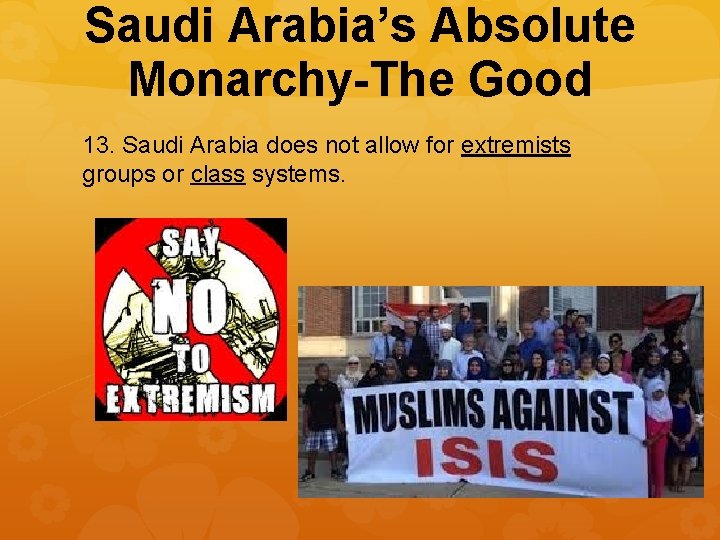
Saudi Arabia’s Absolute Monarchy-The Good 13. Saudi Arabia does not allow for extremists groups or class systems.
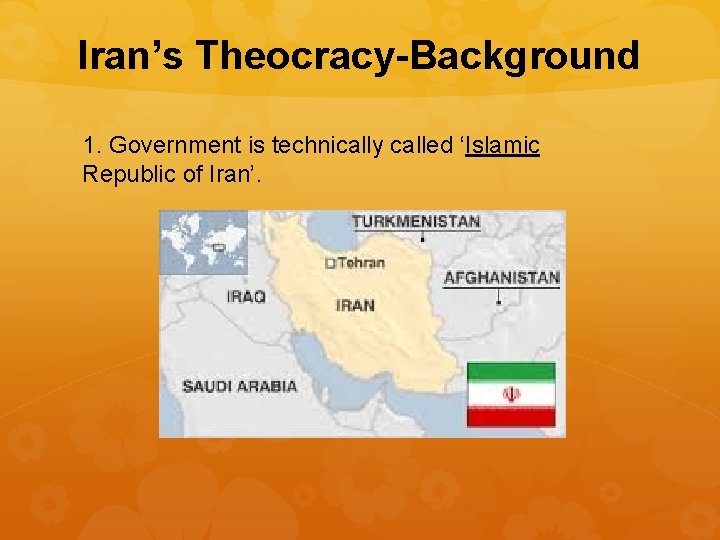
Iran’s Theocracy-Background 1. Government is technically called ‘Islamic Republic of Iran’.
Iran’s Theocracy-Background 2. Current government gained control in 1979.
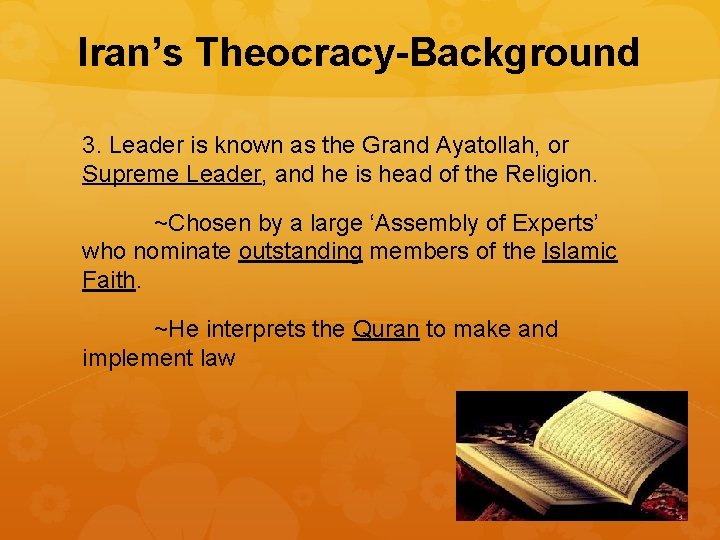
Iran’s Theocracy-Background 3. Leader is known as the Grand Ayatollah, or Supreme Leader, and he is head of the Religion. ~Chosen by a large ‘Assembly of Experts’ who nominate outstanding members of the Islamic Faith. ~He interprets the Quran to make and implement law
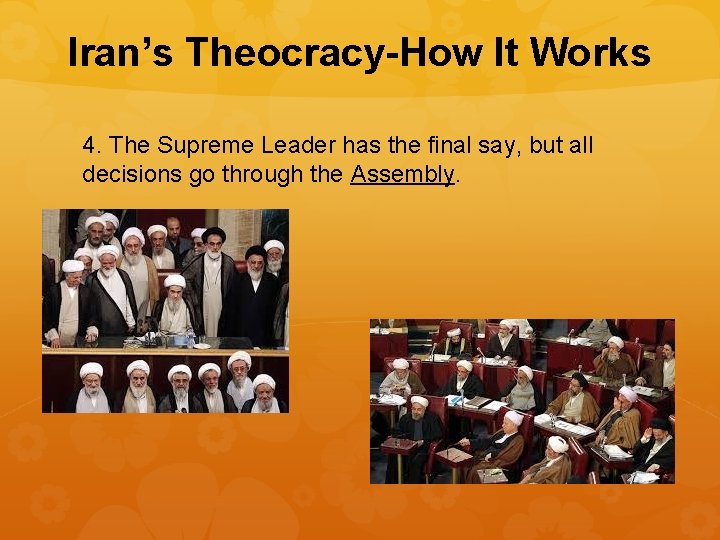
Iran’s Theocracy-How It Works 4. The Supreme Leader has the final say, but all decisions go through the Assembly.
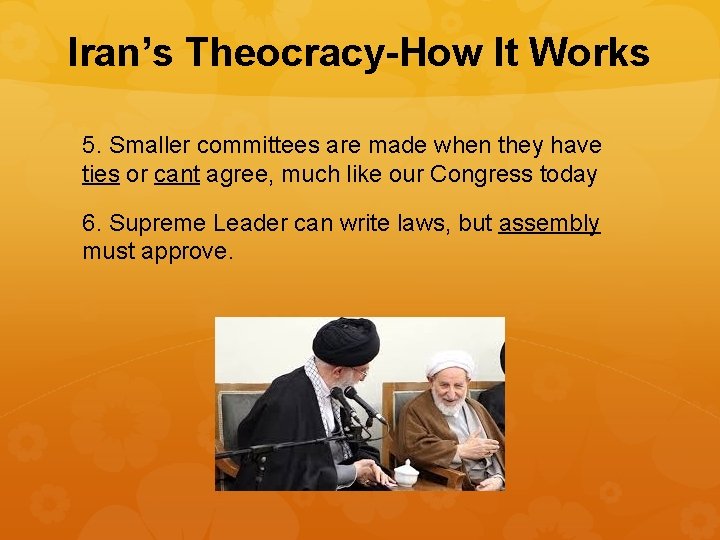
Iran’s Theocracy-How It Works 5. Smaller committees are made when they have ties or cant agree, much like our Congress today 6. Supreme Leader can write laws, but assembly must approve.
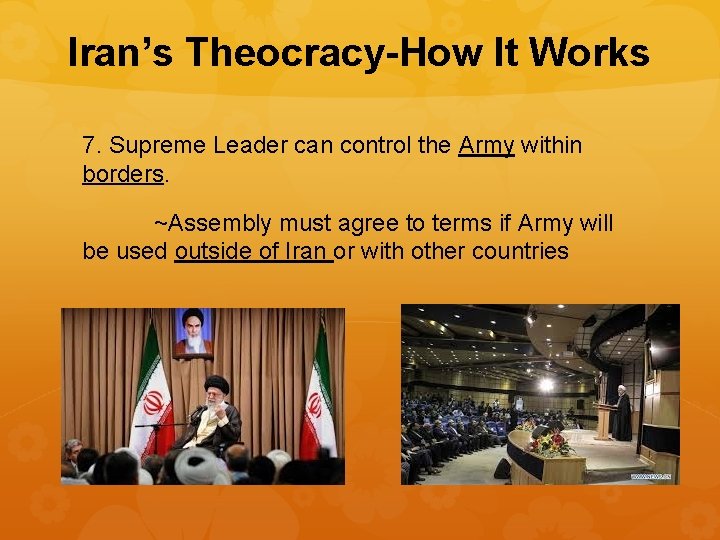
Iran’s Theocracy-How It Works 7. Supreme Leader can control the Army within borders. ~Assembly must agree to terms if Army will be used outside of Iran or with other countries
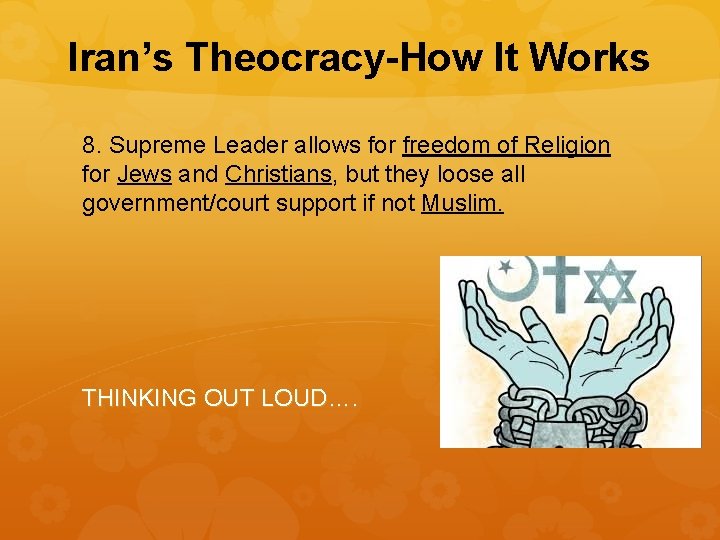
Iran’s Theocracy-How It Works 8. Supreme Leader allows for freedom of Religion for Jews and Christians, but they loose all government/court support if not Muslim. THINKING OUT LOUD….
- Slides: 21