
ABSOLUTE AGE The numerical age in years of

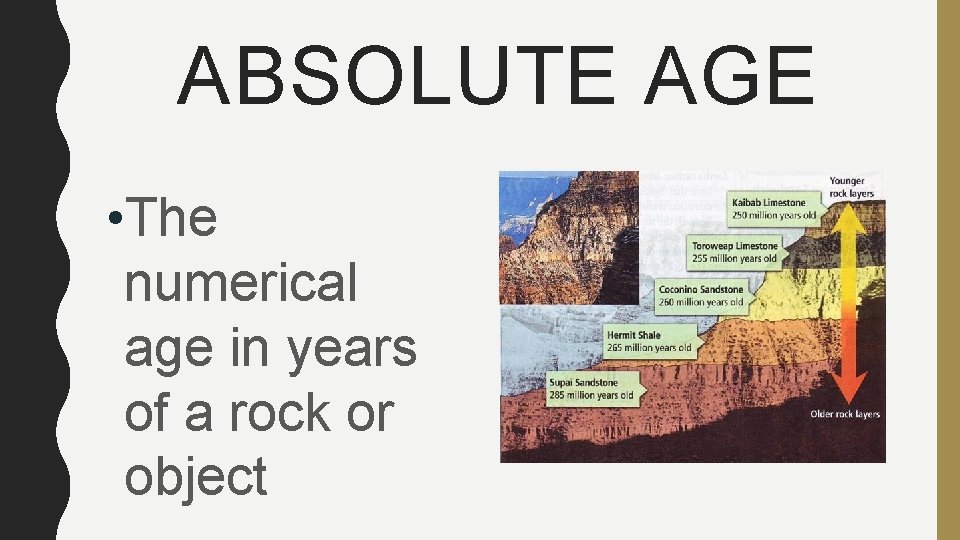
ABSOLUTE AGE • The numerical age in years of a rock or object
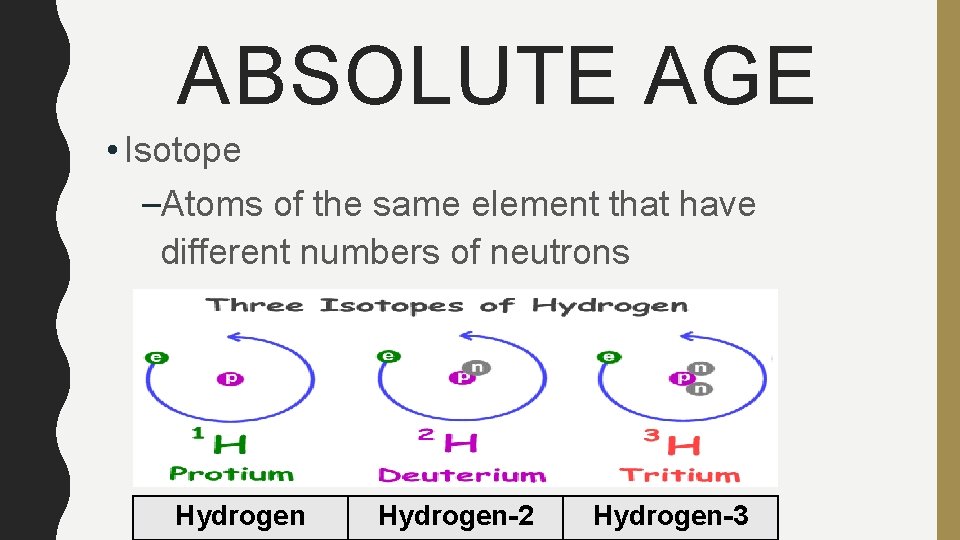
ABSOLUTE AGE • Isotope –Atoms of the same element that have different numbers of neutrons Hydrogen-2 Hydrogen-3
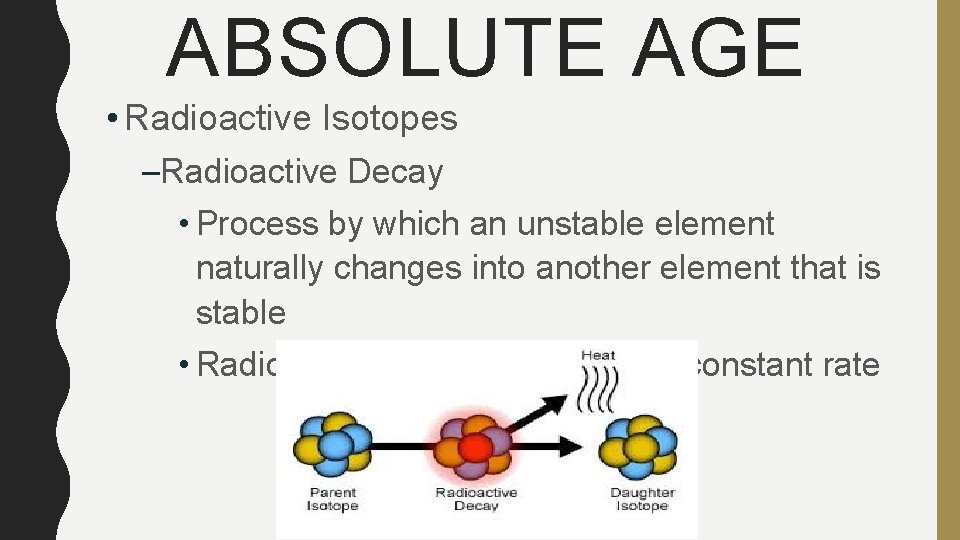
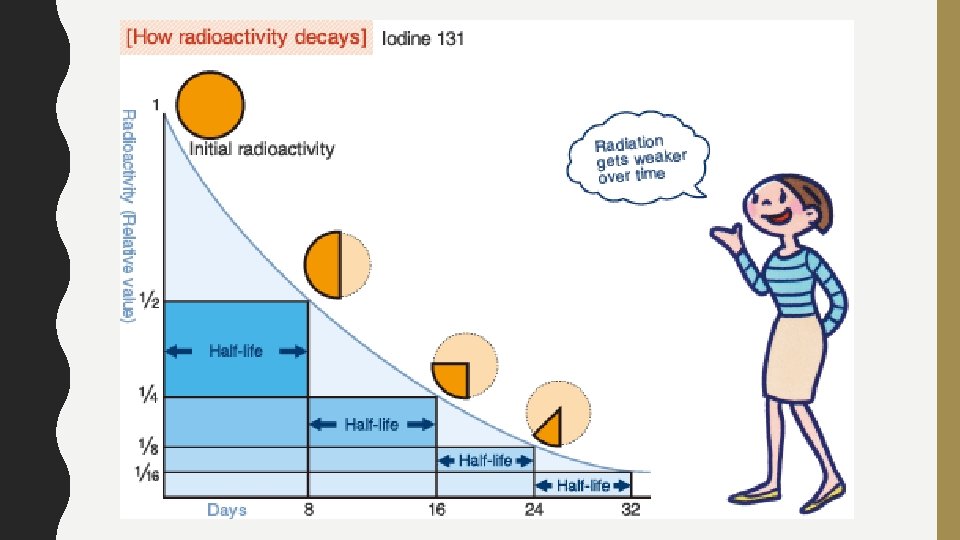
ABSOLUTE AGE • Radioactive Isotopes –Radioactive Decay • Process by which an unstable element naturally changes into another element that is stable • Radioactive isotopes decay at a constant rate
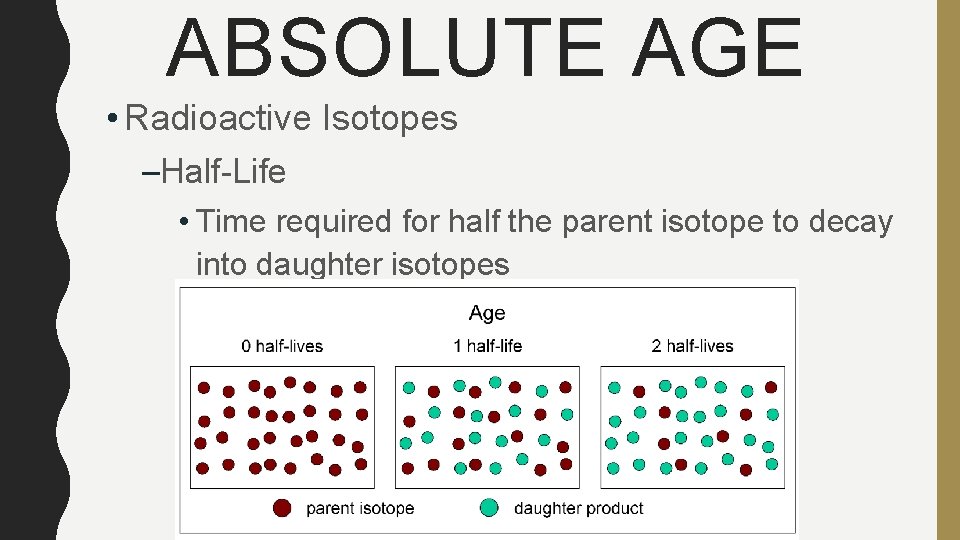
ABSOLUTE AGE • Radioactive Isotopes –Half-Life • Time required for half the parent isotope to decay into daughter isotopes
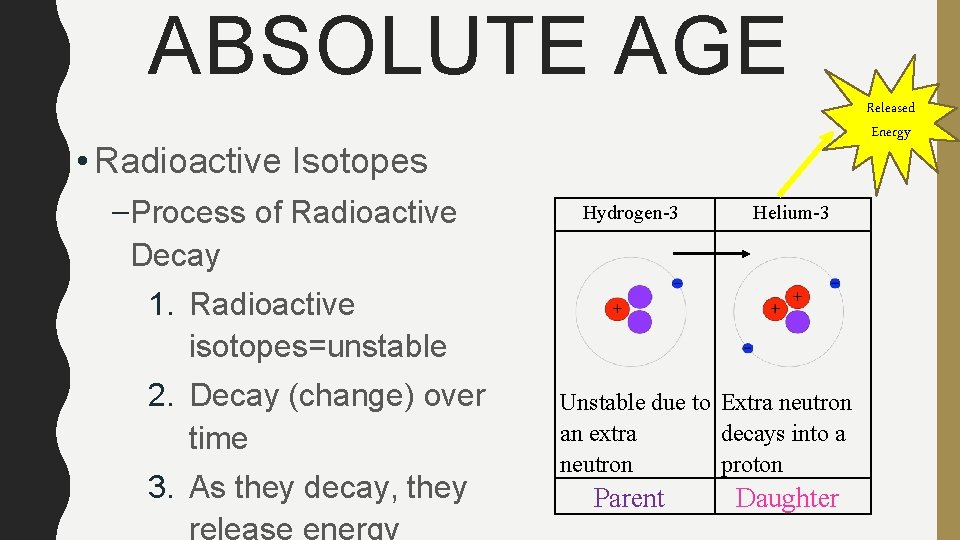
ABSOLUTE AGE Released Energy • Radioactive Isotopes –Process of Radioactive Decay Hydrogen-3 Helium-3 1. Radioactive isotopes=unstable 2. Decay (change) over time 3. As they decay, they Unstable due to Extra neutron an extra decays into a neutron proton Parent Daughter
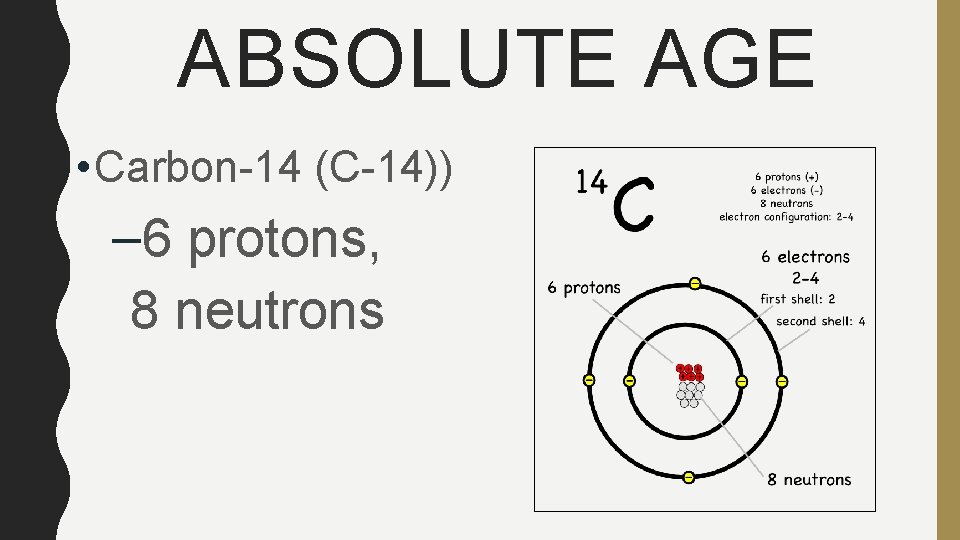
ABSOLUTE AGE • Carbon-14 (C-14)) – 6 protons, 8 neutrons
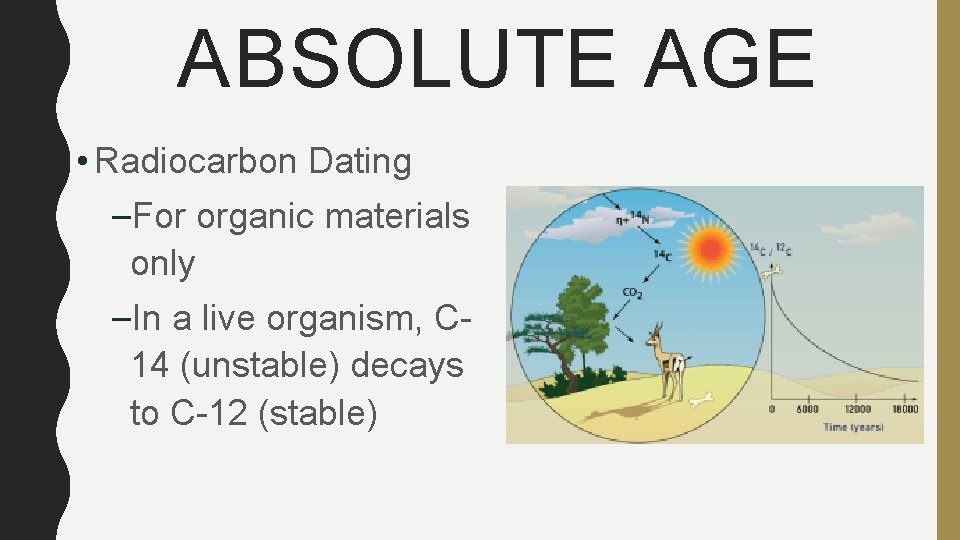
ABSOLUTE AGE • Radiocarbon Dating –For organic materials only –In a live organism, C 14 (unstable) decays to C-12 (stable)
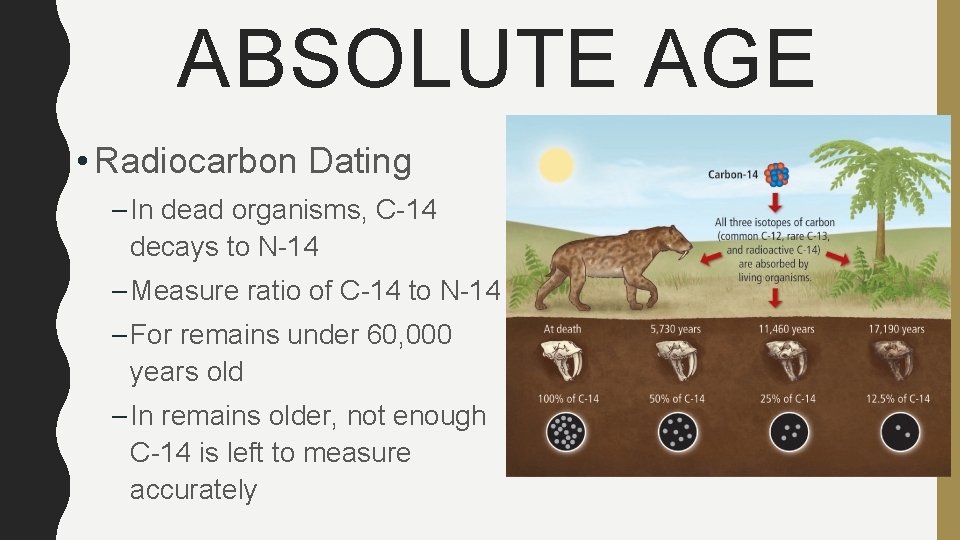
ABSOLUTE AGE • Radiocarbon Dating – In dead organisms, C-14 decays to N-14 – Measure ratio of C-14 to N-14 – For remains under 60, 000 years old – In remains older, not enough C-14 is left to measure accurately
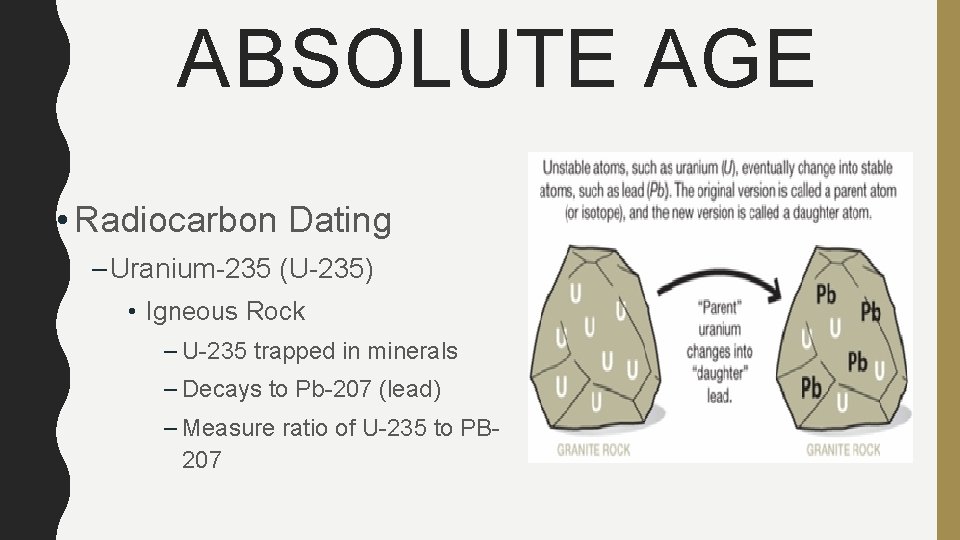
ABSOLUTE AGE • Radiocarbon Dating – Uranium-235 (U-235) • Igneous Rock – U-235 trapped in minerals – Decays to Pb-207 (lead) – Measure ratio of U-235 to PB 207
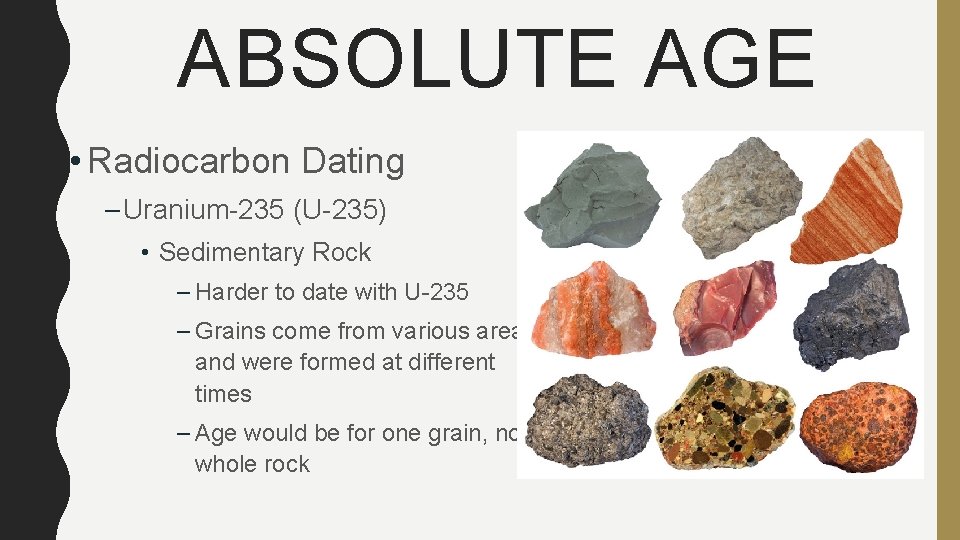
ABSOLUTE AGE • Radiocarbon Dating – Uranium-235 (U-235) • Sedimentary Rock – Harder to date with U-235 – Grains come from various areas and were formed at different times – Age would be for one grain, not whole rock
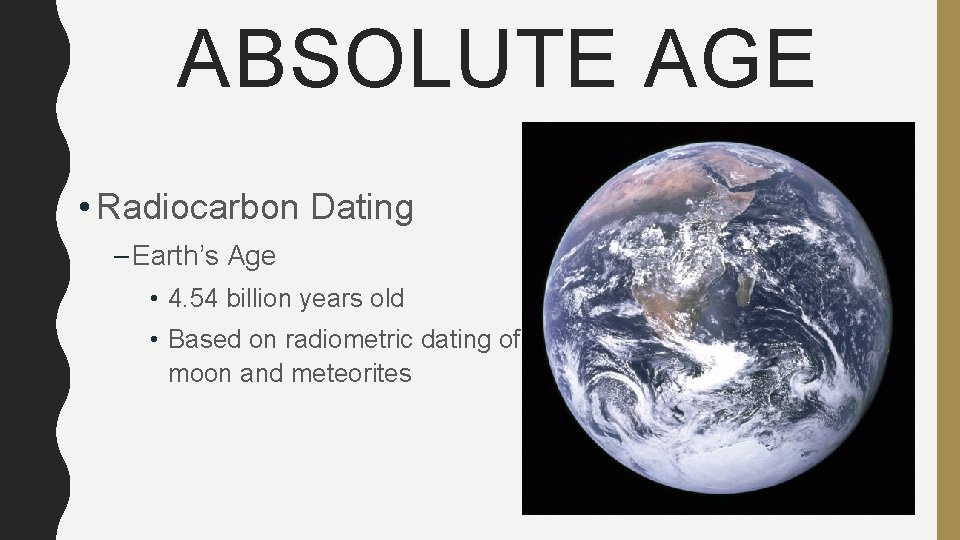
ABSOLUTE AGE • Radiocarbon Dating – Earth’s Age • 4. 54 billion years old • Based on radiometric dating of moon and meteorites
- Slides: 13