
Abridged Project Methodology 15 th October 2013 Graham

. Abridged Project Methodology 15 th October 2013 Graham Mann

Current Situation An assessment or audit of the waste water being generated is the most important starting point for any project. This is split into two categories: 1. Discharge consents to ensure compliance is being achieved – typically flow, p. H, oils and grease, solids, COD, phosphate, ammonia, heavy metals etc 2. Data regarding chargeable components – flow, solids and COD only for the MOGDEN formula Typical charts can be seen on the next pages
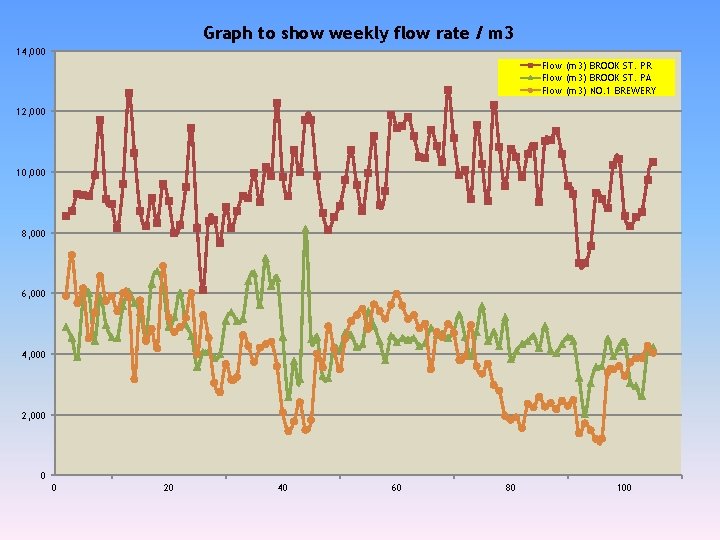
Graph to show weekly flow rate / m 3 14, 000 Flow (m 3) BROOK ST. PR Flow (m 3) BROOK ST. PA Flow (m 3) NO. 1 BREWERY 12, 000 10, 000 8, 000 6, 000 4, 000 2, 000 0 0 20 40 60 80 100
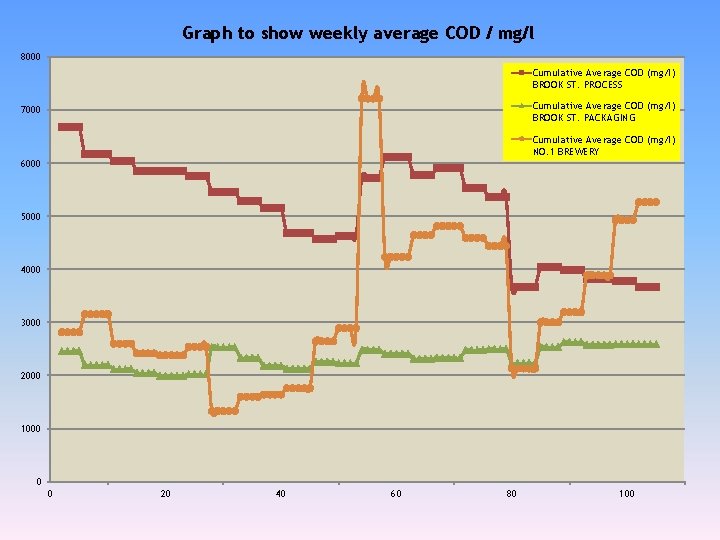
Graph to show weekly average COD / mg/l 8000 Cumulative Average COD (mg/l) BROOK ST. PROCESS Cumulative Average COD (mg/l) BROOK ST. PACKAGING 7000 Cumulative Average COD (mg/l) NO. 1 BREWERY 6000 5000 4000 3000 2000 1000 0 0 20 40 60 80 100
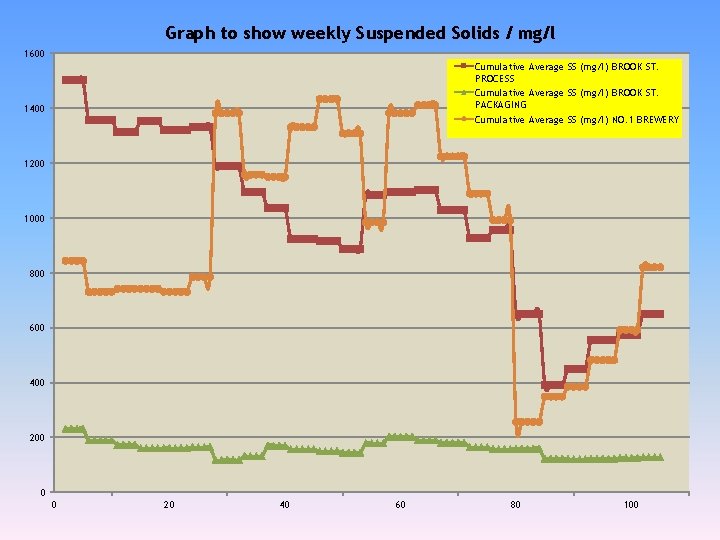
Graph to show weekly Suspended Solids / mg/l 1600 Cumulative Average SS (mg/l) BROOK ST. PROCESS Cumulative Average SS (mg/l) BROOK ST. PACKAGING Cumulative Average SS (mg/l) NO. 1 BREWERY 1400 1200 1000 800 600 400 200 0 0 20 40 60 80 100
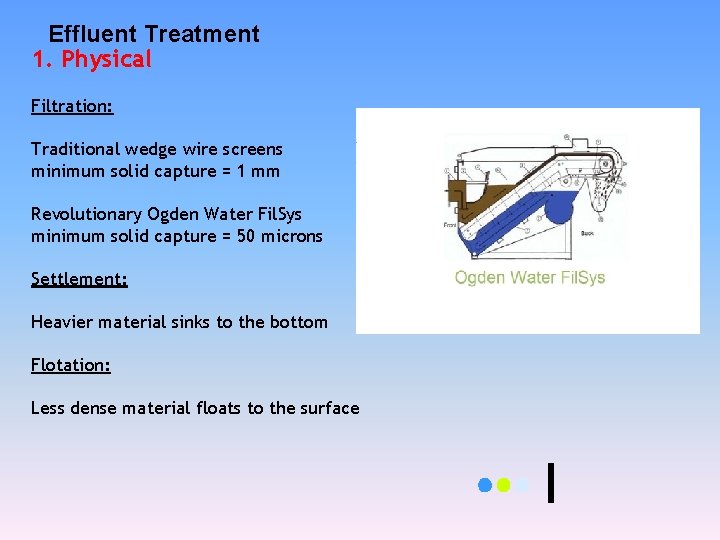
Effluent Treatment 1. Physical Filtration: Traditional wedge wire screens minimum solid capture = 1 mm Revolutionary Ogden Water Fil. Sys minimum solid capture = 50 microns Settlement: Heavier material sinks to the bottom Flotation: Less dense material floats to the surface
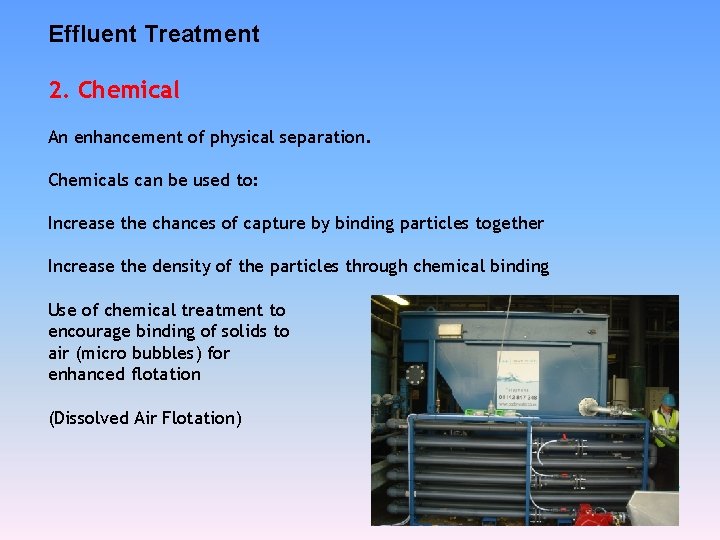
Effluent Treatment 2. Chemical An enhancement of physical separation. Chemicals can be used to: Increase the chances of capture by binding particles together Increase the density of the particles through chemical binding Use of chemical treatment to encourage binding of solids to air (micro bubbles) for enhanced flotation (Dissolved Air Flotation) Ogden Water Ltd.
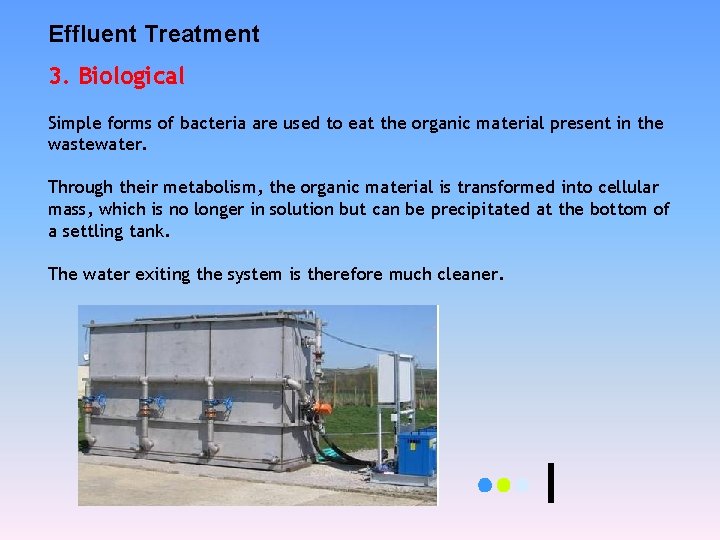
Effluent Treatment 3. Biological Simple forms of bacteria are used to eat the organic material present in the wastewater. Through their metabolism, the organic material is transformed into cellular mass, which is no longer in solution but can be precipitated at the bottom of a settling tank. The water exiting the system is therefore much cleaner.
Effluent Treatment Reasons to treat: Compliance Cost saving Water re-use
Example Effluent Treatment Projects Physical – Filtration System plant: 1, 200 m 3/day of effluent COD 1, 500 mg/l Solids 2, 000 mg/l. Budget £ 120, 000. Chemical – Dissolved Air Flotation plant: 480 m 3/day of effluent COD 4, 500 mg/l Solids 1, 000 mg/l. Budget £ 80, 000.
Effluent Treatment Biological – MBR plant with RO for water recovery: 400 m 3/day of effluent COD 2, 500 mg/l Ammonia 200 mg/l. Budget £ 1 m. Recovered water = 300 m 3/day If greater than 40% is recycled, there is access to grant funding and the possibility of enhanced Capital Allowance to be claimed.
Project Methodology and Work Schedule 24 hourly sampling and analysis programme Laboratory test work – solids removal and effect on COD, p. H correction Budget quotation – funding available, timescales involved etc. Full draft quotation Visit to reference sites Presentation, discussion meetings to finalise the quote Design, build, install Service, support and continuous improvement
- Slides: 12