
Abraham Maslow Hierarchy of Needs Physiological Needs These

Abraham Maslow Hierarchy of Needs
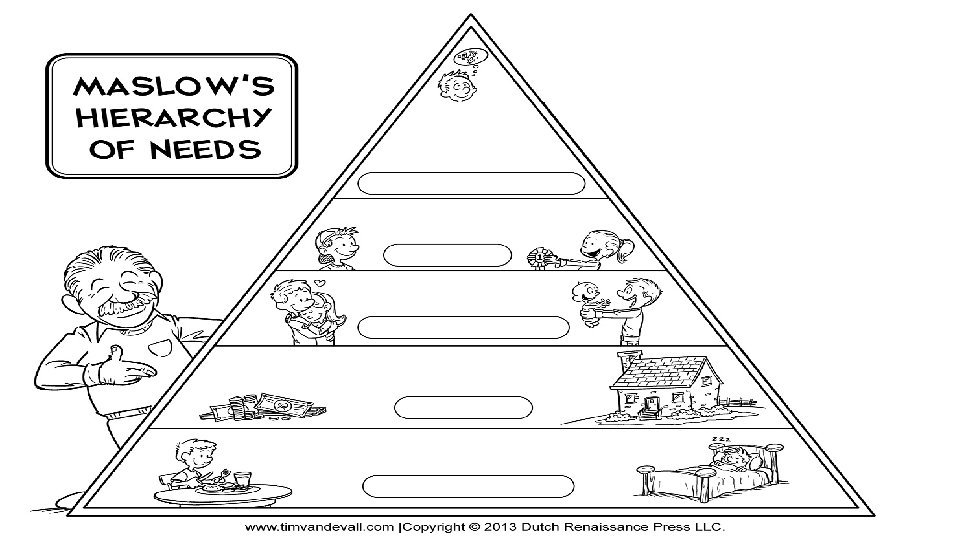
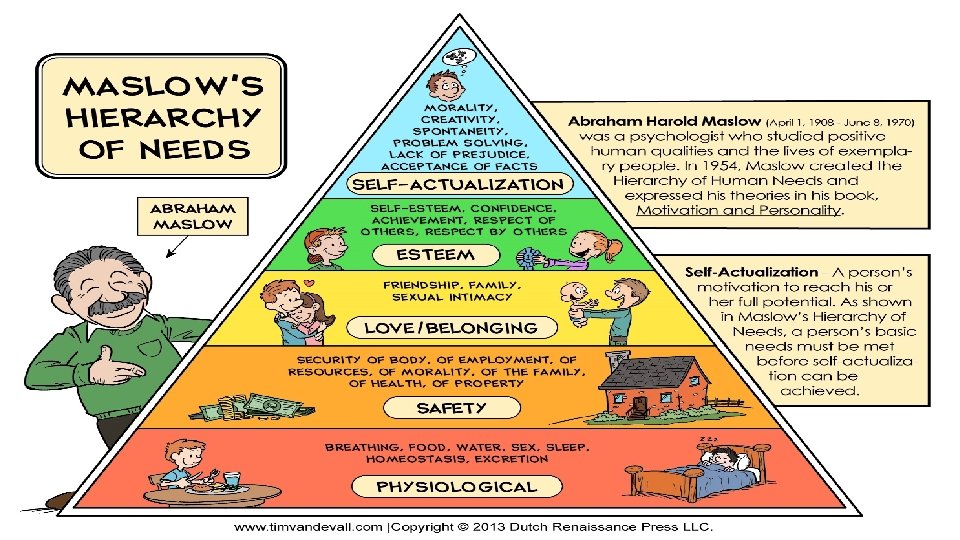
Physiological Needs • These include the most basic needs that are vital to survival, such as the need for water, air, food, and sleep. Maslow believed that these needs are the most basic and instinctive needs in the hierarchy because all needs become secondary until these physiological needs are met.
Safety & Security • These include needs for safety and security. Security needs are important for survival, but they are not as demanding as the physiological needs. Examples of security needs include a desire for steady employment, health care, safe neighborhoods, and shelter from the environment.
Social (Love & Belonging) • These include needs for belonging, love, and affection. Maslow described these needs as less basic than physiological and security needs. Relationships such as friendships, romantic attachments, and families help fulfill this need for companionship and acceptance, as does involvement in social, community, or religious groups.
Esteem • After the first three needs have been satisfied, esteem needs becomes increasingly important. These include the need for things that reflect on self-esteem, personal worth, social recognition, and accomplishment.
Self-Actualization • This is the highest level of Maslow’s hierarchy of needs. Self actualizing people are self-aware, concerned with personal growth, less concerned with the opinions of others, and interested fulfilling their potential.

Now it’s your turn! • Using items from the classroom you will need to create your own interpretation of Maslow’s Hierarchy of Needs. • It can’t be a triangle or pyramid. • Draw your sketch on your desk then I will give you supplies. You have till tomorrow to complete this task. • 50 point project grade will given on Wednesday and projects will be displayed.
- Slides: 9