
About Science Prof Online Power Point Resources Science
About Science Prof Online Power. Point Resources • Science Prof Online (SPO) is a free science education website that provides fully-developed Virtual Science Classrooms, science-related Power. Points, articles and images. The site is designed to be a helpful resource for students, educators, and anyone interested in learning about science. • The SPO Virtual Classrooms offer many educational resources, including practice test questions, review questions, lecture Power. Points, video tutorials, sample assignments and course syllabi. New materials are continually being developed, so check back frequently, or follow us on Facebook (Science Prof Online) or Twitter (Science. Prof. SPO) for updates. • Many SPO Power. Points are available in a variety of formats, such as fully editable Power. Point files, as well as uneditable versions in smaller file sizes, such as Power. Point Shows and Portable Document Format (. pdf), for ease of printing. • Images used on this resource, and on the SPO website are, wherever possible, credited and linked to their source. Any words underlined and appearing in blue are links that can be clicked on for more information. Power. Points must be viewed in slide show mode to use the hyperlinks directly. • Several helpful links to fun and interactive learning tools are included throughout the PPT and on the Smart Links slide, near the end of each presentation. You must be in slide show mode to utilize hyperlinks and animations. • This digital resource is licensed under Creative Commons Attribution-Share. Alike 3. 0: http: //creativecommons. org/licenses/by-sa/3. 0/ Alicia Cepaitis, MS Chief Creative Nerd Science Prof Online Education Resources, LLC alicia@scienceprofonline. com Image: Compound microscope objectives, T. Port Tami Port, MS Creator of Science Prof Online Chief Executive Nerd Science Prof Online Education Resources, LLC info@scienceprofonline. com From the Virtual Cell Biology Classroom on Science. Prof. Online. com
Human Body Tissues From the Virtual Anatomy and Physiology Classroom on Science. Prof. Online. com
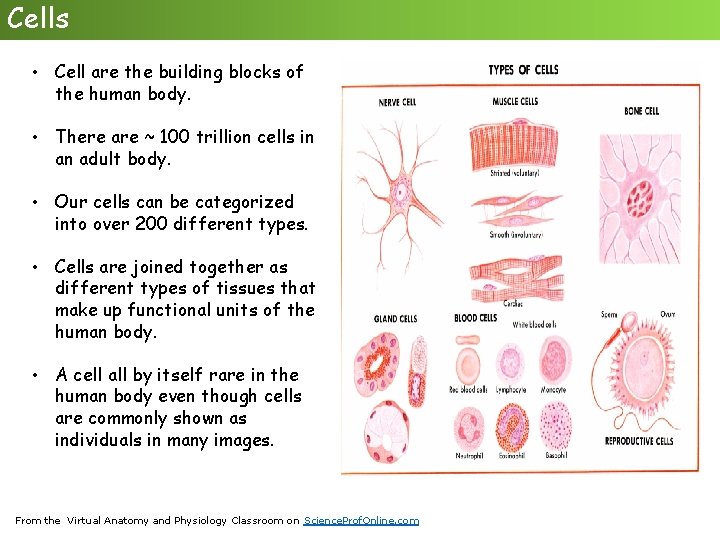
Cells • Cell are the building blocks of the human body. • There are ~ 100 trillion cells in an adult body. • Our cells can be categorized into over 200 different types. • Cells are joined together as different types of tissues that make up functional units of the human body. • A cell all by itself rare in the human body even though cells are commonly shown as individuals in many images. From the Virtual Anatomy and Physiology Classroom on Science. Prof. Online. com
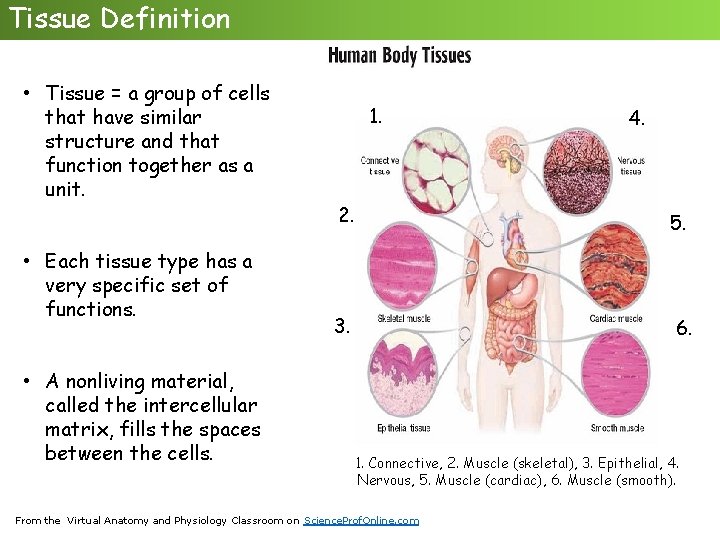
Tissue Definition • Tissue = a group of cells that have similar structure and that function together as a unit. • Each tissue type has a very specific set of functions. • A nonliving material, called the intercellular matrix, fills the spaces between the cells. 1. 4. 2. 5. 3. 6. 1. Connective, 2. Muscle (skeletal), 3. Epithelial, 4. Nervous, 5. Muscle (cardiac), 6. Muscle (smooth). From the Virtual Anatomy and Physiology Classroom on Science. Prof. Online. com
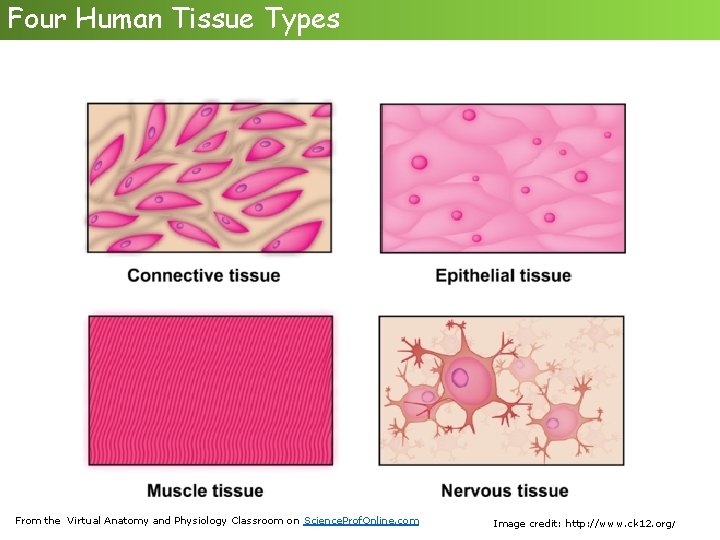
Four Human Tissue Types From the Virtual Anatomy and Physiology Classroom on Science. Prof. Online. com Image credit: http: //www. ck 12. org /
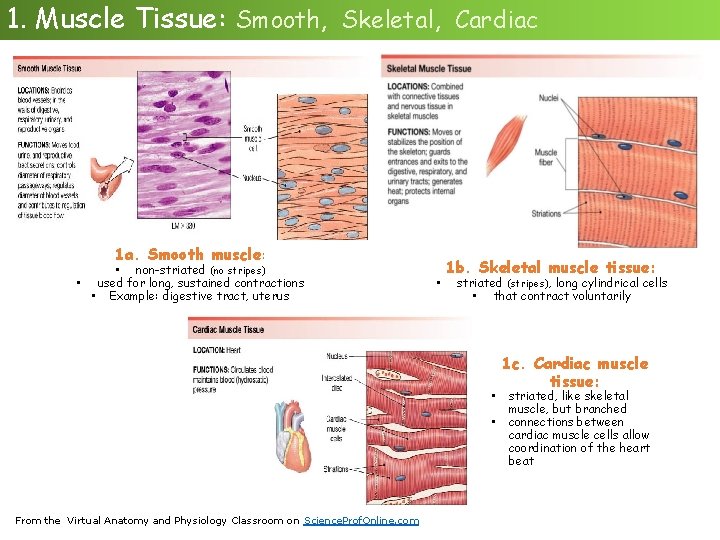
1. Muscle Tissue: Smooth, Skeletal, Cardiac 1 a. Smooth muscle: • non-striated (no stripes) • used for long, sustained contractions • Example: digestive tract, uterus • 1 b. Skeletal muscle tissue: striated (stripes), long cylindrical cells • that contract voluntarily • • From the Virtual Anatomy and Physiology Classroom on Science. Prof. Online. com 1 c. Cardiac muscle tissue: striated, like skeletal muscle, but branched connections between cardiac muscle cells allow coordination of the heart beat
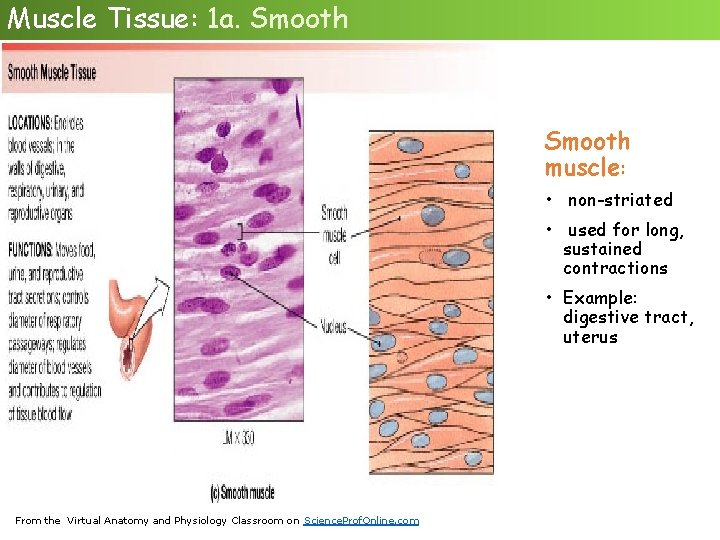
Muscle Tissue: 1 a. Smooth muscle: • non-striated • used for long, sustained contractions • Example: digestive tract, uterus From the Virtual Anatomy and Physiology Classroom on Science. Prof. Online. com
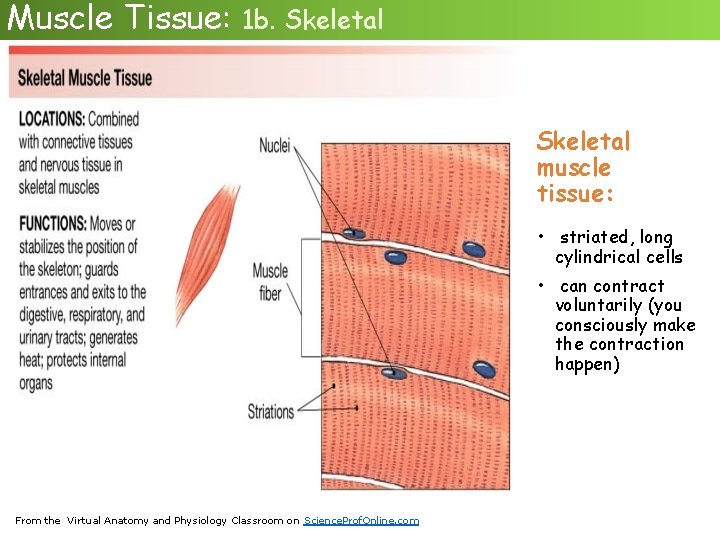
Muscle Tissue: 1 b. Skeletal muscle tissue: • striated, long cylindrical cells • can contract voluntarily (you consciously make the contraction happen) From the Virtual Anatomy and Physiology Classroom on Science. Prof. Online. com
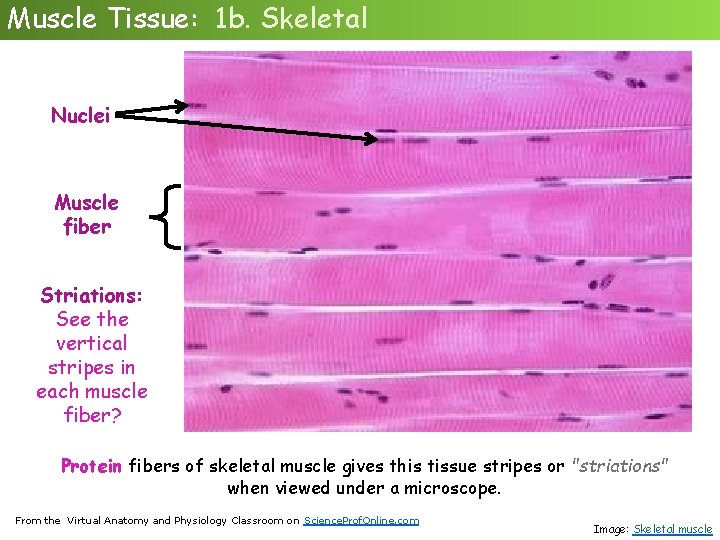
Muscle Tissue: 1 b. Skeletal Nuclei Muscle fiber Striations: See the vertical stripes in each muscle fiber? Protein fibers of skeletal muscle gives this tissue stripes or "striations" when viewed under a microscope. From the Virtual Anatomy and Physiology Classroom on Science. Prof. Online. com Image: Skeletal muscle
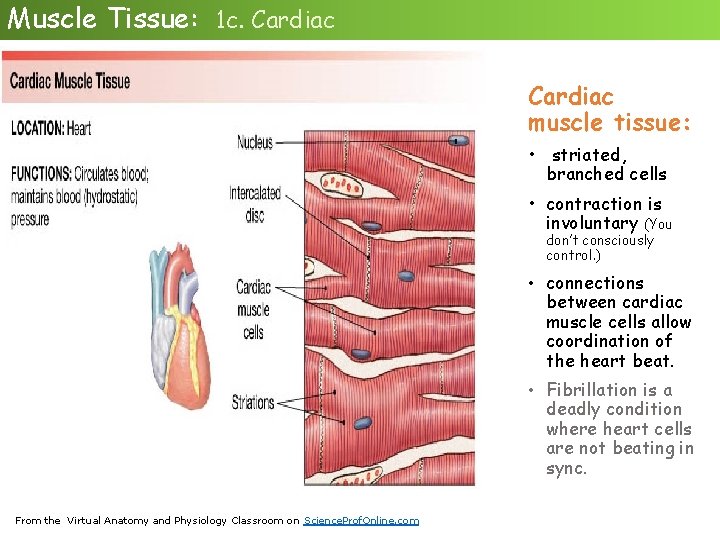
Muscle Tissue: 1 c. Cardiac muscle tissue: • striated, branched cells • contraction is involuntary (You don’t consciously control. ) • connections between cardiac muscle cells allow coordination of the heart beat. • Fibrillation is a deadly condition where heart cells are not beating in sync. From the Virtual Anatomy and Physiology Classroom on Science. Prof. Online. com
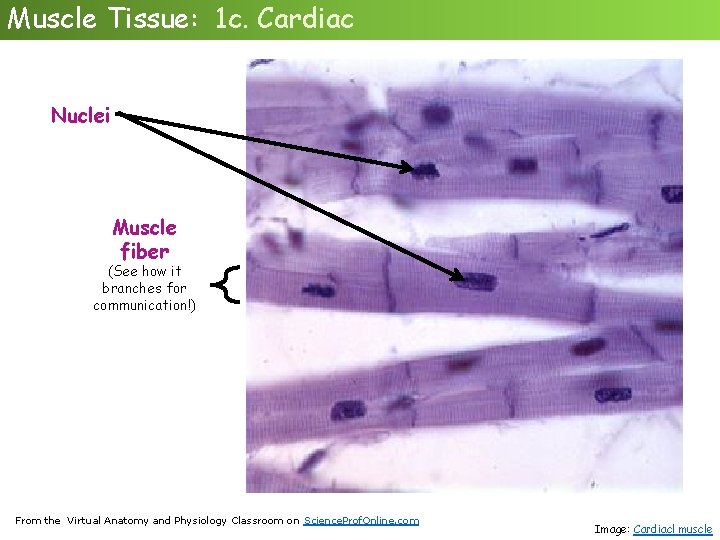
Muscle Tissue: 1 c. Cardiac Nuclei Muscle fiber (See how it branches for communication!) From the Virtual Anatomy and Physiology Classroom on Science. Prof. Online. com Image: Cardiacl muscle
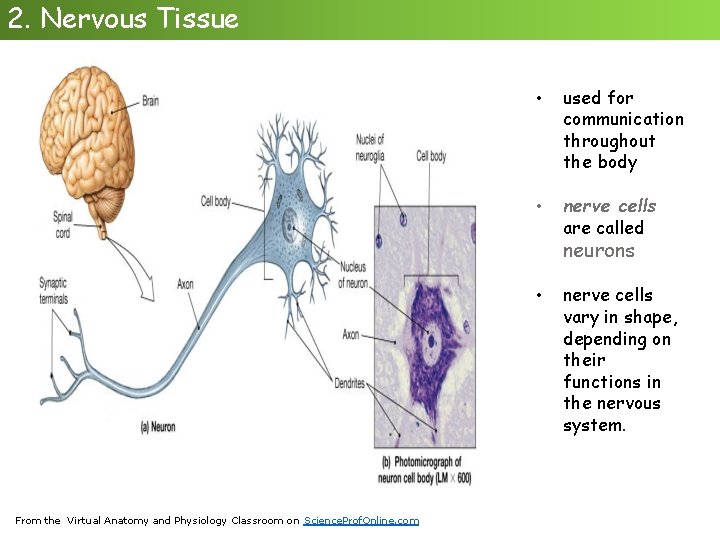
2. Nervous Tissue • used for communication throughout the body • nerve cells are called neurons • From the Virtual Anatomy and Physiology Classroom on Science. Prof. Online. com nerve cells vary in shape, depending on their functions in the nervous system.
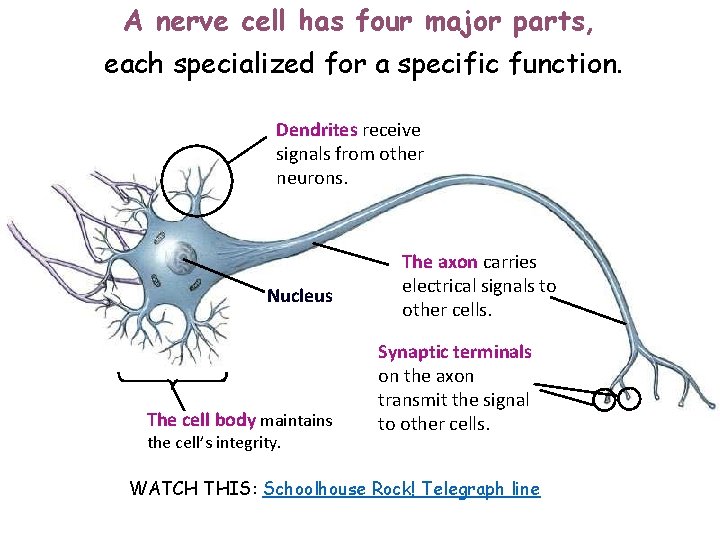
A nerve cell has four major parts, each specialized for a specific function. Dendrites receive signals from other neurons. Nucleus The cell body maintains the cell’s integrity. The axon carries electrical signals to other cells. Synaptic terminals on the axon transmit the signal to other cells. WATCH THIS: Schoolhouse Rock! Telegraph line
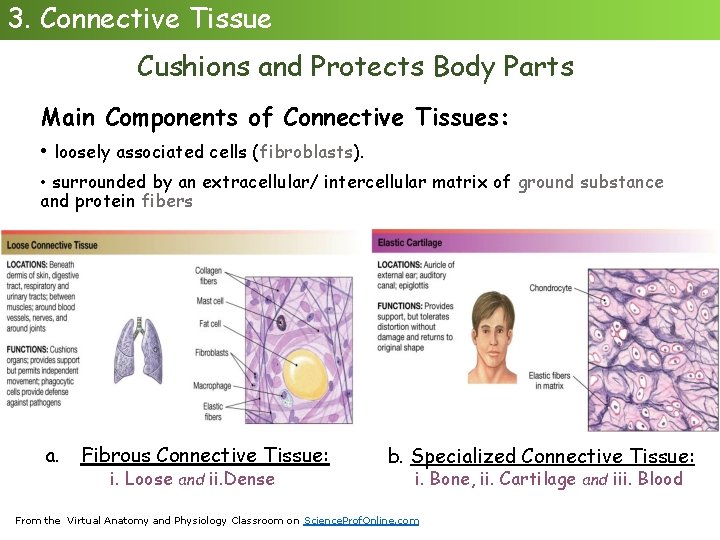
3. Connective Tissue Cushions and Protects Body Parts Main Components of Connective Tissues: • loosely associated cells (fibroblasts). • surrounded by an extracellular/ intercellular matrix of ground substance and protein fibers a. Fibrous Connective Tissue: i. Loose and ii. Dense b. Specialized Connective Tissue: i. Bone, ii. Cartilage and iii. Blood From the Virtual Anatomy and Physiology Classroom on Science. Prof. Online. com
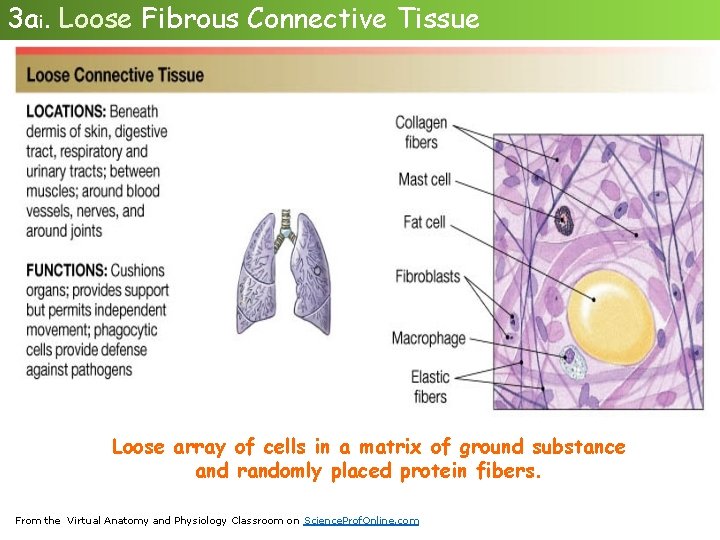
3 ai. Loose Fibrous Connective Tissue Loose array of cells in a matrix of ground substance and randomly placed protein fibers. From the Virtual Anatomy and Physiology Classroom on Science. Prof. Online. com
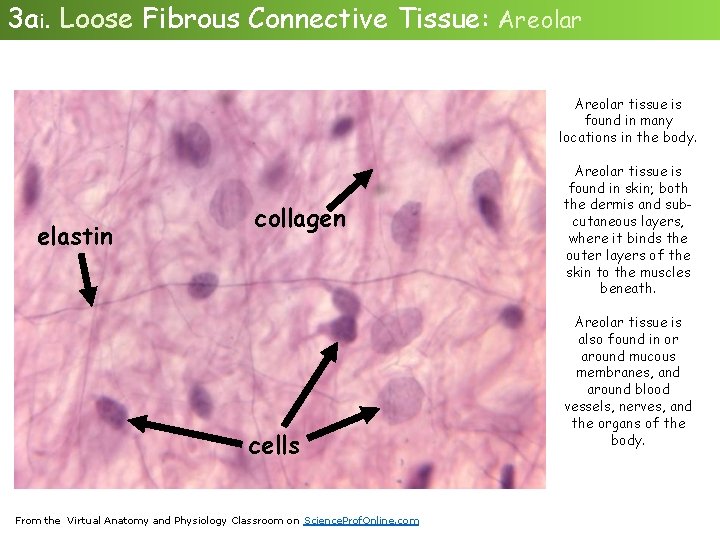
3 ai. Loose Fibrous Connective Tissue: Areolar tissue is found in many locations in the body. elastin collagen cells From the Virtual Anatomy and Physiology Classroom on Science. Prof. Online. com Areolar tissue is found in skin; both the dermis and subcutaneous layers, where it binds the outer layers of the skin to the muscles beneath. Areolar tissue is also found in or around mucous membranes, and around blood vessels, nerves, and the organs of the body.
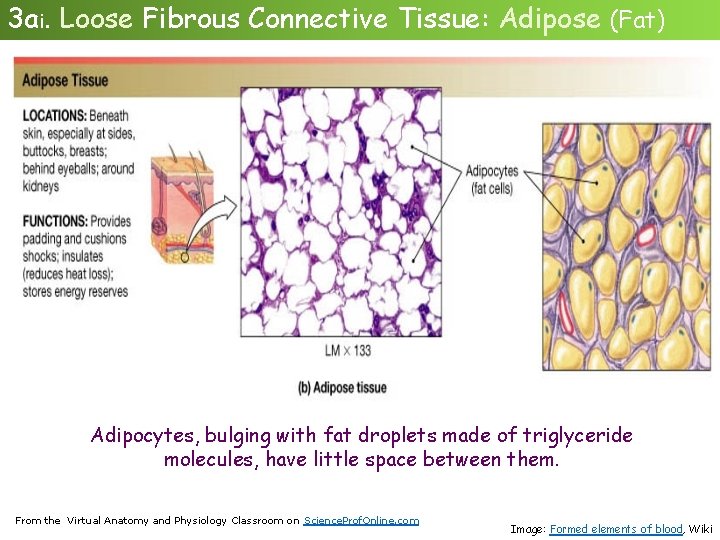
3 ai. Loose Fibrous Connective Tissue: Adipose (Fat) Adipocytes, bulging with fat droplets made of triglyceride molecules, have little space between them. From the Virtual Anatomy and Physiology Classroom on Science. Prof. Online. com Image: Formed elements of blood, Wiki
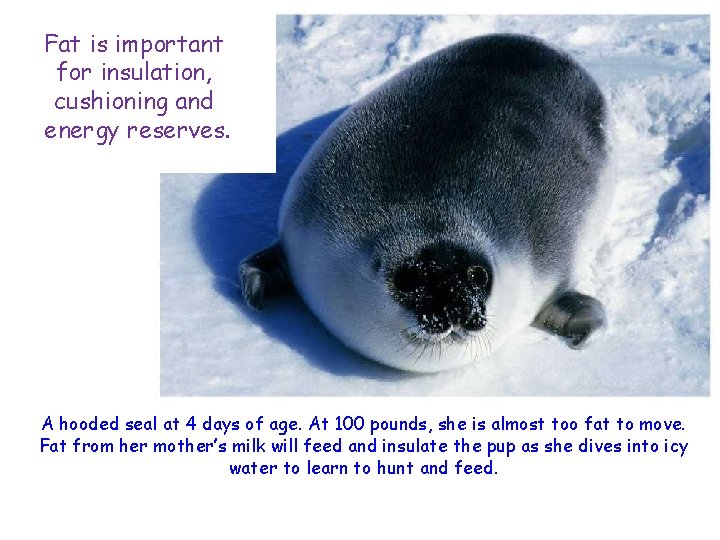
Fat is important for insulation, cushioning and energy reserves. A hooded seal at 4 days of age. At 100 pounds, she is almost too fat to move. Fat from her mother’s milk will feed and insulate the pup as she dives into icy water to learn to hunt and feed.
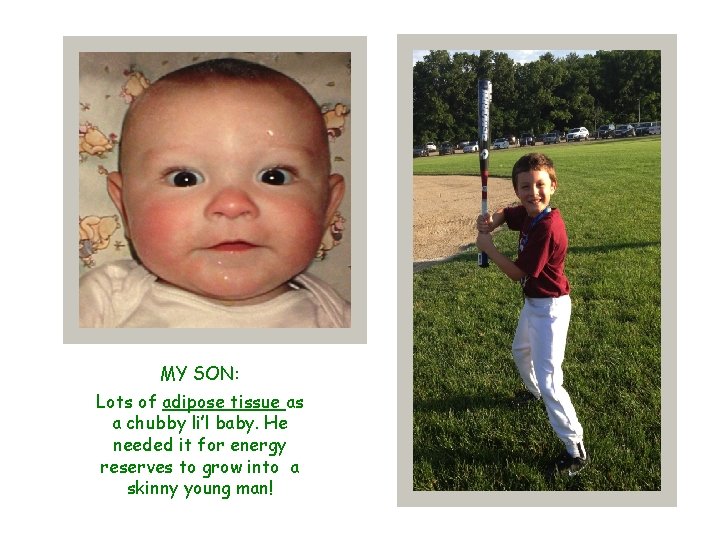
MY SON: Lots of adipose tissue as a chubby li’l baby. He needed it for energy reserves to grow into a skinny young man!
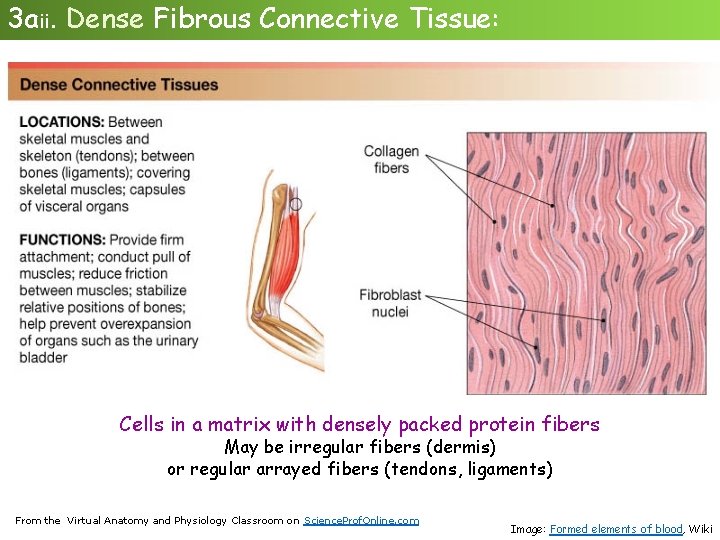
3 aii. Dense Fibrous Connective Tissue: Cells in a matrix with densely packed protein fibers May be irregular fibers (dermis) or regular arrayed fibers (tendons, ligaments) From the Virtual Anatomy and Physiology Classroom on Science. Prof. Online. com Image: Formed elements of blood, Wiki
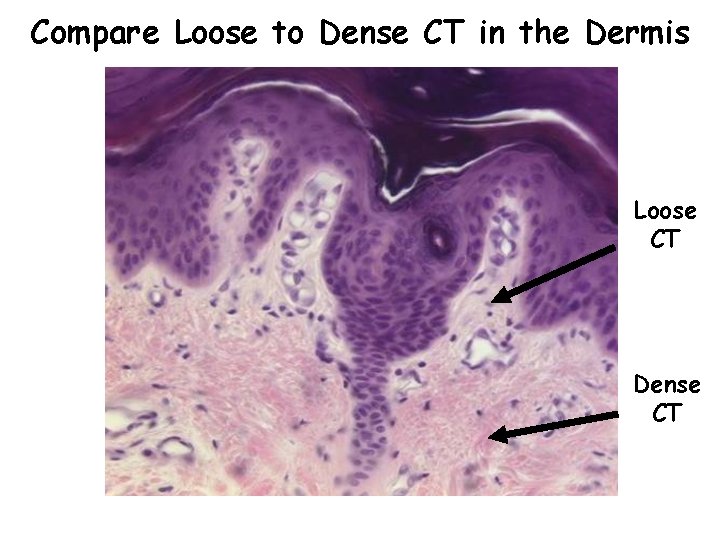
Compare Loose to Dense CT in the Dermis Loose CT Dense CT
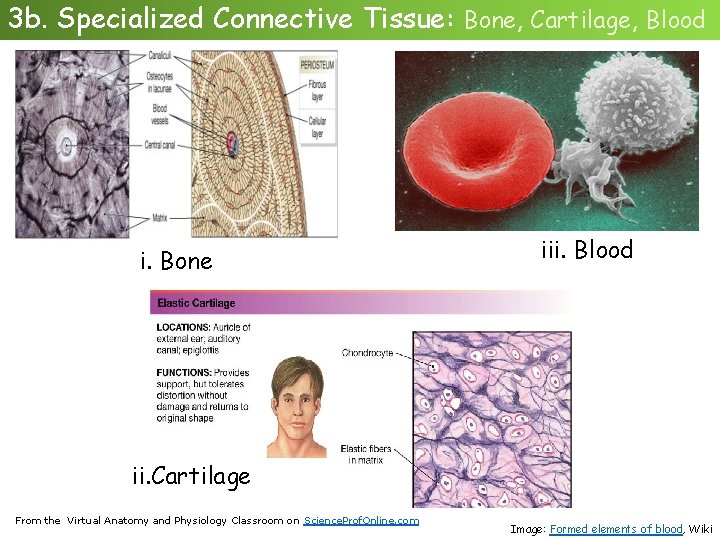
3 b. Specialized Connective Tissue: Bone, Cartilage, Blood i. Bone iii. Blood ii. Cartilage From the Virtual Anatomy and Physiology Classroom on Science. Prof. Online. com Image: Formed elements of blood, Wiki
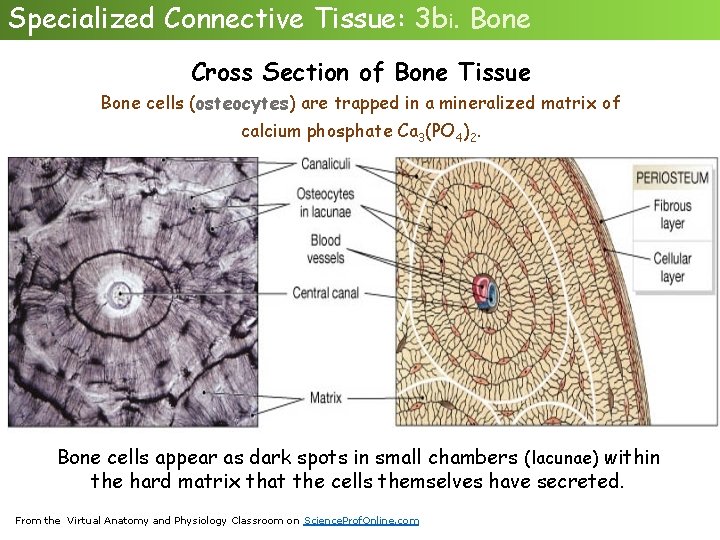
Specialized Connective Tissue: 3 bi. Bone Cross Section of Bone Tissue Bone cells (osteocytes) are trapped in a mineralized matrix of calcium phosphate Ca 3(PO 4)2. Bone cells appear as dark spots in small chambers (lacunae) within the hard matrix that the cells themselves have secreted. From the Virtual Anatomy and Physiology Classroom on Science. Prof. Online. com
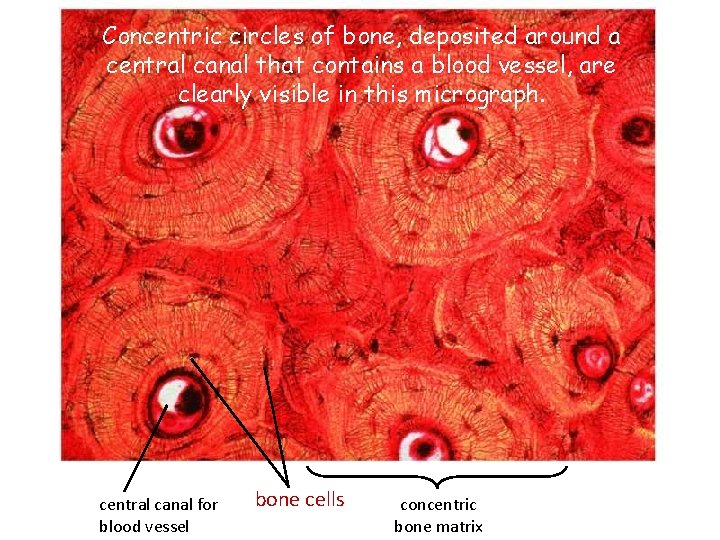
Concentric circles of bone, deposited around a central canal that contains a blood vessel, are clearly visible in this micrograph. central canal for blood vessel bone cells concentric bone matrix
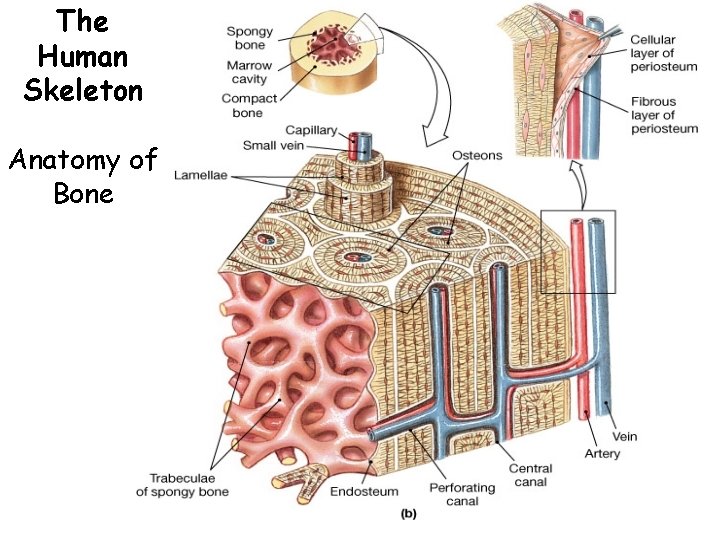
The Human Skeleton Anatomy of Bone
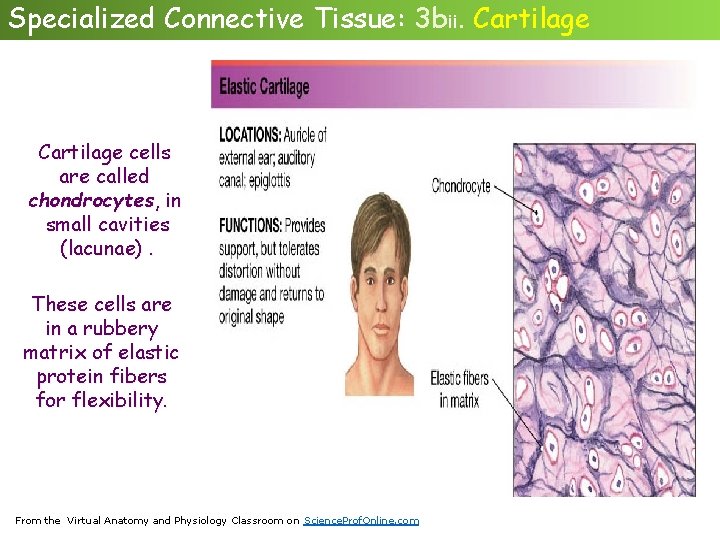
Specialized Connective Tissue: 3 bii. Cartilage cells are called chondrocytes, in small cavities (lacunae). These cells are in a rubbery matrix of elastic protein fibers for flexibility. From the Virtual Anatomy and Physiology Classroom on Science. Prof. Online. com
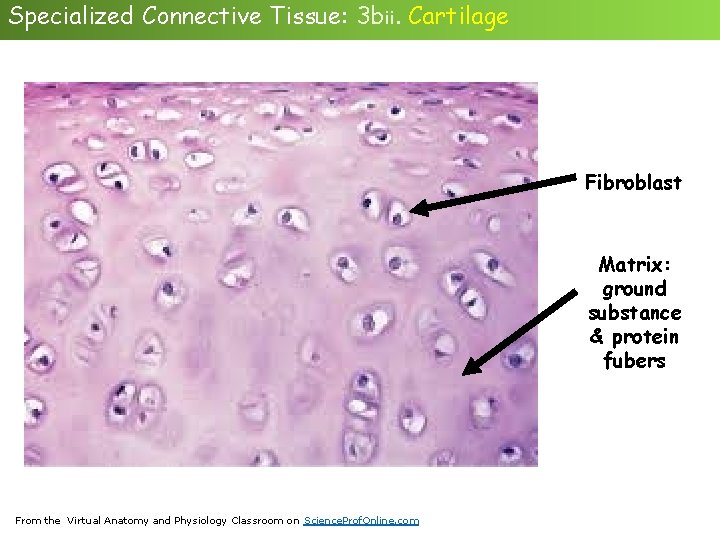
Specialized Connective Tissue: 3 bii. Cartilage * Lab Fibroblast Matrix: ground substance & protein fubers From the Virtual Anatomy and Physiology Classroom on Science. Prof. Online. com
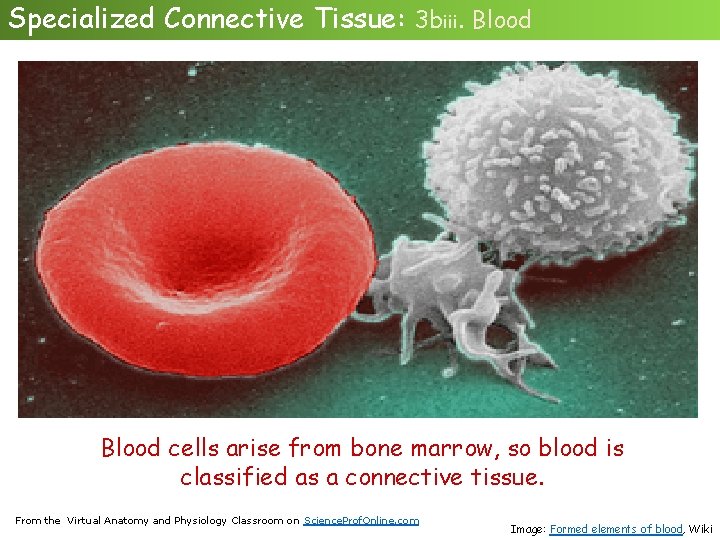
Specialized Connective Tissue: 3 biii. Blood cells arise from bone marrow, so blood is classified as a connective tissue. From the Virtual Anatomy and Physiology Classroom on Science. Prof. Online. com Image: Formed elements of blood, Wiki
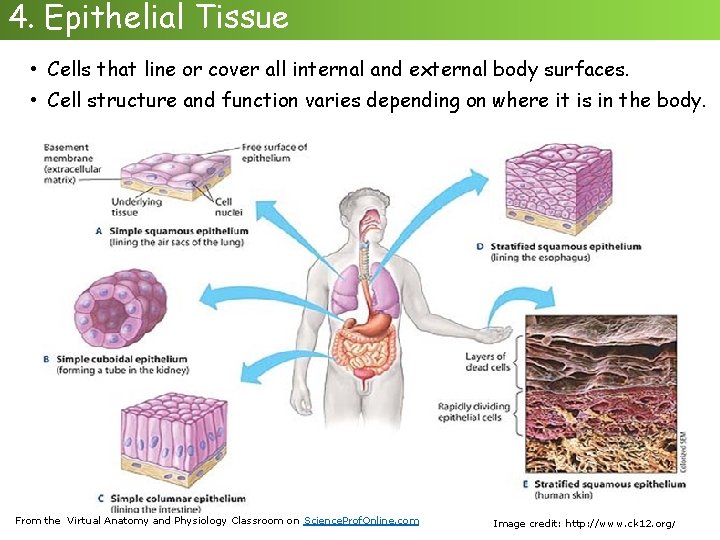
4. Epithelial Tissue • Cells that line or cover all internal and external body surfaces. • Cell structure and function varies depending on where it is in the body. From the Virtual Anatomy and Physiology Classroom on Science. Prof. Online. com Image credit: http: //www. ck 12. org /
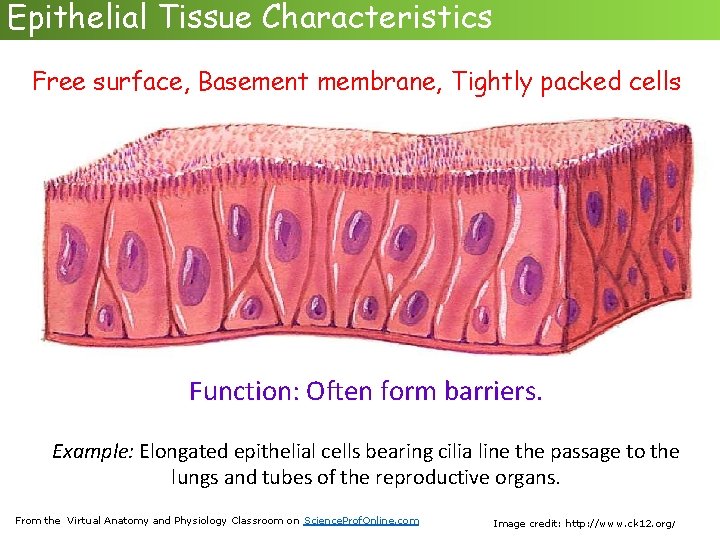
Epithelial Tissue Characteristics Free surface, Basement membrane, Tightly packed cells Function: Often form barriers. Example: Elongated epithelial cells bearing cilia line the passage to the lungs and tubes of the reproductive organs. From the Virtual Anatomy and Physiology Classroom on Science. Prof. Online. com Image credit: http: //www. ck 12. org /
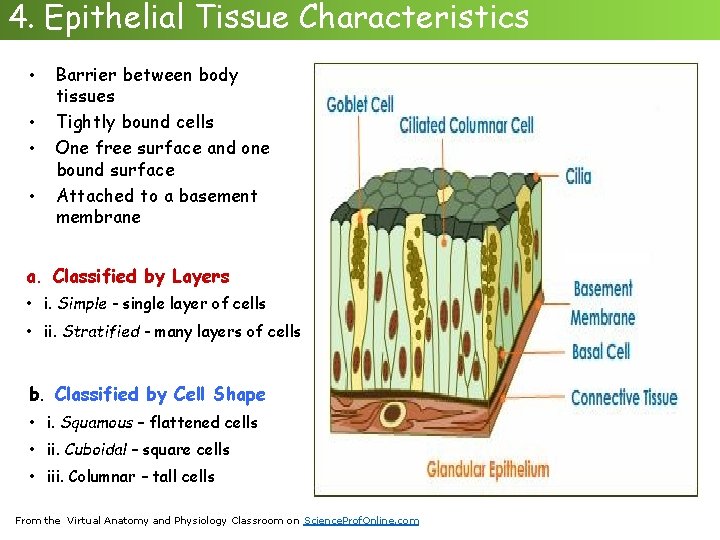
4. Epithelial Tissue Characteristics • • Barrier between body tissues Tightly bound cells One free surface and one bound surface Attached to a basement membrane a. Classified by Layers • i. Simple - single layer of cells • ii. Stratified - many layers of cells b. Classified by Cell Shape • i. Squamous – flattened cells • ii. Cuboidal – square cells • iii. Columnar – tall cells From the Virtual Anatomy and Physiology Classroom on Science. Prof. Online. com
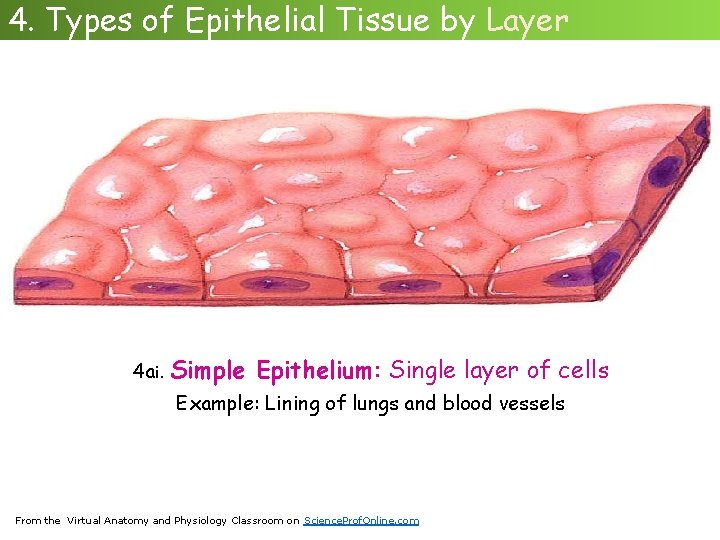
4. Types of Epithelial Tissue by Layer 4 ai. Simple Epithelium: Single layer of cells Example: Lining of lungs and blood vessels From the Virtual Anatomy and Physiology Classroom on Science. Prof. Online. com
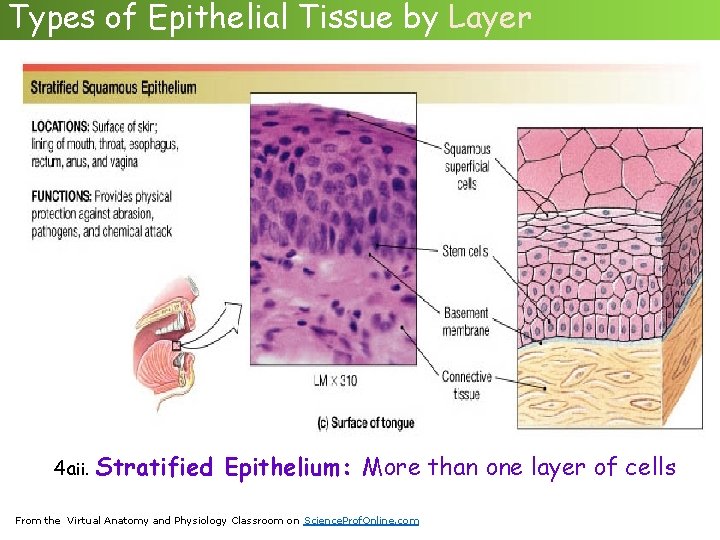
Types of Epithelial Tissue by Layer 4 aii. Stratified Epithelium: More than one layer of cells From the Virtual Anatomy and Physiology Classroom on Science. Prof. Online. com
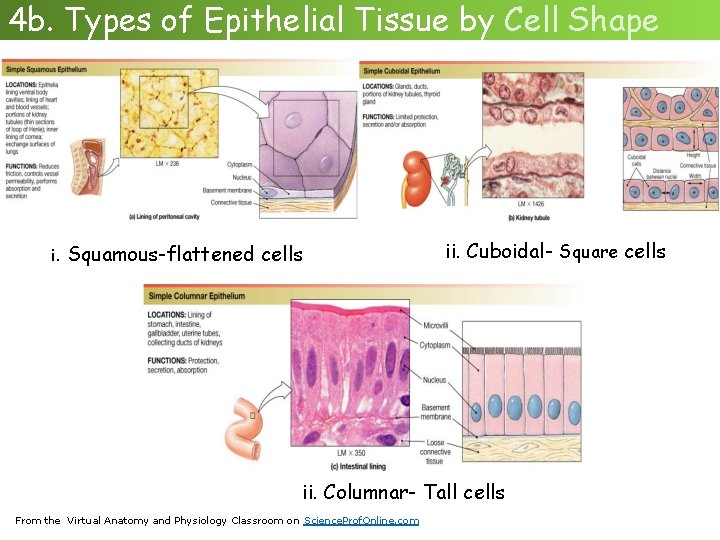
4 b. Types of Epithelial Tissue by Cell Shape i. Squamous-flattened cells ii. Cuboidal- Square cells ii. Columnar- Tall cells From the Virtual Anatomy and Physiology Classroom on Science. Prof. Online. com
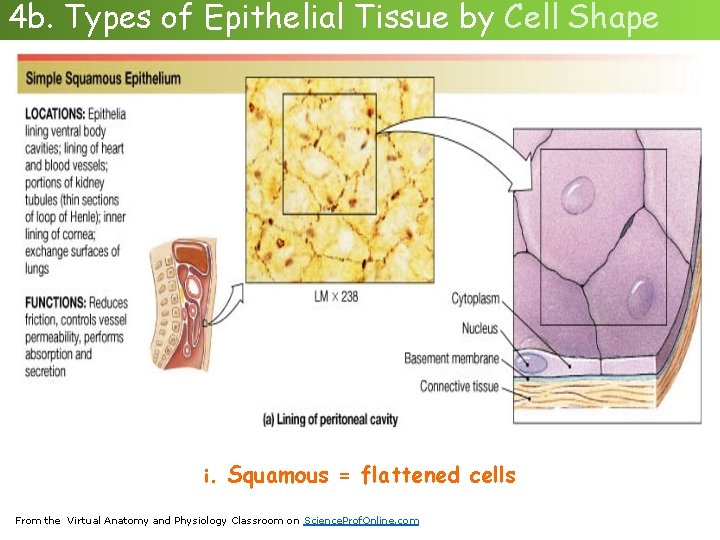
4 b. Types of Epithelial Tissue by Cell Shape i. Squamous = flattened cells From the Virtual Anatomy and Physiology Classroom on Science. Prof. Online. com
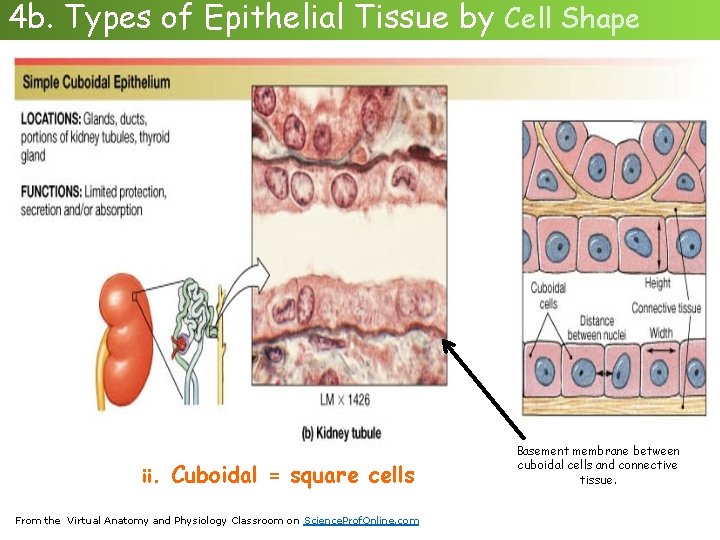
4 b. Types of Epithelial Tissue by Cell Shape ii. Cuboidal = square cells From the Virtual Anatomy and Physiology Classroom on Science. Prof. Online. com Basement membrane between cuboidal cells and connective tissue.
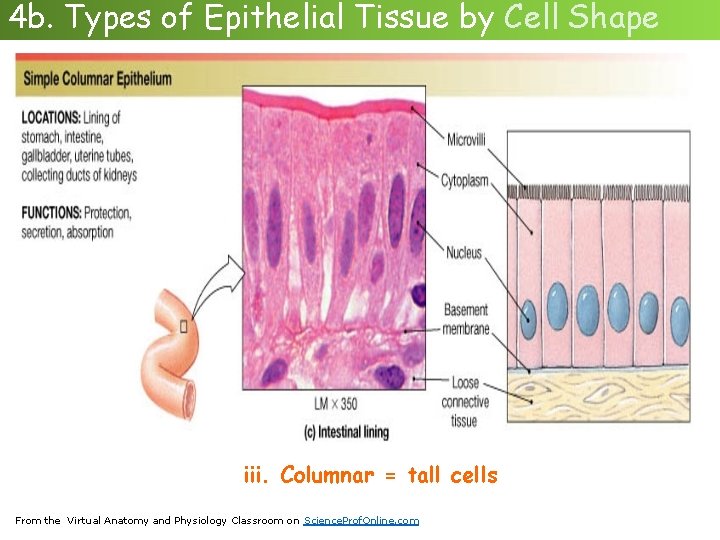
4 b. Types of Epithelial Tissue by Cell Shape iii. Columnar = tall cells From the Virtual Anatomy and Physiology Classroom on Science. Prof. Online. com
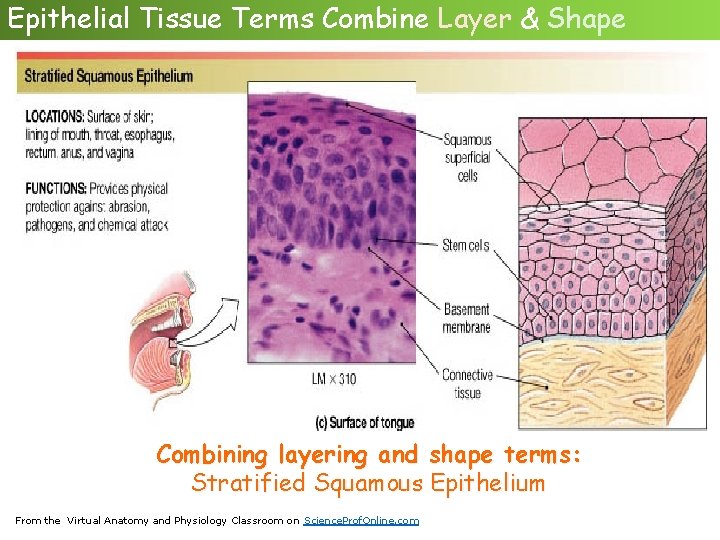
Epithelial Tissue Terms Combine Layer & Shape Combining layering and shape terms: Stratified Squamous Epithelium From the Virtual Anatomy and Physiology Classroom on Science. Prof. Online. com
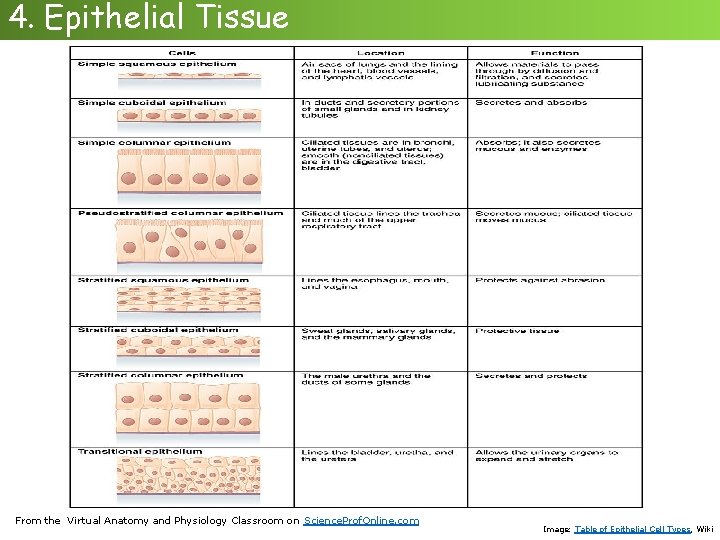
4. Epithelial Tissue From the Virtual Anatomy and Physiology Classroom on Science. Prof. Online. com Image: Table of Epithelial Cell Types, Wiki
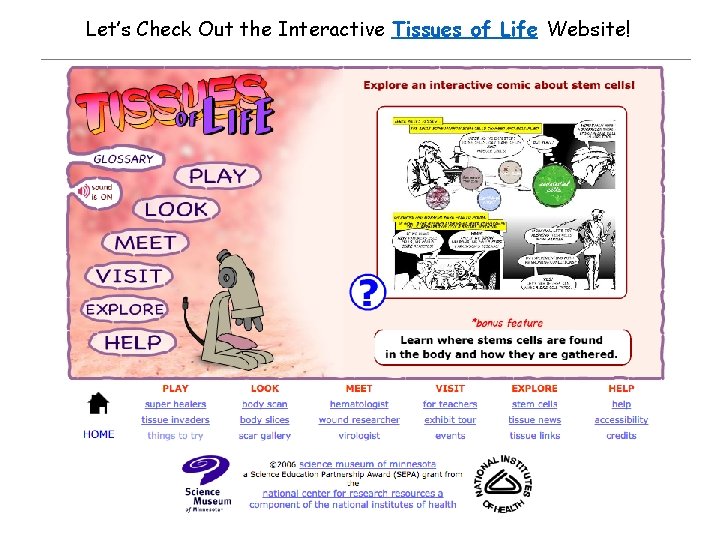
Let’s Check Out the Interactive Tissues of Life Website!
Confused? Here are some links to fun resources that further explain Human Tissues: • Animation of Different Cell & Tissue Types from Paradise Valley Bio 156. • Tissues (biology) from Wikipedia. • Tissues of Life Animated Tutorial from the Science Museum of Minnesota, with tissues of the body. Includes games (“super healers” and “tissue invaders”), interviews with scientists who work with tissues, read the “Stem Cell Comic” and explore various tissue types. • Al’s Interactive Tutorial for Histology from the University of British Colombia has a written tutorial with links to visuals on the right half of screen. It provides good diagrams of different types of tissues, should you wish to elaborate on that topic. • Human Body 101 video from National Geographic. (You must be in PPT slideshow view to click on links. ) From the Virtual Cell Biology Classroom on Science. Prof. Online. com
- Slides: 41