
About Pinewood Pinewood Centre in collaboration with our


About Pinewood § Pinewood Centre, in collaboration with our community partners, provides a continuum of services to people experiencing alcohol, drug and problem gambling related concern’s. We are committed to assisting clients through the process of change. We view the treatment process as collaborative, meaning that we work in partnership with each person's strengths and personal goals. This process includes establishing both short term and long term goals that are realistic and obtainable. § Pinewood is committed to assisting clients through the process of change and believe that each person has a right to make choices regarding his/her treatment plan.
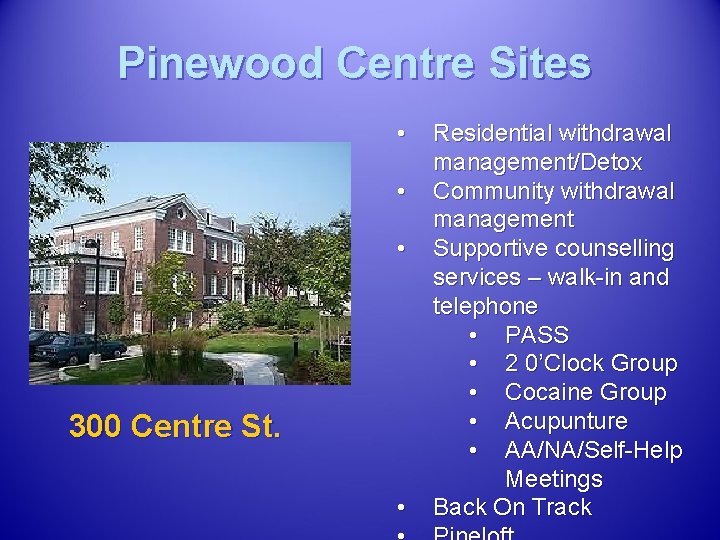
Pinewood Centre Sites • • • 300 Centre St. • Residential withdrawal management/Detox Community withdrawal management Supportive counselling services – walk-in and telephone • PASS • 2 0’Clock Group • Cocaine Group • Acupunture • AA/NA/Self-Help Meetings Back On Track
Women’s Residential • Services for women • 21 -Day residential treatment program • Day treatment option • Individual and group therapy • Umbrellas Program – Pregnant and newly parenting women • Fast-track into community treatment and residential programs
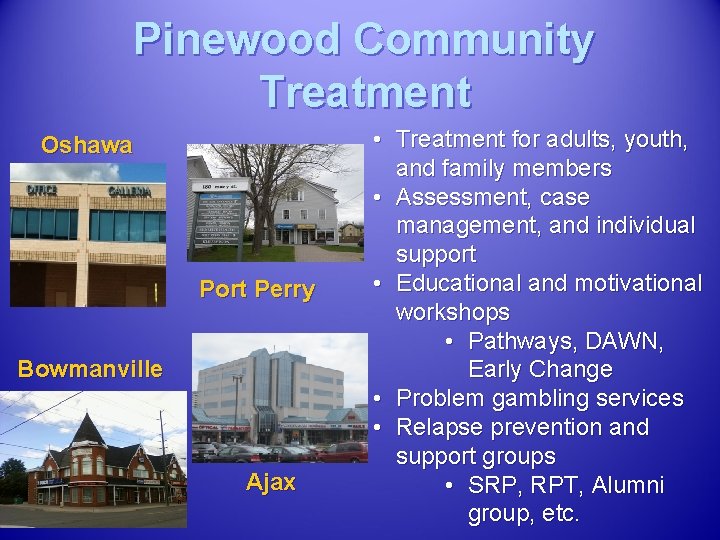
Pinewood Community Treatment Oshawa Port Perry Bowmanville Ajax • Treatment for adults, youth, and family members • Assessment, case management, and individual support • Educational and motivational workshops • Pathways, DAWN, Early Change • Problem gambling services • Relapse prevention and support groups • SRP, RPT, Alumni group, etc.
What is a Substance Use Problem? § A Substance use problem exists when continued use of a mood altering substance (e. g. alcohol, cannabis, crack, heroin, etc. ) means more to the person using it than the problems resulting from the use. § Which means… People who continue to use/drink despite the fact that unfavourable consequences have occurred, are at risk of developing a substance use problem or maintaining a problem that already exists!
Factors that Influence Substance Use § Peer influence § Advertising/media § Previous experience with substances § Level of tolerance § How quickly you get the high § Availability/cost § Self medication for mental or physical health § Whether the substance is legal or not § The type of high-desired feeling § Being under the influence of another substance § Personality and life experiences § Sensitivity to the substance § Degree of social approval/disapproval § Lifestyle § Degree of control over the effects § Risks associated with substance § Family history/culture § Curiosity § Value and belief system § Role models § Stage in life-Adolescent development
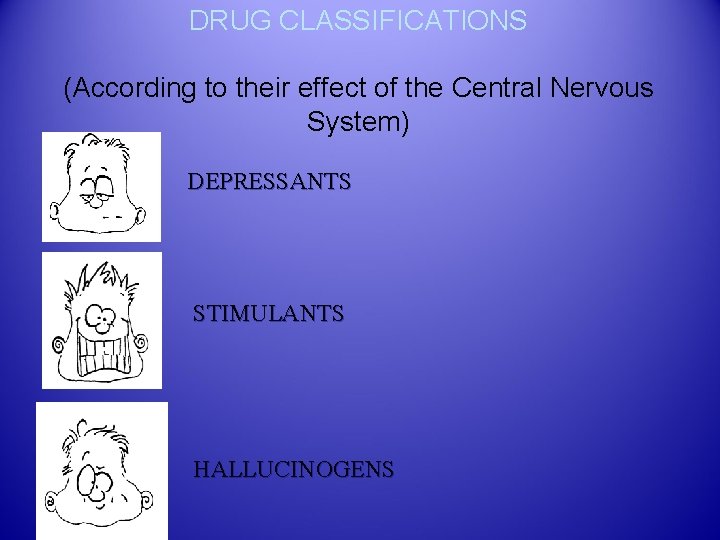
DRUG CLASSIFICATIONS (According to their effect of the Central Nervous System) DEPRESSANTS STIMULANTS HALLUCINOGENS
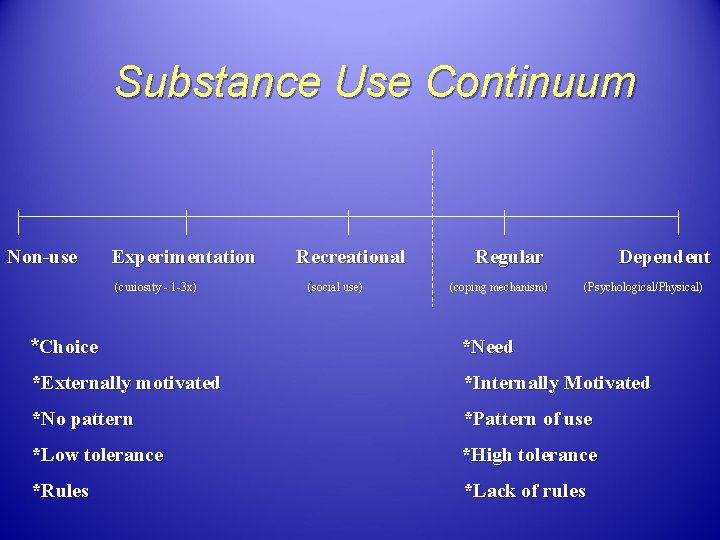
Substance Use Continuum Non-use Experimentation (curiosity - 1 -3 x) Recreational (social use) Regular (coping mechanism) Dependent (Psychological/Physical) *Choice *Need *Externally motivated *Internally Motivated *No pattern *Pattern of use *Low tolerance *High tolerance *Rules *Lack of rules
Moving Left To Right On The Substance Use Continuum § Frequency and quantity increase. § Thoughts and behaviours become more preoccupied with using (less control). § More life areas are likely to be affected. § More likely to use more than one substance. § Reasons and motivation to use change from curiosity, to social, to coping and then to need. § This process can also be applied to other behaviours (Ex: gambling, compulsive eating or dieting, internet use, sex …).
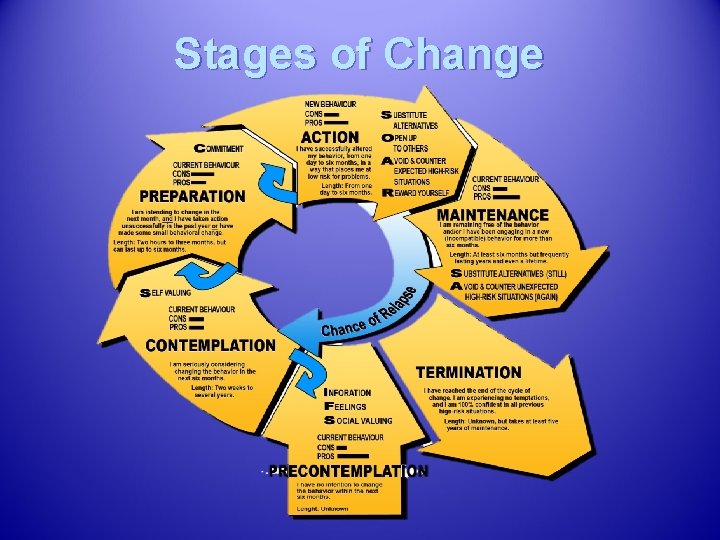
Stages of Change
Harm Reduction § Pinewood Centre promotes the philosophy of Harm Reduction. § Harm reduction aims to reduce the negative impact of substance use and/or gambling on individuals and on society as a whole. This philosophy can include safer use, reduction and/or abstinence. § Pinewood Centre now offers safer injection and inhalation kits that are available at all of our sites. Please ask if you would like more information about this.
Substance use and Dental Care § Alcohol – creates a more acidic environment in your mouth, which can soften enamel. – high sugar level in many types of alcohol – irritates all the soft tissue in the mouth and decreases the amount of natural saliva – the skin of the mouth is very delicate and the alcohol is corrosive to the gums, cheeks and skin § Cocaine – acids in cocaine have an eroding effect on your tooth enamel
– Yet another effect of cocaine is that it causes an extremely dry mouth. § Ecstasy – tooth grinding – jaw clenching – dry mouth which reduces saliva and its protective effect in the mouth § Amphetamines – methamphetamine or 'crystal meth' can cause significant tooth decay in a relatively brief period of time. – 'meth mouth' was coined. – Methamphetamine is very acidic and has a major effect on tooth enamel. On top of that, meth users suffer from jaw clenching, tooth grinding and dry mouth.
Barriers § § § § Difficulty with self-care Difficulty with follow through with appointments (transportation) Priorities (homelessness , food, child care etc) Social assistance coverage- will only cover certain procedures when on OW/ODSP Mental health symptoms (anxiety/depression) Fear (not knowing what to expect) Stigma (shame) Pain medication
Considerations § Addiction/mental health as the norm (not the exception) (mindful of topics that you are discussing etc) § Language/labels (alcoholic/addict) § Empathy § Gentle/understanding approach § Methadone: sometimes needs more pain medication § Give options for breaks (if feeling anxious etc) § Pre-meeting to see location § Talking about the process/procedure § Allow supports
- Slides: 17