
About Japan An island country in east Asia
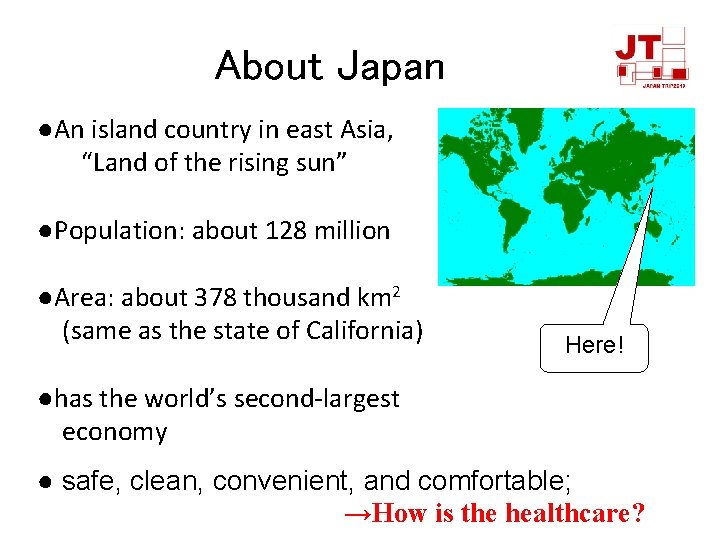
About Japan ●An island country in east Asia, “Land of the rising sun” ●Population: about 128 million ●Area: about 378 thousand km 2 (same as the state of California) Here! ●has the world’s second-largest economy ● safe, clean, convenient, and comfortable; →How is the healthcare?
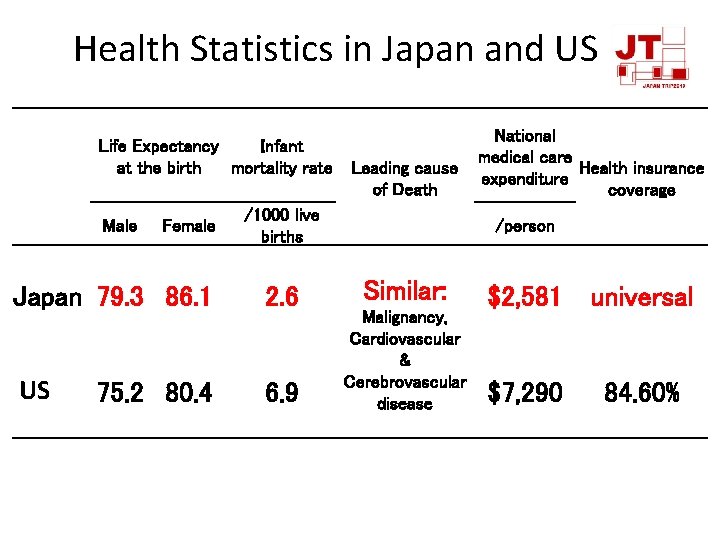
Health Statistics in Japan and US Life Expectancy Infant at the birth mortality rate Male Female /1000 live births Japan 79. 3 86. 1 2. 6 US 6. 9 75. 2 80. 4 Leading cause of Death National medical care Health insurance expenditure coverage /person Similar: Malignancy, Cardiovascular & Cerebrovascular disease $2, 581 universal $7, 290 84. 60%
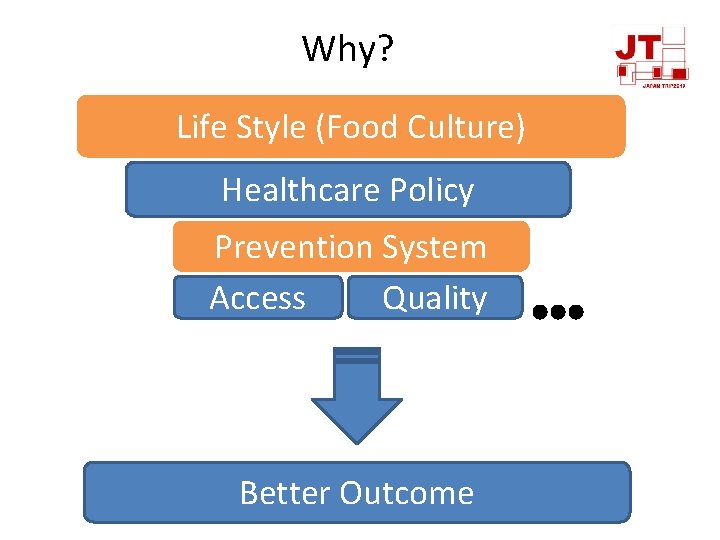
Why? Life Style (Food Culture) Healthcare Policy Prevention System Access Quality Better Outcome
JAPAN TRIP 2010 Purpose • Experience and try to know how the Japanese food culture & prevention system work on the outcome. • Introduce the US public health school to Japan.
JAPAN TRIP 2010 In this session 1. Places we will visit: i. Osaka&Kyoto or Nagasaki ii. Tokyo 2. Application, Cost, Logistics 3. Q & A
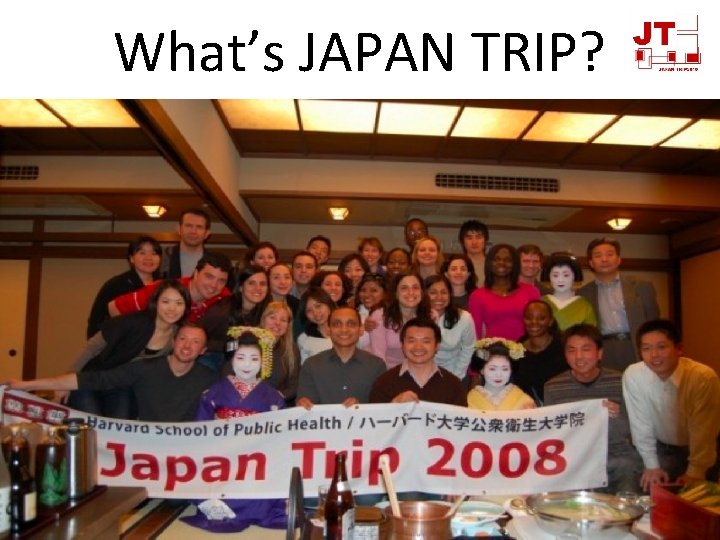
What’s JAPAN TRIP?
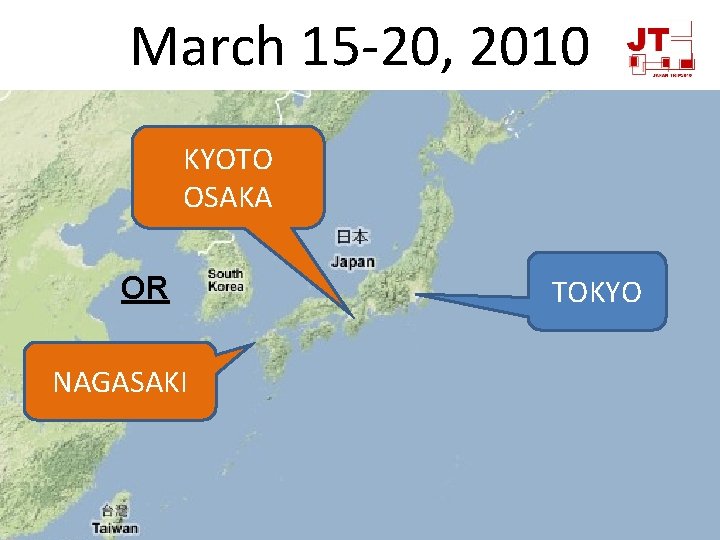
JAPAN TRIP ● Field trip to different areas in Japan Two options: 1. Osaka/Kyoto→Tokyo 2. Nagasaki→Tokyo ● Organized by HSPH student club of Japan ● Non-credit ● During spring break (March 14/15 -20, 2010) ● Trip Theme for 2010: “Japanese diet and disease prevention”
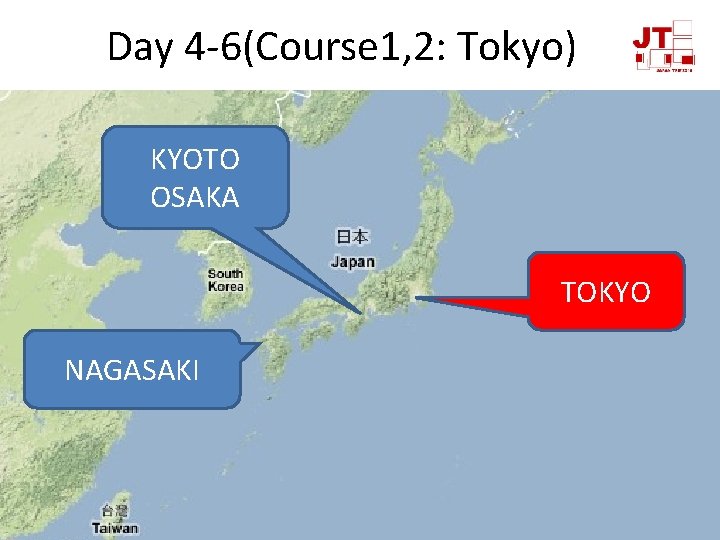
March 15 -20, 2010 KYOTO OSAKA OR NAGASAKI TOKYO
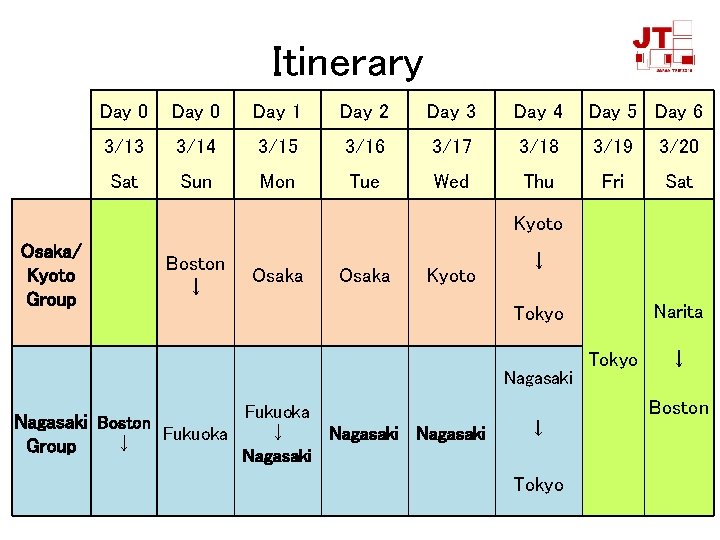
Itinerary Day 0 Day 1 Day 2 Day 3 Day 4 Day 5 Day 6 3/13 3/14 3/15 3/16 3/17 3/18 3/19 3/20 Sat Sun Mon Tue Wed Thu Fri Sat Kyoto Osaka/ Kyoto Group Boston ↓ Osaka Kyoto ↓ Narita Tokyo Nagasaki Fukuoka Nagasaki Boston ↓ Fukuoka Nagasaki ↓ Group Nagasaki Tokyo ↓ Boston ↓ Tokyo
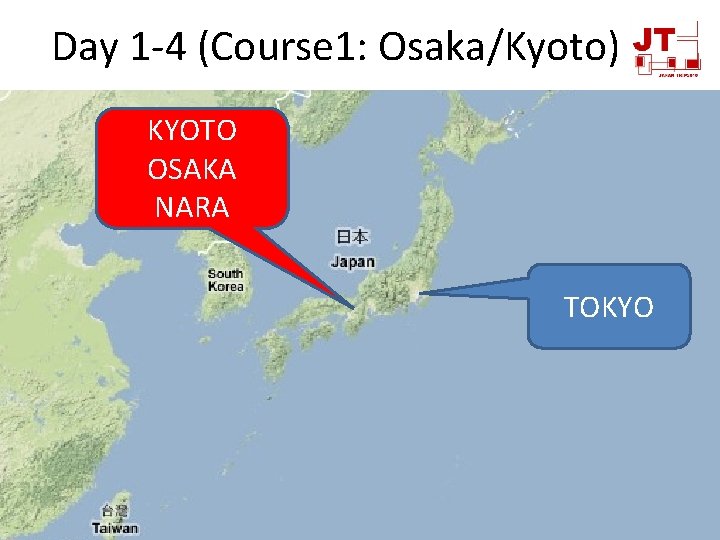
Day 1 -4 (Course 1: Osaka/Kyoto) KYOTO OSAKA NARA TOKYO
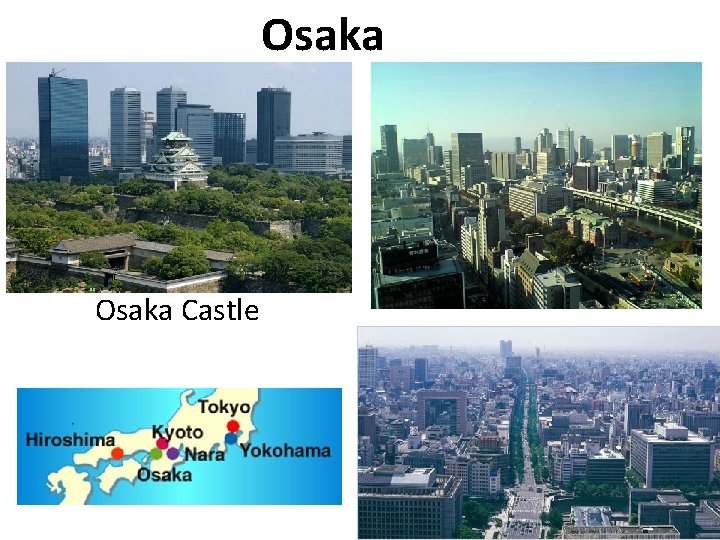
Osaka Castle
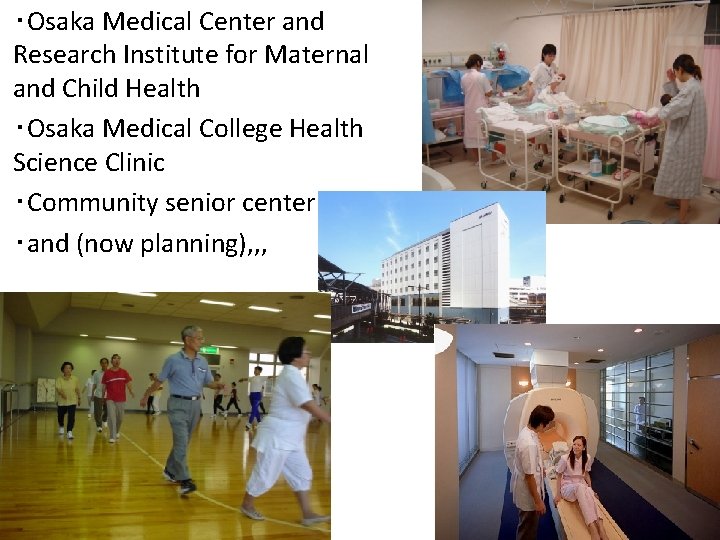
・Osaka Medical Center and Research Institute for Maternal and Child Health ・Osaka Medical College Health Science Clinic ・Community senior center ・and (now planning), , ,
Can we Intervene to Build Social Capital? Evidence from Japan • The Taketoyo Township Intervention Study. Ø Population strategy: Opening of community senior centers, called “salons”. Ø Managed by volunteers, not professionals. Ø Programs are supported by the municipality through providing public venues, financial assistance, and advertisement to citizens etc. Ø Not only physical exercise but also a variety of enjoyable social programs are provided. Slide from Lecture of Society and Health by Prof. Kawachi I.
医食同源 Ishoku-Dogen <Meaning> “Eat healthy, live healthy” “You are what you eat” Medicine and one's daily food are equally important in making a sick body well
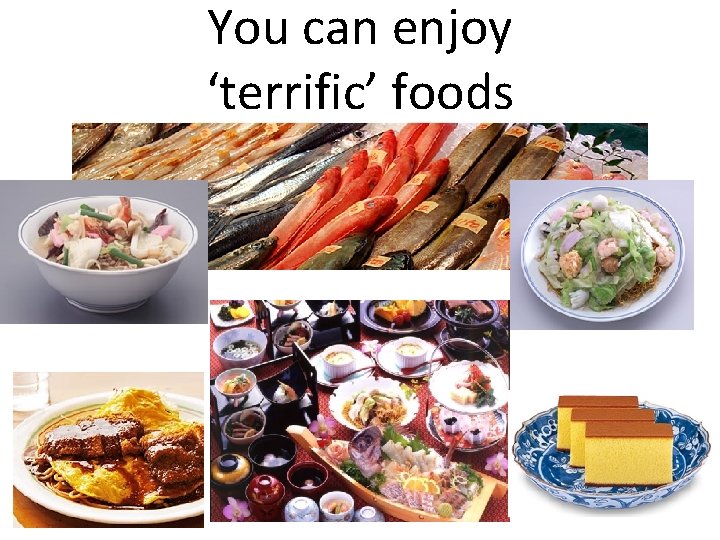
Gourmet ★Numbers of Michelin Stars★ Tokyo 227 Kyoto 106 Paris 96 Osaka 79 New York 56 London 52 San Francisco 32 Hong Kong 31
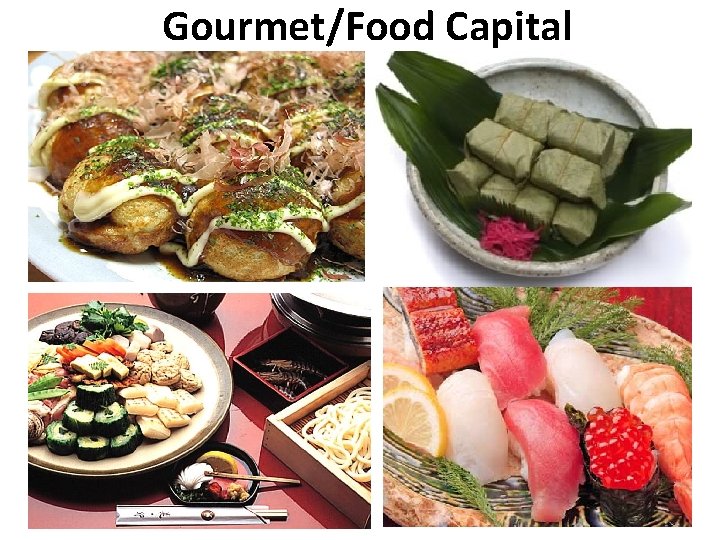
Gourmet/Food Capital
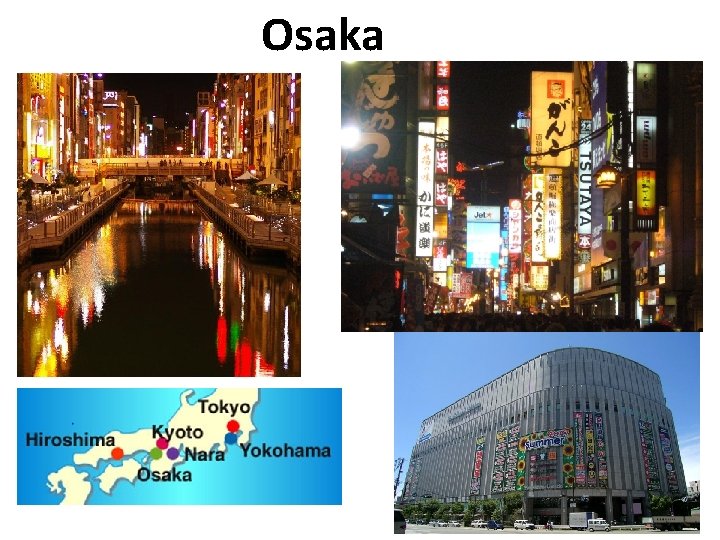
Osaka
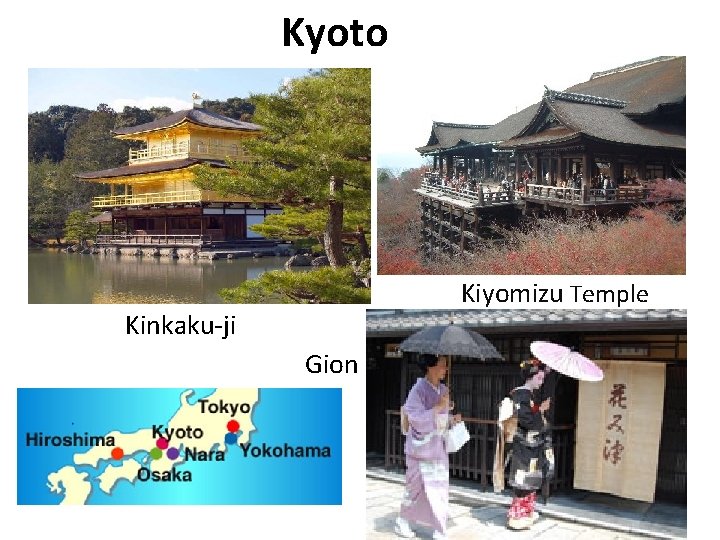
Kyoto Kiyomizu Temple Kinkaku-ji Gion
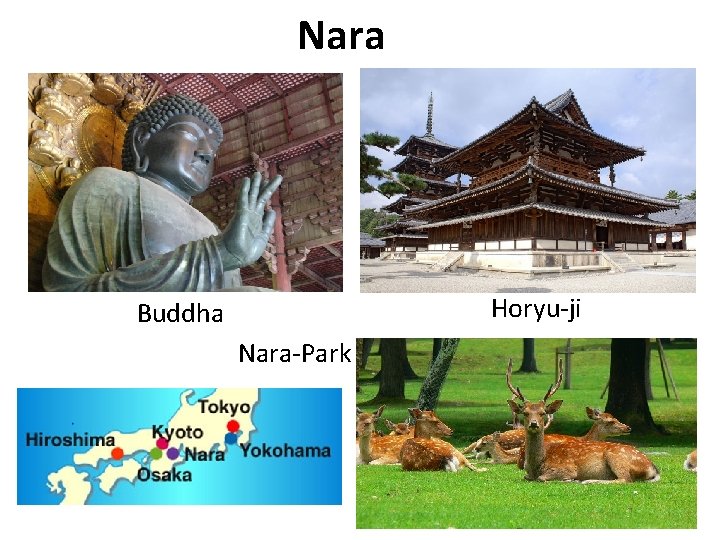
Nara Horyu-ji Buddha Nara-Park
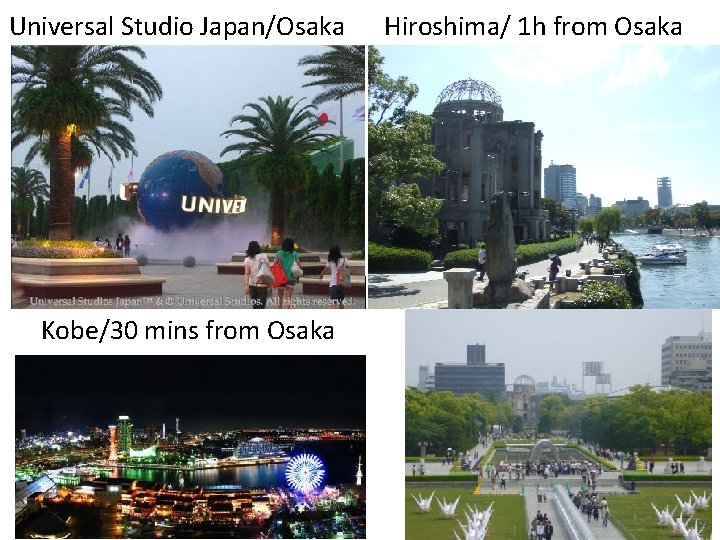
Universal Studio Japan/Osaka Kobe/30 mins from Osaka Hiroshima/ 1 h from Osaka
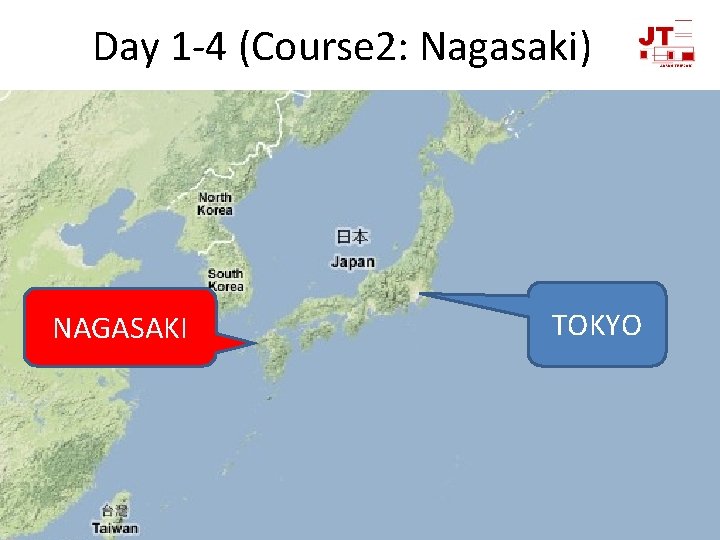
Day 1 -4 (Course 2: Nagasaki) NAGASAKI TOKYO
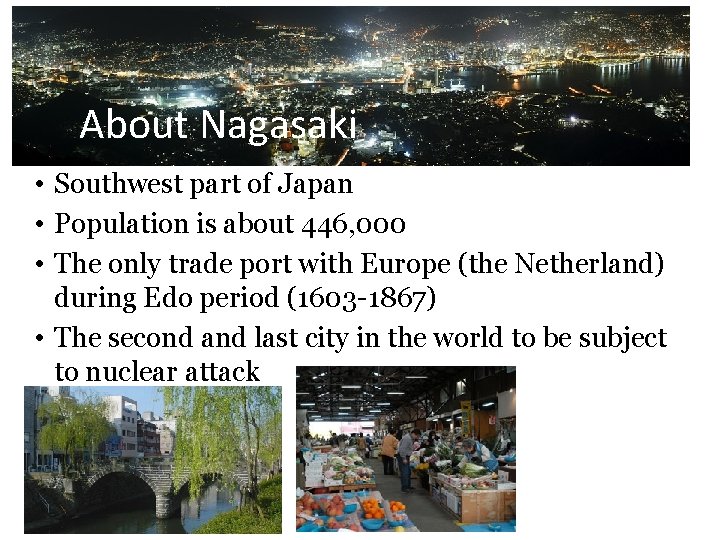
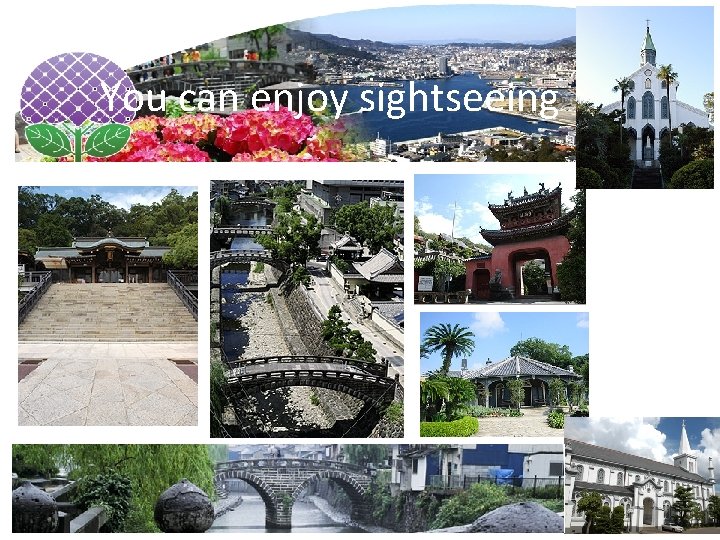
About Nagasaki • Southwest part of Japan • Population is about 446, 000 • The only trade port with Europe (the Netherland) during Edo period (1603 -1867) • The second and last city in the world to be subject to nuclear attack
Aims • Learn about ‘Island medicine’ (disease prevention in remote/rural area) • Learn about Hibakusha care and epidemiology • Learn about Japanese Global health cooperation • ( Learn about rehabilitation through agriculture for developmental disorder people. )
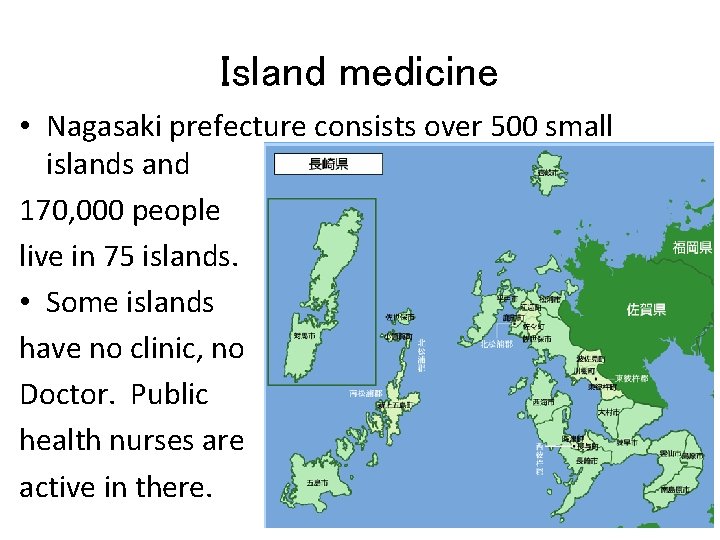
Island medicine • Nagasaki prefecture consists over 500 small islands and 170, 000 people live in 75 islands. • Some islands have no clinic, no Doctor. Public health nurses are active in there.
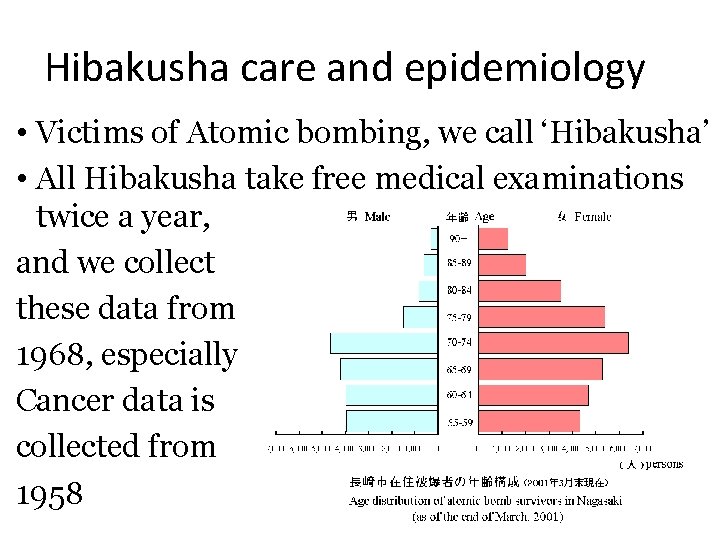
Hibakusha care and epidemiology • Victims of Atomic bombing, we call ‘Hibakusha’ • All Hibakusha take free medical examinations twice a year, and we collect these data from 1968, especially Cancer data is collected from 1958
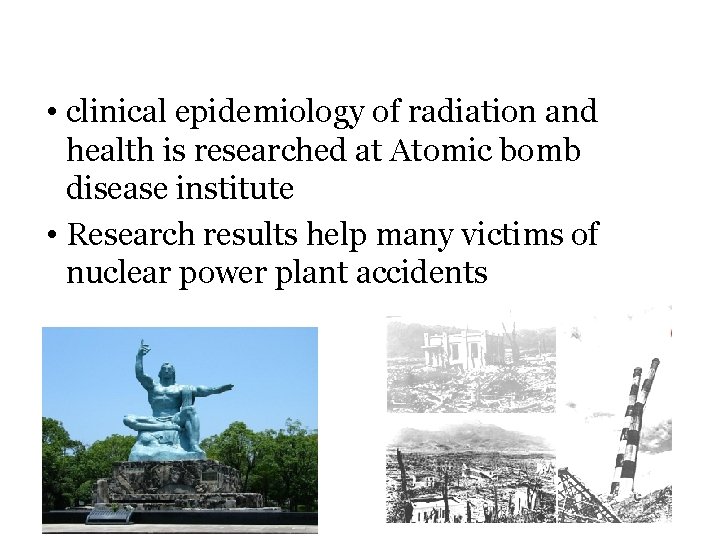
• clinical epidemiology of radiation and health is researched at Atomic bomb disease institute • Research results help many victims of nuclear power plant accidents
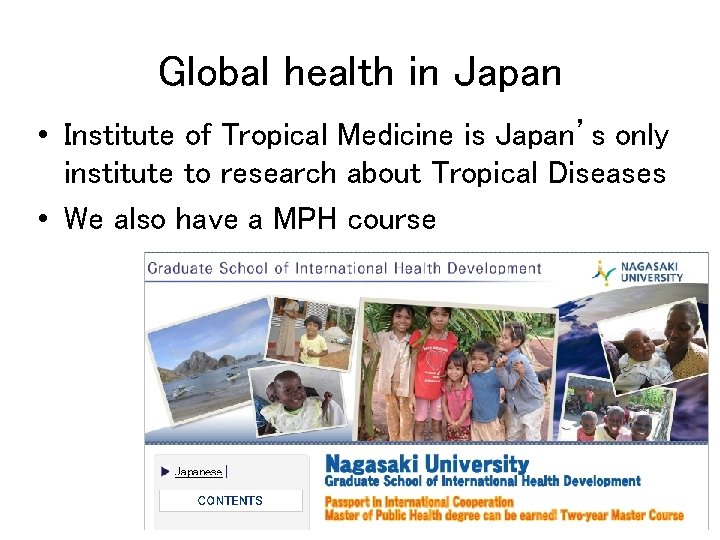
Global health in Japan • Institute of Tropical Medicine is Japan’s only institute to research about Tropical Diseases • We also have a MPH course
You can enjoy ‘terrific’ foods
You can enjoy sightseeing
Day 4 -6(Course 1, 2: Tokyo) KYOTO OSAKA TOKYO NAGASAKI
TOKYO 東京 Course objectives: • At the completion of the course, you will be able to: 1) Review the healthcare, including prevention, system in Japan 2) Identify the key foods for Japanese life 3) Make Japanese home-style dishes 4) Recognize the connection between food culture and healthcare 5) Show off your experiences to your friends
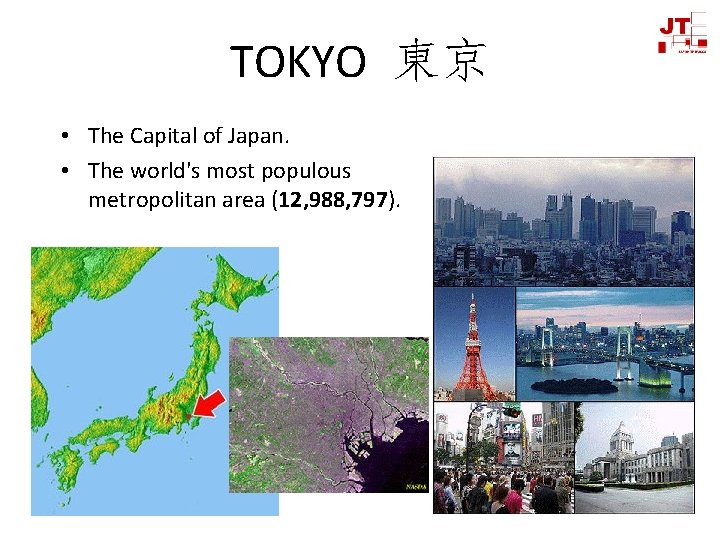
TOKYO 東京 • The Capital of Japan. • The world's most populous metropolitan area (12, 988, 797).
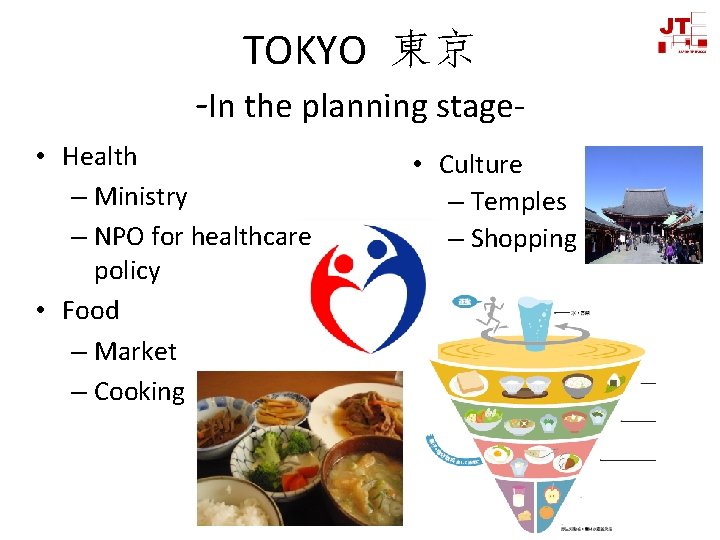
TOKYO 東京 -In the planning stage • Health – Ministry – NPO for healthcare policy • Food – Market – Cooking • Culture – Temples – Shopping
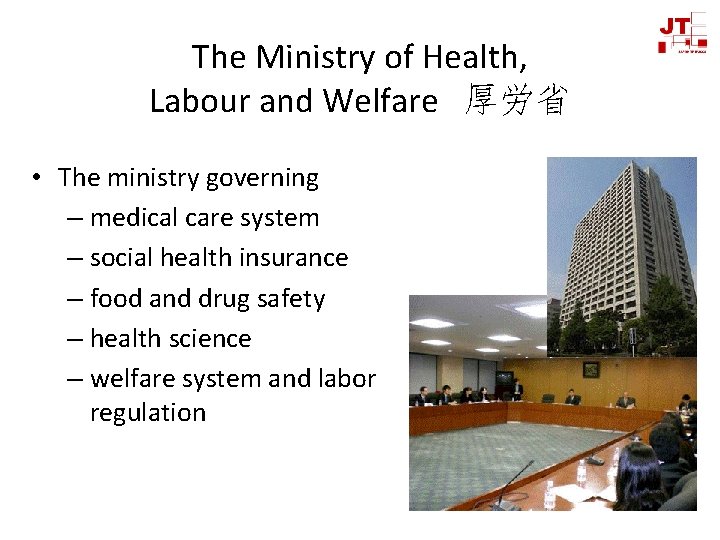
The Ministry of Health, Labour and Welfare 厚労省 • The ministry governing – medical care system – social health insurance – food and drug safety – health science – welfare system and labor regulation
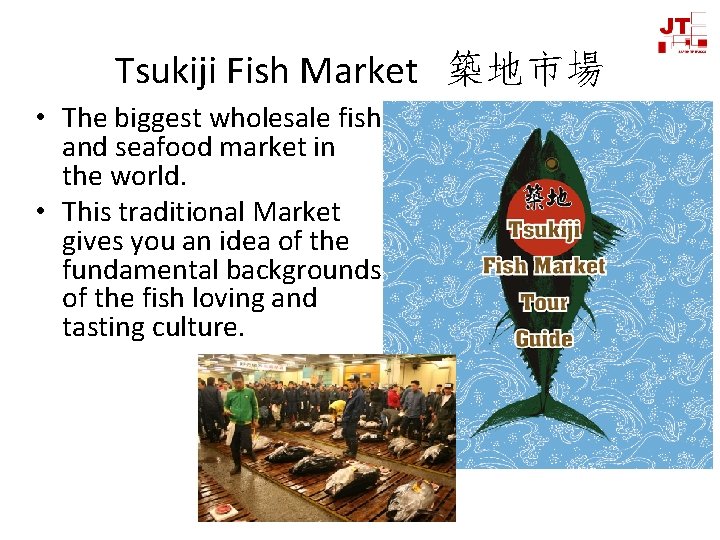
Tsukiji Fish Market 築地市場 • The biggest wholesale fish and seafood market in the world. • This traditional Market gives you an idea of the fundamental backgrounds of the fish loving and tasting culture.
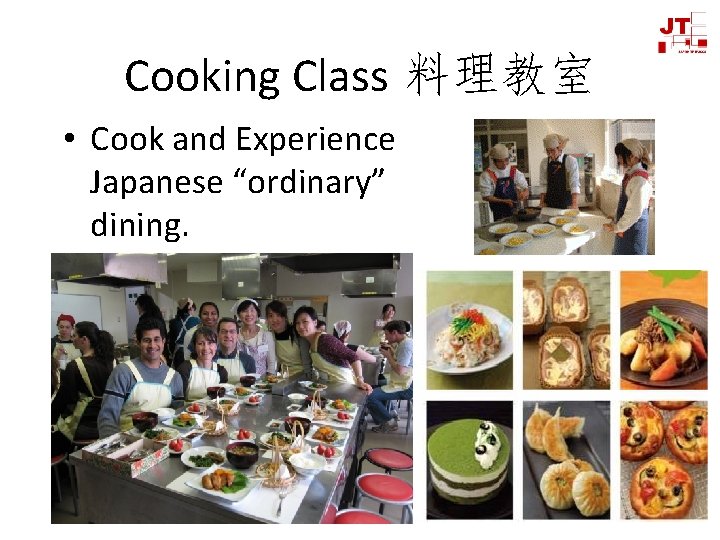
Cooking Class 料理教室 • Cook and Experience Japanese “ordinary” dining.
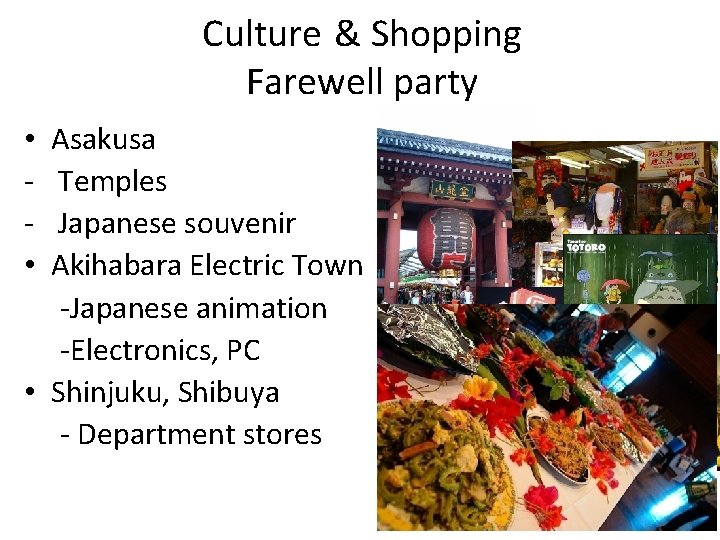
Culture & Shopping Farewell party Asakusa Temples Japanese souvenir Akihabara Electric Town -Japanese animation -Electronics, PC • Shinjuku, Shibuya - Department stores • •
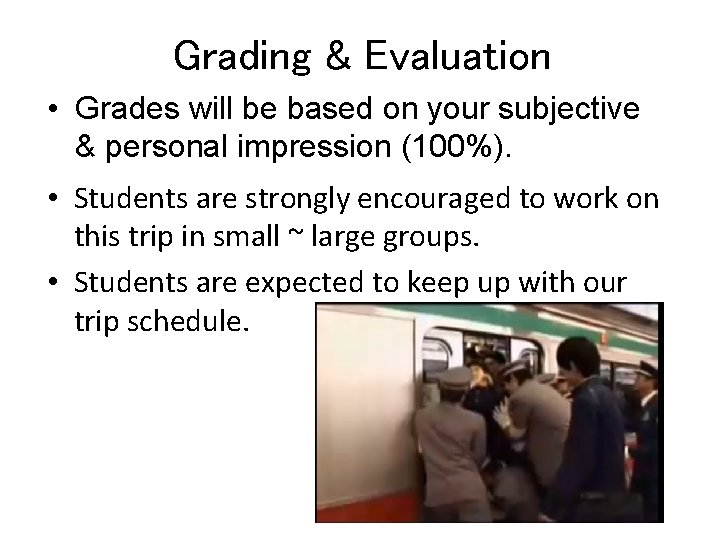
Grading & Evaluation • Grades will be based on your subjective & personal impression (100%). • Students are strongly encouraged to work on this trip in small ~ large groups. • Students are expected to keep up with our trip schedule.
APPLICATION l Online application on our website http: //www. hsph. jp/JT/index. htm l Dec 4(Fri)-Dec 8(Tue) l First come, first served basis (around 12 -13 people in each group)
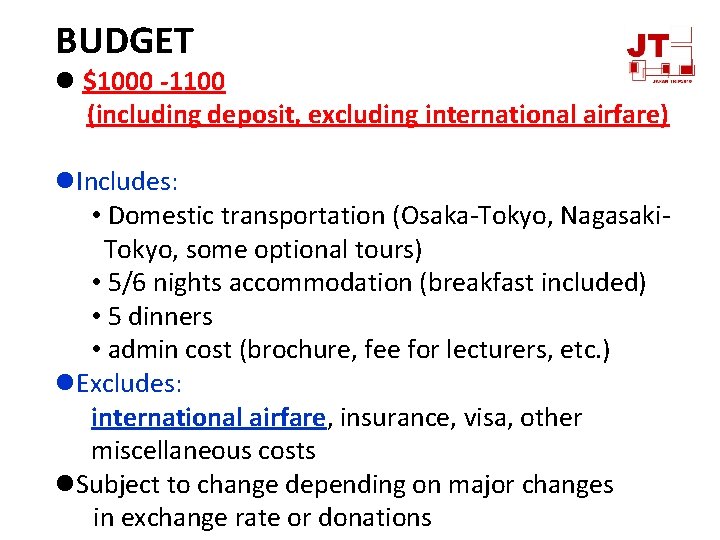
BUDGET l $1000 -1100 (including deposit, excluding international airfare) l. Includes: • Domestic transportation (Osaka-Tokyo, Nagasaki. Tokyo, some optional tours) • 5/6 nights accommodation (breakfast included) • 5 dinners • admin cost (brochure, fee for lecturers, etc. ) l. Excludes: international airfare, insurance, visa, other miscellaneous costs l. Subject to change depending on major changes in exchange rate or donations
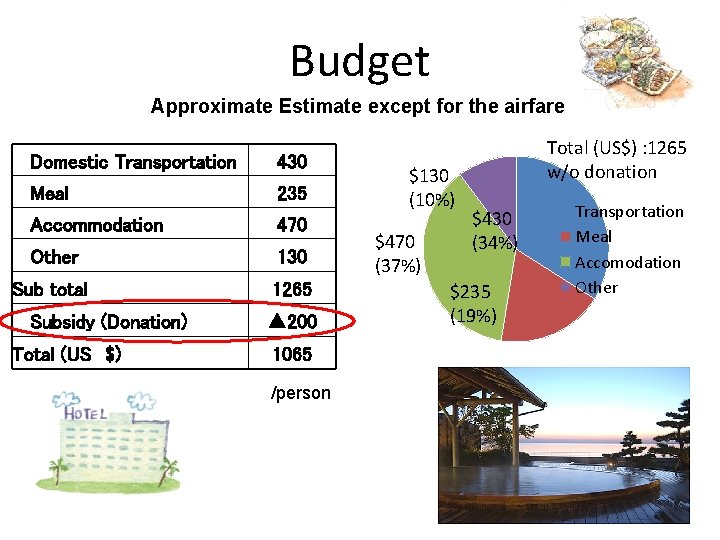
Budget Approximate Estimate except for the airfare Domestic Transportation 430 Meal 235 Accommodation 470 Other 130 Sub total 1265 Subsidy (Donation) Total (US $) ▲ 200 1065 /person $130 (10%) $470 (37%) Total (US$) : 1265 w/o donation $430 (34%) $235 (19%) Transportation Meal Accomodation Other
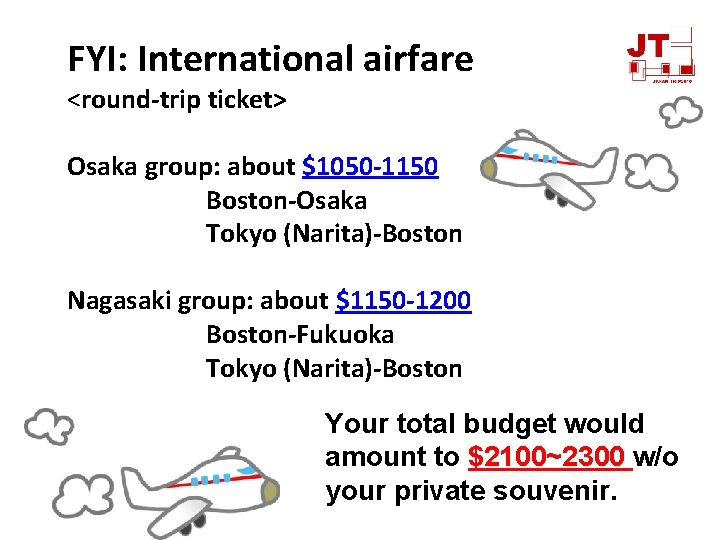
FYI: International airfare <round-trip ticket> Osaka group: about $1050 -1150 Boston-Osaka Tokyo (Narita)-Boston Nagasaki group: about $1150 -1200 Boston-Fukuoka Tokyo (Narita)-Boston Your total budget would amount to $2100~2300 w/o your private souvenir.
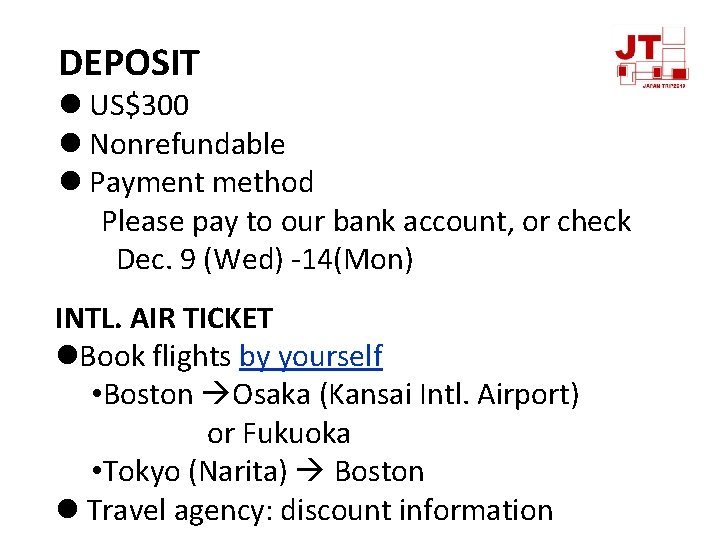
DEPOSIT l US$300 l Nonrefundable l Payment method Please pay to our bank account, or check Dec. 9 (Wed) -14(Mon) INTL. AIR TICKET l. Book flights by yourself • Boston Osaka (Kansai Intl. Airport) or Fukuoka • Tokyo (Narita) Boston l Travel agency: discount information
VISA l. U. S. citizens do not need a visa for short trip. (At the present time, 63 countries and regions have Visa Exemption Arrangements with Japan. ) l For other countries, check our website of Ministry of Foreign Affairs (http: //www. mofa. go. jp/j_info/visit/visa/index. html).
We Will Guide You in JAPAN!! • • Aki Hiroshi (Kiragawa) Hiroshi (Tsuji) Honami • • Kayako Takeshi Toki Yasu We Will Support You in Boston!! • Fumiaki, Keiko, Miori, Rain
CONTACT US • HP: http: //www. hsph. jp/JT/index. htm • Q&A : jt 2010@hsph. jp
THANK YOU !!!
- Slides: 48