
About Cell Membranes All cells have a cell
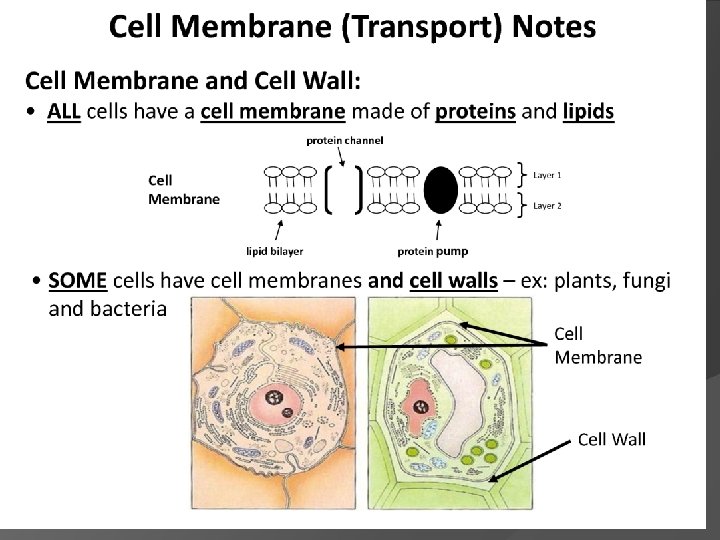
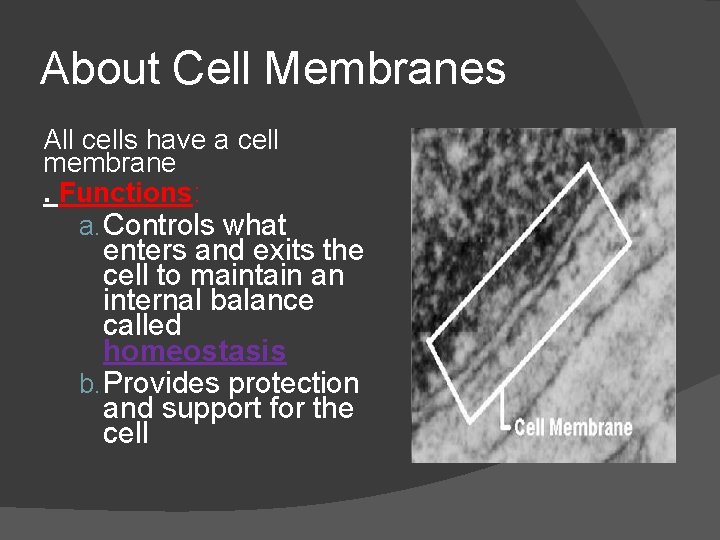
About Cell Membranes All cells have a cell membrane. Functions: a. Controls what enters and exits the cell to maintain an internal balance called homeostasis b. Provides protection and support for the cell
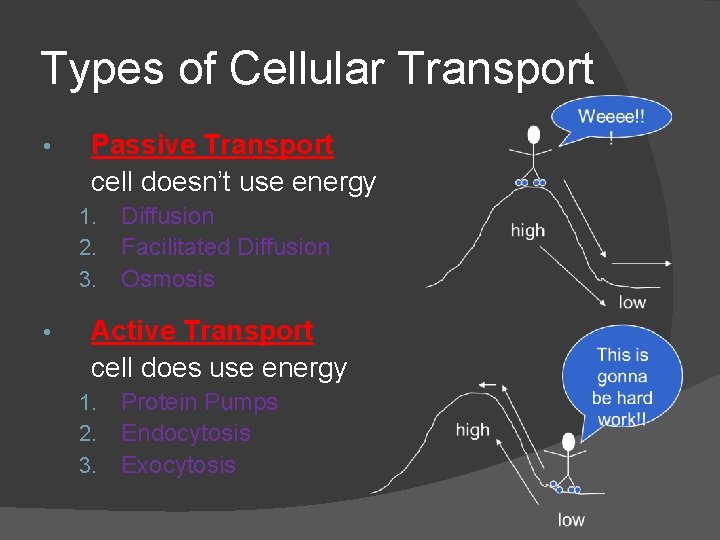
Types of Cellular Transport • Passive Transport cell doesn’t use energy 1. 2. 3. • Diffusion Facilitated Diffusion Osmosis Active Transport cell does use energy 1. 2. 3. Protein Pumps Endocytosis Exocytosis
Passive Transport • • • cell uses no energy molecules move randomly Molecules spread out from an area of high concentration to an area of low concentration. • (High Low) • Three types:
3 Types of Passive Transport 1. Simple Diffusion 2. Facilitative Diffusion – diffusion with the help of transport proteins 3. Osmosis – diffusion of water
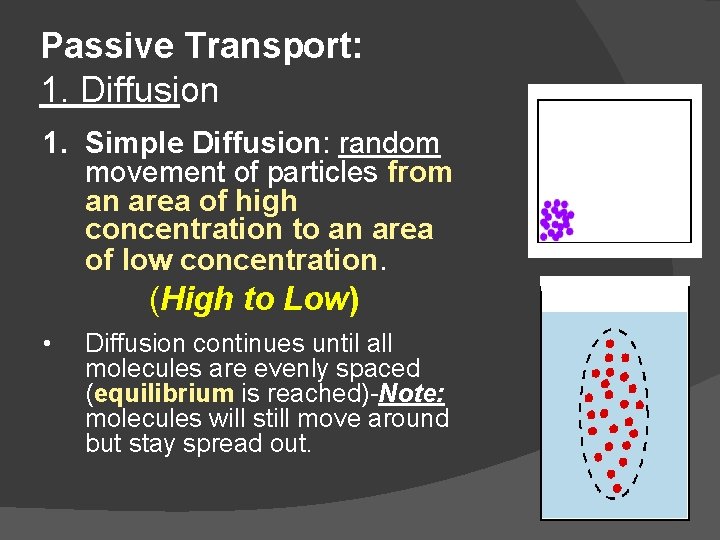
Passive Transport: 1. Diffusion 1. Simple Diffusion: random movement of particles from an area of high concentration to an area of low concentration. (High to Low) • Diffusion continues until all molecules are evenly spaced (equilibrium is reached)-Note: molecules will still move around but stay spread out.
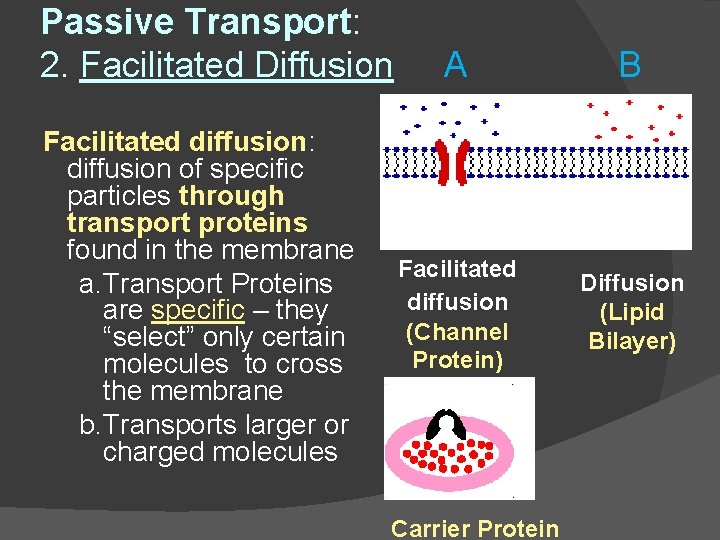
Passive Transport: 2. Facilitated Diffusion Facilitated diffusion: diffusion of specific particles through transport proteins found in the membrane a. Transport Proteins are specific – they “select” only certain molecules to cross the membrane b. Transports larger or charged molecules A B Facilitated diffusion (Channel Protein) Diffusion (Lipid Bilayer) Carrier Protein
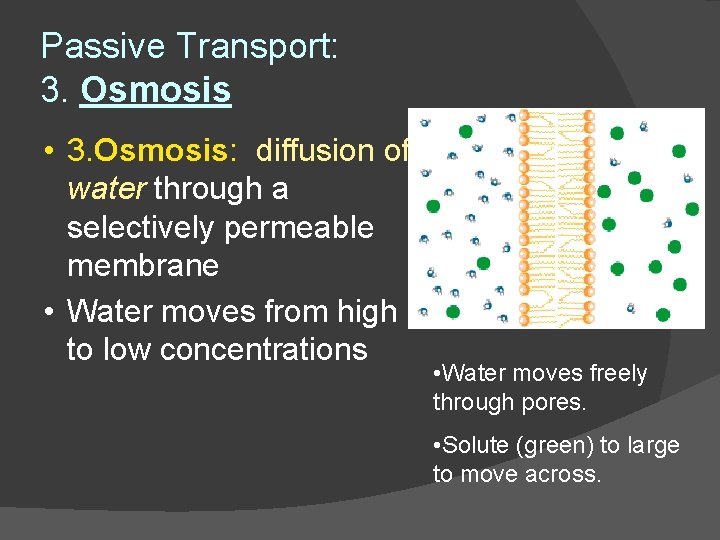
Passive Transport: 3. Osmosis • 3. Osmosis: diffusion of water through a selectively permeable membrane • Water moves from high to low concentrations • Water moves freely through pores. • Solute (green) to large to move across.
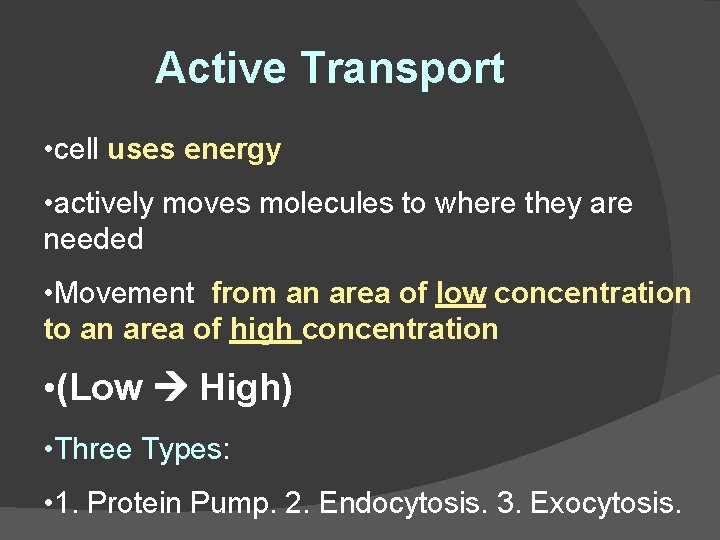
Active Transport • cell uses energy • actively moves molecules to where they are needed • Movement from an area of low concentration to an area of high concentration • (Low High) • Three Types: • 1. Protein Pump. 2. Endocytosis. 3. Exocytosis.
- Slides: 9