
Abnormalities of Red Cell membrane Lecture NO 1
Abnormalities of Red Cell membrane Lecture NO: 1 st MBBS Dr Muhammad Ramzan
Red cell membrane abnormalities – the definition • These are inherited diseases due to mutations of various membranous or/and skeletal proteins of the red cell • Leading to haemolytic anaemias Like: Hereditary Spherocytosis, Somatocytosis and Elliptocytosis • Hereditary RBC membrane defects----. Wilma Barcellini. Blood Tranf 2011. July; 9(3): 274 - 277

Red cell membrane – the background Mutation of skeletal proteins changes RBC shape • Integrity of Red cell membrane is maintained by the vertical interaction B/W Lipid Bilayer and membrane skeleton • Mutation of the skeletal proteins leads to secondary defects in Spectrin assembly and unstable RBC membrane. 1 • RBC changes to sphere; loses passive deformation, trapped and • haemolyzed in capillaries and results in anaemia 2 • Pediatrics in Review; May 2004. VOLUME 25/ISSUE 5
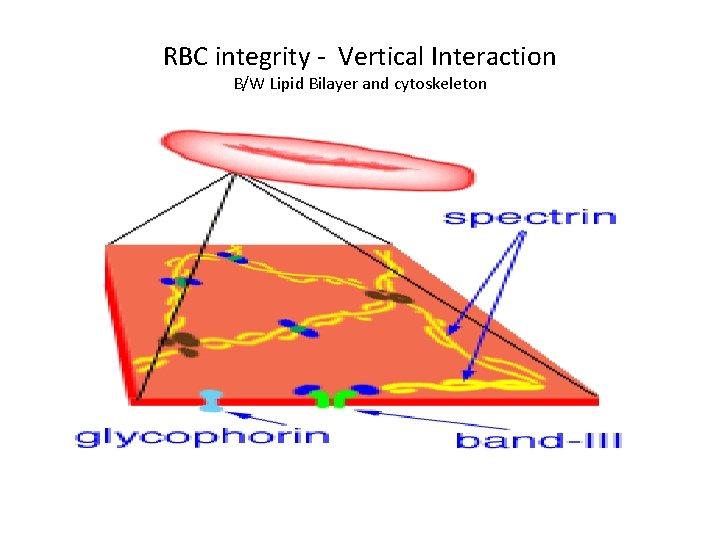
RBC integrity - Vertical Interaction B/W Lipid Bilayer and cytoskeleton
Normal RBC – the morphology Passive deformation • RBC is a biconcave disc that appears wider at the ends and narrowest in the middle : size 7. 5 7. 8µ • Anuclear; red colour for HB, name and fragile • Normochromic/ Normocytic. • Count : 4. 6 – 6. 1 million/micro liter • Life span is 120 days • www. healthhype. com - www. nc. Ib. nlm. nih. org

Red Cell – Morphology and characteristics
Red cell membrane - the characteristics the only structural component • RBC membrane is the only structural component of red cell with multiple properties • 1. Has blood group antigens (AB) • 2. Transports anions : HCO 3 and CL • 3. Has passive deformation • 4. Has large surface area relative to cell volume for the Rapid diffusion of respiratory gases • Wilma Barcellini. Blood Tranfus. 2011 – www. medicinenet. com
Red Cell passive deformation. The merits • It is the ability of the RBC to change and restore its shape after passing through microcirculation normally. It is due to: • I. Excess of cell membrane and is carried out without its stretching • 2. Flexibility of Cytoskeleton • Helps to complete the normal life span of RBC • Prevents RBC trapping, haemolysis and • Maintains blood flow • Red cell membrane; past, present and Future. 2008 • www. blood journal. org

Passive deformation of Red cell

RBC membrane – the parts • • The red blood cell membrane consists of 3 basic components: 1. Lipid Bilayer 2. Trans membrane (integral) and skeletal proteins 3. Cytoskeleton network.
Lipid Bilayer – A semi permeable part • It is a semi permeable part of the plasma membrane that separates intracellular from the Ext. cellular environment • Consist of Proteins; Phospholipids, CH esters and USFAs. • Phospholipids form 2 layers, are hydrophilic while middle is hydrophobic and have CH and USFAs • USFAs impart fluidity to cell membrane and allow movements of its contents laterally (integral proteins) • www. medical- dictionay. com

RBC membrane – the parts
Tran membrane/Integral proteins ˃ 50 types ` • These proteins cross the entire cell membrane, ranging from few hundreds to approx. one million copies/RBC • There are ˃ 50 types with 25 for various blood group antigens • Serve as transporters for Ions, water and urea (Cl. HCO 3) • Major are: Glycophorins, Band 3, Aquaporins, Rh. AG and Red • cell glucose transporters (GLUT-1) • www. bjh. 2008 - (British journal of Hematology)- www. ncbi. nlm. nih. org
Tran membrane proteins - the role • Glycophorins, are rich in Sialic acid that makes the RBC hydrophilic and negatively charged – add CHO moiety to the moles • Band 3 is ion transporter(HCO 3 for Cl++ ions) • Proteins with RH antigens(D) are ABO blood groups (also ion channels) • The red cell Glucose transporter 1, is passive one and is present in other tissues • Cytoplasmic parts these moles contribute to formation of cytoskeleton • www. Bloodjounal. org - www. wikepedia. org
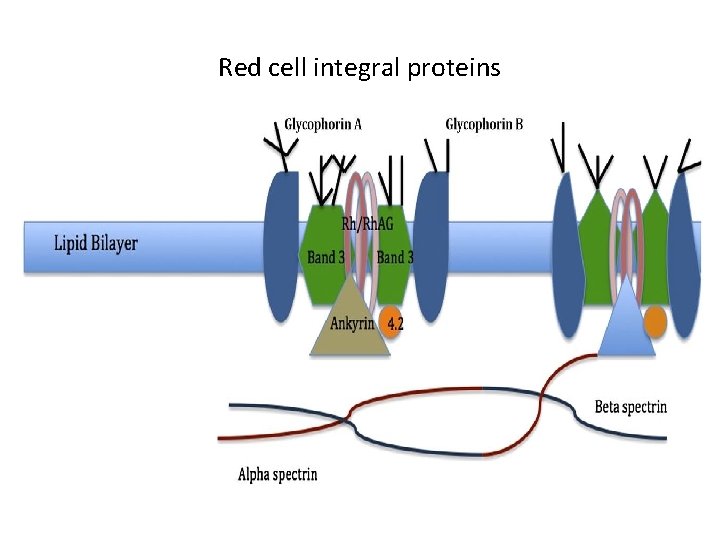
Red cell integral proteins
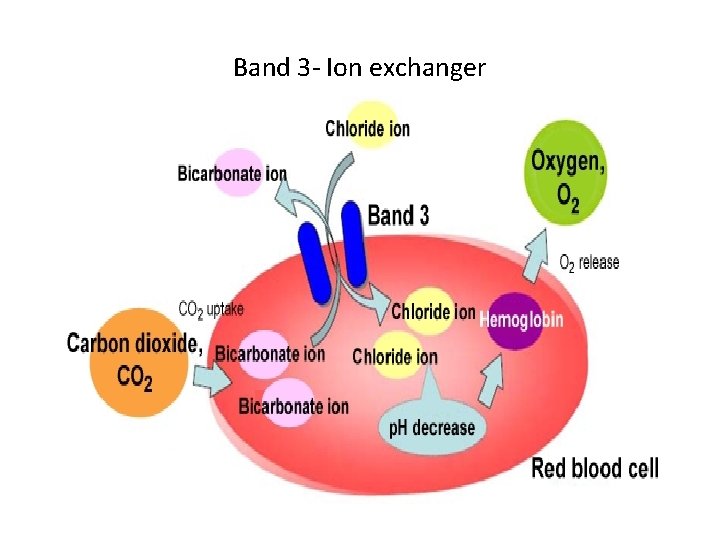
Band 3 - Ion exchanger
Cytoskeleton – A network of skeletal and Cytoplasmic portions of Tran membrane proteins • It is an irregular hexagonal network of α and β Spectrin moles which are tied together mainly by the : • Ankyrin; Actin; Band 3 and other Skeletal proteins at nodes called the junctional complexes. • The skeleton makes a 2 D network which is : • very flexible and compressible and allows passive deformation of RBC
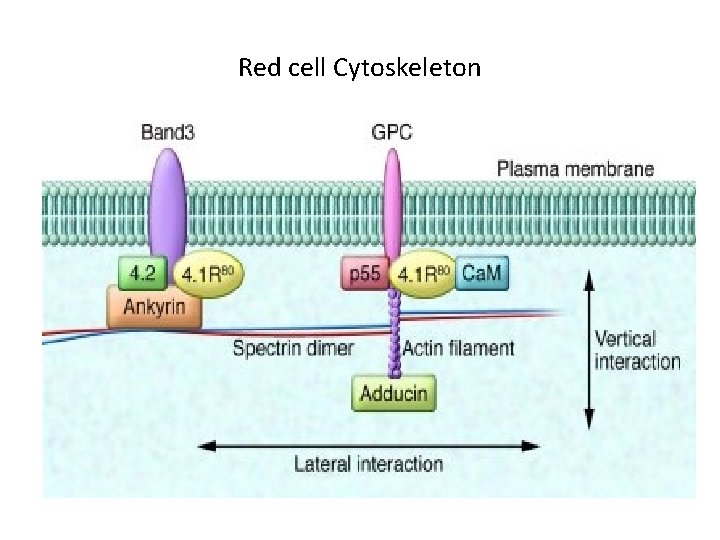
Red cell Cytoskeleton
Cytoskeleton – Spectrin A dimer –α and β • • • Spectrin is the major component of the cytoskeleton. Provide support to the Lipid Bilayer 1 Maintains the cell shape. 2 Regulates the movements of the Integral proteins 3 Ankyrin interacts with the membrane and Skeletal proteins by vertical and lateral interactions respectively • Dr Avinash Deo. February, 2014
Cytoskeleton - the Ankyrin Means fused in Greek • Ankyrin is an adopter protein that attaches integral proteins to the Spectrin- Actin Skeleton • Ankyrin has got binding sites for the β subunits of Spectrin that maintains the integrity the: • cell membrane and Ion channels • Mutation of Ankyrin causes Hereditary Spherocytosis and degeneration of Purkinje neurons • Peter J. Mohler. Journal of Cell Science; 2002
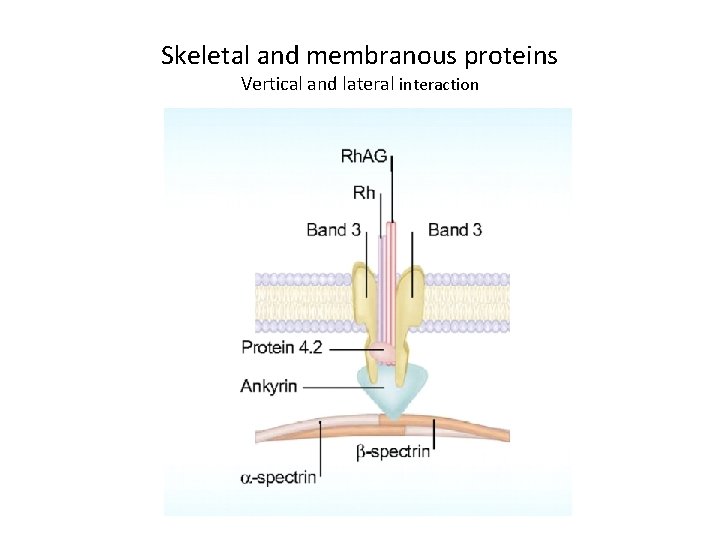
Skeletal and membranous proteins Vertical and lateral interaction
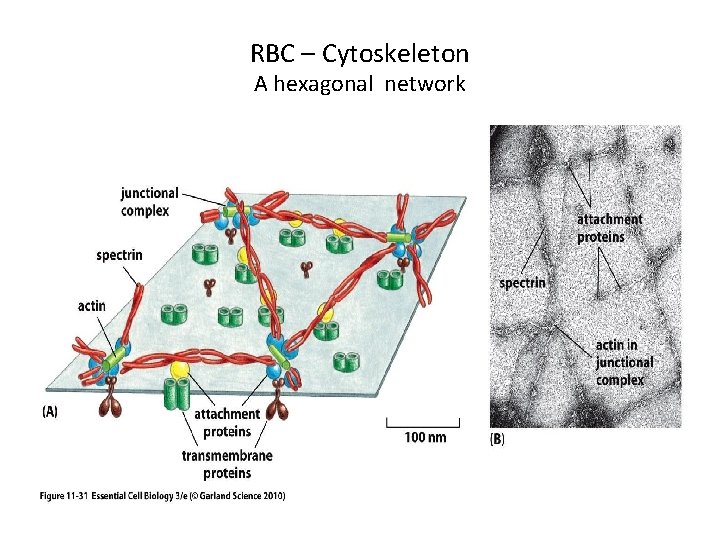
RBC – Cytoskeleton A hexagonal network
Disorders of RBC membrane – definition haemolytic anaemias • These are a group of hemolytic anaemias that present with different clinical and laboratory findings • Can occur any time from early childhood to early adulthood • These include hereditary Spherocytosis; hereditary Elliptocytosis and hereditary Somatocytosis • www. ghr. nlm. nih. org
Pathogenesis - Deformed RBC • The primary cellular defect is the loss of membrane surface area relative to intracellular volume • Mutation of red cell integral/skeletal proteins, produces unstable membrane that leads to: • Change of Discoid shape of RBC to Spherical one that cannot move freely in microcirculation. • Red cells get trapped; membranes damaged and haemolyzed • Thus producing anaemias of various severities
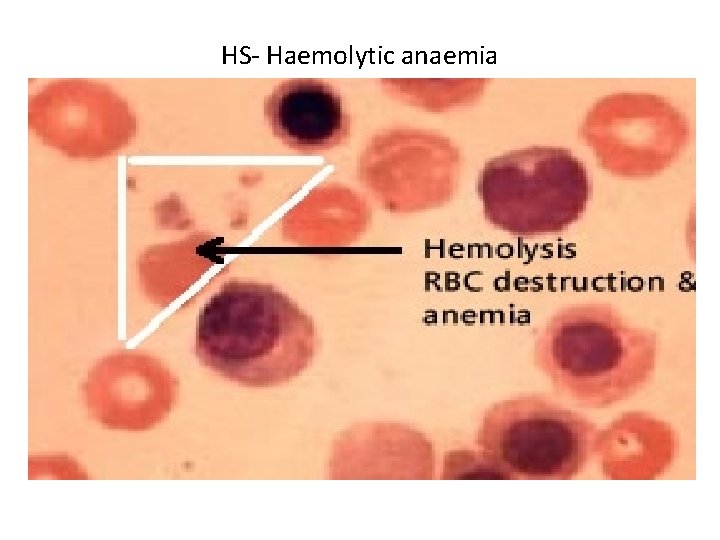
HS- Haemolytic anaemia
Hereditary Spherocytosis (HS) • HS is a disorder of Red cells that is inherited as dominant trait • It is characterized by small fragile Spherocytes which are extremely susceptible to haemolysis • HS is also associated with anaemias: jaundice and enlargement of Spleen and reticulosis • It is diagnosed by the presence of rounded RBC on the peripheral blood smear and Reticulocytes • www. merriam- webster. com
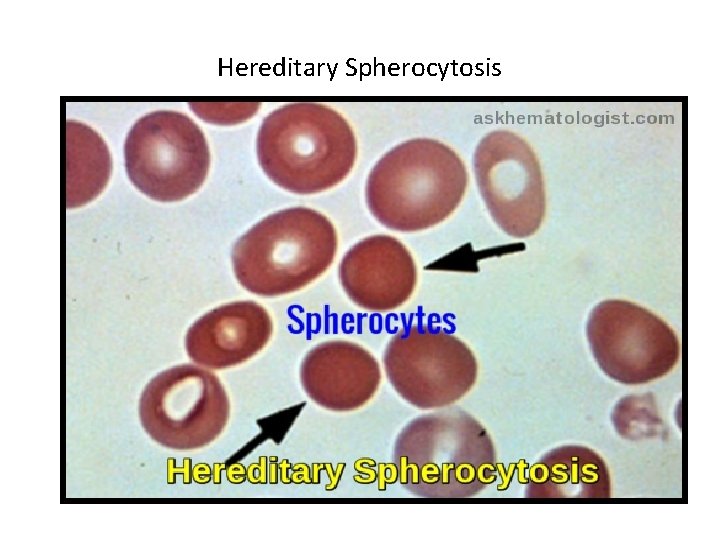
Hereditary Spherocytosis
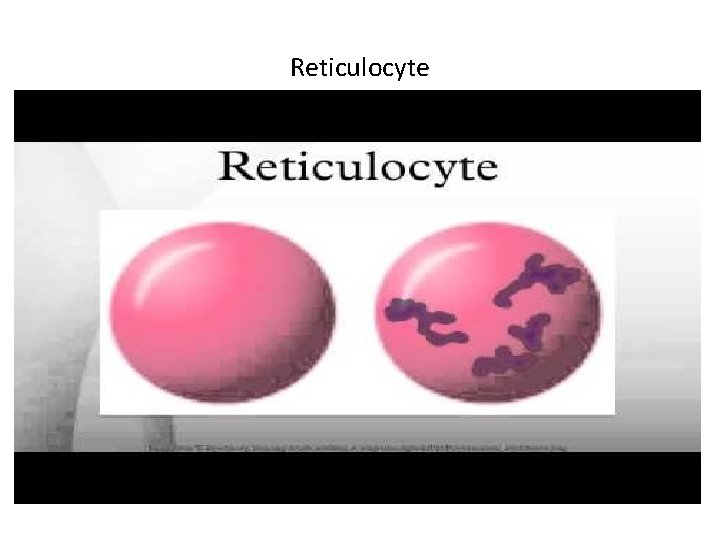
Reticulocyte
- Slides: 28